

MilkChoco - Online FPS
Games
App
[MilkChoco] is a 4 to 4 team shooting game. You can play in the various maps such as 'Assault',...
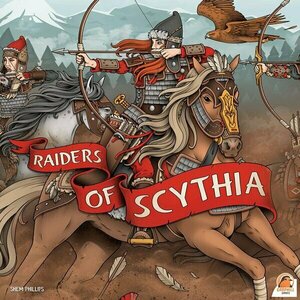
Raiders of Scythia
Tabletop Game
Many centuries ago, the Greek, Persian and Assyrian empires controlled vast amounts of land and...

3D Penalty Football World Champ
Sports and Games
App
Now Mobility Games brings the tension and excitement of fooball’s Penalty Shoot-Out to the iPhone....
South Downs Way: Trailblazer British Walking Guide: Practical Guide to Walking the Whole Path, with 60 Large-Scale Maps, Guides to 49 Towns & Villages, Planning, Places to Stay, Places to Eat
Book
Fully revised and rewalked fifth edition of this popular guidebook.This 100-mile footpath follows...

AirTycoon Online
Games
App
#1 App in South Korea and Hong Kong. #1 Roleplaying & simulation game in Germany, Swiss, Norway,...

Purple Phoenix Games (2266 KP) rated Tiny Epic Western in Tabletop Games
Dec 30, 2021



Disclaimer: I do not intend to rehash the entire rulebook in this review, as there are just too many details, but will instead provide a more general overview of the rules and gameplay. -L
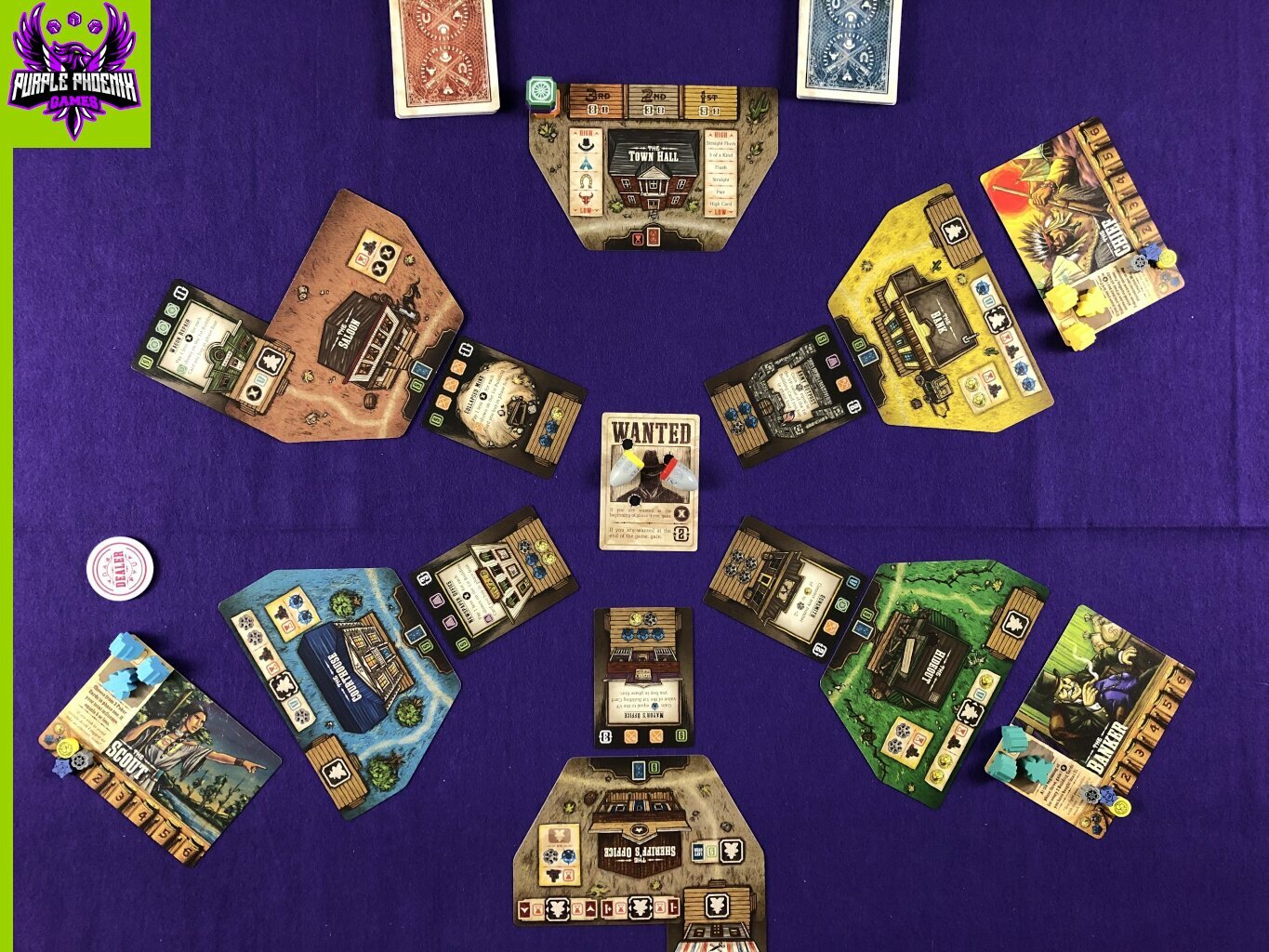
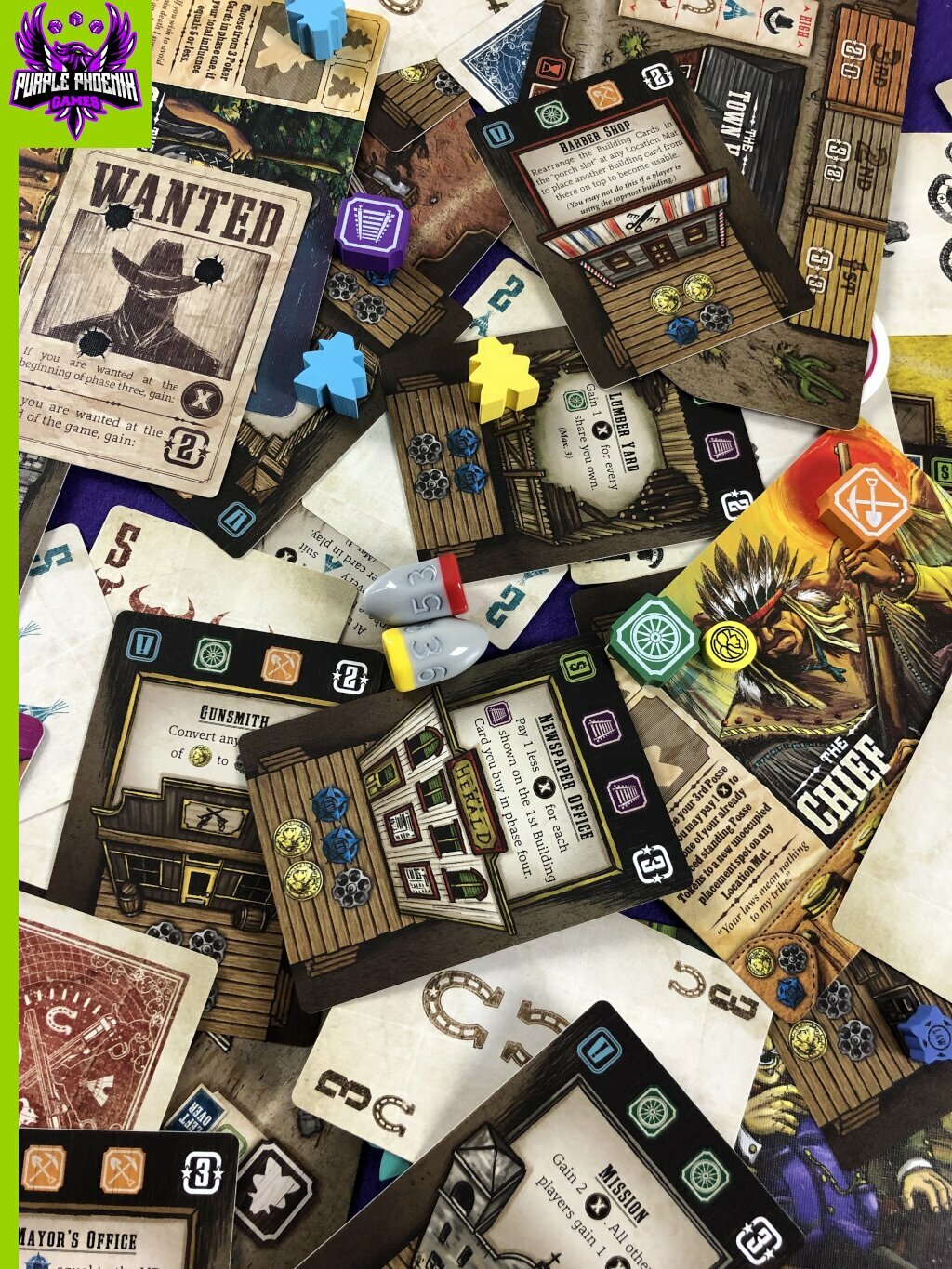
Tiny Epic Western is a game of worker placement and set collection in which players are trying to amass the most end-game victory points. Played over a series of rounds, players will be placing their Posse (Meeples), collecting Influence and taking actions, dueling opponents (if necessary), playing a bit of poker, and buying buildings in an effort to become the most powerful boss in this wild west town. To setup for a game, place the Location Mats as described in the rules, dealing a Building Card where appropriate. Each player receives a Boss card, 3 Posse tokens (Meeples), and one of each of the Influence trackers (Money, Law, and Force), placed on the 1 space of their card. Shuffle the decks of Building Cards and Poker Cards separately, choose a starting player (who receives the Dealer token), place the Wanted card/Gunslinger dice in the center of the play area, and the game is ready to begin! Pictured below is the starting setup for a 3-player game.
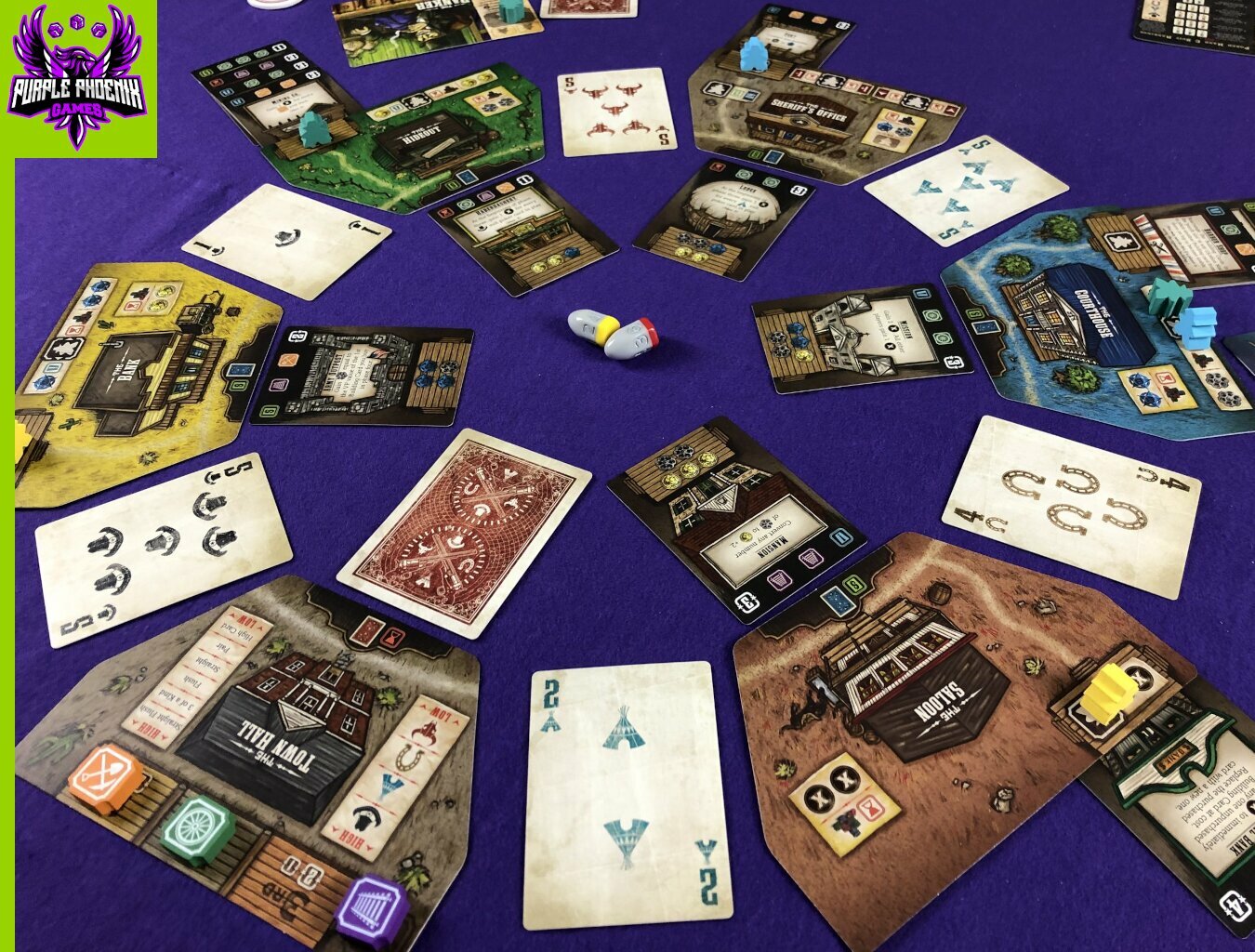
The game is played over 6 total rounds, each of which is broken into 4 phases: Shuffle and Deal, Posse Placement, Resolution, and Buy. To start a round, the Dealer shuffles the deck of Poker cards, and then deals 1 card face-up to the 6 empty spaces between the Location Mats. One Poker card is dealt face-down to the Rival Space (under the Town Hall Location Mat), and 2 Poker cards are dealt face-down to each player. Players look at both of their cards and pick 1 to keep, discarding the other. The round then moves to phase 2: Posse Placement. Starting with the Dealer, players will take turns placing Posse tokens onto the placement spots on any of the Location mats. All placement spots grant unique benefits (collecting different Influence or performing Building card actions) that are performed either immediately or during later phases of the round. What happens if an opponent took a placement spot that you wanted? Then it’s time for an old-fashioned duel! The dueling players each roll a Gunslinger die, modify it if they so choose, and determine a winner. Players continue taking turns placing Posse tokens until all available Posse tokens have been placed.
When all Posse tokens have been placed, the round moves to phase 3: Resolution. The first step of this phase is to reveal Poker cards – all players reveal their cards, and the card in the Rival Space is also revealed. Moving clockwise from the Town Hall, each Location will be resolved by ‘playing’ three-card poker. Each Location has 2 Poker cards directly adjacent to it (placed between the Locations in phase 1), and those 2 cards plus the one in your hand will form your Poker hand. Any players with Posse tokens on the Location will compare their Poker hands to determine a winner. If you win the hand, you collect the Winner’s Pot (extra benefits) and are able to collect any delayed benefits from placement spots in the Posse Placement phase. Losing the hand earns you nothing *womp womp*. If you are the only Posse on a Location (with no opponents) you will compare your hand to that of the Rival. The Rival’s hand uses the cards adjacent to the Town Hall, plus the revealed card in the Rival Space. If you have a better hand, you win the benefits on your Location. If the Rival wins, though, you do not collect these benefits. All Locations are resolved in this fashion before the last phase of the round, Buy, begins.
To start this phase, all players will compare their three-card Poker hands using the 2 Poker cards adjacent to the Town Hall. The player with the best hand will act first in this phase, followed by the next best hand, and so on. The first player may now choose to buy a Building card from any Location on which they have a Posse token. Pay the requisite amount of Influence to purchase a Building, and add it to the Porch Slot on your color-corresponding Location Mat. The power granted by this Building card is now available for use in future rounds. Once all players have had the option to purchase a Building, the player with the best hand will advance one of the Industry Tokens at Town Hall. The placements of Industry Tokens will affect end-game scoring, so keep that in mind as the game progresses. When all steps of the Buy phase are performed, the round now ends. Players collect all their Posse tokens back to their boss cards, all Poker cards are collected and re-shuffled, new Building cards are dealt to Locations from which they were purchased this round, and the Dealer token is passed to the next clockwise player. If a player did not buy a Building at all during the round, they have gained the Third Posse Benefit for the coming round – granting them an additional Posse token to place during phase 2. Otherwise, all players will only ever have 2 Posse tokens to place.
After a total of 6 complete rounds, the game ends and points are tallied. Victory Points are earned from Building cards bought throughout the game. Building cards have a specified VP amount, and also have a collection of Industry Icons on them. Using the final placement of the Industry Tokens on the board, players will earn points for Industry Icon sets they have collected. And finally, whomever holds the Wanted card (won the last duel) gains an additional 2 VP. Points are all counted, and the player with the highest score is the winner.
That all probably sounds pretty complicated. But I do have to say that verbally explaining/teaching the game (and being able to use components for examples) is waaaaay easier than doing so through a text review. So please do not let the seemingly complex gameplay turn you off from this game. Once you get a basic understanding of the phases of each round, the game moves along pretty seamlessly. Honestly, the biggest learning curve for me to conquer was playing three-card poker. As someone who has never played any form of poker before, this was probably what had me most hesitant about learning TEW. After having played it now, three-card poker really isn’t too complicated, and there are some nice player reference cards to help you figure it out.
Aside from the poker element, this game really comes down to worker placement and strategy. Each Location card only has a finite number of placement spots, and the resources required to buy Buildings are not exactly in abundance. This affects your strategy, as you must decide which resources to collect at what times, as well as deciding whether you need to duel someone for a coveted resource. Another element to your strategy? You may only buy Building cards from Locations on which you have a Posse token. Maybe none of those placement spots really appeal to you this round, but you reaaaaally want that specific Building card. Are you willing to ‘burn’ a Posse token for the chance to buy it? Or is there a different Location that offers a useful resources and a desirable Building card? Also, keep in mind how your poker hand will come into play. Since poker cards are dealt to each Location at the start of a round, you are able to see what your hand will be for each Location. Maybe you have a pretty strong hand at the Bank Location, but at the Courthouse the cards end up being a bust. Are you willing to risk a placement in hopes that you have the best hand of the bunch? Because remember – if you don’t have the best hand at a Location, you get no resources/rewards! There are so many elements to a successful strategy with this game, and it really keeps all players engaged at all times. Be warned though – the variety of strategic options could be difficult for some AP-prone players.
Let me touch on components for a minute. As with all Tiny Epic games, the production quality of TEW is pretty stellar. The cards are nice and sturdy, and the iconography is clear. The Posse tokens are cute Meeples with cowboy hats, and they are nice and chunky. The only thing I don’t really like about this game are the Gunslinger dice. In theory, they are super cool, but in actual execution, they leave much to be desired. The numbers aren’t really clearly define, so they’re a bit tricky to read. Aside from that, a pretty high quality game here.
So all in all, how does Tiny Epic Western stand up in the series? It is definitely one of the heavier games of the bunch, and there is so much more going on than initially meets the eye. It feels daunting for the first few plays, but once you get the phases under your belt, it really flows pretty well. I can’t say that it is my favorite Tiny Epic game, as I just personally feel like there are too many elements going on at the same time. You’re strategizing your worker placement, but also need to consider buying Buildings for VP and to collect sets of Industry Icons and for their specific abilities, as well as figuring out your poker hand for 5 different Locations, and dealing with duels. Some people might really be into that amount of strategic forethought, but it feels a bit cumbersome to me. That being said, Purple Phoenix Games gives this three-card poker game a 3/6. The gameplay is decent, just not really my kind of game.

Purple Phoenix Games (2266 KP) rated Tiny Epic Mechs in Tabletop Games
Jun 30, 2021

Disclaimer: I do not intend to rehash the entire rulebook in this review, but give a general overview of turns and gameplay. For a more in-depth look at the rules, pick up a copy of the game from the publisher or your FLGS! -L
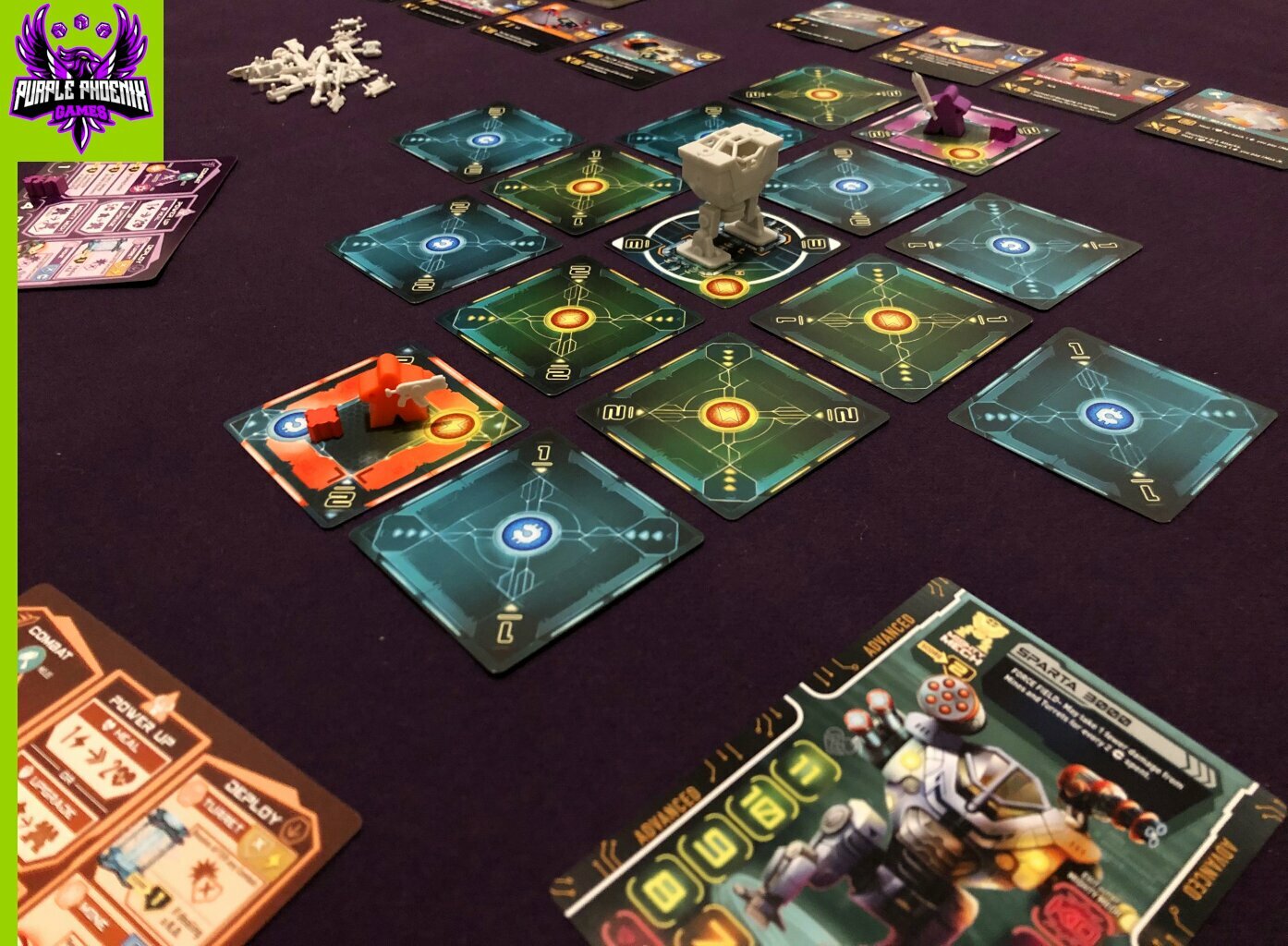
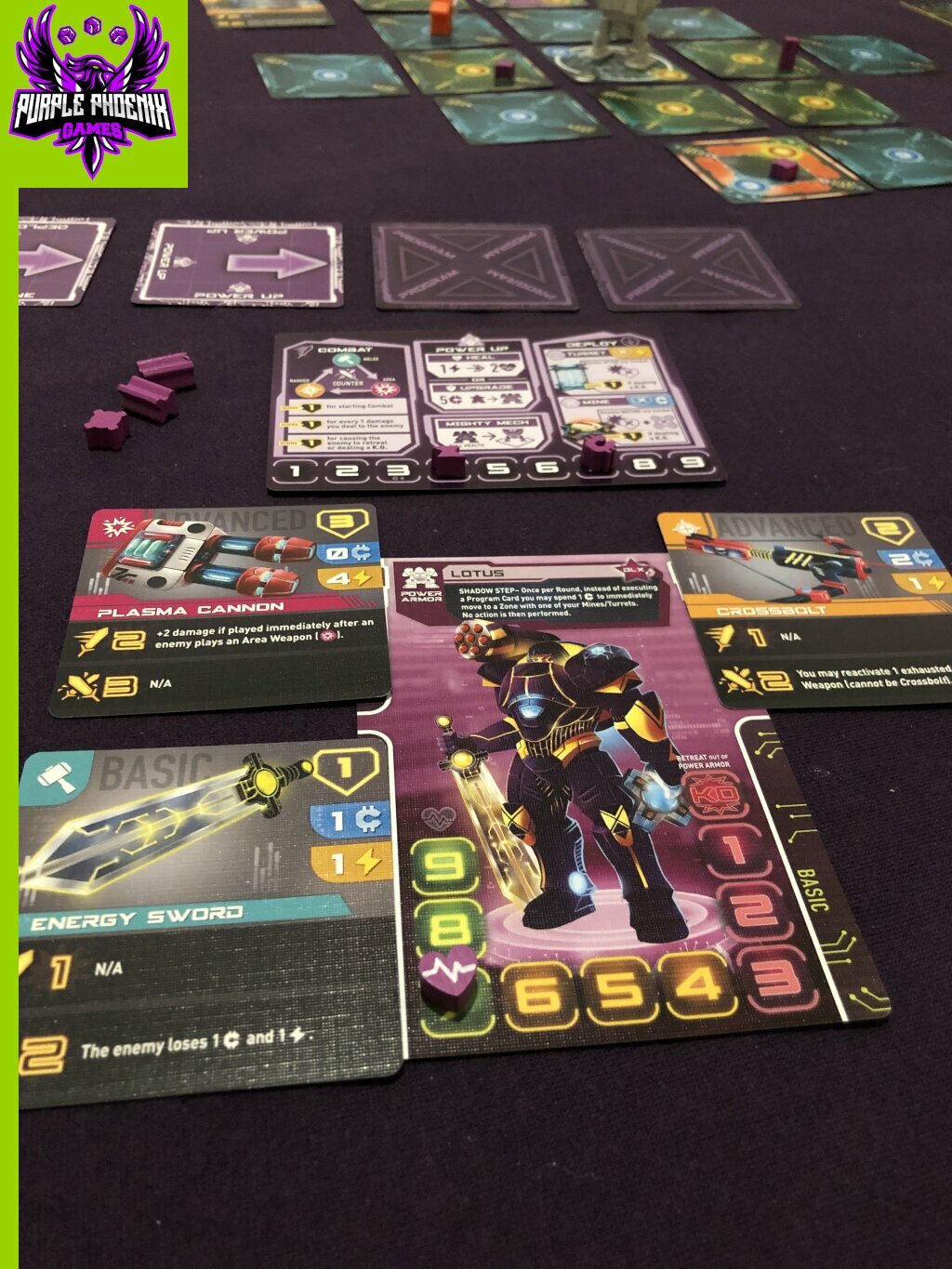
Tiny Epic Mechs is a game of action programming in which players take on the roles of Mech pilots competing in an arena-style battle royale event. Through the purchase of new weapons, powering up into Mech suits, combat with opponents (either face-to-face, or through the deployment of mines and turrets), and controlling different zones of the arena, players are trying to earn the most Victory Points by the end of 6 rounds of play. To begin, follow the setup instructions for the arena, based on the player count. Each player receives a player card (to track resources, and also acts as a reference card), a Pilot card, components in their chosen player color, and 1 Basic Weapon card to equip on their Pilot. Set the Round Tracker to round 1, create a market row of Advanced Weapons, place the Mighty Mech suit on it’s corresponding zone card, and the game is ready to begin!
Each round consists of 3 phases: Program, Execution, and Scoring. During the Program phase, players will secretly choose 4 Program Cards from their hand to represent their 4 moves/actions for this round. The chosen Program Cards will be laid out in order above the player card, and will immediately be covered by a face-down unused Program Card. (There are 8 Program Cards total, only 4 of which are used each round). It is important to note that the orientation of the Program Cards matters – Program Cards must be played parallel to the zone cards of the arena. Since they dictate the directions in which you move, you must place them exactly as you want to move. During the second phase, Execution, players will take turns revealing their Program Cards, one at a time and in order, and resolving the actions. To Execute a Program Card, you will first move your Pilot in the direction of the card’s arrow, and then resolve the action listed on the card. Movement is a must and cannot be skipped.
After Movement, you may perform the action on your card – Collect Resources, Purchase a Weapon, Deploy a Mine or a Turret, or Power Up. The first three of these are pretty self-explanatory. The Power Up action allows your Pilot to either heal themselves or upgrade into a Mech suit. Now to discuss crux of the game – combat. During the Execution phase, if you enter into the same zone as another player, you must immediately begin Combat. You will use your equipped weapons to battle your opponent, in hopes of knocking them out or forcing them to retreat. Weapons will deal base damage, or Power Attack damage, based on the circumstances of the combat. To attack with a weapon, you will deal the base damage immediately to your opponent. After your attack, the weapon you used is Exhausted and cannot be used again this combat. Your opponent then has the chance to attack back – either regularly or via Power Attack (I’ll leave that for you to discover on your own). Combat continues, alternating between players, until either a player is KO’d, or is forced to retreat because all of their weapons have been Exhausted. Initiating combat, dealing damage, and defeating your opponent all earn you VP, so combat is a vital part of the game!
After all players have revealed and performed their final Program Card, the round ends. At the end of the 2nd, 4th, and 6th round, players will perform a Scoring phase, earning points for any zones occupied by their own mines, turrets, or Pilot. At the end of the 6th and final round, scoring takes place as stated above, but players will also earn VP for all weapons they have purchased throughout the game. The player with the highest VP is the winner!
I have to admit that I am not a person who generally enjoys the mechanic of action programming. I like to really think through my strategy, and execute it exactly as I want. Action programming makes strategizing more difficult because your success or failure depends on the actions selected in advance by your opponents. You can’t really adapt mid-round, you kind of just have to deal with what’s happening. That being said, Tiny Epic Mechs, in my opinion, has a good balance of combat and actions/resource management. Your entire strategy can’t be based on combat – you need to upgrade weapons, climb into your Mech suit, etc. – and the ability to vary combat with individual upgrades makes the gameplay feel more strategic. Yes, your opponents might still mess up some of your best-laid plans, but you have to be prepared for any situation.
The overall gameplay can feel calculated or chaotic simply based on the player count. In a 2-player game, obviously there are only 2 people, and you have more opportunities to really focus on your individual Pilot before necessarily traipsing into combat. In a game with 3 or 4 players, interactions between players are inevitable and can really make the action programming mechanic stand out/feel more random/etc. Especially with a small play arena, Pilots will be crossing paths at probably every turn, and you may be forced into more combats that you anticipated. With only 2 players, there are interactions between players, but it feels a little more calm overall, and you can really work with a strategy instead of having to adapt to sudden changes in the arena.
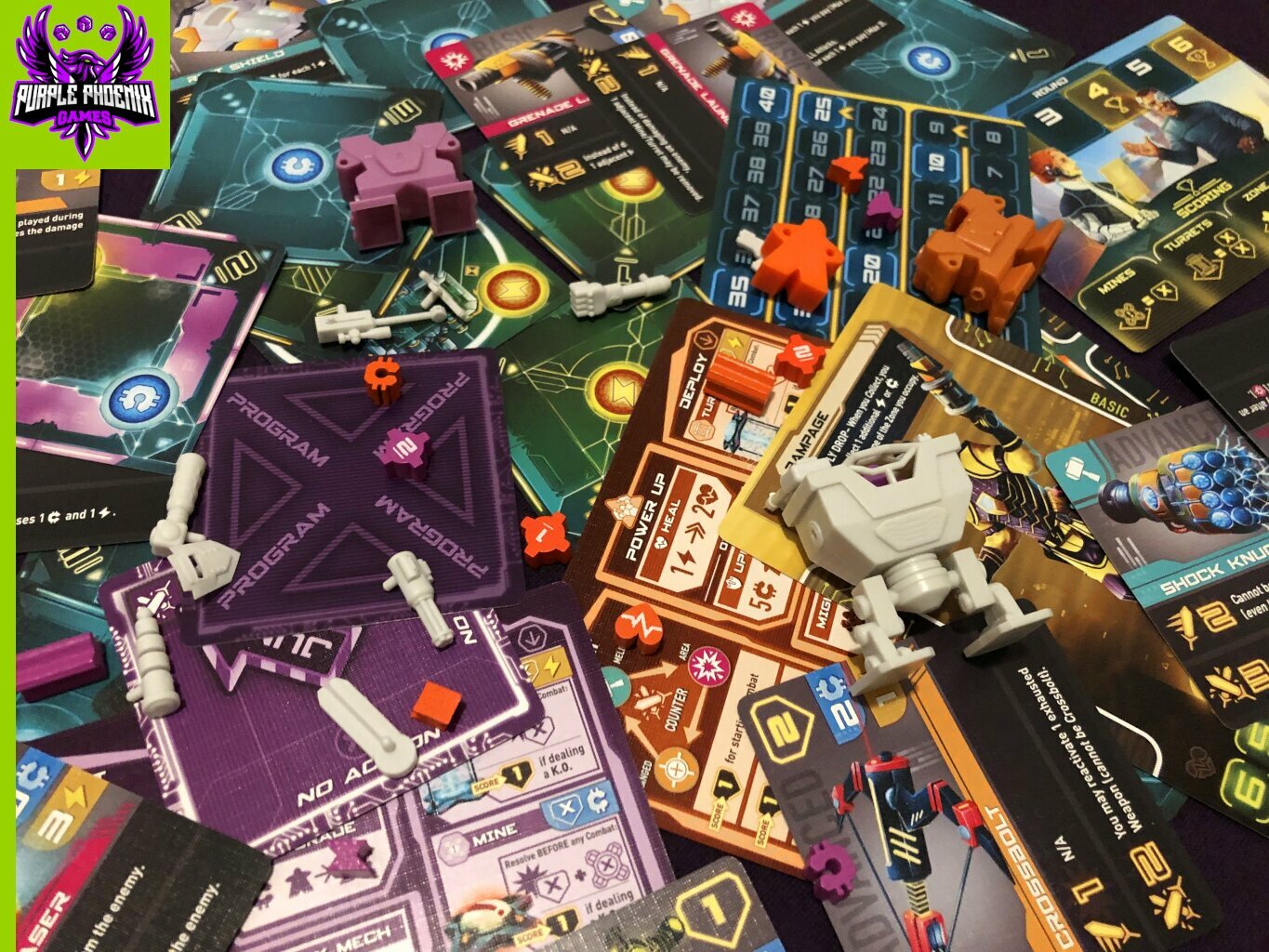
Let’s touch on components for a minute. As always, this Tiny Epic delivers on quality components. The cards are colorful and sturdy, the text easy to read. The wooden components for tracking health/resources are good, but maybe just a little too small, even for my regularly-sized hands. The ITEMeeples, Mech suits, and weapons are always fun to play with, and sturdy enough to hold up to lots of plays. All in all, great work from Gamelyn Games once again.
For being a game of action programming, I have to admit that I enjoyed Tiny Epic Mechs more than I thought I would. At least at a 2-player count. Anything more feels too chaotic and random to me. The elements of programming and combat are engaging and elevate the gameplay, but it’s just not my favorite mechanic. Will I keep this game? Definitely. For what it is, I think it does a good job. Will I get more action programming games in the future? Probably not. I’d say Tiny Epic Mechs fills that spot for me, and that is all good in my book. Check this one out if you’re looking for something fun and relatively simple that utilizes this mechanic. Purple Phoenix Games gives it a mechanical 7 / 12.

Planes, Passports and Porkie Pies - Slice One: Stirring Tales of UK Border Control (but Not as Shown on TV)
Book
Mike Clarke worked for 18 years in Immigration Control in London's larger airports, the last 9 as a...

Connecting Places, Connecting People: A Paradigm for Urban Living in the 21st Century
Robert Cervero and Reena Tiwari
Book
What is a better community? How can we reconfigure places and transport networks to create...

Getting Started with Handplanes: How to Choose, Set Up, and Use Planes for Fantastic Results
Book
With this book and a well-chosen and correctly maintained set of planes, you will be able to handle...