

Purple Phoenix Games (2266 KP) rated Among the Stars in Tabletop Games
Dec 3, 2021
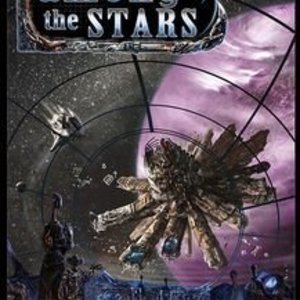
Disclaimer: Among the Stars can be played in two different modes – Aggressive and Non-Aggressive. This review covers the core game Non-Aggressive mode of play. -L
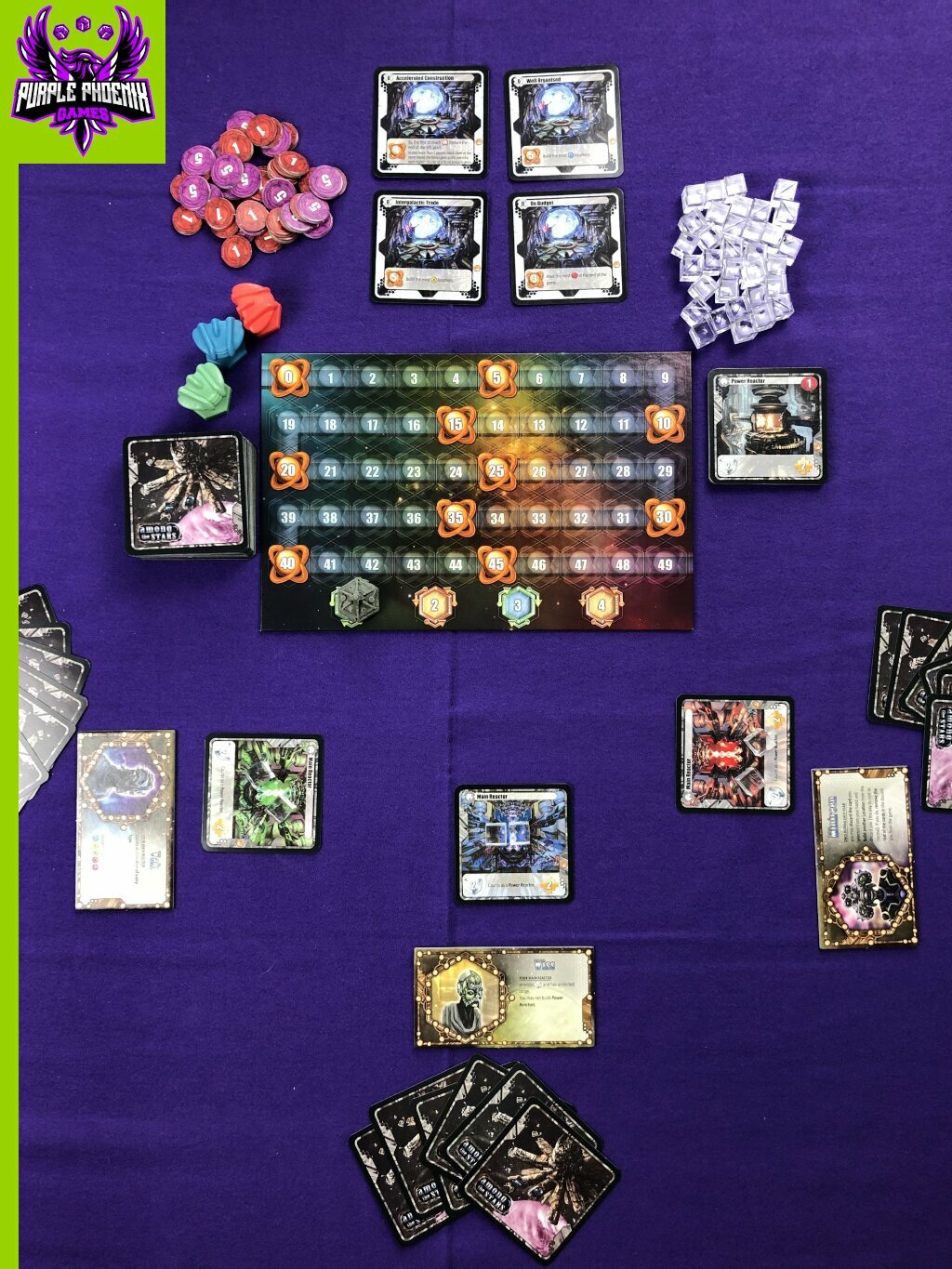
Among the Stars is a game of card drafting and tile placement in which players take on the roles of different alien races attempting to build the most efficient space station over the span of 4 years (rounds). After the 4th and final round, players calculate their final scores, and the player with the highest score is the winner! To setup for a game, assemble the Location deck as described in the rules. Each player takes a Main Reactor card and score marker in their chosen color. Score markers are placed at zero on the score board, and players put their Main Reactor card face-up in front of them, along with 2 Energy Cubes. Players choose, or are randomly given, a Race Tile with a special Racial Ability to be used throughout the game. Randomly draw the requisite number of Objective cards and put them face-up near the score board. The game is now ready to begin!
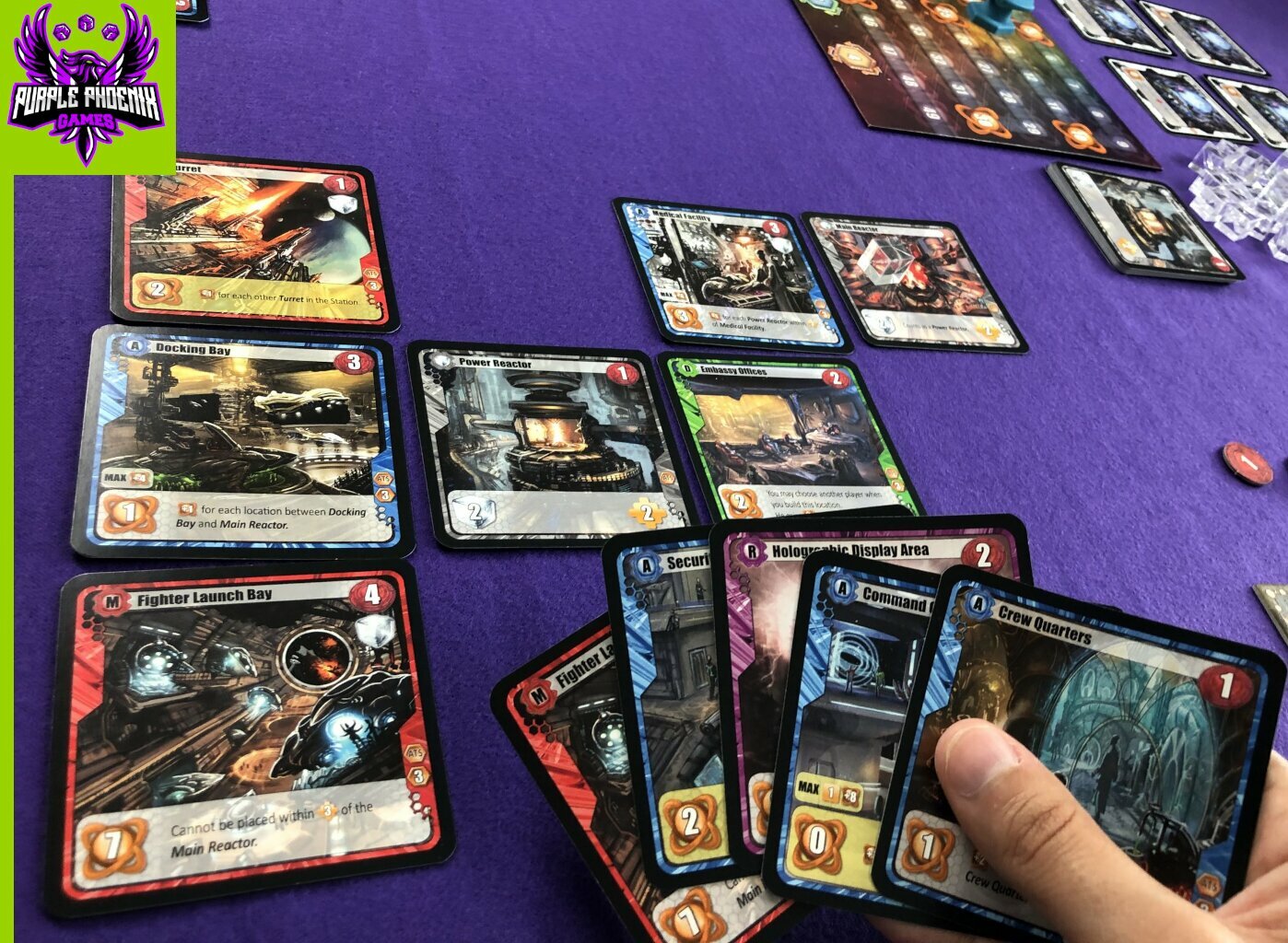
Over the course of 4 rounds, players will be drafting cards and playing them into their Space Station. At the start of each round, every player collects 10 Credits (game currency), and draws a hand of 6 Location cards. Every turn, players will select one card from their hand, place it face-down in front of them, and will pass the remaining cards in their hand to the next player (in either clockwise or counter-clockwise direction, depending on the round). Players will then simultaneously reveal their chosen card and perform one of three actions: Build a Location, Build Power Reactor, or Discard and gain 3 Credits. To Build a Location, you pay its listed cost in Credits and/or Energy and add it to your Space Station. Locations must be placed orthogonally adjacent to an existing Location. When you build a Location, you immediately gain the listed number of VP (tracked on the score board), and may use its ability. Some abilities are immediate and earn you extra VP now, while some are delayed and will be counted at the end of the game. To Build a Power Reactor, you will first discard your selected card for the turn. Pay the 1 Credit cost of a Power Reactor and place it into your Space Station, along with 2 Energy Cubes. Every round, you get 10 Credits, but Energy Cubes do not replenish unless you build more Power Reactors, so keep an eye on your resources! The last possible action is to Discard and gain 3 Credits, and is pretty self-explanatory.
Players continue taking turns (drafting cards, passing cards, and playing cards) until they are left with no cards in hand. The round is now over. Move the round marker to the next space, and begin a new round by drawing another hand of 6 cards. After the 4th round of play, the game ends and final VP are scored. Victory Points have been earned throughout the game, but now any delayed abilities are triggered and scored, Objective points are added, and players gain points for Power Reactors and remaining Credits. The player with the highest score is the winner!
See what I mean about being 7 Wonders in space? The overall gameplay is pretty much the same thing – draft a card, pass cards, play the card – even though thematically they’re on opposite ends of time. That familiarity and simplicity of the gameplay definitely added to my enjoyment of the game. And when I say ‘simplicity’ of gameplay, I do not mean that it is an easy game necessarily. It still requires a decent amount of strategy! Not only do you have to decide what card to draft for maximum benefit, but you also need to figure out exactly where to put it in your Space Station too. Some Locations may give you extra VP for being adjacent to certain other Locations, or they may even earn more VP for distance between two Locations. You’ve got to be thinking in advance, but also able to adapt on the fly. Do you draft a card that you don’t necessarily want because you can see your opponent needs it? Or do you keep your head down and try to fly under the radar? The strategy and mechanics work very well together in creating an engaging and entertaining game.
Components. This game basically just consists of cards, a score board, and some tokens. So even though it’s nothing too fancy or anything, they’re still pretty decent quality! The artwork is thematic and fun to look at, and the layout of the cards is easy to understand. The cards are square, so that makes for some interesting shuffling, but the square shape really lends itself well to the tile-laying aspect of the gameplay. So all in all, good production quality. Just be warned – as the game progresses, it turns into quite a table hog, since you are constantly adding cards to your Space Station. Not a knock on the game, just a heads up so you give yourself plenty of room!
Will Among the Stars replace 7 Wonders for me? Ultimately, no. Don’t get me wrong, it’s still a great game, but 7 Wonders just offers a little more strategy that bumps it to a higher level than Among the Stars. To introduce players to these mechanics and gameplay style, I would use Among the Stars because it is a little ‘lighter’ than 7 Wonders, if you ask me. If you are a fan of 7 Wonders and are interested in a more futuristic theme, I would definitely recommend checking out Among the Stars. It’s a neat game that has been hiding on my game shelf without the playtime it deserves. Purple Phoenix Games gives this one a stellar 15 / 18.



Bob Ross: Art of Chill Game
8.5 Rate It
Tabletop Game
If you want to paint with Bob Ross, you need to be chill, so whoever reaches maximum chill first in...
Cards Against Humanity
8.2
Rate It
Tabletop Game Watch
"A party game for horrible people." Play begins with a judge, known as the "Card Czar", choosing...
BoardGames PartyGames
A Tale of Pirates
Tabletop Game
Put on your captain's hat and navigate the 3D pirate ship using sand timers in this unique real-time...
Purple Phoenix Games (2266 KP) rated Apotheca in Tabletop Games
Jun 12, 2019
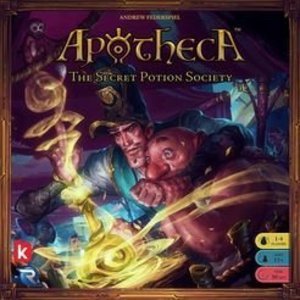

After years of study, you have finally become a master apothecary, and making magic potions is your passion. You buy all of your ingredients in a secret marketplace with no problem until one day, you come across another apothecary trying to buy all of the same ingredients as you! Who does this person think they are?? Using your quick wit, and some sleight of hand, you manage to scatter the ingredients around the marketplace to hide them from your rival. Now all you’ve got to do is give them the slip so you can go pick up the ingredients. Be careful, though – you’re rival is as sly as you are, and is scouring the marketplace to find them first!
In Apotheca, players are racing to create three magic potions before their opponents do. To craft a magic potion, players must make a match of three potions of the same color in a row. Played on a 4×4 grid, potions are manipulated by apothecary powers from recruited apothecary cards in a manner similar to movement in chess, or better yet – Onitama. Complete three matches, and you win! As a whole, I could describe Apotheca as chess with a helping of tic-tac-toe.
One thing I really like about this game is that it’s a game of semi-hidden information. Some things are hidden and some things are not. You do know the apothecary power(s) your opponent has, but you don’t know the color of the potions they put into play. Based on how they use their powers to manipulate potions, both face-up and face-down, you must deduce their strategy and thwart their attempts at making a match! Of course, they are doing the exact same thing to you – only you know the color of potions you place, but your power is known to your opponent. It’s a unique game of deduction and deception that requires more strategy than meets the eye.
Apotheca can be played with 1-4 players, but I think the best player count is 2. In a 3-4 player game, it can be difficult to build a concrete strategy because the board can significantly change between your turns. In a 2-player game, the board changes as well, but not nearly as quickly since it is just a back-and-forth with turn order. Also, more players means more hidden information – it can be tedious trying to remember who performed what action and who has what powers as you try to deduce everyone’s strategy. I don’t mind Apotheca as a 3-4 player game, but I would certainly prefer to play it as a 2-player game.
As you can see by our individual ratings, we are a little split on this game. It requires a decent amount of strategy and deduction, which work well together in this game. Apotheca was one of the first games in my collection, and it’s one that will stay there. Overall, Purple Phoenix Games gives Apotheca a sneaky 12 / 18.
https://purplephoenixgames.wordpress.com/2019/02/01/apotheca-review/

Gareth von Kallenbach (980 KP) rated Rage 2 in Video Games
Jun 19, 2019
The game was so large that it took several discs to contain the game and I remember our review unit arriving extra early so we had time to load the large game so we could be ready to play when it went online.
Nine years later we finally get the sequel as RAGE 2 has arrived from Avalanche Studios. The game picks up 20 years after the first game as players take on the character of Walker; a first generation offspring from the original Ark survivors.
After a deadly attack by the evil General Cross and his army of Mutants; Walker takes on the role as the last of the Rangers and travels the Wastelands to find new Ranger tech, make allies, gather loot, and fight Bandits, Mutants, and other enemies that arise.
Walker has a nice arsenal of pistols, Shotguns, Machine Guns, Rocket Launchers, Grenades, and his deadly Wingstick as well as a series of Nanotech powered abilities which can be improved and gained over time.
There are various towns for players to advance the main mission as well as gain side missions, trade, buy, and increase their vehicle and weapon abilities.
Players will need all this and more as the enemies are numerous and deadly. Just driving between two points on a mission can lead to roving bands and convoys attacking you; not to mention Road Blocks and other Bandit Dens that arise.
The game deftly combines first person combat and vehicle combat and offers some very fine graphics which really lead to the immersion. One issue I had is that some missions seem more like a back and forth between two points versus some of the more cohesive moments on other missions.
The NPC characters do not do as much as some may like as you will pretty much be a Lone Wolf but you will be able to chat with characters to advance the story and get side missions.
The game does require players to win a race in order to advance the story and it took many tries including some frustrating second place finishes before I was able to cross the Finish Line first ahead of the pack.
The game provides plenty of gameplay as I put in over 20 hours on it and there are still some areas I can wander to clean up but with DLC and new content coming; I am looking forward to seeing what is to come. I also look forward to fully loading out my vehicles and weapons as the three main weapons I have are amazing and I would love to see what the full loadout can do.
I was a bit disappointed over the lack of Multiplayer as it was included in the first game and I had hoped we would be able to get both vehicle and FPS combat this time out or at the least a Co-Op mode.
The music and sound effects are good although they can drop or fade now and then but this has become better with a recent patch.
RAGE 2 provided plenty of immersive entertainment and was a very entertaining and engaging game despite some frustrations along the way. The game clearly indicates more is coming to the story and I cannot wait to see what comes next.
http://sknr.net/2019/06/07/rage-2/
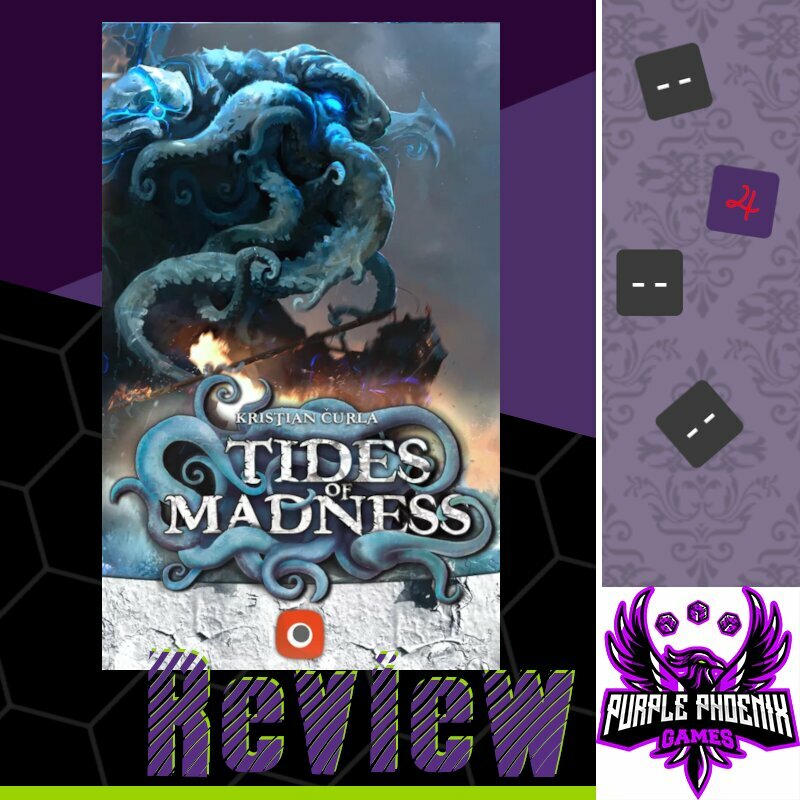
Purple Phoenix Games (2266 KP) rated Tides of Madness in Tabletop Games
Dec 7, 2021
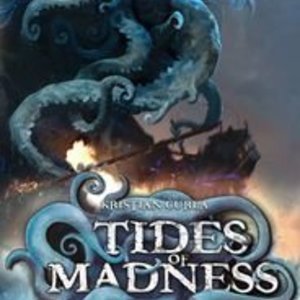
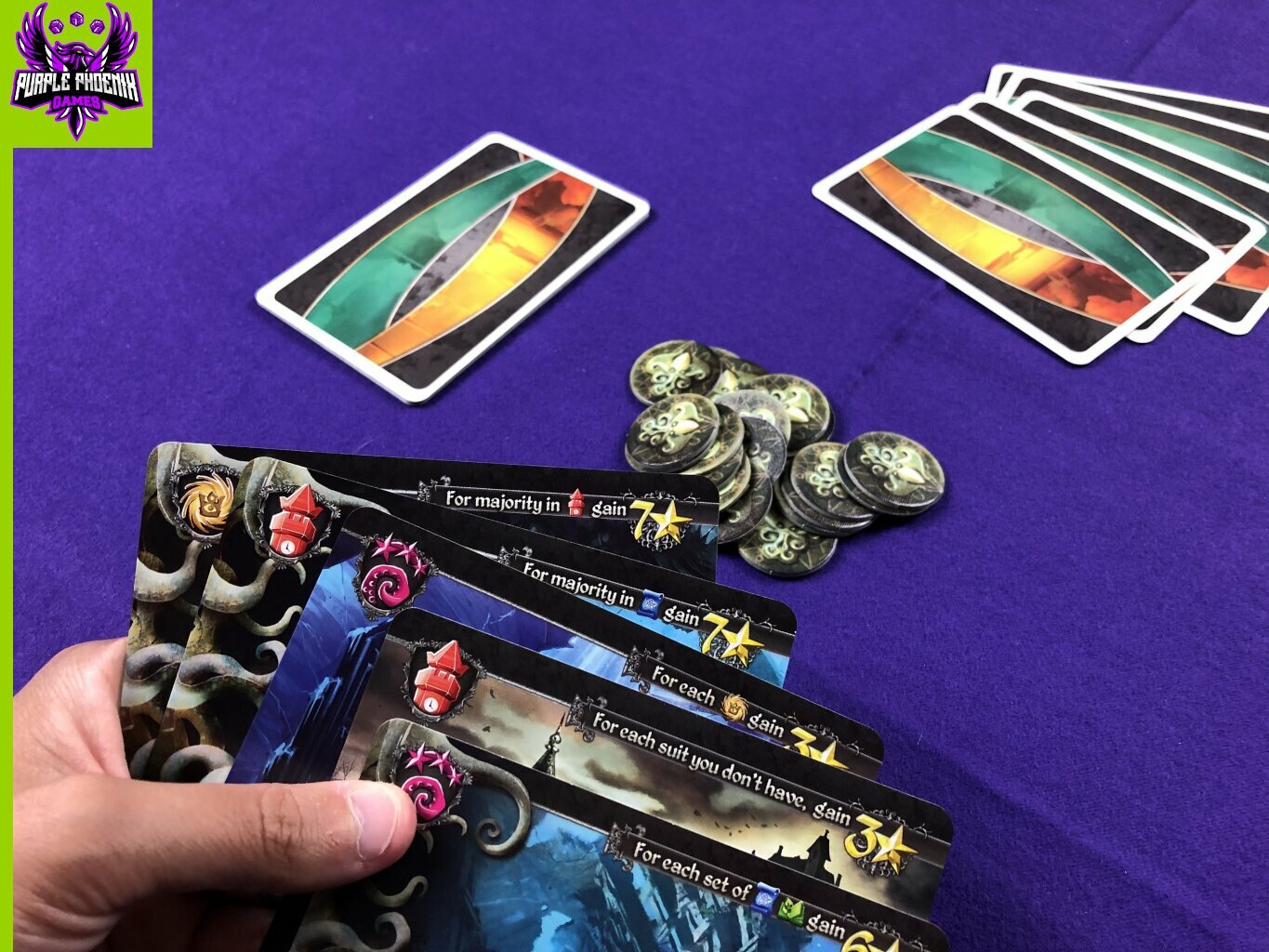
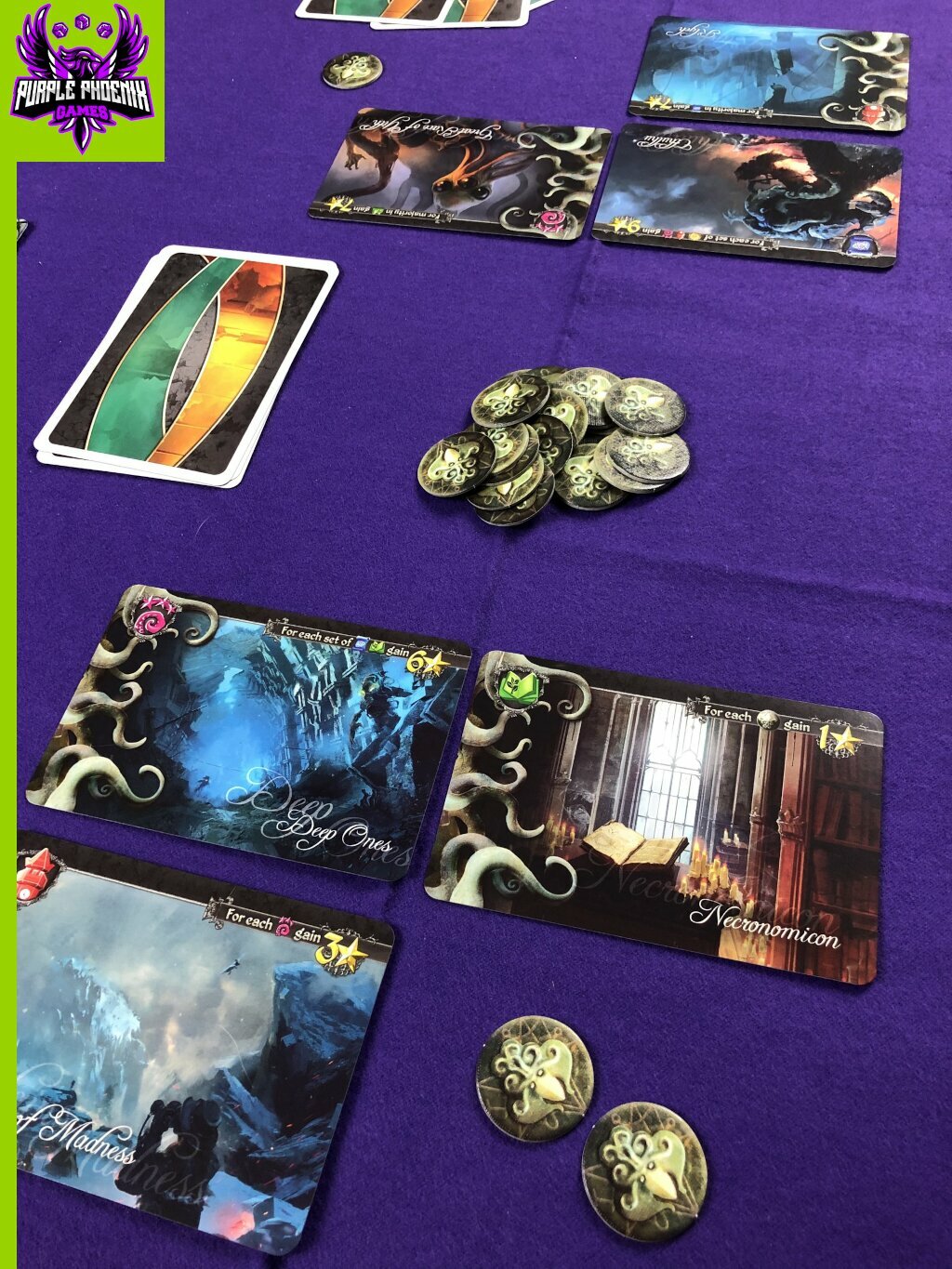
Tides of Madness is a game of card drafting and set collection in which 2 players are trying to amass the most points by the end of 3 rounds. To setup for a game, shuffle the deck and deal 5 cards to each player. Place the rest aside as a draw deck, and place the Madness tokens within reach. Each of the 3 rounds is broken down into 3 phases: Drafting, Scoring, and Refresh. During the Drafting phase, each player will choose one card from their hand to keep, and place it face-down in front of them. Once both players have chosen their card, they will be revealed simultaneously and placed in your tableau. Take the remaining cards from your hand and pass them to your opponent. You now draft another card from this new hand, and will then pass the cards again. Drafting continues in this fashion until both players have no cards remaining in hand.
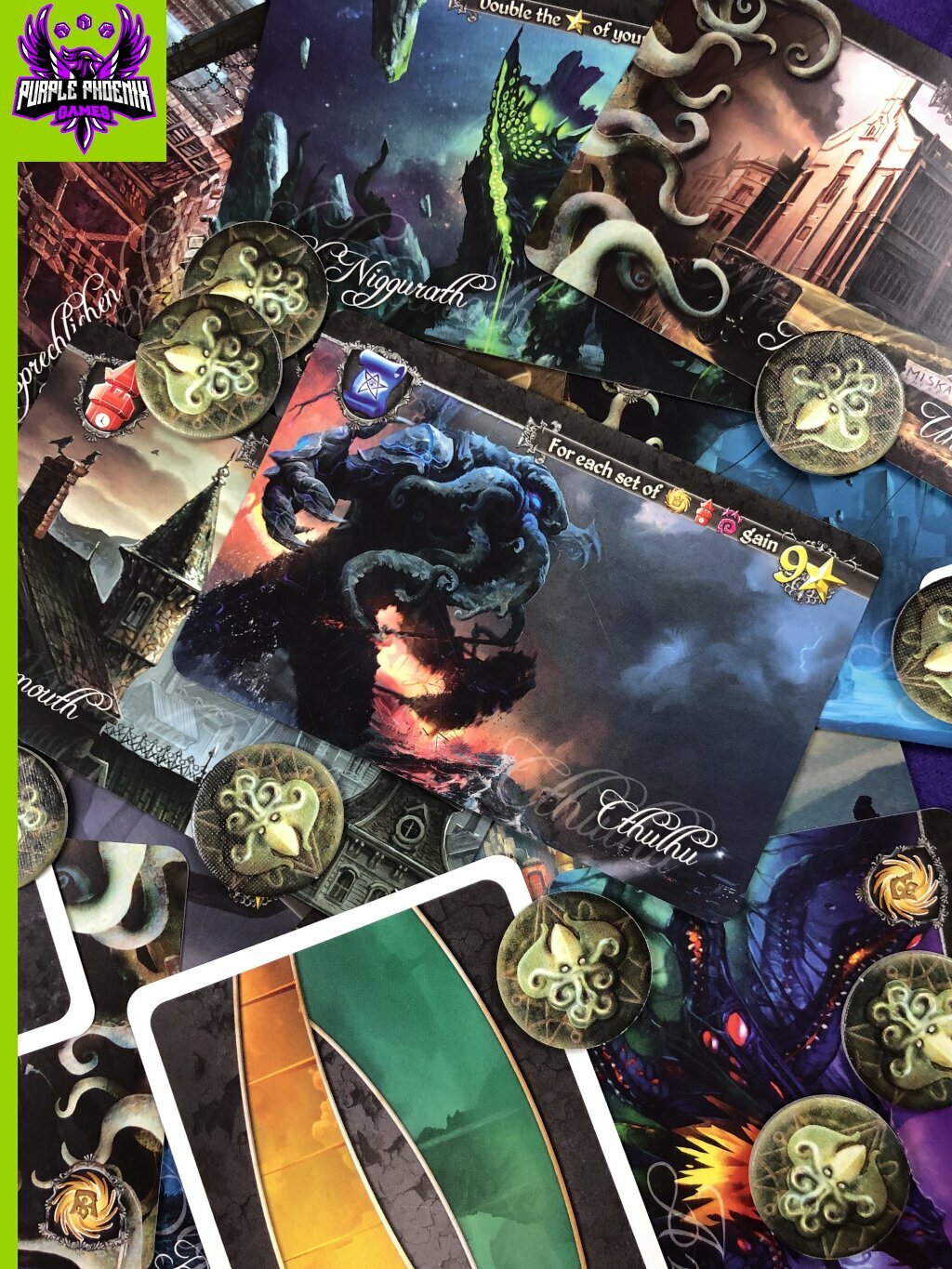
The next phase, Scoring, now begins. Players check their tableau and take a Madness token for each card with a Madness icon. The player with the most Madness this round can choose to gain an additional 4 VP or heal (discard) one Madness token. An important note – if at any time a player receives 9 or more Madness tokens, they immediately lose the game! So keep an eye on those cards, and know when to heal. Next, players will score the cards based on printed objectives – sets of suits, majority of a suit, etc. Points are tallied on the score pad. Finally, the Refresh phase gets you ready for the next round. Each player collects their tableau and selects one card to keep for the next round, and another card to discard from the game. Players simultaneously reveal their kept card and it starts the round already in their tableau. Players will draw 2 new cards to total 5 in hand, and the next round is ready to begin. Play ends either if a player has 9 or more Madness, or after a total of 3 rounds. After the 3rd and final round, all points are added up and the player with the highest score wins.
So if you’re thinking this game is basically Tides of Time, you’re pretty much correct. The only difference between the two is the concept/mechanic of the Madness tokens. And honestly, I think the inclusion of the tokens elevates the strategy a bit. In Tides of Time, it really is all about set collection. But with Madness tokens, you’ve got some risk/reward balance to play with. Do you take a card to complete a set even though it gives you a Madness token? Or do you leave it for last so your opponent is forced to take it? The same applies to the extra step in the Scoring phase. Do you risk keeping all your Madness to snag 4 extra VP or is it better (and safer) to heal 1? It just adds another element to the gameplay that makes it feel a little more engaging and exciting than simple set collection.
To touch on components for a minute – this game consists of 18 oversized cards, a bunch of cardboard Madness tokens, a score pad, and small pencil. The artwork on the cards is appropriately thematic and dark, and the text is clear and easy to interpret. The Madness icon on certain cards is a bunch of tentacles on the side of the card, and it is easy to see which cards are affected and which are not. The tokens and score pad are both decent quality as well. Although not 100% necessary, I appreciate the inclusion of a score pad just to help you remember points between rounds. All in all, good production all around.
I have to say that of the two, I prefer Tides of Madness over Tides of Time. You may have noticed that I have rated both games at a 4, but the Madness element in this one just pushes it over the top for me. Both are good games, don’t get me wrong! Either work as a good set collection/drafting game, and are quick to learn and play. Tides of Madness just engages me a little more and that makes the overall gameplay more enjoyable for me. So all in all, Purple Phoenix Games gives this one a maddening 4 / 6.
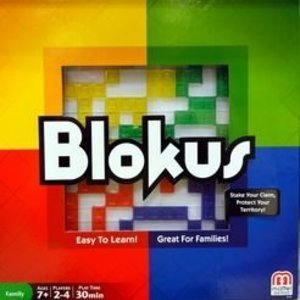
Blokus
7.2 Rate It
Tabletop Game
Blokus (officially pronounced "Block us") is an abstract strategy game with transparent,...
Boardgames KidsGames AbstractGames

Color Concrete Garden Projects: Making Your Own Planters, Furniture and Firepits Using Creative Techniques
Michael Snyder and Nathan Smith
Book
In Color Concrete Garden Projects, authors Nathan Smith and Michael Snyder offer step-by-step colour...

Hands up alias charades and heads up activity game for fun friends company
Games and Entertainment
App
Hands up – Charades, Activity and Alias in one app! Exciting game for friends will make your party...