
Man of Steel and Honour: General Stanislaw Maczek: Soldier of Poland, Commander of the 1st Polish Armoured Division in North-West Europe 1944-45
Book
This is a biography of one of the most undervalued commanders of the Second World War, General...

Heather Cranmer (2721 KP) created a post
Nov 11, 2022


Britain at War - army, navy, air force history mag
Lifestyle and Magazines & Newspapers
8.0 Rate It
App
Britain at War Magazine Brought to you by Key Publishing Ltd, the World’s Leading Aviation...

Bob Mann (459 KP) rated Battle of the Sexes (2016) in Movies
Sep 29, 2021
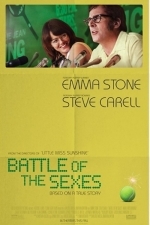

“Battle of the Sexes” (which I just managed to catch before it left cinemas) tells the true-life story of US tennis star Billie-Jean King (Emma Stone, “La La Land“). The year is 1973 and Billie-Jean is riding high as the Number 1 female tennis player. She is a feminist; she is married (to hunk Larry – no not that one – King played by Austin Stowell (“Whiplash“, “Bridge of Spies“)); …. and she is also attracted to women, not something she has yet acted on. That all changes when her path crosses with LA-hairdresser Marilyn (Andrea Riseborough, “Birdman“, “Oblivion”).
But this is a side story: the main event is a bet made by aging ex-star Bobby Riggs (Steve Carell, “Foxcatcher“); that – even at his age – as a man he could beat the leading female tennis player of the day.
The film is gloriously retro, starting with the old-school 20th Century Fox production logo. And it contains breathtakingly sexist dialogue by writer Simon Beaufoy (“Everest“, “The Full Monty”). Surely men couldn’t have been so crass and outrageous in the 70’s? Sorry ladies, but the answer is yes, and the film is testament to how far women’s rights have come in 50 years.
This is a tour de force in acting from both Emma Stone and Steve Carell, particularly the latter: a scene where Carell tries to re-engage with his estranged wife (Elisabeth Shue, “Leaving Las Vegas”) is both nuanced and heart-breaking. Stone’s performance is also praiseworthy, although it feels slightly less so as it is an impersonation of a (relatively) well-known figure: this is extremely well-studied though, right down to her strutting walk around the court which I had both forgotten and was immediately again reminded of.
One of my favourite movie awards are the Screen Actor’s Guild (SAG) “cast” awards that celebrate ensemble performances, and here is a film that should have been nominated (it unfortunately wasn’t). Andrea Riseborough; Natalie Morales (as fellow tennis player Rosie Casals); comedian Sarah Silverman (“A Million Ways to Die in the West“), almost unrecognisable as the brash publicist Gladys Heldman; Bill Pullman as LTA head Jack Kramer; the great Alan Cumming (“The Good Wife”) as the team’s flamboyant, gay, costume designer; Lewis Pullman as Riggs’s son Larry; Jessica McNamee (magnetic eyes!) as King’s Australian tennis nemesis Margaret Court. All bounce off the leads, and each other, just beautifully.
Cinematography by Linus Sandgren (“La La Land“) and editing by Pamela Martin (“Little Miss Sunshine”) unite to deliver one of the most sexually charged haircuts you are ever likely to see on the screen. For those put off by this aspect of the storyline, the “girl-on-girl action” is pretty tastefully done and not overly graphic: it’s mostly “first-base” stuff rather than “third-base”!
“What a waste of a lovely night”. Marilyn (Andrea Riseborough) and Billie-Jean (Emma Stone) get serious.
Directed with panache by the co-directors of the 2006 smash “Little Miss Sunshine” – Jonathan Dayton and Valerie Faris – all in all it’s a delight, especially for older audiences who will get a blast of nostalgia from days when sports were still played at a slightly more leisurely pace… and definitely without the grunting.

Movie Metropolis (309 KP) rated Deadpool 2 (2018) in Movies
Jun 10, 2019 (Updated Jun 10, 2019)
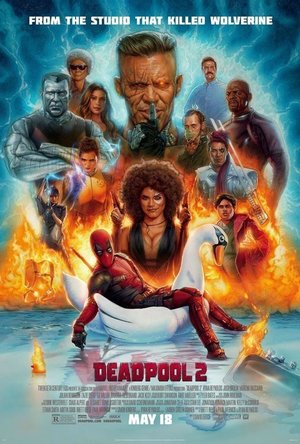
Deadpool senior went on to gross nearly $800million worldwide, impressive for an R-rated (15 certification) flick, and was an undisputed king of comic-book hero movies. Like Guardians of the Galaxy was for Marvel Studios, Deadpool was a huge gamble that paid off massively thanks to Ryan Reynold’s brilliant comic-timing and an origins story that wasn’t done to death. Naturally, a sequel was always on the cards. But are we looking at a sequel of Empire quality or Speed 2: Cruise Control?
Wisecracking mercenary Deadpool (Reynolds) is back, and this time he decides to joins force with three mutants – Bedlam (Terry Crews), Shatterstar (Lewis Tan) and Domino (Zazie Beets) – to protect a boy from the all-powerful Cable (Josh Brolin).
One-half of John Wick’s directing team, David Leitch, is thrust into the directing chair for Deadpool 2 after Tim Miller was unceremoniously dumped from the project due to creative differences with Ryan Reynolds (read into that what you will). Thankfully, he brings that trademark style that we again saw in Atomic Blonde to this sequel and with that comes plenty of stylised action and a neon/grey colour palate plus a Celine Dion number that’s just begging for parody status.
Surprisingly, that all works rather well for this film. Propped by another cracking performance from Ryan Reynolds who has really found his calling after years of mediocrity. I’ve said it before and I’ll say it again, he was absolutely born to play this role and his dry wit is given much more room to breathe this time around.
The rest of the cast are fine, if a little underdeveloped. Zazie Beets probably makes the most impact as mutant, Domino, but even she is a little underpowered when compared to the brilliant work the MCU has done on its heroes over the years. Josh Brolin (who must be getting paid rather handsomely this year) is great as Cable, though it is difficult to hear his voice and not immediately think of Thanos. T.J. Miller returns in a heavily reduced role as does Reynolds’ on-screen girlfriend Morena Baccarin who is criminally underused.
Story wise, it’s pretty much more of the same and that’s no bad thing. The fourth-wall breaking is as fresh as it felt two years ago and is cleverly used to hide the necessary exposition to bring the audience up-to-speed with what’s been happening in Deadpool-ville over the last couple of years.
Thankfully, there is plenty of repeat-watch value in Deadpool 2, thanks mainly to the returning cast members
The comedy hits more than it misses, though the constant quipps can be exhausting, and the action is filmed as confidently as you’d expect from the man who brought Keanu Reeves screaming into the 21st Century, but there is some incredibly poor CGI that is at odds with a movie costing over $100million. By incredibly poor, I don’t mean just a bit naff, I’m talking laughably bad.
The finale is vibrant, action-packed and as Deadpool himself says, CGI-filled, but it’s a little unoriginal and very much like its predecessor, though the inclusion of one particular character that I won’t spoil here is great fun to see.
There are also plenty of X-Men Easter eggs for fans to enjoy too. From characters showing up where you’d least expect them to a blink-and-you’ll-miss-it Stan Lee cameo, the film is full to the brim of in-references that only the most hardened of comic-book fans will notice on the first watch.
Thankfully, there is plenty of repeat-watch value in Deadpool 2, thanks mainly to the returning cast members. Reynolds, T.J. Miller, Leslie Uggams (Wade Wilson’s blind roommate Al) and Karan Soni (taxi driver Dopinder) are welcome returnees and ensure the film has a little heart, though not too much. After all, that wouldn’t be the Deadpool way.
Overall, Deadpool 2 is a confident sequel to one of the best comic-book movies there is. What it does right, it does very well indeed. The comedy, performances and action are all spot on. Unfortunately, there are some very poor special effects over the course of the film and in an effort to make everything bigger and badder, it occasionally feels like a mass of scenes put together to make a film. A worthy sequel, but not an Empire or Spider-Man 2 in this instance.
https://moviemetropolis.net/2018/05/16/deadpool-2-review-more-of-the-same/#more-6342

Matthew Krueger (10051 KP) rated Eternal Darkness: Sanity's Requiem in Video Games
Oct 28, 2019 (Updated Oct 28, 2019)

The narrative of the game's story switches between two phases. The main phase focuses on a series of chapters in which players take control of a new character each time. The other phase acts as an intermission. The game boasts twelve playable characters, split between four distinct locations, and from different periods of time.
The story features multiple paths that can be taken. This choice not only determines which of the game's three other antagonists are aligned to the plot, but it also has subtle effects on the gameplay in chapters and intermission periods. Some changes include slight differences in puzzles and items, but most changes revolve around enemy placement, which will determine how the player engages them. This can even have an effect on the relative difficulty of the game in certain situations. Red tinted enemies, for example, are tougher than their counterparts.
The other distinctive gameplay aspect comes from "Sanity Effects", the game's standout concept that Nintendo patented. Upon beginning the game's second chapter, players must keep watch on a Sanity meter – a green bar which decreases when the player is spotted by an enemy. As the bar becomes low, subtle changes to the environment and random unusual events begin to occur, which reflect the character's slackening grip on reality.
While minor effects include a skewed camera angle, heads of statues following the character, and unsettling noises, stronger effects include bleeding on walls and ceilings, entering a room that is unrealistic before finding that the character never left the previous room, the character suddenly dying, and fourth wall breaking effect such as "To Be Continued" promotions for a "sequel", and simulated errors and anomalies of the TV or GameCube. While the latter does not affect gameplay, they can be misconstrued by the player as being actual technical malfunctions.
Lets talk about the plot/story....
The story of Eternal Darkness takes place over four principal locations which the game skips back and forth between. They include an underground temple complex called the Forbidden City, in Persia; a Khmer temple in Angkor Thom, Cambodia; Oublié Cathedral in Amiens, France (not to be confused with Amiens Cathedral); and the Roivas Family Estate in Rhode Island, which also leads to an ancient underground city named Ehn'gha beneath the mansion. Each time a location is visited, it is done so in a different time period. Spanning from 26 BC to 2000 AD. Almost half of which take place in the 20th century. Each different era and character offers a different periodic and personal perspective on the location.
The chapters found in the game are not discovered in chronological order. Instead, to make the narrative more dramatic, each chapter jumps around the timeline of the plot. However, despite the overall story skipping back and forth through time, the chapters do follow chronological order within their respective locations. This is because each setting also has its own contained story.
This game is so good, its epic, im surprised that not of people know about this game and heard about this game.
I highly reccordmend playing this game.
Lastly shout out to @LeftSideCut for getting the hints/clues for this review.

Digital Pan Free
Music and Entertainment
App
Free Version... Includes all the features of Pro Version but supported by Ads The Digital Pan...

Digital Pan
Music and Entertainment
App
The Digital Pan Mobile App is the only steelpan app that is officially and exclusively endorsed by...
Movie Metropolis (309 KP) rated Alita: Battle Angel (2019) in Movies
Jun 10, 2019
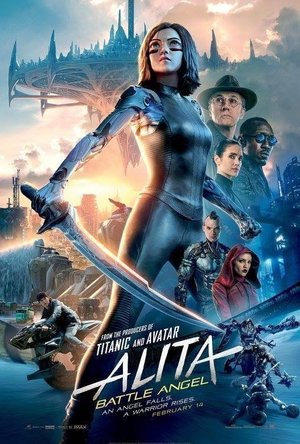
You have to feel a little sorry for director Robert Rodriguez as his name has been almost usurped by Cameron’s in the marketing push for this live-action adaptation of the classic manga. Of course, Cameron is too busy making the four Avatar sequels no-one actually cares about anymore and instead, entrusted his vision for Alita: Battle Angel to Rodriguez. He’s certainly an intriguing choice of director, but does the finished product work?
Set several centuries in the future, the abandoned Alita (Rosa Salazar) is found in the scrapyard of Iron City by Ido (Christoph Waltz), a compassionate cyber-doctor who takes the unconscious cyborg Alita to his clinic. When Alita awakens, she has no memory of who she is, nor does she have any recognition of the world she finds herself in. As Alita learns to navigate her new life and the treacherous streets of Iron City, Ido tries to shield her from her mysterious past.
After spending nearly $200million on Alita, Fox clearly think they’ve got another massive hit on their hands and to an extent, they deserve one. Battle Angel is a majestic film, filled with visual presence not dissimilar to the spectacle of watching Avatar for the first time in 2009. The bustling world of Iron City feels as if it’s living and breathing right before our eyes and that’s a testament to both Cameron and Rodriguez as well as the visual effects people down at Weta Digital.
This thriving metropolis is populated by practical and CGI effects of varying qualities, but as a movie world, it works much better than Wakanda did in Black Panther and is leagues ahead of the empty, soulless Asgard from Thor.
It is reminiscent of Sakaar in Thor: Ragnarok however, with its narrow streets and market stalls. The difference here is that Iron City is a much darker, eerier place than Sakarr ever was, save for Jeff Goldblum’s Grandmaster towering above everything.
The casting is also very good and features some household names that were clearly intrigued by the project. Waltz is excellent as the compassionate Ido and Jennifer Connelly works well as his ex-wife, though she is underused throughout.
Alita: Battle Angel is a pleasant surprise from a director who has needed a hit for quite some time.
Ed Skrein turns up every now and then as Zapan, a cyborg bounty hunter and provides some light comic relief in a film that has more than its fair share of darker moments. TV actor Keann Johnson makes his big-budget film debut here and he is excellent as Hugo, Alita’s love interest.
Unfortunately, the initial optimism fades somewhat when you realise that Alita: Battle Angel struggles under the weight of its own script. Plot points in the first 45 minutes feel ridiculously rushed and then the film hurtles towards its climax without stopping for breath.
You get the feeling there was much more that had to be cut to trim the runtime down to a more family friendly 2 hours. The dialogue too isn’t a strong point. Overly expositional and riddled in cliché, Alita is not a film you watch because of its sparkling and witty one-liners.
Niggles aside though and Alita: Battle Angel is much better than I thought it was going to be. The plot, while unoriginal, is sweet and easy enough to swallow, making it a great family film. True, it has its darker moments, but the strong visuals and vibrant environment will make it enjoyable for older children and adults alike.
Overall, Alita: Battle Angel is a pleasant surprise from a director who has needed a hit for quite some time. It’s a flawed film that struggles to cope with its many ideas that continuously pull it in hundreds of different directions, but it’s worth a watch just for the visual spectacle and emotionally arresting story. Whether or not it recoups that colossal $200million budget remains to be seen.
https://moviemetropolis.net/2019/02/09/alita-battle-angel-review-a-visual-spectacle/
Bob Mann (459 KP) rated The Trial of the Chicago 7 (2020) in Movies
Oct 24, 2020
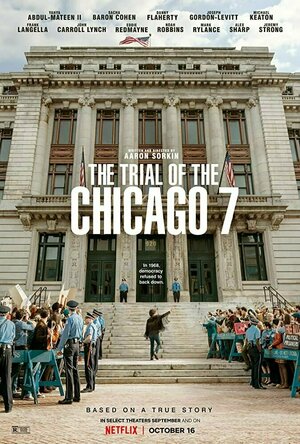

I know a decent bit of 20th century history, but this is a story I knew nothing about. At the 1968 Democratic Convention in Chicago, anti-Vietnam protests resulted in a violent and brutal confrontation with the police. Eight of the ring-leaders were rounded up and charged with inciting the violence. What happens in the court with the eight convicted men, in front of an old and partisan judge (the wonderful Frank Langella), is simply amazing.
There's a nice wiki article on the history you can look up. But its worth watching the movie blind, since it's a great rollercoaster ride.
If you read my blog regularly, you'll know that one of my favourite of the awards in award season is the "Ensemble Cast" award from the Screen Actor's Guild (SAG). I think a good measure of which movies might be good candidates for this award is when you find it difficult to single out particular actors for an individual award when they all work so well together. For this is a cast to die for:
- Sacha Baron Cohen, as Abbie Hoffman: an intelligent 'straight' role, poles apart from Borat and Bruno, that he delivers on 100%;
- Jeremy Strong as Hoffman's buddy Jerry Rubin, doing an enormously entertaining turn;
- Eddie Redmayne as the apparently 'sensible one' Tom Hayden. A bit similar to his role in "Les Miserables", but diving off in a different direction at a key point;
- John Carroll Lynch as the genuine 'boy scout' David Dellinger, so good in "The Founder" and here as the only family man under the judgmental stare of his wife and son;
- Yahya Abdul-Mateen II as Black Panther member Bobby Seale - the "minus 1" from the title - in an astonishingly powerful performance;
- Joseph Gordon-Levitt as the prosecutor Richard Schultz - always quietly dependable;
- And the fantastic Mark Rylance as the defense attorney William Kunstler. I appreciate I am having a tendency to gush in this review, but Rylance expresses such a range of frustration and disgust here that his performance is nothing short of electrifying.
There's also a cracking cameo from Michael Keaton playing the former US Attorney General, Ramsey Clark.
I would think that any of these performances might be Oscar-worthy (somewhere in the Actor/Supporting Actor categories) but my personal choices would be Rylance for Best Actor and Baron Cohen and Langella for Best Supporting Actor nods.
One of my issues with the scripts of Aaron Sorkin is that they tend to be overly dense and wordy. In epic TV like "The West Wing" he could spread the dialogue over a whole series, but in a feature film it can become very dense and verbose. I found that in both of his last two films - "Molly's Game" and "Steve Jobs".
Here, in "The Trial of the Chicago 7", even though there's a lot of speechifying, to me it never felt over the top. Although an epic courtroom drama (akin to his debut script "A Few Good Men") the characters are given time to breath between the lines. And many of those lines are real zingers, particularly out of the mouth of stand-up anarchist Abbie Hoffman (Sacha Baron Cohen).
Aside from the script being a zinger, the direction here from Aaron Sorkin is also top-notch. If you thought a courtroom drama was going to be static and boring, think again. The camera never rests, and inserted flashbacks (excellent film editing from Alan Baumgarten) maintain the momentum of the story.
Overall, this is a movie tour-de-force from Sorkin, and a fantastic watch. Could this be a writing/directing double Oscar nom for Sorkin?
(For the full graphical review, check out the bob the movie man review here - https://rb.gy/y6bxtf . Thanks.)