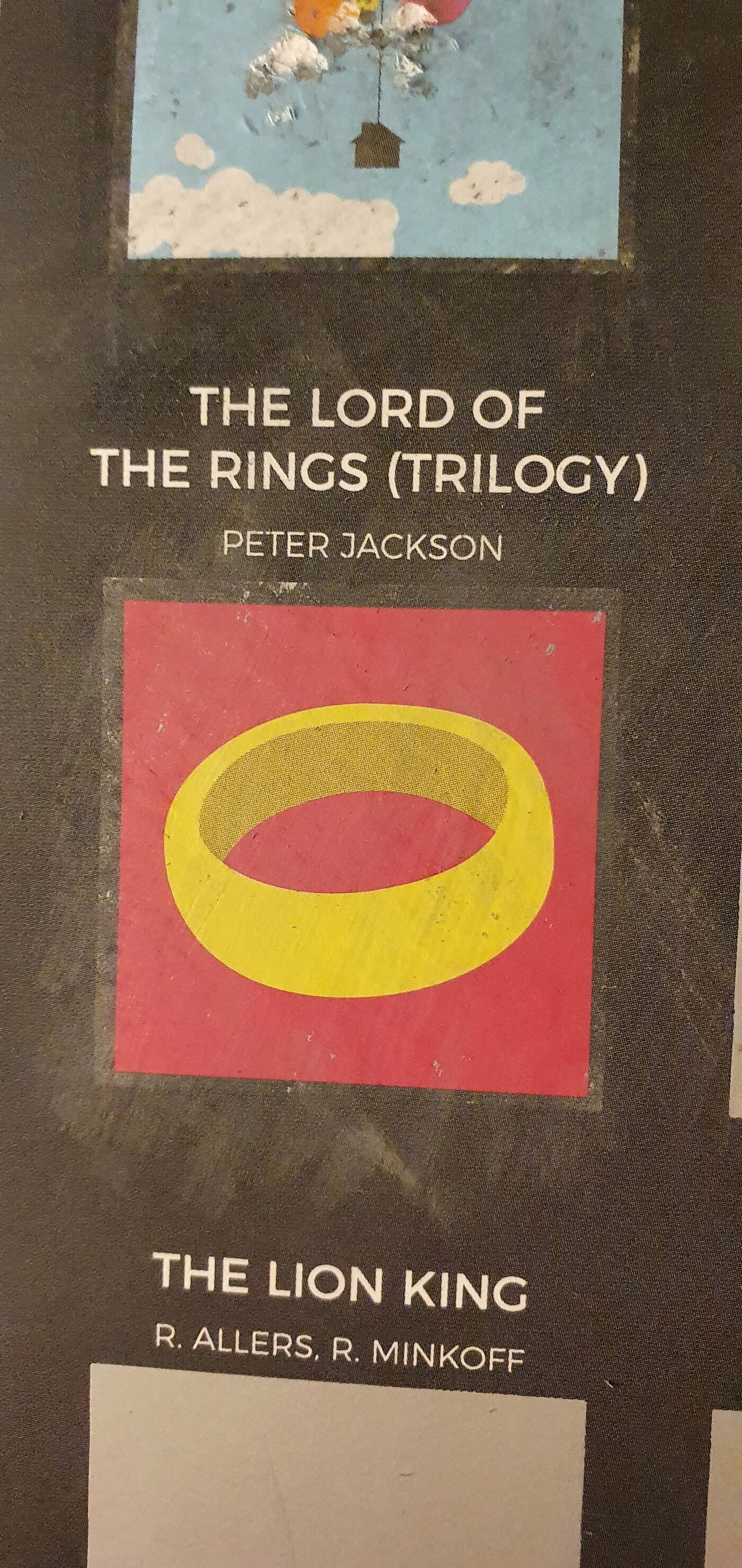
Film 11 is actually the three films that make up the Lord of the Rings trilogy: Fellowship of the Ring, The Two Towers and Return of the King. Whilst I can entirely understand featuring the trilogy as a whole, especially as they were filmed back to back and follow the same continuing storyline, however as a watcher this is a tad frustrating. The extended editions of these films, which I own of course, come in at a hefty runtime of just under 12 hours and this means a marathon of a film screening. But gripes about the runtime aside, this trilogy is still every bit the epic I remember it being when they were first released nearly 20 years ago.
The Lord of the Rings trilogy is based by JRR Tolkien’s book of the same name that follows Frodo (Elijah Wood), a hobbit who must journey to the darkest lands of Mordor to destroy a powerful ring before it falls into the hands of the evil lord Sauron. Throughout Frodo’s journey across Middle Earth, he is accompanied by a 9 strong fellowship: hobbits Sam (Sean Astin), Merry (Dominic Monaghan) and Pippin (Billy Boyd); men Aragorn (Viggo Mortensen) and Boromir (Sean Bean); elf Legolas (Orlando Bloom), wizard Gandalf the Grey (Ian McKellen) and dwarf Gimli (John Rhys-Davies). All of whom must also face their own battles in the war to defeat Sauron.
At the time these films were released between 2001 and 2003, we’d never seen filmmaking taken to such extremes and I’d argue that aside from the later Hobbit film trilogy (the less said about those the better), we still haven’t seen anything like it in the decades since. To film these back to back over 15 months with a immense cast, sets and filming locations across New Zealand is no mean feat and watching these back you can really appreciate the sheer amount of work that has gone into these films. The cinematography is stunning and really highlights the beautiful scenery of New Zealand, and the CGI for it’s time was beyond impressive. The motion capture technology used for Andy Serkis’ portrayal of Gollum was incredible and like nothing we’d seen before. All of this paired with Howard Shore’s hugely memorable and iconic score makes for a superb bit of filmmaking.
What makes director Peter Jackson’s take on Lord of the Rings so engaging is the story and the fact that there’s nothing in the main plot that is unnecessary. Jackson had removed all of the erroneous side plots from the book (think Tom Bombadil) yet kept the main thread of the story intact, which effortlessly weaves serious fantasy and war with some rather light hearted and funny moments. While I would normally be an advocate of books over their film counterparts, I happily make an exception for the Lord of the Rings. The films are definitely better than the book. They’re also helped by a stellar cast, from seasoned veterans like Ian McKellen and Christopher Lee (Saruman), to relative newcomers at the time like Viggo Mortensen, who has by far a standout performance, who all do their part to make this trilogy come alive.
This isn’t to say that the trilogy is flawless. Whilst the films look good for their age, some of the special effects haven’t aged quite as well as you’d expect and there are some that are looking decidedly ragged around the edges – Treebeard in Fangorn forest is but one example. The casting of Orlando Bloom was also a questionable one. His acting skills are limited at best and while he is meant to be playing a rather emotionless elf, his performance is very poor compared the rest of the elvish actors. He probably isn’t helped by the fact that Legolas has been given some rather ridiculous and farfetched acrobatics that just look quite silly. And then there’s Éowyn, who is possibly one of the most irritating characters of all, her doe eyed fawning over Aragorn completely overruling the tough, feisty woman she’s trying to be. Finally I’d also question about whether the extended editions are truly necessary, which I appreciate does make me a bit of a hypocrite seen as I own them. They might include scenes we’d never seen in the theatrical releases, but I’d argue that none of these ads particularly much to the overall story.
However despite these flaws, the Lord of the Rings trilogy is undeniably an epic masterclass in filmmaking from Peter Jackson and these are 3 films that you won’t forget in a hurry. It can only be 10/10.
For some reason people like to slag Green Day, they are the butt of a lot of punk music jokes and to be honest I do get why. I understand why people see their use of makeup and their whole zany persona as a farce and don’t take them seriously, but no matter what you think of them in general, it is hard to deny that their seventh album, ‘American Idiot,’ perfectly captured the zeitgeist at the time, especially in the US. The album was an unexpected maturation of any of the band’s previous efforts and capitalised on their potential. When Billie Joe Armstrong wrote the album, he chose to channel his feelings into a cast of various characters and use a concept album format to display the emotions he and his peers felt at the time. I would argue the fact that American Idiot is definitively a concept album, as it doesn’t actually tell a cohesive story with a beginning, middle and end, instead opting for the approach of latching on to a certain feeling, whether it be rage or love and assigning that to a specific character and then throwing all of these characters into the mixing pot together. We hear the album from the perspective of the protagonist in the story, Jesus Of Suburbia, a young man who is sick of a broken system and feels disillusioned and uninspired by everything that he sees around him. The reason that so many people felt this way at the time of this album’s release, 2004, was due to the Bush administration’s misguidance and outright lies and due to the fallout from the 9/11 terrorists attacks that has never really gone away in America since the incident occurred. So, fed up of his suburban, dead end town Jesus leaves home and begins a quest of self discovery that involves a great deal of substance abuse, which ends up leading to the creation of an alter ego residing in Jesus’ mind who calls himself Saint Jimmy. Think Tyler Durden in fight club, but if he had a Mohican and ear stretchers. Jimmy leads Jesus on the thinly veiled path to revolution, which simply turns out to be a path to self destruction and eventually when Jesus hits rock bottom, (just like Fight Club,) he forces Jimmy to commit suicide and rids his mind of him. At the end of the album though Jesus’ fate is left ambiguous, but what is clear is that his journey has taken its toll on him, which is signified by the fact that he forgets the name of the girl that he fell in and out of love with during his spiritual quest. This album perfectly captured the mindset of a generation of kids forgotten by the system that was put in place to help them grow. American Idiot gives the man on the street a well informed, unified voice and actually injects some form of leadership into the political and social landscape at the time, even if it probably isn’t the form of leadership that your parents had in mind, or the government had put in place for you. A wake up call that is essential and still relevant today, this album and its story and character carries the important message that we shouldn’t settle for any less than what we deserve and what we deserve is often a lot better than what we end up getting. This album is pretty much the American version of Never Mind The Bollocks.