
Search

Sarah (7800 KP) rated Monty Python's Life of Brian (1979) in Movies
Mar 15, 2021


A classic
Film #16 on the 100 Movies Bucket List: Monty Python’s Life of Brian
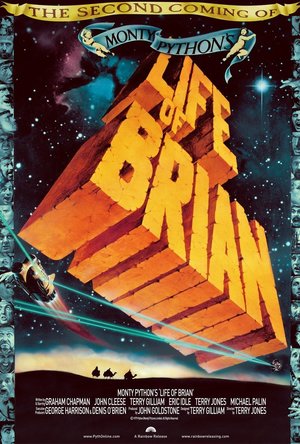
Life of Brian (1979] is an old school comedy classic, and alongside Python’s take on the Holy Grail, were fairly revered comedies when I was growing up and I doubt there’s many people over a certain age that haven’t seen these films. Films like this are my favourite type of comedy, and I just wish they still made films similar today.
Life of Brian follows Brian (Graham Chapman), who was born on the same night one stable down from Jesus, yet has lived an entirely different life. Fed up of the Romans, Brian joins the People’s Front of Judea led by Reggie (John a Cleese), whose aim is to get the Romans out of Judea. After being caught infiltrating the palace and put in front of Pontius Pilate (Michael Palin), Brian escapes capture and in his bid to hide from the Romans, winds up relaying some of the teachings he learnt from Jesus. This spurs a crowd into thinking he is the next Messiah, leaving Brian to try and evade his followers as well as the Romans, with rather dire consequences.
This is the Pythons second proper feature film, following on from the hugely successful Holy Grail and their tv series, Flying Circus. Directed by Terry Jones, the purpose of Life of Brian was to lampoon and satirise the New Testament, and more specifically, to make fun of followers of mistaken religious figures. To be quite honest, I don’t think they could make comedy films like this anymore. This lampoon, satire style was fairly rife even up until the 90s (with the likes of Hot Shots and The Naked Gun sequels), but I think they’d struggle to make anything like this nowadays which is a great shame. The humour in this isn’t offensive at all, it’s intelligent and adult and whipsmart and wonderfully done. Admittedly there are a few scenes that may cause some offence purely because it was made when times were different over 40 years ago, but there’s also a lot in here that is surprisingly relevant even in today’s society – one scene where the People’s Front of Judea discuss women’s rights and a request from Stan to be known as Loretta is unexpectedly well done and respectful, albeit with a Python comedy edge. There are some genius works of comedy in this film too that have become cult favourites, from Palin’s depiction of Pontius Pilate with a speech impediment (“Stwike him centuwion, vewy wuffly!”) to Terry Jones’ mother crying out to Brian’s followers that “he’s not the Messiah, he’s a very naughty boy!”. Personally, Palin’s take on Pilate and all of his scenes are my favourite of the entire film.
This isn’t to say that Life of Brian is perfect. There are some scenes and acting that are maybe a little too pantomime-esque (even for a parody) and there are some jokes and scenes that don’t quite land - the alien scene (yes I did say “alien”) is one that jumps to mind. Because of this some scenes can seem rather drawn out if you don’t get the gag. Humour like this isn’t for everyone, although for me it’s my favourite kind. This is British comedy at its best and a shining example that humour doesn’t be crude to be funny. I mean who else other than the Monty Python troupe could pull off crucified men singing “Always Look on the Bright Side of Life”?
Life of Brian (1979] is an old school comedy classic, and alongside Python’s take on the Holy Grail, were fairly revered comedies when I was growing up and I doubt there’s many people over a certain age that haven’t seen these films. Films like this are my favourite type of comedy, and I just wish they still made films similar today.
Life of Brian follows Brian (Graham Chapman), who was born on the same night one stable down from Jesus, yet has lived an entirely different life. Fed up of the Romans, Brian joins the People’s Front of Judea led by Reggie (John a Cleese), whose aim is to get the Romans out of Judea. After being caught infiltrating the palace and put in front of Pontius Pilate (Michael Palin), Brian escapes capture and in his bid to hide from the Romans, winds up relaying some of the teachings he learnt from Jesus. This spurs a crowd into thinking he is the next Messiah, leaving Brian to try and evade his followers as well as the Romans, with rather dire consequences.
This is the Pythons second proper feature film, following on from the hugely successful Holy Grail and their tv series, Flying Circus. Directed by Terry Jones, the purpose of Life of Brian was to lampoon and satirise the New Testament, and more specifically, to make fun of followers of mistaken religious figures. To be quite honest, I don’t think they could make comedy films like this anymore. This lampoon, satire style was fairly rife even up until the 90s (with the likes of Hot Shots and The Naked Gun sequels), but I think they’d struggle to make anything like this nowadays which is a great shame. The humour in this isn’t offensive at all, it’s intelligent and adult and whipsmart and wonderfully done. Admittedly there are a few scenes that may cause some offence purely because it was made when times were different over 40 years ago, but there’s also a lot in here that is surprisingly relevant even in today’s society – one scene where the People’s Front of Judea discuss women’s rights and a request from Stan to be known as Loretta is unexpectedly well done and respectful, albeit with a Python comedy edge. There are some genius works of comedy in this film too that have become cult favourites, from Palin’s depiction of Pontius Pilate with a speech impediment (“Stwike him centuwion, vewy wuffly!”) to Terry Jones’ mother crying out to Brian’s followers that “he’s not the Messiah, he’s a very naughty boy!”. Personally, Palin’s take on Pilate and all of his scenes are my favourite of the entire film.
This isn’t to say that Life of Brian is perfect. There are some scenes and acting that are maybe a little too pantomime-esque (even for a parody) and there are some jokes and scenes that don’t quite land - the alien scene (yes I did say “alien”) is one that jumps to mind. Because of this some scenes can seem rather drawn out if you don’t get the gag. Humour like this isn’t for everyone, although for me it’s my favourite kind. This is British comedy at its best and a shining example that humour doesn’t be crude to be funny. I mean who else other than the Monty Python troupe could pull off crucified men singing “Always Look on the Bright Side of Life”?

100 PICS Quiz
Games and Entertainment
App
The world's greatest picture trivia game ● Over 10,000 pictures to play ● Play over 100 quiz...

DaveySmithy (107 KP) rated Fight Club (1999) in Movies
Dec 3, 2024
An Explosive and Provocative Journey
Few films have managed to spark as much debate and cultural impact as David Fincher’s Fight Club. Released in 1999, this dark and audacious psychological thriller quickly evolved from a divisive box office release to a bona fide cult classic. Based on Chuck Palahniuk’s novel of the same name, Fight Club is more than just a movie—it’s an exploration of identity, consumerism, and the hidden chaos lurking within us all. Fincher’s meticulous direction, coupled with outstanding performances by Edward Norton and Brad Pitt, makes Fight Club a visceral and thought-provoking cinematic ride that lingers long after the credits roll.
The story is told through the eyes of the unnamed narrator (Norton), a white-collar worker trapped in a monotonous life. Crippled by insomnia and a desperate longing for purpose, his mundane existence takes a dramatic turn when he crosses paths with Tyler Durden (Pitt), a magnetic, anarchic soap maker. Together, they form the titular fight club—a raw, underground outlet for men to vent their frustrations by literally beating them out of each other. What begins as an unconventional form of therapy soon spirals into a chaotic and dangerous movement, leading the narrator down a path of self-destruction and shocking revelations.
Edward Norton delivers a career-best performance as the narrator, capturing the character’s descent into madness with unnerving precision. His dry wit and self-deprecating humor make him relatable, even as his actions become increasingly unhinged. But it’s Brad Pitt who truly steals the show as Tyler Durden. Charismatic, unpredictable, and dripping with swagger, Pitt embodies the fantasy of rebellion and freedom that so many viewers secretly crave. Together, the two actors create a mesmerizing dynamic, with Tyler representing everything the narrator wants to be—and fears he might become.
Helena Bonham Carter rounds out the core cast as Marla Singer, a nihilistic wildcard who both disrupts and grounds the narrator’s chaotic journey. Her chemistry with Norton is as compelling as it is unconventional, adding a layer of emotional complexity to an otherwise hyper-masculine narrative.
What sets Fight Club apart is its fearless critique of modern society. It skewers consumerism, masculinity, and the emptiness of the so-called “American Dream,” forcing viewers to confront uncomfortable truths about their own lives. Fincher’s direction is sharp and unrelenting, with the film’s gritty visual style perfectly complementing its nihilistic tone. The innovative use of CGI, fourth-wall-breaking moments, and hauntingly effective cinematography by Jeff Cronenweth keep the audience on edge, unsure of what to expect next.
Yet, Fight Club is not without flaws. Its provocative themes can feel overly blunt at times, and some viewers might find its violent and anarchistic undertones alienating. Additionally, while the infamous plot twist is masterfully executed, it risks overshadowing the film’s deeper messages upon rewatch.
The soundtrack, anchored by The Dust Brothers’ industrial score and the unforgettable use of The Pixies’ “Where Is My Mind?” in the climax, elevates the film to iconic status. These elements, combined with razor-sharp dialogue and endlessly quotable lines, solidify Fight Club as a masterpiece of late-90s cinema.
While it may not be for everyone, Fight Club is a bold, daring, and unforgettable experience that challenges societal norms and forces introspection. It’s an audacious 9/10 film—flawed but brilliant, much like the chaos it portrays.
The story is told through the eyes of the unnamed narrator (Norton), a white-collar worker trapped in a monotonous life. Crippled by insomnia and a desperate longing for purpose, his mundane existence takes a dramatic turn when he crosses paths with Tyler Durden (Pitt), a magnetic, anarchic soap maker. Together, they form the titular fight club—a raw, underground outlet for men to vent their frustrations by literally beating them out of each other. What begins as an unconventional form of therapy soon spirals into a chaotic and dangerous movement, leading the narrator down a path of self-destruction and shocking revelations.
Edward Norton delivers a career-best performance as the narrator, capturing the character’s descent into madness with unnerving precision. His dry wit and self-deprecating humor make him relatable, even as his actions become increasingly unhinged. But it’s Brad Pitt who truly steals the show as Tyler Durden. Charismatic, unpredictable, and dripping with swagger, Pitt embodies the fantasy of rebellion and freedom that so many viewers secretly crave. Together, the two actors create a mesmerizing dynamic, with Tyler representing everything the narrator wants to be—and fears he might become.
Helena Bonham Carter rounds out the core cast as Marla Singer, a nihilistic wildcard who both disrupts and grounds the narrator’s chaotic journey. Her chemistry with Norton is as compelling as it is unconventional, adding a layer of emotional complexity to an otherwise hyper-masculine narrative.
What sets Fight Club apart is its fearless critique of modern society. It skewers consumerism, masculinity, and the emptiness of the so-called “American Dream,” forcing viewers to confront uncomfortable truths about their own lives. Fincher’s direction is sharp and unrelenting, with the film’s gritty visual style perfectly complementing its nihilistic tone. The innovative use of CGI, fourth-wall-breaking moments, and hauntingly effective cinematography by Jeff Cronenweth keep the audience on edge, unsure of what to expect next.
Yet, Fight Club is not without flaws. Its provocative themes can feel overly blunt at times, and some viewers might find its violent and anarchistic undertones alienating. Additionally, while the infamous plot twist is masterfully executed, it risks overshadowing the film’s deeper messages upon rewatch.
The soundtrack, anchored by The Dust Brothers’ industrial score and the unforgettable use of The Pixies’ “Where Is My Mind?” in the climax, elevates the film to iconic status. These elements, combined with razor-sharp dialogue and endlessly quotable lines, solidify Fight Club as a masterpiece of late-90s cinema.
While it may not be for everyone, Fight Club is a bold, daring, and unforgettable experience that challenges societal norms and forces introspection. It’s an audacious 9/10 film—flawed but brilliant, much like the chaos it portrays.

Darren (1599 KP) rated Alaska (1996) in Movies
Jun 20, 2019


Story: Alaska starts as we meet the Barnes family, father Jake (Benedict) a small plane pilot and his kids Jessie (Birch) and Sean (Kartheiser), the family has started a new life in Alaska after their death of Jake’s wife and mother of Jessie and Sean. While Jessie has embraced this new life enjoying the beautiful sites, Sean is struggling with new life. We also get to meet to poachers Perry (Heston) and Koontz (Fraser) who have been hunting polar bears.
When their father goes missing, Jessie and Sean aim to go in search of him through the Alaskan wilderness discovering a captured baby polar bear cub that they release who joins them on their adventure, which only attracts the poachers attention as they find themselves chased through the wilderness by the poachers too in a race against time to find their father.
Thoughts on Alaska
Characters/Performance – Jessie is the sister of the siblings, she has embraced the change to Alaska learning to be part of the team with her father, while they both want to search for their father, she is the most prepared of the two. Sean hates his new life in Alaska and wants to move back to Chicago but you can clearly see he is grieving his mother with his behaviour, but with his father missing he will do everything he can to find him, learning to love the beautiful landscape they are part of now. Jake is the father of the family that has given up his 747-pilot job to start a new life in the small town in Alaska, he does spend most of the film trapped in his plane but his character gives Jessie and Sean the reason for going on their adventure. Perry and Koontz are two poachers hunting polar bears, they cross paths with the kids as they menacingly try to recapture the polar bear cub that they had released.
Performance wise, Thora Birch and Vincent Kartheiser are both great in the lead roles as the children in search of their father. Dirk doesn’t have much to do but does what he needs to well. Charlton Heston as the menacing poacher does seem to enjoy the role he plays in the movie.
Story – The story of two young teenagers going into the wilderness to find their missing father is a nice tried and tested formula, this style of film seemed to be the rave for family films around the time too, so to stand out you had to do something different. We get the moments of peril which are good and well-paced but we also get the moments of discovery which are just as important. Obviously, there are negatives here which include the idea the adults are clueless when searching for people in crashes and poachers being just evil people. I would also like to point out, that it is very unlikely a polar bear mother is just going to accept another cub, well that is what David Attenborough has taught me.
Adventure/Family – The adventure the kids get to go on is one I remember watching as a kid going, I wanna do that and I still would like to. The family side of this film is about the unity between a broken family doing everything to stay together and of course having a cute little polar bear helping them out.
Settings – Alaska as a setting, beautiful, stunning, peril filled and perfect for the story being told.
Effects – We only have a few effects in use here, most feels practical with the stunt work and working with a potential deadly animal in a polar bear.
Final Thoughts – This is easily one of the better kids work with animal films of the 90s, one that gives you hope in humanity and a wonderful setting.
Overall: Family night sorted.
https://moviesreview101.com/2018/01/31/alaska-1996/
When their father goes missing, Jessie and Sean aim to go in search of him through the Alaskan wilderness discovering a captured baby polar bear cub that they release who joins them on their adventure, which only attracts the poachers attention as they find themselves chased through the wilderness by the poachers too in a race against time to find their father.
Thoughts on Alaska
Characters/Performance – Jessie is the sister of the siblings, she has embraced the change to Alaska learning to be part of the team with her father, while they both want to search for their father, she is the most prepared of the two. Sean hates his new life in Alaska and wants to move back to Chicago but you can clearly see he is grieving his mother with his behaviour, but with his father missing he will do everything he can to find him, learning to love the beautiful landscape they are part of now. Jake is the father of the family that has given up his 747-pilot job to start a new life in the small town in Alaska, he does spend most of the film trapped in his plane but his character gives Jessie and Sean the reason for going on their adventure. Perry and Koontz are two poachers hunting polar bears, they cross paths with the kids as they menacingly try to recapture the polar bear cub that they had released.
Performance wise, Thora Birch and Vincent Kartheiser are both great in the lead roles as the children in search of their father. Dirk doesn’t have much to do but does what he needs to well. Charlton Heston as the menacing poacher does seem to enjoy the role he plays in the movie.
Story – The story of two young teenagers going into the wilderness to find their missing father is a nice tried and tested formula, this style of film seemed to be the rave for family films around the time too, so to stand out you had to do something different. We get the moments of peril which are good and well-paced but we also get the moments of discovery which are just as important. Obviously, there are negatives here which include the idea the adults are clueless when searching for people in crashes and poachers being just evil people. I would also like to point out, that it is very unlikely a polar bear mother is just going to accept another cub, well that is what David Attenborough has taught me.
Adventure/Family – The adventure the kids get to go on is one I remember watching as a kid going, I wanna do that and I still would like to. The family side of this film is about the unity between a broken family doing everything to stay together and of course having a cute little polar bear helping them out.
Settings – Alaska as a setting, beautiful, stunning, peril filled and perfect for the story being told.
Effects – We only have a few effects in use here, most feels practical with the stunt work and working with a potential deadly animal in a polar bear.
Final Thoughts – This is easily one of the better kids work with animal films of the 90s, one that gives you hope in humanity and a wonderful setting.
Overall: Family night sorted.
https://moviesreview101.com/2018/01/31/alaska-1996/
Darren (1599 KP) rated American Graffiti (1973) in Movies
Nov 21, 2019
Thoughts on American Graffiti
Characters – Curt has always enjoyed his time on the strip, he knows everybody and is one of the most popular guys around, he was due to head of the college, but hasn’t made his mind up yet, despite it needing to be read for his next day, he ends up trying to spend his time chasing a mysterious woman around town all night. Steve has always planned his life out, he is going off to college and he is ready to make his relationship more open while they are separated, here he gets to learn about his relationship even if his best friend might not be joining him in college. John is the friend that has always been known for his ability with cars, he has a reputation around town with the police following him around and now he is starting to see the future where his friends are doing a lot more than him and gets stuck with a younger girl for the night, where he starts to see a brighter side to his future. Terry has always been the butt of most of the jokes between the friends, now he gets Steve’s car to look after he spends the night trying to find himself a woman and impress her with his lines.
Performances – When we look at the cast, Richard Dreyfuss is great through the film showing us a character that can get plenty of laughs and is quick on his feet. Ron Howard brings the character we know him for is always going to be easy for him to play. Paul Le Mat brings the typical bad boy to life that does show how he bought us a level of sympathy to the character. Charles Martin Smith brings the geeky sounding character out which become one of the most popular characters in these teen comedies for years to come.
Story – The story here follows four friends on the last day of summer before college is due to start, we see how the four have a different adventure on this night, which will help them discover what they want next in their lives. This is a story that shows just how difficult life is when you take the next step, leaving school is one of the first and biggest anybody will take, with the uncertainty being there for everybody involved, part of you will want to stay close to what you already had, while other sides of this will see you wanting to see what is next. This story mixes all of this together through the film with little effort and makes you believe these people could be real, while certain aspects will have dated here, with a new generation, back n the 1970s this would have been the idea of the house party in the 80s or 90s and wild adventure the modern youth would be having.
Comedy – The comedy in this film would be right up there with any teen comedies, it would have gotten more laughs for when it was released, rather than the ones you would expect to see now.
Settings – The film is set in one hang out location known as the strip, this will be the location where we get all the hang outs you would expect for teens in this generation.
Scene of the Movie – Terry’s attempts to get boozes.
That Moment That Annoyed Me – The world involved does seem to have dated.
Final Thoughts – This is a wonderful look at teenage life in the 70s it shows us just how close the friendships were, how hard the changes coming were and just what was left for the people in life.
Overall: Beautiful Look at the 70s.
Rating
Characters – Curt has always enjoyed his time on the strip, he knows everybody and is one of the most popular guys around, he was due to head of the college, but hasn’t made his mind up yet, despite it needing to be read for his next day, he ends up trying to spend his time chasing a mysterious woman around town all night. Steve has always planned his life out, he is going off to college and he is ready to make his relationship more open while they are separated, here he gets to learn about his relationship even if his best friend might not be joining him in college. John is the friend that has always been known for his ability with cars, he has a reputation around town with the police following him around and now he is starting to see the future where his friends are doing a lot more than him and gets stuck with a younger girl for the night, where he starts to see a brighter side to his future. Terry has always been the butt of most of the jokes between the friends, now he gets Steve’s car to look after he spends the night trying to find himself a woman and impress her with his lines.
Performances – When we look at the cast, Richard Dreyfuss is great through the film showing us a character that can get plenty of laughs and is quick on his feet. Ron Howard brings the character we know him for is always going to be easy for him to play. Paul Le Mat brings the typical bad boy to life that does show how he bought us a level of sympathy to the character. Charles Martin Smith brings the geeky sounding character out which become one of the most popular characters in these teen comedies for years to come.
Story – The story here follows four friends on the last day of summer before college is due to start, we see how the four have a different adventure on this night, which will help them discover what they want next in their lives. This is a story that shows just how difficult life is when you take the next step, leaving school is one of the first and biggest anybody will take, with the uncertainty being there for everybody involved, part of you will want to stay close to what you already had, while other sides of this will see you wanting to see what is next. This story mixes all of this together through the film with little effort and makes you believe these people could be real, while certain aspects will have dated here, with a new generation, back n the 1970s this would have been the idea of the house party in the 80s or 90s and wild adventure the modern youth would be having.
Comedy – The comedy in this film would be right up there with any teen comedies, it would have gotten more laughs for when it was released, rather than the ones you would expect to see now.
Settings – The film is set in one hang out location known as the strip, this will be the location where we get all the hang outs you would expect for teens in this generation.
Scene of the Movie – Terry’s attempts to get boozes.
That Moment That Annoyed Me – The world involved does seem to have dated.
Final Thoughts – This is a wonderful look at teenage life in the 70s it shows us just how close the friendships were, how hard the changes coming were and just what was left for the people in life.
Overall: Beautiful Look at the 70s.
Rating

NBA JAM by EA SPORTS™
Games and Entertainment
App
Read on for important info below! BOOMSHAKALAKA!!! Jam with a friend in Local Multiplayer and rock...

Brutal Street 2
Games, Entertainment and Stickers
App
Brutal Street's sequel has finally come to fruition! Five years is a long wait, but now that wait is...

Alex Kapranos recommended Here Come the Warm Jets by Brian Eno in Music (curated)

Sarah (7800 KP) rated It’s A Sin in TV
Feb 7, 2021

Outstanding drama
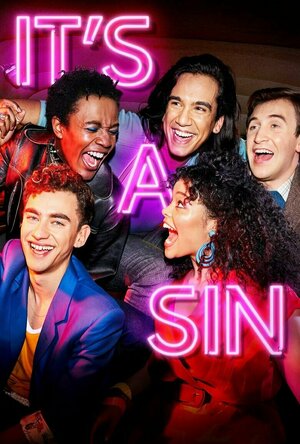
It’s A Sin is the latest drama from the mind of Russell T Davies, the man behind Queer as Folk, Cucumber and the revival of Doctor Who back in 2005. It follows a group of gay men and their friends in London from 1981 to 1991, depicting how the developing HIV and AIDS crisis impacted on their lives.
The series concentrates on 5 friends who meet in 1981 and move into a flat together. There’s outgoing and smart Ritchie (Olly Alexander), shy and mild mannered Colin (Callum Scott Howells), flamboyant Nigerian Roscoe (Omari Douglas), sweet Ash (Nathaniel Curtis) and outgoing, responsible Jill (Lydia West). It’s A Sin follows the friends as they party and lead promiscuous lifestyles over the 80s, only for the AIDS crisis to slowly weave its way into their lives and affect friends and colleagues closest to them. Each deals with the developing crisis in their own way: Jill fights for AIDS awareness and help for those that are suffering, whereas Ritchie remains in denial and spreads conspiracy theories about AIDS. But by 1991, the lives of the group and their families have been irrevocably changed.
It’s A Sin is a powerful drama about an emotive and serious subject. While it is not based on a completely true story (only Jill is loosely based on a real person, Jill Nalder, a friend of Davies), Russell T Davies has based this around his and his friends experiences of the AIDS crisis in the 80s and watching this you can really believe that these sorts of events happened across the 80s and 90s. The attitudes and experiences shown here, from the hedonistic lifestyles to the rampant denial and conspiracy theories, are terrifying and sadly a true to life depiction of the attitudes at the time, and make for a rather emotional and sometimes harrowing watch.
Despite the serious subject, It’s A Sin isn’t entirely sombre. It starts out as a story of friendship and fun and there are a lot of heartwarming scenes and a surprising amount of laughs. Some might think the uplifting side of this drama detracts from the seriousness of the AIDS crisis, but personally I found the lighthearted scenes helped balance the rather sobering seriousness, especially as the episodes gradually become more and more grave as the crisis progresses. Even the gay sex scenes are fun and made mostly for laughs rather than any sort of eroticism. It’s impressive that Davies has managed to pull off a series that seamlessly blends lighthearted entertainment with a serious topic, without making light of such a harrowing crisis.
It helps that the cast are fantastic. Olly Alexander, who I knew nothing about other than recognising a few Years and Years songs, is an absolute star and a standout as Ritchie. He’s charismatic and engaging and when he’s on screen, you can’t take your eyes off him. The rest of the main cast too are just as good, especially this being their first major tv role in the case of Howells and Douglas. They’re ably supported by a host of seasoned veterans, including Neil Patrick Harris as Colin’s work colleague, Stephen Fry as a closeted MP that Roscoe meets, and Keeley Hawes and Shaun Dooley as Ritchie’s parents. Hawes and Dooley are especially moving and ultimately surprising in the later episodes, when their true attitudes as parents are revealed. My only real criticism of this series is so minor it’s barely worth mentioning, but I did get a little frustrated that Ritchie’s full name was Ritchie Tozer, as this is the same name as Richie Tozier from Stephen King’s IT. Admittedly a different spelling, but it did grate on me a little throughout the episodes as it’s not exactly a common name.
However despite my reservations on character naming, It’s A Sin is a fantastic heartwarming yet sobering drama that can’t be faulted. It’s been a long time since I’ve seen anything so engaging and emotional.
The series concentrates on 5 friends who meet in 1981 and move into a flat together. There’s outgoing and smart Ritchie (Olly Alexander), shy and mild mannered Colin (Callum Scott Howells), flamboyant Nigerian Roscoe (Omari Douglas), sweet Ash (Nathaniel Curtis) and outgoing, responsible Jill (Lydia West). It’s A Sin follows the friends as they party and lead promiscuous lifestyles over the 80s, only for the AIDS crisis to slowly weave its way into their lives and affect friends and colleagues closest to them. Each deals with the developing crisis in their own way: Jill fights for AIDS awareness and help for those that are suffering, whereas Ritchie remains in denial and spreads conspiracy theories about AIDS. But by 1991, the lives of the group and their families have been irrevocably changed.
It’s A Sin is a powerful drama about an emotive and serious subject. While it is not based on a completely true story (only Jill is loosely based on a real person, Jill Nalder, a friend of Davies), Russell T Davies has based this around his and his friends experiences of the AIDS crisis in the 80s and watching this you can really believe that these sorts of events happened across the 80s and 90s. The attitudes and experiences shown here, from the hedonistic lifestyles to the rampant denial and conspiracy theories, are terrifying and sadly a true to life depiction of the attitudes at the time, and make for a rather emotional and sometimes harrowing watch.
Despite the serious subject, It’s A Sin isn’t entirely sombre. It starts out as a story of friendship and fun and there are a lot of heartwarming scenes and a surprising amount of laughs. Some might think the uplifting side of this drama detracts from the seriousness of the AIDS crisis, but personally I found the lighthearted scenes helped balance the rather sobering seriousness, especially as the episodes gradually become more and more grave as the crisis progresses. Even the gay sex scenes are fun and made mostly for laughs rather than any sort of eroticism. It’s impressive that Davies has managed to pull off a series that seamlessly blends lighthearted entertainment with a serious topic, without making light of such a harrowing crisis.
It helps that the cast are fantastic. Olly Alexander, who I knew nothing about other than recognising a few Years and Years songs, is an absolute star and a standout as Ritchie. He’s charismatic and engaging and when he’s on screen, you can’t take your eyes off him. The rest of the main cast too are just as good, especially this being their first major tv role in the case of Howells and Douglas. They’re ably supported by a host of seasoned veterans, including Neil Patrick Harris as Colin’s work colleague, Stephen Fry as a closeted MP that Roscoe meets, and Keeley Hawes and Shaun Dooley as Ritchie’s parents. Hawes and Dooley are especially moving and ultimately surprising in the later episodes, when their true attitudes as parents are revealed. My only real criticism of this series is so minor it’s barely worth mentioning, but I did get a little frustrated that Ritchie’s full name was Ritchie Tozer, as this is the same name as Richie Tozier from Stephen King’s IT. Admittedly a different spelling, but it did grate on me a little throughout the episodes as it’s not exactly a common name.
However despite my reservations on character naming, It’s A Sin is a fantastic heartwarming yet sobering drama that can’t be faulted. It’s been a long time since I’ve seen anything so engaging and emotional.

Gareth von Kallenbach (980 KP) rated Bleed For This (2016) in Movies
Jul 12, 2019
Bleed for This is the true story of boxer Vinny Pazienza (Miles Teller). Vinny is the type of person that in and out of the ring goes all out to the point he can go no further. This mindset puts him on the verge of being out of boxing after losing three straight fights, which he drastically cuts weight to fight. As he searches for one last chance, he is paired with a new trainer, Kevin Rooney (Aaron Eckhart), who is also seemingly given his last chance to revive his career. Rooney sets out to change the way Vinny trains and convinces him that fighting at a heavier weight will help his body, he previously was taking drastic measures to cut weight for fights. The pair are committed to success even with Vinny’s head strong father’s (Angelo Pazienza played by Ciarán Hinds) disapproving of the change, his mother (Louise Pazienza played by Katey Sagal) not wanting Vinny to get hurt, and his own Manager (Lou Duva played by Ted Levine) saying he should quit boxing all together. After some convincing and a lot of hard work Vinny gets his chance at one last fight. But he is moving up two weight classes and is put into a title fight against a seasoned opponent. Vinny shocks seemingly everyone by overcoming these obstacles and knocking out his favored opponent to become a World Champion.
After the biggest win of his career when everything appears to be going Vinny, his families and Rooney’s way, there is a terrible car accident and Vinny suffers a broken neck. The doctor tells him that he may never walk again, let alone box. With everyone telling him that his boxing career is over, Vinny is single-mindedly determined to do everything he can to get back into the ring. He opts to not have surgery in hopes that his neck can heal on its own and he can return to champion ship form. He has to convince Rooney to train him, find someone willing to fight him, and has to overcome his once over bearing father being unwilling be in his corner for the first time in his life. Even with a mountain of obstacles in his way, he begins his quest to get back into the ring and show everyone that he can do the impossible and regain his past form.
Writer and Director Ben Younger (Prime and Boiler Room) does an excellent job with this inspirational true story. The supporting cast provide solid performances, especial Eckhart and Hinds, but Miles Teller’s performance is what really makes this a fun film to watch. He really seemed to fit into this role really well. His performance was both compelling and fun. There were several times that the film showed actual old footage and footage just made to look old and you really couldn’t tell if it was Teller or the real Vinny Pazienza on the screen. I liked how the boxing sequences were not over dramatized, no mouth pieces flying across the ring, it looked like there was an effort to just keep them as true to the actual fights as possible. I also enjoyed the moments of comedy. For a story full of drama there was a good amount of well-timed comedy, mostly provided by Teller. Visually they did a good job of making the film feel like you were in late 80s and early 90s. There were a couple of slow scenes but overall the film flowed really well.
Overall this was a well done boxing genre movie. Good story, great acting performances and solid directing.
After the biggest win of his career when everything appears to be going Vinny, his families and Rooney’s way, there is a terrible car accident and Vinny suffers a broken neck. The doctor tells him that he may never walk again, let alone box. With everyone telling him that his boxing career is over, Vinny is single-mindedly determined to do everything he can to get back into the ring. He opts to not have surgery in hopes that his neck can heal on its own and he can return to champion ship form. He has to convince Rooney to train him, find someone willing to fight him, and has to overcome his once over bearing father being unwilling be in his corner for the first time in his life. Even with a mountain of obstacles in his way, he begins his quest to get back into the ring and show everyone that he can do the impossible and regain his past form.
Writer and Director Ben Younger (Prime and Boiler Room) does an excellent job with this inspirational true story. The supporting cast provide solid performances, especial Eckhart and Hinds, but Miles Teller’s performance is what really makes this a fun film to watch. He really seemed to fit into this role really well. His performance was both compelling and fun. There were several times that the film showed actual old footage and footage just made to look old and you really couldn’t tell if it was Teller or the real Vinny Pazienza on the screen. I liked how the boxing sequences were not over dramatized, no mouth pieces flying across the ring, it looked like there was an effort to just keep them as true to the actual fights as possible. I also enjoyed the moments of comedy. For a story full of drama there was a good amount of well-timed comedy, mostly provided by Teller. Visually they did a good job of making the film feel like you were in late 80s and early 90s. There were a couple of slow scenes but overall the film flowed really well.
Overall this was a well done boxing genre movie. Good story, great acting performances and solid directing.