

BankofMarquis (1832 KP) rated Green Book (2018) in Movies
Dec 14, 2018
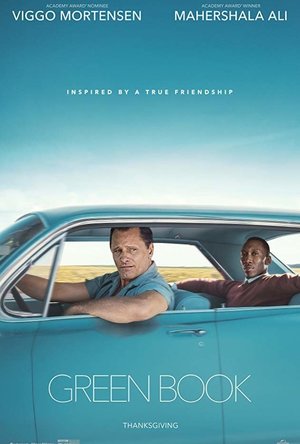


Yes, it's that good.
"Based on a true story", GREEN BOOK stars Viggo Mortenson (Aragon in the LOTR films) as "Tony Lip" a bouncer at the Copacabana in the early 1960's who is tapped by African American concert pianist Dr. Don Shirley (Academy Award winner Mahershala Ali) to be his driver/escort/security on a tour of a very prejudicial Southern part of the United States in the early 1960's. Both Tony and Dr. Don look down their noses at the other one, but during the course of this film, the two develop mutual respect and a friendship that lasted until the both passed away in 2013.
That is, in essence, the entire plot of this film. But it is not the destination, but rather, the journey that is the core of this film - and what a journey it is.
We, the audience, probably spend 70% of the film in a car with the 2 stars of this film, so they better be interesting to look at and listen to (for nothing much else happens) and both characters - and both actors- are up to the task.
Ali won a Best Supporting Actor Oscar for his brief turn in Barry Jenkins MOONLIGHT - and he is even better here as Dr. Don Shirley, an elitist virtuoso piano player, with strong pride and hidden secrets of his own. Ali brings a humanity and vulnerability to this character that acts as a softening of the hard shell of this character that allows us, the audience, a glimpse into this character's heart. This person could easily have been a one-note caricature, but in Ali's hands, it is much, much more.
The biggest surprise to me is two-time Oscar Nominee Mortenson as "Tony Lip". While the character starts as a typical early 1960's Italian-mob type, Mortenson brings humor, humanity and (yes) heart to a matter-of-fact character and continues to evolve the rough edges of Tony as Tony, himself, develops throughout the course of the film. I have always "liked but not loved" Mortenson, but, I LOVE HIM in this film and will be rooting for him come Oscars time.
The other big surprise of this film is the strong, subtle and human way that Director Peter Farrelly brings events to the screen. Prior to this, Farrelly (along with his brother Bobby) Directed such over-the-top comedies as THERE'S SOMETHING ABOUT MARY and KINGPIN, so I was a bit concerned that the Direction would be over-the-top. But...it wasn't...and I wouldn't be surprised if Farelly's name is called when Oscar nominations are announced.
I was charmed and moved by these characters - and this story - and was glad to spend 2 hours with them.
Letter Grade: A
9 stars (out of 10) and you can take that to the Bank (ofMarquis)

Gareth von Kallenbach (980 KP) rated Lincoln (2012) in Movies
Aug 7, 2019

Daniel Day Lewis, a man revered for his choice of films and roles, as well as his ability to portray characters with so much emotion and conviction, has done it once again. As the title character for this film, Lewis portrays one of the U.S.A’s greatest leaders and pioneers in a way that few other men could. Surrounded by some of the best actors in Hollywood (including Tommy Lee Jones), this star-studded film has a laundry list of very recognizable faces from all corners of Hollywood. The red carpet was clearly rolled out for this film.
The story starts amid the death and destruction of the American Civil War, an event that is both a fixed point of the story and a constant backdrop. Seeing the fighting and killing made me wonder how gritty this movie would get, but as it turns out, they kept the level of gore pretty low.
The film goes on to set the stage for the final footsteps into the southern theater that was the Civil War. In tandem, it follows the highly controversial 13th amendment, which was barely passed at the time due to racism and the belief that one color of human should be slave to another color. The absurdity of this notion is highlighted, but it’s also familiar in the way it parallels issues we face today: legalizing pot, gay marriage, prostitution, the right to bear arms, etc. Perhaps our grandchildren will watch a film in the future about these struggles, and regard it as we do a film about the Civil War. As I sat and watched this movie, I was nearly in tears at the thought of how African-Americans were once regarded as lesser beings. Will our grandchildren cry at the ridiculousness of our beliefs?
The cinematography was amazingly crisp. Many of the characters are introduced in such a way that they have a grand entrance through the mystique created by camera angles. I have to truly applaud Spielberg for what might be his best film yet. The camera work was immensely effective, relying heavily on the contrast between shadow and light. Coupled with richly detailed sets, it made everything staggeringly realistic, and absolutely convincing.
I will say this for Lincoln: I haven’t been so moved and taken aback by a period film in my life. This is a must see for everyone.
The dialog is highly political, and sometimes goes along at quite a clip; be prepared to miss a few things the first time around. However, watching it a second time surely won’t be a sin. The humor alone merits a second viewing. There are many good laughs to be had.
Lincoln is a work of art.

World Prayer Time
Reference and Travel
App
600,000+ downloads !!!!!! App Features ------------ - Imsak, Fajr, Sunrise, Dhuhr, Asr, Maghrib...
BankofMarquis (1832 KP) rated Jungle Cruise (2021) in Movies
Jul 30, 2021


Yes…Disney has made another movie based on one of it’s them park rides and this one is more like the first PIRATES OF THE CARIBBEAN film than most of the other attempts.
Directed by Jaume Collet-Serra (several Liam Neeson action flicks like NON-STOP), JUNGLE CRUISE is part PIRATES, part INDIANA JONES and part AFRICAN QUEEN (look it up, kids) as we follow an adventurous young lady in the 1910’s. She heads to the Amazon and hires a ne’er do well Jungle Cruise skipper to take her up river.
Pretty standard set-up, right? We’ve seen this “mis-matched” frenemies premise before but in the hands of Emily Blunt and Dwayne “The Rock” Johnson, it is a very entertaining (albeit familiar) ride with 2 tremendously charismatic performers working off each other very well and they look like they are having as good a time in this film as we are.
They are joined by a bevy of assorted characters that help fill out this journey. Edgar Ramirez and Veronica Falcon are enjoyable enough as a couple of characters along the way, while Jack Whitehall surprised the heck out of me as the wimpy brother to Blunt’s character who becomes more and more three dimensional as the film progressed - something I didn’t think this film would even think about doing.
A pair of wiley veterans - Jesse Plemons and good ol’ Paul Giamatti - are also on board and each add some (but not a lot) to this film. Plemons is the main villain and he just wasn’t villainous enough for my tastes while I wanted much, much more of Giamatti’s character than was in this film (and it is a rare film, indeed, that you are left wanting more with a Giamatti character).
But make no mistake, this is a Rock and Blunt flick and these two professionals hold the center of this film together very, very well.
Director Collet-Serra keeps the action (and comedy) moving along at about the right pace, never dwelling too long on any of the plot points (for if you were to think too much about any of it, it would fall apart) and (for the most part) keeps the action sequences fun and coherent and avoiding over-directing, over-CGI-ing and over-loading these sequences.
Speaking of CGI, the main issue with this film is the special effects work - it is not the best (probably a budget issue) and, at times, you really need to suspend disbelief in watching the CGI and convincing yourself that it is a Live Action film you are watching and not a cartoon.
But, since the intended audience for this film are families, the less-than-perfect CGI (at times) is forgivable as JUNGLE CRUISE provides plenty of PG-Rated action and fun that the entire family will enjoy.
Letter Grade: A-
8 stars (out of 10) and you can take that to the Bank(ofMarquis)

Lee Ronaldo recommended Dancing In Your Head by Ornette Coleman in Music (curated)

Sleep Sounds HQ: relaxing aid
Health & Fitness and Lifestyle
App
* As seen on CNN, Lifehacker, and Engadget.com * Fall asleep fast to over 600 high-quality...

Currency Exchange - Currency Converter
Travel and Finance
App
Currency Exchange is powerful and elegant Currency Converter application for your iPhone & iPod...

World Flags Quiz Game – Guess the Country Flag – Free Educational Trivia
Games and Entertainment
App
Guess the country by its flag with this fun and educational geography game app! How well do you...

Bird Hunting : Sniper Shooting
Games
App
World's best expert marksman shooters, bow bolt winged animals and creature seeker are invited to...
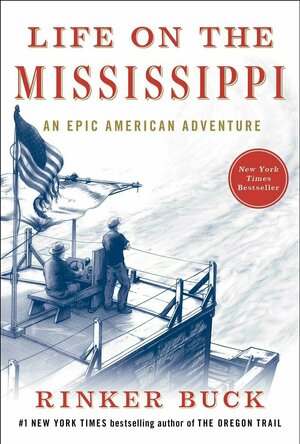
Life on the Mississippi
5.0 Rate It
Book
The eagerly awaited return of master American storyteller Rinker Buck, Life on the Mississippi is an...