
Search
Search results

Mandy and G.D. Burkhead (26 KP) rated Flightless Falcon in Books
May 20, 2018
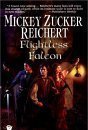

Shelf Life – Flightless Falcon Still Glides Pretty Well
Flightless Falcon is a light DAW fantasy by Mickey Zucker Reichert that first came out in paperback in July of 2001. Set in your typical fantasy land – lightly coated in magic but sans any fantastical creatures such as dragons, elves, dwarves, and the like – it follows the sad, luckless exploits of an ex-miner named Tamison made useless after a cave in kills his father and brother and leaves him trapped deep in the mine for a few days.
Afterwards, with a debilitating fear of both the dark and being underground, he’s unable to continue as a miner, yet too unskilled to get any other job. As such, he and his family live in dirt poverty for a decade or so until he finally decides to try stealing what they need instead of earning the money to buy it. Unfortunately he’s just as horrible at this as anything else he tries and ends up in jail for two years.
When he finally gets out, his family’s disappeared, so he adopts a stray dog and lives on the streets for a while. Then one day a guard finds him and tells him, “Hey, I know where your family is, and it’s bad, man, we should go save ’em.” So Tamison saves a fortune teller from some different guards, just for good measure, and the three of them go off to get his family back.
The plot evolves from there – I won’t go into much greater detail because I don’t want to give anything away. And while it’s an entertaining read, it does have its share of snags, though not often or strong enough to derail the overall experience. Still, might was well talk about ’em.
The majority of these moments occur due to the protagonist himself; Tamison’s constant suffering and depression and worthlessness gets a bit irritating after a while (and not a very long while). But you do end up genuinely sympathizing with him, at least for the most part – his self-pitying and constant sobbing are offset, personality-wise, by his intense love and devotion to his family’s welfare (though apparently it still isn’t strong enough for him to suck up his phobia and go back to working in the mines). The end result is a character that, while whiny enough that you want to reach into the pages and smack him, is still believable. The fact that a lot of his misfortune is brought on by bad luck and the overwhelming apathy of the world around him, instead of just his own sad uselessness, also helps save what might have been an otherwise excruciatingly sad-sack protagonist.
But ignore what Miss Reichert and the back cover of the book say – the real star of this story isn’t Tamison, the guard (Dallan), or the fortune teller (Rifkah). It’s the weasely bastard of a con man that Tamison can’t stop running into, the aptly-named Con. This guy’s selfish lack of a moral compass and unwillingness to sugarcoat anything for anyone is a breath of fresh air amidst the hopeful optimism and general boyscout do-goodery of the rest of the starring party, and his quick wit and blunt, sarcastic dialogue are at once impressive and entertaining to read in the circumstances. His back story’s also far more interesting than anything Tamison, Dallan, and Rifkah can come up with.
The story itself also grows past a simple “save some good guys from some bad guys” fetch quest to envelope a degree of political intrigue, subterfuge, loyalty dilemmas, and good ol’ fashion backstabbery. I won’t say anything more past the obvious (there’s a twist, you know there’s gonna be a twist, there’s always a twist) other than to say that the generic good-guy-bad-guy feeling the book’s own synopsis offers slips slowly into a more realistic, more satisfying realm of uncertain grayness that accompanies all conflicts between the world’s two rival governments, the one Tamison belongs to and the one he’s told is harboring his missing family.
Basically, each time you think this book is going to march the plot or one of the characters into Generic Land (and you will occasionally think this multiple times), the direction skews off at the last moment to surprise you. The result is that you end up reading the book in two minds: one for soaking up the story and being entertained, and one with a critical eye turned always on the author’s style, to see where it threatens to stray into unimpressiveness and how it keeps saving itself.
But don’t focus overly much on my criticisms – that’s just how I’ve been trained to talk about good writing, to search for the roughest spots and pick at them in order to see how the whole thing might be polished even more. The reason this book is so easy to criticize is because its weak spots are few and manageable and therefor easy to cover and be done with in the length of a blog post. The overall impression I came away with is still one of a fun, thoughtful, imaginative tale, at times suspenseful, at times moving, and always deeply visual. I didn’t mention the detailed visual descriptions did I? Oh well, I just did. Now you know they’re there.
It’s not going to turn into the next blockbuster fantasy franchise, but if you find it in your used book store, there are less-enjoyable ways to spend your reading time. I recommend Flightless Falcon to anyone who enjoys well-written, character-driven fantasy and doesn’t need it to last through a dozen sequels.
Afterwards, with a debilitating fear of both the dark and being underground, he’s unable to continue as a miner, yet too unskilled to get any other job. As such, he and his family live in dirt poverty for a decade or so until he finally decides to try stealing what they need instead of earning the money to buy it. Unfortunately he’s just as horrible at this as anything else he tries and ends up in jail for two years.
When he finally gets out, his family’s disappeared, so he adopts a stray dog and lives on the streets for a while. Then one day a guard finds him and tells him, “Hey, I know where your family is, and it’s bad, man, we should go save ’em.” So Tamison saves a fortune teller from some different guards, just for good measure, and the three of them go off to get his family back.
The plot evolves from there – I won’t go into much greater detail because I don’t want to give anything away. And while it’s an entertaining read, it does have its share of snags, though not often or strong enough to derail the overall experience. Still, might was well talk about ’em.
The majority of these moments occur due to the protagonist himself; Tamison’s constant suffering and depression and worthlessness gets a bit irritating after a while (and not a very long while). But you do end up genuinely sympathizing with him, at least for the most part – his self-pitying and constant sobbing are offset, personality-wise, by his intense love and devotion to his family’s welfare (though apparently it still isn’t strong enough for him to suck up his phobia and go back to working in the mines). The end result is a character that, while whiny enough that you want to reach into the pages and smack him, is still believable. The fact that a lot of his misfortune is brought on by bad luck and the overwhelming apathy of the world around him, instead of just his own sad uselessness, also helps save what might have been an otherwise excruciatingly sad-sack protagonist.
But ignore what Miss Reichert and the back cover of the book say – the real star of this story isn’t Tamison, the guard (Dallan), or the fortune teller (Rifkah). It’s the weasely bastard of a con man that Tamison can’t stop running into, the aptly-named Con. This guy’s selfish lack of a moral compass and unwillingness to sugarcoat anything for anyone is a breath of fresh air amidst the hopeful optimism and general boyscout do-goodery of the rest of the starring party, and his quick wit and blunt, sarcastic dialogue are at once impressive and entertaining to read in the circumstances. His back story’s also far more interesting than anything Tamison, Dallan, and Rifkah can come up with.
The story itself also grows past a simple “save some good guys from some bad guys” fetch quest to envelope a degree of political intrigue, subterfuge, loyalty dilemmas, and good ol’ fashion backstabbery. I won’t say anything more past the obvious (there’s a twist, you know there’s gonna be a twist, there’s always a twist) other than to say that the generic good-guy-bad-guy feeling the book’s own synopsis offers slips slowly into a more realistic, more satisfying realm of uncertain grayness that accompanies all conflicts between the world’s two rival governments, the one Tamison belongs to and the one he’s told is harboring his missing family.
Basically, each time you think this book is going to march the plot or one of the characters into Generic Land (and you will occasionally think this multiple times), the direction skews off at the last moment to surprise you. The result is that you end up reading the book in two minds: one for soaking up the story and being entertained, and one with a critical eye turned always on the author’s style, to see where it threatens to stray into unimpressiveness and how it keeps saving itself.
But don’t focus overly much on my criticisms – that’s just how I’ve been trained to talk about good writing, to search for the roughest spots and pick at them in order to see how the whole thing might be polished even more. The reason this book is so easy to criticize is because its weak spots are few and manageable and therefor easy to cover and be done with in the length of a blog post. The overall impression I came away with is still one of a fun, thoughtful, imaginative tale, at times suspenseful, at times moving, and always deeply visual. I didn’t mention the detailed visual descriptions did I? Oh well, I just did. Now you know they’re there.
It’s not going to turn into the next blockbuster fantasy franchise, but if you find it in your used book store, there are less-enjoyable ways to spend your reading time. I recommend Flightless Falcon to anyone who enjoys well-written, character-driven fantasy and doesn’t need it to last through a dozen sequels.
Kayleigh (12 KP) rated To Kill a Mockingbird in Books
Jan 2, 2019
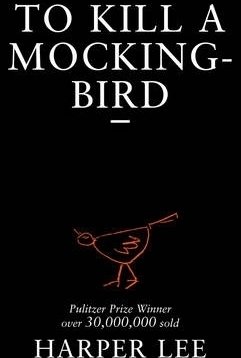

Well, February is definitely the month for discovering classics I’ve missed! For some reason, I’d always classed To Kill a Mockingbird in amongst the Agatha Christie genre of murder mysteries – not that I’ve read those either – and didn’t know enough about it for it to have piqued my interest. Now I’ve read it though, I can see what all the fuss is about, and it’s not surprising that, despite being published in 1960, it was still the <a href="http://www.guardian.co.uk/news/datablog/2012/aug/09/best-selling-books-all-time-fifty-shades-grey-compare">65th best-selling book of all time</a> in 2012. Beware of spoilers!
The story is set in Maycomb, Alabama in the 1930s, and is written from the perspective of Jean Louise ‘Scout’ Finch, who is between six and eight years old as the story progresses. The start of the book does an effective job of introducing us to all the characters. Scout lives with her widowed father, Atticus, a lawyer, her brother Jem (who is 4 years older than her) and Calpurnia, a black woman who acts as a type of mother figure. A friend, Dill, also joins them in the summer. The three children are intrigued by Arthur ‘Boo’ Radley, who lives in the house on the corner but is never seen outside. I really enjoyed this part of the story; it set the scene brilliantly, as well as helping me reminisce about my own childhood. Even if there is no ‘haunted’ house, children will always make one – at least, my brother and I did! With the limitless amounts of imagination children have, there will always be adventures to be had and ‘monsters’ to escape from. There was one particular house, when we were around the same age as Jem and Scout, where they had a doorbell you pulled, like a cord. My brother Josh said it was a doorbell that made you scream every time you pulled it, so we obviously had great fun in pulling it, screaming, and running away. If by some fluke the person living there is reading this, I’m really sorry, but it still makes me laugh! There was also every Christmas, when we went carol singing. We had decided that the houses beyond the wood were richer than the others, and every year would link arms, lighting matches to try and find our way in the dark and telling ghost stories the whole time.
Once everything has been established, the book moves on to a case Atticus is defending. A black man, Tom, has been accused of raping Mayella Ewell, part of a trashy white family with very poor education and even less money. This is where the casual prejudice of the time is evident – Jem and Scout have to put up with people calling their family a “nigger-lover” (sorry if that language offends, it is a direct quote and I mean no harm); Atticus faces repercussions for his whole-hearted attempt to save Tom; and many of the Maycomb women look down on the black community. However, there’s still a touch of hope – the way Atticus defends Tom’s case makes everybody think, a great feat in the setting where black and white people are in completely different classes. In this part of the story, I really looked up to Atticus, in his seemingly-infinite wisdom.
In the final part of the story, Jem and Scout finally get to meet Boo Radley, and it is here that the title of the book becomes apparent. In the middle of the book, after Jem and Scout get air-rifles, it is said:
<blockquote>When he gave us our air-rifles Atticus wouldn’t teach us to shoot. Uncle Jack instructed us in the rudiments thereof; he said Atticus wasn’t interested in guns. Atticus said to Jem one day, “I’d rather you shoot at tin cans in the back yard, but I know you’ll go after birds. Shoot all the bluejays you want, if you can hit ‘em, but remember it’s a sin to kill a mockingbird.”
That was the only time I ever heard Atticus say it was a sin to do something, and I asked Miss Maudie about it.
“Your father’s right,” she said. “Mockingbirds don’t do one thing but make music for us to enjoy. They don’t eat up people’s gardens, don’t nest in corncribs, they don’t do one thing but sing their hearts out for us. That’s why it’s a sin to kill a mockingbird.”</blockquote>
Obviously, not knowing what was coming, I thought the story must eventually be about the children shooting a mockingbird. The last page of the book, though, I realised that it was a lot more subtle and symbolic than that. The mockingjay is Boo Radley, the man who gives when he can and causes no harm.
I really wish I’d read this story as a child, to see what sort of perspective I’d have had back then. Reading as an adult means that, while Scout was a brilliant perspective, I was almost reading as an outsider. I could see her maturing, slowly fitting the pieces together to start acting like an adult, but at the same time it was an undeniably adult reading. I really really enjoyed the book, but I have a feeling it’s one of those multi-faceted ones where you read something different every time. I can’t help thinking that reading it as a child would have been a lot more powerful.
This review is also on my <a href="http://awowords.wordpress.com">blog</a>; - if you liked it, please check it out!
The story is set in Maycomb, Alabama in the 1930s, and is written from the perspective of Jean Louise ‘Scout’ Finch, who is between six and eight years old as the story progresses. The start of the book does an effective job of introducing us to all the characters. Scout lives with her widowed father, Atticus, a lawyer, her brother Jem (who is 4 years older than her) and Calpurnia, a black woman who acts as a type of mother figure. A friend, Dill, also joins them in the summer. The three children are intrigued by Arthur ‘Boo’ Radley, who lives in the house on the corner but is never seen outside. I really enjoyed this part of the story; it set the scene brilliantly, as well as helping me reminisce about my own childhood. Even if there is no ‘haunted’ house, children will always make one – at least, my brother and I did! With the limitless amounts of imagination children have, there will always be adventures to be had and ‘monsters’ to escape from. There was one particular house, when we were around the same age as Jem and Scout, where they had a doorbell you pulled, like a cord. My brother Josh said it was a doorbell that made you scream every time you pulled it, so we obviously had great fun in pulling it, screaming, and running away. If by some fluke the person living there is reading this, I’m really sorry, but it still makes me laugh! There was also every Christmas, when we went carol singing. We had decided that the houses beyond the wood were richer than the others, and every year would link arms, lighting matches to try and find our way in the dark and telling ghost stories the whole time.
Once everything has been established, the book moves on to a case Atticus is defending. A black man, Tom, has been accused of raping Mayella Ewell, part of a trashy white family with very poor education and even less money. This is where the casual prejudice of the time is evident – Jem and Scout have to put up with people calling their family a “nigger-lover” (sorry if that language offends, it is a direct quote and I mean no harm); Atticus faces repercussions for his whole-hearted attempt to save Tom; and many of the Maycomb women look down on the black community. However, there’s still a touch of hope – the way Atticus defends Tom’s case makes everybody think, a great feat in the setting where black and white people are in completely different classes. In this part of the story, I really looked up to Atticus, in his seemingly-infinite wisdom.
In the final part of the story, Jem and Scout finally get to meet Boo Radley, and it is here that the title of the book becomes apparent. In the middle of the book, after Jem and Scout get air-rifles, it is said:
<blockquote>When he gave us our air-rifles Atticus wouldn’t teach us to shoot. Uncle Jack instructed us in the rudiments thereof; he said Atticus wasn’t interested in guns. Atticus said to Jem one day, “I’d rather you shoot at tin cans in the back yard, but I know you’ll go after birds. Shoot all the bluejays you want, if you can hit ‘em, but remember it’s a sin to kill a mockingbird.”
That was the only time I ever heard Atticus say it was a sin to do something, and I asked Miss Maudie about it.
“Your father’s right,” she said. “Mockingbirds don’t do one thing but make music for us to enjoy. They don’t eat up people’s gardens, don’t nest in corncribs, they don’t do one thing but sing their hearts out for us. That’s why it’s a sin to kill a mockingbird.”</blockquote>
Obviously, not knowing what was coming, I thought the story must eventually be about the children shooting a mockingbird. The last page of the book, though, I realised that it was a lot more subtle and symbolic than that. The mockingjay is Boo Radley, the man who gives when he can and causes no harm.
I really wish I’d read this story as a child, to see what sort of perspective I’d have had back then. Reading as an adult means that, while Scout was a brilliant perspective, I was almost reading as an outsider. I could see her maturing, slowly fitting the pieces together to start acting like an adult, but at the same time it was an undeniably adult reading. I really really enjoyed the book, but I have a feeling it’s one of those multi-faceted ones where you read something different every time. I can’t help thinking that reading it as a child would have been a lot more powerful.
This review is also on my <a href="http://awowords.wordpress.com">blog</a>; - if you liked it, please check it out!

Bob Mann (459 KP) rated Spielberg (2017) in Movies
Sep 29, 2021
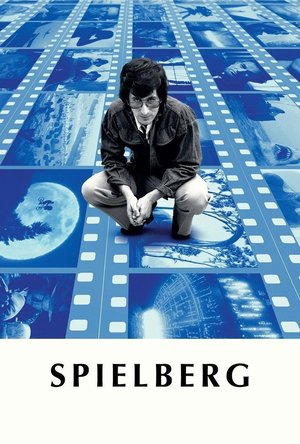
On making Drew Barrymore cry.
“Spielberg” is an HBO-produced documentary by documentarian Susan Lacy. You’ll never guess who the subject is?!
Steven Spielberg is a product of one of the most surprising revolutions in Hollywood in the late 70’s: one of a set of wunderkind directors alongside such luminaries as George Lucas, Francis Ford Coppola, John Milius, Brian De Palma and Martin Scorcese. These men (only men, it should be noted!) were ready to cock a snook at Hollywood’s traditional studio system to break rules (case in point, Star Wars’ lack of opening credits) and move cinema into the format that would last to this day.
As this excellent documentary makes clear, Spielberg was one of the least rebellious of the movie-brats. Even though (astoundingly) he blagged himself a production office at Universal (after hiding during the Tram Tour toilet stop!), his path to the top was through hard graft on multiple Universal TV shows, after recognition of his talents by Universal exec Sidney Sheinberg who speaks in the film.
Before we get to that stage of his life, we cover his childhood back-story as a reluctant Jew living in a non-Jewish neighbourhood, driven to fill his time with tormenting his sisters and movie-making with a Super 8 camera. Scenes of home videos, photos and his early attempts at special effects are all fascinating. The impact of his Bohemian mother Leah and workaholic father Arnold, and particularly the very surprising relationship breakdown that happened between them, go a long way to explain the constant return to ‘father issues’ in many of his films such as “E.T.”, “Close Encounters of the Third Kind”, “Hook” and “Indiana Jones and the Last Crusade”.
The majority of the film though settles down into a roughly chronological review of the highlights of his movie career, with particular emphasis justly being placed on some of the key watershed moments in that career. Most of his films get at least a mention, but “Jaws”, “E.T.”, “Schindler’s List”, “The Color Purple”, “Jurassic Park”, “Munich” and “Empire of the Sun” get more focus. It is such a wonderful trip down my cinematic memory lane. I also forget just what cinematic majesty and craftsmanship is present in these films: I just hope that at some point this will get a Blu-Ray or DVD release so it can be properly appreciated (rather than viewing it on a tiny airplane screen which is how I watched this): the combination of film clips in here is breathtaking.
As might be expected for a documentary about the great director, there is plenty of ‘behind the camera’ footage on show, some of which is fascinating. Spielberg could always get the very best performances out of the youngsters on set, from Cary Guffey (“Toys!!”) in “Close Encounters” to a heartbreaking scene where he reduces the young Drew Barrymore to howls of emotion in “E.T.”. A master at work.
All of the movie scenes are accompanied by new interview footage from Spielberg himself, as well as warm platitudes from many of the luminaries he has worked with in the past. Directors involved include many of the the directors referenced above, as well as those modern directors influenced by him such as J.J. Abrams; his go-to cinematographers Vilmos Zsigmond and Janusz Kaminski; his ‘go-to’ composer John Williams; and stars including his go-to ‘everyman’ Richard Dreyfuss, Tom Cruise, Harrison Ford, Bob Balaban, Tom Hanks, Opray Winfrey, Leonardo DiCaprio, Christian Bale, Dustin Hoffman and James Brolin. Some of these comments are useful and insightful; some are just fairly meaningless sound bites that add nothing to the film. What all the comments are though is almost all uniformly positive.
And that’s my only criticism of the film. Like me, Susan Lacy is clearly a big fan. It is probably quite hard to find anyone who isn’t…. but perhaps Ms Lacy should have tried a bit harder! There is only limited focus on his big comedy flop of 1979, “1941”, and no mention at all of his lowest WW grossing film “Always”. And there are only a few contributors – notably film critic Janet Maslin – who are willing to stick their head above the parapet and prod into Spielberg’s weaknesses; ostensibly his tendency to veer to the sentimental and away from harder issues: the omitted “Color Purple” ‘mirror scene’ being a case in point.
This is a recommended watch for Spielberg fans. On the eve of the launch of his latest – “Ready Player One”, a film that I am personally dubious about from the trailer – it’s a great insight into the life and works of the great man. It could though have cut a slightly harder and more critical edge.
Steven Spielberg is a product of one of the most surprising revolutions in Hollywood in the late 70’s: one of a set of wunderkind directors alongside such luminaries as George Lucas, Francis Ford Coppola, John Milius, Brian De Palma and Martin Scorcese. These men (only men, it should be noted!) were ready to cock a snook at Hollywood’s traditional studio system to break rules (case in point, Star Wars’ lack of opening credits) and move cinema into the format that would last to this day.
As this excellent documentary makes clear, Spielberg was one of the least rebellious of the movie-brats. Even though (astoundingly) he blagged himself a production office at Universal (after hiding during the Tram Tour toilet stop!), his path to the top was through hard graft on multiple Universal TV shows, after recognition of his talents by Universal exec Sidney Sheinberg who speaks in the film.
Before we get to that stage of his life, we cover his childhood back-story as a reluctant Jew living in a non-Jewish neighbourhood, driven to fill his time with tormenting his sisters and movie-making with a Super 8 camera. Scenes of home videos, photos and his early attempts at special effects are all fascinating. The impact of his Bohemian mother Leah and workaholic father Arnold, and particularly the very surprising relationship breakdown that happened between them, go a long way to explain the constant return to ‘father issues’ in many of his films such as “E.T.”, “Close Encounters of the Third Kind”, “Hook” and “Indiana Jones and the Last Crusade”.
The majority of the film though settles down into a roughly chronological review of the highlights of his movie career, with particular emphasis justly being placed on some of the key watershed moments in that career. Most of his films get at least a mention, but “Jaws”, “E.T.”, “Schindler’s List”, “The Color Purple”, “Jurassic Park”, “Munich” and “Empire of the Sun” get more focus. It is such a wonderful trip down my cinematic memory lane. I also forget just what cinematic majesty and craftsmanship is present in these films: I just hope that at some point this will get a Blu-Ray or DVD release so it can be properly appreciated (rather than viewing it on a tiny airplane screen which is how I watched this): the combination of film clips in here is breathtaking.
As might be expected for a documentary about the great director, there is plenty of ‘behind the camera’ footage on show, some of which is fascinating. Spielberg could always get the very best performances out of the youngsters on set, from Cary Guffey (“Toys!!”) in “Close Encounters” to a heartbreaking scene where he reduces the young Drew Barrymore to howls of emotion in “E.T.”. A master at work.
All of the movie scenes are accompanied by new interview footage from Spielberg himself, as well as warm platitudes from many of the luminaries he has worked with in the past. Directors involved include many of the the directors referenced above, as well as those modern directors influenced by him such as J.J. Abrams; his go-to cinematographers Vilmos Zsigmond and Janusz Kaminski; his ‘go-to’ composer John Williams; and stars including his go-to ‘everyman’ Richard Dreyfuss, Tom Cruise, Harrison Ford, Bob Balaban, Tom Hanks, Opray Winfrey, Leonardo DiCaprio, Christian Bale, Dustin Hoffman and James Brolin. Some of these comments are useful and insightful; some are just fairly meaningless sound bites that add nothing to the film. What all the comments are though is almost all uniformly positive.
And that’s my only criticism of the film. Like me, Susan Lacy is clearly a big fan. It is probably quite hard to find anyone who isn’t…. but perhaps Ms Lacy should have tried a bit harder! There is only limited focus on his big comedy flop of 1979, “1941”, and no mention at all of his lowest WW grossing film “Always”. And there are only a few contributors – notably film critic Janet Maslin – who are willing to stick their head above the parapet and prod into Spielberg’s weaknesses; ostensibly his tendency to veer to the sentimental and away from harder issues: the omitted “Color Purple” ‘mirror scene’ being a case in point.
This is a recommended watch for Spielberg fans. On the eve of the launch of his latest – “Ready Player One”, a film that I am personally dubious about from the trailer – it’s a great insight into the life and works of the great man. It could though have cut a slightly harder and more critical edge.
Bob Mann (459 KP) rated Daddy's Home 2 (2017) in Movies
Sep 29, 2021
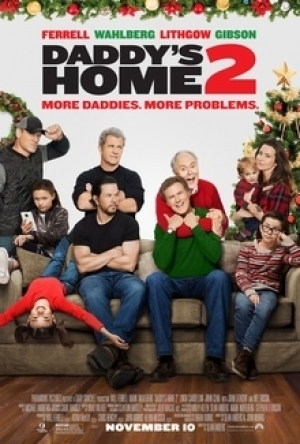

Some good comedy moments drowned in schmaltz.
Comedy and tragedy have always gone together hand-in-hand. Every great comedy tends to have its bitter-sweet moments: Roberts Blossom as the “shovel-killer” grandad in “Home Alone” (who always reminds me of my late Dad… in appearance I might add, not that he was a shovel killer!); John Candy’s depressed shower-ring salesman in “Planes Trains and Automobiles”; Ron Burgundy bawling in a phone box in “Anchorman”. The balance between the two is the key thing and comedies can sometimes get it wrong (the Bird Woman in “Home Alone 2” for example!).
Here is another case in point: “Daddy’s Home 2”, which has some laugh-out-loud comedy moments, but is generally so utterly drenched in schmaltz and sentimentality that the film becomes far harder work than it should be. (By the way, I never saw “Daddy’s Home” (but read the IMDB synopsys): it was not a prerequisite for seeing this movie).
A Christmas cast. From left, Alessandra Ambrosio, Didi Costine, Mark Wahlberg, Scarlett Estevez, Will Ferrell, Owen Vaccaro, Linda Cardellini, Conor or Daphne or Dylan Wise(!) and Mel Gibson.
Will Ferrell (“Get Hard“, “Anchorman“) reprises his role as the somewhat incompetent Brad, ‘sharing’ his family of kids and stepkids with the much more streetwise Dusty (Mark Wahlberg, “Patriot’s Day“). After a poignant school recital, the pair realise the damage that a distributed Christmas is doing to their offspring and they determine to spend Christmas all together this year. In the process they vow to try to put aside their attempts at one-upmanship – “the harbour is closed” – in the interests of giving everyone the best Christmas ever.
But their plans are turned upside down when their fathers also turn up for Christmas: Mel Gibson (in a sublime piece of casting) plays Dusty’s dad, astronaut-hero Kurt, who is even more macho and extreme than Dusty, and John Lithgow (“Miss Sloane“; “The Accountant“) plays Brad’s airy-fairy father Don… the apple has not fallen far from the tree there.
Kurt forces the family to ‘fight’ Christmas on a neutral turf by renting a palatial AirBnB in a snowy wilderness. Tensions rise between the diverse individuals until a breaking point is inevitably reached.
There are some great farcical sight-gags in this movie. Quite a few of the funniest ones are spoiled by the trailer, but there are still a few standout routines that made me guffaw. A hi-tech shower is predictable but funny; and Brad’s use of a snowblower to apocalyptic ends is the funniest scene in the movie.
Wahlberg and Ferrell are a trustworthy double act (after their initial surprise pairing in “The Other Guys”). Gibson and Lithgow also inhabit their roles perfectly, although it was hard of me to relate to either of them. The scene on the airport escalator as they arrive is very well done.
The supporting cast all play their parts well: ER’s Linda Cardellini as Brad’s wife and Dusty’s ex-wife; Brazilian model and actress Alessandra Ambrosio, as Dusty’s (almost unbelievably good-looking) new wife Karen; and WWE star John Cena as Karen’s ex-husband. (Doesn’t ANYONE stay married in the US any more?). The kid stars – Didi Costine, Scarlett Estevez and Owen Vaccaro – are also good, with Estevez being particularly appealing.
Watch out for a funny cameo in the final scene as well, which I found very amusing (“You only have one story” … LoL).
“Will my bum look big in this?” – erm… no! Sara (Linda Cardellini) and Karen (Alessandra Ambrosio) on a shopping trip.
What drowns out the comedy though is the sentimental storyline around a personal tragedy being lived out by one of the family. The angst and nasty back-biting that surrounds this I found neither funny nor pleasant. The story builds to a snow-bound cinema (showing “Missile Tow” starring Liam Neeson… a great “pointless answer” for the BBC’s “Pointless” quiz!) and a finale song that is just so over the top that it has both an “awww” factor and is bile-inducing all at the same time. The screenplay is by Sean Anders and John Morris, with Anders also directing.
Will Ferrell films can be like a game of Russian Roulette, and I fully expected this to be truly awful. It wasn’t, and as a Christmas comedy it is an OK watch… and thankfully significantly above “Jingle all the Way”!
Here is another case in point: “Daddy’s Home 2”, which has some laugh-out-loud comedy moments, but is generally so utterly drenched in schmaltz and sentimentality that the film becomes far harder work than it should be. (By the way, I never saw “Daddy’s Home” (but read the IMDB synopsys): it was not a prerequisite for seeing this movie).
A Christmas cast. From left, Alessandra Ambrosio, Didi Costine, Mark Wahlberg, Scarlett Estevez, Will Ferrell, Owen Vaccaro, Linda Cardellini, Conor or Daphne or Dylan Wise(!) and Mel Gibson.
Will Ferrell (“Get Hard“, “Anchorman“) reprises his role as the somewhat incompetent Brad, ‘sharing’ his family of kids and stepkids with the much more streetwise Dusty (Mark Wahlberg, “Patriot’s Day“). After a poignant school recital, the pair realise the damage that a distributed Christmas is doing to their offspring and they determine to spend Christmas all together this year. In the process they vow to try to put aside their attempts at one-upmanship – “the harbour is closed” – in the interests of giving everyone the best Christmas ever.
But their plans are turned upside down when their fathers also turn up for Christmas: Mel Gibson (in a sublime piece of casting) plays Dusty’s dad, astronaut-hero Kurt, who is even more macho and extreme than Dusty, and John Lithgow (“Miss Sloane“; “The Accountant“) plays Brad’s airy-fairy father Don… the apple has not fallen far from the tree there.
Kurt forces the family to ‘fight’ Christmas on a neutral turf by renting a palatial AirBnB in a snowy wilderness. Tensions rise between the diverse individuals until a breaking point is inevitably reached.
There are some great farcical sight-gags in this movie. Quite a few of the funniest ones are spoiled by the trailer, but there are still a few standout routines that made me guffaw. A hi-tech shower is predictable but funny; and Brad’s use of a snowblower to apocalyptic ends is the funniest scene in the movie.
Wahlberg and Ferrell are a trustworthy double act (after their initial surprise pairing in “The Other Guys”). Gibson and Lithgow also inhabit their roles perfectly, although it was hard of me to relate to either of them. The scene on the airport escalator as they arrive is very well done.
The supporting cast all play their parts well: ER’s Linda Cardellini as Brad’s wife and Dusty’s ex-wife; Brazilian model and actress Alessandra Ambrosio, as Dusty’s (almost unbelievably good-looking) new wife Karen; and WWE star John Cena as Karen’s ex-husband. (Doesn’t ANYONE stay married in the US any more?). The kid stars – Didi Costine, Scarlett Estevez and Owen Vaccaro – are also good, with Estevez being particularly appealing.
Watch out for a funny cameo in the final scene as well, which I found very amusing (“You only have one story” … LoL).
“Will my bum look big in this?” – erm… no! Sara (Linda Cardellini) and Karen (Alessandra Ambrosio) on a shopping trip.
What drowns out the comedy though is the sentimental storyline around a personal tragedy being lived out by one of the family. The angst and nasty back-biting that surrounds this I found neither funny nor pleasant. The story builds to a snow-bound cinema (showing “Missile Tow” starring Liam Neeson… a great “pointless answer” for the BBC’s “Pointless” quiz!) and a finale song that is just so over the top that it has both an “awww” factor and is bile-inducing all at the same time. The screenplay is by Sean Anders and John Morris, with Anders also directing.
Will Ferrell films can be like a game of Russian Roulette, and I fully expected this to be truly awful. It wasn’t, and as a Christmas comedy it is an OK watch… and thankfully significantly above “Jingle all the Way”!


Writing (3 more)
No character development
Too many inconsistencies
Too many chapters
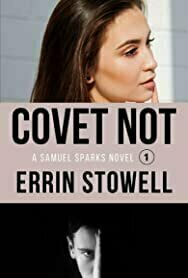
Errin Stowell's new novel series starts with Covet Not which is about a middle-aged lawyer named Sam Sparks - - - who is referred to as Sparks nearly the entire story - - - whose fiancee goes missing and he then becomes the prime suspect. Before everything happens though, readers see that Sparks spends his time trying to defend the elderly from home foreclosures as a small-time lawyer.
If this sounds like a synopsis for a John Grisham novel, you wouldn't be far off because Stowell has the potential to be the next one. This is only the first novel I've read by Stowell, but the one thing I noticed mostly in this story was the amount of inconsistencies and amateur writing mistakes; with better editing and consistency, his books could very well hit mainstream.
Also, Covet Not had so many chapters, so much so that scenes were chopped in half and made into entirely new chapters. The book ended up having 48 chapters within 158 pages. This amount could have easily been shortened and helped with the flow of the story if Stowell had just continued onwards with scenes rather then cutting them short or just skipping parts completely.
The novel starts with a man called Skinny who is enjoying his growing infamy on the dark web (he records himself murdering women then uploads it for his audience to enjoy). Here is how Stowell describes Skinny's thought process:
" Skinny took a black ski mask from the duffel bag and put it on before carrying the bag into the camera's frame and placing it near the woman. He began unpacking other items from the bag. It was slow work, deliberately slow for the camera. Skinny intended to have a before and after view for each tool. It was important to show the proper use of tools. The viewers always appreciated that. "
When we switch over to Sparks, we find him after a long day of work, speaking with a journalist named Gina, his fiancee, who is telling him one of her co-workers stole her story, but no one has heard from her in two days. Yet, they both agree that she's probably holed up with one of the producers, and instead, get into a small argument about Sparks never supporting Gina - - - a constant habit of arguing is almost every interaction between the two throughout the entire novel.
Soon after, Sparks introduces us to his uncle Jimmy, who is being housed at a retirement home: " The old man was seated in a wheelchair; his left leg had been amputated just below the knee a few years before, the result of allowing an ingrown toenail to fester to gangrene. Jimmy's barrel chest and solid upper body contrasted with his wasting legs. "
As Sparks continues to visit his uncle in the retirement home, he keeps running into a cute nurse named Darlene, who quickly sets her sights on him. She goes so far out of her way to get Sparks and Gina to separate that she sends him nude photos of herself from a burner phone. Fortunately, Sparks has bigger fish to fry when he hears over his car radio that Gina's co-worker was now being treated as a missing person case, causing Sparks to quickly jump to the conclusion that Gina possibly was responsible for it.
However, Stowell throws in an expected curveball by making our villain, Skinny, work at the retirement home. When he comes in to take care of a patient while Sparks is present, it's too easy to guess that this patient was going to end up dead soon. Sparks, expectedly, has a bad feeling about this male nurse, but dismisses it and believes that the patient died by natural causes. Life goes on.
Stowell's novel, with a great plot, was just too focused on ending the story, that after page 50, it seemed as if Stowell didn't care what happened to these characters, just as long as he finished the book. At one point, readers are told that Sparks doesn't drink alcohol, but it's never explained why he doesn't which would have given a bite of character development; another scene, Sparks finds a phone, but doesn't want to give it to police, instead he states that he has a 'friend' in the police department who can go through it as a favor, but this 'friend' is completely forgotten, as if Sparks never mentioned him, and the former is left dumbfounded as to how to get into the phone.
There's a story here and characters that could be more well-rounded, but I honestly found myself not caring the least bit about any of the characters' well-being, especially Sparks - - - someone who comes off as inept, someone who has to be told what to do in order for anything to get done - - - he's like a lost child running blindly throughout the book. The story needs to be longer with more emphasis given to mundane scenes that will allow readers to chew on a piece of Sparks' daily life because, by the end of the book, we needed a full picture of every major character, not a Jackson Pollock.
If this sounds like a synopsis for a John Grisham novel, you wouldn't be far off because Stowell has the potential to be the next one. This is only the first novel I've read by Stowell, but the one thing I noticed mostly in this story was the amount of inconsistencies and amateur writing mistakes; with better editing and consistency, his books could very well hit mainstream.
Also, Covet Not had so many chapters, so much so that scenes were chopped in half and made into entirely new chapters. The book ended up having 48 chapters within 158 pages. This amount could have easily been shortened and helped with the flow of the story if Stowell had just continued onwards with scenes rather then cutting them short or just skipping parts completely.
The novel starts with a man called Skinny who is enjoying his growing infamy on the dark web (he records himself murdering women then uploads it for his audience to enjoy). Here is how Stowell describes Skinny's thought process:
" Skinny took a black ski mask from the duffel bag and put it on before carrying the bag into the camera's frame and placing it near the woman. He began unpacking other items from the bag. It was slow work, deliberately slow for the camera. Skinny intended to have a before and after view for each tool. It was important to show the proper use of tools. The viewers always appreciated that. "
When we switch over to Sparks, we find him after a long day of work, speaking with a journalist named Gina, his fiancee, who is telling him one of her co-workers stole her story, but no one has heard from her in two days. Yet, they both agree that she's probably holed up with one of the producers, and instead, get into a small argument about Sparks never supporting Gina - - - a constant habit of arguing is almost every interaction between the two throughout the entire novel.
Soon after, Sparks introduces us to his uncle Jimmy, who is being housed at a retirement home: " The old man was seated in a wheelchair; his left leg had been amputated just below the knee a few years before, the result of allowing an ingrown toenail to fester to gangrene. Jimmy's barrel chest and solid upper body contrasted with his wasting legs. "
As Sparks continues to visit his uncle in the retirement home, he keeps running into a cute nurse named Darlene, who quickly sets her sights on him. She goes so far out of her way to get Sparks and Gina to separate that she sends him nude photos of herself from a burner phone. Fortunately, Sparks has bigger fish to fry when he hears over his car radio that Gina's co-worker was now being treated as a missing person case, causing Sparks to quickly jump to the conclusion that Gina possibly was responsible for it.
However, Stowell throws in an expected curveball by making our villain, Skinny, work at the retirement home. When he comes in to take care of a patient while Sparks is present, it's too easy to guess that this patient was going to end up dead soon. Sparks, expectedly, has a bad feeling about this male nurse, but dismisses it and believes that the patient died by natural causes. Life goes on.
Stowell's novel, with a great plot, was just too focused on ending the story, that after page 50, it seemed as if Stowell didn't care what happened to these characters, just as long as he finished the book. At one point, readers are told that Sparks doesn't drink alcohol, but it's never explained why he doesn't which would have given a bite of character development; another scene, Sparks finds a phone, but doesn't want to give it to police, instead he states that he has a 'friend' in the police department who can go through it as a favor, but this 'friend' is completely forgotten, as if Sparks never mentioned him, and the former is left dumbfounded as to how to get into the phone.
There's a story here and characters that could be more well-rounded, but I honestly found myself not caring the least bit about any of the characters' well-being, especially Sparks - - - someone who comes off as inept, someone who has to be told what to do in order for anything to get done - - - he's like a lost child running blindly throughout the book. The story needs to be longer with more emphasis given to mundane scenes that will allow readers to chew on a piece of Sparks' daily life because, by the end of the book, we needed a full picture of every major character, not a Jackson Pollock.

Eilidh G Clark (177 KP) rated Tony Hogan Bought Me an Ice Cream Float Before He Stole My Ma in Books
May 14, 2017

This is not only a well-written novel but also a powerful commentary on life within the poverty trap.
‘Graffiti and scorch marks, echoes of small fires, decorated doorsteps. Golden Special Brew cans and crushed vodka bottles, bright as diamonds, collected in gutters. Front gardens were filled with mouldy paddling pools and, occasionally, a rust burnished shell of a car. I had never seen anything so beautiful, so many colours, before in grey Aberdeen.’
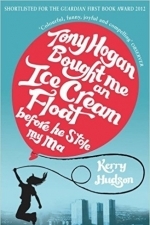
This is a novel with nothing held back. While the title is light hearted and the cover art bright and cheerful, both are deceiving. The cover shows a silhouette of a young girl holding a giant red balloon against the backdrop of a Scottish suburban town. It is important to address the significance of this image. Readers may recall a similar painting by Banksy, named Girl With Balloon which was originally painted on a wall in London. Beside the painting was engraved “There Is Always Hope”. While Banksy’s painting shows the girl releasing the balloon, possibly representing lost hope or lost innocence, Hudson’s cover shows the girl being lifted by the balloon. Considering this when addressing the text, it is clear that Hudson wished to demonstrate that one can only hold on to hope by not letting go. Critics have described this book as containing bittersweet humour and Hudson cleverly intrudes in the second chapter by saying that this is in fact a ‘humorous cautionary tale’. As soon as you begin reading, expect to get dirt under your nails. The author launches right into the location of the novel using regional Scottish dialect and local Aberdonian vernacular. The story begins with the birth of out protagonist, Janie Ryan. Born to Iris (formally Irene), a single, homeless mother who comes from a line of women described as ‘fishwives to the marrow’, Iris has recently returned from London after trying to change her destiny (not wanting to become her mother). After falling pregnant to a rich and married American man, the relationship breaks down. Iris is forced to return to poverty in the back streets of Aberdeen but is keen to ensure that things have changed,’ I didnae go all the way to fuckin’ London to come back an’ be the same old Irene!’ Unfortunately, Iris falls back into her old ways and for Janie; this has a direct effect on her life. The reader follows the protagonist from her first home to temporary care and then to a string of homes over the UK in some of its poorest areas. Janie watches, as her mother gets involved in some abusive relationships, including one with alcohol, and watches helplessly as her mother loses hope. Towards the latter end of the novel, it is clear that Janie is falling into the same habits as her mother, however, a string of unfortunate event forces her to reassess her life. The end of the novel, like the cover art, is left to the reader’s interpretation. Can Janie break the cycle and make changes to her life, or is she destined to become her mother? This is not only a well-written novel but also a powerful commentary on life within the poverty trap.
Kerry Hudson, Tony Hogan Bought me an Ice Cream Float Before He Stole My Ma, 2012 published by Vintage Books
This is a novel with nothing held back. While the title is light hearted and the cover art bright and cheerful, both are deceiving. The cover shows a silhouette of a young girl holding a giant red balloon against the backdrop of a Scottish suburban town. It is important to address the significance of this image. Readers may recall a similar painting by Banksy, named Girl With Balloon which was originally painted on a wall in London. Beside the painting was engraved “There Is Always Hope”. While Banksy’s painting shows the girl releasing the balloon, possibly representing lost hope or lost innocence, Hudson’s cover shows the girl being lifted by the balloon. Considering this when addressing the text, it is clear that Hudson wished to demonstrate that one can only hold on to hope by not letting go. Critics have described this book as containing bittersweet humour and Hudson cleverly intrudes in the second chapter by saying that this is in fact a ‘humorous cautionary tale’. As soon as you begin reading, expect to get dirt under your nails. The author launches right into the location of the novel using regional Scottish dialect and local Aberdonian vernacular. The story begins with the birth of out protagonist, Janie Ryan. Born to Iris (formally Irene), a single, homeless mother who comes from a line of women described as ‘fishwives to the marrow’, Iris has recently returned from London after trying to change her destiny (not wanting to become her mother). After falling pregnant to a rich and married American man, the relationship breaks down. Iris is forced to return to poverty in the back streets of Aberdeen but is keen to ensure that things have changed,’ I didnae go all the way to fuckin’ London to come back an’ be the same old Irene!’ Unfortunately, Iris falls back into her old ways and for Janie; this has a direct effect on her life. The reader follows the protagonist from her first home to temporary care and then to a string of homes over the UK in some of its poorest areas. Janie watches, as her mother gets involved in some abusive relationships, including one with alcohol, and watches helplessly as her mother loses hope. Towards the latter end of the novel, it is clear that Janie is falling into the same habits as her mother, however, a string of unfortunate event forces her to reassess her life. The end of the novel, like the cover art, is left to the reader’s interpretation. Can Janie break the cycle and make changes to her life, or is she destined to become her mother? This is not only a well-written novel but also a powerful commentary on life within the poverty trap.
Kerry Hudson, Tony Hogan Bought me an Ice Cream Float Before He Stole My Ma, 2012 published by Vintage Books

Acanthea Grimscythe (300 KP) rated Bonfire in Books
May 16, 2018
This was first posted on <I><a href="http://theghastlygrimoire.com"; target="new">The Ghastly Grimoire</a></I>.
After completing this book, I think it’s safe to say that my reading slump has finally come to an end. I devoured Krysten Ritter’s debut novel, Bonfire, with a hunger I haven’t felt in months. If you take into account that I’m from a small town of a whopping fifteen hundred people, it’s easier to realize how much I am able to relate to the main character of this book, Abigail Williams. That, and Ritter hits on some nostalgia too, because in a way, Bonfire reads like Erin Brokovich meets Sweet Home Alabama, with distinctly darker notes.
Character development plays a vital role in how a book turns out. If your cast is too flat, it makes the book a total bore. On the other hand, if you’ve got characters that are dynamic and, in the case of several individuals in Bonfire, two-faced, the book is far more likely to entertain. In this area, Ritter has excelled at creating that small-town feel with many of the types of people those living in small towns meet. Let’s face it, even with Abigail moving to Chicago, there’s always those people who get out. Sometimes they come back, sometimes they’re gone for good. (In my case, I chose to come back.)
Plotwise, Ritter keeps the ball rolling. I didn’t feel like the story was dragging at any point. In fact, it’s the way that the story continues to unfold that kept me up until three this morning finishing it. Bonfire plays host to a story within a story, taking the corrupt corporations one step beyond contamination and into a far deeper, far worse crime. Just when things appear over, an entirely new turn keeps the story going. I won’t lie: I nearly bawled last night while I finished reading it.
There is only one aspect of this book that truly miffed me, and it sorta deals with the romance aspect. As many of my readers know, I abhor romance plots. Especially those that seem forced, rather than natural. That said, I really don’t want to divulge any spoilers, but I will say this: for being such a strong, independent character, there are some actions that Abigail Williams takes in this book that simply aren’t natural. They feel incredibly forced and out of character, and I can’t help but think it’s there more as a cop-out for the final twist in the story than going about it in some other clever manner.
That said, after finishing Bonfire, I feel it is safe to say that this debut novel is worth reading. Initially, I nearly forgot I had it until I saw it was one of the options for this month’s Book of the Month Club. Considering I’m very particular, I almost chose it before realizing I already had it technically. So if you’re wanting to pick it up cheap, there you go. (I’m actually still debating grabbing it through Book of the Month Club myself, because hey! I loved it.)
I would like to thank Penguin’s First to Read program for providing me with a copy of this book for the purpose of unbiased review.
After completing this book, I think it’s safe to say that my reading slump has finally come to an end. I devoured Krysten Ritter’s debut novel, Bonfire, with a hunger I haven’t felt in months. If you take into account that I’m from a small town of a whopping fifteen hundred people, it’s easier to realize how much I am able to relate to the main character of this book, Abigail Williams. That, and Ritter hits on some nostalgia too, because in a way, Bonfire reads like Erin Brokovich meets Sweet Home Alabama, with distinctly darker notes.
Character development plays a vital role in how a book turns out. If your cast is too flat, it makes the book a total bore. On the other hand, if you’ve got characters that are dynamic and, in the case of several individuals in Bonfire, two-faced, the book is far more likely to entertain. In this area, Ritter has excelled at creating that small-town feel with many of the types of people those living in small towns meet. Let’s face it, even with Abigail moving to Chicago, there’s always those people who get out. Sometimes they come back, sometimes they’re gone for good. (In my case, I chose to come back.)
Plotwise, Ritter keeps the ball rolling. I didn’t feel like the story was dragging at any point. In fact, it’s the way that the story continues to unfold that kept me up until three this morning finishing it. Bonfire plays host to a story within a story, taking the corrupt corporations one step beyond contamination and into a far deeper, far worse crime. Just when things appear over, an entirely new turn keeps the story going. I won’t lie: I nearly bawled last night while I finished reading it.
There is only one aspect of this book that truly miffed me, and it sorta deals with the romance aspect. As many of my readers know, I abhor romance plots. Especially those that seem forced, rather than natural. That said, I really don’t want to divulge any spoilers, but I will say this: for being such a strong, independent character, there are some actions that Abigail Williams takes in this book that simply aren’t natural. They feel incredibly forced and out of character, and I can’t help but think it’s there more as a cop-out for the final twist in the story than going about it in some other clever manner.
That said, after finishing Bonfire, I feel it is safe to say that this debut novel is worth reading. Initially, I nearly forgot I had it until I saw it was one of the options for this month’s Book of the Month Club. Considering I’m very particular, I almost chose it before realizing I already had it technically. So if you’re wanting to pick it up cheap, there you go. (I’m actually still debating grabbing it through Book of the Month Club myself, because hey! I loved it.)
I would like to thank Penguin’s First to Read program for providing me with a copy of this book for the purpose of unbiased review.

Amanda (96 KP) rated Alex, Approximately in Books
Mar 14, 2019
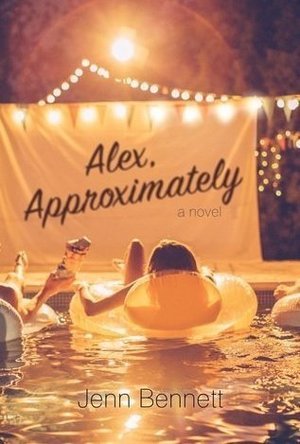
“My name is Bailey Rydell, and I’m a habitual evader.”
This was one of those books that I’ve seen everywhere from Kindle store to the Target book section. I did grab it while it was on sale, so that’s a bonus for me. This book read almost like a teenager version of You’ve Got Mail. I’m not saying that’s a bad thing at all. I actually enjoyed this book.
Bailey “Mink” moves from her mother’s home and into her father’s home in California. Before that, she was chatting with a classic movie buff online with someone by the SN Alex. He happens to live in California and wants Bailey to accompany him to a film festival where classics are shown, including North by Northwest. Bailey doesn’t tell Alex that she up and moved to California, and for some reason, wants to try and find him on her own.
Why she would want to do that…I had no idea but I kept reading. Her father gets her a summer job and during the first day of training, she meets a guy she titles him her ‘arch nemesis’. Only villains from Disney have arch nemesis, I’m just saying.
Porter Roth is rude, inappropriate and gets on Bailey’s nerves – you can’t help but like the guy anyway; and clearly, neither could she.
So, I say that it almost read like You’ve Got Mail, because when Bailey starts to see Porter, she kind of stops messaging Alex – and so does he, but the summary gives it away that Alex IS Porter, so I don’t have to worry about spoiling it. Then again, the movie already lets you know he’s the one anyway.
Bailey is an evader and wants to avoid any kind of conflict, confrontation, etc. I can relate to that, so I can’t really fault her on being that way. I really found it disheartening that her mother didn’t bother to give her a call or even a simple text to see how she’s doing after she moved in with her father. That is addressed, but it’s still hard for me to grasp it. I know she feels guilty (sorry, won’t spoil as to why she does), but it’s still disheartening to make your daughter think that you don’t really care about her.
“That’s the thing about being an evader. You have to be flexible and know when to bail before it all gets weird. Better for everyone, really. I’m a giver.”
This is the first novel I’ve read by Jenn Bennett. There was an excerpt from her other novel in the ebook, but I didn’t read it. I don’t know why. I don’t like reading excerpts from other books after I’ve finished one. I always want to read it straight from the book itself. I’m not sure if that made any sense at all.
The book was a cute read. Don’t let Bailey get to you right away, she has her reasons and she’s a good and strong person. Porter is a goober, but you’ll love him just as much as Bailey does. I ADORE Grace. Wish she was a bigger part in the story, just because I like her that much. And now the book makes me want to check some of the older classic movies I have not seen yet.
This was one of those books that I’ve seen everywhere from Kindle store to the Target book section. I did grab it while it was on sale, so that’s a bonus for me. This book read almost like a teenager version of You’ve Got Mail. I’m not saying that’s a bad thing at all. I actually enjoyed this book.
Bailey “Mink” moves from her mother’s home and into her father’s home in California. Before that, she was chatting with a classic movie buff online with someone by the SN Alex. He happens to live in California and wants Bailey to accompany him to a film festival where classics are shown, including North by Northwest. Bailey doesn’t tell Alex that she up and moved to California, and for some reason, wants to try and find him on her own.
Why she would want to do that…I had no idea but I kept reading. Her father gets her a summer job and during the first day of training, she meets a guy she titles him her ‘arch nemesis’. Only villains from Disney have arch nemesis, I’m just saying.
Porter Roth is rude, inappropriate and gets on Bailey’s nerves – you can’t help but like the guy anyway; and clearly, neither could she.
So, I say that it almost read like You’ve Got Mail, because when Bailey starts to see Porter, she kind of stops messaging Alex – and so does he, but the summary gives it away that Alex IS Porter, so I don’t have to worry about spoiling it. Then again, the movie already lets you know he’s the one anyway.
Bailey is an evader and wants to avoid any kind of conflict, confrontation, etc. I can relate to that, so I can’t really fault her on being that way. I really found it disheartening that her mother didn’t bother to give her a call or even a simple text to see how she’s doing after she moved in with her father. That is addressed, but it’s still hard for me to grasp it. I know she feels guilty (sorry, won’t spoil as to why she does), but it’s still disheartening to make your daughter think that you don’t really care about her.
“That’s the thing about being an evader. You have to be flexible and know when to bail before it all gets weird. Better for everyone, really. I’m a giver.”
This is the first novel I’ve read by Jenn Bennett. There was an excerpt from her other novel in the ebook, but I didn’t read it. I don’t know why. I don’t like reading excerpts from other books after I’ve finished one. I always want to read it straight from the book itself. I’m not sure if that made any sense at all.
The book was a cute read. Don’t let Bailey get to you right away, she has her reasons and she’s a good and strong person. Porter is a goober, but you’ll love him just as much as Bailey does. I ADORE Grace. Wish she was a bigger part in the story, just because I like her that much. And now the book makes me want to check some of the older classic movies I have not seen yet.

Phillip McSween (751 KP) rated McLintock! (1963) in Movies
Jun 10, 2019
Solid Visuals but Nothing Else
A cattle baron’s wife returns after a two-year separation wanting a divorce.
Acting: 10
It’s a tough task to ask someone not to like John Wayne and the things he brings to the big screen. He has a distinct way of capturing your attention and holding it with his no-nonsense demeanor and sheer bad-assery. I enjoyed the other performances as well, but, for me, it always goes back to Wayne and your sheer desire as a viewer to see what he’s going to do or say next.
Beginning: 2
Not a strong start in the least. Even past the first ten minutes, I spent a considerable amount of time trying to figure out just what the hell the plot was. A beginning that is mired in confusion is not a very good beginning at all.
Characters: 7
I’ll admit, George Washington McLintock is probably someone I would like to have a glass of whiskey with. He’s charming and doesn’t take any guff from anyone. Other fun characters included the Native American guy (whose name slips me right now) and Drago. If it weren’t for McLintock’s wife who was just a horrible character to deal with the entire movie, this category would have scored higher.
Cinematography/Visuals: 9
Conflict: 6
It’s hard to really appreciate conflict when you don’t know fully what the story is about. Throughout the movie, I was never really grabbed as there wasn’t enough action to keep me fully entertained. It’s like watching two dudes square up a bar, but all they do is push each other the whole time. I wanted more and damned if McLintock! wanted to give it to me.
Genre: 6
Memorability: 6
One of the reasons I will review a movie well after having seen it is to gauge how memorable it is. How many scenes stick out in my head days, weeks, sometimes months later? The answer as it relates to McLintock!: Not a whole damn lot. I remember one scene where they were fighting in a mud slide. I also remember a spanking. Outside of that…nothing. Mind you, I just watched this movie two months ago.
Pace: 7
Once the movie picks up, it holds on pretty consistently. Outside of a couple small lulls, it managed to hold my attention and keep me entertained enough to want to see what would happen next. I love movies and pacing is extremely important to me. It’s too bad the pacing here wasn’t enough to alter the overall strength of the movie.
Plot: 7
Yes, I finally figured out what the story was about. Once I had a better sense, it made the overall movie a bit more enjoyable. Pretty straightforward, we are looking at something that was good, not great.
Resolution: 2
Overall: 62
So why did I dislike this movie so much? Outside of a terrible beginning and ending, I think a lot of it has to do with Mrs. McLintock’s character. She was just a ghastly person, plain and simple, with not a redeeming characteristic in her body. And I don’t think she was even meant to be a villain, yet that’s how she came across. Probably won’t be watching McLintock! again anytime soon.
Acting: 10
It’s a tough task to ask someone not to like John Wayne and the things he brings to the big screen. He has a distinct way of capturing your attention and holding it with his no-nonsense demeanor and sheer bad-assery. I enjoyed the other performances as well, but, for me, it always goes back to Wayne and your sheer desire as a viewer to see what he’s going to do or say next.
Beginning: 2
Not a strong start in the least. Even past the first ten minutes, I spent a considerable amount of time trying to figure out just what the hell the plot was. A beginning that is mired in confusion is not a very good beginning at all.
Characters: 7
I’ll admit, George Washington McLintock is probably someone I would like to have a glass of whiskey with. He’s charming and doesn’t take any guff from anyone. Other fun characters included the Native American guy (whose name slips me right now) and Drago. If it weren’t for McLintock’s wife who was just a horrible character to deal with the entire movie, this category would have scored higher.
Cinematography/Visuals: 9
Conflict: 6
It’s hard to really appreciate conflict when you don’t know fully what the story is about. Throughout the movie, I was never really grabbed as there wasn’t enough action to keep me fully entertained. It’s like watching two dudes square up a bar, but all they do is push each other the whole time. I wanted more and damned if McLintock! wanted to give it to me.
Genre: 6
Memorability: 6
One of the reasons I will review a movie well after having seen it is to gauge how memorable it is. How many scenes stick out in my head days, weeks, sometimes months later? The answer as it relates to McLintock!: Not a whole damn lot. I remember one scene where they were fighting in a mud slide. I also remember a spanking. Outside of that…nothing. Mind you, I just watched this movie two months ago.
Pace: 7
Once the movie picks up, it holds on pretty consistently. Outside of a couple small lulls, it managed to hold my attention and keep me entertained enough to want to see what would happen next. I love movies and pacing is extremely important to me. It’s too bad the pacing here wasn’t enough to alter the overall strength of the movie.
Plot: 7
Yes, I finally figured out what the story was about. Once I had a better sense, it made the overall movie a bit more enjoyable. Pretty straightforward, we are looking at something that was good, not great.
Resolution: 2
Overall: 62
So why did I dislike this movie so much? Outside of a terrible beginning and ending, I think a lot of it has to do with Mrs. McLintock’s character. She was just a ghastly person, plain and simple, with not a redeeming characteristic in her body. And I don’t think she was even meant to be a villain, yet that’s how she came across. Probably won’t be watching McLintock! again anytime soon.

Movie Metropolis (309 KP) rated The BFG (2016) in Movies
Jun 10, 2019
Spielberg, where are you?
Roald Dahl’s inspiring novels have had a chequered history when it comes to turning them into films. Danny DeVito’s Matilda is widely regarded as one of the best adaptations, with Tim Burton’s Charlie & the Chocolate Factory rendered a monstrosity by fans of the author and movie critics alike.
So when Steven Spielberg was announced as director of The BFG, my personal favourite of all Dahl’s novels, I was equal parts pleased and wary. Could my favourite filmmaker really do this amazing book justice?
Partially is the short answer. Spielberg proves a safe pair of hands as usual, but it lacks his trademark flair, losing the darker, more brooding elements of the source material in the process.
Ten-year-old Sophie (Ruby Barnhill) experiences the adventure of a lifetime when she meets the Big Friendly Giant (Mark Rylance). Naturally scared at first, she soon realizes that the 24-foot behemoth is actually gentle and charming. As their friendship grows, Sophie’s presence attracts the unwanted attention of Bloodbottler, Fleshlumpeater and other giants. After traveling to London, Sophie and the BFG must convince the Queen to help them get rid of all the bad giants once and for all.
Casting wise, The BFG is practically spot on with Mark Rylance being exceptional in the titular role. It was always going to be hard to fill the shoes of David Jason, who tackled the character in the 1989 TV film, but he is perfect; getting the mannerisms and voice down to a tee. The motion capture used to render Rylance’s face onto the giant is breath-taking and some of the best I’ve seen. Elsewhere, Ruby Barnhill certainly has the look of Sophie, but lacks the acting finesse of some child actors.
The cinematography is both beautiful and at times hard to stomach. The opening sequence in which Sophie is taken from her bed to Giant Country is stunning, climaxing in a first-person view of the far-away land. Unfortunately, Spielberg’s avoidance of shaky cam lends an almost video-game feel to the scene that proves nauseating after a few minutes.
The BFG also suffers when both its main characters share a close-up. In particular, when Sophie is being carried by the giant, the motions look continuously jerky and spoil an otherwise impeccably rendered film – you can see where the $140million was spent.
Unfortunately, John Williams’ score lacks any sort of punch and feels sorely out of place in certain parts of the film. This is even more unusual considering the pairing of Spielberg and Williams has given us greats like Jurassic Park, E.T. and Indiana Jones.
Nevertheless, this is a sweet film that children and adults should enjoy. The themes of friendship and loneliness can resonate with all generations and a packed-out cinema proves just what a draw Roald Dahl still is to this day.
Overall, The BFG is everything most families will want from a summer holiday blockbuster. It’s sugary sweet, with great special effects, engaging acting and a wonderful story that follows its source material reasonably well. However, for Spielberg fans, it’s puzzling because the director’s presence feels a little lost. There’s a lot to like, but not a lot to love.
https://moviemetropolis.net/2016/07/28/spielberg-where-are-you-the-bfg-review/
So when Steven Spielberg was announced as director of The BFG, my personal favourite of all Dahl’s novels, I was equal parts pleased and wary. Could my favourite filmmaker really do this amazing book justice?
Partially is the short answer. Spielberg proves a safe pair of hands as usual, but it lacks his trademark flair, losing the darker, more brooding elements of the source material in the process.
Ten-year-old Sophie (Ruby Barnhill) experiences the adventure of a lifetime when she meets the Big Friendly Giant (Mark Rylance). Naturally scared at first, she soon realizes that the 24-foot behemoth is actually gentle and charming. As their friendship grows, Sophie’s presence attracts the unwanted attention of Bloodbottler, Fleshlumpeater and other giants. After traveling to London, Sophie and the BFG must convince the Queen to help them get rid of all the bad giants once and for all.
Casting wise, The BFG is practically spot on with Mark Rylance being exceptional in the titular role. It was always going to be hard to fill the shoes of David Jason, who tackled the character in the 1989 TV film, but he is perfect; getting the mannerisms and voice down to a tee. The motion capture used to render Rylance’s face onto the giant is breath-taking and some of the best I’ve seen. Elsewhere, Ruby Barnhill certainly has the look of Sophie, but lacks the acting finesse of some child actors.
The cinematography is both beautiful and at times hard to stomach. The opening sequence in which Sophie is taken from her bed to Giant Country is stunning, climaxing in a first-person view of the far-away land. Unfortunately, Spielberg’s avoidance of shaky cam lends an almost video-game feel to the scene that proves nauseating after a few minutes.
The BFG also suffers when both its main characters share a close-up. In particular, when Sophie is being carried by the giant, the motions look continuously jerky and spoil an otherwise impeccably rendered film – you can see where the $140million was spent.
Unfortunately, John Williams’ score lacks any sort of punch and feels sorely out of place in certain parts of the film. This is even more unusual considering the pairing of Spielberg and Williams has given us greats like Jurassic Park, E.T. and Indiana Jones.
Nevertheless, this is a sweet film that children and adults should enjoy. The themes of friendship and loneliness can resonate with all generations and a packed-out cinema proves just what a draw Roald Dahl still is to this day.
Overall, The BFG is everything most families will want from a summer holiday blockbuster. It’s sugary sweet, with great special effects, engaging acting and a wonderful story that follows its source material reasonably well. However, for Spielberg fans, it’s puzzling because the director’s presence feels a little lost. There’s a lot to like, but not a lot to love.
https://moviemetropolis.net/2016/07/28/spielberg-where-are-you-the-bfg-review/