Search
Search results

Little Ray Of Sunshine (41 KP) rated The Guardian in Books
Jan 11, 2019 (Updated Feb 10, 2019)


Book Review | The Guardian by Nicholas Sparks
Nicholas Sparks is a well known author as some of hes books have been made into films. If you don't know the author or what book have been turned into a film they are the following The Notebook, The Best Of Me, Dear John, The Longest Ride, The Last Song, Safe Haven, The Choice, The Lucky One, A Walk to Remember, Message In A Bottle and Nights in Rodanthe. All these films I have seen but I aint read the books yet. But I am a type where I always think back to the actors in the film and can't imagine my own imaginary character.
But when I saw this book on Amazon I thought why not read more of hes books because I've read A Bend in the Road I love how he grips me with twist and turns that what this book The Guardian is like. But the only differences its more of a love story with a thriller story entwined.
The story is about Julie who is widowed early into her marriage as her husband Jim had cancer and passed away. Jim left her two unexpected gifts one is a puppy Great Dane called Singer and also to tell her to find someone who she can spend her life with (her late husband's best friend Mike). Mike is a down-to-earth guy but someone else grabs her eyes called Richard hes charming he comes to her work (shes a hairdresser) but she doesn't know that hes a obsessed with her and starts stalking her and taking photos of her. But through the story Mike his there to help her remember her late husband and Singer the dog is her 'Guardian'. They also form a bond Singer and Mike and the dog only trusts him not Richard. But Julie starts getting feelings for Mike and calls off her relationship with Richard. He doesn't like this so the character gets darker and plots you will have to read the book to find out the ending.
Sorry but I don't like giving away spoilers so go and buy the copy and find out what you think.
Q. Have you read any Nicholas Sparks' books, If so which ones have you read?
P.S I have purchased another book of hes called True Believer. Can't wait to get into it after I've read Professor Green Autobiography called Lucky.
But when I saw this book on Amazon I thought why not read more of hes books because I've read A Bend in the Road I love how he grips me with twist and turns that what this book The Guardian is like. But the only differences its more of a love story with a thriller story entwined.
The story is about Julie who is widowed early into her marriage as her husband Jim had cancer and passed away. Jim left her two unexpected gifts one is a puppy Great Dane called Singer and also to tell her to find someone who she can spend her life with (her late husband's best friend Mike). Mike is a down-to-earth guy but someone else grabs her eyes called Richard hes charming he comes to her work (shes a hairdresser) but she doesn't know that hes a obsessed with her and starts stalking her and taking photos of her. But through the story Mike his there to help her remember her late husband and Singer the dog is her 'Guardian'. They also form a bond Singer and Mike and the dog only trusts him not Richard. But Julie starts getting feelings for Mike and calls off her relationship with Richard. He doesn't like this so the character gets darker and plots you will have to read the book to find out the ending.
Sorry but I don't like giving away spoilers so go and buy the copy and find out what you think.
Q. Have you read any Nicholas Sparks' books, If so which ones have you read?
P.S I have purchased another book of hes called True Believer. Can't wait to get into it after I've read Professor Green Autobiography called Lucky.

Amy Curtis (49 KP) rated Christmas at Tiffany's in Books
Dec 31, 2018


Light hearted (1 more)
Easy Read
Power to the women!
Contains spoilers, click to show
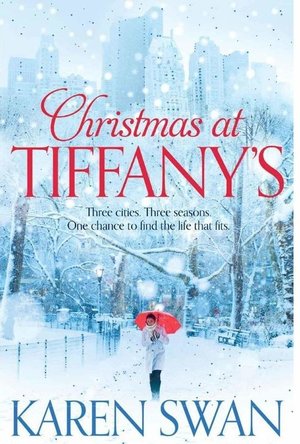
This book was recommended to me by a friend and I wasn’t sure what to expect. The whole time I was reading it, anyone that saw the book in my hands would ask ‘is that similar to ‘Breakfast at Tiffany’s?’ The short answer to that is no, not even close.
I must admit that I was quite confused by the start of the book and the prologue could have been explained a bit better. The story is focalised through Cassie who is celebrating 10 years of marriage with her husband. 3 of her friends have come to visit her in order to celebrate this ‘achievement’. However, things quickly turn sour and it’s revealed that her husband has been having an affair with her best friend and they even have a child together. Her 3 visitors whisk her away and it is agreed that she will spend 4 months with each of them in order to find herself again. She will have to find her feet in New York, Paris and then London (it can’t be all bad!).
This novel shows you a journey of a woman who has always depended on her relationship and who gains her independence and finds what she truly wants. Granted, there are parts that are incredibly cheesy but I think that is part of the beauty of it. It’s a predictable feel-good book but there is absolutely nothing wrong with that.
As a woman, it has inspired and reminded me that relationships aren’t everything and a happily ever after can come at any moment. The novel excites you as the prospect of a new and better relationship unfolds for Cassie. Swan takes you into this world where anything is possible even for a woman with a broken heart.
This book doesn’t just appeal to women that have had their heart broken but also those that love to travel. It highlights different things to do in the three locations and makes you feel inspired to go and see these for yourself. It is a bitter sweet romance novel and I’m just waiting to find my own version of Henry.
Overall, it was an enjoyable read and something that I could happily pick up again. I must admit, I’m surprised that they have made an adaptation of this novel. It would be an ultimate chick flick!
I must admit that I was quite confused by the start of the book and the prologue could have been explained a bit better. The story is focalised through Cassie who is celebrating 10 years of marriage with her husband. 3 of her friends have come to visit her in order to celebrate this ‘achievement’. However, things quickly turn sour and it’s revealed that her husband has been having an affair with her best friend and they even have a child together. Her 3 visitors whisk her away and it is agreed that she will spend 4 months with each of them in order to find herself again. She will have to find her feet in New York, Paris and then London (it can’t be all bad!).
This novel shows you a journey of a woman who has always depended on her relationship and who gains her independence and finds what she truly wants. Granted, there are parts that are incredibly cheesy but I think that is part of the beauty of it. It’s a predictable feel-good book but there is absolutely nothing wrong with that.
As a woman, it has inspired and reminded me that relationships aren’t everything and a happily ever after can come at any moment. The novel excites you as the prospect of a new and better relationship unfolds for Cassie. Swan takes you into this world where anything is possible even for a woman with a broken heart.
This book doesn’t just appeal to women that have had their heart broken but also those that love to travel. It highlights different things to do in the three locations and makes you feel inspired to go and see these for yourself. It is a bitter sweet romance novel and I’m just waiting to find my own version of Henry.
Overall, it was an enjoyable read and something that I could happily pick up again. I must admit, I’m surprised that they have made an adaptation of this novel. It would be an ultimate chick flick!

Neon's Nerd Nexus (360 KP) rated Gemini Man (2019) in Movies
Oct 16, 2019


Exposition Man
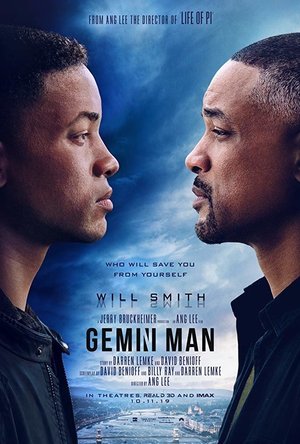
Gemini Man is a pure bore, a tedious bombardment of utter crap that's so oversimplified you would think it was made for children. Personaly I admire Ang Lee as a director hes got this quirky kinda way of shooting films & hes always brave enough to try new filming techniques/strange camera angles that you dont really see in other movies. Id liken him to Luc Besson tbh but sadly just like him after making some absolute cinematic masterpieces they both then seem to be content with just churning out utter dross & while at the heart all these movies have great ideas/cool action its the excecution they fail on every time. Gemini man is no diffrerent infact id say its even worse than Lucy or Billy Lynn as its just so dull to the point where I was questioning if i should use the time catch up on sleep instead. Nothing of any intrest happens in this movie and im not kidding when i say all we get 90% of the time is characters repeating the extreamly basic plot to us over & over again which comes across as patronising making the movie exteamly monotonous & exhausting to watch. Acting isnt much better either its all very one tone/basic with characters clearly only there as checklist reminder of whats about to happen. But what about the action? well for a 2hour movie #action scenes only equate to about 15 minutes total & even when we do get finally get an action scene (bar the motorbike chase from the trailer) theres really nothing memorable or thrilling at all. One thing I will say its a looker for sure & at times my god does it look fantastic with a visual clarity that almost feels like your on set but problem is again its not pushed enough & theres not really any enviroments or action that makes good use of the techniques used to film it which is a big shame (it almost got a 2 because of visuals but I got annoyed I wasted 2hours of my only day off watching it). So irritating, boring, generic, predictable, shallow, basic, overlong & inteligence insulting I warn you now do not go to see Gemini Man it deserves no ones precious time or #money its just a pointless mess thats nothing but an absolutle chore to sit through.

Deborah (162 KP) rated The Mythology of Richard III in Books
Dec 21, 2018
As usual, Ashdown-Hill has given us a well-written and accessible book with an extensive index and bibliography and reasoning well backed up with factual evidence; I find his books are always worth reading an a refreshing change from a lot of the nonsense there is out there. In this particular book he looks at myths and legends, both old and rather worryingly modern, that surround one or our best known monarchs.
Early chapters deal with the mythology perpetuated by Tudor propagandists and blinkered 'traditionalists' despite lack of evidence in many cases and even explicit evidence to the contrary in others! He looks at how some stories, such as the 'body in the river' became perpetuated over time so that they eventually become accepted as 'truth' by the uninformed. Even I had taken rather at face value the story of the White/Blue Boar Inn, but as Ashdown-Hill points out, it would be much more logical for Richard III to have stayed at Leicester Castle, as he had on a previous occasion, and also there is no evidence that an inn with a boar in its name existed at all in Leicester at this time!
The latter part of the book deals with more modern myths and I was really rather saddened and disappointed that it was necessary to have to set the record straight on many aspect of the rediscovery of the king's grave. I completely understand Ashdown-Hill's need to do so. After reading his earlier book 'The Last Days of Richard III' I was thoroughly convinced by his well reasoned arguments and never for a moment did I seriously doubt that that is where Richard III's resting place was. I was almost ready to go and dig the car park up myself! Whatever the rights and wrongs of it, I did find all the arguments over a final resting place to be somewhat distasteful, with some people sinking very low in voicing their opinions. It is disheartening that a British University PR department is less interested in truth than in trying to keep all the kudos for itself and I hope that people will read this and know the truth. With all its apparent misinformation I doubt I will be bothering with the visitor centre in Leicester any more than I have bothered to visit the putative site of Bosworth.
Early chapters deal with the mythology perpetuated by Tudor propagandists and blinkered 'traditionalists' despite lack of evidence in many cases and even explicit evidence to the contrary in others! He looks at how some stories, such as the 'body in the river' became perpetuated over time so that they eventually become accepted as 'truth' by the uninformed. Even I had taken rather at face value the story of the White/Blue Boar Inn, but as Ashdown-Hill points out, it would be much more logical for Richard III to have stayed at Leicester Castle, as he had on a previous occasion, and also there is no evidence that an inn with a boar in its name existed at all in Leicester at this time!
The latter part of the book deals with more modern myths and I was really rather saddened and disappointed that it was necessary to have to set the record straight on many aspect of the rediscovery of the king's grave. I completely understand Ashdown-Hill's need to do so. After reading his earlier book 'The Last Days of Richard III' I was thoroughly convinced by his well reasoned arguments and never for a moment did I seriously doubt that that is where Richard III's resting place was. I was almost ready to go and dig the car park up myself! Whatever the rights and wrongs of it, I did find all the arguments over a final resting place to be somewhat distasteful, with some people sinking very low in voicing their opinions. It is disheartening that a British University PR department is less interested in truth than in trying to keep all the kudos for itself and I hope that people will read this and know the truth. With all its apparent misinformation I doubt I will be bothering with the visitor centre in Leicester any more than I have bothered to visit the putative site of Bosworth.
MaryAnn (14 KP) rated Jaguar (Painter Place Saga, #3) in Books
Nov 4, 2019
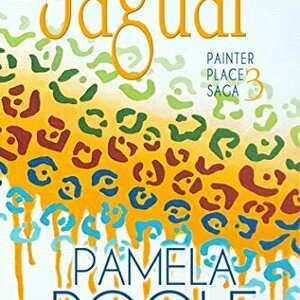
Can the man who once left Caroline behind now be trusted to rescue her? Caroline and Chad Gregory are happy on their island home at Painter Place. But an old vendetta against them puts Caroline in terrible danger. Her enemies are closing in, and the future of Painter Place is at stake. Her only hope of escape is a man known as the jaguar, a legendary international operative-and the ex-boyfriend who once leftCaroline behind. Even if he and a miracle can save her, Caroline will never be the same sheltered woman who has been groomed from childhood to inherit the island. Social Media post idea starters (see attached photos to share): Can the man who once left Caroline Painter behind now be trusted to rescue her? If Caroline's prayers to return to Painter Place are answered, can she adjust to the ordinary after a week of the extraordinary? (For reviewers who want to play up a missionary-minded point of view in the novel)In desperation, a wandering tribe in the Amazon tested the God of the Shining Woman who left her drawings as gifts for them in the darkness. The Jaguar lived his life as if it began only five years ago, with his first memories. He did not expect to live five more. But a dangerous mission stirs resurfacing memories and compromises his ability to rescue the only woman he ever loved-and left behind.
My Thoughts: This is the continuing saga of Painter Place, where there is no shortage of drama. In this episode we find Caroline abducted and taken into the jungle to escape the cartel. The thing is, it is her former boyfriend whom Caroline thought to be dead that is her rescuer. How will this affect her marriage? Will she ever get home to her family and children?
This is a fast-paced novel that will keep the reader on the edge until the very end. Pamela Poole writes her books that will make the reader think. Always full of valuable lessons for all of us to consider. I enjoyed meeting new characters and of course meeting up with some old ones. I do believe that the author was trying to convey how powerful our prayers can be; and enjoyed reading about the jaguar. I certainly look forward to her next book in the series.
?????
My Thoughts: This is the continuing saga of Painter Place, where there is no shortage of drama. In this episode we find Caroline abducted and taken into the jungle to escape the cartel. The thing is, it is her former boyfriend whom Caroline thought to be dead that is her rescuer. How will this affect her marriage? Will she ever get home to her family and children?
This is a fast-paced novel that will keep the reader on the edge until the very end. Pamela Poole writes her books that will make the reader think. Always full of valuable lessons for all of us to consider. I enjoyed meeting new characters and of course meeting up with some old ones. I do believe that the author was trying to convey how powerful our prayers can be; and enjoyed reading about the jaguar. I certainly look forward to her next book in the series.
?????

Night Reader Reviews (683 KP) rated The Wailing Snail in Books
Jan 9, 2020
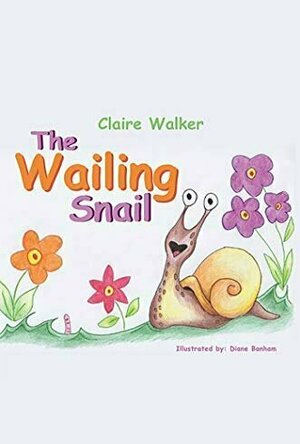
The Wailing Snail by Claire Walker is a cute little rhyming book about a chain reaction caused by a little garden snail. It reminded me of a similar book by Dr. Seuss called Because a Little Bug Went KA-CHOO! but with a much darker ending.
In a garden, a little snail wails so loudly that it causes a major chain reaction. This reaction at one point causes a cat to get mad at a bird and chase after it. Once the bird escapes it is so tired and exhausted that it goes in search of something to eat. The story then comes full circle with the bird finding the snail in the garden that started the whole thing in the first place. The snail then once again lets out a wail
I really liked the illustrations by Diane Bonham. They are cute with simple shapes and colors that ultimately do not overwhelm children. The subject matter of the page is always depicted in a way that draws full attention to it. The rhymes give the book a solid rhythm and the rhyming words being bold and all caps puts emphasis on them for learning and teaching points for new readers. What I did not like was that while the story comes full circle it dose so it a dark and almost morbid way with the bird eating the snail. The back of the book does hint at something bad happening so I might just be used to childrens books have a feel-good ending.
The target readers for this book are young children, infants to toddler age range who would enjoy having this book read to them as the rhymes make it fun. Older toddlers and/or children just starting their first few years of school may question the ending. The ending is an interesting twist for adults though. I rate this book a 2 out of 4 because in the vast amount of childrens book available I would not go out of my way to recommend this book. At the same time, I also would not discourage anyone from it either, but I would warn them about the ending. This book sits firmly as a mid-range book, not good and not bad.
https://nightreaderreviews.blogspot.com/
https://www.austinmacauley.com/book/wailing-snail
In a garden, a little snail wails so loudly that it causes a major chain reaction. This reaction at one point causes a cat to get mad at a bird and chase after it. Once the bird escapes it is so tired and exhausted that it goes in search of something to eat. The story then comes full circle with the bird finding the snail in the garden that started the whole thing in the first place. The snail then once again lets out a wail
I really liked the illustrations by Diane Bonham. They are cute with simple shapes and colors that ultimately do not overwhelm children. The subject matter of the page is always depicted in a way that draws full attention to it. The rhymes give the book a solid rhythm and the rhyming words being bold and all caps puts emphasis on them for learning and teaching points for new readers. What I did not like was that while the story comes full circle it dose so it a dark and almost morbid way with the bird eating the snail. The back of the book does hint at something bad happening so I might just be used to childrens books have a feel-good ending.
The target readers for this book are young children, infants to toddler age range who would enjoy having this book read to them as the rhymes make it fun. Older toddlers and/or children just starting their first few years of school may question the ending. The ending is an interesting twist for adults though. I rate this book a 2 out of 4 because in the vast amount of childrens book available I would not go out of my way to recommend this book. At the same time, I also would not discourage anyone from it either, but I would warn them about the ending. This book sits firmly as a mid-range book, not good and not bad.
https://nightreaderreviews.blogspot.com/
https://www.austinmacauley.com/book/wailing-snail

JT (287 KP) rated The Raid (2011) in Movies
Mar 10, 2020
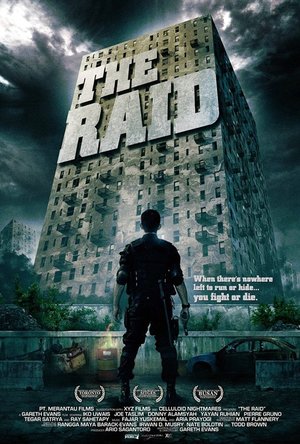
As a big fan of action I always look for a film that really holds your attention as well as capture the imagination.We all know that there is a sense of unbelievability that is needed for some action films, and The Raid will certainly check those two points off the list.
The film follows Rama (Uwais) a rookie cop who is part of a S.W.A.T team sent into a tower block to bring down drug lord Tama (Sahetapy), who is holed up surrounded by a army of psychopathic knife wielding maniacs. This is a man that is not to be messed with as we see him viciously execute five men at close range. When he runs out of bullets on the last man we think he’ll let him go. Not so, as he goes to the desk draw, in it are a couple of bullets and a hammer….he takes the hammer.
Meanwhile as the team arrive at the building it’s clear that they are not going to get it all their own way as the majority of them are picked off one by one leaving only a few survivors trapped on the seventh floor. With seemingly nowhere to go, the small band of brothers agree to finish what they started, and go get Tama. The action is explosive, right from the moment the cops set foot inside the carnage begins and doesn’t really let itself catch breath for the 90 minutes.
The fight scenes in-particular are brilliantly choreographed, the climatic fight at the end just seems to keep going and going. A lot of work has gone into getting them just right, in fact the character Mad Dog who is played by Yayan Ruhian had a big part to play in orchestrating them.
There might be the risk that seeing one Indonesian getting the shit kicked out of them one after another may become boring, but that is not the case. Director Gareth Evans has immersed us fully in the action, with wide angled shots giving us a a beautiful picture to look at.
It’s a fully enjoyable film that will have you wincing in pleasure, there must be something about the tower block that attracts, but Evans has taken the action genre to great heights with this one.
The film follows Rama (Uwais) a rookie cop who is part of a S.W.A.T team sent into a tower block to bring down drug lord Tama (Sahetapy), who is holed up surrounded by a army of psychopathic knife wielding maniacs. This is a man that is not to be messed with as we see him viciously execute five men at close range. When he runs out of bullets on the last man we think he’ll let him go. Not so, as he goes to the desk draw, in it are a couple of bullets and a hammer….he takes the hammer.
Meanwhile as the team arrive at the building it’s clear that they are not going to get it all their own way as the majority of them are picked off one by one leaving only a few survivors trapped on the seventh floor. With seemingly nowhere to go, the small band of brothers agree to finish what they started, and go get Tama. The action is explosive, right from the moment the cops set foot inside the carnage begins and doesn’t really let itself catch breath for the 90 minutes.
The fight scenes in-particular are brilliantly choreographed, the climatic fight at the end just seems to keep going and going. A lot of work has gone into getting them just right, in fact the character Mad Dog who is played by Yayan Ruhian had a big part to play in orchestrating them.
There might be the risk that seeing one Indonesian getting the shit kicked out of them one after another may become boring, but that is not the case. Director Gareth Evans has immersed us fully in the action, with wide angled shots giving us a a beautiful picture to look at.
It’s a fully enjoyable film that will have you wincing in pleasure, there must be something about the tower block that attracts, but Evans has taken the action genre to great heights with this one.

Gareth von Kallenbach (980 KP) rated Elvis & Nixon (2016) in Movies
Aug 6, 2019

Elvis Presley has always been a mystery to me. I never understood the fascination around him and the length at which his fans adore him. Growing up in the south, his image and legend permeated throughout the culture and made it impossible to criticize him or his music. He was infallible. Nixon, on the other hand, is universally loathed for having a Presidential administration built on division and corruption. Through one bold idea, on the part of Presley, they cross paths. Elvis and Nixon, sounds as though it would be perfect for an 80s sitcom, however, the reality of this interaction is put on display through this film. In total, the film is fun in that it gives a bit of insight as to what their interaction may have been like, given their personalities and styles, however, there is a lack of depth with anyone in the film. Michael Shannon’s (Midnight Special, Man of Steel) portrayal of Elvis comes off as wooden and lacking any personality.
I felt as though I was watching an impersonator on screen rather an actor portraying a character. Kevin Spacey (House of Cards) plays a strong Nixon in which you feel a little bit of sympathy for the President considering the circumstances that he finds himself in toward the end of his first term. Unfortunately, due to his character Frank Underwood on House of Cards, audiences will feel as though it is President Underwood playing Nixon. There isn’t much space between the two characters that he plays. There also isn’t much space between Elvis and Nixon with their approach to social ills and the American landscape.
There is very little this film offers other than an imagining of what possibly took place due to now recordings of their meeting other than a photo. In that sense, it is an interesting “what if” piece. The imagination of the filmmakers allows us to question who these two men and the circumstances that faced America during 1971. Although provocative in its approach, it doesn’t allow for much growth or ability to connect with any of the characters. It has its fun and funny moments, which will keep audiences interested, but nothing that will have them talking about the film well after they have seen it. Through the portrayals by Shannon and Spacey, I find myself liking Nixon a little more and hating Elvis a little less.
I felt as though I was watching an impersonator on screen rather an actor portraying a character. Kevin Spacey (House of Cards) plays a strong Nixon in which you feel a little bit of sympathy for the President considering the circumstances that he finds himself in toward the end of his first term. Unfortunately, due to his character Frank Underwood on House of Cards, audiences will feel as though it is President Underwood playing Nixon. There isn’t much space between the two characters that he plays. There also isn’t much space between Elvis and Nixon with their approach to social ills and the American landscape.
There is very little this film offers other than an imagining of what possibly took place due to now recordings of their meeting other than a photo. In that sense, it is an interesting “what if” piece. The imagination of the filmmakers allows us to question who these two men and the circumstances that faced America during 1971. Although provocative in its approach, it doesn’t allow for much growth or ability to connect with any of the characters. It has its fun and funny moments, which will keep audiences interested, but nothing that will have them talking about the film well after they have seen it. Through the portrayals by Shannon and Spacey, I find myself liking Nixon a little more and hating Elvis a little less.

Learn Japanese - AccelaStudy®
Education and Travel
App
AccelaStudy Japanese is the award-winning language education software for iPhone, iPod touch, and...