
Search
Search results

Hadley (567 KP) rated The Shining in Books
Apr 6, 2019
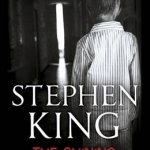


Different from the movie (1 more)
Well written
Contains spoilers, click to show
In his most well-known horror story, 'The Shining,' which is either a ghost story or the collapse of a man's mental state, Jack Torrance, a recovering alcoholic who just lost his job teaching at a school, gets hired to be the Winter caretaker of the infamous Overlook Hotel. In this book, the readers follow Jack into a nervous breakdown, as well as his possession by the ghosts of this hotel.
While the Torrance's seem like every other family - a small boy and moving to a new town - we find out that their son, Danny, has special abilities that help him to see things that may or may not happen in the future.
Soon after the family arrives to take over the hotel for the Winter, Danny meets a man named Hallorann - a chef at the hotel - who has the same abilities as him, which he calls 'Shine:' "What you got son, I call it shinin' on, the Bible calls it having visions, and there's scientists that call it precognition. I've read up on it, son. I've studied on it. They all mean seeing the future. Do you understand that?" Hallorann tells Danny.
Why does Danny, or anyone for that matter, have the Shine? King doesn't explain this in the book, it just seems to be something specific people are born with, even Danny's parents take him to a doctor before the snowfall hits to figure out what is going on,but even the doctor believes it's just a child's overactive imagination. Even so, Danny continues to have visions: one is of the room 217 in the Overlook, which even Hallorann told him to never go inside, and the other is of a creature-like man swinging a roque mallet, yelling about someone needing to take their medicine,"Come out! Come out, you little shit! Take your medicine!" We,also,meet his imaginary friend, Tony, who is the one whom continues to show Danny these visions over and over.
Unlike the movie, 'The Shining' book stands on it's own as an almost completely different story, even having Jack wielding a roque mallet and not an axe. Also the infamous scene of the Grady twins showing up in a hallway, asking Danny to play with them, never happened in the book; Hallorann also survives Jack's attack, Wendy is nearly beaten to-death by the roque mallet, and the hedge maze doesn't even exist! Instead, King wrote about topiary animals that came to life to kill you, "The rabbit was down on all fours, cropping grass. Its belly was against the ground. But not ten minutes ago it had been up on its hind legs, of course it had been, he had trimmed its ears...and its belly."
Jack begins to change when he finds a scrapbook in the basement that contains articles and such of things that happened at the Overlook. One such thing that sticks with Jack is about a Masked Ball that took place at the grand opening of the hotel. "Horace M. Derwent Requests The Pleasure of Your Company At a Masked Ball to Celebrate The Grand Opening of THE OVERLOOK HOTEL...Dinner Will Be Served At 8 P.M. Unmasking And Dancing At Midnight August 29,1945...RSVP"
Later on in the story, Jack, Wendy and Danny are awoken by the elevator going up and down by itself, but inside is a surprise,"Then she was up, her cheeks flushed, her forehead as pale and shining as a spirit lamp. 'What about this, Jack? Is this a short circuit?' She threw something and suddenly the hall was full of drifting confetti, red and white and blue and yellow. 'Is this?' A green party streamer, faded to a pale pastel color with age." Continuously, throughout the book,the past hotel guests make themselves known, either by showing up in rooms or leaving things for the family to find.
King shines (pun intended) with this book, he keeps things moving so that readers don't get bored. Known for his horror books, he doesn't disappoint in this one, which I personally think that this is his best work ever. He doesn't jump from scene to scene (like in many of his other books), he flawlessly keeps the timeline going even though he switches from character view points, between Jack, Danny, Wendy and Hallorann.
Although the film 'The Shining' is a classic in the horror movie genre, it is a huge step away from the book itself. "And the Red Death held sway over all." is a line that was never in the movie,but is quite frequent through the book. Even the most recognizable scene of "Here's Johnny!" is not in the book!
Also, Hallorann's character has a much bigger part in the story, the reader gets to see him living his Winter life in Florida, working as a chef in another hotel.. Hallorann even has a back story in the book that is wonderful to read about; we get to accompany him to a lawyer's office where he feels the need to get his Will made out for everything to be left to his sister when he is overcome with the feeling that his life may be about to end,"Hallorann had stepped in and told this McIver that he wanted to make a will,and could McIver help him out? Well, McIver asked,how soon do you want the document? Yesterday, said Hallorann, and threw his head back and laughed."
This 659- page book is well worth the read. You not only get a different take on 'The Shining' that is so well known,but you also get a different ending!'The Shining' will now always be a staple on my book shelf.
Even if you love the movie as much as I do (it is my favorite horror movie of all time), you will love the book just as much. King went above and beyond when he wrote 'The Shining.' Highly recommend!
While the Torrance's seem like every other family - a small boy and moving to a new town - we find out that their son, Danny, has special abilities that help him to see things that may or may not happen in the future.
Soon after the family arrives to take over the hotel for the Winter, Danny meets a man named Hallorann - a chef at the hotel - who has the same abilities as him, which he calls 'Shine:' "What you got son, I call it shinin' on, the Bible calls it having visions, and there's scientists that call it precognition. I've read up on it, son. I've studied on it. They all mean seeing the future. Do you understand that?" Hallorann tells Danny.
Why does Danny, or anyone for that matter, have the Shine? King doesn't explain this in the book, it just seems to be something specific people are born with, even Danny's parents take him to a doctor before the snowfall hits to figure out what is going on,but even the doctor believes it's just a child's overactive imagination. Even so, Danny continues to have visions: one is of the room 217 in the Overlook, which even Hallorann told him to never go inside, and the other is of a creature-like man swinging a roque mallet, yelling about someone needing to take their medicine,"Come out! Come out, you little shit! Take your medicine!" We,also,meet his imaginary friend, Tony, who is the one whom continues to show Danny these visions over and over.
Unlike the movie, 'The Shining' book stands on it's own as an almost completely different story, even having Jack wielding a roque mallet and not an axe. Also the infamous scene of the Grady twins showing up in a hallway, asking Danny to play with them, never happened in the book; Hallorann also survives Jack's attack, Wendy is nearly beaten to-death by the roque mallet, and the hedge maze doesn't even exist! Instead, King wrote about topiary animals that came to life to kill you, "The rabbit was down on all fours, cropping grass. Its belly was against the ground. But not ten minutes ago it had been up on its hind legs, of course it had been, he had trimmed its ears...and its belly."
Jack begins to change when he finds a scrapbook in the basement that contains articles and such of things that happened at the Overlook. One such thing that sticks with Jack is about a Masked Ball that took place at the grand opening of the hotel. "Horace M. Derwent Requests The Pleasure of Your Company At a Masked Ball to Celebrate The Grand Opening of THE OVERLOOK HOTEL...Dinner Will Be Served At 8 P.M. Unmasking And Dancing At Midnight August 29,1945...RSVP"
Later on in the story, Jack, Wendy and Danny are awoken by the elevator going up and down by itself, but inside is a surprise,"Then she was up, her cheeks flushed, her forehead as pale and shining as a spirit lamp. 'What about this, Jack? Is this a short circuit?' She threw something and suddenly the hall was full of drifting confetti, red and white and blue and yellow. 'Is this?' A green party streamer, faded to a pale pastel color with age." Continuously, throughout the book,the past hotel guests make themselves known, either by showing up in rooms or leaving things for the family to find.
King shines (pun intended) with this book, he keeps things moving so that readers don't get bored. Known for his horror books, he doesn't disappoint in this one, which I personally think that this is his best work ever. He doesn't jump from scene to scene (like in many of his other books), he flawlessly keeps the timeline going even though he switches from character view points, between Jack, Danny, Wendy and Hallorann.
Although the film 'The Shining' is a classic in the horror movie genre, it is a huge step away from the book itself. "And the Red Death held sway over all." is a line that was never in the movie,but is quite frequent through the book. Even the most recognizable scene of "Here's Johnny!" is not in the book!
Also, Hallorann's character has a much bigger part in the story, the reader gets to see him living his Winter life in Florida, working as a chef in another hotel.. Hallorann even has a back story in the book that is wonderful to read about; we get to accompany him to a lawyer's office where he feels the need to get his Will made out for everything to be left to his sister when he is overcome with the feeling that his life may be about to end,"Hallorann had stepped in and told this McIver that he wanted to make a will,and could McIver help him out? Well, McIver asked,how soon do you want the document? Yesterday, said Hallorann, and threw his head back and laughed."
This 659- page book is well worth the read. You not only get a different take on 'The Shining' that is so well known,but you also get a different ending!'The Shining' will now always be a staple on my book shelf.
Even if you love the movie as much as I do (it is my favorite horror movie of all time), you will love the book just as much. King went above and beyond when he wrote 'The Shining.' Highly recommend!

Sheridan (209 KP) rated Love, Death & Robots in TV
Apr 20, 2019
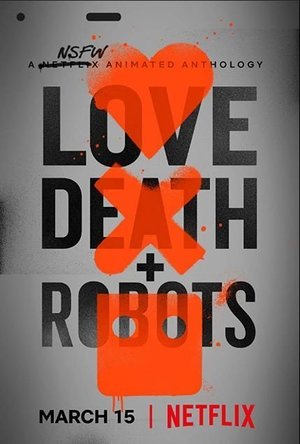

CGI is amazing (1 more)
The Perfect Mix of Morbid Humour and Gore
A Masterpiece of the Weird and Fantastical
This is going to be a long one, I'm going to review each episode as they aren't linked or related in any way, but just know, they are all gorgeous works of art and you should totally go watch the whole thing ?.
Beyond the Aquila Rift - CGI was beautiful from the moment it started, I was like 'shiiiit this series is going to be everything I love'. This one is about a crew making a delivery in space, however nothing quite goes to plan. For me, it had a very 'Mass Effect' feel with the FTL travel. I was not expecting a full out sex scene in the first 6 minutes but then again the episodes are on average only 16 minutes long. It was rauncy yet somehow, still quite tasteful, but as with most animated stuff there was an excessive amount of topless boob shots. I won't spoil it, but it ended up as a horrific mind fuck that left a shiver down my spine ?.
Secret War - Again, CGI was epic and the story was the perfect mix of unsettling, gory, and tragic. It follows a platoon of Red Army soldiers who are hunting down mysterious 'monsters'. There's blood, there's guts, a guy has an arm off at one point - what more could you ask for?
Sonnie's Edge - Immediately feels hellishly grunge and rave. I absolutely adored the blacklight effects and a strong female styling, the fight is gorgeous, the monsters have almost a Kaju feel which really made me happy as I love Pacific Rim. Of course this epicness is immediately ruined by a sloppy scene (I won't spoil it) which cemented the fact in my mind this was written by a man (I checked later and found I was correct), it does save itself with a fantastic twist at the end though so it was still an amazing short.
Sucker of Souls - This had a great grungy cartooning that felt half Kill Bill, half 2003 TMNT. It ended up being a real bad day for an archaeological expedition. Gore injected with humour is always a favourite of mine and this ticked all those boxes, including a wisecracking explosives expert (looking at you Gary!) If we've learnt anything from Indiana Jones and Rick O'Connell it's, don't fuck with tombs. This time was no different.
Three Robots - There's something just so fucking fantastic about robots going on holiday and speculating about 'human' stuff. It's just the perfect injection of morbid humour and I love it. The twist at the end had me laughing harder than I had any right to ?.
Ice Age - I haven't seen Topher Grace since That 70's Show so I was like 'heeeey cool'. This was the first one that wasn't soley animation so that was really cool. They find a civilization in their freezer - yes, you read that right, their freezer - and the story is awesome ?. It's a neat reflection on humans and our place in the world.
The Witness - Set in a brightly coloured city the animation here feels very Borderlands-y, which is super cool because I fricking love that game ?. There's murder, full frontal nudity, erotic dancing, and an ending that will tear your head right off. Pretty neat all in all.
Suits - Great Googamooga, this is my absolutely favourite so far, a perfectly normal looking farm, complete with adorable hick accents, discovers a breach in their fence. This isn't just any breach, this is an alien style swarm complete with Mech Warrior suits and a woman named Mel, who I'm convinced is Tank Girl as an old lady. 17 minutes of utter badassery you do not want to miss. Utterly LOVED it, and would 10/10 watch this as its own series.
When the Yogurt Took Over - Ok so the name - I was like 'should I take this seriously? Oooor' ?. Weirdly serious - yet hysterical. A five minute journey into what happened when Yogurt became sentient. You will not be disaappointed ?.
Good Hunting - With animation that reminds me of The Last Airbender, it's a story of magic, friendship, and the industrial age. A beautiful and tragic story, with horrific overtones of what greed and 'progress' can do.
The Dump - The animation this reminds me of would be sorta like, if the people at Pixar got high with Tim Burton. There was one random thing - I found Pearly's dick swing in the wind much funnier than any sane person probably would ?. A great story about man's best friend and let me tell ya, everyone needs an Otto ❤.
Shape-Shifter - There's something so deeply interesting about putting the supernatural into regular life. Two men, who are not human, in the US marines. Insanely intense story for under 15 minutes. Gorgeous CGI work too.
Helping Hand - This had a great "Gravity" feel to it, when everything goes wrong you just keep going, give a little and then a little more and you achieve the impossible. Breathtaking space visuals is just an added bonus ?.
Fish Night - Telltale style animation, depicts a story of a father and son on the road. The car breaks down and something both magical and tragic happens. The ending left me reeling ?.
Lucky 13 - The CGI in this one was so good it took me half the time to figure out that it wasn't real. Lucky 13 was to Cutter like the Normandy was to Joker. Just - the best goddamn ship ❤.
Zima Blues - Animated in a style similiar to Archer, this was an interesting piece about art and how it effects us, we search for meaning through it sometimes it's about appreciating the little things ❤.
Blindspot - 90's animation and a rad story about robots. This is my second favourite after Suits, would 10/10 watch as its own movie ?.
Alternate Histories - Did not stop laughing the entire time. Utter gold. I will recommend one thing - pause it at the blue screen bit, you won't be disappointed ?.
The only thing I'm sad about is there wasn't more of this to watch, it was incredible ?.
Beyond the Aquila Rift - CGI was beautiful from the moment it started, I was like 'shiiiit this series is going to be everything I love'. This one is about a crew making a delivery in space, however nothing quite goes to plan. For me, it had a very 'Mass Effect' feel with the FTL travel. I was not expecting a full out sex scene in the first 6 minutes but then again the episodes are on average only 16 minutes long. It was rauncy yet somehow, still quite tasteful, but as with most animated stuff there was an excessive amount of topless boob shots. I won't spoil it, but it ended up as a horrific mind fuck that left a shiver down my spine ?.
Secret War - Again, CGI was epic and the story was the perfect mix of unsettling, gory, and tragic. It follows a platoon of Red Army soldiers who are hunting down mysterious 'monsters'. There's blood, there's guts, a guy has an arm off at one point - what more could you ask for?
Sonnie's Edge - Immediately feels hellishly grunge and rave. I absolutely adored the blacklight effects and a strong female styling, the fight is gorgeous, the monsters have almost a Kaju feel which really made me happy as I love Pacific Rim. Of course this epicness is immediately ruined by a sloppy scene (I won't spoil it) which cemented the fact in my mind this was written by a man (I checked later and found I was correct), it does save itself with a fantastic twist at the end though so it was still an amazing short.
Sucker of Souls - This had a great grungy cartooning that felt half Kill Bill, half 2003 TMNT. It ended up being a real bad day for an archaeological expedition. Gore injected with humour is always a favourite of mine and this ticked all those boxes, including a wisecracking explosives expert (looking at you Gary!) If we've learnt anything from Indiana Jones and Rick O'Connell it's, don't fuck with tombs. This time was no different.
Three Robots - There's something just so fucking fantastic about robots going on holiday and speculating about 'human' stuff. It's just the perfect injection of morbid humour and I love it. The twist at the end had me laughing harder than I had any right to ?.
Ice Age - I haven't seen Topher Grace since That 70's Show so I was like 'heeeey cool'. This was the first one that wasn't soley animation so that was really cool. They find a civilization in their freezer - yes, you read that right, their freezer - and the story is awesome ?. It's a neat reflection on humans and our place in the world.
The Witness - Set in a brightly coloured city the animation here feels very Borderlands-y, which is super cool because I fricking love that game ?. There's murder, full frontal nudity, erotic dancing, and an ending that will tear your head right off. Pretty neat all in all.
Suits - Great Googamooga, this is my absolutely favourite so far, a perfectly normal looking farm, complete with adorable hick accents, discovers a breach in their fence. This isn't just any breach, this is an alien style swarm complete with Mech Warrior suits and a woman named Mel, who I'm convinced is Tank Girl as an old lady. 17 minutes of utter badassery you do not want to miss. Utterly LOVED it, and would 10/10 watch this as its own series.
When the Yogurt Took Over - Ok so the name - I was like 'should I take this seriously? Oooor' ?. Weirdly serious - yet hysterical. A five minute journey into what happened when Yogurt became sentient. You will not be disaappointed ?.
Good Hunting - With animation that reminds me of The Last Airbender, it's a story of magic, friendship, and the industrial age. A beautiful and tragic story, with horrific overtones of what greed and 'progress' can do.
The Dump - The animation this reminds me of would be sorta like, if the people at Pixar got high with Tim Burton. There was one random thing - I found Pearly's dick swing in the wind much funnier than any sane person probably would ?. A great story about man's best friend and let me tell ya, everyone needs an Otto ❤.
Shape-Shifter - There's something so deeply interesting about putting the supernatural into regular life. Two men, who are not human, in the US marines. Insanely intense story for under 15 minutes. Gorgeous CGI work too.
Helping Hand - This had a great "Gravity" feel to it, when everything goes wrong you just keep going, give a little and then a little more and you achieve the impossible. Breathtaking space visuals is just an added bonus ?.
Fish Night - Telltale style animation, depicts a story of a father and son on the road. The car breaks down and something both magical and tragic happens. The ending left me reeling ?.
Lucky 13 - The CGI in this one was so good it took me half the time to figure out that it wasn't real. Lucky 13 was to Cutter like the Normandy was to Joker. Just - the best goddamn ship ❤.
Zima Blues - Animated in a style similiar to Archer, this was an interesting piece about art and how it effects us, we search for meaning through it sometimes it's about appreciating the little things ❤.
Blindspot - 90's animation and a rad story about robots. This is my second favourite after Suits, would 10/10 watch as its own movie ?.
Alternate Histories - Did not stop laughing the entire time. Utter gold. I will recommend one thing - pause it at the blue screen bit, you won't be disappointed ?.
The only thing I'm sad about is there wasn't more of this to watch, it was incredible ?.


Gareth von Kallenbach (980 KP) rated Call of Duty: Ghosts - Devastation in Video Games
Jun 19, 2019
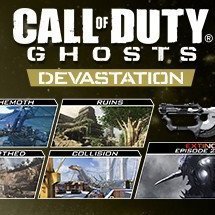

The second of four planned content packs for Call of Duty: Ghosts has arrived and offers more than a way to tide fans over until the release the next pack and highly anticipated release of Call of Duty: Advanced Warfare in November. Following the established formula of previous releases, the new collection offers four new maps, a new weapon, and a new episode for the alien themed Extinction gameplay mode.
The following maps are included in the collection.
Behemoth
This is set in a large excavation tool in Columbia where stairs, narrow corridors, and fast action are the order of business. Think of a cross between an oil rig and excavation machine and you have an idea what’s in store.
The upper levels of the map provide plenty of fast action and the interior locales get plenty of opportunity for close quarter combat. Running on the main deck may make you a favorite of snipers, but there are plenty of opportunities for players to duck out of harms way if they’re willing to jump over a ledge.
I have to say that this is my favorite of the new maps because I just really enjoyed the run and gun style of playing and this one suits me perfectly.
COD Ghosts Devastation_Behemoth Environment
Ruins
Set in Mexico, this map combines a jungle locale with plenty of temples. At first it was very frustrating as due to the excessive amounts of foliage and varying terrain levels, it was a campers paradise. I lost count of how many times I was spawn camped at the beginning of my play sessions but I soon developed instincts as to where opponents preferred to set up and hide. There is plenty of opportunity for fast and intense combat here as long as you’re willing to put up with the numerous snipers and campers that will letter the map.
When a player reaches a certain level of kill streak, they will become The Predator from the film series and this allows them to hunt opposing players using the heat vision of character as well as his wrist blades and plasma cannon. Should a player be lucky enough to take down this creature, he often gets the final laugh courtesy of his self-destruct mechanism which complete with sound effects from the film has devastating results.
COD Ghosts Devastation_Predator vs the Volcano
Unearthed
Set in a classified location this is often the most frustrating of the new maps for me. It is like a combination of Dome and a couple of other maps from previous games which forces combat to flow along and excavation site. There are some impressive things such as automatic doors and underground areas to fight within. However the central hub and elevated catwalk also lead to lots of sniping and camping. I had been spawn camped on this map more than any of the other maps combined but if you’re willing to lob a few grenades into the central hub, you can often be rewarded with some very impressive kill streaks.
COD Ghosts Devastation_Unearthed Environment
Collision
This New York based map is cluttered and dangerous as it is set aboard a crashed freighter that is mingled with the bridge and has all manner of vehicles and cargo containers aboard. Sniping is common here but the multilevel map and numerous interiors allow for a nice mix of gameplay styles. I remember recent session where I completed the final kills for our team by jumping down upon three passing enemies firing as I jumped. I have also racked up some very enjoyable kill streaks on this map that resulted in rocket strikes being called in. The detail level is good from the standing water in the lower sections of the ship to the cargo netting and containers that letter the upper levels. Seeing the wrecked New York City taxis was a nice touch as well as some of the more personal details in the crew quarter areas of the ship.
COD Ghosts Devastation_Collision Environment
The new weapon is called the Ripper and I found it to be a very interesting mix of submachine gun an assault rifle as it escaped will changing between the two on-the-fly. It is very high rates of fire which will rip opponent to shreds in short order hence how the weapon got its name. The high rate of fire though does go through your ammunition quickly so short bursts or plenty of time to reload is always recommend.
The final part of the collection is the Mayday episode of the alien themed Extinction. For players work with one another to infiltrate and clear a locale that is been overrun by the alien menace. Players purchase weapons upgrades based on the amount of enemies they dispatch and will also earn skill points based on their performance. Said skill points will let them do things such is offer ammunition upgrades to teammates and bring in electronics ranging from Sentry guns and other advanced weaponry. My first time through we made excellent progress as we seem to be well synced to take out the aliens and guard our drill that was required for advancement into the game.
This was short-lived as after several successful encounters we came across a group that had our number and dispatch us in quick succession which left no one to revive the fallen members. While it is a bit frustrating batch when this happens you must replay the entire session over the graphics and gameplay are definitely a very nice touch and I’m very happy to see that they have moved this to an episodic format because the narrative and back story bring a whole new level of enjoyment.
While not perfect, the collection is to me more enjoyable than many that maps the game shipped with at launch and therefore one that I can easily recommend. Those looking for the best value will want to purchase a season pass is that will get you all for the map packs at the discounted price which is certainly a is better than paying the going rate to get them à la carte.
http://sknr.net/2014/05/20/call-duty-ghosts-devastation-dlc/
The following maps are included in the collection.
Behemoth
This is set in a large excavation tool in Columbia where stairs, narrow corridors, and fast action are the order of business. Think of a cross between an oil rig and excavation machine and you have an idea what’s in store.
The upper levels of the map provide plenty of fast action and the interior locales get plenty of opportunity for close quarter combat. Running on the main deck may make you a favorite of snipers, but there are plenty of opportunities for players to duck out of harms way if they’re willing to jump over a ledge.
I have to say that this is my favorite of the new maps because I just really enjoyed the run and gun style of playing and this one suits me perfectly.
COD Ghosts Devastation_Behemoth Environment
Ruins
Set in Mexico, this map combines a jungle locale with plenty of temples. At first it was very frustrating as due to the excessive amounts of foliage and varying terrain levels, it was a campers paradise. I lost count of how many times I was spawn camped at the beginning of my play sessions but I soon developed instincts as to where opponents preferred to set up and hide. There is plenty of opportunity for fast and intense combat here as long as you’re willing to put up with the numerous snipers and campers that will letter the map.
When a player reaches a certain level of kill streak, they will become The Predator from the film series and this allows them to hunt opposing players using the heat vision of character as well as his wrist blades and plasma cannon. Should a player be lucky enough to take down this creature, he often gets the final laugh courtesy of his self-destruct mechanism which complete with sound effects from the film has devastating results.
COD Ghosts Devastation_Predator vs the Volcano
Unearthed
Set in a classified location this is often the most frustrating of the new maps for me. It is like a combination of Dome and a couple of other maps from previous games which forces combat to flow along and excavation site. There are some impressive things such as automatic doors and underground areas to fight within. However the central hub and elevated catwalk also lead to lots of sniping and camping. I had been spawn camped on this map more than any of the other maps combined but if you’re willing to lob a few grenades into the central hub, you can often be rewarded with some very impressive kill streaks.
COD Ghosts Devastation_Unearthed Environment
Collision
This New York based map is cluttered and dangerous as it is set aboard a crashed freighter that is mingled with the bridge and has all manner of vehicles and cargo containers aboard. Sniping is common here but the multilevel map and numerous interiors allow for a nice mix of gameplay styles. I remember recent session where I completed the final kills for our team by jumping down upon three passing enemies firing as I jumped. I have also racked up some very enjoyable kill streaks on this map that resulted in rocket strikes being called in. The detail level is good from the standing water in the lower sections of the ship to the cargo netting and containers that letter the upper levels. Seeing the wrecked New York City taxis was a nice touch as well as some of the more personal details in the crew quarter areas of the ship.
COD Ghosts Devastation_Collision Environment
The new weapon is called the Ripper and I found it to be a very interesting mix of submachine gun an assault rifle as it escaped will changing between the two on-the-fly. It is very high rates of fire which will rip opponent to shreds in short order hence how the weapon got its name. The high rate of fire though does go through your ammunition quickly so short bursts or plenty of time to reload is always recommend.
The final part of the collection is the Mayday episode of the alien themed Extinction. For players work with one another to infiltrate and clear a locale that is been overrun by the alien menace. Players purchase weapons upgrades based on the amount of enemies they dispatch and will also earn skill points based on their performance. Said skill points will let them do things such is offer ammunition upgrades to teammates and bring in electronics ranging from Sentry guns and other advanced weaponry. My first time through we made excellent progress as we seem to be well synced to take out the aliens and guard our drill that was required for advancement into the game.
This was short-lived as after several successful encounters we came across a group that had our number and dispatch us in quick succession which left no one to revive the fallen members. While it is a bit frustrating batch when this happens you must replay the entire session over the graphics and gameplay are definitely a very nice touch and I’m very happy to see that they have moved this to an episodic format because the narrative and back story bring a whole new level of enjoyment.
While not perfect, the collection is to me more enjoyable than many that maps the game shipped with at launch and therefore one that I can easily recommend. Those looking for the best value will want to purchase a season pass is that will get you all for the map packs at the discounted price which is certainly a is better than paying the going rate to get them à la carte.
http://sknr.net/2014/05/20/call-duty-ghosts-devastation-dlc/

Darren (1599 KP) rated American Heist (2015) in Movies
Jun 20, 2019
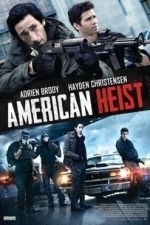
Story: American Heist starts with James (Christensen) waiting before starting to look for someone then an explosion surprises him bring us back a day in time where we follow James going about his everyday life. James has a brother Frankie (Brody) fresh out of prison being picked up by his criminal connection Sugar (Akon) who keeps him happy with drinks, drugs and girls on his first night out before meeting the boss Ray (Kittles).
James has turned his life around where he now works on the straight life working as a mechanic, he sees an old flame Emily (Brewster) back in town where James sees his life moving in the right direction. Frankie turns up to see his brother’s life after ten years locked away. Frankie arranges to meet for drinks with James which leads to him discussion a new job opportunity which leads us back to the opening scene where James gets tricked into a job as Frankie is trying to repay his debts.
Ray has assembled a team to pull off an elaborate bank robbery which will finally see Frankie pay back the debts he owes because James has the skills to get part of the plan done.
American Heist is a story that does seem to follow the traditional idea of a recently released from prison criminal goes straight back into the criminal world even if it isn’t fully his desire. We also see how the man thinking he has escaped from the criminal world gets dragged back in for one more job. This side of the story has been done before but is does really push the two brothers on an emotional level. When it comes to the actual heist it does become the secondary story behind the brothers relationship with the preparation being a quick flash scene and like most heist films go completely wrong. The story will have to go down as a solid entry into the genre but won’t be a film climbing into anyone’s best. (7/10)
Actor Review
Hayden Christensen: James is the former criminal who has turned his life around with a clean cut job where he is trying to get his own business, his life may not be perfect but he is happy that everything is all legal now. When his brothers released from prison he ends up caught up trying to pay off Frankie’s debts forced into working for criminal Ray. Hayden continues to try and recover from the criticism he got for Star Wars with another anti pretty boy film where he tries to play tough but doesn’t quite pull it off. (6/10)
james
Adrien Brody: Frankie is James’ brother who fresh out of prisoner does straight back into his criminal underworld where criminal boss Ray wants both Frankie and James to work for him. Frankie went through a lot in prison and always stood up for his brothers, as well as helping him become the man he is now. Adrien gives a performance you would expect from an Oscar winner, he does show his skills but sometimes feels like he is overacting to the situations. (7/10)
frankie
Jordana Brewster: Emily is the old flame who comes back into James’ life. Emily just so happens to be a dispatch caller for the police which could make the bank job all that much harder as Emily and James start rekindling their romance. Jordana does a good job but really doesn’t get enough screen time for the romantic angle in the story. (6/10)
Akon: Sugar is the second in command to Ray who gets the dirty jobs done when other people won’t get involved. Akon does make a good supporting actor never trying to over act like many musicians do when they enter the acting world. (7/10)
Tory Kittles: Ray is the criminal who helped Frankie in prison leaving him being owed a favour from Frankie when he finally gets out. Ray makes Frankie bring James back into the criminal world to take part in an elaborate heist. Tory makes for a good emotionless tough criminal who believes in every word he is saying. (7/10)
Support Cast: American Heist doesn’t really have many more characters involved in the story, we have the generic characters trying to chase down the criminals and the members of the group trying to pull off the heist.
Director Review: Sarik Andreasyan – Sarik gives us a solid heist film that really does focus on the relationship between the two brothers who have gone down different paths but must work together one last time. (7/10)
Action: American Heist keeps the action in a realistic level apart from one moment, making each feel like it could be a real heist and aftermath. (7/10)
Drama: American Heist creates a dysfunctional relationship between the two brothers which helps show just how far they would go for each other. (7/10)
Settings: American Heist keeps the settings in location where you would imagine the characters would want to turn to crime to end all the suffering they are going through. (8/10)
Suggestion: American Heist is one to try, I do think if you are a fan of the genre you will enjoy but there is only so much you can do with a heist film without fully copying anything else. (Try It)
Best Part: I really liked how the film ended, but can’t give it away.
Worst Part: How James gets pulled into the criminal world again.
Action Scene Of The Film: Ray’s escape attempt.
Believability: The heist feels like it could be how a real one would end, but the relationship side mixed with the heist not so. (4/10)
Chances of Tears: No (0/10)
Chances of Sequel: No
Post Credits Scene: No
Similar Too: Kill Point (TV Show)
Oscar Chances: None
Budget: $10 Million
Runtime: 1 Hour 34 Minutes
Overall: American Heist will go down as an emotionally gritty heist film about two brothers.
https://moviesreview101.com/2015/05/26/american-heist-2015/
James has turned his life around where he now works on the straight life working as a mechanic, he sees an old flame Emily (Brewster) back in town where James sees his life moving in the right direction. Frankie turns up to see his brother’s life after ten years locked away. Frankie arranges to meet for drinks with James which leads to him discussion a new job opportunity which leads us back to the opening scene where James gets tricked into a job as Frankie is trying to repay his debts.
Ray has assembled a team to pull off an elaborate bank robbery which will finally see Frankie pay back the debts he owes because James has the skills to get part of the plan done.
American Heist is a story that does seem to follow the traditional idea of a recently released from prison criminal goes straight back into the criminal world even if it isn’t fully his desire. We also see how the man thinking he has escaped from the criminal world gets dragged back in for one more job. This side of the story has been done before but is does really push the two brothers on an emotional level. When it comes to the actual heist it does become the secondary story behind the brothers relationship with the preparation being a quick flash scene and like most heist films go completely wrong. The story will have to go down as a solid entry into the genre but won’t be a film climbing into anyone’s best. (7/10)
Actor Review
Hayden Christensen: James is the former criminal who has turned his life around with a clean cut job where he is trying to get his own business, his life may not be perfect but he is happy that everything is all legal now. When his brothers released from prison he ends up caught up trying to pay off Frankie’s debts forced into working for criminal Ray. Hayden continues to try and recover from the criticism he got for Star Wars with another anti pretty boy film where he tries to play tough but doesn’t quite pull it off. (6/10)
james
Adrien Brody: Frankie is James’ brother who fresh out of prisoner does straight back into his criminal underworld where criminal boss Ray wants both Frankie and James to work for him. Frankie went through a lot in prison and always stood up for his brothers, as well as helping him become the man he is now. Adrien gives a performance you would expect from an Oscar winner, he does show his skills but sometimes feels like he is overacting to the situations. (7/10)
frankie
Jordana Brewster: Emily is the old flame who comes back into James’ life. Emily just so happens to be a dispatch caller for the police which could make the bank job all that much harder as Emily and James start rekindling their romance. Jordana does a good job but really doesn’t get enough screen time for the romantic angle in the story. (6/10)
Akon: Sugar is the second in command to Ray who gets the dirty jobs done when other people won’t get involved. Akon does make a good supporting actor never trying to over act like many musicians do when they enter the acting world. (7/10)
Tory Kittles: Ray is the criminal who helped Frankie in prison leaving him being owed a favour from Frankie when he finally gets out. Ray makes Frankie bring James back into the criminal world to take part in an elaborate heist. Tory makes for a good emotionless tough criminal who believes in every word he is saying. (7/10)
Support Cast: American Heist doesn’t really have many more characters involved in the story, we have the generic characters trying to chase down the criminals and the members of the group trying to pull off the heist.
Director Review: Sarik Andreasyan – Sarik gives us a solid heist film that really does focus on the relationship between the two brothers who have gone down different paths but must work together one last time. (7/10)
Action: American Heist keeps the action in a realistic level apart from one moment, making each feel like it could be a real heist and aftermath. (7/10)
Drama: American Heist creates a dysfunctional relationship between the two brothers which helps show just how far they would go for each other. (7/10)
Settings: American Heist keeps the settings in location where you would imagine the characters would want to turn to crime to end all the suffering they are going through. (8/10)
Suggestion: American Heist is one to try, I do think if you are a fan of the genre you will enjoy but there is only so much you can do with a heist film without fully copying anything else. (Try It)
Best Part: I really liked how the film ended, but can’t give it away.
Worst Part: How James gets pulled into the criminal world again.
Action Scene Of The Film: Ray’s escape attempt.
Believability: The heist feels like it could be how a real one would end, but the relationship side mixed with the heist not so. (4/10)
Chances of Tears: No (0/10)
Chances of Sequel: No
Post Credits Scene: No
Similar Too: Kill Point (TV Show)
Oscar Chances: None
Budget: $10 Million
Runtime: 1 Hour 34 Minutes
Overall: American Heist will go down as an emotionally gritty heist film about two brothers.
https://moviesreview101.com/2015/05/26/american-heist-2015/

Lottie disney bookworm (1056 KP) rated Mirror, Mirror in Books
Aug 16, 2019

Review by Disney Bookworm
Contains spoilers, click to show
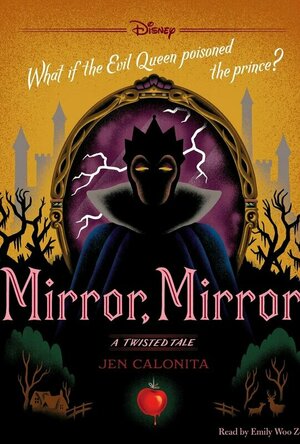
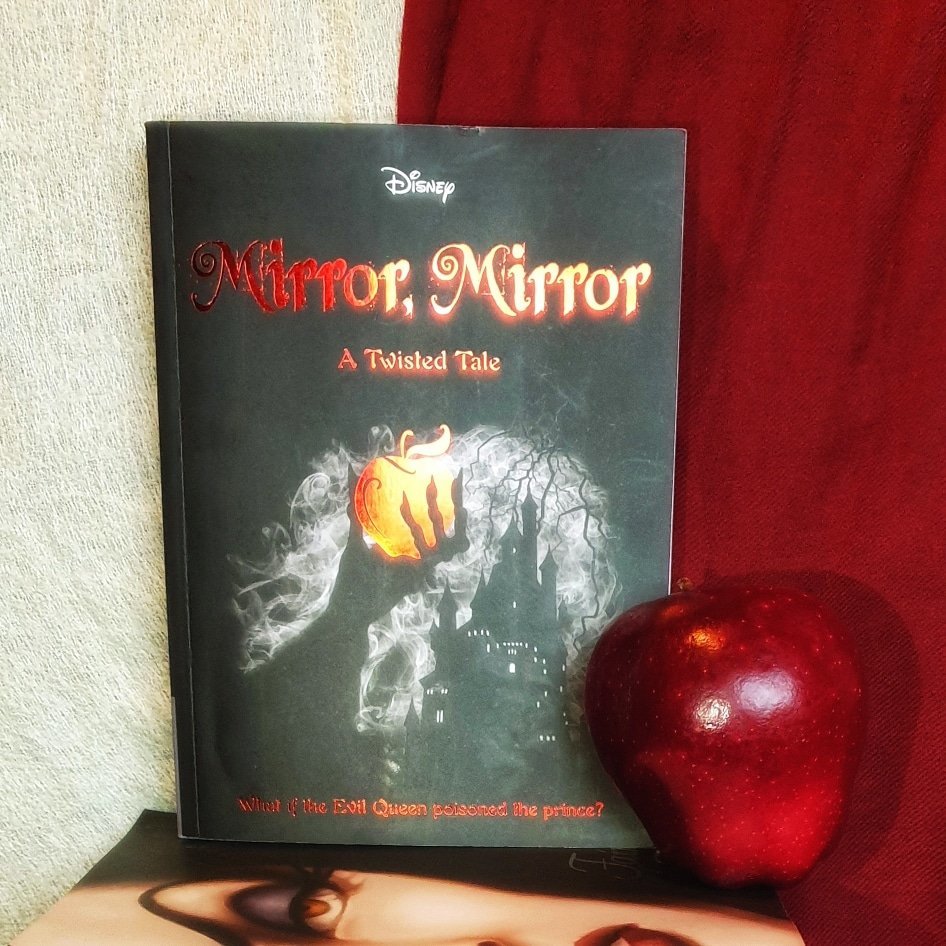
If I’m honest I initially thought the tagline to this Snow White twisted tale novel was a massive plot spoiler but, when you are 300 pages into a book and no-one has eaten a poisoned apple, it may be the ideal opportunity to admit you were wrong. This book is not that simple!
Mirror, Mirror explores the traditional Grimm fairy tale of Snow White through the eyes of the two main characters: the Evil Queen and Snow White herself. The reader is completely under the control of these two women: finding themselves with no choice but to witness the familiar story from their perspective.
Jen Calonita’s novel is also heavily built on story telling through flashbacks. In my opinion, this is a genius idea as it provides an undeniable depth to her characters. Let’s be honest, everyone knows the story of Snow White but not everyone knows the story before Snow White and it is here where the twisted tale evolves.
Through these flashbacks we meet Katherine and Ingrid: two sisters whom have lost their mother and are being raised by their neglectful, sometimes violent, father. As a result of their upbringing, Ingrid, the elder sister, has adopted a motherly role towards her younger sister Katherine and strives to protect the innocent girl at all times. They leave home, finding work on a farm where Katherine finds her passion within the apple orchard, cultivating a new variety of apple which will later attract the attention of the King.
Ingrid however, always wants more than what she has. Older and more aware of the hardship life can bring, Ingrid is not as sweet and innocent as her sister: people do not dote on Ingrid as they do Katherine and eventually Ingrid finds that she cannot settle for a simple life- instead opting for a job in a small shop known for its association with dark magic and the home of a certain mirror.
You may have guessed by now that Ingrid is, in fact, the Evil Queen and her sister Katherine is Snow White’s mother! I know what you are thinking, I have just described how protective Ingrid was of the future Queen: surely she wouldn’t “off” her own sister and try to collect her niece’s heart in a box?
This is where the complexity of Ingrid’s character really shines through and where, (if hats suited me) I will take my hat off to Jen Calonita. Mirror Mirror takes you on a journey with Ingrid. You experience her love for her sister first-hand as well as her frustration with her sheltered life but later you also witness her lust for power and how easily Ingrid’s choices lead her down the wrong path.
I also believe that Ingrid is truly scarred by her past. She sneers upon her sister’s kindness and villainises Katherine for letting a man, and later her baby, come between them. Ingrid views herself as wiser and more intelligent than her little sister: believing that she would certainly rule the Kingdom more efficiently and not stopping until this becomes a reality.
Despite being a formidable woman, Ingrid is not devoid of vulnerabilities and, as the story progresses, the readers will witness Ingrid’s ghosts and note how one in particular never leaves her until the very end.
Of course, Ingrid’s enabler is the magic mirror. Calonita paints a picture of a mirror identical to the one we remember from the Disney 1938 classic animated film with a haunting mask dominating and manipulating The Evil Queen with every chance it gets.
The mirror creates an obsession and dependence within Ingrid that is chillingly portrayed. It is undoubtedly the real villain of the story: demanding blood from the start and weakening Ingrid until she cleaves to its will. However, we all know who is standing between the mirror and its plans for domination and undisputed power: the princess Snow White.
In the past, I have made no secret of the fact that Snow is my least favourite Disney princess. Her voice in the film grated on me and I just genuinely found her irritating. Thankfully Calonita’s Snow White is more akin to the ‘Once Upon A Time’ interpretation and so much easier to form a relationship with as a reader.
While fulfilling our expectations of being kind, innocent and prone to falling in love with conveniently handsome Princes: Mirror Mirror’s Snow White is bolder than we are used to and, as her story progresses, becomes more confident in herself as the heir to the kingdom. Her priorities are more political in nature, with a strong focus on rebuilding her kingdom and her bravery shines through almost from the very beginning. Snow does encounter challenges and dark thoughts as any person does but earns her Disney princess badge by helping true love to save the day!
Similarly, the seven dwarves are not as one-dimensional as the classic movie. They assist the Princess of course and shelter her in the forest but they also seem more street-wise (or should that be forest-wise?), squirreling away diamonds for bartering and mustering armies for Snow’s cause. There isn’t too much focus on the seven men in Mirror Mirror but I don’t think that the book is necessarily missing this. I think the characters are so well-known that too much character development would stray away from the main plot.
Mirror, Mirror is a modern adaptation of the familiar fairytale: centring itself around two very strong women in their own right but polar opposites in terms of their characters and choices in life.
The novel makes several nods to the iconic images formed in 1938 by Walt Disney such as the apple, the glass coffin and, of course, the seven dwarves. However, the recurring theme of choosing your own story and the complex backgrounds to her characters cause Jen Calonita’s novel to stand out on its own.
It may not have been the traditional “happy ever after” but this adaptation of Snow White was, in my opinion, the “fairest of them all”.
Written by The Disney Bookworm:
https://disneybookworm.home.blog
Mirror, Mirror explores the traditional Grimm fairy tale of Snow White through the eyes of the two main characters: the Evil Queen and Snow White herself. The reader is completely under the control of these two women: finding themselves with no choice but to witness the familiar story from their perspective.
Jen Calonita’s novel is also heavily built on story telling through flashbacks. In my opinion, this is a genius idea as it provides an undeniable depth to her characters. Let’s be honest, everyone knows the story of Snow White but not everyone knows the story before Snow White and it is here where the twisted tale evolves.
Through these flashbacks we meet Katherine and Ingrid: two sisters whom have lost their mother and are being raised by their neglectful, sometimes violent, father. As a result of their upbringing, Ingrid, the elder sister, has adopted a motherly role towards her younger sister Katherine and strives to protect the innocent girl at all times. They leave home, finding work on a farm where Katherine finds her passion within the apple orchard, cultivating a new variety of apple which will later attract the attention of the King.
Ingrid however, always wants more than what she has. Older and more aware of the hardship life can bring, Ingrid is not as sweet and innocent as her sister: people do not dote on Ingrid as they do Katherine and eventually Ingrid finds that she cannot settle for a simple life- instead opting for a job in a small shop known for its association with dark magic and the home of a certain mirror.
You may have guessed by now that Ingrid is, in fact, the Evil Queen and her sister Katherine is Snow White’s mother! I know what you are thinking, I have just described how protective Ingrid was of the future Queen: surely she wouldn’t “off” her own sister and try to collect her niece’s heart in a box?
This is where the complexity of Ingrid’s character really shines through and where, (if hats suited me) I will take my hat off to Jen Calonita. Mirror Mirror takes you on a journey with Ingrid. You experience her love for her sister first-hand as well as her frustration with her sheltered life but later you also witness her lust for power and how easily Ingrid’s choices lead her down the wrong path.
I also believe that Ingrid is truly scarred by her past. She sneers upon her sister’s kindness and villainises Katherine for letting a man, and later her baby, come between them. Ingrid views herself as wiser and more intelligent than her little sister: believing that she would certainly rule the Kingdom more efficiently and not stopping until this becomes a reality.
Despite being a formidable woman, Ingrid is not devoid of vulnerabilities and, as the story progresses, the readers will witness Ingrid’s ghosts and note how one in particular never leaves her until the very end.
Of course, Ingrid’s enabler is the magic mirror. Calonita paints a picture of a mirror identical to the one we remember from the Disney 1938 classic animated film with a haunting mask dominating and manipulating The Evil Queen with every chance it gets.
The mirror creates an obsession and dependence within Ingrid that is chillingly portrayed. It is undoubtedly the real villain of the story: demanding blood from the start and weakening Ingrid until she cleaves to its will. However, we all know who is standing between the mirror and its plans for domination and undisputed power: the princess Snow White.
In the past, I have made no secret of the fact that Snow is my least favourite Disney princess. Her voice in the film grated on me and I just genuinely found her irritating. Thankfully Calonita’s Snow White is more akin to the ‘Once Upon A Time’ interpretation and so much easier to form a relationship with as a reader.
While fulfilling our expectations of being kind, innocent and prone to falling in love with conveniently handsome Princes: Mirror Mirror’s Snow White is bolder than we are used to and, as her story progresses, becomes more confident in herself as the heir to the kingdom. Her priorities are more political in nature, with a strong focus on rebuilding her kingdom and her bravery shines through almost from the very beginning. Snow does encounter challenges and dark thoughts as any person does but earns her Disney princess badge by helping true love to save the day!
Similarly, the seven dwarves are not as one-dimensional as the classic movie. They assist the Princess of course and shelter her in the forest but they also seem more street-wise (or should that be forest-wise?), squirreling away diamonds for bartering and mustering armies for Snow’s cause. There isn’t too much focus on the seven men in Mirror Mirror but I don’t think that the book is necessarily missing this. I think the characters are so well-known that too much character development would stray away from the main plot.
Mirror, Mirror is a modern adaptation of the familiar fairytale: centring itself around two very strong women in their own right but polar opposites in terms of their characters and choices in life.
The novel makes several nods to the iconic images formed in 1938 by Walt Disney such as the apple, the glass coffin and, of course, the seven dwarves. However, the recurring theme of choosing your own story and the complex backgrounds to her characters cause Jen Calonita’s novel to stand out on its own.
It may not have been the traditional “happy ever after” but this adaptation of Snow White was, in my opinion, the “fairest of them all”.
Written by The Disney Bookworm:
https://disneybookworm.home.blog
Gareth von Kallenbach (980 KP) rated Hellboy (2019) in Movies
Jul 2, 2019
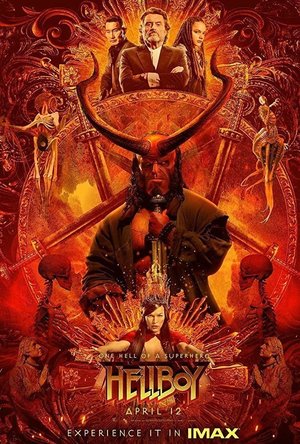

Trivia question for you…what does an immortal evil queen, King Arthur, Nazis and a boy born from Hell itself have in common? If you answered Hellboy you win a prize. The prize is going to the theater and watching the film and whether it’s a prize worth winning is something you’ll have to decide for yourself. I’m getting a bit ahead of myself though, so let’s rewind a bit and start at the beginning.
Hellboy (David Harbour) is a demon from Hell (hence the name), his backstory as we learn early on in the movie is pretty standard fare. The Nazi’s are on the verge of losing World War II and in a desperate move to turn the tide call upon the evil sorcerer Rasputin to call upon the depths of Hell and raise a champion who will fight for them. The incantation is interrupted when famous Nazi hunter Lobster Johnson (Thomas Haden Church) goes in with guns blazing, as other allied troops join the fray. Their relief at stopping the incantation is short-lived as the alter opens and a young demon climbs through. Professor Broom who had infiltrated the Nazi team had been brought in to put down any evil that was successfully summoned. Upon seeing the young demon, Professor Broom (for reasons known only to him at the time) decides not to kill him, but to take him in and raise him as his own.
Flash forward to present day, and Hellboy as we now know him alongside his father are members of the B.P.R.D (Bureau for Paranormal Research and Defense). On a mission to defeat some giants that are roaming the countryside in England they stumble upon an ancient evil that dark forces are trying to retrieve. It seems back in the dark ages a war between humans and monsters was being waged. Seeing no end to the violence King Arthur (Mark Stanley) and his faithful wizard Merlin (Brian Gleeson) offer to surrender to The Blood Queen (Milla Jovovich). On top the hill where the surrender is to take place, the Blood Queen is betrayed by one of her own and King Arthur, using the infamous blade Excalibur, cut the Blood Queen into several parts. While she can’t be killed, she can be contained and each of her body parts are placed in separate boxes. These boxes are then sealed with holy water that only a holy man can unlock and are sent to the farthest corners of England. If the Blood Queen ever returns, she will release a plague that will not only destroy England but spread across the entire world. Thus, sets the stage for Hellboy.
Being a fan of the previous movies and in particular the portrayal of Hellboy by Ron Pearlman, I wasn’t sure how to feel about David Harbour in this role. It’s always a bit hit or miss when a series is rebooted, and I was pleasantly surprised with how David Harbour stepped up and into the role. While he doesn’t have the same menacing size and gruffness that Ron Pearlman possesses, it didn’t take me long to adjust to this new version. He is joined by a strong supporting cast consisting of Sasha Lane as his ghost whispering friend Alice and Ben Daimo as an MI-11 agent weary of teaming up with a monster. Milla Jovovich does an outstanding job as the Blood Queen and her fairy-pig friend portrayed by Stephen Graham and Douglas Tait.
Visually the movie is stunning, with the numerous monsters and fairy creatures coming to life before your eyes. The movie is exceptionally gory as one might expect, with numerous limb dismemberments, decapitations, and more blood than anyone would expect to erupt from such wounds. It’s over-the-top and meant to be that way which tended to bring some uncomfortable laughter at times from those around me. Having recently played Mortal Kombat 11, I couldn’t help but feel that some of the fatality screens in that game would have felt right at home in this movie.
Story is where I feel Hellboy falls a bit flat. There are so many characters and side stories going on that it’s easy to get lost in it. From my description above, you can see that it includes King Arthur, Rasputin, Nazis, Secret Societies, Witches that eat children, monsters…and that’s only in the first half of the movie. There is a ton going on and there are a lot of disconnects. While trying to avoid spoilers, there is a part in the film where Hellboy is talking to Baba Yaga (see another character reference), and after tricking her she places a curse on him. I’m still trying to figure out if the curse she placed on him occurred in the movie or not. In fact, I’m trying to figure out exactly what the point of that scene was. It’s not a bad story, but it tries to pack in a TON of references in its brief hour and forty five-ish minutes.
I’ll be the first to admit that I’ve never read any of the Hellboy graphic novels, I have seen both of the previous films, so I had a little bit of background going into this movie. I don’t know if all the references in the movie are pivotal to the novels or not. You certainly don’t have to have read them or seen the previous movies to appreciate this one, I just wonder if they tried to fit in too many Hellboy references into one film. Hellboy is an enjoyable ride, and it certainly doesn’t drag at all, in fact I was surprised at how quickly it was over. With all that being said, it’s a fun action-packed movie, with lots of gratuitous violence if that’s your thing. I certainly wouldn’t recommend taking your children to see it, violence aside, I just think there is way too much going on and it can be difficult to follow. Oh, and don’t forget to stay through the credits for the end credit scene. It’s not pivotal to the movie, but worth waiting around for.
Hellboy (David Harbour) is a demon from Hell (hence the name), his backstory as we learn early on in the movie is pretty standard fare. The Nazi’s are on the verge of losing World War II and in a desperate move to turn the tide call upon the evil sorcerer Rasputin to call upon the depths of Hell and raise a champion who will fight for them. The incantation is interrupted when famous Nazi hunter Lobster Johnson (Thomas Haden Church) goes in with guns blazing, as other allied troops join the fray. Their relief at stopping the incantation is short-lived as the alter opens and a young demon climbs through. Professor Broom who had infiltrated the Nazi team had been brought in to put down any evil that was successfully summoned. Upon seeing the young demon, Professor Broom (for reasons known only to him at the time) decides not to kill him, but to take him in and raise him as his own.
Flash forward to present day, and Hellboy as we now know him alongside his father are members of the B.P.R.D (Bureau for Paranormal Research and Defense). On a mission to defeat some giants that are roaming the countryside in England they stumble upon an ancient evil that dark forces are trying to retrieve. It seems back in the dark ages a war between humans and monsters was being waged. Seeing no end to the violence King Arthur (Mark Stanley) and his faithful wizard Merlin (Brian Gleeson) offer to surrender to The Blood Queen (Milla Jovovich). On top the hill where the surrender is to take place, the Blood Queen is betrayed by one of her own and King Arthur, using the infamous blade Excalibur, cut the Blood Queen into several parts. While she can’t be killed, she can be contained and each of her body parts are placed in separate boxes. These boxes are then sealed with holy water that only a holy man can unlock and are sent to the farthest corners of England. If the Blood Queen ever returns, she will release a plague that will not only destroy England but spread across the entire world. Thus, sets the stage for Hellboy.
Being a fan of the previous movies and in particular the portrayal of Hellboy by Ron Pearlman, I wasn’t sure how to feel about David Harbour in this role. It’s always a bit hit or miss when a series is rebooted, and I was pleasantly surprised with how David Harbour stepped up and into the role. While he doesn’t have the same menacing size and gruffness that Ron Pearlman possesses, it didn’t take me long to adjust to this new version. He is joined by a strong supporting cast consisting of Sasha Lane as his ghost whispering friend Alice and Ben Daimo as an MI-11 agent weary of teaming up with a monster. Milla Jovovich does an outstanding job as the Blood Queen and her fairy-pig friend portrayed by Stephen Graham and Douglas Tait.
Visually the movie is stunning, with the numerous monsters and fairy creatures coming to life before your eyes. The movie is exceptionally gory as one might expect, with numerous limb dismemberments, decapitations, and more blood than anyone would expect to erupt from such wounds. It’s over-the-top and meant to be that way which tended to bring some uncomfortable laughter at times from those around me. Having recently played Mortal Kombat 11, I couldn’t help but feel that some of the fatality screens in that game would have felt right at home in this movie.
Story is where I feel Hellboy falls a bit flat. There are so many characters and side stories going on that it’s easy to get lost in it. From my description above, you can see that it includes King Arthur, Rasputin, Nazis, Secret Societies, Witches that eat children, monsters…and that’s only in the first half of the movie. There is a ton going on and there are a lot of disconnects. While trying to avoid spoilers, there is a part in the film where Hellboy is talking to Baba Yaga (see another character reference), and after tricking her she places a curse on him. I’m still trying to figure out if the curse she placed on him occurred in the movie or not. In fact, I’m trying to figure out exactly what the point of that scene was. It’s not a bad story, but it tries to pack in a TON of references in its brief hour and forty five-ish minutes.
I’ll be the first to admit that I’ve never read any of the Hellboy graphic novels, I have seen both of the previous films, so I had a little bit of background going into this movie. I don’t know if all the references in the movie are pivotal to the novels or not. You certainly don’t have to have read them or seen the previous movies to appreciate this one, I just wonder if they tried to fit in too many Hellboy references into one film. Hellboy is an enjoyable ride, and it certainly doesn’t drag at all, in fact I was surprised at how quickly it was over. With all that being said, it’s a fun action-packed movie, with lots of gratuitous violence if that’s your thing. I certainly wouldn’t recommend taking your children to see it, violence aside, I just think there is way too much going on and it can be difficult to follow. Oh, and don’t forget to stay through the credits for the end credit scene. It’s not pivotal to the movie, but worth waiting around for.

Purple Phoenix Games (2266 KP) rated The Druid Master in Tabletop Games
Jun 2, 2021
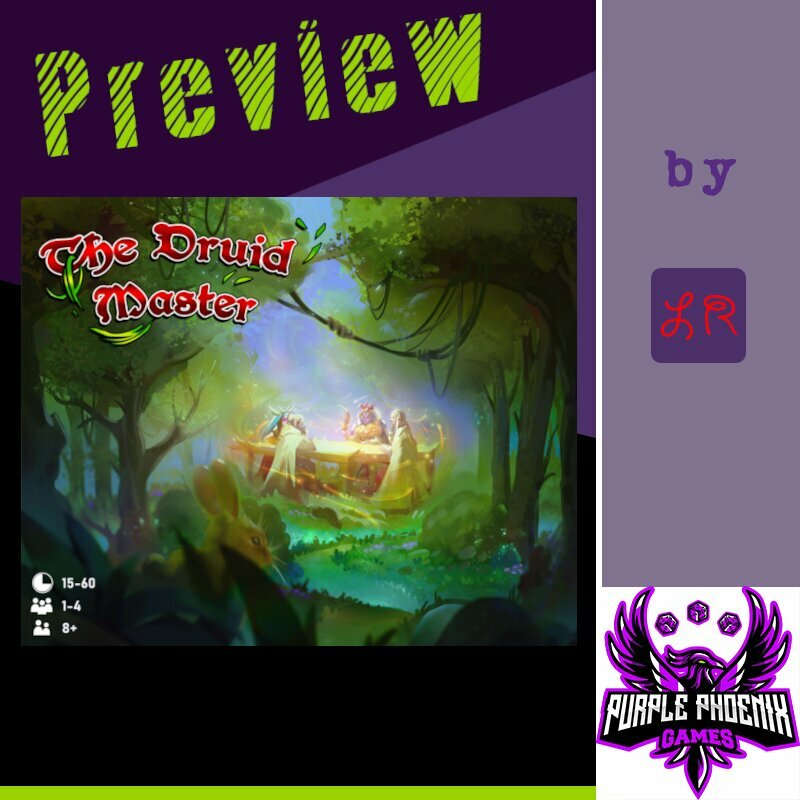
When it comes to fantasy worlds, I often think of powerful parties going on epic adventures – fighting monsters, delving through dungeons, and saving the world! But what about when the adventure is over and the party comes home? What do they do in their day-to-day lives? Well, The Druid Master helps give us a glimpse into the regular life of a Druid. Being the local healer might not always be glamorous, but hey, it’s a living!
Disclaimer: We were provided a PnP of The Druid Master for the purposes of this preview. The artwork and design of the cards is not yet finalized, so what you see pictured below is not necessarily what the production copies will look like. It is also important to note that although the game is about natural medicines/remedies, it does not replace professional medical advice and treatments. -L
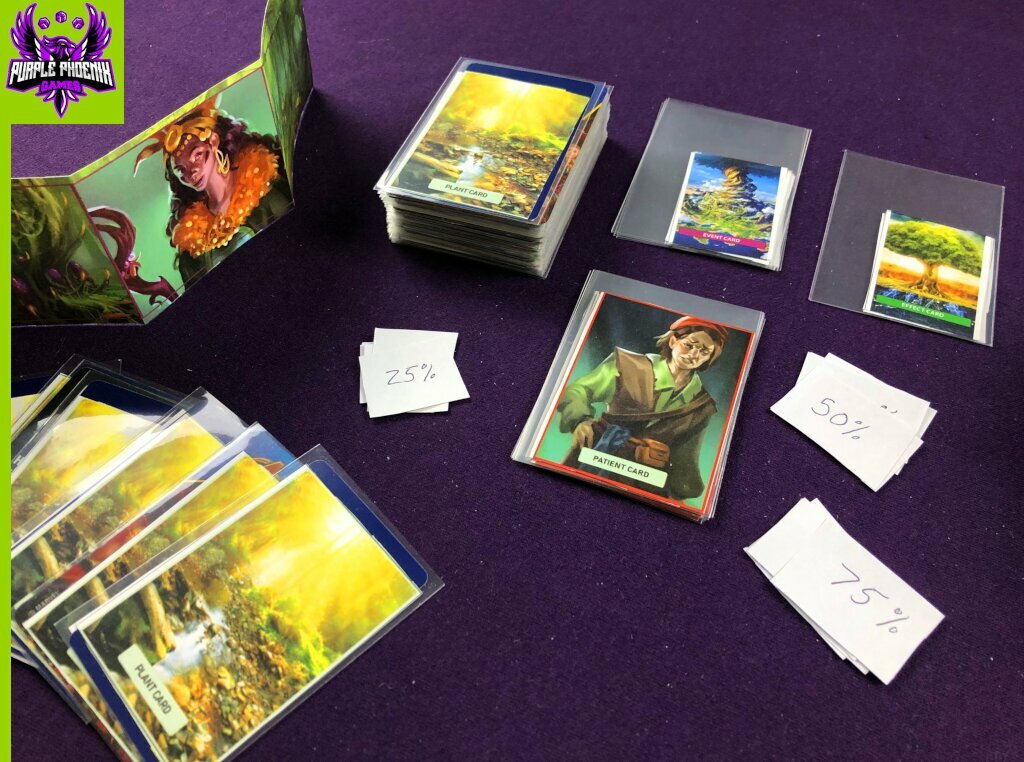
In The Druid Master, players will take on the roles of (you guessed it) Druids who have mastered the ancient arts of healing, through use of plants, herbs, and other natural elements. Ailing patients will come to you (and your rivals) for help, so you must work quickly to concoct the most effective remedy to heal them back to normal! To setup for a game, each player receives a Player Screen, 1 Effect card, and 7 Plant cards. The remaining Effect and Plant cards are shuffled to form draw decks, and the Event deck is placed nearby as well. Place the deck of Patient cards facedown within reach of all players, and set the Cure tokens to the side. The game is now ready to begin!
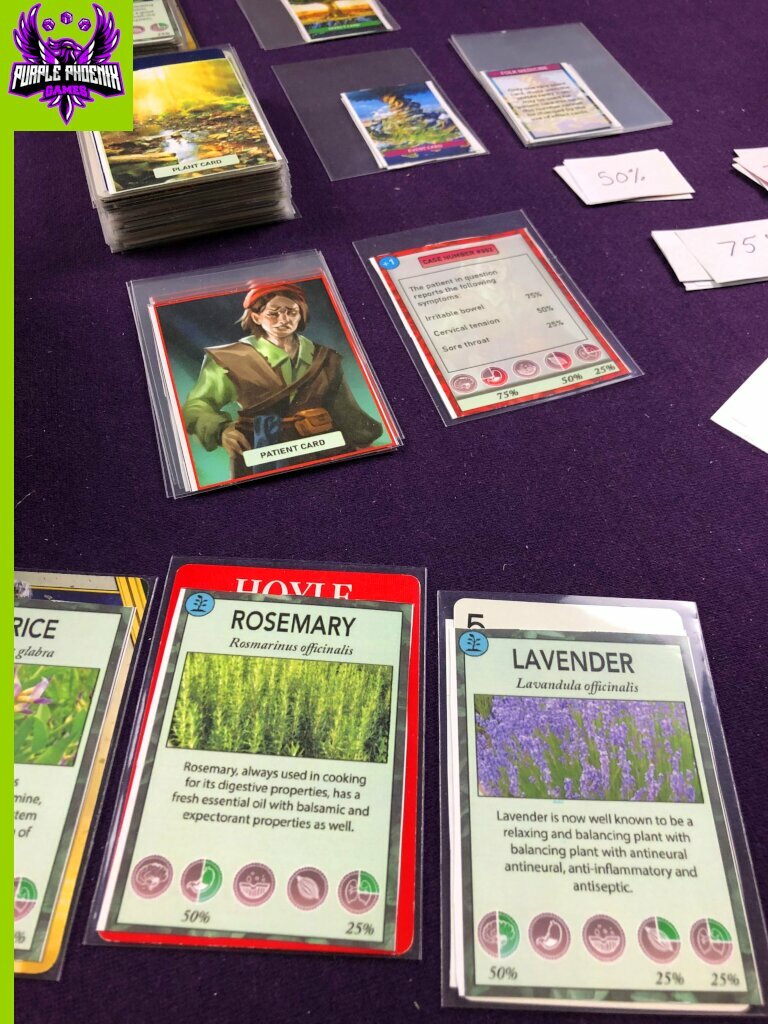
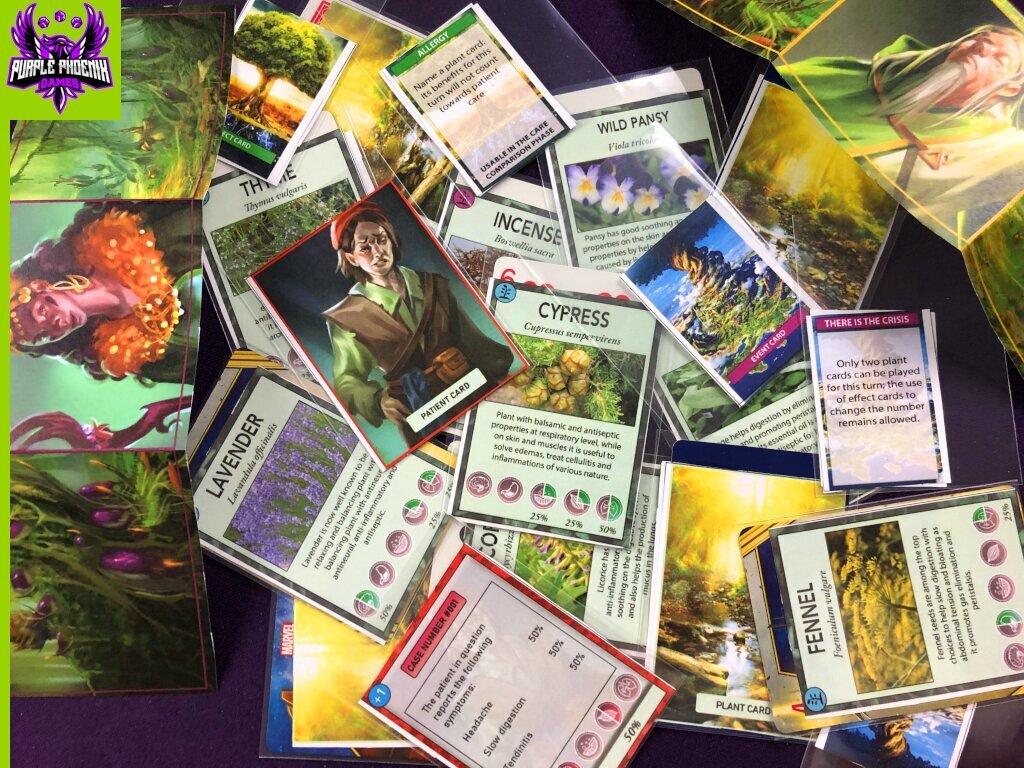
Over the course of 8 rounds, players will be using Plant and Effect cards to best help the ailing Patient for each given round. Once the 8th and final Patient card has been resolved, points will be counted to determine the ultimate Druid Master! To start a round, an Event card will be revealed. These Events will alter the round in some way, putting your strategic thinking to the test. For example, an Event card might limit the number of cards you can play this round. After the Event is resolved, the Patient card will be revealed for all players to see. The Patient will have a list of symptoms/ailments, with a percentage corresponding to the severity of the issue. Each player will then secretly select 1-3 Plant cards from their hand to be used to heal the Patient. The different Plant cards offer remedies for the various symptoms/ailments, and also list a corresponding percentage as to how much it will help. Effect cards can also be used during this phase of the game to obtain bonuses/negatively affect opponents. Use them wisely!
Once everyone is ready, all Plant cards will be revealed, and players will determine who has best cured the Patient. Compare the percentages on your Plant cards against those of the Patient – if you have failed to completely cure a symptom, take a Cure token that represents the missing percentages from your played cure. When all Plant cards have been checked, the player that was able to Cure the Patient completely (was able to match all Patient percentages with their played Plant cards) is the winner of the round. They will take the Patient card for end-game scoring. If nobody completely Cured the Patient, the player who accumulated the least number of Cure tokens (thus curing the most Patient percentages of the group) wins the round and collects the Patient card. All Plant and Effect cards used this round are discarded, and each player will draw 2 new Plant cards for the next round. Play continues in this fashion until the 8th Patient has been Cured. Players will count up their points earned from Cured Patients, and the player with the highest score is named the winning Druid Master!
I should say right off the bat that I’m not really a person who is into natural medicine. But my personal preferences do not stop me from playing and enjoying The Druid Master. If you think about it, natural medicine is very thematically appropriate for fantasy worlds, so it makes sense in this setting. Ok, so what about the gameplay? It is very straight-forward, which lends itself to fast teaching, learning, and playing. Ultimately, you are trying to match your Plant cards as best you can to the Patient card in play. And since you can only play a maximum of 3 cards each round, you really have to consider your options. If you aren’t able to completely Cure the Patient, can you play your Plant cards in such a way that you will collect the fewest Cure tokens? It’s all about how you strategize. Another thing that I really like about the gameplay is that all Plant cards are selected secretly and revealed simultaneously. So nobody is at an advantage by being able to see that an opponent was not 100% successful. It adds a little element of risk and hidden information to the game that makes it more engaging.
As I mentioned earlier, this is a PnP version of the game, so these components are not what will be received in a production copy. Also, the card layouts and artwork are not completely finalized either. But going on what I have, I do like the simplicity of the components. The symbolism is clear, the percentages are easy to read, and the text/pictures are informational as well. Once this game is printed on real cards and with cardboard tokens, I know it will be a decent quality production.
So overall, how does The Druid Master fare? I’d say fairly well. The rules and gameplay are straight-forward, it is fast and easy to teach and play, and it keeps all players engaged throughout the entire game. This is certainly not the most complicated or heavy game in existence, but it does offer hints of strategy that will keep the gameplay fresh and players invested. If you are looking for a nice little filler-type game set in a fantasy realm, I would recommend checking out The Druid Master. It is coming to Kickstarter soon, so be on the lookout!
Disclaimer: We were provided a PnP of The Druid Master for the purposes of this preview. The artwork and design of the cards is not yet finalized, so what you see pictured below is not necessarily what the production copies will look like. It is also important to note that although the game is about natural medicines/remedies, it does not replace professional medical advice and treatments. -L
In The Druid Master, players will take on the roles of (you guessed it) Druids who have mastered the ancient arts of healing, through use of plants, herbs, and other natural elements. Ailing patients will come to you (and your rivals) for help, so you must work quickly to concoct the most effective remedy to heal them back to normal! To setup for a game, each player receives a Player Screen, 1 Effect card, and 7 Plant cards. The remaining Effect and Plant cards are shuffled to form draw decks, and the Event deck is placed nearby as well. Place the deck of Patient cards facedown within reach of all players, and set the Cure tokens to the side. The game is now ready to begin!
Over the course of 8 rounds, players will be using Plant and Effect cards to best help the ailing Patient for each given round. Once the 8th and final Patient card has been resolved, points will be counted to determine the ultimate Druid Master! To start a round, an Event card will be revealed. These Events will alter the round in some way, putting your strategic thinking to the test. For example, an Event card might limit the number of cards you can play this round. After the Event is resolved, the Patient card will be revealed for all players to see. The Patient will have a list of symptoms/ailments, with a percentage corresponding to the severity of the issue. Each player will then secretly select 1-3 Plant cards from their hand to be used to heal the Patient. The different Plant cards offer remedies for the various symptoms/ailments, and also list a corresponding percentage as to how much it will help. Effect cards can also be used during this phase of the game to obtain bonuses/negatively affect opponents. Use them wisely!
Once everyone is ready, all Plant cards will be revealed, and players will determine who has best cured the Patient. Compare the percentages on your Plant cards against those of the Patient – if you have failed to completely cure a symptom, take a Cure token that represents the missing percentages from your played cure. When all Plant cards have been checked, the player that was able to Cure the Patient completely (was able to match all Patient percentages with their played Plant cards) is the winner of the round. They will take the Patient card for end-game scoring. If nobody completely Cured the Patient, the player who accumulated the least number of Cure tokens (thus curing the most Patient percentages of the group) wins the round and collects the Patient card. All Plant and Effect cards used this round are discarded, and each player will draw 2 new Plant cards for the next round. Play continues in this fashion until the 8th Patient has been Cured. Players will count up their points earned from Cured Patients, and the player with the highest score is named the winning Druid Master!
I should say right off the bat that I’m not really a person who is into natural medicine. But my personal preferences do not stop me from playing and enjoying The Druid Master. If you think about it, natural medicine is very thematically appropriate for fantasy worlds, so it makes sense in this setting. Ok, so what about the gameplay? It is very straight-forward, which lends itself to fast teaching, learning, and playing. Ultimately, you are trying to match your Plant cards as best you can to the Patient card in play. And since you can only play a maximum of 3 cards each round, you really have to consider your options. If you aren’t able to completely Cure the Patient, can you play your Plant cards in such a way that you will collect the fewest Cure tokens? It’s all about how you strategize. Another thing that I really like about the gameplay is that all Plant cards are selected secretly and revealed simultaneously. So nobody is at an advantage by being able to see that an opponent was not 100% successful. It adds a little element of risk and hidden information to the game that makes it more engaging.
As I mentioned earlier, this is a PnP version of the game, so these components are not what will be received in a production copy. Also, the card layouts and artwork are not completely finalized either. But going on what I have, I do like the simplicity of the components. The symbolism is clear, the percentages are easy to read, and the text/pictures are informational as well. Once this game is printed on real cards and with cardboard tokens, I know it will be a decent quality production.
So overall, how does The Druid Master fare? I’d say fairly well. The rules and gameplay are straight-forward, it is fast and easy to teach and play, and it keeps all players engaged throughout the entire game. This is certainly not the most complicated or heavy game in existence, but it does offer hints of strategy that will keep the gameplay fresh and players invested. If you are looking for a nice little filler-type game set in a fantasy realm, I would recommend checking out The Druid Master. It is coming to Kickstarter soon, so be on the lookout!
Purple Phoenix Games (2266 KP) rated Castle Dice in Tabletop Games
Jun 28, 2021
Ahh castle building. One of my favorite pastimes. Well, medieval building games, anyway. I love ’em! So put together medieval building with a bunch of dice and that should make a hit right? Well, yes, but I fear this game has flown under the radar for too long! Why do I like it, but more importantly why does it get so little love?
Castle Dice is a dice and resource management game that pits players against each other to build the greatest castle in the land. It is played over seven rounds and when the seventh round is complete players will tally up VPs to declare a winner!
To setup place the Turn Tracker board where players can see it. Shuffle each of the differently-backed Castle Deck, Village Deck, and Market Deck from which players will be drawing cards throughout the game. Assemble piles of Villager Tokens, Animals, and all dice. Each player receives their own playmat and five Tracking Beads placed just like the photo above. The game may now begin!
Castle Dice spans seven rounds with each round following a strict order of play. This play order and any special effects of the round are conveniently printed on the playmats and Turn Tracker respectively. The Turn Tracker will display which type of dice each player will take from the pool, roll, and add to the World Pool – to which every player will have access. The turn order will show all the phases of each round (which will not be thoroughly covered in this review, but will be at least mentioned): Determine first player, Draw cards, “Choice Dice”, Roll dice, Gather dice, Market, Workers produce, Merchants, Build castle parts, Barbarians.
Players will be able to draw cards from either the Castle or Village decks to supply their hand limit of five and give the player options to build at different phases of the game. Each round players will have standard dice to cull and roll from the pile, but also a choice of any dice type they prefer to be added to the World Pool in the next phase. After the World Pool has been populated with all the dice the players have rolled, each player will then choose a die from the World Pool one at a time around the table in player order. These dice will show resources (Wood, Stone, Gold, Land, and Iron), animals (Pig, Chicken, Cow, Horse), and Barbarians. By hiring Workers and Guards players will be able to produce more resources and subsequently protect them from raiding Barbarians who wish to drain players of one of each of their resources at the end of the round. The Build action is self-explanatory as players will be spending resources gathered to build castle parts using cards from their hand. Play continues in this very structured fashion until the end of seven rounds. Whichever player has amassed the greatest amount of VP from having the most animals, most villagers, Bards, and built castle parts will be the winner!
Components. Castle Dice is sold in a large box – a little wider than Kingdomino’s box, about two inches longer, and about three times as tall (still taller or thicker than Legendary Marvel, Harry Potter Hogwart’s Battle, and The 7th Continent). So there are a lot of components, and they are all good quality. The cards are nice, the boards are thick, but glossy (boo), and the dice are all fine. I question the use of the red Tracking Beads, as they are a little too large to fit in the areas they are designed to track, and a simple wooden cube would have been just as effective and fit the space better. Perhaps I will de-bling mine to boring cubes, or find something else more suitable. The art style, though, is very lovable and cute. Except the Farmer, who seems to have a large dangle of snot hanging out of his or her nose. Being from the Midwest I see a lot of farmers, and I know that they aren’t always super snotty. Maybe they were back in the Medieval Period, but it is a strange detail in the art. Overall though I am very impressed with the quality of the components.
I am similarly impressed overall with the gameplay. I am not incredibly Type A, but I think I lean that way, and having a game with very strict phases of play with a definite end game trigger is very appreciated. I absolutely LOVE how each round is plainly shown on the Turn Tracker and similarly how each phase is clearly printed on each playmat. These notifications eliminate the need for reference cards/sheets/what have you, and I applaud the design team for this. One of my gaming pet peeves is needing to reference the rulebook every turn because I am unsure of what I do next or being worried that I have forgotten a step. No need here – it is all in front of me.
Playing the game is also quite enjoyable. I do not know many gamers who hate games utilizing dice, and typically the more dice the better. Well Castle Dice comes with 64 custom dice and it just feels good to be rolling seven or eight dice each round. But the coolest part is that each player has the standard dice to roll but also several “Choice Dice” that can be of any flavor. That doesn’t necessarily mean they will end up gathering those dice, but they will be options for all players. That is a unique twist that I thoroughly enjoy. Also the balancing act of wanting to do 34 things on your turn, but not having the time to accomplish it adds that level of danger I like in my games. Those dang Barbarians! Overall Purple Phoenix Games gives Castle Dice a non-boogery-farmer’s 14 / 18. It’s a great game and if you see it in the wild pick it up! You will have a good time with it.
Castle Dice is a dice and resource management game that pits players against each other to build the greatest castle in the land. It is played over seven rounds and when the seventh round is complete players will tally up VPs to declare a winner!
To setup place the Turn Tracker board where players can see it. Shuffle each of the differently-backed Castle Deck, Village Deck, and Market Deck from which players will be drawing cards throughout the game. Assemble piles of Villager Tokens, Animals, and all dice. Each player receives their own playmat and five Tracking Beads placed just like the photo above. The game may now begin!
Castle Dice spans seven rounds with each round following a strict order of play. This play order and any special effects of the round are conveniently printed on the playmats and Turn Tracker respectively. The Turn Tracker will display which type of dice each player will take from the pool, roll, and add to the World Pool – to which every player will have access. The turn order will show all the phases of each round (which will not be thoroughly covered in this review, but will be at least mentioned): Determine first player, Draw cards, “Choice Dice”, Roll dice, Gather dice, Market, Workers produce, Merchants, Build castle parts, Barbarians.
Players will be able to draw cards from either the Castle or Village decks to supply their hand limit of five and give the player options to build at different phases of the game. Each round players will have standard dice to cull and roll from the pile, but also a choice of any dice type they prefer to be added to the World Pool in the next phase. After the World Pool has been populated with all the dice the players have rolled, each player will then choose a die from the World Pool one at a time around the table in player order. These dice will show resources (Wood, Stone, Gold, Land, and Iron), animals (Pig, Chicken, Cow, Horse), and Barbarians. By hiring Workers and Guards players will be able to produce more resources and subsequently protect them from raiding Barbarians who wish to drain players of one of each of their resources at the end of the round. The Build action is self-explanatory as players will be spending resources gathered to build castle parts using cards from their hand. Play continues in this very structured fashion until the end of seven rounds. Whichever player has amassed the greatest amount of VP from having the most animals, most villagers, Bards, and built castle parts will be the winner!
Components. Castle Dice is sold in a large box – a little wider than Kingdomino’s box, about two inches longer, and about three times as tall (still taller or thicker than Legendary Marvel, Harry Potter Hogwart’s Battle, and The 7th Continent). So there are a lot of components, and they are all good quality. The cards are nice, the boards are thick, but glossy (boo), and the dice are all fine. I question the use of the red Tracking Beads, as they are a little too large to fit in the areas they are designed to track, and a simple wooden cube would have been just as effective and fit the space better. Perhaps I will de-bling mine to boring cubes, or find something else more suitable. The art style, though, is very lovable and cute. Except the Farmer, who seems to have a large dangle of snot hanging out of his or her nose. Being from the Midwest I see a lot of farmers, and I know that they aren’t always super snotty. Maybe they were back in the Medieval Period, but it is a strange detail in the art. Overall though I am very impressed with the quality of the components.
I am similarly impressed overall with the gameplay. I am not incredibly Type A, but I think I lean that way, and having a game with very strict phases of play with a definite end game trigger is very appreciated. I absolutely LOVE how each round is plainly shown on the Turn Tracker and similarly how each phase is clearly printed on each playmat. These notifications eliminate the need for reference cards/sheets/what have you, and I applaud the design team for this. One of my gaming pet peeves is needing to reference the rulebook every turn because I am unsure of what I do next or being worried that I have forgotten a step. No need here – it is all in front of me.
Playing the game is also quite enjoyable. I do not know many gamers who hate games utilizing dice, and typically the more dice the better. Well Castle Dice comes with 64 custom dice and it just feels good to be rolling seven or eight dice each round. But the coolest part is that each player has the standard dice to roll but also several “Choice Dice” that can be of any flavor. That doesn’t necessarily mean they will end up gathering those dice, but they will be options for all players. That is a unique twist that I thoroughly enjoy. Also the balancing act of wanting to do 34 things on your turn, but not having the time to accomplish it adds that level of danger I like in my games. Those dang Barbarians! Overall Purple Phoenix Games gives Castle Dice a non-boogery-farmer’s 14 / 18. It’s a great game and if you see it in the wild pick it up! You will have a good time with it.
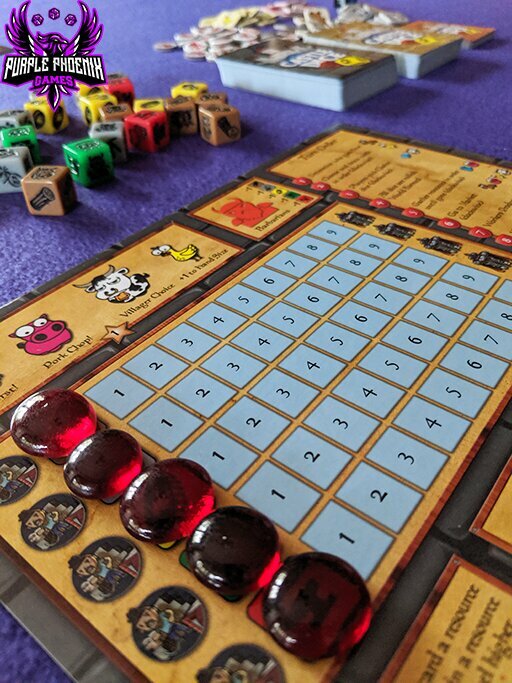
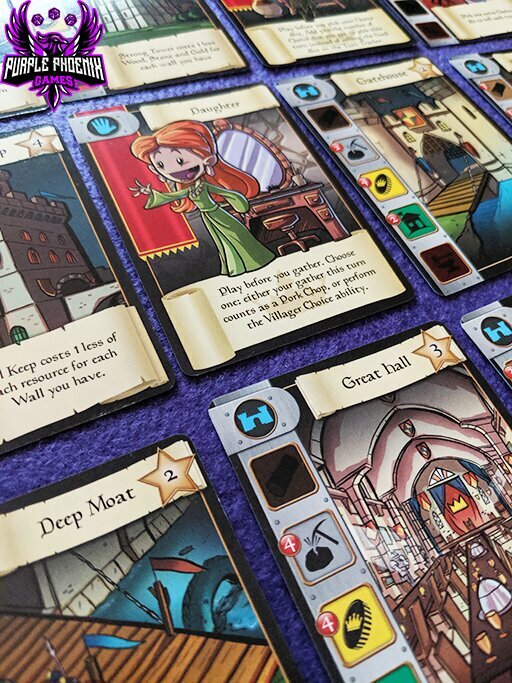
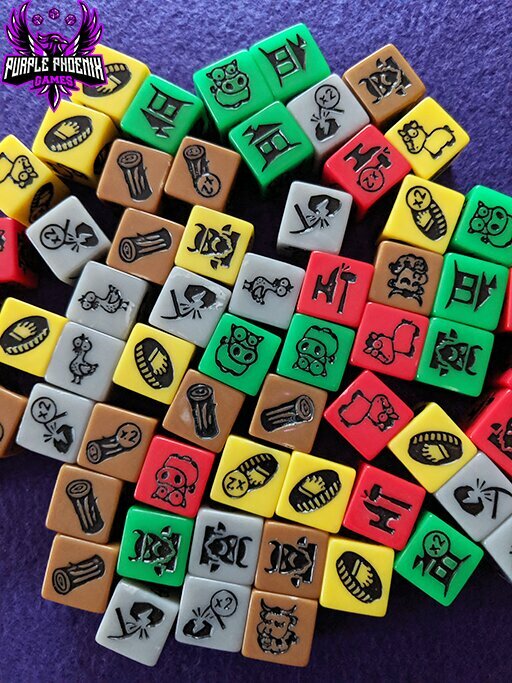

5 Minute Movie Guy (379 KP) rated Angel Has Fallen (2019) in Movies
Sep 16, 2019
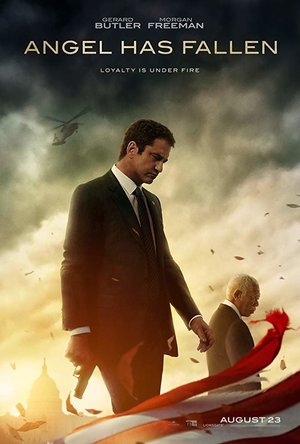
After putting in plenty of years and two prior movies spent protecting the President, Secret Service member Mike Banning is up for promotion. In Angel Has Fallen, the third installment of the Fallen franchise, Banning has been personally hand-picked by President Allan Trumbull to take over as the new Secret Service Director. Trumbull tells him the good news directly during a getaway fishing trip, but then things quickly turn bad when a drone attack attempts to assassinate the President. Banning is able to successfully save himself and the President, but the attack kills all the rest of the Secret Service members on site and the aftermath leaves Trumbull in a coma. Planted DNA evidence linking Banning to an involvement in the attack leads to his arrest, and with the President unconscious, he has no other witness to clear his name. Banning’s obviously been framed and set-up and will have to escape from authorities to find out who is responsible, and to also protect the President from any further attempts on his life.
Directed by Ric Roman Waugh, Angel Has Fallen is a film that starts off pretty well, yet I feel that the whole narrative of Banning being so easily framed is pretty hard to believe, especially given that he’s been the hero of two films already. It’s the driving force of the film’s story and yet it seems highly questionable to me that the intelligence committee would be so quick to blame it all on Banning considering his reputable history. Naturally any attack on the President is taken very seriously, but the FBI is extremely quick to condemn the man that just saved his life. I think it’s the weakest part of the story, although story is not an area this film ever really excels at. I would even say that most of its attempts at being smart usually fall flat. Regardless, this is the kind of movie that would be best enjoyed if you didn’t take it too seriously. It’s in many ways a throwback to the macho action movies of yesteryear, and that’s where it makes up for its shortcomings.
As the first film I’ve seen in this series, I admittedly had low expectations for it. If not for my dad wanting to see it, I probably would have skipped it entirely, but in truth it turned out to be better than I had anticipated. It’s also been the number one movie at the box office for two weeks running, so what do I know? I must confess that ever since seeing Den of Thieves last year, I’ve instantly become a huge fan of Gerard Butler, whose filmography I’ve largely overlooked. I love his energy, his over-the-top acting and his tough guy persona. He’s a great fit here in Angel Has Fallen as Banning and is enjoyable to watch, even if at times it can be a little hard to believe that he’s somehow always the smartest guy in the room.
The rest of the cast in the movie is respectful as well. Morgan Freeman is a comfortable choice as President Trumbull, and he truly makes me long for a time when we had a sane and competent President. It’s a rather reserved role for Freeman, as he spends most of the runtime in a coma. Still, he’s a graceful and welcome presence who has at least a couple moments to shine. Jada Pinkett Smith has the unfortunate role of playing the FBI agent who orders Banning’s arrest, and I wish she had a bit more to work with. Nick Nolte plays Banning’s estranged father Clay, a paranoid war veteran living off the grid, and he’s one of the highlights of the film. I enjoyed his character’s relationship with Banning, and he and Butler play off each other well. Danny Huston also gives a worthwhile performance as Banning’s former military companion Wade Jennings.
Despite having the appearance of a run-of-the-mill, rescue-the-President type of action movie, the action is actually for the most part quite admirable. Right from the get-go, it makes an impressive statement with its tense and exciting introductory scene which feels reminiscent of tactical military-style video games. The movie is heavy on explosions, shootouts, and hand-to-hand combat, and its action is generally fun. There’s also an impressive final stand-off that’s surprisingly well-planned and executed. It’s in moments like this where the movie demonstrates its intelligence and expertise. If not for these strong action sequences, I feel the movie as a whole would have suffered tremendously, but it rightfully delivers on what we came to see. Of course, not all of the action is stellar, and there’s a clunker of a car chase thrown into the mix, but overall I was entertained.
One area where the movie could have used some more improvement was with the special effects. They’re sufficient in the sense that they still clearly convey what the movie is trying to show, but a lot of it looks noticeably fake. It’s unfortunate, but I also don’t believe it was ever a major distraction. Another issue with the film is that its run-time feels a little long and there are some subplots that I really couldn’t care less about. It’s your standard government scheming and political conspiracy stuff, complete with all of the twists you would expect, but it isn’t particularly interesting, even if it does explain the purpose of the initial attack on the President.
Overall, I had a better time with Angel Has Fallen than I would have imagined. It’s far from great, but it’s good enough that I’ll probably now check out the two previous Fallen films at some point. The story might leave a lot to be desired, but the action sequences help fill the void. I would recommend it for fans of action movies, or anyone who likes Gerard Butler. It’s not something anyone needs to rush to the theater to see, but if you’re looking for a little action to end your summer with, it should do the trick.
Directed by Ric Roman Waugh, Angel Has Fallen is a film that starts off pretty well, yet I feel that the whole narrative of Banning being so easily framed is pretty hard to believe, especially given that he’s been the hero of two films already. It’s the driving force of the film’s story and yet it seems highly questionable to me that the intelligence committee would be so quick to blame it all on Banning considering his reputable history. Naturally any attack on the President is taken very seriously, but the FBI is extremely quick to condemn the man that just saved his life. I think it’s the weakest part of the story, although story is not an area this film ever really excels at. I would even say that most of its attempts at being smart usually fall flat. Regardless, this is the kind of movie that would be best enjoyed if you didn’t take it too seriously. It’s in many ways a throwback to the macho action movies of yesteryear, and that’s where it makes up for its shortcomings.
As the first film I’ve seen in this series, I admittedly had low expectations for it. If not for my dad wanting to see it, I probably would have skipped it entirely, but in truth it turned out to be better than I had anticipated. It’s also been the number one movie at the box office for two weeks running, so what do I know? I must confess that ever since seeing Den of Thieves last year, I’ve instantly become a huge fan of Gerard Butler, whose filmography I’ve largely overlooked. I love his energy, his over-the-top acting and his tough guy persona. He’s a great fit here in Angel Has Fallen as Banning and is enjoyable to watch, even if at times it can be a little hard to believe that he’s somehow always the smartest guy in the room.
The rest of the cast in the movie is respectful as well. Morgan Freeman is a comfortable choice as President Trumbull, and he truly makes me long for a time when we had a sane and competent President. It’s a rather reserved role for Freeman, as he spends most of the runtime in a coma. Still, he’s a graceful and welcome presence who has at least a couple moments to shine. Jada Pinkett Smith has the unfortunate role of playing the FBI agent who orders Banning’s arrest, and I wish she had a bit more to work with. Nick Nolte plays Banning’s estranged father Clay, a paranoid war veteran living off the grid, and he’s one of the highlights of the film. I enjoyed his character’s relationship with Banning, and he and Butler play off each other well. Danny Huston also gives a worthwhile performance as Banning’s former military companion Wade Jennings.
Despite having the appearance of a run-of-the-mill, rescue-the-President type of action movie, the action is actually for the most part quite admirable. Right from the get-go, it makes an impressive statement with its tense and exciting introductory scene which feels reminiscent of tactical military-style video games. The movie is heavy on explosions, shootouts, and hand-to-hand combat, and its action is generally fun. There’s also an impressive final stand-off that’s surprisingly well-planned and executed. It’s in moments like this where the movie demonstrates its intelligence and expertise. If not for these strong action sequences, I feel the movie as a whole would have suffered tremendously, but it rightfully delivers on what we came to see. Of course, not all of the action is stellar, and there’s a clunker of a car chase thrown into the mix, but overall I was entertained.
One area where the movie could have used some more improvement was with the special effects. They’re sufficient in the sense that they still clearly convey what the movie is trying to show, but a lot of it looks noticeably fake. It’s unfortunate, but I also don’t believe it was ever a major distraction. Another issue with the film is that its run-time feels a little long and there are some subplots that I really couldn’t care less about. It’s your standard government scheming and political conspiracy stuff, complete with all of the twists you would expect, but it isn’t particularly interesting, even if it does explain the purpose of the initial attack on the President.
Overall, I had a better time with Angel Has Fallen than I would have imagined. It’s far from great, but it’s good enough that I’ll probably now check out the two previous Fallen films at some point. The story might leave a lot to be desired, but the action sequences help fill the void. I would recommend it for fans of action movies, or anyone who likes Gerard Butler. It’s not something anyone needs to rush to the theater to see, but if you’re looking for a little action to end your summer with, it should do the trick.

Bob Mann (459 KP) rated Instant Family (2019) in Movies
Sep 28, 2021

Enjoyable and harmless comedy laced with a degree of sentimentality.
The Plot
Pete (Mark Wahlberg) and Ellie (Rose Byrne) are focused and business-oriented home designers. They’ve talked about having kids “sometime in the future” but the years – as years are want to do – are motoring away from them. Pete is concerned that if they have their own kids now then he will end up being an “old dad” (cue very funny, black-comedy, flashback). This leads them into contact with the State’s fostering service – led by Karen (Octavia Spencer) and Sharon (Tig Notaro) – and they progress into foster training. This introduces into their ‘perfect adult lives’ 15-year old Lizzy (Isabela Moner) and her younger siblings Juan (Gustavo Quiroz) and Lita (Julianna Gamiz). As these guys come from a troubled background Pete and Ellie find they have their work cut out. Who will crack first?
The turns
You’ve got to admire Mark Wahlberg as an actor. In the same vein as Steve Carell, he seems to be able to flex from dramatic (in his case, tough-guy action roles) to comedy without a blink. He’s nowhere near the calibre of actor as Carell, but he brings to all his roles a sense of menace – derived no doubt from his torrid criminal background in younger days. (His wiki page makes your eyes water: there’s a great biopic screenplay waiting to be written there! ) It must have made the kid actor who plays Charlie (Carson Holmes) actually soil himself at a key point in the film!
Wahlberg and the excellent Rose Byrne make a believable driven-couple, and Byrne has such a range of expressive faces that she can’t help but make you laugh.
Of the child actors, Nickelodeon star Isabella Moner shines with genuine brilliance, both in terms of her acting as the fiercely loyal Lizzy but also in terms of her musical ability (she sings the impressive end-title song). With Hollywood in ‘post-La-La-Showman: Here we go again’ mode, this is a talented young lady I predict might be in big demand over the next few years.
Top of my list of the most stupid “where the hell have I seen her before bang-my-head-against-the-cinema-wall” moments is the actress playing Ellie’s mother Jan. She is OF COURSE Julie Hagerty, air-hostess supreme from “Airplane!”.
Also good value, and topping my list of “I know her from lots of films but don’t know her name” is Margo Martindale* as Pete’s exuberant and easily bought mother Sandy. (*Must write this out 100 times before her picture appears in the Picturehouse Harbour Lights film quiz!).
A well-crafty script with some wayward characters
The script by director Sean (“Daddy’s Home”) Anders and John Morris zips along at a fine pace, albeit in a wholly predictable direction. It helps that I struggle the think of many films about the adoption process itself. Sure there have been lots of movies about children that have been adopted – Manchester By The Sea and Lion being two recent examples – but the only film I can immediately think of (and not in a good way) with foster care at its heart was the Katherine Heigl comedy from a few years ago “Life as we know it”. So this is good movie territory to mine.
There are some fine running jokes, notably young Juan’s penchant for constantly getting injured. However, the script also lapses as did Anders’ “Daddy’s Home 2” from last year – into moments of slushy sentimentality. (My dear departed Dad always used to affect an exaggerated snore at such points, and I could hear him in my head at regular intervals during the film!). I would have preferred a harder and blacker edge to the comedy: something that last year’s excellent “Game Night” pulled off so well.
There are also a couple of characters in the film that were poorly scripted and which just didn’t work. While Octavia Spencer was fine (channelling an almost identical version of her wisecracking and sardonic character from “The Shape of Water“), I just had no idea what her colleague Sharon (Tig Notaro) was supposed to be. The tone was all over the place. Similarly, who should pop up on a balcony in an unexpected cameo but the great Joan Cusack. And very funny she is too for the 10 second interruption. But the writers having got her there just couldn’t leave alone and we get a plain embarrassing extended interruption that strikes a duff note in the flow of the film.
Summary
The film is amusing and harmless without taxing many brain cells. Most notably unlike many so-called American ‘comedies’ it did actually make me laugh at multiple points. I should also point out that my wife absolutely loved it, rating it a strong 4* going on 5*.
But the really cute thing is that…
…the film is “inspired by a true family”: namely Anders’ own. He and his wife fostered three kids out of the US foster service, so the script is undoubtedly loosely based on their own experiences, which give it an extra impact for some of Peter and Ellie’s lines. In an essay for TIME (source: bustle.com) Anders wrote:
My wife Beth and I had been talking for years about whether we should have kids,” he wrote. “For the longest time we just felt like we couldn’t afford it. Then I sold a couple of scripts and was feeling like I might have a career, but we were in our 40s and worried we had left it too long. We knew kids would make our life bigger, so one day I joked, ‘Why don’t we just adopt a five-year-old and it will be like we got started five years ago?'”
It gives you a completely different perspective on the film knowing this. My wife after the film was saying “I’m not sure how accurately it portrays the fostering process”. But it clearly does.
Pete (Mark Wahlberg) and Ellie (Rose Byrne) are focused and business-oriented home designers. They’ve talked about having kids “sometime in the future” but the years – as years are want to do – are motoring away from them. Pete is concerned that if they have their own kids now then he will end up being an “old dad” (cue very funny, black-comedy, flashback). This leads them into contact with the State’s fostering service – led by Karen (Octavia Spencer) and Sharon (Tig Notaro) – and they progress into foster training. This introduces into their ‘perfect adult lives’ 15-year old Lizzy (Isabela Moner) and her younger siblings Juan (Gustavo Quiroz) and Lita (Julianna Gamiz). As these guys come from a troubled background Pete and Ellie find they have their work cut out. Who will crack first?
The turns
You’ve got to admire Mark Wahlberg as an actor. In the same vein as Steve Carell, he seems to be able to flex from dramatic (in his case, tough-guy action roles) to comedy without a blink. He’s nowhere near the calibre of actor as Carell, but he brings to all his roles a sense of menace – derived no doubt from his torrid criminal background in younger days. (His wiki page makes your eyes water: there’s a great biopic screenplay waiting to be written there! ) It must have made the kid actor who plays Charlie (Carson Holmes) actually soil himself at a key point in the film!
Wahlberg and the excellent Rose Byrne make a believable driven-couple, and Byrne has such a range of expressive faces that she can’t help but make you laugh.
Of the child actors, Nickelodeon star Isabella Moner shines with genuine brilliance, both in terms of her acting as the fiercely loyal Lizzy but also in terms of her musical ability (she sings the impressive end-title song). With Hollywood in ‘post-La-La-Showman: Here we go again’ mode, this is a talented young lady I predict might be in big demand over the next few years.
Top of my list of the most stupid “where the hell have I seen her before bang-my-head-against-the-cinema-wall” moments is the actress playing Ellie’s mother Jan. She is OF COURSE Julie Hagerty, air-hostess supreme from “Airplane!”.
Also good value, and topping my list of “I know her from lots of films but don’t know her name” is Margo Martindale* as Pete’s exuberant and easily bought mother Sandy. (*Must write this out 100 times before her picture appears in the Picturehouse Harbour Lights film quiz!).
A well-crafty script with some wayward characters
The script by director Sean (“Daddy’s Home”) Anders and John Morris zips along at a fine pace, albeit in a wholly predictable direction. It helps that I struggle the think of many films about the adoption process itself. Sure there have been lots of movies about children that have been adopted – Manchester By The Sea and Lion being two recent examples – but the only film I can immediately think of (and not in a good way) with foster care at its heart was the Katherine Heigl comedy from a few years ago “Life as we know it”. So this is good movie territory to mine.
There are some fine running jokes, notably young Juan’s penchant for constantly getting injured. However, the script also lapses as did Anders’ “Daddy’s Home 2” from last year – into moments of slushy sentimentality. (My dear departed Dad always used to affect an exaggerated snore at such points, and I could hear him in my head at regular intervals during the film!). I would have preferred a harder and blacker edge to the comedy: something that last year’s excellent “Game Night” pulled off so well.
There are also a couple of characters in the film that were poorly scripted and which just didn’t work. While Octavia Spencer was fine (channelling an almost identical version of her wisecracking and sardonic character from “The Shape of Water“), I just had no idea what her colleague Sharon (Tig Notaro) was supposed to be. The tone was all over the place. Similarly, who should pop up on a balcony in an unexpected cameo but the great Joan Cusack. And very funny she is too for the 10 second interruption. But the writers having got her there just couldn’t leave alone and we get a plain embarrassing extended interruption that strikes a duff note in the flow of the film.
Summary
The film is amusing and harmless without taxing many brain cells. Most notably unlike many so-called American ‘comedies’ it did actually make me laugh at multiple points. I should also point out that my wife absolutely loved it, rating it a strong 4* going on 5*.
But the really cute thing is that…
…the film is “inspired by a true family”: namely Anders’ own. He and his wife fostered three kids out of the US foster service, so the script is undoubtedly loosely based on their own experiences, which give it an extra impact for some of Peter and Ellie’s lines. In an essay for TIME (source: bustle.com) Anders wrote:
My wife Beth and I had been talking for years about whether we should have kids,” he wrote. “For the longest time we just felt like we couldn’t afford it. Then I sold a couple of scripts and was feeling like I might have a career, but we were in our 40s and worried we had left it too long. We knew kids would make our life bigger, so one day I joked, ‘Why don’t we just adopt a five-year-old and it will be like we got started five years ago?'”
It gives you a completely different perspective on the film knowing this. My wife after the film was saying “I’m not sure how accurately it portrays the fostering process”. But it clearly does.