
Search
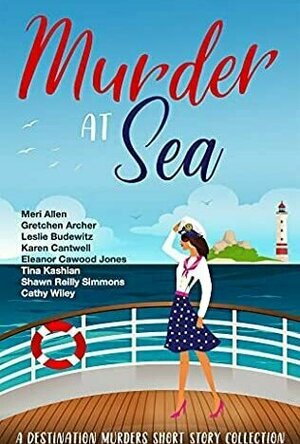
Murder at Sea
10.0 Rate It
Book
Fear naut, the next Destinations Murder collection is here: Murder at Sea. Third in this...

Jamie (131 KP) rated Not a Sound in Books
Aug 15, 2017


Engaging story (2 more)
Great cast of characters, a resilient heroine
Handles the subject of disability with delicacy and respect
A compelling thriller about a deaf woman that finds herself entangled in a murder investigation
The story follows Amelia, a former ER nurse left deaf after a horrible accident that is struggling to get her life back together. I greatly appreciated how delicately the subjects of disability, depression, and alcoholism are handled in this book. Amelia is both a sympathetic character and an admirable one, actively learning how to carry on and create a new life for herself after the loss of her hearing. She’s strong-willed, persistent, and resourceful. Her deafness is a part of who she is, but she is not defined by it. This book was incredibly informative both about the impact that deafness can have on a person’s every day functionality, but also the multitude of tools and resources available to help. I learned quite a lot about the services available for the hearing impaired and thought it was great how well researched the topic is. It wasn’t until after I finished reading that I learned that the author herself is hearing impaired and draws from her own experiences to depict Amelia’s journey toward recovery.
Having read a few of Gudenkauf’s books I can’t help but notice a pattern in her stories that bothers me. In every one of her books that I’ve read the main character always has some connection to law enforcement that gets her “in” an investigation, even though she really shouldn’t see or know any of this information legally. Even worse, the main character always ends up interfering in an investigation by giving the police false leads. I don’t mind following an amateur sleuth that makes mistakes in their investigation it starts to feel repetitive with these characters suspecting everyone of everything.
It’s a very obvious attempt at adding some red herrings to the story to keep the mystery going but it becomes very noticeable once you’re acquainted with the author’s writing style. It is because of this that the story becomes a little predictable and the culprit can be guessed almost as soon as they are introduced. It seems that Gudenkauf may have noticed this, at least, as the character is reprimanded for her meddling and I appreciated this.
Despite this, however, the story kept me interested in finding out the how and they why rather than the who. Gudenkauf has a way of immersing the reader into the story and the characters and it is something that I admire about her work. Her skill with pacing is perfect despite the sometimes overwhelming issues with dangerous interference that is present in many of her books. It is because of these two factors that make her books so hit or miss with me.
This book was a definite hit and I’m so glad that I took a chance on it. It’s rare to find a main character that is disabled in some way and so I was happy that I found this book. I love the commentary that this book has about the importance of trust and empathy in the health industry, a topic that I wish was addressed more often. Even with the mild plot issues it’s worthwhile read for the intense mystery and wonderful cast of characters, especially Amelia and Stitch.
Having read a few of Gudenkauf’s books I can’t help but notice a pattern in her stories that bothers me. In every one of her books that I’ve read the main character always has some connection to law enforcement that gets her “in” an investigation, even though she really shouldn’t see or know any of this information legally. Even worse, the main character always ends up interfering in an investigation by giving the police false leads. I don’t mind following an amateur sleuth that makes mistakes in their investigation it starts to feel repetitive with these characters suspecting everyone of everything.
It’s a very obvious attempt at adding some red herrings to the story to keep the mystery going but it becomes very noticeable once you’re acquainted with the author’s writing style. It is because of this that the story becomes a little predictable and the culprit can be guessed almost as soon as they are introduced. It seems that Gudenkauf may have noticed this, at least, as the character is reprimanded for her meddling and I appreciated this.
Despite this, however, the story kept me interested in finding out the how and they why rather than the who. Gudenkauf has a way of immersing the reader into the story and the characters and it is something that I admire about her work. Her skill with pacing is perfect despite the sometimes overwhelming issues with dangerous interference that is present in many of her books. It is because of these two factors that make her books so hit or miss with me.
This book was a definite hit and I’m so glad that I took a chance on it. It’s rare to find a main character that is disabled in some way and so I was happy that I found this book. I love the commentary that this book has about the importance of trust and empathy in the health industry, a topic that I wish was addressed more often. Even with the mild plot issues it’s worthwhile read for the intense mystery and wonderful cast of characters, especially Amelia and Stitch.

Sassy Brit (97 KP) rated Forever Fudge in Books
Jun 5, 2019

Forever Fudge by Nancy Coco is a sweet cozy mystery. Readers will salivate with the fudge recipes, be charmed on the Mackinac Island, and attempt to crack the murder mystery along with the main character Allie McMurphy.
Coco is a great pseudonym for the Fudge series. “I really enjoy writing these cozy mysteries with the humor and solving the puzzle. While writing my first series, I would put recipes on my blog. Then a friend of mine suggested I should write in this genre with a gluten free bakery. My last name was specifically chosen for this series. I love fudge, actually anything chocolate. The person in the apartment next to us said it always smells like chocolate in my house. Not only does it smell good but tastes good as well.”
Allie is an amateur sleuth. She and her dog Mal have an uncanny ability to find dead bodies. In the past, she has helped the police solve cases. As the owner of a delightful hotel and fudge shop on Mackinac Island, Allie’s excitement has grown after a television crew arrives on the island to film a television pilot for a mystery series. Throwing a wrench into the enthusiasm is the dead body found by Allie’s adorable Bichon-Poo puppy, Mal. Shot in the head, the body discovered has a letter with clues from chess moves. As the killings mount up, the murderer continues to taunt Allie, trying to get her to play his game.
The island plays a role in the story. “I have a huge family living in Michigan, which is where the island is located. If you ever saw the movie, “Somewhere in Time” starring Christopher Reeve, you can picture the setting. The island does not allow cars so people travel by foot, horse and carriage, or bicycle. It is a cool touristy place.”
There is also a love triangle. Allie is being wooed by two courters. She broke up with Trent Jessup because a long-distance relationship is not working, with him spending a lot of time in Chicago. The other beau is police chief Rex Manning who is being persistent in pursuing her, yet, willing to give her time and space.
“I thought it is interesting to compare ‘in love versus loving someone.’ I love my male friends but being ‘in love’ has excitement, a commitment, and intimacy. Allie is starting to build connections but some old timers see her as an outsider. One of those who accept her as part of the community is Rex who sees it as his responsibility to protect her and the community.”
Actual recipes are dispersed throughout the story. “I purposely did it this way to show what Allie is working on. I sprinkle it throughout to give the feel and flavor to what she is actually making. I try to relate it to the story when possible. I remember my first contract with Kensington Books required me to write ten recipes per book. Luckily, they downsized that amount. Since they had to be originals it was a relief.”
This story has an intriguing mystery, some romance, and humor. It is a fun who done it plot that has no shortage of suspects. Readers will be looking forward to the next installment, Fudge Bits, out next fall, a Halloween plot. It will highlight her cat instead of her dog that finds a Zombie body.
Coco is a great pseudonym for the Fudge series. “I really enjoy writing these cozy mysteries with the humor and solving the puzzle. While writing my first series, I would put recipes on my blog. Then a friend of mine suggested I should write in this genre with a gluten free bakery. My last name was specifically chosen for this series. I love fudge, actually anything chocolate. The person in the apartment next to us said it always smells like chocolate in my house. Not only does it smell good but tastes good as well.”
Allie is an amateur sleuth. She and her dog Mal have an uncanny ability to find dead bodies. In the past, she has helped the police solve cases. As the owner of a delightful hotel and fudge shop on Mackinac Island, Allie’s excitement has grown after a television crew arrives on the island to film a television pilot for a mystery series. Throwing a wrench into the enthusiasm is the dead body found by Allie’s adorable Bichon-Poo puppy, Mal. Shot in the head, the body discovered has a letter with clues from chess moves. As the killings mount up, the murderer continues to taunt Allie, trying to get her to play his game.
The island plays a role in the story. “I have a huge family living in Michigan, which is where the island is located. If you ever saw the movie, “Somewhere in Time” starring Christopher Reeve, you can picture the setting. The island does not allow cars so people travel by foot, horse and carriage, or bicycle. It is a cool touristy place.”
There is also a love triangle. Allie is being wooed by two courters. She broke up with Trent Jessup because a long-distance relationship is not working, with him spending a lot of time in Chicago. The other beau is police chief Rex Manning who is being persistent in pursuing her, yet, willing to give her time and space.
“I thought it is interesting to compare ‘in love versus loving someone.’ I love my male friends but being ‘in love’ has excitement, a commitment, and intimacy. Allie is starting to build connections but some old timers see her as an outsider. One of those who accept her as part of the community is Rex who sees it as his responsibility to protect her and the community.”
Actual recipes are dispersed throughout the story. “I purposely did it this way to show what Allie is working on. I sprinkle it throughout to give the feel and flavor to what she is actually making. I try to relate it to the story when possible. I remember my first contract with Kensington Books required me to write ten recipes per book. Luckily, they downsized that amount. Since they had to be originals it was a relief.”
This story has an intriguing mystery, some romance, and humor. It is a fun who done it plot that has no shortage of suspects. Readers will be looking forward to the next installment, Fudge Bits, out next fall, a Halloween plot. It will highlight her cat instead of her dog that finds a Zombie body.

Hadley (567 KP) rated The Ghost of Villa Winter in Books
Mar 12, 2021


A cult (1 more)
Description of environment
All of the characters (1 more)
Amateur writing mistakes
Little does the reader know when they pick up a copy of The Ghost of Villa Winter by Isobel Blackthorn that a cult is lurking about inside the pages.
We begin our journey with Clarissa ,our main character, boarding a tour bus where she lets her personality shine through, which turns out to be extremely judgmental of anyone who isn't like her, or doesn't fit into the categories she places them in. For example, the driver of the tour bus is automatically labeled by Clarissa as a bad man because he has an uneven face and a French accent, and much of the same is said about the other seven passengers, as well. When she finally manages to stop judging the passengers, readers find out that Clarissa is somewhat of a psychic: "Ghosts spoke a language of their own and if a member of the spirit world inhabited the abandoned abode, she was sure to pick up on it. She was never wrong in these matters. Only three of the thirty or more premises she'd investigated on so-called ghost tours had contained a legitimate ghost. She prided herself on her mediumistic prowess. She was apt to pick up on preternatural inhabitants of places said not to be haunted. Sometimes she thought she could singlehandedly re-write history based on information she had gleaned, but that was being arrogant. She followed her dreams and her visions and her intuition, that was all. A natural psychic and a cynic to boot. "
It turns out that Clarissa is on the tour to see if she can encounter any spirits that may be at the infamous Villa Winter; a place that is believed to have been a secret Nazi base, as well as a place for human experiments - - - the tower was also believed to have been used as a lighthouse for German U-boats - - - which, in reality, Villa Winter is an actual place that exists on the Canary Islands in Spain.
The Ghost of Villa Winter is the fourth book in Blackthorn's Canary Islands Mysteries series, but it can be easily read as an introduction to it because you don't need any background information to understand what is going on. The novel takes on the usual tropes of a murder-mystery plot (a body is found, people are stranded and trying to figure out who among them is the murderer). Agatha Christie is one of the best authors of the murder-mystery genre who loved using her knowledge of poisons in her stories - - - Blackthorn treats the tropes with the right amount of respect which makes The Ghost of Villa Winter a pretty good story.
My major complaint for the Ghost of Villa Winter are the characters, which I found every single one quite unlikable, and even by the end, I couldn't bring myself to care at all for Clarissa. The way that she judged everyone so harshly, and her viewpoint that if no one acted the way she wanted them to, she would believe something was wrong with them that needed to be addressed in a rude manner: "He was the most anxious man she had come across in a long time. Anxious, unsure of himself and preoccupied. Far too self-conscious. The way he'd aligned his plate at lunch. That was obsessive-compulsive. And he certainly couldn't handle Fred Spice. She was sure he could be charming with pretty young ladies, patronizing even, but around her he was awkward. It was clear, too, that he was broken. It wouldn't be easy being an author knowing as you aged that all of your success was behind you and your future held nothing but diminishment. Writing was one of those activities you could pursue until you dropped and many successful authors did just that. As irritating as he could be, she felt sorry for him. "
The other characters are all seen from Clarissa's viewpoint, so they come off quite annoying, but at one point it seemed like Blackthorn was trying to redeem Clarissa's negative qualities by making her an advocate for a possibly wrongly convicted man. This story line didn't come off as redemption for me, but rather to fuel Clarissa's need to be important and in the right. Blackthorn failed to make any of the characters grow above pettiness. If a reader doesn't have a character to root for, the story becomes unenjoyable - - - which is the main reason I gave the book such a low rating; the murder-mystery was interesting, but the characters were not.
The murder, a woman who may have been part of a cult, is found inside a nailed-up crate with a tattoo of a number on her body being one of the only clues that puts Clarissa into sleuth-mode. After believing that one of the tourists is the killer, she decides to keep the discovery of the murder between her and Richard - - - a crime author who came to Villa Winter in hopes of a book inspiration. The two slowly begin to investigate their fellow tourists to figure out who had the mind and motive to kill the young woman, but this doesn't seem to be as easy as it is in Richard's books. I did have a problem though with the ending which ends up being very reminiscent of a majority of short stories: the ending came abruptly and the pieces fell into a place that was unbelievable.
I had never read any of Blackthorn's books before, so I didn't have much of an expectation reading the Ghost of Villa Winter. Unfortunately, I came away from this one pretty dissatisfied because all of the interesting points in the story (such as the cult) are rarely shown/explored further. Also, the fact that 'ghost' is in the title, I was pretty let down with only a couple of scenes where a ghost actually shows up, one such short-lived scene: "She [Clarissa] was about to carry on when a figure appeared in one of the uppermost tower windows. Appeared, and then was gone. At least, what she thought to be a figure. Could have been a ghost. " The scenes are so short that I believe 'ghost' shouldn't be in the title because it's misleading.
With quite a few amateur writing mistakes, and unlikable characters, I don't think I will read anymore of the books in this series. I loved the idea of a cult murder and a haunting in a possible Nazi base, but too much of the focus in the story was on Clarissa's judgmental outlook on everything that it ended up not being the story it could have been. I can only recommend this book to people who want a quick murder-mystery (what most call the genre 'cozy mystery'), but for paranormal lovers, the ghosts practically disappeared within a few pages.
We begin our journey with Clarissa ,our main character, boarding a tour bus where she lets her personality shine through, which turns out to be extremely judgmental of anyone who isn't like her, or doesn't fit into the categories she places them in. For example, the driver of the tour bus is automatically labeled by Clarissa as a bad man because he has an uneven face and a French accent, and much of the same is said about the other seven passengers, as well. When she finally manages to stop judging the passengers, readers find out that Clarissa is somewhat of a psychic: "Ghosts spoke a language of their own and if a member of the spirit world inhabited the abandoned abode, she was sure to pick up on it. She was never wrong in these matters. Only three of the thirty or more premises she'd investigated on so-called ghost tours had contained a legitimate ghost. She prided herself on her mediumistic prowess. She was apt to pick up on preternatural inhabitants of places said not to be haunted. Sometimes she thought she could singlehandedly re-write history based on information she had gleaned, but that was being arrogant. She followed her dreams and her visions and her intuition, that was all. A natural psychic and a cynic to boot. "
It turns out that Clarissa is on the tour to see if she can encounter any spirits that may be at the infamous Villa Winter; a place that is believed to have been a secret Nazi base, as well as a place for human experiments - - - the tower was also believed to have been used as a lighthouse for German U-boats - - - which, in reality, Villa Winter is an actual place that exists on the Canary Islands in Spain.
The Ghost of Villa Winter is the fourth book in Blackthorn's Canary Islands Mysteries series, but it can be easily read as an introduction to it because you don't need any background information to understand what is going on. The novel takes on the usual tropes of a murder-mystery plot (a body is found, people are stranded and trying to figure out who among them is the murderer). Agatha Christie is one of the best authors of the murder-mystery genre who loved using her knowledge of poisons in her stories - - - Blackthorn treats the tropes with the right amount of respect which makes The Ghost of Villa Winter a pretty good story.
My major complaint for the Ghost of Villa Winter are the characters, which I found every single one quite unlikable, and even by the end, I couldn't bring myself to care at all for Clarissa. The way that she judged everyone so harshly, and her viewpoint that if no one acted the way she wanted them to, she would believe something was wrong with them that needed to be addressed in a rude manner: "He was the most anxious man she had come across in a long time. Anxious, unsure of himself and preoccupied. Far too self-conscious. The way he'd aligned his plate at lunch. That was obsessive-compulsive. And he certainly couldn't handle Fred Spice. She was sure he could be charming with pretty young ladies, patronizing even, but around her he was awkward. It was clear, too, that he was broken. It wouldn't be easy being an author knowing as you aged that all of your success was behind you and your future held nothing but diminishment. Writing was one of those activities you could pursue until you dropped and many successful authors did just that. As irritating as he could be, she felt sorry for him. "
The other characters are all seen from Clarissa's viewpoint, so they come off quite annoying, but at one point it seemed like Blackthorn was trying to redeem Clarissa's negative qualities by making her an advocate for a possibly wrongly convicted man. This story line didn't come off as redemption for me, but rather to fuel Clarissa's need to be important and in the right. Blackthorn failed to make any of the characters grow above pettiness. If a reader doesn't have a character to root for, the story becomes unenjoyable - - - which is the main reason I gave the book such a low rating; the murder-mystery was interesting, but the characters were not.
The murder, a woman who may have been part of a cult, is found inside a nailed-up crate with a tattoo of a number on her body being one of the only clues that puts Clarissa into sleuth-mode. After believing that one of the tourists is the killer, she decides to keep the discovery of the murder between her and Richard - - - a crime author who came to Villa Winter in hopes of a book inspiration. The two slowly begin to investigate their fellow tourists to figure out who had the mind and motive to kill the young woman, but this doesn't seem to be as easy as it is in Richard's books. I did have a problem though with the ending which ends up being very reminiscent of a majority of short stories: the ending came abruptly and the pieces fell into a place that was unbelievable.
I had never read any of Blackthorn's books before, so I didn't have much of an expectation reading the Ghost of Villa Winter. Unfortunately, I came away from this one pretty dissatisfied because all of the interesting points in the story (such as the cult) are rarely shown/explored further. Also, the fact that 'ghost' is in the title, I was pretty let down with only a couple of scenes where a ghost actually shows up, one such short-lived scene: "She [Clarissa] was about to carry on when a figure appeared in one of the uppermost tower windows. Appeared, and then was gone. At least, what she thought to be a figure. Could have been a ghost. " The scenes are so short that I believe 'ghost' shouldn't be in the title because it's misleading.
With quite a few amateur writing mistakes, and unlikable characters, I don't think I will read anymore of the books in this series. I loved the idea of a cult murder and a haunting in a possible Nazi base, but too much of the focus in the story was on Clarissa's judgmental outlook on everything that it ended up not being the story it could have been. I can only recommend this book to people who want a quick murder-mystery (what most call the genre 'cozy mystery'), but for paranormal lovers, the ghosts practically disappeared within a few pages.
Sassy Brit (97 KP) rated Let The Dead Keep Their Secrets in Books
Jun 5, 2019
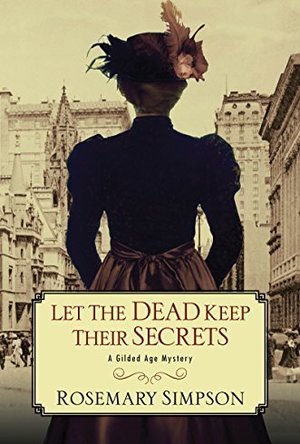
Let The DEAD Keep Their Secrets by Rosemary Simpson brings to life New York City during the 1880s in a historical mystery. It is rich in the culture of the time with a riveting Colombo type crime. Readers know who has done it and seek clues with the characters to find the proof.
The plot opens with New York opera singer Claire Buchanan calling on the investigative services of Prudence MacKenzie and her partner, Geoffrey Hunter. Claire shows up at their door begging them to find out exactly how her twin sister, Catherine, and newborn daughter died, believing it was not from natural causes. Catherine’s husband, Aaron Sorenson, is a scoundrel and appears to be marrying women, getting them pregnant, and then having baby and mother die in childbirth. Prudence and Geoffrey find that childbirth can be dangerous to one’s health as they realize that Sorenson’s current wife may also be in danger. His motive, both the late wife and the current wife would inherit a substantial estate, which will go to him upon their death. Sorensen seems to always be in need of money to pay mounting gambling debts. As the tension mounts the investigative team is putting themselves at risk in attempting to expose the murder-for-inheritance scheme.
The author noted, “Catherine was emotionally abused. Women during that time period did not have much choice. In the Gilded Age in New York women were still property of their husbands. They were very limited to what their husbands wanted.”
One of the important clues is a photograph of the late mother and child. Simpson weaves into the story a Victorian Era custom, post-mortem photography. During these scenes readers learn of the spiritualists who believe “about the possibility of capturing an image of the soul leaving a body at the moment of death.” It was during this time that Claire senses something from her twin sister. The author commented, “During my research, I read how twins separated by birth and raised by different families still have the same likes and dislikes and can sense how each other feels.”
Through the characters people learn of the Gilded Age era, with a fascinating description of the homes, the period clothing, and the city of New York. Unlike many women of the time, Prudence is very unconventional, desiring to take the bar exam and become a litigator. For now, she is content to be an amateur sleuth to her partner, ex-Pinkerton agent Geoffrey Hunter, as she learns on the job. “I wrote Prudence being raised by a widowed father who looked at her as a replacement for a son. He did not make an exception for her being a girl and made sure she had a very well developed sharp legal mind. She is determined to make her own way even though she inherited wealth. I read that the Pinkerton Agency hired a lady detective during the Civil War and knew I wanted to make my heroine an investigator who is constantly challenged by Geoffrey.”
The hero and heroine also have flaws. The author uses events that happened during the Gilded Age paralleling them with what is happening today. Simpson explained, “Geoffrey has left his southern roots, abandoning his culture and family. He has a lot of contradictions. Prudence must struggle with her addiction to the drug laudanum. She was given it by her family doctor to help her cope with her father’s passing and then her fiancé’s death. She overcame the reliance on laudanum but not without a terrible struggle and the knowledge that she would never be entirely free of it. I parallel it with the opioid epidemic today. People became accidental addicts because they were given the drugs legally to cope with physical and emotional pain.”
The antagonist, Simpson has no redeeming qualities. He is a cold and calculating thief, a swindler, and bigamist who victimizes rich women. “I wanted to write an absolute villain. He is unscrupulous, uncaring with no conscience. He had every vile habit known. I do not write cozy mysteries, but historical noirs. My bad guys are really, really bad who cause awful things to happen.”
The author definitely had done her homework. “I want to feel I live in this world for awhile and to get the reader to feel that also. I read the New York Times Archives and fall into the rhythm of the language used, how they spoke, wrote and thought. It puts me in the mindset of the character I am writing about.” With her detailed descriptions and gripping story Simpson has also drawn the reader into the time period through an exciting and action-packed mystery.
The plot opens with New York opera singer Claire Buchanan calling on the investigative services of Prudence MacKenzie and her partner, Geoffrey Hunter. Claire shows up at their door begging them to find out exactly how her twin sister, Catherine, and newborn daughter died, believing it was not from natural causes. Catherine’s husband, Aaron Sorenson, is a scoundrel and appears to be marrying women, getting them pregnant, and then having baby and mother die in childbirth. Prudence and Geoffrey find that childbirth can be dangerous to one’s health as they realize that Sorenson’s current wife may also be in danger. His motive, both the late wife and the current wife would inherit a substantial estate, which will go to him upon their death. Sorensen seems to always be in need of money to pay mounting gambling debts. As the tension mounts the investigative team is putting themselves at risk in attempting to expose the murder-for-inheritance scheme.
The author noted, “Catherine was emotionally abused. Women during that time period did not have much choice. In the Gilded Age in New York women were still property of their husbands. They were very limited to what their husbands wanted.”
One of the important clues is a photograph of the late mother and child. Simpson weaves into the story a Victorian Era custom, post-mortem photography. During these scenes readers learn of the spiritualists who believe “about the possibility of capturing an image of the soul leaving a body at the moment of death.” It was during this time that Claire senses something from her twin sister. The author commented, “During my research, I read how twins separated by birth and raised by different families still have the same likes and dislikes and can sense how each other feels.”
Through the characters people learn of the Gilded Age era, with a fascinating description of the homes, the period clothing, and the city of New York. Unlike many women of the time, Prudence is very unconventional, desiring to take the bar exam and become a litigator. For now, she is content to be an amateur sleuth to her partner, ex-Pinkerton agent Geoffrey Hunter, as she learns on the job. “I wrote Prudence being raised by a widowed father who looked at her as a replacement for a son. He did not make an exception for her being a girl and made sure she had a very well developed sharp legal mind. She is determined to make her own way even though she inherited wealth. I read that the Pinkerton Agency hired a lady detective during the Civil War and knew I wanted to make my heroine an investigator who is constantly challenged by Geoffrey.”
The hero and heroine also have flaws. The author uses events that happened during the Gilded Age paralleling them with what is happening today. Simpson explained, “Geoffrey has left his southern roots, abandoning his culture and family. He has a lot of contradictions. Prudence must struggle with her addiction to the drug laudanum. She was given it by her family doctor to help her cope with her father’s passing and then her fiancé’s death. She overcame the reliance on laudanum but not without a terrible struggle and the knowledge that she would never be entirely free of it. I parallel it with the opioid epidemic today. People became accidental addicts because they were given the drugs legally to cope with physical and emotional pain.”
The antagonist, Simpson has no redeeming qualities. He is a cold and calculating thief, a swindler, and bigamist who victimizes rich women. “I wanted to write an absolute villain. He is unscrupulous, uncaring with no conscience. He had every vile habit known. I do not write cozy mysteries, but historical noirs. My bad guys are really, really bad who cause awful things to happen.”
The author definitely had done her homework. “I want to feel I live in this world for awhile and to get the reader to feel that also. I read the New York Times Archives and fall into the rhythm of the language used, how they spoke, wrote and thought. It puts me in the mindset of the character I am writing about.” With her detailed descriptions and gripping story Simpson has also drawn the reader into the time period through an exciting and action-packed mystery.