
My Town : Museum
Games and Education
App
At My Town's Museum, there is something fun and exciting in every room and something to play with...

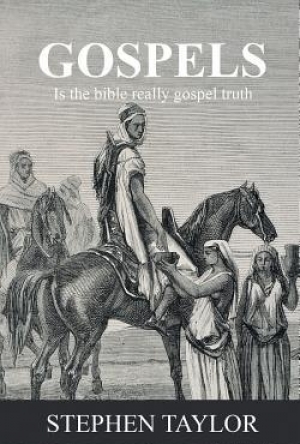


Is the Bible really gospel truth? This is the question the honourable, academic Robert Babcock aims to find out on his quest to find the earliest copies of the gospels in order to prove the reliability of the story of Jesus as recounted in the King James Bible. However, this is not the key focus of Stephen Taylor’s fictional novel, Gospels. The main character is the perfidious John Campbell-John, a rogue, imposter and swindler who flees 19th-century England in an attempt to escape from his debts.
John meets the magnanimous Robert in Venice and, despite being polar opposites, become firm friends. After being honest for the first time in his life, admitting to owing thousands of pounds in gambling debts, Robert offers John the opportunity to accompany him on his quest through the deserts of Egypt. John accepts and the pair finds themselves on an adventure of discovery and personal redemption.
John and Robert make an unlikely but excellent team. Robert’s knowledge of the Bible and ancient history is vital, however, John’s propensity for falsehoods and cunningness gets them out of a few scrapes and tricky situations. Nonetheless, it is difficult for John to give up his old ways and his insular behaviour threatens to get them in more trouble.
Fortunately, Robert’s humility begins to influence the young scoundrel, as does his penchant for historical artefacts. As the story progresses, John begins to leave his past behind and becomes interested in Robert’s work, learning new things about Egyptian culture and the origins of the Bible. However, when a new gospel comes to light that threatens the whole of Christianity, Robert does not know what to do; and only John can give him counsel.
John Campbell-John is a character that the author introduced in a previous book. However, the timelines are not sequential, therefore Gospels is a stand-alone novel. The time frame for this book needed to be set in 1835 to correspond with historical truths. Although Robert’s discovery of a Gospel of Thaddeus Jude is an invention of the author, the quest itself is based on the journeys of three 19th-century Bible hunters. Stephen Taylor has conducted an enormous amount of research, including the biographies of Robert Curzon, Constantin von Tischendorf and Émile Amélineau who, on separate occasions, sought the same knowledge as the fictional Robert Babcock.
Despite being titled Gospels, the novel, for the most part, focuses on John Campbell-John and his wicked ways. Through a first-person narrative, John explains his past, his betrayal of a friend, and his addiction to gambling. Initially, he has no qualms about his behaviour and acts only for himself and his selfish greed. Whilst Robert goes in search of knowledge, John goes on a journey of redemption, coming to terms with his previous wrongdoings. However, acknowledging these faults is not enough, he needs to turn away from these roguish ways.
It is disappointing that the narrative does not focus more on the gospels, both real and imagined. There was enormous scope for an in-depth look at the life of Jesus and the inconsistencies in the Bible. The fictitious Gospel of Thaddeus Jude evokes a similar reaction in Robert as the Non-Canonical Gospel of Thomas found in the 19th-century had on many devout Christians. There was so much potential with this direction of thought, however, the author passes over it in preference to the life of John Campbell-John.
Slow to begin but increasingly interesting as it progresses, Gospels is a book of many themes. History, both 19th-century and ancient; religion, although not a Christian story; and achievement and absolution combine together to produce a unique tale that takes the reader from the back alleys of London to the River Nile and the deserts of Sinai. A subtle clue in the prologue keeps readers alert as they await the conclusion of the adventure – an ending that ambiguously reveals whether John moves on from the follies of his past.
Is the Bible really gospel truth?</i> This is the question the honourable, academic Robert Babcock aims to find out on his quest to find the earliest copies of the gospels in order to prove the reliability of the story of Jesus as recounted in the King James Bible. However, this is not the key focus of Stephen Taylor’s fictional novel, <i>Gospels</i>. The main character is the perfidious John Campbell-John, a rogue, imposter and swindler who flees 19th-century England in an attempt to escape from his debts.
John meets the magnanimous Robert in Venice and, despite being polar opposites, become firm friends. After being honest for the first time in his life, admitting to owing thousands of pounds in gambling debts, Robert offers John the opportunity to accompany him on his quest through the deserts of Egypt. John accepts and the pair finds themselves on an adventure of discovery and personal redemption.
John and Robert make an unlikely but excellent team. Robert’s knowledge of the Bible and ancient history is vital, however, John’s propensity for falsehoods and cunningness gets them out of a few scrapes and tricky situations. Nonetheless, it is difficult for John to give up his old ways and his insular behaviour threatens to get them in more trouble.
Fortunately, Robert’s humility begins to influence the young scoundrel, as does his penchant for historical artefacts. As the story progresses, John begins to leave his past behind and becomes interested in Robert’s work, learning new things about Egyptian culture and the origins of the Bible. However, when a new gospel comes to light that threatens the whole of Christianity, Robert does not know what to do; and only John can give him counsel.
John Campbell-John is a character that the author introduced in a previous book. However, the timelines are not sequential, therefore <i>Gospels</i> is a stand-alone novel. The time frame for this book needed to be set in 1835 to correspond with historical truths. Although Robert’s discovery of a Gospel of Thaddeus Jude is an invention of the author, the quest itself is based on the journeys of three 19th-century Bible hunters. Stephen Taylor has conducted an enormous amount of research, including the biographies of Robert Curzon, Constantin von Tischendorf and Émile Amélineau who, on separate occasions, sought the same knowledge as the fictional Robert Babcock.
Despite being titled <i>Gospels</i>, the novel, for the most part, focuses on John Campbell-John and his wicked ways. Through a first-person narrative, John explains his past, his betrayal of a friend, and his addiction to gambling. Initially, he has no qualms about his behaviour and acts only for himself and his selfish greed. Whilst Robert goes in search of knowledge, John goes on a journey of redemption, coming to terms with his previous wrongdoings. However, acknowledging these faults is not enough, he needs to turn away from these roguish ways.
It is disappointing that the narrative does not focus more on the gospels, both real and imagined. There was enormous scope for an in-depth look at the life of Jesus and the inconsistencies in the Bible. The fictitious Gospel of Thaddeus Jude evokes a similar reaction in Robert as the Non-Canonical Gospel of Thomas found in the 19th-century had on many devout Christians. There was so much potential with this direction of thought, however, the author passes over it in preference to the life of John Campbell-John.
Slow to begin but increasingly interesting as it progresses, <i>Gospels</i> is a book of many themes. History, both 19th-century and ancient; religion, although not a Christian story; and achievement and absolution combine together to produce a unique tale that takes the reader from the back alleys of London to the River Nile and the deserts of Sinai. A subtle clue in the prologue keeps readers alert as they await the conclusion of the adventure – an ending that ambiguously reveals whether John moves on from the follies of his past.
Reiner Knizia's Ra
Games and Entertainment
App
Summer Sale + 64bit update celebration! We are working hard to avoid the Appocalypse - help support...

BookblogbyCari (345 KP) rated A Short History of the World in Books
Aug 5, 2018

As I hoped, the book often reads like a novel, with 67 distinct sections, each like a mini story. In order to fit the history of the whole world into one book, by nature the story telling ranges from nice and rapid, to a little too rapid. I found it rather like a catalogue of numerous interesting little nuggets of information. Despite covering events from all over the world, the topics often flow seamlessly from one topic to the next. Due to so many overlapping topics, this history of the world isn't told in a linear purely chronological pattern, but has to go backwards a little, now and again.
At various times throughout, the stories are gripping and Wells successfully brings history to life. I particularly liked the various sections on religious leaders. Appropriately, Wells tackles religion as would any unbiased historian-become storyteller. I also enjoyed the beginning, where Wells paints a crystal clear picture of our solar system and the vast empty space that our dramas are within. His description of our galaxy sounds nothing short of beautiful.
The book was meant to be predominantly factual, but Wells did include a substantial amount of speculation and opinion. This does not distract from the storyline, but adds value in generating the concepts of the time periods.
It covers progress and prosperity as much as carnage and decimation, and provides good explanations of everything it covers. (Although it would benefit from more illustrations). At times it feels detail heavy but also gives the reader a feel for each age - the book is not limited to which country went to war with which country and when, but also examines changes in ways of thinking through the ages. Including the Ancient Greek philosophers, Arabian progress in maths and science, the advent of experimental science, and the development of political and social ideas in Wells’ time.
I was reassured to learn that despite not studying the history of the world in its entirety in school, I was already familiar with much of the book’s content. Having said that, there were also topics where I really felt I was learning something. I read Wells’ opinion on why the Roman Empire fell, and how the industrial revolution was not merely a revolution in machinery, but rather a revolution in how people conducted their everyday lives. There were also some important figures from history described that were never mentioned in my school days, particularly Charlemagne and Roger Bacon.
Towards the end of the book, Wells correctly predicts another war like that of the Great War. However his final message was one of faith and hope in humanity’s progress.
With such a huge scope, Wells must have struggled with deciding what topics to include and what to exclude. I thought he ought to have included a touch more detail on Ancient Egypt, and on the causes of the Great War (World War 1). As a British person myself I would have liked to have seen more on British history.
Likewise, if the book were written now rather than 1922 I began to speculate on what he would and wouldn’t have included. I imagine there would certainly be a section on World War 2, rockets into space, the internet, and 9/11. He would have provided an excellently conducted section on how humans are destroying the planet.
One of the beauties of this book has to be its availability. If you type “short history of the world” into Google, the free PDF of this book takes up much of the first 2 pages of results. If you’re sketchy on world history, this book will fill in the main blanks, and is worth a read if this is your aim, especially if you wish to do so quickly. The fact that it’s split up into so many succinct sections also means that you can pick up and put down the book as often as opportunity allows. It also works well as a reference book, as it does not need to be read from cover to cover in order to look up one particular event or time period.
In summary, this book would be a welcome addition to bookshelf (or ebook library) of the general non-fiction fan or historian.
Find more of my book review on www.bookblogbycari.com
Super Why! ABC Adventures
Education and Games
App
Parents' Choice Gold Award Winner! No in-app purchases - all Super Reader games are immediately...
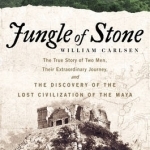
Jungle of Stone: The Extraordinary Journey of John L. Stephens and Frederick Catherwood, and the Discovery of the Lost Civilization of the Maya
Book
New York Times Bestseller (Expeditions) "Thrilling...A captivating history of two men who...

History of Dance with Web Resource
Book
History of Dance, Second Edition, offers readers a panoramic view of dance from prehistory to the...

Kids Yogaverse: I AM LOVE
Health & Fitness and Book
App
Kids Yogaverse: I AM LOVE is “Highly recommended” by the US Surgeon General as a healthy app...

Summer Heat: A Steamy Romance Collection
Caitlyn Lynch, Christina Rose Andrews, Ariel Bishop, Líadáin Douglas, Annika Steele, Gwen Marshall, Abbigail Clark, Livvy Ward, T.D. Crawls, Ava Bari, Avery J. Heath, Tally Bane, Sera Taíno, Moxie Rivers, Siobhan Kearney, Cynthia Miller and Tricia Ramey
8.0 Rate It
Book
A collection of 17 steamy short stories (5,000 - 10,000 words) by new and established romance...
Anthology Contemporary Romance