
Search

Gareth von Kallenbach (980 KP) rated Black Adam (2022) in Movies
Oct 21, 2022

Dwayne Johnson jumps into the DC Universe with “Black Adam” which sees the
star departs from his usual hero roles to play a part that has his
character walking the line between good and bad.
When he is awaked nearly 5,000 years after he helped defeat a tyrant and
free his people, the magically powered Black Adam returns to the modern
world to find his homeland under the occupation of mercenaries with a
shoot first mentality.
Naturally, this does not sit well with Black Adam and him easily and
brutally dispatches the enemies he faces and in doing so comes onto the
radar of Amanda Waller (Viola Davis) who dispatches members of the Justice
Society to bring him in.
Knowing that a 5,000-year-old with god-like powers are not going to go
easily, Waller dispatches Hackman (Aldis Hodge), Doctor Fate (Pierce
Brosnan), Atom Smasher (Noah Centineo), and Cyclone (Maxine Hunkel), to
convince him to say the word which will remove his powers and come along
to detainment.
Knowing this is a bad plan, the group pushes forward with their mission
and this results in some protracted combat with moments of attempting to
reason with Black Adam.
It is learned that the mercenaries are after an ancient crown which a
professor named Shirt (Odelya Halevi), has recovered and this has placed
her and her son in great danger from forces who will stop at nothing to
obtain in.
Fans of comics and adventure movies likely will see where this is heading
as characters must form uneasy alliances to save the day from those
looking to rule the world through chaos and evil and an extended FX-laden
finale follows.
While the film was better than it looked to be from the trailers, the movie dragged in several places and never really offered up much in the way of twists or standout content from the story.
The saving grace was cast which was solid and Johnson seems to be going
all-in on his performance and it was enjoyable to see despite the flaws
with the story and at times pacing of the film.
While it does not reach the heights of many of the MCU films, “Black Adam”
is an enjoyable adventure and a great introduction to the character. As
long as you are willing to work with the issues of the film and simply
enjoy the great cast and action, you will likely have a good time,
It was also refreshing to see a locale and supporting characters who were
not from a glittering urban city and it added a nice change and diversity
to the film.
There were reports that the film had to be edited from an R- rating and some scenes do imply darker and gorier sequences were originally planned.
Make sure to stay through the credits for a bonus scene and here is hoping
that we see Black Adam back soon.
star departs from his usual hero roles to play a part that has his
character walking the line between good and bad.
When he is awaked nearly 5,000 years after he helped defeat a tyrant and
free his people, the magically powered Black Adam returns to the modern
world to find his homeland under the occupation of mercenaries with a
shoot first mentality.
Naturally, this does not sit well with Black Adam and him easily and
brutally dispatches the enemies he faces and in doing so comes onto the
radar of Amanda Waller (Viola Davis) who dispatches members of the Justice
Society to bring him in.
Knowing that a 5,000-year-old with god-like powers are not going to go
easily, Waller dispatches Hackman (Aldis Hodge), Doctor Fate (Pierce
Brosnan), Atom Smasher (Noah Centineo), and Cyclone (Maxine Hunkel), to
convince him to say the word which will remove his powers and come along
to detainment.
Knowing this is a bad plan, the group pushes forward with their mission
and this results in some protracted combat with moments of attempting to
reason with Black Adam.
It is learned that the mercenaries are after an ancient crown which a
professor named Shirt (Odelya Halevi), has recovered and this has placed
her and her son in great danger from forces who will stop at nothing to
obtain in.
Fans of comics and adventure movies likely will see where this is heading
as characters must form uneasy alliances to save the day from those
looking to rule the world through chaos and evil and an extended FX-laden
finale follows.
While the film was better than it looked to be from the trailers, the movie dragged in several places and never really offered up much in the way of twists or standout content from the story.
The saving grace was cast which was solid and Johnson seems to be going
all-in on his performance and it was enjoyable to see despite the flaws
with the story and at times pacing of the film.
While it does not reach the heights of many of the MCU films, “Black Adam”
is an enjoyable adventure and a great introduction to the character. As
long as you are willing to work with the issues of the film and simply
enjoy the great cast and action, you will likely have a good time,
It was also refreshing to see a locale and supporting characters who were
not from a glittering urban city and it added a nice change and diversity
to the film.
There were reports that the film had to be edited from an R- rating and some scenes do imply darker and gorier sequences were originally planned.
Make sure to stay through the credits for a bonus scene and here is hoping
that we see Black Adam back soon.

Bob Mann (459 KP) rated Slaughterhouse Rulez (2018) in Movies
Sep 28, 2021
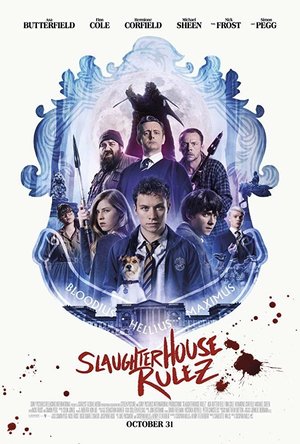


Form-Prefect of the Dead.
The Plot
Meredith Houseman (Simon Pegg) is housemaster of Sparta house in Slaughterhouse school: an ancient public school establishment steering England’s future greats to greatness (which probably explains a lot about the current Brexit mess!). Houseman is not in a happy place, given that his girlfriend is now in deepest darkest African doing “good works” with handsome French doctors, and particularly that she is played by Margot Robbie: I would be also be sad… #punching!
New school starter Don Wallace (Finn Cole) is equally unhappy as he is a northern teen dragooned into attending the school by his well-meaning Mum (Jo Hartley). His strange room-mate Willoughby (Asa Butterfield) seems to be a chronic depressive; he is being picked on by the prefect-bully Clegg (Tom Rhys Harries); and his bed was previously occupied by a Viscount, since deceased under unpleasant circumstances that no-one wants to talk about. At least he has the distraction of the upper-sixth school goddess Clemsie Lawrence (Hermione Corfield) to take his mind off his woes.
All this washes over “The Bat” – the school’s headmaster (Michael Sheen) – since he is engrossed in some shady deal with an evil corporation doing fracking in the school grounds. The fracking though seems to be doing more than just causing a few minor earth tremors, as ancient forces are unleashed.
The Review
The movie is positioned as a “comedy/horror”, along the lines of “Shaun of the Dead”. The film also has Frost and Pegg as executive producers and they also have starring roles in the film. But there the similarities really end: this is a “Cornetto film” without a cone of solid chocolate lurking at the bottom to enjoy.
The script (by director Crispian Mills and first-time screenwriter Henry Fitzherbert) is nowhere near as sharp as the Frost/Pegg scripts for their famous collaborations. The story overall makes precious little sense: it’s a hodge-podge of elements from many Harry Potter films (especially “The Chamber of Secrets”), Lindsay Anderson’s “If…”; and Roy Boulting’s “The Guinea Pig”; with also a sprinkling of the anarchic essence of Michael Palin’s classic “Tomkinson’s Schooldays”. The whole thing never manages to gel into a cohesive whole.
After the second reel, the film completely loses sight of the plot: there’s a whole lot of running, screaming and dying going on but there’s little logic behind any of it that I could fathom. What didn’t help my comprehension of what was going on were some ‘Cornetto-esque’ sequences of manic editing. Images were thrown onto the screen so subliminally that any clever nuance was lost. I’m sure at one point there was a droll (if gross) segue at a “Roman orgy” of a girl receiving oral sex before being ‘eaten out’ in an entirely different way. But you would need a Blu-ray and a frame-by-frame pause function to get the joke.
That’s not to say that I didn’t laugh a few times along the way. There are some sight gags – for example, Wooten (Kit Connor) as the lad at the bottom of the bullying pecking order, chained to a U-bend – that made me laugh, and some running jokes – for example, Frost as the head of the anti-fracking camp offering the kids drugs at every encounter – that mildly amuse. But once again here’s a British comedy that, like the atrocious “The Brits are Coming“, thinks that “funny” largely revolves around swearing a lot – how useful that “frack” sounds so similar to another word – with added bodily dismemberment.
The turns
Pegg and Frost ham it up with their usual comedy schtick well enough, and it was quite fun to see Sheen try a comedy role for a change as the conniving and supercilious headmaster. Elsewhere all the young cast put their hearts into it, but it’s again Asa Butterfield that your eyes gravitate to, due to his striking features. I last saw Asa in the excellent if harrowing WW1 drama “Journey’s End“, and he here proves again that he is a One Mann’s Movies ‘name to watch for the future’.
Final thoughts
There’s a lot to irritate in this film. From the “z” in the title to… well… about 80% of the film. There is no nuance or subtlety to either the writing or the direction. I think that’s a great shame. The film has a good premise hidden in there. An adult comedy set around the ridiculous rules and rites of public schools (away from the light nonsense of “St Trinians”) is overdue. And the whole subject of fracking, and the conflicts surrounding the controversial techniques, hasn’t yet – to my knowledge – been explored in a fictional movie. The film does have a few very funny moments. But as a whole I left the cinema with that “wasted two hours” feeling. Not recommended.
Meredith Houseman (Simon Pegg) is housemaster of Sparta house in Slaughterhouse school: an ancient public school establishment steering England’s future greats to greatness (which probably explains a lot about the current Brexit mess!). Houseman is not in a happy place, given that his girlfriend is now in deepest darkest African doing “good works” with handsome French doctors, and particularly that she is played by Margot Robbie: I would be also be sad… #punching!
New school starter Don Wallace (Finn Cole) is equally unhappy as he is a northern teen dragooned into attending the school by his well-meaning Mum (Jo Hartley). His strange room-mate Willoughby (Asa Butterfield) seems to be a chronic depressive; he is being picked on by the prefect-bully Clegg (Tom Rhys Harries); and his bed was previously occupied by a Viscount, since deceased under unpleasant circumstances that no-one wants to talk about. At least he has the distraction of the upper-sixth school goddess Clemsie Lawrence (Hermione Corfield) to take his mind off his woes.
All this washes over “The Bat” – the school’s headmaster (Michael Sheen) – since he is engrossed in some shady deal with an evil corporation doing fracking in the school grounds. The fracking though seems to be doing more than just causing a few minor earth tremors, as ancient forces are unleashed.
The Review
The movie is positioned as a “comedy/horror”, along the lines of “Shaun of the Dead”. The film also has Frost and Pegg as executive producers and they also have starring roles in the film. But there the similarities really end: this is a “Cornetto film” without a cone of solid chocolate lurking at the bottom to enjoy.
The script (by director Crispian Mills and first-time screenwriter Henry Fitzherbert) is nowhere near as sharp as the Frost/Pegg scripts for their famous collaborations. The story overall makes precious little sense: it’s a hodge-podge of elements from many Harry Potter films (especially “The Chamber of Secrets”), Lindsay Anderson’s “If…”; and Roy Boulting’s “The Guinea Pig”; with also a sprinkling of the anarchic essence of Michael Palin’s classic “Tomkinson’s Schooldays”. The whole thing never manages to gel into a cohesive whole.
After the second reel, the film completely loses sight of the plot: there’s a whole lot of running, screaming and dying going on but there’s little logic behind any of it that I could fathom. What didn’t help my comprehension of what was going on were some ‘Cornetto-esque’ sequences of manic editing. Images were thrown onto the screen so subliminally that any clever nuance was lost. I’m sure at one point there was a droll (if gross) segue at a “Roman orgy” of a girl receiving oral sex before being ‘eaten out’ in an entirely different way. But you would need a Blu-ray and a frame-by-frame pause function to get the joke.
That’s not to say that I didn’t laugh a few times along the way. There are some sight gags – for example, Wooten (Kit Connor) as the lad at the bottom of the bullying pecking order, chained to a U-bend – that made me laugh, and some running jokes – for example, Frost as the head of the anti-fracking camp offering the kids drugs at every encounter – that mildly amuse. But once again here’s a British comedy that, like the atrocious “The Brits are Coming“, thinks that “funny” largely revolves around swearing a lot – how useful that “frack” sounds so similar to another word – with added bodily dismemberment.
The turns
Pegg and Frost ham it up with their usual comedy schtick well enough, and it was quite fun to see Sheen try a comedy role for a change as the conniving and supercilious headmaster. Elsewhere all the young cast put their hearts into it, but it’s again Asa Butterfield that your eyes gravitate to, due to his striking features. I last saw Asa in the excellent if harrowing WW1 drama “Journey’s End“, and he here proves again that he is a One Mann’s Movies ‘name to watch for the future’.
Final thoughts
There’s a lot to irritate in this film. From the “z” in the title to… well… about 80% of the film. There is no nuance or subtlety to either the writing or the direction. I think that’s a great shame. The film has a good premise hidden in there. An adult comedy set around the ridiculous rules and rites of public schools (away from the light nonsense of “St Trinians”) is overdue. And the whole subject of fracking, and the conflicts surrounding the controversial techniques, hasn’t yet – to my knowledge – been explored in a fictional movie. The film does have a few very funny moments. But as a whole I left the cinema with that “wasted two hours” feeling. Not recommended.

Movie Metropolis (309 KP) rated A Monster Calls (2016) in Movies
Jun 10, 2019


A Masterpiece
J.A. Bayona is one of the most exciting rising stars behind the camera lens. His knack for creating superbly shot, engaging films like The Orphanage and The Impossible has meant many in Hollywood have been keeping an intrigued eye on him.
His hard work paid off last year when it was announced he would be taking over directorial duties on the as yet unnamed Jurassic World sequel. In the meantime, Bayona has been busy working on A Monster Calls, based on the book of the same name by Patrick Ness, but does it continue the director’s brilliant work?
12-year-old Conor (Lewis MacDougall), dealing with his mother’s (Felicity Jones) illness, a less-than-sympathetic grandmother (Sigourney Weaver), and bullying classmates, finds a most unlikely ally when a Monster (Liam Neeson) appears at his bedroom window. Ancient, wild, and relentless, the Monster guides Conor on a journey of courage, faith, and truth through three dramatic tales.
The first thing to say is that the film is visually stunning with detail seeping from every frame. Every shot is breath-taking in its own way and the tall tales in which Liam Neeson’s booming voice narrate are beautiful. Bayona yet again demonstrates his flair for cinematography, but this time his creativeness is set free in Conor’s imagination, where he literally paints pictures with superb animations.
Acting wise, A Monster Calls is sublime. With talent like Liam Neeson, Sigourney Weaver and Felicity Jones making up the bulk of the cast, you’d be forgiven for thinking it’d be easy for newcomer Lewis MacDougall to get lost in the fray, but he doesn’t. His performance throughout the film is exceptional and the chemistry he shares with on-screen mum Felicity is entirely believable, making his plight all the more heart-breaking.
But the real winners here are the special effects. Liam Neeson’s gravelly tone lends itself perfectly to creating ‘the Monster’ in all its woody glory. The incredible CGI used to bring him to life is some of the best I’ve ever seen, all the more remarkable given the film’s relatively modest $43million budget. The effects are better than those in some blockbusters costing three times this.
Then there’s the plot. Essentially a coming of age story as one young man tries desperately to hang on to his youth and escape the tragedies of life; A Monster Calls is one of the most heartfelt and emotionally resonant films in the genre. It is a testament to author and screenwriter Patrick Ness that his novel’s gut-wrenching themes are carried across perfectly to the silver screen; that is by no means an easy thing to accomplish.
Overall, A Monster Calls is a mesmerising 115 minutes that stays with you long after the end credits roll. Everything from the acting to the direction is spot on, with the story being relatable to every single one of us. This time last year I was sat in the cinema watching Daddy’s Home; what a difference 12 months makes.
https://moviemetropolis.net/2017/01/07/a-masterpiece-a-monster-calls-review/
His hard work paid off last year when it was announced he would be taking over directorial duties on the as yet unnamed Jurassic World sequel. In the meantime, Bayona has been busy working on A Monster Calls, based on the book of the same name by Patrick Ness, but does it continue the director’s brilliant work?
12-year-old Conor (Lewis MacDougall), dealing with his mother’s (Felicity Jones) illness, a less-than-sympathetic grandmother (Sigourney Weaver), and bullying classmates, finds a most unlikely ally when a Monster (Liam Neeson) appears at his bedroom window. Ancient, wild, and relentless, the Monster guides Conor on a journey of courage, faith, and truth through three dramatic tales.
The first thing to say is that the film is visually stunning with detail seeping from every frame. Every shot is breath-taking in its own way and the tall tales in which Liam Neeson’s booming voice narrate are beautiful. Bayona yet again demonstrates his flair for cinematography, but this time his creativeness is set free in Conor’s imagination, where he literally paints pictures with superb animations.
Acting wise, A Monster Calls is sublime. With talent like Liam Neeson, Sigourney Weaver and Felicity Jones making up the bulk of the cast, you’d be forgiven for thinking it’d be easy for newcomer Lewis MacDougall to get lost in the fray, but he doesn’t. His performance throughout the film is exceptional and the chemistry he shares with on-screen mum Felicity is entirely believable, making his plight all the more heart-breaking.
But the real winners here are the special effects. Liam Neeson’s gravelly tone lends itself perfectly to creating ‘the Monster’ in all its woody glory. The incredible CGI used to bring him to life is some of the best I’ve ever seen, all the more remarkable given the film’s relatively modest $43million budget. The effects are better than those in some blockbusters costing three times this.
Then there’s the plot. Essentially a coming of age story as one young man tries desperately to hang on to his youth and escape the tragedies of life; A Monster Calls is one of the most heartfelt and emotionally resonant films in the genre. It is a testament to author and screenwriter Patrick Ness that his novel’s gut-wrenching themes are carried across perfectly to the silver screen; that is by no means an easy thing to accomplish.
Overall, A Monster Calls is a mesmerising 115 minutes that stays with you long after the end credits roll. Everything from the acting to the direction is spot on, with the story being relatable to every single one of us. This time last year I was sat in the cinema watching Daddy’s Home; what a difference 12 months makes.
https://moviemetropolis.net/2017/01/07/a-masterpiece-a-monster-calls-review/
Gareth von Kallenbach (980 KP) rated Justice League (2017) in Movies
Jun 19, 2019
The long anticipated “Justice League” has finally arrived finally combining the biggest stars of the DC universe into one film. The proposed film has faced many obstacles on the way to the big screen ranging from script issues, massive reshoots and a change of Director for said reshoots due to a family tragedy that Director Zack Snyder suffered.
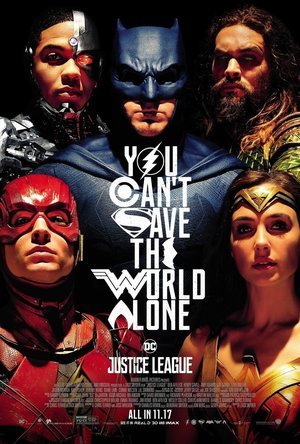
The film follows Batman (Ben Affleck) and Wonder Woman (Gal Godot), as they look to assemble a team of other gifted individuals to help fight off a pending invasion.
The death of Superman has left a void on the Earth, and this has paved the way for an ancient evil to return as he attempts to conquer the planet after he collects the three needed artifacts that his plan requires.
In a race against time, Batman and Wonder Woman recruit Aquaman (Jason Momoa), The Flash (Ezra Miller), and Cyborg (Ray Fisher), to battle to save the planet. Naturally they battle amongst themselves as well as their massing enemies but ultimately decide on a dangerous plan that can tip the odds in their favor and save the day.
The action in the film is good but it often plays out like a video game. With so many blatantly obvious CGI backgrounds, the movie looked like a video game. There were numerous scenes that looked like they were lifted from Injustice and Injustice 2 that I mused to myself that someone must have used their Power Up for the shot.
Affleck and Gadot are good and work well with one another, but there are some serious casting issues with the film. The biggest for me was Ezra Miller as The Flash. I did not like his effeminate, nerdy, socially awkward, and neurotic and at times cowardly take on the character. This is not the Barry Allen I grew up reading in comics or the one that has been portrayed twice in a much better fashion on television. His comic relief status grew old fast and his character really offered little to the film.
It has been well-documented that Joss Whedon not only handled the rewrites for the film but took over directing duties to complete the film. You can see elements of his humor scattered throughout and the film does move along at a steady pace without dragging.
The biggest issue is that so many of the characters are just stiff and one-dimensional. They really are not overly interesting so it is hard to really connect with them and the tasks they are facing. Unlike Marvel who have excelled with dysfunctional groups who fight amongst themselves as well as the forces of evil, this group seems to be going through the paces rather than being fully engaged with the task at hand and each other.
In the end “Justice League” is better than I expected, and the two bonus scenes in the credits show some interesting potential down the road. As it is, it is flawed entertainment that requires audiences to overlook a lot of issues.
http://sknr.net/2017/11/15/justice-league/
The film follows Batman (Ben Affleck) and Wonder Woman (Gal Godot), as they look to assemble a team of other gifted individuals to help fight off a pending invasion.
The death of Superman has left a void on the Earth, and this has paved the way for an ancient evil to return as he attempts to conquer the planet after he collects the three needed artifacts that his plan requires.
In a race against time, Batman and Wonder Woman recruit Aquaman (Jason Momoa), The Flash (Ezra Miller), and Cyborg (Ray Fisher), to battle to save the planet. Naturally they battle amongst themselves as well as their massing enemies but ultimately decide on a dangerous plan that can tip the odds in their favor and save the day.
The action in the film is good but it often plays out like a video game. With so many blatantly obvious CGI backgrounds, the movie looked like a video game. There were numerous scenes that looked like they were lifted from Injustice and Injustice 2 that I mused to myself that someone must have used their Power Up for the shot.
Affleck and Gadot are good and work well with one another, but there are some serious casting issues with the film. The biggest for me was Ezra Miller as The Flash. I did not like his effeminate, nerdy, socially awkward, and neurotic and at times cowardly take on the character. This is not the Barry Allen I grew up reading in comics or the one that has been portrayed twice in a much better fashion on television. His comic relief status grew old fast and his character really offered little to the film.
It has been well-documented that Joss Whedon not only handled the rewrites for the film but took over directing duties to complete the film. You can see elements of his humor scattered throughout and the film does move along at a steady pace without dragging.
The biggest issue is that so many of the characters are just stiff and one-dimensional. They really are not overly interesting so it is hard to really connect with them and the tasks they are facing. Unlike Marvel who have excelled with dysfunctional groups who fight amongst themselves as well as the forces of evil, this group seems to be going through the paces rather than being fully engaged with the task at hand and each other.
In the end “Justice League” is better than I expected, and the two bonus scenes in the credits show some interesting potential down the road. As it is, it is flawed entertainment that requires audiences to overlook a lot of issues.
http://sknr.net/2017/11/15/justice-league/

50 Bars to Blow Your Mind
Lonely Planet and Ben Handicott
Book
From the people who have been delivering trustworthy guidebooks to every destination in the world...

Kyera (8 KP) rated Wintersong in Books
Jan 31, 2018
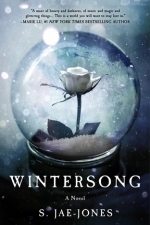
Wintersong is a fairytale re-telling based upon the German poem Der Erlkonig and stories of the Goblin King. The author takes a relatively short poem and breathes life into it, translating the dark words into an entire world. Liesl has heard tales of the Goblin King from her grandmother since she was a small child. Even played make-believe in the Goblin Grove with her Goblin King, but as she grew older she lost her faith in the old stories. Even her brother and sister seemed not to heed the old woman’s warnings. She warned Liesl that she must protect both siblings - she would be faced with a choice and mustn’t choose wrong.
This dire warning and her later choices set her on a journey to the Underworld. It is dark, earthy and primal, full of creatures that Liesl does not understand or trust. The land itself is well-described and forms itself within the reader’s mind. Though you would never hope to call it home, it has its own ancient and crude form of beauty.
The characters are unique, although generally not faceted or well-developed in their personalities. Perhaps our main character just does not know them as well as she believes, for her view is quite flat. Her sister, Kathe is beautiful and cares only about similarly pretty and frivolous things. Her brother, Josef is a talented musician who fears his music is a “gift” from the Devil. Her grandmother is superstitious, her mother hard-working and aloof, and her father a drunk. Sadly, we don’t get to see or experience any depth of personality, nor are they given the chance to develop over the course of the novel. As our main character is in the Underworld, the lack of development is understandable which is why I wish they were more fleshed out initially.
Liesl herself is a strange mix of traits with her love of music and composition, intense lack of confidence and anger stemming from her belief that she is ugly and unwanted. Her choices are both selfish and selfless. She is a mass of contradictions and broken beliefs. While she is an interesting character, I don’t find her to be particularly relatable. I didn’t connect with any of the characters in the novel, although I enjoyed the story itself. I’m sure there are others who would find similarities between themselves and one of the characters, making this book more impactful.
Finally, the Goblin King himself – who seems to be like two people in one. At times, we see the younger, more open man that he was and could be again while at others the cold, quick to anger Trickster of the Underworld is at the forefront. More intriguing than his present is his story, you wonder how did he become the Erlkonig? For he is not the first, nor shall he be the last. He is more human than his subjects and thus this difference is what fascinated me. I wanted that story, more than him demanding Liesl in her “entire” and her being unable to give of herself, fully, yet.
It was an interesting story even though I didn’t particularly care for the characters. I recommend this book for older young adult/teen readers who enjoy fantasy and fairytale books. The writing is very poetic and beautifully descriptive. I don’t regret reading this book, but I also wouldn’t personally go out and buy a physical copy of it for my shelf.
This dire warning and her later choices set her on a journey to the Underworld. It is dark, earthy and primal, full of creatures that Liesl does not understand or trust. The land itself is well-described and forms itself within the reader’s mind. Though you would never hope to call it home, it has its own ancient and crude form of beauty.
The characters are unique, although generally not faceted or well-developed in their personalities. Perhaps our main character just does not know them as well as she believes, for her view is quite flat. Her sister, Kathe is beautiful and cares only about similarly pretty and frivolous things. Her brother, Josef is a talented musician who fears his music is a “gift” from the Devil. Her grandmother is superstitious, her mother hard-working and aloof, and her father a drunk. Sadly, we don’t get to see or experience any depth of personality, nor are they given the chance to develop over the course of the novel. As our main character is in the Underworld, the lack of development is understandable which is why I wish they were more fleshed out initially.
Liesl herself is a strange mix of traits with her love of music and composition, intense lack of confidence and anger stemming from her belief that she is ugly and unwanted. Her choices are both selfish and selfless. She is a mass of contradictions and broken beliefs. While she is an interesting character, I don’t find her to be particularly relatable. I didn’t connect with any of the characters in the novel, although I enjoyed the story itself. I’m sure there are others who would find similarities between themselves and one of the characters, making this book more impactful.
Finally, the Goblin King himself – who seems to be like two people in one. At times, we see the younger, more open man that he was and could be again while at others the cold, quick to anger Trickster of the Underworld is at the forefront. More intriguing than his present is his story, you wonder how did he become the Erlkonig? For he is not the first, nor shall he be the last. He is more human than his subjects and thus this difference is what fascinated me. I wanted that story, more than him demanding Liesl in her “entire” and her being unable to give of herself, fully, yet.
It was an interesting story even though I didn’t particularly care for the characters. I recommend this book for older young adult/teen readers who enjoy fantasy and fairytale books. The writing is very poetic and beautifully descriptive. I don’t regret reading this book, but I also wouldn’t personally go out and buy a physical copy of it for my shelf.
Gareth von Kallenbach (980 KP) rated Shazam! (2019) in Movies
Jun 19, 2019
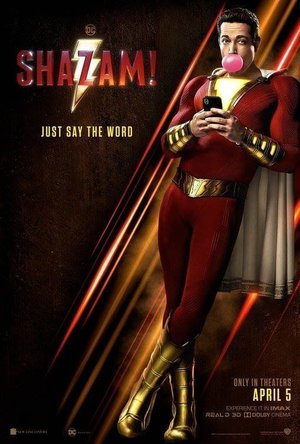

Growing up I was a regular viewer of the Shazam and Isis “Super Power Hour” on television. Back before the days of mega-budgeted Super Hero movies; we had to content ourselves with cartoons and low budget television offerings which did their best to capture the look and action of comic characters within the budget and technology limits they had to deal with.
Warner Bros. has brought their latest DC hero to the big screen with “Shazam!” and it looks to launch a new franchise for the studio and build on the success of “Wonder Woman” and “Aquaman” following some earlier disappointments with their planned hero franchise films.
The film follows the story of young Billy Batson (Asher Angel), who has grown up in and fled several Foster Homes after being lost at a Carnival years earlier and unable to find his mother. Billy has never stopped trying to find her and even takes extreme measures to try to find her that has gotten him in trouble with the law.
While trying to stick up for a family member at his latest Foster Home; Billy is forced to flee from some local goons and finds himself facing an ancient Wizard (Djimon Honsou; who tells him he will now have superior powers when he speaks his name as he is now a guardian against the forces of evil.
Billy does not believe this but upon uttering the name; he transforms into a powerful hero in adult form. Zach Levi plays the title hero and soon finds himself eager to test his new powers and his Super Hero obsessed Foster Brother is more than happy to mentor him and make all sorts of viral videos of his efforts and training.
Their efforts soon draw the attention of an evil individual (Mark Strong), who covets the power Billy has for himself as along with the Seven Deadly Sins; he looks to become an unstoppable force for evil and sets out to destroy all that stands in his way.
The film is aimed more for a younger audience as much of the humor is squarely focused on Middle School level jokes. There are more than a few references to “Big” along the way which does sum up a good portion of the backstory as when he is in hero form; the young boy without a family is a popular and dynamic adult.
In many ways this was one of the more odd aspects of the film. Billy is a dour and untrusting individual most of the time; however when he is hero form he is a jovial and goofy individual who acts like a teenager. I could see an increase in confidence but it is odd considering that they are the same person.
Levi is very energetic in the part and goes all in and he does a great job of conveying a kid in a man’s body. The biggest issue with the film is that there is mostly a lot of humor aimed at a much younger audience and large gaps with minimal action which made sitting through numerous childish antics a bit tedious at times.
Despite this; the film was entertaining and one of the better adaptions of a comic. The door is wide open for future adventures and I look forward to seeing what they come up with next.
http://sknr.net/2019/03/23/shazam/
Warner Bros. has brought their latest DC hero to the big screen with “Shazam!” and it looks to launch a new franchise for the studio and build on the success of “Wonder Woman” and “Aquaman” following some earlier disappointments with their planned hero franchise films.
The film follows the story of young Billy Batson (Asher Angel), who has grown up in and fled several Foster Homes after being lost at a Carnival years earlier and unable to find his mother. Billy has never stopped trying to find her and even takes extreme measures to try to find her that has gotten him in trouble with the law.
While trying to stick up for a family member at his latest Foster Home; Billy is forced to flee from some local goons and finds himself facing an ancient Wizard (Djimon Honsou; who tells him he will now have superior powers when he speaks his name as he is now a guardian against the forces of evil.
Billy does not believe this but upon uttering the name; he transforms into a powerful hero in adult form. Zach Levi plays the title hero and soon finds himself eager to test his new powers and his Super Hero obsessed Foster Brother is more than happy to mentor him and make all sorts of viral videos of his efforts and training.
Their efforts soon draw the attention of an evil individual (Mark Strong), who covets the power Billy has for himself as along with the Seven Deadly Sins; he looks to become an unstoppable force for evil and sets out to destroy all that stands in his way.
The film is aimed more for a younger audience as much of the humor is squarely focused on Middle School level jokes. There are more than a few references to “Big” along the way which does sum up a good portion of the backstory as when he is in hero form; the young boy without a family is a popular and dynamic adult.
In many ways this was one of the more odd aspects of the film. Billy is a dour and untrusting individual most of the time; however when he is hero form he is a jovial and goofy individual who acts like a teenager. I could see an increase in confidence but it is odd considering that they are the same person.
Levi is very energetic in the part and goes all in and he does a great job of conveying a kid in a man’s body. The biggest issue with the film is that there is mostly a lot of humor aimed at a much younger audience and large gaps with minimal action which made sitting through numerous childish antics a bit tedious at times.
Despite this; the film was entertaining and one of the better adaptions of a comic. The door is wide open for future adventures and I look forward to seeing what they come up with next.
http://sknr.net/2019/03/23/shazam/
Jungle of Stone: The Extraordinary Journey of John L. Stephens and Frederick Catherwood, and the Discovery of the Lost Civilization of the Maya
Book
New York Times Bestseller (Expeditions) "Thrilling...A captivating history of two men who...
HO

History of Dance with Web Resource
Book
History of Dance, Second Edition, offers readers a panoramic view of dance from prehistory to the...

Ivana A. | Diary of Difference (1171 KP) rated 100 Speeches that roused the world in Books
Oct 5, 2020
<a href="https://amzn.to/2Wi7amb">Wishlist</a>; | <a
<a href="https://diaryofdifference.com/">Blog</a>; | <a href="https://www.facebook.com/diaryofdifference/">Facebook</a>; | <a href="https://twitter.com/DiaryDifference">Twitter</a>; | <a href="https://www.instagram.com/diaryofdifference/">Instagram</a>; | <a href="https://www.pinterest.co.uk/diaryofdifference/pins/">Pinterest</a>;
<img src="https://i1.wp.com/diaryofdifference.com/wp-content/uploads/2020/09/Book-Review-Banner-86.png?resize=768%2C432&ssl=1"/>;
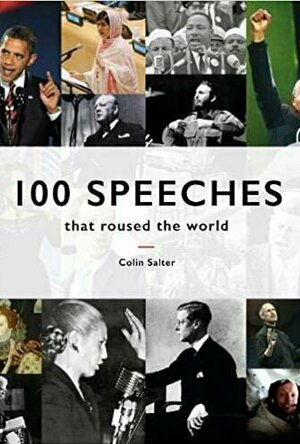
<b><i>Boy, oh boy, do I have mixed feelings about 100 Speeches That Roused the World by Colin Salter.</i></b>
The reason I picked up this book is because I have always been in love with speeches and orators. I believe that the ability to speak in front of an audience is a very powerful skill, and I admire it as such. Many great leaders and many successful people use this skill to make people listen and act in a way they want them to. That is where the true art is, and I really admire this aspect. The fact that you can listen to two or more people tell you the same thing, and only one being able to convince you to do something or believe in something they say is a true gift.
Which takes us to the second reason I picked this book up. To find out more about the people who had this ability in history and made a difference in one way or another. And for the most part, I was pleased. There are speeches of many great (and not so great) leaders out there, speeches of people that made breakthroughs in their fields, people who fought for their rights.
<b><i>But there was a pattern I noticed in these 100 speeches.</i></b>
Most of these speeches were either from the UK or USA. And most of them were presidents, prime ministers,royalty or leaders in any other way. And all their speeches were speeches during the wars. Telling their people to fight for their nations.
And I have nothing against those speeches. They were perfect for their time and they did their purpose at the time. What I had a problem with is that there were so many more important times in history when a speech was made and it represented a change.
What about all the speeches that philosophers have given in ancient Rome and Greece? For Rome, where is Julius Caesar’s speech to the senate? For Greece, how about the movement for freedom of speech? What about the speeches during humanism and renaissance? What about some of the groundbreaking speeches that scientists have given over the years?
I was a bit disappointed with the format of the book as well, as the speeches were mostly short paragraphs, followed by a full page of the author’s notes, mostly quoting the same speech again. It was very helpful to know the background of how the speech made a difference in the world, but when most of those speeches didn’t really make any difference, and I was involved in a history lesson of the most important wars in history, it wasn’t much of a fun read.
<b><i>To conclude, this book wasn’t what I was looking for, both format and content wise. The 100 Speeches mentioned in this book didn’t do enough justice for me. I believe that title is misleading, but I can also understand that some people can still learn a lot by reading it.</i></b>
<a href="https://diaryofdifference.com/">Blog</a>; | <a href="https://www.facebook.com/diaryofdifference/">Facebook</a>; | <a href="https://twitter.com/DiaryDifference">Twitter</a>; | <a href="https://www.instagram.com/diaryofdifference/">Instagram</a>; | <a href="https://www.pinterest.co.uk/diaryofdifference/pins/">Pinterest</a>;
<img src="https://i1.wp.com/diaryofdifference.com/wp-content/uploads/2020/09/Book-Review-Banner-86.png?resize=768%2C432&ssl=1"/>;
<b><i>Boy, oh boy, do I have mixed feelings about 100 Speeches That Roused the World by Colin Salter.</i></b>
The reason I picked up this book is because I have always been in love with speeches and orators. I believe that the ability to speak in front of an audience is a very powerful skill, and I admire it as such. Many great leaders and many successful people use this skill to make people listen and act in a way they want them to. That is where the true art is, and I really admire this aspect. The fact that you can listen to two or more people tell you the same thing, and only one being able to convince you to do something or believe in something they say is a true gift.
Which takes us to the second reason I picked this book up. To find out more about the people who had this ability in history and made a difference in one way or another. And for the most part, I was pleased. There are speeches of many great (and not so great) leaders out there, speeches of people that made breakthroughs in their fields, people who fought for their rights.
<b><i>But there was a pattern I noticed in these 100 speeches.</i></b>
Most of these speeches were either from the UK or USA. And most of them were presidents, prime ministers,royalty or leaders in any other way. And all their speeches were speeches during the wars. Telling their people to fight for their nations.
And I have nothing against those speeches. They were perfect for their time and they did their purpose at the time. What I had a problem with is that there were so many more important times in history when a speech was made and it represented a change.
What about all the speeches that philosophers have given in ancient Rome and Greece? For Rome, where is Julius Caesar’s speech to the senate? For Greece, how about the movement for freedom of speech? What about the speeches during humanism and renaissance? What about some of the groundbreaking speeches that scientists have given over the years?
I was a bit disappointed with the format of the book as well, as the speeches were mostly short paragraphs, followed by a full page of the author’s notes, mostly quoting the same speech again. It was very helpful to know the background of how the speech made a difference in the world, but when most of those speeches didn’t really make any difference, and I was involved in a history lesson of the most important wars in history, it wasn’t much of a fun read.
<b><i>To conclude, this book wasn’t what I was looking for, both format and content wise. The 100 Speeches mentioned in this book didn’t do enough justice for me. I believe that title is misleading, but I can also understand that some people can still learn a lot by reading it.</i></b>