

Indiana Jones and the Seven Veils
Book
Having barely survived a hair-raising archaeological dig in Tikal, Guatemala, Indiana Jones has...

101 Things to Do with a Stone Circle
Book
There are more than nine hundred stone circles in the British Isles alone and countless thousands of...

MaryAnn (14 KP) rated Fragments of Fear in Books
Nov 4, 2019
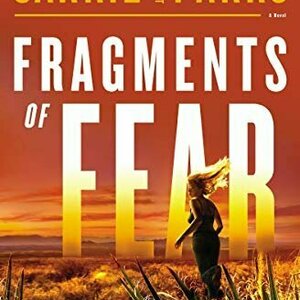

Evelyn Yvonne McTavish-Tavish to her friends-had her almost perfect world in Albuquerque, New Mexico, come to a crashing end with the suicide of her fiancé. As she struggles to put her life back together and make a living from her art, shes given the news that her dog is about to be destroyed at the dog pound. Except she doesnt own a dog. The shelter is adamant that the microchip embedded in the canine-with her name and address-makes it hers. Tavish recognizes the dog as one owned by an archaeologist named Pat Caron because she did a commissioned drawing of the two of them months earlier. The simple solution is to return the dog to his owner, but she arrives only to discover Carons murdered body. After meeting undercover FBI agent Sawyer Price the mystery deepens as more people start disappearing and Tavish becomes a target as well. Her only solution is to find the links between microchip technology, an Anasazi site in the desert, her fiancés death, a late-night radio show, and the dog. And the clock is ticking.
My Thoughts: This is an interesting suspense mystery novel. The author has a whimsical way of writing, that puts a little humor into the storyline. When the story begins, we have a young woman at the funeral of her fiance, then finds herself with a dog she doesn't really want and then discovers that it's the owner has been murdered. No wonder Tavish had so many panic attacks. I really enjoyed this novel. It kept my attention from the beginning and did not disappoint me throughout the story.
I enjoyed this novel, the one point I did like about this novel, is that the main character does come to Christ, and learns to overcome her fears by leaning on God.
I look forward to more from Carrie Stuart Parks.
????

An Autobiography
Book
Agatha Christie's 'most absorbing mystery' - her own autobiography, with new exclusive CD containing...

Dan Dare: Volume 1
Richard Kurti, Bev Doyle, James Swallow and Marc Platt
Book
Three audio adventures based on the Eagle comic strip "Dan Dare" created by Rev. Marcus Morris,...

Kristy H (1252 KP) rated The Stone Circle (Ruth Galloway, #11) in Books
Jun 21, 2019
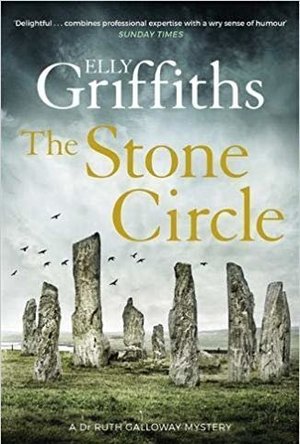

"'He's back,' says Clough. 'Bollocks,' says Nelson. 'He's dead.'"
The wonderful Elly Griffiths brings us back to her first Ruth Galloway book, The Crossing Places in this, her eleventh Ruth story. Yet, the tale feels as fresh and intriguing as ever. I just love the Ruth Galloway series--the tone of these books is unlike almost any other. Ruth seems real to me by now, like an old friend, and don't even get me started on Nelson, our beloved, sarcastic, DCI. Griffiths has an amazing ability to characterize Ruth and Nelson (and the whole crew) and capture their own distinct voices. Her books are at turns funny, familiar, and sometimes heartbreaking as Ruth and Nelson try to navigate their own relationship--and the other relationships that may or may not keep them apart. Michelle, Nelson's wife, has her baby in this one (cliffhanger resolved), and there is progress made on other personal fronts as well.
It almost seems like icing on the cake that we are treated to an enjoyable mystery along with our lovely characters and just overall familiarity. I found the case in this one to be engrossing, especially with the ties back to the earlier book. (I highly recommend reading this series from the beginning--it's the best way to catch all the little nuances and bits of humor, but the book will stand alone.) Margaret's disappearance is interesting--and her story brings a whole new cast of characters, several of whom entwine with our usual suspects.
All in all, as always, another winner from Griffiths. I could read her books constantly, and I love Ruth and Nelson (and Kate, Ruth's seven-year-old) so dearly! They truly seem real to me. If you've been reading this series from book #1, you'll enjoy the usual humor (oh Nelson) and returning to our cast of characters. If you like a good mystery (with some archaeological flavor sprinkled in), you won't be disappointed either. 4.5 stars.

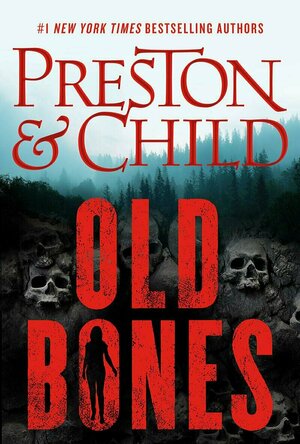

'Old Bones' follows two women, Nora Kelly and Corrie Swanson, with a small segment following a man named Clive Benton, all of who end up being intertwined within this one novel. The entire story revolves around the dark history of the cannibalistic Donner Party, while bringing in fictitious elements to give the readers a well-rounded adventure.
The story gets rolling after Benton visits Kelly with a historical diary that belonged to a member of the Donner Party- - - Kelly is a well-known archaeologist, while Benton is an accredited historian - - - Benton tells Kelly that the journal revealed a lost camp which had never been discovered by anyone, and that this camp could be one of the biggest archaeological finds of the century. While Kelly has to convince the director of the Archaeology Institute to fund the expedition, Benton springs on her and the director that there is a possibility of twenty million dollars worth of gold coins that belonged to a member of the Donner Party could still be located at this lost camp, and, of course, the director quickly agrees to fund the expedition.
Before this, I have never read a book by Preston and Child, but after reading 'Old Bones,' I am anxious to read their other works. The writing is fluid, and keeps the pace going quite well, and the transition between the two main characters is done flawlessly without any confusion as to whose view point you are viewing. The fictitious take on the historical Donner Party is done masterfully enough that even I had to go back to actual historic documents to see what was true and what was not. In one book, readers get dark history, paranormal elements, archaeology, thriller moments, mystery and suspense.
Although the story is a well-written one, there is one scene that could have had great potential, but nothing ever came of it: "Taking a few more steps, she passed through a particularly dense stand of trees and suddenly emerged into a roughly circular clearing. Odd: there was no reason for a break like this in such thick forest. She shone her light around, but there was nothing: just a soft bed of green moss, undisturbed by tracks, and a few scattered boulders." The way this scene is written leaves readers to believe that this may be important later on, but the area is unfortunately never mentioned again.
The story brings FBI agent Swanson into the lives of Benton and Kelly after a string of grave robberies and one presumed murder takes place; the former and latter have one thing in common: they are descendants of a member belonging to the Donner Party.
" 'So where do we fit into this?' asked Nora.
'The commonality I referred to. All four individuals were descended from a single person: a man named Parkin.'
Nora saw Clive start in surprise. 'Albert Parkin?' he asked. 'Of the Donner Party?'
'Exactly. And I've been led to understand he's one of the individuals in the camp you're excavating.' " Agent Swanson isn't exactly welcomed with open arms at the expedition.
The amount of archaeological understanding that was put into this novel is astounding. Preston and Child relay a lot of terms and devices used in the career field such as when Benton uses a bamboo pick to loosen the surface of a quad area and a whisk to gently work dirt away from findings. But this story isn't all archaeological terms, there's also a lot of great development among the characters.
These characters are written differently just enough that the reader should be able to tell them apart easily. Kelly is a leading archaeologist, who has led many different expeditions, but she is also still dealing with the grief of losing her husband years before. Benton is a historian that is a descendant of a member belonging to the Donner Party,and Swanson is a junior FBI agent that is eager to work on her first active case. Even minor characters are distinct among themselves.
Yet, the story is not flawless, there are quite a few inconsistencies, but the major problem I have found with the novel is the changing of characters' names in which they are addressed by. One scene, Nora would be referred to as Kelly - her last name - then more than usually the next paragraph, she would be called Nora. This happens with the main characters too often than it should, that it can confuse the reader and upset the flow of the story itself.
And unfortunately, the paranormal and horror elements are few and far between. We get an amazing retelling of the Donner Party tragedy not once, but throughout the story, reliving the cannibalism that took place, as well as the fictional element of gold leading to murder:
" 'Then you'll recall that when Wolfinger's wagon became stuck while crossing the Great Salt Lake Desert, two men - - - Reinhardt and Spitzer- - - volunteered to go back and help dig it out. Those two men returned, claiming Indians had killed Wolfinger.'
' Yes, yes, ' Dr. Fugit said, concealing a growing impatience.
'Well, that was a lie. Even at the time the members of the party were suspicious that something untoward had happened to Wolfinger. Reinhardt and Spitzer were viewed with a great deal if suspicion, and the two men afterwards kept to themselves and were somewhat ostracized by the rest. When Reinhardt was dying of starvation in the Lost Camp, he made a deathbed confession: Wolfinger had not been killed by Indians. Reinhardt and Spitzer had gone back, murdered Wolfinger, and taken his gold.' He paused. ' This information has been known to historians for over a century, but nobody, incredibly enough, thought to ask the next question: what happened to the gold? ' "
I highly recommend this book to fans of Thomas Harris; the writing is very similar and the character Swanson reminds me a lot of Harris' character Clarice Starling (refer to 'Silence of the Lambs' and 'Hannibal'). I also recommend this book to anyone who enjoys history, especially that of dark history, such as the Donner Party tale.