
Search
Search results
Purple Phoenix Games (2266 KP) rated Hiding Hitler in Tabletop Games
Apr 6, 2021
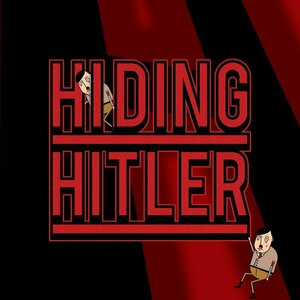

Adolf Hitler was an abomination of a person, can we all agree? Now that THAT is out of the way, let’s talk card games based on a character from history named Hitler. This game is based on a historical figure, but once translated to cardstock becomes simply the target of victory. When I heard the pitch (I paraphrased by quite a bit) for Hiding Hitler I immediately winced, as the subject matter makes me wince. But I took a chance on the game, and I am here to let you know that it will be okay, this is merely a card game, but if you are offended by the subject matter, please check out any of our other reviews that contain zero references to horrible people.
Hiding Hitler is a hand management, take that card game for four to six players. In it, players are trying to end the game with either the Hitler card in their hand or the Death token in their possession. The game is played over a series of turns and ends once the final turn has been taken, following the draw of the final card from the draw deck.
DISCLAIMER: We were provided a prototype copy of this game for the purposes of this review. These are preview copy components, and I do not know for sure if the final components will be any different from these shown. Also, it is not my intention to detail every rule in the game, as there are just too many. You are invited to download the rulebook, back the game through the Kickstarter campaign, or through any retailers stocking it after fulfillment. -T
To setup, shuffle the deck of cards and deal six cards to each player. Set the draw deck in the middle of the table, along with the other components. The left of the deck is considered the “Graveyard” and the right side of the deck is the “Action Pile.” Depending on the game mode chosen to play, the Hitler card may be in one of the players’ hands (Blitzkrieg mode – faster because Hitler is already in one player’s hand) or possibly in the draw deck (Strategic mode – slower if Hitler starts in the draw deck). The first player is now able to begin taking their turn and the hunt (or hiding) of Hitler may begin!
On a turn a player may play any amount of Action, Attack, or Instant cards from their hand, resolved one at a time. Action cards are just that: cards that allow for some type of action, be it drawing more cards, or having the entire table draw more cards. Attacks are targeted at a specific player and that player will need to roll the die in order to achieve the Attack card’s victory condition. For example, the Attack card may instruct the attacked to roll higher than value 2 on the die. If they beat that number nothing happens. However, should they roll a 1 (or simply not meet the number on the card) the failing player will need to discard Hitler to the Graveyard if they have it, or discard any other card to the Action Pile. Finally, Instant cards can be played AT ANY TIME, even if not on the player’s turn. These can negate actions or modify die/roll results. Once a player has no more cards to play (or cards they wish to play), the turn ends by drawing one card from the draw deck. It is now the next player’s turn.
Play continues in this fashion of players taking turns playing cards from their hands to attack each other, bolster their hands, and affect each other in various ways until the last card is drawn from the deck. This signifies one final turn for all players. When the final turns are over the winning player is they who either have the Hitler card in hand, or was the last player to send Hitler to the Graveyard, thus collecting the Death token. This winner may now awkwardly congratulate themselves on winning a card game based on eliminating or Hiding Hitler. Yay?
Components. Again, this is a prototype version of the game, so the components may be different as a result of a successful Kickstarter campaign. That said, this game is a bunch of cards, a small die, and a plastic token with Hitler stickers. The cards are all fine, the die is a smaller size than your typical RPG set, and the plastic standee token is fine as well. I do need to address the art style on the cards. It is quite cartoony and really isn’t my style, but for this type of game it works just fine. I am not really excited by it at all, but there is nothing gruesome or triggery in the artwork. FOR ME. I do not speak for everyone though, so if you have issues with it, you are more than entitled to your opinions.
It is difficult to review, or even play for that matter, a game with such an emotionally charged central character. However, this is meant to be a lighthearted card game with a wonky theme. And it most certainly is that. Players are playing as many cards as they dare trying to find out where that Hitler card is residing so they may Attack and send it to the Graveyard. This earns the Death token. But can you hold onto that token until the end of the game? Depending on how far through the deck the game currently is, other players still may have chances to bring the Hitler card back to life. When this happens that Death token is surrendered and available to be earned again. I like that. Now, obviously, the whole zombie thing is weird, but the game is weird in itself, so that fits. Want to throw some achievements into your game? See how many times a player can send Hitler to the Graveyard. You can do that, and it would be a fun way to spice up the game for everyone.
At the end of the day, again, this is a card game with a Hitler theme. In it, Hitler really doesn’t DO anything. He just hangs out in players’ hands, gets sent to the Graveyard, possibly is resurrected, and the cycle continues until the end of the game. The theme may be off-putting for some, but I have no problems with it after having played it several times now. I cannot stress this enough: if you or any of your playmates MAY be offended by the theme, please do not pull this out at game night. It works best with players who can see it and appreciate it for what it is.
Now that the disclaimers are hopefully done, I can explain what this reminds me of, and give you some thoughts. Have you played Munchkin before? You know the part of the game (which we lovingly refer to as “the second half”) where one player is on 9th level attempting to win the game and everyone is ganging up on them to prevent the victory? Hiding Hitler feels a little like that scenario, but throughout the entire game. So many cards can be played on one turn and some cards are played out of turn to increase or decrease the die rolls, and when all players know exactly who has Hitler and they gang up on that player, it’s just Munchkin all over. Now, I feel like here in Hiding Hitler it doesn’t seem to be SO hurtful toward other players as it is in Munchkin, but I get that same vibe. It should be restated that I like Munchkin, so comping this to that game doesn’t necessarily mean it is at all a bad thing. It just gives me that same feeling.
So if you are looking for a possibly quicker and smaller card game to replace your copy of Munchkin, then check out Hiding Hitler. Yes, this is SUPER niche with the gameplay and theme, but with the right crowd I do believe it would be a hit. It has its flaws, but does also offer a rewarding gaming experience that I think about for hours after the game is over. When games can create lasting fond memories of the experience, then it has graduated into a good game. And I think Hiding Hitler is a good game. If you like the sounds of this one, I invite you to consider backing it on Kickstarter when the campaign launches. Find some friends ahead of time that may be into the theme, or can look past it, and prepare them for what is about to come: a game about keeping Hitler safe. Or murdering him. Either way.



KalJ95 (25 KP) rated The Last of Us Part II in Video Games
Jun 23, 2020

You Won't Find A Better Game In Terms Of Presentation. (4 more)
Level Design Is Astounding.
Like The First Game, This Will Create A Conversation For Years To Come
Sound Design Is Incredible.
Takes Risks, And Some Do Pay Off.
A Flawed Sequel. (4 more)
Awful Pacing.
Structure Of Narrative Is Bad.
Some Terrible Dialogue.
Shoehorned Agenda.
The last of The Last of Us.
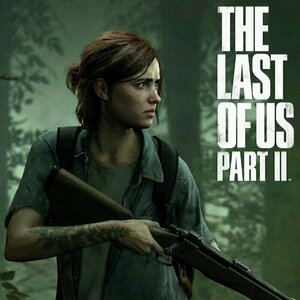
The video game industry doesn't get enough credit as a source of entertainment, in my humble opinion. Time and time again, the industry has proven that it can produce something magical, memorable, mesmerising to play, and even more so, something engaging to watch as someone not even holding the controller. Naughty Dog’s 2013 masterpiece, The Last of Us, became an overnight classic game because it was cinematic in presentation, and a rollercoaster of emotions in narrative. I sat and played the remastered version on my PlayStation 4 in 2017, and fell in love with the chemistry, love and heartbreak Joel and Ellie took with them, as they crossed a post-apocalyptic America. I was satisfied with the conclusion, and felt the story of these two characters was finished. I didn't need, or ever want a sequel. Then a few months pass, The Last of Us Part II is announced. Obviously, I was ecstatic, but also concerned. Trailers came and went, delays happened over and over, and leaks began to drip onto the internet. I was even more concerned with the leaks, and how this game was taking shape, but I remained open minded, and began playing the game.
The Last of Us Part II is a strange beast. An ambitious, exquisite experience, mired by multiple flaws in structure, pacing and plot holes. I simultaneously adored and loathed the twenty five hour experience, and I’m ready to do it all again. Ellie’s thirst for revenge deals with many issues of morality and hate, and the consequences of ones actions. To coin a phrase, “violence begets violence”, and this is very violent. A flawed piece of art, that often shoehorns a political tick list so it can cater to a certain demographic of sexuality and gender. Whatever you think about Part II, it will create a conversation for years to come, for better or worse.
Narrative:
Ellie and Joel are settled in Jackson, Wyoming, living a relatively normal existence. Ellie is nineteen, and has a job, like the rest of the fighters in Jackson, by going out into the world on routes to clear out the wondering infected. When Ellie witnesses a violent event, she takes it into her own hands to take bloody revenge on the people responsible.
A big risk was taken by Naughty Dog to decide what they did for the first two hours, even the VP of the company, Neil Druckmann, said himself the game will be “divisive”, and that is probably an understatement judging by the fan backlash. I feel it worked to support the other twenty three hours, and shows the blurry line of being good and bad in this world.
Unfortunately, the narrative slogs through awful structuring and some dreadful, downright cringe-worthy dialogue. The structure goes back and forth from the present day, to months, and sometimes years previous, and this is all to cement the events that keep the narrative flowing. The flashbacks featuring Joel and Ellie give you brief moments of happiness, followed by devastating revelations. They are the best moments of the game, you can feel the warmth the characters have for each other, and the heartbreaking actions they take. It made me wonder why they simply didn't just create a game with these ideas in mind. Other flashbacks create more problems than they solve, particularly in the latter half of the game. The first half, for all its faults, really treats you to a vicious and bloodthirsty ride through Seattle, and you completely feel the motivation and drive Ellie has to complete the mission she's set out to do. Seattle is huge, and the perfect backdrop for this game.
Sadly, the second half of the game is an absolute mess. The whole experience becomes nothing more than “go to this location, collect something, go back” over and over again. Its a lazy trope that causes so much fatigue in terms of pacing, slowing down any momentum gained by the first half. The second half serves the most important purpose too, and while I did grow to understand the intention it was presenting me, I couldn't help but feel frequently bored of doing fetch quests. To remain as spoiler free as possible, the game is split into two perspectives of Ellie, and an entirely new character. Naughty Dog wants you to understand the perspectives of both sides, but the history thats been created with the original game, you cant help but sympathise with Ellie more. The fact that its half the game away from the main protagonist, and starts you fresh with a new character, with new skill sets and weapons, really feels out of place. This could of worked much better as an episodic entry, rather than just two stories, one after the other. I can understand people who love this way of storytelling, but for me it slows the pacing down.
Gameplay:
Part II is the most beautiful game I’ve ever played. Naughty Dog continue to set the bar extremely high in terms of surroundings and facial animations, and the seamless transitions from cutscene to gameplay made my jaw drop. Each facial movement shows the hurt, the honesty, the devastation the characters carry with them. It almost feels more like a film or tv series than a video game, featuring an excellent performance from Troy Baker, and a career defining show from Ashley Johnson. Unfortunately, some of the new cast members don't have enough time on screen to give a full understanding of their personality or perspective. Some are likeable, relatable even, but some are just annoying, saying some of the strangest, out of place dialogue.
In terms of its gameplay, Part II hasn't really changed anything from its predecessor. It feels the same, whether you enjoyed it first time round or not. I personally am in the middle ground, it works for what it is. The Last of Us has always been a game about surviving by any means necessary. Part II feels like multiple ideas all in one, all conflicting themselves. Let me explain:
The game actively tries to twist the act of killing people to make you seem like its an awful thing to do. This is an interesting idea that has been done many times before in games, but it works in the oddest of ways here. I have completed the game twice now, and found it almost impossible to not kill anyone, yet cutscenes display remorse within the characters after they’ve murdered someone. This conflicts the idea of the whole game, where one moment I'm slicing a persons throat with a knife, the next I do the exact same, but this time I regret that decision. Again, its adding less weight to the story, and actively contradicting everything that happens.
Extra Notes:
The environments of Part II are some of the best in a video game. A sandbox of lush greenery and worn down buildings follows the same formula that Naughty Dog designed in Uncharted: The Lost Legacy, where you can explore a massive space to do what you find the objectives, but also see the sights and collect items. The level design of the entire game is absolutely masterful, but this level astounded me graphically and structurally.
By this point, it probably feels like I utterly hated Part II. I did, and didn’t, and thats the line I'm sticking on. The Last of Us always presented a commentary as to the nature of relationships, love, life and death. At the core was Ellie and Joel, two wayward strangers forced together on a journey across America. Everyone has a reason to love that game, for me its their chemistry and progression. Joel was hardened, standoffish, only to warm to Ellie, and love her by the end. Ellie, the immune girl who's humorous, optimistic and full of life, who ultimately becomes cold, quiet and sceptical of Joel.
Part II presents a different commentary, one of revenge and hate. I firmly believe Part II is weak in most areas, a downgrade in fact compared to its counterpart, but its so beautiful and bleak, with so many incapsulated moments of joy, heartbreak, love, shock. Its uncompromising, relentless and essential for anyone with a PS4. This will be a game I will constantly change my opinion on the more I think about it. As I said at the beginning, I never felt a sequel was necessary, and I firmly believe the story must end here.
(P.S. I must mention that Naughty Dog and Sony have only themselves to blame when it comes to the reception Part II has received during its release and promotional material. Early reviewers were told that they could only go into detail about the first ten or so hours, not mentioning the other fifteen. The other fifteen hours are incredibly important to mention, and they either make or break this game, so not letting reviewers do their job feels disingenuous, and from my point of view shows that they had no faith in their product to be criticised. The promotional material is also hugely misleading. The trailers show a completely different game, and characters are swapped for others in key scenes. That is wrong, and once again, shows your audience you had zero faith in your product based on the actual plot of your game.)