Search

Search only in certain items:

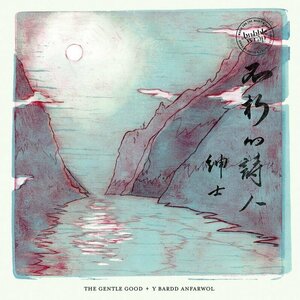
Y Bardd Anfarwol by The Gentle Good
2013 | Folk
(0 Ratings)
Album Favorite

"I'd gotten into The Gentle Good after hearing his previous record, which was called Tethered For The Storm, which was lent to me by one of my neighbours back in Cardiff. That's how I switched onto him. I still love the accidental way you sometimes just get into music. He made this record when he took a trip to China because he'd become obsessed with the story of a Chinese poet called Li Bai. So Y Bardd Anfarwol is the immortal poet, basically; he has that west Walian edge to his music. He is a folk musician, even if I don't know if he'd like to be described as such, and this album has lots of Chinese musicians on it and it really is dealing with the myth and reality of this poet, and when he becomes a hermit. There's songs on there which are absolutely lovely. I like it when someone buys into a record; they jump into it, and they travel to another country, and they think: "I have to do this. I have to follow the path of this record." I'm not a great lover of world music - I'm not a great authority on it - but this was sometimes I could buy into; it was a smash-up which was enchanting. I love the fact he went from The Gathering Storm to this; it was a lovely seamless step that he made, and it's that kind of thing where I'm so entranced with this album, and it is a record that relaxes me, which is rare for me. I'm intrigued to see where he goes next, and that's lovely - it's the feeling you had when you're 15, and you go out and buy a third album from an artist and as soon as you finish digesting it you think, "God, I wonder what they're gonna do next." I kind of have that feeling with this guy."

Source
  
Coney Island Baby by Lou Reed
1976 | Rock
(0 Ratings)
Album Favorite

Coney Island Baby by Lou Reed

(0 Ratings)

Track

"This is from Lou Reed’s sixth solo record Coney Island Baby, which was released in 1975. Whenever this song comes on it has this incredible ability to transport me back to a specific car journey; I was nine years old and I was being driven to Heathrow in the back of my Dad's car. “My parents had recently separated, and I was living with my Mum in France. I had to fly back to the UK for hospital operations, which is why Dad was driving me to the airport, to fly home to France. Nine years old is quite young to fly on your own, and I remember it being a traumatic experience to say goodbye to one parent and then fly across what felt like an entire ocean, especially after surgery. “On this occasion my Dad had Lou Reed playing and “Coney Island Baby” came on. I was too young to understand the lyrics, but I felt them. I received the sentiment of the song even in my tiny child mind. It cut through everything in that moment - I can still smell the leather of the car seats, I can still taste the tears rolling down my cheek and still see the tears on my Dad’s face in the rear-view mirror. I actually usually skip this song when it comes on, because it’s almost too much to be transported back into that sort of pain. “As a lyricist, I really scrutinize lyrics and I always try and follow the story when I listen to music. When I fall in love with an artist, I’m always Googling the lyrics and trying to work out the various meanings and duality behind the words. With a song like this, which I discovered when I was so young, the lyrics are almost unimportant. It’s more about the feeling that they convey. “There probably is a narrative there, but when I listen to the song its lost on me. I’m absorbed by the feeling of being in that car."

Source
  
Greatest Hits by Nina Simone
2003 | Rock
(0 Ratings)
Album Favorite

"As an artist, Nina Simone has inspired me so much. I think she was my introduction to artistry. Especially coming from a woman, it really changed the way I viewed music and gave me an incentive to learn piano. I was probably about nine or 10 when I first heard her music – it was my Dad that played me a live rendition of a song that she’d done two days after Dr Martin Luther King Jr. was shot. It was called “Why? (The King of Love Is Dead)”. I remember waiting for my Mum outside work, he used to play that song. As soon as I heard her voice I was just hooked on it. ""'I Want a Little Sugar in My Bowl' is one of my favourite songs of hers to sing. I have been thinking about [covering it]! It has so much room in it melodically to freestyle, maybe improvising some of the lyrics to make it more relevant to my life. I’d probably do it just on piano instead of with the full band. There’s times when I’ve seen Nina combine classical music with jazz, so I’d probably attempt some of that. It’s such an open song – I think that’s what I love about it. I just love the space in in it. Even the title’s quite metaphoric: sexy, but quite poetic at the same time. ""Nina Simone showed me that there are really no rules with music. The more you learn in any direction, it can only empower what you’re doing. Reading about her history, at first her dream was to be a classical pianist! It’s so effortless – she’s not even looking at the keys, she’s not even thinking! And then she’s singing a pop song on top of a classical jazz fusion! She definitely inspired me to become accomplished where I can, just to add more freedom to express myself more deeply."

Source
  
40x40

Rat Scabies recommended Innervisions by Stevie Wonder in Music (curated)

 
Innervisions by Stevie Wonder
1973 | Rock
9.0 (1 Ratings)
Album Favorite

"It's one of the classic records of all time, but I remember when this came out I wasn't particularly a Stevie Wonder fan. He'd done the singles and he was a Tamla pop artist really, wearing a suit, and I thought I'd got him labelled. But then this record came out and it was like his coming of age almost. It's like a small journey, listening to this album. It has a very positive beginning and ending, from side one right through to the last track. And that whole thing of here I am in New York, that wonderful idea of bringing in sound effects of street sounds that gave a different atmosphere and set the scene for what you're about to hear. I think most bands wanted to do that kind of thing but it was very easy for it to take over, so it was mostly left to the Pink Floyds of this world. But for somebody to do it just on the one track worked really well. And he played drums on this album, too. That was the weird thing, because when you listen to the drums it doesn't sound like a drummer. The things he plays aren't instinctive, so there's a different kind of musicality to what he's doing, and where it goes and where he puts things and where he hits the toms and where he does crashes and stuff like that. In some ways it was very brave of him, because let's face it he could've got any drummer to do it. But it gives it what I suppose these days you'd call an artisan quality, but I think of it as an earthy feel. Otherwise everything would be too perfect on this record. You have to have imperfection to give it character and personality. I think there's something about imperfection that puts you more in touch with what you're listening to, because you're not alienated by something that's unachievable. This record has that by the sack full"

Source
  
The Complete Works by Edgard Varese
2018 | Classical, Compilation, Jazz
(0 Ratings)
Album Favorite

"Varese is a universe. A dense universe of objects colliding, crystallising, dissipating and obliterating. I feel like I can relate to what I know of his temperament as well. As well as his obsession with the desert and need to rid himself of the historical baggage of the past is something I can relate to. That guy for me is the origin of a lot of ideas that I'm excited about. It's hard to even talk about him. You know when you've sat with someone for so long that it's difficult to even begin to say. He was one of the first major composers who transitioned into more of a sound artist. As people have said, he kind of liberated sound from the familiar tropes of Western music and turned sound into this absolute state. An appreciation of sound as object. Sound as environment or experience. So, he's that guy. He's someone who, as I grew up, getting into composition and trying to find someone who I can relate to because I love the music but the culture of classical music is stuffy and boring. And I don't give a shit about it. But he was such an intense, probably manic depressive, obsessive-compulsive, beautiful, frustrated, angry, passionate person – and all this stuff came through his music. And I love him for that. He came out of the whole Romantic orchestral universe, and this was pre-electronic age. So he was surrounded by Stravinsky, Debussy, these major models as far as orchestral writing goes. But there wasn't anyone who was taking that model, freezing it and laying to waste the baggage of history that comes with along with that music. He was able to erase all of that and push the idea of orchestral writing forward. If he was alive today, that's a question I would ask him – where are you coming from? Like Feldman though, he's very intuitive in his writing, so he just trusted himself."

Source
  
40x40

Thundercat recommended Gist of the Gemini by Gino Vannelli in Music (curated)

 
Gist of the Gemini by Gino Vannelli
1976 | Rock
(0 Ratings)
Album Favorite

"Gino Vannelli's albums were what made me feel it was possible to be a songwriter. When I was younger I used to do a lot of production work with my cousin Brian Warfield, we had our own studio. He went on later on to produce artists like Jhené Aiko and Miguel, but before that I feel like I was very much his very first hep artist, his homeboy at least, just making music together. We'd go buy records to sample and then we would work on music and go eat Yoshinoya. I remember my older brother came over, and he picked up Gino Vannelli's album on a fluke. I'd never seen it, I'd never paid attention to it, it was just sitting in the pile of records. My older brother put the first song on to find the sample and the way the record starts out grabbed my attention because of the style progressions that are happening immediately. When he left I put the record on and it washed over me and transformed me. There's songs that when you actually put them on you lose control of yourself almost, and you go into this thing where you start to sing, and all of a sudden you are a singer because this is something that you love so much. And when I would hear Gino Vannelli, I would pay attention to the lyrics, I'd pay attention to what he was singing about; some love loss or some mythology or something weird that a woman that has done to him. This is one of my favourite albums, Gist of the Gemini. Along with Kenny Loggins and Michael McDonald, he kind of shaped my songwriting and kind of let me know what it was to write songs. I was always told that you have to be honest in the music, but I was like 'well how do you do that?', and the people that taught me how to do that were Gino Vannelli, Michael McDonald and Kenny Loggins, with a couple of other people too."

Source