
Search
Search results
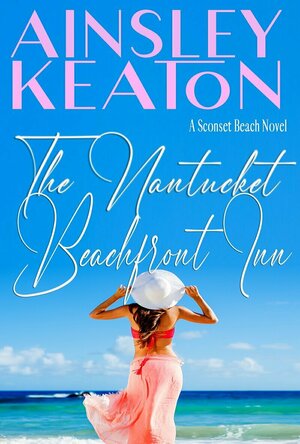
The Nantucket Beachfront Inn (Sconset Beach #1)
Book
She's 54, broken-hearted, and starting over.... High-powered New York attorney Ava Flynn finds...
Contemporary Women's Fiction
Ande Thomas (69 KP) rated The Time Traveler's Wife in Books
May 30, 2019
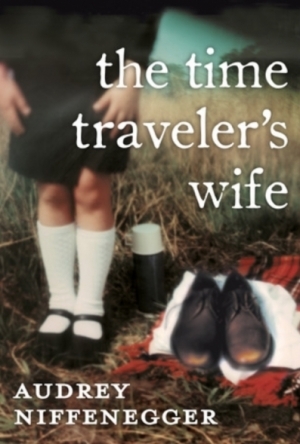


I've been thinking a lot about what I would write about <i>The Time Traveler's Wife,</i> partly because it seems one usually falls into one of two camps: Love it, hate it. It turns out, I belong to the latter. I won't bother with the sci-fi elements, the could he/couldn't he, the exploration of time travel as a plot device - I'm always willing to engage with a story as long as it follows it's own rules. My problems run deeper.
Spoilers abound.
<spoiler>
First, I'd be remiss not to at least acknowledge the creepy factor of a 40 year old naked man befriending a 6 year old girl. It's been discussed ad nauseum, but I've got to put my two cents in.
The whole experience reeks of grooming. Henry shows up, naked, in a young girl's life and (although true) casually explains that he's a <i>time traveler</i>. Her imagination is hooked. Her very own secret Magic Man. Over the following years, their friendship blossoms, and Henry refuses to tell her anything about the future. He is friendly, charming even, and always respectful. But he remains an enigma. Clare is pulled in by the mystery of the Magic Man. All she knows are the dates of his future arrivals. Until one day he begins to break his rule and tell her that they will be together. They'll get married and be in love and have a life. What changed? Why is he suddenly willing to tell her snippets of her future life? Puberty. She admits her desire to be with him and he basically says "keep waiting, it'll happen."
From that moment, her life has been decided - by Henry, and for Henry. Clare spends the entirety of her teenage existence (and beyond) waiting on Henry. The whole of her character arc is basically one big middle finger to the Bechdel test. Henry leads her by a leash with clues and vague promises of the future. We'll be together when you're older (we're destined). We'll have sex on your 18th birthday (wait for me). We'll meet in Chicago (move to Chicago). Even after his dying breath, he subtly slides direction her way. "I hope you move on, but by the way, I'll drop by when you're EIGHTY. But by all means...move on." Is it coincidence that Henry's time traveling mimics an emotionally abusive relationship? Clare tells us, "Henry is an artist of another sort, a disappearing artist. Our life together in this too-small apartment is punctuated by Henry’s small absences. Sometimes he disappears unobtrusively . . . Sometimes it’s frightening." Sure, you say, but he can't help it. He wants to be there for her. <i>It's just the way he is.</i> It's not even hinted at. Multiple people tell Clare <b>to her face</b> that Henry is bad news. But she won't hear it, because he spent her entire childhood molding her into his wife.
The author doesn't hide the allusion to Homer. Rather, she beats us over the head with it. And sure, it makes sense; Clare is the patiently waiting wife, Henry the distant traveler. Even Alba takes up her role as Telemachus, going on her own journeys in search of her father. But do we need both main characters referring to Henry by name, as Odysseus? We get it, girl. You want to write your own romantic Odyssey. Ease up.
Oh, and by the way - Clare's quote above? That's one of her first comments on married life. Her first thoughts after the wedding are "Why is my husband always gone? Why am I always afraid for him?" Henry's first thoughts? "How can Clare listen to Cheap Trick?" Let me remind you that this is the guy who's willing to rattle off a comprehensive list of early punk before jumping up to join in singing a Prince song, but he's upset that his wife listens to The Eagles instead of some obscure as hell French punk band. Also, this man who is thrilled to share musical tastes with a young teen with a mohawk then laments that the kid can't find his own music and has to take his? He preaches the meaning of punk before privately questioning why those kids want to be punk? Here's a guy who's entire life was shaped by music - both of his parents made livings playing music written before they were even born, yet he can't comprehend why two preteens could (or should) like The Clash, or why Clare would like The Beatles. <i>Stay in your own time,</i> he is essentially saying, <i>leave the time traveling to me.</i>
The guy doesn't even realize the pain he causes. Ingrid asks him "Why were you so mean to me?" "Was I," he says, "I didn't want to be." I know, I know. Everyone around her didn't want him to see her or speak to her. But need I remind you - dude time travels and frequently gives himself tips from the future. "Hey pal, take it easy on Ingrid," or "Bro, Ingrid is really shaken up, don't listen to her family or doctor, she needs some closure." But of course, nothing can really change, everything is the way it is.
This is all before I even begin to mention how much Niffenegger LOVES to name-drop. Of course there's the aforementioned punk band name-vomit, mentions of Henry's parents' work can't go by without naming a specific piece, despite adding nothing to the story or our understanding of the characters, there are two separate references to Claude Levi-Strauss (why?), and various other casual mentions of figures that seem to serve no purpose other than to prove that Henry is smart, and knows smart people things.
</spoiler>
I wanted to like this book more, I thought it had a fascinating premise and an interesting perspective. Obviously, I'm not a regular consumer of romance, and I realize that the problems I have with this book are problems shared by a large portion of the genre. But I am positive that we can have a love story that isn't mired by (at best) morally ambiguous relationships. I understand it was a different world when it was published, and that's not directly anyone's fault. Questions of consent and power and respect have been thrust into the spotlight in the short years since this book was published, but that's the lens with which I have to peer through. Stop glorifying these vapid, and frankly, abusive relationships as the paragon of romance. We're better than this. We need to be.
Spoilers abound.
<spoiler>
First, I'd be remiss not to at least acknowledge the creepy factor of a 40 year old naked man befriending a 6 year old girl. It's been discussed ad nauseum, but I've got to put my two cents in.
The whole experience reeks of grooming. Henry shows up, naked, in a young girl's life and (although true) casually explains that he's a <i>time traveler</i>. Her imagination is hooked. Her very own secret Magic Man. Over the following years, their friendship blossoms, and Henry refuses to tell her anything about the future. He is friendly, charming even, and always respectful. But he remains an enigma. Clare is pulled in by the mystery of the Magic Man. All she knows are the dates of his future arrivals. Until one day he begins to break his rule and tell her that they will be together. They'll get married and be in love and have a life. What changed? Why is he suddenly willing to tell her snippets of her future life? Puberty. She admits her desire to be with him and he basically says "keep waiting, it'll happen."
From that moment, her life has been decided - by Henry, and for Henry. Clare spends the entirety of her teenage existence (and beyond) waiting on Henry. The whole of her character arc is basically one big middle finger to the Bechdel test. Henry leads her by a leash with clues and vague promises of the future. We'll be together when you're older (we're destined). We'll have sex on your 18th birthday (wait for me). We'll meet in Chicago (move to Chicago). Even after his dying breath, he subtly slides direction her way. "I hope you move on, but by the way, I'll drop by when you're EIGHTY. But by all means...move on." Is it coincidence that Henry's time traveling mimics an emotionally abusive relationship? Clare tells us, "Henry is an artist of another sort, a disappearing artist. Our life together in this too-small apartment is punctuated by Henry’s small absences. Sometimes he disappears unobtrusively . . . Sometimes it’s frightening." Sure, you say, but he can't help it. He wants to be there for her. <i>It's just the way he is.</i> It's not even hinted at. Multiple people tell Clare <b>to her face</b> that Henry is bad news. But she won't hear it, because he spent her entire childhood molding her into his wife.
The author doesn't hide the allusion to Homer. Rather, she beats us over the head with it. And sure, it makes sense; Clare is the patiently waiting wife, Henry the distant traveler. Even Alba takes up her role as Telemachus, going on her own journeys in search of her father. But do we need both main characters referring to Henry by name, as Odysseus? We get it, girl. You want to write your own romantic Odyssey. Ease up.
Oh, and by the way - Clare's quote above? That's one of her first comments on married life. Her first thoughts after the wedding are "Why is my husband always gone? Why am I always afraid for him?" Henry's first thoughts? "How can Clare listen to Cheap Trick?" Let me remind you that this is the guy who's willing to rattle off a comprehensive list of early punk before jumping up to join in singing a Prince song, but he's upset that his wife listens to The Eagles instead of some obscure as hell French punk band. Also, this man who is thrilled to share musical tastes with a young teen with a mohawk then laments that the kid can't find his own music and has to take his? He preaches the meaning of punk before privately questioning why those kids want to be punk? Here's a guy who's entire life was shaped by music - both of his parents made livings playing music written before they were even born, yet he can't comprehend why two preteens could (or should) like The Clash, or why Clare would like The Beatles. <i>Stay in your own time,</i> he is essentially saying, <i>leave the time traveling to me.</i>
The guy doesn't even realize the pain he causes. Ingrid asks him "Why were you so mean to me?" "Was I," he says, "I didn't want to be." I know, I know. Everyone around her didn't want him to see her or speak to her. But need I remind you - dude time travels and frequently gives himself tips from the future. "Hey pal, take it easy on Ingrid," or "Bro, Ingrid is really shaken up, don't listen to her family or doctor, she needs some closure." But of course, nothing can really change, everything is the way it is.
This is all before I even begin to mention how much Niffenegger LOVES to name-drop. Of course there's the aforementioned punk band name-vomit, mentions of Henry's parents' work can't go by without naming a specific piece, despite adding nothing to the story or our understanding of the characters, there are two separate references to Claude Levi-Strauss (why?), and various other casual mentions of figures that seem to serve no purpose other than to prove that Henry is smart, and knows smart people things.
</spoiler>
I wanted to like this book more, I thought it had a fascinating premise and an interesting perspective. Obviously, I'm not a regular consumer of romance, and I realize that the problems I have with this book are problems shared by a large portion of the genre. But I am positive that we can have a love story that isn't mired by (at best) morally ambiguous relationships. I understand it was a different world when it was published, and that's not directly anyone's fault. Questions of consent and power and respect have been thrust into the spotlight in the short years since this book was published, but that's the lens with which I have to peer through. Stop glorifying these vapid, and frankly, abusive relationships as the paragon of romance. We're better than this. We need to be.
5 Minute Movie Guy (379 KP) rated Scary Stories to Tell in the Dark (2019) in Movies
Sep 16, 2019
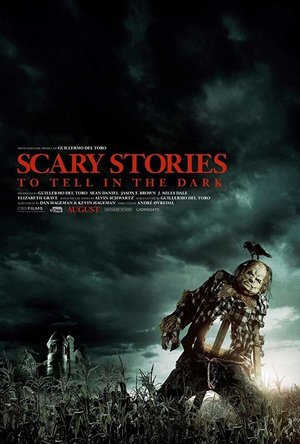


In the early 1980s, author Alvin Schwartz created a book of short horror stories titled Scary Stories to Tell in the Dark that would go on to terrorize a whole generation of curious young readers. Combined with its morbid and ghastly illustrations by artist Stephen Gammell, the book would serve as an introduction to horror for many. Over the next ten years, Schwartz wrote two more books in the Scary Stories series, and now, nearly forty years later, it has finally been adapted into a major motion picture. Produced by Academy Award-winning director Guillermo Del Toro and directed by André Øvredal, the Scary Stories to Tell in the Dark film constructs a new narrative around several of the iconic short stories from the book series, and brings them to life to haunt the movie’s teenage characters.
In Mill Valley, Pennsylvania in 1968, a group of teenage friends fleeing from a band of bullies hide out in an abandoned haunted house on Halloween night. They know the story of this house well, whose folklore is rooted in the origins of their own small town. It was once owned by the wealthy Bellows Family, who according to urban legend, locked away their own daughter, Sarah Bellows, inside the cellar of their home. Sarah had been accused of killing the town’s children, and so her family kept her hidden away and attempted to erase her from existence, even removing her from their own family portraits. According to legend, Sarah wrote a book of horror stories and would read them aloud through the walls of her room to frighten the local townspeople.
While inside this haunted house, our group of protagonists; Stella (Zoe Colletti), Ramón (Michael Garza), Auggie (Gabriel Rush), and Chuck (Austin Zajur), discover the room Sarah had spent her life trapped in. Stella, an amateur horror writer herself, finds the rumored book that was written by Sarah. Upon opening it she sees that a new page is somehow being written in blood right before her very eyes, and it happens to be about the bully that chased them into the house. The next day, they realize that it seems as though the story actually came true, and that the book itself may be haunted. This establishes the basic premise of the film, in which new stories are being written in the book and they appear to be targeting Stella and everyone else that entered the Bellows’ house that night.
It’s an interesting set-up that cleverly mixes horror with mystery, as the characters are not only trying to survive these stories as they come to life, but are also trying to figure out how to stop them from happening. The film features five different stories from the series, most of which come from the third and final book, and a sixth story centered around Stella and Sarah Bellows that is at least in part inspired by one of the original tales. To give an example without giving too much away, one story for instance, involves a haunted scarecrow, whereas another is about a walking corpse in search of its severed big toe. The stories themselves are much more dark and grotesque than I had anticipated. I was expecting something more along the lines of Goosebumps, which was a series of children’s horror books that I personally loved and grew up with as a child, but these are much more disturbing than that. While I only found the first story of the film, “Harold”, to actually be scary, I do imagine this movie might be a little too frightening for some teenagers.
I should clarify that I’m not familiar with the original written source material of Scary Stories to Tell in the Dark, and I had truthfully never even heard of the books prior to the movie’s announcement. I don’t have any personal stake in these stories, but I do admire the thoughtfulness and creativity that went into building the film around them. I thought the film started out really strong with a likable cast of characters, and with most of its best moments featured early on. I loved the introduction to the haunted house and the legend of the Bellows Family. I enjoyed the playful nature of our group of young protagonists, who in the beginning felt reminiscent of the fun and crazy kids you might find in an 80s movie like The Goonies. Additionally, I liked the mystery of Sarah Bellows that the kids were trying to uncover, all the while struggling to survive the dangers of her haunting stories that had come to life.
Unfortunately, as the movie went on, I found myself less and less invested in it with each passing story, all of which I would argue are weaker than the previous one before it. The Pale Lady storyline was particularly dull and underwhelming. The final act itself, although smartly designed with its use of parallels, wound up feeling poorly executed and unsatisfying overall.
Similarly, in regards to the acting, I liked the performances even less by the end as well. Early on I had been impressed with Zoe Colletti as Stella, but I found her to be annoying in the later parts of the movie. The same goes for Austin Zajur as Chuck. The cast for the most part was decent, but everything about the movie began to drop in quality as it dragged on, which is especially unfortunate given how well it starts out.
The special effects are mostly quite good and adequately disturbing, but on the same token, I wish they were more clearly visible at times. A lot of the horror settings take place in dark rooms, so at times it can be hard to see the monsters with much clarity. Still, I love the design of Harold the Scarecrow, as well as The Jangly Man, who is played by contortionist Troy James whose extreme flexibility allows the character to move in unnatural and disturbing looking ways.
To conclude, I’m left with some mixed feelings on Scary Stories to Tell in the Dark. For me, it almost hits the mark, but unfortunately it isn’t a movie that I think I’d bother to watch again. It made a solid first impression with its rich atmosphere and creepy first act, but it failed to maintain its momentum and level of quality. In the end, my favorite thing about the whole movie is actually the excellent cover song of “Season of the Witch” by Lana Del Rey that plays during the credits. However that’s not in any way to say the movie is so bad that the credits were my favorite part. It’s just a great song by an artist I very much enjoy. If you grew up with the Scary Stories to Tell in the Dark series, then by all means, I recommend that you at least check it out. If you like horror and have any troublesome teenaged kids, this may be a perfect opportunity to have some fun scaring the heck out of them.
In Mill Valley, Pennsylvania in 1968, a group of teenage friends fleeing from a band of bullies hide out in an abandoned haunted house on Halloween night. They know the story of this house well, whose folklore is rooted in the origins of their own small town. It was once owned by the wealthy Bellows Family, who according to urban legend, locked away their own daughter, Sarah Bellows, inside the cellar of their home. Sarah had been accused of killing the town’s children, and so her family kept her hidden away and attempted to erase her from existence, even removing her from their own family portraits. According to legend, Sarah wrote a book of horror stories and would read them aloud through the walls of her room to frighten the local townspeople.
While inside this haunted house, our group of protagonists; Stella (Zoe Colletti), Ramón (Michael Garza), Auggie (Gabriel Rush), and Chuck (Austin Zajur), discover the room Sarah had spent her life trapped in. Stella, an amateur horror writer herself, finds the rumored book that was written by Sarah. Upon opening it she sees that a new page is somehow being written in blood right before her very eyes, and it happens to be about the bully that chased them into the house. The next day, they realize that it seems as though the story actually came true, and that the book itself may be haunted. This establishes the basic premise of the film, in which new stories are being written in the book and they appear to be targeting Stella and everyone else that entered the Bellows’ house that night.
It’s an interesting set-up that cleverly mixes horror with mystery, as the characters are not only trying to survive these stories as they come to life, but are also trying to figure out how to stop them from happening. The film features five different stories from the series, most of which come from the third and final book, and a sixth story centered around Stella and Sarah Bellows that is at least in part inspired by one of the original tales. To give an example without giving too much away, one story for instance, involves a haunted scarecrow, whereas another is about a walking corpse in search of its severed big toe. The stories themselves are much more dark and grotesque than I had anticipated. I was expecting something more along the lines of Goosebumps, which was a series of children’s horror books that I personally loved and grew up with as a child, but these are much more disturbing than that. While I only found the first story of the film, “Harold”, to actually be scary, I do imagine this movie might be a little too frightening for some teenagers.
I should clarify that I’m not familiar with the original written source material of Scary Stories to Tell in the Dark, and I had truthfully never even heard of the books prior to the movie’s announcement. I don’t have any personal stake in these stories, but I do admire the thoughtfulness and creativity that went into building the film around them. I thought the film started out really strong with a likable cast of characters, and with most of its best moments featured early on. I loved the introduction to the haunted house and the legend of the Bellows Family. I enjoyed the playful nature of our group of young protagonists, who in the beginning felt reminiscent of the fun and crazy kids you might find in an 80s movie like The Goonies. Additionally, I liked the mystery of Sarah Bellows that the kids were trying to uncover, all the while struggling to survive the dangers of her haunting stories that had come to life.
Unfortunately, as the movie went on, I found myself less and less invested in it with each passing story, all of which I would argue are weaker than the previous one before it. The Pale Lady storyline was particularly dull and underwhelming. The final act itself, although smartly designed with its use of parallels, wound up feeling poorly executed and unsatisfying overall.
Similarly, in regards to the acting, I liked the performances even less by the end as well. Early on I had been impressed with Zoe Colletti as Stella, but I found her to be annoying in the later parts of the movie. The same goes for Austin Zajur as Chuck. The cast for the most part was decent, but everything about the movie began to drop in quality as it dragged on, which is especially unfortunate given how well it starts out.
The special effects are mostly quite good and adequately disturbing, but on the same token, I wish they were more clearly visible at times. A lot of the horror settings take place in dark rooms, so at times it can be hard to see the monsters with much clarity. Still, I love the design of Harold the Scarecrow, as well as The Jangly Man, who is played by contortionist Troy James whose extreme flexibility allows the character to move in unnatural and disturbing looking ways.
To conclude, I’m left with some mixed feelings on Scary Stories to Tell in the Dark. For me, it almost hits the mark, but unfortunately it isn’t a movie that I think I’d bother to watch again. It made a solid first impression with its rich atmosphere and creepy first act, but it failed to maintain its momentum and level of quality. In the end, my favorite thing about the whole movie is actually the excellent cover song of “Season of the Witch” by Lana Del Rey that plays during the credits. However that’s not in any way to say the movie is so bad that the credits were my favorite part. It’s just a great song by an artist I very much enjoy. If you grew up with the Scary Stories to Tell in the Dark series, then by all means, I recommend that you at least check it out. If you like horror and have any troublesome teenaged kids, this may be a perfect opportunity to have some fun scaring the heck out of them.

Eilidh G Clark (177 KP) rated Optograms in Books
May 13, 2017
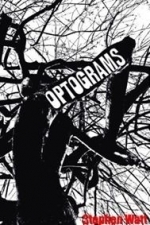

Great Collection
Stephen Watt is a poet and spoken word artist from Dumbarton. I stumbled upon his work by accident, and was drawn by his likeness in style to a favourite poet of mine, Raymond Carver. Delighted by what I had read, I preceded to watch some of his spoken word performances on You Tube. I was not disappointed. Watt’s poetry and indeed his spoken word delivery, is smart, punchy, intelligent and contemporary. I was delighted to be offered the opportunity to review his new poetry pamphlet Optograms, published by Wild Word press in 2016. Optograms is a wonderful representation of Watt’s finest work, and is a fresh new approach to Scottish poetry. The poet tackles some controversial topics such as prostitution, homelessness, and gender as well as delving into the more intimate topics such as miscarriage and Alzheimer’s. The imagery is his work is striking and each word and line carefully crafted, but it is the way in which the poems radiate emotion that make this work unique. The readers need look no further than the opening poem to get an understanding of the poet’s compassion and understanding of contemporary society. ‘Lipstick’ explores gender representation and discrimination,
I go to my room, wiping
the admirer’s lipstick clean
with tights beneath jeans
retrieved from a friend’s house,
and with the words
Big Girl’s Blouse
reverberating inside my head
This poem speaks volumes in so little words and the reader is forced to look inwardly at their own behaviour toward people who do not conform to the norm. Similarly, ‘Prayers to Aliens and Satellites’ is a raw and candid view of homelessness which digs deep into the readers conscience,
where bloodless, xylophonic fingers
sink into armpits –
petitioned hands closed to benefits
and the friendships of passersby.
Like the previous poem, ‘Prayers to Aliens and Satellites’ urges the reader to become more aware of the social problems in society. If these poems are not enough to capture the heart of the reader, Watt surprises us with his heart crushing honesty in poems such as ‘Clinics Lip’ – a grief stricken account of miscarriage,
A husband, once the acme of affection,
now lollygagging in the garden;
crossmaker in waiting
for the small plot earmarked for the hill’s crest.
My own personal favourite is ‘Trouble was Someone Else’s Kid’, a short account of childhood memories, like a fragment of memoir condensed into neatly arranged stanza’s. There is something funny yet tragic about this poem that brought to me both nostalgia and a desire to relive my own fading youth.
We moved in shadows, kept the lid
on, as if peanut butter sandwiches
had pasted our lips together.
Other neighbourhoods sizzled
with pyromaniacs and politics,
alcoholics who played tin whistles
when Di and Charles got hitched.
These are only a few of the delights that can be found in this little treasure of a pamphlet and I would urge poetry lovers as well as those who are new to poetry to seek out a copy of this work. With twenty-six wonderful poems Optograms, is undoubtedly one of the best collections of contemporary Scottish poetry that I have read.
To learn more about the Stephen Watt you can visit The Scottish Poetry Library, http://www.scottishpoetrylibrary.org.uk/poetry/poets/stephen-watt or like his Facebook page @StephenWattSpit. Optograms, can be purchased from stephenwattspit299@gmail.com or the publisher Marc Sherland marcsherland@me.com at Wild Word Press.
I go to my room, wiping
the admirer’s lipstick clean
with tights beneath jeans
retrieved from a friend’s house,
and with the words
Big Girl’s Blouse
reverberating inside my head
This poem speaks volumes in so little words and the reader is forced to look inwardly at their own behaviour toward people who do not conform to the norm. Similarly, ‘Prayers to Aliens and Satellites’ is a raw and candid view of homelessness which digs deep into the readers conscience,
where bloodless, xylophonic fingers
sink into armpits –
petitioned hands closed to benefits
and the friendships of passersby.
Like the previous poem, ‘Prayers to Aliens and Satellites’ urges the reader to become more aware of the social problems in society. If these poems are not enough to capture the heart of the reader, Watt surprises us with his heart crushing honesty in poems such as ‘Clinics Lip’ – a grief stricken account of miscarriage,
A husband, once the acme of affection,
now lollygagging in the garden;
crossmaker in waiting
for the small plot earmarked for the hill’s crest.
My own personal favourite is ‘Trouble was Someone Else’s Kid’, a short account of childhood memories, like a fragment of memoir condensed into neatly arranged stanza’s. There is something funny yet tragic about this poem that brought to me both nostalgia and a desire to relive my own fading youth.
We moved in shadows, kept the lid
on, as if peanut butter sandwiches
had pasted our lips together.
Other neighbourhoods sizzled
with pyromaniacs and politics,
alcoholics who played tin whistles
when Di and Charles got hitched.
These are only a few of the delights that can be found in this little treasure of a pamphlet and I would urge poetry lovers as well as those who are new to poetry to seek out a copy of this work. With twenty-six wonderful poems Optograms, is undoubtedly one of the best collections of contemporary Scottish poetry that I have read.
To learn more about the Stephen Watt you can visit The Scottish Poetry Library, http://www.scottishpoetrylibrary.org.uk/poetry/poets/stephen-watt or like his Facebook page @StephenWattSpit. Optograms, can be purchased from stephenwattspit299@gmail.com or the publisher Marc Sherland marcsherland@me.com at Wild Word Press.
Hazel (1853 KP) rated Clover Moon in Books
May 24, 2017
A Victorian Story
This eBook was provided by the publisher via NetGalley in exchange for an honest review
Although now in her seventies, the Nation’s favourite children’s author, Dame Jacqueline Wilson, is continuing to write after surpassing one hundred novels. Many children (mostly girls) grow up reading her stories, myself being amongst that number. Even my sister, who hated reading, purchased a number of her books. It has been well over a decade since I last read a Jacqueline Wilson, however after seeing her latest novel was available for review, I thought I would give it a go.
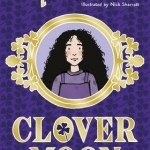
Clover Moon is set in poverty-stricken Victorian London, where eleven-year-old Clover, the eldest of six siblings, lives with her father and stepmother. Like many stepmother’s in children’s literature, Clover’s treats her like a slave – a position she is destined to stay in unless she gets a job in a factory. With no school to attend, Clover becomes a second mother to her younger brother’s and sisters, yet nothing can prepare her for the devastating impact a wave of Scarlet Fever brings. With only an old doll maker who cares about her, Clover is desperate to get out of her situation; so after a chance meeting with an artist who tells her about a home for destitute girls, Clover decides to seek out the help and life she deserves.
Although only eleven, Clover has the responsibilities of someone of a more mature age. It is hard to imagine sending a child out to work, or trusting them to look after a newborn baby. Children reading this book will learn the difference between their lives and the life of a child in the 1800s.
As always, Jacqueline Wilson gives her main character a happy ending – although in this instance it still remains a bit uncertain. Despite the horrible circumstances, Wilson manages to pump her story full of enthusiastic optimism, thus portraying Clover as a strong, determined heroine.
Most of Jacqueline Wilson’s earlier books were set in the present day; there were still unhappy situations, but the settings were based on ideas the reader would be familiar with. In the case of Clover Moon, unless children have been educated about the poor in Victorian England, it is unlikely that they will be able to fully comprehend Clover’s predicament. As a result, the book is more suitable for young teenagers than the usual target audience of eight to twelve year olds.
Comparing my memories of Jacqueline Wilson books I read as a child with her latest publication, Clover Moon felt like something different; a new direction. As I have not read any of her work between the early 2000s and now, I am not sure when this change occurred, but it feels as though Wilson is delving deeper into her main character’s thoughts and feelings, and creating a more insightful storyline. On the other hand, I may simply be more intuitive as an adult than I was a child.
Although Clover Moon did not turn out to be the style of writing I was expecting I thoroughly enjoyed it. In fact, this difference made it possible to distance myself from the author’s renown, and treat it as an individual story. Clover is an admirable character who, through her narration, provides both an entertaining story and brief historical education. Fans of Jacqueline Wilson will not be disappointed with this latest publication; and if you are a new reader, Clover Moon is a great place to start.
Although now in her seventies, the Nation’s favourite children’s author, Dame Jacqueline Wilson, is continuing to write after surpassing one hundred novels. Many children (mostly girls) grow up reading her stories, myself being amongst that number. Even my sister, who hated reading, purchased a number of her books. It has been well over a decade since I last read a Jacqueline Wilson, however after seeing her latest novel was available for review, I thought I would give it a go.
Clover Moon is set in poverty-stricken Victorian London, where eleven-year-old Clover, the eldest of six siblings, lives with her father and stepmother. Like many stepmother’s in children’s literature, Clover’s treats her like a slave – a position she is destined to stay in unless she gets a job in a factory. With no school to attend, Clover becomes a second mother to her younger brother’s and sisters, yet nothing can prepare her for the devastating impact a wave of Scarlet Fever brings. With only an old doll maker who cares about her, Clover is desperate to get out of her situation; so after a chance meeting with an artist who tells her about a home for destitute girls, Clover decides to seek out the help and life she deserves.
Although only eleven, Clover has the responsibilities of someone of a more mature age. It is hard to imagine sending a child out to work, or trusting them to look after a newborn baby. Children reading this book will learn the difference between their lives and the life of a child in the 1800s.
As always, Jacqueline Wilson gives her main character a happy ending – although in this instance it still remains a bit uncertain. Despite the horrible circumstances, Wilson manages to pump her story full of enthusiastic optimism, thus portraying Clover as a strong, determined heroine.
Most of Jacqueline Wilson’s earlier books were set in the present day; there were still unhappy situations, but the settings were based on ideas the reader would be familiar with. In the case of Clover Moon, unless children have been educated about the poor in Victorian England, it is unlikely that they will be able to fully comprehend Clover’s predicament. As a result, the book is more suitable for young teenagers than the usual target audience of eight to twelve year olds.
Comparing my memories of Jacqueline Wilson books I read as a child with her latest publication, Clover Moon felt like something different; a new direction. As I have not read any of her work between the early 2000s and now, I am not sure when this change occurred, but it feels as though Wilson is delving deeper into her main character’s thoughts and feelings, and creating a more insightful storyline. On the other hand, I may simply be more intuitive as an adult than I was a child.
Although Clover Moon did not turn out to be the style of writing I was expecting I thoroughly enjoyed it. In fact, this difference made it possible to distance myself from the author’s renown, and treat it as an individual story. Clover is an admirable character who, through her narration, provides both an entertaining story and brief historical education. Fans of Jacqueline Wilson will not be disappointed with this latest publication; and if you are a new reader, Clover Moon is a great place to start.

Beckie Shelton (40 KP) rated Two Sisters in Books
May 28, 2017
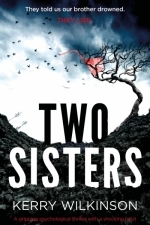

Such a great Read
Two Sisters By Kerry Wilkinson is well worth a read.
I would describe this as a psychological mystery but with the added bonus of it dipping its toe into the waters of mental illness and addiction to.
To summarise we have two sisters Megan and Chloe who after the death of their parents in a road accident, journey back to their parents holiday cottage in Whitecliff to stay, supposedly to sort out their affairs and get the cottage in order.
But for Megan, there are different reasons for her return she has received a postcard with the letter Z spelt on it.
years ago the girls older brother Zak went missing at Whitecliff his body never found, Megan the oldest sister is determined to figure out the truth of what has happened to her brother and she will bulldoze down whoever gets in her way.
Now the sisters are an interesting pair, having spent their time at different boarding schools growing up, these two are like chalk and cheese.
We have Chloe the younger of the two nearly seventeen a bit shy, but friendly and open, Chloe doesn't like to rock the waters and I get the impression she's a bit of a people pleaser. She's also a fabulous artist, A vegan and looks like her mother.
Now Megan, by contrast, is the exact polar opposite of her younger sister, she's prickly, bad tempered, goes out of her way to cause strife and shock in people.
there's a lot of deep-seated issues that are girl needs to get a handle on she is addicted to prescription drugs which she acquires through dubious means and as if that's not enough she is also suffering from an eating disorder, which her sister pretends to turn a blind eye too.
So as you can see there is an awful lot going on here.
As the story progresses truths that people want buried come to light, Megan puts herself and sister in extreme danger and some people are so not what they seem in Whitecliff.
Two sisters was definitely a page turner with a flowing easy storyline that sucked you in from the start. I especially appreciated Megan's issues, this added a whole extra layer to the storyline enriching it greatly. Eating disorders are a subject close to my heart, so it was fascinating to kind of get into the mindset of an individual suffering from this type of mental illness. The addiction storyline was also an extremely fascinating issue, we often see drug taking in novels but prescription drug addiction, even know so prevalent, is not explored so frequently in fiction.
But I have to say my favourite aspect of Two Sisters was seeing the two girls connect together after being virtual strangers growing up, now that was really charming indeed.
So, in conclusion, I found this a Fabulous book and I would definitely recommend this to other readers.
Thank you to the publisher and NetGalley for providing me with a free advance reader copy of Two Sisters by Kerry Wilkinson. This is my own unbiased opinion of this novel.
Arc Reviewed By BeckieBookworm
https://www.beckiebookworm.com/
https://www.facebook.com/beckiebookworm/
https://www.goodreads.com/user/show/9460945-bex-beckie-bookworm
I would describe this as a psychological mystery but with the added bonus of it dipping its toe into the waters of mental illness and addiction to.
To summarise we have two sisters Megan and Chloe who after the death of their parents in a road accident, journey back to their parents holiday cottage in Whitecliff to stay, supposedly to sort out their affairs and get the cottage in order.
But for Megan, there are different reasons for her return she has received a postcard with the letter Z spelt on it.
years ago the girls older brother Zak went missing at Whitecliff his body never found, Megan the oldest sister is determined to figure out the truth of what has happened to her brother and she will bulldoze down whoever gets in her way.
Now the sisters are an interesting pair, having spent their time at different boarding schools growing up, these two are like chalk and cheese.
We have Chloe the younger of the two nearly seventeen a bit shy, but friendly and open, Chloe doesn't like to rock the waters and I get the impression she's a bit of a people pleaser. She's also a fabulous artist, A vegan and looks like her mother.
Now Megan, by contrast, is the exact polar opposite of her younger sister, she's prickly, bad tempered, goes out of her way to cause strife and shock in people.
there's a lot of deep-seated issues that are girl needs to get a handle on she is addicted to prescription drugs which she acquires through dubious means and as if that's not enough she is also suffering from an eating disorder, which her sister pretends to turn a blind eye too.
So as you can see there is an awful lot going on here.
As the story progresses truths that people want buried come to light, Megan puts herself and sister in extreme danger and some people are so not what they seem in Whitecliff.
Two sisters was definitely a page turner with a flowing easy storyline that sucked you in from the start. I especially appreciated Megan's issues, this added a whole extra layer to the storyline enriching it greatly. Eating disorders are a subject close to my heart, so it was fascinating to kind of get into the mindset of an individual suffering from this type of mental illness. The addiction storyline was also an extremely fascinating issue, we often see drug taking in novels but prescription drug addiction, even know so prevalent, is not explored so frequently in fiction.
But I have to say my favourite aspect of Two Sisters was seeing the two girls connect together after being virtual strangers growing up, now that was really charming indeed.
So, in conclusion, I found this a Fabulous book and I would definitely recommend this to other readers.
Thank you to the publisher and NetGalley for providing me with a free advance reader copy of Two Sisters by Kerry Wilkinson. This is my own unbiased opinion of this novel.
Arc Reviewed By BeckieBookworm
https://www.beckiebookworm.com/
https://www.facebook.com/beckiebookworm/
https://www.goodreads.com/user/show/9460945-bex-beckie-bookworm
Daniel Boyd (1066 KP) rated Russian Doll in TV
Feb 5, 2019 (Updated Feb 5, 2019)
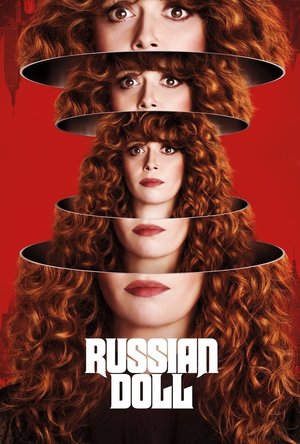
Natasha Lyonne carries this entire series phenomenally (2 more)
Good, tight script full of quick, witty dialogue
Short and sweet
Death Becomes Her
I watched Netflix's latest series Russian Doll over the past weekend and I loved it. Natasha Lyonne stars as a woman who on the night of her 36th birthday party, is suddenly hit by a car and dies. She then comes to and finds herself again standing in the bathroom in front of the sink back at her birthday party without a scratch. Then after dying a few more times and returning to the same spot in the bathroom, she realises that she is unable to stay dead and is going to be stuck in this loop indefinitely.
I had no clue what to expect going into this one. I was a fan of Natasha Lyonne from her role in Orange Is The New Black and had heard that she had co-wrote this project and even had a hand in directing it. This peaked my curiosity enough to give it a shot, and I'm glad that I did because, (although it is only February,) this is my favourite show of this year so far.
There is of course the presence of the obvious 'Groundhog Day,' trope, but thankfully the show uses this mechanic to it's benefit and manages to tell a fairly unique story based on a pretty unoriginal story-telling device. The show was co-written by Lyonne, Amy Poehler and Leslye Headland and the writing is brilliant. The show is comedic in all of the right places while managing to achieve and maintain a more serious tone when it wants to for certain moments, especially towards the end of the series.
Consisting of eight episodes all around 30 minutes in duration, the series moves at an extremely brisk pace and it is a pace that matches the quick dialogue and editing style that the series adopts during many of the death montage sequences. This all gels together to ensure that the show never feels stagnant or dragging in any sense. The score and cinematography are also great and compliment the other aspects of the show very nicely. All of this together is what gives this show it's unique, quirky feel.
Though, none of this would work without having a reliable lead protagonist to tie the whole thing together and Natasha Lyonne pulls off this difficult task flawlessly. I have always enjoyed seeing Lyonne pop up in several projects as a solid supporting actress, but this is the first time that I have seen her in the lead role and she is phenomenal through the entire eight episodes that Russian Doll consists of. Match that with the writing and directing credits that she claims on this series and you realise that we are watching an artist with incredible talent getting to realise her vision through this project and it is a joy to witness the whole thing unfold.
Overall, Russian Doll is a fantastic series that is enjoyable from start to finish. It features brilliant writing, fantastic performances and plenty of laughs. Due to the oddball nature and tone of this wonderful series, I am not sure if I want to see a second season. However, I am very much looking forward to seeing wherever Lyonne goes from here and what she plans to do next, both as an actress and as an auteur.
I had no clue what to expect going into this one. I was a fan of Natasha Lyonne from her role in Orange Is The New Black and had heard that she had co-wrote this project and even had a hand in directing it. This peaked my curiosity enough to give it a shot, and I'm glad that I did because, (although it is only February,) this is my favourite show of this year so far.
There is of course the presence of the obvious 'Groundhog Day,' trope, but thankfully the show uses this mechanic to it's benefit and manages to tell a fairly unique story based on a pretty unoriginal story-telling device. The show was co-written by Lyonne, Amy Poehler and Leslye Headland and the writing is brilliant. The show is comedic in all of the right places while managing to achieve and maintain a more serious tone when it wants to for certain moments, especially towards the end of the series.
Consisting of eight episodes all around 30 minutes in duration, the series moves at an extremely brisk pace and it is a pace that matches the quick dialogue and editing style that the series adopts during many of the death montage sequences. This all gels together to ensure that the show never feels stagnant or dragging in any sense. The score and cinematography are also great and compliment the other aspects of the show very nicely. All of this together is what gives this show it's unique, quirky feel.
Though, none of this would work without having a reliable lead protagonist to tie the whole thing together and Natasha Lyonne pulls off this difficult task flawlessly. I have always enjoyed seeing Lyonne pop up in several projects as a solid supporting actress, but this is the first time that I have seen her in the lead role and she is phenomenal through the entire eight episodes that Russian Doll consists of. Match that with the writing and directing credits that she claims on this series and you realise that we are watching an artist with incredible talent getting to realise her vision through this project and it is a joy to witness the whole thing unfold.
Overall, Russian Doll is a fantastic series that is enjoyable from start to finish. It features brilliant writing, fantastic performances and plenty of laughs. Due to the oddball nature and tone of this wonderful series, I am not sure if I want to see a second season. However, I am very much looking forward to seeing wherever Lyonne goes from here and what she plans to do next, both as an actress and as an auteur.
graveyardgremlin (7194 KP) rated Slide (Slide, #1) in Books
Feb 15, 2019

<b>2.5 stars
Slide</b> features an intriguing idea though the results left me with mixed feelings. The concept is awesome, but the execution? Yeah, not so much. The writing is serviceable, neither bad nor great and it didn't draw me into the story straightaway. Both the way it is written and the storyline reminds me of some of the books I read as a pre-teen/teen way back during the Pleistocene epoch, otherwise known as the 1990s, with authors like Christopher Pike, R.L. Stine, Diane Hoh, Lois Duncan, Richie Tankersley Cusick, among others. It especially seems to fall right in between Pike and Stine. While the writing is more mature than Stine's, it's not quite as sophisticated as Pike's. The mystery is weak, and by the end, seems pointless as it's totally anti-climactic, over in a flash, like it was written just to finish the book up, and absurdly contrived. The whole ending is totally ludicrous and unbelievable. The clues leading up to it are obvious and not incorporated into the story well at all. These clues were so glaring they all but had a flashing sign pointing to them in cartoon-like fashion whenever they fell into the main character's path. Sylvia a.k.a. Vee wasn't written as a dummy, at first, but boy she was an absolute idiot about those clues and putting two and two together, or really much of anything until it slapped her in the face. While Vee is sympathetic, I can't say I felt much of anything for her, and even less for anyone else in book because of their lack of depth. No one is explained in any detail, either personality or looks, motivations, or whatever. Just a brief shallow summary if lucky. Speaking of.... What has happened in books today where there are no descriptions of how anybody looks, except "I have pink hair," "his blonde hair," or some other toss away adjective? I've seen it over and over again and all I'm left with is the visualization that these people have no faces, much like that episode of Doctor Who (The Idiot's Lantern). Frankly it's all rather creepy.
I feel like this could have been a great book if it was longer (the copy I read is only 250 pages of at least 1.5 spaced lines) and had much more depth. Add in a couple more suspects, motivations, etc., and maybe a little more information on Vee's "sliding" powers. Unfortunately it's only an "okay" read that's easy and moves at a rapid pace. I didn't hate the book by any means, it's just not one that'll stick in my head for more than a few days. On the plus side I love the cover composition and colors, so kudos to the artist(s). This works fine as a standalone, but is now part of a series, for some unfathomable reason. Frankly, I'm getting sick of every book that comes out, most usually in the YA genre, becoming a series. It's ridiculous how few standalone books there are anymore. Still, even with all my grumbling about the numerous series and everything else, I think I will check out [b:Impostor|13423265|Impostor (Slide, #2)|Jill Hathaway|http://d202m5krfqbpi5.cloudfront.net/books/1341084724s/13423265.jpg|18870053], the second book in the <i>Slide</i> series, as it sounds interesting. Who knows, this might have just been the stepping stone to bigger and better things. Although if Vee is as stupid as she was in this one, I'm outta there.
Originally Reviewed: October 16, 2012
Received: Amazon Vine
Slide</b> features an intriguing idea though the results left me with mixed feelings. The concept is awesome, but the execution? Yeah, not so much. The writing is serviceable, neither bad nor great and it didn't draw me into the story straightaway. Both the way it is written and the storyline reminds me of some of the books I read as a pre-teen/teen way back during the Pleistocene epoch, otherwise known as the 1990s, with authors like Christopher Pike, R.L. Stine, Diane Hoh, Lois Duncan, Richie Tankersley Cusick, among others. It especially seems to fall right in between Pike and Stine. While the writing is more mature than Stine's, it's not quite as sophisticated as Pike's. The mystery is weak, and by the end, seems pointless as it's totally anti-climactic, over in a flash, like it was written just to finish the book up, and absurdly contrived. The whole ending is totally ludicrous and unbelievable. The clues leading up to it are obvious and not incorporated into the story well at all. These clues were so glaring they all but had a flashing sign pointing to them in cartoon-like fashion whenever they fell into the main character's path. Sylvia a.k.a. Vee wasn't written as a dummy, at first, but boy she was an absolute idiot about those clues and putting two and two together, or really much of anything until it slapped her in the face. While Vee is sympathetic, I can't say I felt much of anything for her, and even less for anyone else in book because of their lack of depth. No one is explained in any detail, either personality or looks, motivations, or whatever. Just a brief shallow summary if lucky. Speaking of.... What has happened in books today where there are no descriptions of how anybody looks, except "I have pink hair," "his blonde hair," or some other toss away adjective? I've seen it over and over again and all I'm left with is the visualization that these people have no faces, much like that episode of Doctor Who (The Idiot's Lantern). Frankly it's all rather creepy.
I feel like this could have been a great book if it was longer (the copy I read is only 250 pages of at least 1.5 spaced lines) and had much more depth. Add in a couple more suspects, motivations, etc., and maybe a little more information on Vee's "sliding" powers. Unfortunately it's only an "okay" read that's easy and moves at a rapid pace. I didn't hate the book by any means, it's just not one that'll stick in my head for more than a few days. On the plus side I love the cover composition and colors, so kudos to the artist(s). This works fine as a standalone, but is now part of a series, for some unfathomable reason. Frankly, I'm getting sick of every book that comes out, most usually in the YA genre, becoming a series. It's ridiculous how few standalone books there are anymore. Still, even with all my grumbling about the numerous series and everything else, I think I will check out [b:Impostor|13423265|Impostor (Slide, #2)|Jill Hathaway|http://d202m5krfqbpi5.cloudfront.net/books/1341084724s/13423265.jpg|18870053], the second book in the <i>Slide</i> series, as it sounds interesting. Who knows, this might have just been the stepping stone to bigger and better things. Although if Vee is as stupid as she was in this one, I'm outta there.
Originally Reviewed: October 16, 2012
Received: Amazon Vine
Joe Julians (221 KP) rated The Disaster Artist (2017) in Movies
Jan 30, 2018
James Franco (1 more)
The tone
Far from a disaster
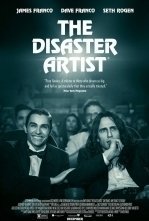
If you haven't seen The Room, then I urge you to do so at once. It's a bemusing, confusing, unintentionally hilarious 90 odd minutes that fully deserves all the cult screenings and bewildered wonder that it has garnered over the years. It's without question a perfect awful movie. And here with The Disaster Artist, based on the book of the same name, we get to see the story of just went on to get this film made.
To start with, James Franco is perfect as the mysterious and downright bonkers Tommy Wiseau. His voice, his mannerisms, his almost childlike tantrum throwing approach to life, he manages to make an almost unbelievable man fully believable. He's backed up by a cast that commit to the roles, but other than Dave Franco, don't get a huge amount of time in the spotlight. That's not a criticism as such, by design the two central figures in this are Tommy and Greg Sistero- his friend and fellow budding actor.
I suspect if you are a "fan" of The Room, you'll likely get a lot more out of this than if you had little to know knowledge of the film it depicts the making of. It's a blast getting to see certain iconic scenes recreated for this and to hear the origin stories behind key lines- "you're tearing me apart, Lisa" being one such moment that took me by surprise. The original film is a messy nonsensical experience and it's fun to see that almost everyone working on it viewed it as such even when it was being made. Everyone except Tommy that is.
Where things get a little murky for me is with how you are supposed to feel by the time the brilliant end credits roll (there's exact recreations of certain moments played side by side that are great fun.) It seems as though we are meant to be inspired by Tommy and what he has achieved, like in the end this is supposed to be a feel-good movie about never giving up on your dreams. That's all well and good, but Tommy Wiseau doesn't come across particularly well in this. He's a temper tantrum throwing and at times scary man to be around. One scene in particular during the shooting of the 'belly button sex scene' portrays him as a pretty horrible man, one that gets his way by being somewhat of a bully. This isn't addressed again fully and it's hard to feel like cheering him on by the time the big premiere screening rolls round. There's also his about face when it comes to claiming the movie was meant to be a comedy- something nobody believes. On the one hand, it's a smart move to take what he has and run with it, but there's also something sad about him not having something he cared so passionately about be received in the way it was intended. This is something else that is glossed over, but then Wiseau would never speak so candidly to give the writers anything to work with.
Overall this is a great movie and a fascinating watch. Would highly recommend.
To start with, James Franco is perfect as the mysterious and downright bonkers Tommy Wiseau. His voice, his mannerisms, his almost childlike tantrum throwing approach to life, he manages to make an almost unbelievable man fully believable. He's backed up by a cast that commit to the roles, but other than Dave Franco, don't get a huge amount of time in the spotlight. That's not a criticism as such, by design the two central figures in this are Tommy and Greg Sistero- his friend and fellow budding actor.
I suspect if you are a "fan" of The Room, you'll likely get a lot more out of this than if you had little to know knowledge of the film it depicts the making of. It's a blast getting to see certain iconic scenes recreated for this and to hear the origin stories behind key lines- "you're tearing me apart, Lisa" being one such moment that took me by surprise. The original film is a messy nonsensical experience and it's fun to see that almost everyone working on it viewed it as such even when it was being made. Everyone except Tommy that is.
Where things get a little murky for me is with how you are supposed to feel by the time the brilliant end credits roll (there's exact recreations of certain moments played side by side that are great fun.) It seems as though we are meant to be inspired by Tommy and what he has achieved, like in the end this is supposed to be a feel-good movie about never giving up on your dreams. That's all well and good, but Tommy Wiseau doesn't come across particularly well in this. He's a temper tantrum throwing and at times scary man to be around. One scene in particular during the shooting of the 'belly button sex scene' portrays him as a pretty horrible man, one that gets his way by being somewhat of a bully. This isn't addressed again fully and it's hard to feel like cheering him on by the time the big premiere screening rolls round. There's also his about face when it comes to claiming the movie was meant to be a comedy- something nobody believes. On the one hand, it's a smart move to take what he has and run with it, but there's also something sad about him not having something he cared so passionately about be received in the way it was intended. This is something else that is glossed over, but then Wiseau would never speak so candidly to give the writers anything to work with.
Overall this is a great movie and a fascinating watch. Would highly recommend.
Kyera (8 KP) rated The Progeny (Descendants of the House of Bathory #1) in Books
Feb 1, 2018
What do you do when an ancestor's actions threaten your very existence? You disappear. Emily, or at least that's what her name is now, must begin a quiet, hidden, new life in Maine. It's one of those small towns with a couple of hundred residents, some shops/eating establishments, an unexplained interest to tourists and not much else. The sign must say Greenville, population: a handful of moose.
The beginning just reminds me of home, with the gorgeous trees, lake, the phrase "wicked cool" and Emily's Red Sox cap. The action quickly takes over the plot, as Emily must flee Maine with a man she doesn't know if she can trust.... from a guy who had been following her for years with one goal - to kill her. With her memories gone Emily, or Audra as she finds out, doesn't know who she can trust. Is Luka the one who wants her dead? Or did Rolan lie and he's the real threat?
The unique plot is intriguing and the mystery won't let you put the book down. Danger lurks around every corner and Audra must rediscover what she forced herself to forget, at all costs.
The characters are intriguing and develop over the course of the novel. The Progeny are secretive and with good reason, any knowledge they have of their brethren can be taken upon their deaths. Their minds put countless others at risk unless they keep themselves isolated. While her comrades are decently well described, they don't quite feel like fully realized people. We need to now more of their dreams and fears, history, relationships and motivation.
The "big-bads" are sort of a generic evil villain type that I wished was developed more. What turned him into a zealot? What <i>is</i> his history with Audra's mother? How did he rise in the Court? I know Audra lost her memories, so we're in the dark like her but it just makes the novel feel less realized than it could.
The one relationship that feels authentic is between Audra and Luka. Even though she's not initially sure she can trust him and questions herlself throughout the novel - she still can't imagine going through everything without him/ I'm glad to learn that it isn't one long-running deception. The end of the novel is still completely unexpected in regards to the two of them.
Claudia and Piotrek are so close but he feels like such a mystery. We get to experience some of Claudia's emotions, like her confusion and hurt at being left or her anger about Ivan's death. Piotrek just seems flat in comparison. He's very protective of Claudia and painted a picture once. For all we know, he could have been an artist and it was just one of his many works. Its just as likely that it was the one and only time he attempted to be creative. I wish Piotrek was more develop as I"m very interested to learn more about him.
Audra travels to a number of foreign locations and they are described well enough that you can imagine them beautifully. They may not be the most glamorous villas or rich cities but you want to learn more about them nonetheless.
The book ends with a lot of revelations and so many more questions. Traitors are unmasked. Confessed or accused killers may not have been the murderers after all. Lovers are in peril. And time is running out. I know I can't wait to read the next book and find out what happens.
The beginning just reminds me of home, with the gorgeous trees, lake, the phrase "wicked cool" and Emily's Red Sox cap. The action quickly takes over the plot, as Emily must flee Maine with a man she doesn't know if she can trust.... from a guy who had been following her for years with one goal - to kill her. With her memories gone Emily, or Audra as she finds out, doesn't know who she can trust. Is Luka the one who wants her dead? Or did Rolan lie and he's the real threat?
The unique plot is intriguing and the mystery won't let you put the book down. Danger lurks around every corner and Audra must rediscover what she forced herself to forget, at all costs.
The characters are intriguing and develop over the course of the novel. The Progeny are secretive and with good reason, any knowledge they have of their brethren can be taken upon their deaths. Their minds put countless others at risk unless they keep themselves isolated. While her comrades are decently well described, they don't quite feel like fully realized people. We need to now more of their dreams and fears, history, relationships and motivation.
The "big-bads" are sort of a generic evil villain type that I wished was developed more. What turned him into a zealot? What <i>is</i> his history with Audra's mother? How did he rise in the Court? I know Audra lost her memories, so we're in the dark like her but it just makes the novel feel less realized than it could.
The one relationship that feels authentic is between Audra and Luka. Even though she's not initially sure she can trust him and questions herlself throughout the novel - she still can't imagine going through everything without him/ I'm glad to learn that it isn't one long-running deception. The end of the novel is still completely unexpected in regards to the two of them.
Claudia and Piotrek are so close but he feels like such a mystery. We get to experience some of Claudia's emotions, like her confusion and hurt at being left or her anger about Ivan's death. Piotrek just seems flat in comparison. He's very protective of Claudia and painted a picture once. For all we know, he could have been an artist and it was just one of his many works. Its just as likely that it was the one and only time he attempted to be creative. I wish Piotrek was more develop as I"m very interested to learn more about him.
Audra travels to a number of foreign locations and they are described well enough that you can imagine them beautifully. They may not be the most glamorous villas or rich cities but you want to learn more about them nonetheless.
The book ends with a lot of revelations and so many more questions. Traitors are unmasked. Confessed or accused killers may not have been the murderers after all. Lovers are in peril. And time is running out. I know I can't wait to read the next book and find out what happens.