
Search

STEINS;GATE HD KR
Games and Entertainment
App
STEINS;GATE has sold over 1,000,000 copies since 2009! "STEINS;GATE", based on the anime currently...


Writing Magazine
Reference and Magazines & Newspapers
App
The biggest and best monthly for all writers, Writing Magazine offers encouragement, exercises,...

Gareth von Kallenbach (980 KP) rated Safe (2012) in Movies
Aug 7, 2019
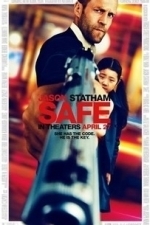

I’ve returned with another movie review for y’all and it should certainly come as no surprise Whatsoever that my review covers the latest edition to Jason Statham’s growing resume of action Movies. After 3 delays for its U.S. release, “SAFE” has finally arrived.
“Safe” is first and foremost an action film as one would expect from Statham
But somehow he always seems to up his game with even better actions scenes which are brilliantly Choreographed.
Some of which will have you laughing at the ineptness of his enemies
Or to the point where you’ll cringe at the very thought of the pain the characters might be going through. But as always, it’s worth it. This time, they’ve even thrown in more of a storyline and a plot twist or two that would peak Tarentino’s interest.
From writer/director by Boaz Yakin and executive producer Kevin Spacey and producer Lawrence Bender (Of Pulp Fiction and Inglorious Bastards fame), Jason Statham stars as Luke Wright. A garbage man turned second-rate cage fighter and former NYPD officer. Upon leaving the NYPD after testifying against corrupt NYPD detectives, Luke drifts from garbage man to Mixed Martial Arts fighter.
In order to support his pregnant wife. Upon winning a fight that he was supposed to lose the bad guys decides to make an example of him by brutally murdering his wife and unborn child. If this was not bad enough, the bad guys then tell Luke that they will murder anyone he comes into contact with as is illustrated when they later kill a homeless man Luke gave his shoes to.
Meanwhile, Mei (Catherine Chan) a young math prodigy, is forced to be a ‘counter’ for a Chinese triad (in essence instead of using computers, the triad forces her to memorize everything from money for drug transactions to police payoffs etc.), in order to keep the triad from killing her mother.
Upon learning of the death of her mother, Mei escapes but with the knowledge of the entire organization retained in her memory the triad hunts her down through the streets of New York City while also trying to avoid the same thugs who terrorize Luke as they have discovered who she is and want to use everything she knows to bring down their competitors.
Luke, mourning the loss of his wife and unborn child nearly commits suicide by jumping in front of a subway when he witness Mei being chased through the subway by the same goons who killed his wife.
After realizing that he is the only one who can protect Mei, Luke begins a brutal rampage through New York City battling all who stand in the way and pose a threat to Mei.
To sum up the movie briefly it is Grand Theft Auto meets “The Transporter” in New York City
minus the sex, drugs, and the modified Audi with the V-12 rocket engine.
There are plenty of shootouts, fight scenes, car chases, in even some intrigue to keep you thinking. A most excellent movie if you’re looking to take a break from the sunny weather and take refuge in a cool air-conditioned movie theater as the film is more than worth spending your hard earned cash on.
“Safe” is first and foremost an action film as one would expect from Statham
But somehow he always seems to up his game with even better actions scenes which are brilliantly Choreographed.
Some of which will have you laughing at the ineptness of his enemies
Or to the point where you’ll cringe at the very thought of the pain the characters might be going through. But as always, it’s worth it. This time, they’ve even thrown in more of a storyline and a plot twist or two that would peak Tarentino’s interest.
From writer/director by Boaz Yakin and executive producer Kevin Spacey and producer Lawrence Bender (Of Pulp Fiction and Inglorious Bastards fame), Jason Statham stars as Luke Wright. A garbage man turned second-rate cage fighter and former NYPD officer. Upon leaving the NYPD after testifying against corrupt NYPD detectives, Luke drifts from garbage man to Mixed Martial Arts fighter.
In order to support his pregnant wife. Upon winning a fight that he was supposed to lose the bad guys decides to make an example of him by brutally murdering his wife and unborn child. If this was not bad enough, the bad guys then tell Luke that they will murder anyone he comes into contact with as is illustrated when they later kill a homeless man Luke gave his shoes to.
Meanwhile, Mei (Catherine Chan) a young math prodigy, is forced to be a ‘counter’ for a Chinese triad (in essence instead of using computers, the triad forces her to memorize everything from money for drug transactions to police payoffs etc.), in order to keep the triad from killing her mother.
Upon learning of the death of her mother, Mei escapes but with the knowledge of the entire organization retained in her memory the triad hunts her down through the streets of New York City while also trying to avoid the same thugs who terrorize Luke as they have discovered who she is and want to use everything she knows to bring down their competitors.
Luke, mourning the loss of his wife and unborn child nearly commits suicide by jumping in front of a subway when he witness Mei being chased through the subway by the same goons who killed his wife.
After realizing that he is the only one who can protect Mei, Luke begins a brutal rampage through New York City battling all who stand in the way and pose a threat to Mei.
To sum up the movie briefly it is Grand Theft Auto meets “The Transporter” in New York City
minus the sex, drugs, and the modified Audi with the V-12 rocket engine.
There are plenty of shootouts, fight scenes, car chases, in even some intrigue to keep you thinking. A most excellent movie if you’re looking to take a break from the sunny weather and take refuge in a cool air-conditioned movie theater as the film is more than worth spending your hard earned cash on.

Haley Mathiot (9 KP) rated Blood Red Road (Dust Lands, #1) in Books
Apr 27, 2018
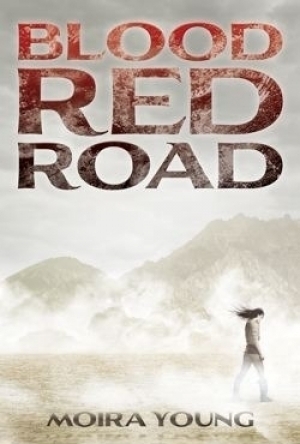

Blood Red Road has a searing pace, a poetically minimal writing style, violent action, and an epic love story. Moira Young is one of the most promising and startling new voices in teen fiction.
Blood Red Road completely took over my life for the few hours I was reading it. I found myself physically excited from reading. It was one of those books where you forget how long you've been reading and you look up to discover it's four hours later than it was five minutes ago, and the book is almost over. Dang. Then someone calls you to do chores and you get upset because you can't stop reading now!
Blood Red Road has everything a book should have: Immediately developed characters, tension the whole time, a multi-layered plot, and conflict around ever turn.
It seemed that one thing just naturally led to another—and that's the way it should be. Things don't always go as planned, people don't always do as you tell them to, and we're not always honest with ourselves about our feelings and motives. There were so many different layers, so many different things that influenced the book, that it felt real.
The writing was interesting. It was written the way the characters spoke. "Aks" instead of "Ask," "Thinkin" instead of "Thinking," "Fer" instead of "for," and a lot of slang like "kinda" and "ain't." At first it was really annoying, but then I got used to it and it didn't bother me. It slowed down my reading a little, but it didn't interfere with the pacing of the book (just my reading speed). It greatly added to the characters.
People betray us. People change. People fall in love. They argue with each other, they hate and they love at the same time, they put up with crap and they pitch fits. And that's what happens, so that's the way the characters were. I loved the change in Saba and Emmi's relationship (Emmi is her little sister) and I loved the growth, tearing down, tension, and forgiveness in the relationship between Saba and Jack.
Of course it wouldn't have been complete without a love story. Saba is so totally against outside help, so against Jack's attention (or maybe just terrified of it), that it causes an annoying and infuriating love story that gave me flashbacks to Mortal Instruments. (Only much better, because Jack is much more of a man than Jace. They both flirt about as often, though...)
I liked everything about this book except that it's only 512 pages. I didn't want it to end. I even like the cover. I saw it and thought "Oh I'm going to like that book." Saba looked like a kick-ass heroine. She is. I like her a lot (when she's not being a smart-aleck to Jack, and a jerk to her little sister).
And now I wait. This happened to me when I read The Hunger Games, Birthmarked, and Magic Under Glass, too. I read it first (either the day it was released, or I read the ARC), then had to wait longer than everyone else to get the sequel because I read it before they did. It stinks. Luckily, Blood Red Road doesn't have the horrible cliff hanger endings that Suzanne Collins, Cassandra Claire, and Jaclyn Dolamore have in their books. However, you can bet I will be holding my breath for the next one. Moria Young is going on my "auto-buy" list.
Content: Some violence, but not gore. I don't remember if there was any minor language, but there was so strong language. No sex. Ages 14+
Blood Red Road completely took over my life for the few hours I was reading it. I found myself physically excited from reading. It was one of those books where you forget how long you've been reading and you look up to discover it's four hours later than it was five minutes ago, and the book is almost over. Dang. Then someone calls you to do chores and you get upset because you can't stop reading now!
Blood Red Road has everything a book should have: Immediately developed characters, tension the whole time, a multi-layered plot, and conflict around ever turn.
It seemed that one thing just naturally led to another—and that's the way it should be. Things don't always go as planned, people don't always do as you tell them to, and we're not always honest with ourselves about our feelings and motives. There were so many different layers, so many different things that influenced the book, that it felt real.
The writing was interesting. It was written the way the characters spoke. "Aks" instead of "Ask," "Thinkin" instead of "Thinking," "Fer" instead of "for," and a lot of slang like "kinda" and "ain't." At first it was really annoying, but then I got used to it and it didn't bother me. It slowed down my reading a little, but it didn't interfere with the pacing of the book (just my reading speed). It greatly added to the characters.
People betray us. People change. People fall in love. They argue with each other, they hate and they love at the same time, they put up with crap and they pitch fits. And that's what happens, so that's the way the characters were. I loved the change in Saba and Emmi's relationship (Emmi is her little sister) and I loved the growth, tearing down, tension, and forgiveness in the relationship between Saba and Jack.
Of course it wouldn't have been complete without a love story. Saba is so totally against outside help, so against Jack's attention (or maybe just terrified of it), that it causes an annoying and infuriating love story that gave me flashbacks to Mortal Instruments. (Only much better, because Jack is much more of a man than Jace. They both flirt about as often, though...)
I liked everything about this book except that it's only 512 pages. I didn't want it to end. I even like the cover. I saw it and thought "Oh I'm going to like that book." Saba looked like a kick-ass heroine. She is. I like her a lot (when she's not being a smart-aleck to Jack, and a jerk to her little sister).
And now I wait. This happened to me when I read The Hunger Games, Birthmarked, and Magic Under Glass, too. I read it first (either the day it was released, or I read the ARC), then had to wait longer than everyone else to get the sequel because I read it before they did. It stinks. Luckily, Blood Red Road doesn't have the horrible cliff hanger endings that Suzanne Collins, Cassandra Claire, and Jaclyn Dolamore have in their books. However, you can bet I will be holding my breath for the next one. Moria Young is going on my "auto-buy" list.
Content: Some violence, but not gore. I don't remember if there was any minor language, but there was so strong language. No sex. Ages 14+

Kirk Bage (1775 KP) rated Tales from the Loop in TV
Jan 22, 2021
Such is the competition for our attention on the major streaming services, and such is the daunting depth of choice, that sometimes something of real quality can slip through the net for a while. I like to think that eventually, everything gets the audience it deserves, because eventually enough people that appreciated it will find it and pass it on. But it is apparent that good things can go under the radar very easily for one reason or another.
Everything about the production and presentation of Amazon’s Tales From the Loop suggests they thought it might be a bigger hit, or at least they had enough faith in it to let it be different from the mass appeal conventions that apply to sci-fi shows. They have proved this many times in recent years, with shows like The Man In the High Castle and The Expanse favouring patient and mature story-telling over interminable flashbangs and whizzpops usually found in the more action based sci-fi on Netflix and others (The Handmaid’s Tale being another notable exception).
Having raised myself auto-didactically on the oldest traditions of science fiction writing in novel and short story form since my teenage years, I can say with some amateur authority that the point of using sci-fi ideas was always about the people and the parallels to social reality and politics that could be highlighted by putting them in a “what-if” situation. The lazer guns and spaceships and evil aliens were much more a product of Hollywood, and still are. Great science fiction writing can and usually does revolve around a very simple change to the world we know, an inversion or a convention or a technology that turns how we live on its head. At its best it is philosophical and moral poetry.
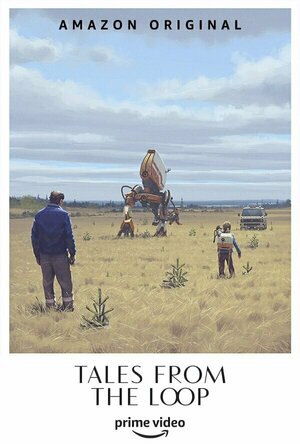
Tales From the Loop, inspired by the beguiling paintings of Swedish Artist Simon Stålenhag aspires to return to these principles, eschewing breakneck pace and unnecessary exposition at every turn – it is entirely content to confuse and sometimes even bore you with its patient, melancholy approach, testing almost if you are worthy to reach the prize of deeper meaning buried away in the final few episodes.
The idea of Stålenhag’s work is to juxtapose a familiar and mundane landscape with a detail of technology that does not exist in our reality. Often it is something broken, run-down or neglected, leaving a strange sadness and beauty behind that has you wondering who once made this and what was it for, and why is it no longer loved? The untold stories objects and hidden lives, secrets and desires that have been lost, is what this sensitive and delicate show is about. It is about the interconnection of lives caught in time, and the sci-fi / tech conceit is only the hanger that coat is put on. Which… I love.
The surface idea is that we are looking at the inhabitants of a small American town that once relied on farming and community, but now has been changed by the presence of an underground facility that deals with experimental physics and finding ways to make impossible things possible. They call it The Loop. It is never fully explained where it came from, or why, or what it is truly capable of – the mystery is always allowed to remain mostly a mystery – which, again, I love!
Many people in the town work at The Loop and rely on it for their livelihoods and collective economy, including Jonathon Pryce and Rebecca Hall, who are ostensibly the show’s main characters. But most folk have no idea what is really going on. Each episode focuses on one or two members of the community that interweave with one another; several important people begin as background dressing and become more prevalent as the full story of their lives and connections unfolds. But no one character is in every episode… which, you know, I love.
Their lives, that seem simple at first glance, are revealed to be complex tapestries of emotion and personal history, revolving around how The Loop has affected them and the things they love. The progression and unfolding of the detail is so deliberate and usually under-explained that very often you don’t realise the effect the full image will have. And when it does catch up with you it becomes a very moving and meaningful experience. Characters that you don’t understand or even like at first come into sharper focus as we reach the climax of the season and grow to learn why they are the way they are. The story arcs of Pryce and Hall in particular are very satisfying, tragic yet utterly beautiful to comprehend.
A lot of the criticism you will see about the show will concentrate on how slow it all is. I am totally convinced this is a deliberate artistic choice to weed out the thrill junkies. They are very welcome to go elsewhere, and it sounds as if many of them did, basing their reviews on one or two half watched episodes they couldn’t be bothered to engage with or wonder at. Which is why I think in time the respect for this as a work of art will come back around.
There is nothing to fault in the production at all. From the opening credits to the end of each episode, what you get is a very highly polished and considered look and feel, designed to evoke certain feelings over others – a wistfulness, an ennui, a bittersweet smile of knowing, perhaps. It invites you to watch patiently and relate, not to watch eagerly and expect… which, you know, I love.
The photography is crisp and well framed always; the music is subtle but effective; the dialogue is often sparing and well chosen (no detail is merely thrown away); and the direction is of a remarkably uniform vision, considering each episode is a different guest professional, including such prestigious names as Jodie Foster, Mark Romanek and Andrew Stanton.
I absolutely urge anyone that isn’t put off by a little sentiment to give this one a try. Sadness and regret in life is not something to shun and be afraid of, they are parts of human experience, and I love art that explores them as concepts. Put that art in a science fiction context and I am bound to love it even more. Like the final moments of Blade Runner, we know that one day all these moments will be lost in time, like tears in rain. We have to take time to see the beauty while we can, even if that beauty is painful.
It may not be for you – I don’t think it is better or worse than other things, just more… me. There is every chance that if it isn’t you… you will hate it. If you do begin, however, please see it to the finish before casting judgement – the final episode directed by Jodie Foster is truly wonderful: a pay-off of such emotion after your investment of seven previous stories, tying it all together perfectly. Rarely have I felt so stupid for not understanding the point of something sooner, or been more pleased that I hadn’t. The final moment of the season is literally unforgettable, and gets richer in my imagination by the day.
Will there be a second season? There certainly could be. Was it enough of a success to justify the investment? Hmm, not sure. Either way, it either sits as a perfect self contained collection of fine, old-fashioned sci-fi stories, or I’d be happy to see it expand, as long as the temptation isn’t to listen to the negative reviews and pander to the fast-food mentality that has already rejected it without fully understanding it. Because nothing needs to change here. A thing of beauty, recommended to those who like beautiful and delicate things.
Everything about the production and presentation of Amazon’s Tales From the Loop suggests they thought it might be a bigger hit, or at least they had enough faith in it to let it be different from the mass appeal conventions that apply to sci-fi shows. They have proved this many times in recent years, with shows like The Man In the High Castle and The Expanse favouring patient and mature story-telling over interminable flashbangs and whizzpops usually found in the more action based sci-fi on Netflix and others (The Handmaid’s Tale being another notable exception).
Having raised myself auto-didactically on the oldest traditions of science fiction writing in novel and short story form since my teenage years, I can say with some amateur authority that the point of using sci-fi ideas was always about the people and the parallels to social reality and politics that could be highlighted by putting them in a “what-if” situation. The lazer guns and spaceships and evil aliens were much more a product of Hollywood, and still are. Great science fiction writing can and usually does revolve around a very simple change to the world we know, an inversion or a convention or a technology that turns how we live on its head. At its best it is philosophical and moral poetry.
Tales From the Loop, inspired by the beguiling paintings of Swedish Artist Simon Stålenhag aspires to return to these principles, eschewing breakneck pace and unnecessary exposition at every turn – it is entirely content to confuse and sometimes even bore you with its patient, melancholy approach, testing almost if you are worthy to reach the prize of deeper meaning buried away in the final few episodes.
The idea of Stålenhag’s work is to juxtapose a familiar and mundane landscape with a detail of technology that does not exist in our reality. Often it is something broken, run-down or neglected, leaving a strange sadness and beauty behind that has you wondering who once made this and what was it for, and why is it no longer loved? The untold stories objects and hidden lives, secrets and desires that have been lost, is what this sensitive and delicate show is about. It is about the interconnection of lives caught in time, and the sci-fi / tech conceit is only the hanger that coat is put on. Which… I love.
The surface idea is that we are looking at the inhabitants of a small American town that once relied on farming and community, but now has been changed by the presence of an underground facility that deals with experimental physics and finding ways to make impossible things possible. They call it The Loop. It is never fully explained where it came from, or why, or what it is truly capable of – the mystery is always allowed to remain mostly a mystery – which, again, I love!
Many people in the town work at The Loop and rely on it for their livelihoods and collective economy, including Jonathon Pryce and Rebecca Hall, who are ostensibly the show’s main characters. But most folk have no idea what is really going on. Each episode focuses on one or two members of the community that interweave with one another; several important people begin as background dressing and become more prevalent as the full story of their lives and connections unfolds. But no one character is in every episode… which, you know, I love.
Their lives, that seem simple at first glance, are revealed to be complex tapestries of emotion and personal history, revolving around how The Loop has affected them and the things they love. The progression and unfolding of the detail is so deliberate and usually under-explained that very often you don’t realise the effect the full image will have. And when it does catch up with you it becomes a very moving and meaningful experience. Characters that you don’t understand or even like at first come into sharper focus as we reach the climax of the season and grow to learn why they are the way they are. The story arcs of Pryce and Hall in particular are very satisfying, tragic yet utterly beautiful to comprehend.
A lot of the criticism you will see about the show will concentrate on how slow it all is. I am totally convinced this is a deliberate artistic choice to weed out the thrill junkies. They are very welcome to go elsewhere, and it sounds as if many of them did, basing their reviews on one or two half watched episodes they couldn’t be bothered to engage with or wonder at. Which is why I think in time the respect for this as a work of art will come back around.
There is nothing to fault in the production at all. From the opening credits to the end of each episode, what you get is a very highly polished and considered look and feel, designed to evoke certain feelings over others – a wistfulness, an ennui, a bittersweet smile of knowing, perhaps. It invites you to watch patiently and relate, not to watch eagerly and expect… which, you know, I love.
The photography is crisp and well framed always; the music is subtle but effective; the dialogue is often sparing and well chosen (no detail is merely thrown away); and the direction is of a remarkably uniform vision, considering each episode is a different guest professional, including such prestigious names as Jodie Foster, Mark Romanek and Andrew Stanton.
I absolutely urge anyone that isn’t put off by a little sentiment to give this one a try. Sadness and regret in life is not something to shun and be afraid of, they are parts of human experience, and I love art that explores them as concepts. Put that art in a science fiction context and I am bound to love it even more. Like the final moments of Blade Runner, we know that one day all these moments will be lost in time, like tears in rain. We have to take time to see the beauty while we can, even if that beauty is painful.
It may not be for you – I don’t think it is better or worse than other things, just more… me. There is every chance that if it isn’t you… you will hate it. If you do begin, however, please see it to the finish before casting judgement – the final episode directed by Jodie Foster is truly wonderful: a pay-off of such emotion after your investment of seven previous stories, tying it all together perfectly. Rarely have I felt so stupid for not understanding the point of something sooner, or been more pleased that I hadn’t. The final moment of the season is literally unforgettable, and gets richer in my imagination by the day.
Will there be a second season? There certainly could be. Was it enough of a success to justify the investment? Hmm, not sure. Either way, it either sits as a perfect self contained collection of fine, old-fashioned sci-fi stories, or I’d be happy to see it expand, as long as the temptation isn’t to listen to the negative reviews and pander to the fast-food mentality that has already rejected it without fully understanding it. Because nothing needs to change here. A thing of beauty, recommended to those who like beautiful and delicate things.