
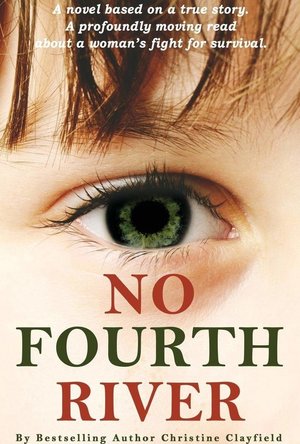


No Fourth River is a very powerful story about swimming up to surface, when the world is against you. A story about child abuse unlike anything else, and one very determined woman.
This is the second Audiobook I have listened to, with the first being Ready Player One. Two completely different experiences. It was disturbing listening to such a painful story for a while, and it took me a long time to finish it.
The story of Christine is so sad and so unique. She is being molested by her father in ways you could never imagine. She goes to boarding school and she is being bullied even by the nurses. She wets her bed every single day. And bad things keep happening, one after another, after another, until she is in her thirties and almost dies being beaten to almost-death by her husband.
And then she decides to change her life and to be the most successful woman.
At first, when I read the synopsis, the thing that thrilled me was the ill mother that suffered from dementia. I thought this book will revolve and focus on this point, but it didn’t. And I was very disappointed.
Then I manned up, and decided to continue listening, despite my unhappiness. It was a decent story, a powerful, motivational one, but not realistic. And it hurts me saying this, because this book is autobiography. Of course these terrible things happened. But I didn’t felt for the woman. Not in a way I usually would.
The writing was just about average, or maybe the woman reading in the audiobook was to blame. I will leave that up to you, who have listened to the audiobook, or choose to do so.
The character of this woman was honest, but I still can’t imagine how and why a person would stick to people that keep hurting her, despite everything. Even if love, even if forever after, I would not stay one more day with a person if he, for one moment, loses control and raises a hand over me. I would be out of the house in a minute, never returning back. A man would never hurt a woman. No matter what she could do, or couldn’t do. I can argue for hours, and I can admit being wrong, and I can cope with being yelled at, because I have done something stupid. But the moment the line is crosses, I would be out – FOREVER.
If you guys are looking for a story that will keep you thinking about whether you’ve made right decisions, this is a great book for you. A powerful success story of a woman that was brave enough to say NO (after a few years, that is) and brave enough to start building a new life. I recommend it, even though I personally did not really enjoy it a lot.
I have won this Audiobook as a giveaway from LibraryThing, and all my opinions are honest and completely unbiased.
Outcry: Holocaust Memoirs
10.0 Rate It
Book
Manny Steinberg (1925-2015) spent his teens in Nazi concentration camps in Germany, miraculously...
Haley Mathiot (9 KP) rated From Darkness to Light: My Journey Back from a Brain Filled with Blood in Books
Apr 27, 2018

by Lynn Christopher Roby
Rating: 3.5/5
Genre: Memoir, Autobiography, Christian
Summary: Lynn tells the story of her aneurysm, her life before and after, and her walk with God. She recalls her aneurysm and tells the sad and frightening story of her trials trying to get through it. Living through an aneurysm is hard—I had no idea how hard! She went through constant pain and a lot of depression. She also talks about her alcoholism early in life, mentions her sexual abuse, and her early depression. Eventually, after the aneurysm, she was able to heal enough to start her work for the Lord, opening a clinic to help people through the things she has gone through.
Thoughts: Lynn’s story is amazing and inspiring. This books shows how the bible verse “all things work together for good” plays out in real life. Lynn never would have been able to help the people she helped, or save the lives she helped save, if it hadn’t been for her very rough life.
Writing: The writing style and prose was tough to read in that it felt very choppy, had a lot of fragments, and quite a few typos, giving it an overall casual feel. The pacing was also a bit fast through the aneurysm, and slow through the rest. I found it difficult to read during the section where she explained the “12 steps to A.A.” which she explained in detail and then related it to her experiences, and showed how she used them through her life as a recovering alcoholic and getting through the aneurysm. The layout was a bit hard to follow, too. She starts with the aneurysm, then the healing process, then backtracks to tell about her alcoholism and depression, divorce, and second marriage before she finishes the story of what happened after the aneurysm. It was a little confusing, but once I saw what she was doing, it was easier to follow.
Content: There was no language or sex. She does mention God very often, as it is a memoir of a Christian’s suffering, but does not leave you with the feeling that you’ve been “preached to.”
Recommendation: Ages 13+ because of reference to alcohol. I really enjoyed this book—it had its on-the-edge-of-your-seat moments, its sad sections, and its happy parts.
About the author:
Lynn lives in Carroll Valley Pa. with her husband Bill and their Samoyed Abigail. She is a Mother blessed with four sons and beautiful grandchildren that add to filling her life with joy and fun.
Lynn is a certified Professional Level Kripalu Yoga Teacher; she continues her studies at The Kripalu Center for Yoga & Health in Stockbridge Ma. Lynn and her husband Bill are the founders and owners of The Gettysburg Holistic Health Center where Lynn teaches in her studio which is a Kripalu affiliated studio. Lynn is a Master level addictions specialist and a Reiki Master. She feels honored to work with folks who suffer from the disease of addiction as she watches them transform their lives from turmoil to surrender.
Lynn’s journey led her into writing this book that was very cathartic hoping to inspire anyone suffering not only from a ruptured brain aneurysm, or alcoholism, or abuse but to touch anyone who can relate to such pain and suffering and find hope from reading this book
**Thank you to Bostic Communications and Lynn for providing me with my review copy!**
~Haleyknitz
Whisperin' Bill Anderson: An Unprecedented Life in Country Music
Bill Anderson and Peter Cooper
Book
Whisperin' Bill: An Unprecedented Life in Country Music presents a revealing portrait of Bill...

Magic Screen Pro - Customize your Lock & Home Screen Wallpaper for iPhone & iPod Touch (iOS8)
Lifestyle and Photo & Video
App
The #1 Wallpaper-making App is BACK for iOS 8 (version 3.5)! Back with more powerful features and...
American Dreamer: My Life in Fashion & Business
Peter Knobler and Tommy Hilfiger
Book
In this tale of grit and glamour, setbacks and comebacks, business and pop culture icon Tommy...
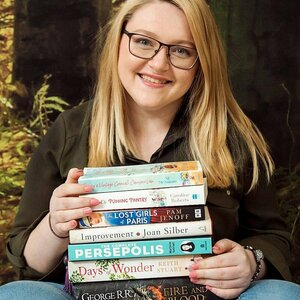
Ivana A. | Diary of Difference (1171 KP) rated Hippie in Books
Nov 26, 2018
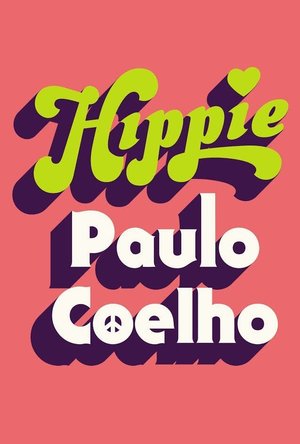

Hippie is the autobiography by Paulo Coelho, told in third person. This is a story about people that travel the world, wear funny clothes and flowers in their hairs, and believe in peace, love and freedom.
I have read many of Coelho’s books, even since I was a teenage girl. And all of them share something in common – the path of finding yourself. After reading Hippie, I believe that this is the the best one that covers this subject quite perfectly.
‘’He was a human being, with all the fragility that entails, he didn’t understand everything that happened in his life, but he truly wished to believe he was travelling in search of the light.’’
The book is a story of two people, Paulo and Karla. Paulo, a Brazilian guy, searching for freedom and travels. Karla, a lady born and living in Amsterdam, wanting to find herself so badly in the world. When she hears that a hippie bus is going all the way to Nepal, she is willing to go if she meets her ideal companion.
‘’She wished they could see her for her beauty, but all anyone ever saw was the hurricane, and they never sought shelter from it. They preferred to flee to safer ground.’’
Their adventure begins in such an adorable way, only hippies can relate to. Their search for what they want and need feeds with every stop and every destination. A beautiful story about friendship, love and travel.
I actually wished that they had spoken more about the travels and less about some individual stories that didn’t quite correlate to the plot. I also wished that they actually reached out the final destination the way they are supposed to (this was not a spoiler).
‘’Our travels teach us everything we need to know for the rest of our lives, as long as there’s no need to explain this to our parents.’’
Even though a sad end, it is a realistic story about a way of life before, where people loved to be free, and were free to find love, in a world of peace, love, marijuana and travels. A place where no one cares what you look like.
Right now, hippies are a normal thing, people that we all secretly enjoy reading about, and listening to their stories, but in the past, these people fought so hard to change the system of how people’s minds worked, the system people were stuck in, to make people realise that they have the freedom to believe in anything they think is right, to do anything that makes them happy, to be happy, and share this with the world. To live in a world full of happiness, love, peace, to travel and see places, discover places and people, see new cultures, explore people’s minds and customs.
‘’The sun had come out, as though to say that finally the Renaissance was making a return, to change everyone’s habits and customs – and one day very soon, people would no longer depend on the opinions of others but rather on their own ways of seeing life.’’
The one thing that I couldn’t enjoy was the constant religion mentioning in this book. All religions were mentioned, and with such intensity, that peace and love and freedom and the hippie meaning started to be in relation to religion, which is something I personally don’t want to put together. I am aware that lots of hippies believe in God in their own way, but I also think that love and peace should gather them together as a group, not religion. And this point was clearly states a lot of times throughout the book. Not enjoyable, at least for me.
For all of you out there, the hippies, the ordinary people that love travelling, love, life, happiness, music – this is a book for you. Another amazing Paulo Coelho novel, full of wisdom and quotes to underline.

Bob Mann (459 KP) rated The Personal History of David Copperfield (2019) in Movies
Jan 8, 2021
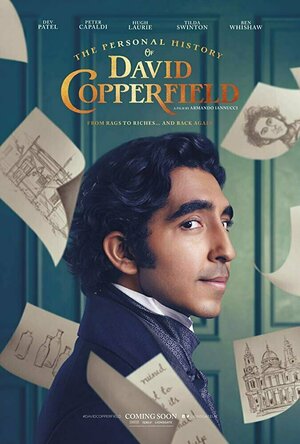

You have to admire the artistry of Dickens. Of course, I am aware of some of the plethora of rich and complex characters that Dickens imagined including the rascally Mr Micawber (Peter Capaldi) and the ever-'umble but conniving Uriah Heep (Ben Wishaw). But the story is literally rammed with amazing characters. It's almost as if Dickens conjured up full pen-portraits of 30 different characters and then contrived to fit them somehow into the story. Remarkably rich.
There's a very striking nature to the casting of this movie. It had me going "Wha?? Who??" while watching it. Because the roles are cast multi-culturally, without nature to the demographics of the time and - crucially - to the relationship between the characters. For example, with Copperfield, you might - with a bit of a squint - play along with it since we never see the father. But then the mother of the (very-much-white) Steerforth (Aneurin Barnard) turns up as Nigerian-born actress Nikki Amuka-Bird (who is fabulous). Benedict Wong also turns up as legal director Mr Wickfield. It was as if the casting was done purely on talent and regardless of race and appropriateness for the Dickensian times. Which is refreshingly different and much to be welcomed.
Sarah Crowe has won a number of awards for her casting of the film and a BAFTA nomination too. And well deserved, since she pulls in a truly stellar ensemble cast. As well as those mentioned above, we also have Hugh Laurie as the addled Mr Dick; Tilda Swinton as Betsey Trotwood; Anna Maxwell Martin as Mrs Strong; Paul Whitehouse as Daniel Peggotty; and Gwendoline Christie as the evil Mrs Murdstone. Even Daisy May Cooper (from TV's "This Country") turns up and is particularly effective as Peggoty - the housemaid and friend to Copperfield. And casting Morfydd Clark in a second role as the scatty love interest Dora Spenlow is also both brilliant and provocative.
With such a wealth of talent on show, it's difficult to pull out specific performances. This is a movie that genuinely deserved to make the SAG Ensemble award list.
When I saw that the director of this was Armando Iannucci, I raised an eyebrow. For the subject matter seemed to be at right angles to the normal satirical thrust of the director. But the guy behind "The Thick of It" and "The Death of Stalin" reigned in his most satirical barbs and - together with his regular collaborative screenwriter Simon Blackwell - turned the movie into a delightfully quirky telling of the story. I felt that there was something of the Guy Ritchie "Sherlock Holmes" behind the very effective use of the cutting and on screen handwriting.
In that cutting, many of the scene transitions are masterfully done. So a special shout-out to the film editors Mick Audsley and Peter Lambert here. A memorable example is a flashback in the "boat house" where a background tarpaulin blows away to reveal Steerforth on horseback in France: simply breathtaking.
This was a refreshing movie. Endlessly innovative and entertaining. It makes me even possibly want to revisit trying to read the book again! Highly recommended.
(For the full graphical review, please check out the review here - https://rb.gy/ba74zo ).
Bob Mann (459 KP) rated Molly's Game (2017) in Movies
Sep 29, 2021
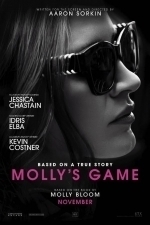

Bloom is played by Jessica Chastain, from films such as “Zero Dark Thirty” and “Miss Sloane” (one of my films of the year last year). Chastain’s roles as an actress are often quite cold and calculating, as suits her demeanour. As such her characters are not often easy to warm to in movies (and as such, my wife is not a fan).
Taking the piste. Molly in her younger ski-centric role.
Here as Molly Bloom she is as equally driven as in “Miss Sloane“, but the drive is learned from her father (Kevin Costner), bullying her to be the best she can be at skiing in a highly competitive family. Forced out of the skiing business (for reasons I won’t spoil), she takes a “gap year” from law school that turns into a “gap life” after she falls into the slightly shady business of running poker nights for LA’s rich elite. It’s here that Chastain’s Bloom is able to show a gentler and more compassionate side, trying to talk some of her clients (who invariably fall in love with her) off the ledge of their gambling addiction.
Chris O’Dowd as one of the punter’s in deep.
Sorkin’s script (based on Molly’s own autobiography, I should add) does a really nice job of cutting backwards and forwards through Molly’s timeline to drill into motivations and her mental state, and in doing so he pulls out an award-winning (or at least Golden-Globe award-nominating) performance from Chastain in the process. Also very effective though is Kevin Costner (“Hidden Figures“, “Man of Steel“), who is quietly building an impressive portfolio of supporting actor roles. Here he rather dials in his “tough and aloof guy” performance until the park bench scene (below) where he surprises in a good way.
Benches with wolves. Kevin Costner impressive as Molly’s hard-line father.
It’s also a blessed relief to find a decent vehicle to showcase the undoubted talents of Britain’s Idris Elba – an actor who has been woefully served by rubbish such as “Bastille Day“, rather lame sequels like “Star Trek: Beyond” or minor roles such as in “Thor: Ragnarok“. Here he can really get his teeth into the role of Molly’s lawyer, with a multi-layered character that reveals a little – but not too much of – his back-story to leave you with intriguing questions.
An indecisive Charlie Jaffey (Idris Elba) can make his mind up about Molly (Jessica Chastain).
So it’s a good film, but an intelligent watch that mandates your attention. The script is sufficiently dense and wordy that it requires significant concentration: this is not a “park your brain at the door” type of ‘Michael Bay film’. (As such, while it remains a recommended watch, I’m not sure it would be one that would necessarily make my DVD list for repeat watchings).
Michael Cera (centre) as the mysterious but powerful “Player X”; a Hollywood actor, but who is he supposed to be? (Answers on a postcard!).
But again, I must comment on what an amazing year this is turning out to be for women in film. Less #Me-too and more #She-do! Once again, here is a movie where a confident woman is firmly in the driving seat, and while powerful men try to bring her down, it is not them that succeeds. (The studio bill for talent in the past year must be a LOT less than it was the year before! #don’tshootme #topicalhumour #CarrieGracey). #TimesUp.

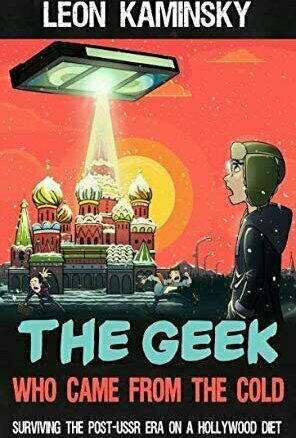

Leon is a young boy growing up in Russia at the end of the 1900s. He has a nervous problem (possibly anxiety) and has a hard time at school and with other people in general. Leon quickly falls in love with movies, specifically those from Hollywood after seeing them for the first time. Like so many other people who are not exactly social for one reason or another, he trades social interaction for watching films. His love for movies over the years borders on the edge of obsession as he knows not only actors and directors but also the Russian’s who voice over the tapes to translate them. His daily and weekly schedule revolves around what movies are being played on TV or at the theaters.
He takes readers through the difficulty of obtaining some of the popular movies that can be found just about anywhere here in the United States. This difficulty is not only because of how much Russia censored movies from just about anywhere but because the titles are often changed as well. Leon shares his excitement and the challenges he faced to get his first VCR play and to transport his VHS collection when his family moved. He even talks about when owning a VCR was illegal in Russia and when people would give anything to have one, including offering to trade a boat for a VCR.
What I liked best was that the informative quality of the book was wonderful and the author clearly did his research (I even wondered at times if the book was based on the author’s own childhood). I appreciated the human qualities of the book, such as the struggles Leon faces at school. New facts about Russia was presented to the readers in a way that prevented anything from feeling too overly informative. What I did not like was the fact that the book ends fairly abruptly. I would have liked to see at least one chapter about after the family’s move to Germany. There were also multiple sections where it would begin on one topic and end on another, seemingly unrelated topic.
Movie fans will enjoy this book but it is recommended that they be somewhat familiar with movies from the 1980s (I think was the time period of most movies mentioned in the book, I myself am far from a movie buff at all) and newer. High school students may not be able to fully appreciate the cinematic history in this book and may feel more like a history book to them. It should also be noted as VHS tapes are already a thing of the past (I am holding on to a few to show my children in the future) upcoming generations may not know what the book is talking about without asking their parents or google. Finally, I give this book a rating of 3 out of 4. This book is very informative about a topic not many people are probably aware of. Sadly this gives it a very narrow target audience. The way the book is written makes it feel like it is an autobiography about a movie lover growing up where movies are largely controlled. The plot of the book is frequently lost through during all the movie talk.
https://www.facebook.com/nightreaderreviews