
Search

Matthew Krueger (10051 KP) rated The Tingler (1959) in Movies
Dec 5, 2020


Vincent Price (1 more)
William Castle
When You Scream
The Tingler- is a excellent movie and if you havent watched it than go watch it.
The plot: Dr. Warren Chapin (Vincent Price) has made a surprising discovery -- the spine-chilling sensation that people get when scared is due to a parasite that he dubs the "tingler." Chapin concludes that in extreme circumstances, prolonged fear can cause the creature to damage a person's spine and even cause death if the victim can't scream, a theory that Oliver Higgins (Philip Coolidge) uses to deadly effect on his wife (Judith Evelyn). Soon the tingler that killed the woman is on the loose.
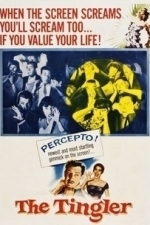
Castle used gimmicks to sell the film. The Tingler remains most well known for a gimmick called "Percepto!", a vibrating device in some theater chairs which activated with the onscreen action.
In a similar manner as Universal's Frankenstein (1931), Castle opened the film with an on-screen warning to the audience:
"I am William Castle, the director of the motion picture you are about to see. I feel obligated to warn you that some of the sensations—some of the physical reactions which the actors on the screen will feel—will also be experienced, for the first time in motion picture history, by certain members of this audience. I say 'certain members' because some people are more sensitive to these mysterious electronic impulses than others. These unfortunate, sensitive people will at times feel a strange, tingling sensation; other people will feel it less strongly. But don't be alarmed—you can protect yourself. At any time you are conscious of a tingling sensation, you may obtain immediate relief by screaming. Don't be embarrassed about opening your mouth and letting rip with all you've got, because the person in the seat right next to you will probably be screaming too. And remember—a scream at the right time may save your life."
William Castle was famous for his movie gimmicks, and The Tingler featured one of his best: "Percepto!". Previously, he had offered a $1,000 life insurance policy against "Death by Fright" for Macabre (1958) and sent a skeleton flying above the audiences' heads in the auditorium in House on Haunted Hill (1959).
"Percepto!" was a gimmick where Castle attached electrical "buzzers" to the underside of some seats in theaters where The Tingler was screened. The buzzers were small surplus airplane wing deicing motors left from World War II. The cost of this equipment added $250,000 to the film's budget. It was used predominantly in larger theaters.
During the climax of the film, The Tingler was unleashed in the movie theater, while the audience watched Tol'able David (1921), in which a young woman escapes the unwanted advances of her boyfriend and is targeted. In the real-life theater, a woman screamed and then pretended to faint; she was then taken away in a stretcher, all part of the show arranged by Castle. From the screen, the voice of Price mentioned the fainted lady and asked the rest of the audience to remain seated. The film-within-a-film resumed and was interrupted again. The projected film appeared to break as the silhouette of the tingler moved across the projection beam. The image of the film went dark, all lights in the auditorium (except fire exit signs) went off, and Price's voice warned the audience, "Ladies and gentlemen, please do not panic. But scream! Scream for your lives! The tingler is loose in this theater!" This cued the theater projectionist to activate the Percepto! buzzers, giving some audience members an unexpected jolt, followed by a highly visible physical reaction. The voices of scared patrons were heard from the screen, replaced by the voice of Price, who explained that the tingler was paralyzed and the danger was over. At this point, the film resumed its normal format, which was used for its epilogue
An alternate warning was recorded for drive-in theaters; this warning advised the audience the tingler was loose in the drive-in. Castle's voice was substituted for Price's in this version.
Castle's autobiography, Step Right Up!: I'm Gonna Scare the Pants off America, erroneously stated that "Percepto!" delivered electric shocks to the theater seats.
To enhance the climax even more, Castle hired fake "screamers and fainters" planted in the audience There were fake nurses stationed in the foyer and an ambulance outside of the theater. The "fainters" would be carried out on a gurney and whisked away in the ambulance, to return for the next showing.
Although The Tingler was filmed in black-and-white, a short color sequence was spliced into the film. It showed a sink (in black-and-white) with bright-red "blood" flowing from the taps and a black-and-white Evelyn watching a bloody red hand rising from a bathtub, likewise filled with the bright red "blood". Castle used color film for the effect. The scene was accomplished by painting the set white, black and gray and applying gray makeup to the actress to simulate monochrome.
Excellent Film.
The plot: Dr. Warren Chapin (Vincent Price) has made a surprising discovery -- the spine-chilling sensation that people get when scared is due to a parasite that he dubs the "tingler." Chapin concludes that in extreme circumstances, prolonged fear can cause the creature to damage a person's spine and even cause death if the victim can't scream, a theory that Oliver Higgins (Philip Coolidge) uses to deadly effect on his wife (Judith Evelyn). Soon the tingler that killed the woman is on the loose.
Castle used gimmicks to sell the film. The Tingler remains most well known for a gimmick called "Percepto!", a vibrating device in some theater chairs which activated with the onscreen action.
In a similar manner as Universal's Frankenstein (1931), Castle opened the film with an on-screen warning to the audience:
"I am William Castle, the director of the motion picture you are about to see. I feel obligated to warn you that some of the sensations—some of the physical reactions which the actors on the screen will feel—will also be experienced, for the first time in motion picture history, by certain members of this audience. I say 'certain members' because some people are more sensitive to these mysterious electronic impulses than others. These unfortunate, sensitive people will at times feel a strange, tingling sensation; other people will feel it less strongly. But don't be alarmed—you can protect yourself. At any time you are conscious of a tingling sensation, you may obtain immediate relief by screaming. Don't be embarrassed about opening your mouth and letting rip with all you've got, because the person in the seat right next to you will probably be screaming too. And remember—a scream at the right time may save your life."
William Castle was famous for his movie gimmicks, and The Tingler featured one of his best: "Percepto!". Previously, he had offered a $1,000 life insurance policy against "Death by Fright" for Macabre (1958) and sent a skeleton flying above the audiences' heads in the auditorium in House on Haunted Hill (1959).
"Percepto!" was a gimmick where Castle attached electrical "buzzers" to the underside of some seats in theaters where The Tingler was screened. The buzzers were small surplus airplane wing deicing motors left from World War II. The cost of this equipment added $250,000 to the film's budget. It was used predominantly in larger theaters.
During the climax of the film, The Tingler was unleashed in the movie theater, while the audience watched Tol'able David (1921), in which a young woman escapes the unwanted advances of her boyfriend and is targeted. In the real-life theater, a woman screamed and then pretended to faint; she was then taken away in a stretcher, all part of the show arranged by Castle. From the screen, the voice of Price mentioned the fainted lady and asked the rest of the audience to remain seated. The film-within-a-film resumed and was interrupted again. The projected film appeared to break as the silhouette of the tingler moved across the projection beam. The image of the film went dark, all lights in the auditorium (except fire exit signs) went off, and Price's voice warned the audience, "Ladies and gentlemen, please do not panic. But scream! Scream for your lives! The tingler is loose in this theater!" This cued the theater projectionist to activate the Percepto! buzzers, giving some audience members an unexpected jolt, followed by a highly visible physical reaction. The voices of scared patrons were heard from the screen, replaced by the voice of Price, who explained that the tingler was paralyzed and the danger was over. At this point, the film resumed its normal format, which was used for its epilogue
An alternate warning was recorded for drive-in theaters; this warning advised the audience the tingler was loose in the drive-in. Castle's voice was substituted for Price's in this version.
Castle's autobiography, Step Right Up!: I'm Gonna Scare the Pants off America, erroneously stated that "Percepto!" delivered electric shocks to the theater seats.
To enhance the climax even more, Castle hired fake "screamers and fainters" planted in the audience There were fake nurses stationed in the foyer and an ambulance outside of the theater. The "fainters" would be carried out on a gurney and whisked away in the ambulance, to return for the next showing.
Although The Tingler was filmed in black-and-white, a short color sequence was spliced into the film. It showed a sink (in black-and-white) with bright-red "blood" flowing from the taps and a black-and-white Evelyn watching a bloody red hand rising from a bathtub, likewise filled with the bright red "blood". Castle used color film for the effect. The scene was accomplished by painting the set white, black and gray and applying gray makeup to the actress to simulate monochrome.
Excellent Film.

Bob Mann (459 KP) rated The Post (2017) in Movies
Sep 29, 2021

Landing the Hindenburg in a Thunderstorm.
What a combination: Streep, Hanks, Spielberg, Kaminski behind the camera, Williams behind the notes. What could possibly go wrong?
Nothing as it turns out. After, for me, the disappointment of “The BFG” here is Spielberg on firm ground and at the height of his game.
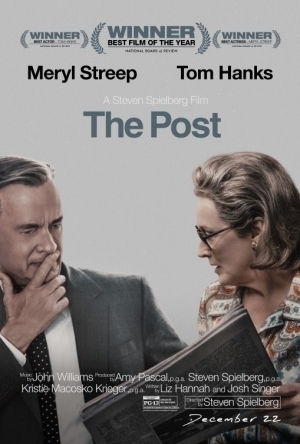
It’s 1971 and the New York Times is in trouble for publishing what became known as “The Pentagon Papers”: a damning account of multiple administration’s dodgy dealings around the Vietnam War, put together by Robert McNamara (Bruce Greenwood, “Star Trek: Into Darkness“) and meant for “posterity” – not for publication! Watching from the sidelines with frustration at their competitor’s scoop are the Washington Post’s editor Ben Bradlee (Tom Hanks, “Bridge of Spies“, “Inferno“) and the new owner Kay Graham (Meryl Streep, “Florence Foster Jenkins“, “Suffragette“). With immaculate timing, Graham is taking the paper public, so needs the newspaper embroiled in any sort of scandal like a hole in the head. But with the US First Amendment under pressure, will Graham and Bradlee put their business and their freedom at risk by publishing and being damned?
Bradlee (Tom Hanks) and Graham (Meryl Streep) in the Washington Post’s newsroom.
Both of the leads play characters that are quite strikingly out of character from their normal roles.
In a seamingly endless run of ‘kick-ass’ women in the movie driving seat, here I expected Streep to be in full “Iron Lady” mode, but in fact she starts the film as quite the opposite: nervous, timid, vascillating. For although the story is about “The Washington Post” and “The Pentagon Papers”, the real story is about Graham herself (Liz Hannah’s script is actually based on Graham’s autobiography). In many ways it’s about a woman, in a male world, overcoming her fear and finding her own voice. As has been demonstrated in many recent films (“Hidden Figures” for example) the working world for woman has changed so markedly since the 60’s and 70’s that it’s almost impossible to relate to these chavenistic attitudes. Graham is repeatedly downtrodden as “not good enough” by her underlings within earshot, and then thanks them “for their frankness”. When the women folk retire at dinner, to let the men-folk talk politics, Graham meekly goes with them. Even her father, for God’s sake, left the newspaper not to her but to her (now late) husband! It’s no surprise then that she is coming from a pretty low base of self-confidence, and her journey in the film – as expertly played by Streep – is an extraordinarily rousing one.
The real deal: Ben Bradlee and Kay Graham.
Hanks, normally the guy you’d most like to invite round for dinner (@tomhanks if you happen to be reading this sir, that’s a genuine invitation… we make a mean lasagne here!) also plays somewhat outside of his normal character here. As Bradlee, he is snappy, brusque and businesslike. Although I don’t think he could ever quite match the irascibility of the character’s portrayal by Jason Robards in the classic “All the President’s Men” – who could? – its a character with real screen presence.
The similarities with Alan J Pakula’s 1976 classic Watergate movie – one of my personal favourites – don’t stop there. The same sets that were once populated by Redford and Hoffman are gloriously reproduced with Spielberg and Janusz Kaminski delivering great tracking shots through the newsroom. (Watch out for Sacha Spielberg – daughter of Stephen and Kate Capshaw – who also turns up there delivering a package).
The scoop revealed: Odenkirk, Hanks and David Cross get the low-down.
The supporting cast includes Sarah Paulson (so memorable in “The Trial of O.J. Simpson”) as Bradlee’s wife Tony, Bradley Whitford (“The West Wing”, “Get Out“) and Tracy Letts (“The Big Short“) as two of Graham’s board advisors and Jesse Plemons (“The Program“, “Bridge of Spies“) as the lead legal advisor. Particularly impressive though is Bob Odenkirk (“Breaking Bad”) as Ben Bagdikian, Bradlee’s lead investigative reporter on the case: all stress, loose change and paranoia in his dealings with the leaky Daniel Ellsberg (Matthew Rhys).
Bagdikian (Bob Odenkirk) ordering a drink for himself and his travelling companion.
In a memorable piece of casting Richard Nixon is played by…. Richard Nixon. Although a silluohetted Curzon Dobell stalks the Oval office, the ex-president’s original phone recordings are played on the soundtrack. (There, I knew those recordings would be useful for something… thank heavens he kept them all!)
The film also demonstrates in fascinating style the newsprint business of yesteryear. When I click a button on my PC and a beautifully laser-printed page streams out of my Epson printer, it still seems like witchcraft to me! But it is extraordinary to think that newspapers in those days were put together by typesetters manually building up the pages from embossed metal letters laboriously slotted into a frame. Brilliantly evocative.
Ellsberg (Matthew Rhys) takes a risk.
If Spielberg has a fault, it is one of sentimentality – something that is pointed out in Susan Lacy’s superb HBO documentary on Spielberg (something I have yet to write a review on, but if you like Spielberg you should definitely seek out). Here he falls into that trap again, with an unnecessary bedroom scene between Graham and her daughter tipping the screenplay into mawkishness. It’s unnecessary since we don’t need the points raised rammed down our throats again. It’s something repeated in a rather bizarre final scene with Graham walking down the steps of the supreme court with admiring woman – only woman – watching her. These irritations tarnish for me what could have been a top-rated film.
But the movie is an impressive watch and older viewers, and anyone interested in American political history will, I think, love it. The film, especially with its nice epilogue, did make me immediately want to come home and put “All the President’s Men” on again… which is never a bad thing. Highly recommended.
Nothing as it turns out. After, for me, the disappointment of “The BFG” here is Spielberg on firm ground and at the height of his game.
It’s 1971 and the New York Times is in trouble for publishing what became known as “The Pentagon Papers”: a damning account of multiple administration’s dodgy dealings around the Vietnam War, put together by Robert McNamara (Bruce Greenwood, “Star Trek: Into Darkness“) and meant for “posterity” – not for publication! Watching from the sidelines with frustration at their competitor’s scoop are the Washington Post’s editor Ben Bradlee (Tom Hanks, “Bridge of Spies“, “Inferno“) and the new owner Kay Graham (Meryl Streep, “Florence Foster Jenkins“, “Suffragette“). With immaculate timing, Graham is taking the paper public, so needs the newspaper embroiled in any sort of scandal like a hole in the head. But with the US First Amendment under pressure, will Graham and Bradlee put their business and their freedom at risk by publishing and being damned?
Bradlee (Tom Hanks) and Graham (Meryl Streep) in the Washington Post’s newsroom.
Both of the leads play characters that are quite strikingly out of character from their normal roles.
In a seamingly endless run of ‘kick-ass’ women in the movie driving seat, here I expected Streep to be in full “Iron Lady” mode, but in fact she starts the film as quite the opposite: nervous, timid, vascillating. For although the story is about “The Washington Post” and “The Pentagon Papers”, the real story is about Graham herself (Liz Hannah’s script is actually based on Graham’s autobiography). In many ways it’s about a woman, in a male world, overcoming her fear and finding her own voice. As has been demonstrated in many recent films (“Hidden Figures” for example) the working world for woman has changed so markedly since the 60’s and 70’s that it’s almost impossible to relate to these chavenistic attitudes. Graham is repeatedly downtrodden as “not good enough” by her underlings within earshot, and then thanks them “for their frankness”. When the women folk retire at dinner, to let the men-folk talk politics, Graham meekly goes with them. Even her father, for God’s sake, left the newspaper not to her but to her (now late) husband! It’s no surprise then that she is coming from a pretty low base of self-confidence, and her journey in the film – as expertly played by Streep – is an extraordinarily rousing one.
The real deal: Ben Bradlee and Kay Graham.
Hanks, normally the guy you’d most like to invite round for dinner (@tomhanks if you happen to be reading this sir, that’s a genuine invitation… we make a mean lasagne here!) also plays somewhat outside of his normal character here. As Bradlee, he is snappy, brusque and businesslike. Although I don’t think he could ever quite match the irascibility of the character’s portrayal by Jason Robards in the classic “All the President’s Men” – who could? – its a character with real screen presence.
The similarities with Alan J Pakula’s 1976 classic Watergate movie – one of my personal favourites – don’t stop there. The same sets that were once populated by Redford and Hoffman are gloriously reproduced with Spielberg and Janusz Kaminski delivering great tracking shots through the newsroom. (Watch out for Sacha Spielberg – daughter of Stephen and Kate Capshaw – who also turns up there delivering a package).
The scoop revealed: Odenkirk, Hanks and David Cross get the low-down.
The supporting cast includes Sarah Paulson (so memorable in “The Trial of O.J. Simpson”) as Bradlee’s wife Tony, Bradley Whitford (“The West Wing”, “Get Out“) and Tracy Letts (“The Big Short“) as two of Graham’s board advisors and Jesse Plemons (“The Program“, “Bridge of Spies“) as the lead legal advisor. Particularly impressive though is Bob Odenkirk (“Breaking Bad”) as Ben Bagdikian, Bradlee’s lead investigative reporter on the case: all stress, loose change and paranoia in his dealings with the leaky Daniel Ellsberg (Matthew Rhys).
Bagdikian (Bob Odenkirk) ordering a drink for himself and his travelling companion.
In a memorable piece of casting Richard Nixon is played by…. Richard Nixon. Although a silluohetted Curzon Dobell stalks the Oval office, the ex-president’s original phone recordings are played on the soundtrack. (There, I knew those recordings would be useful for something… thank heavens he kept them all!)
The film also demonstrates in fascinating style the newsprint business of yesteryear. When I click a button on my PC and a beautifully laser-printed page streams out of my Epson printer, it still seems like witchcraft to me! But it is extraordinary to think that newspapers in those days were put together by typesetters manually building up the pages from embossed metal letters laboriously slotted into a frame. Brilliantly evocative.
Ellsberg (Matthew Rhys) takes a risk.
If Spielberg has a fault, it is one of sentimentality – something that is pointed out in Susan Lacy’s superb HBO documentary on Spielberg (something I have yet to write a review on, but if you like Spielberg you should definitely seek out). Here he falls into that trap again, with an unnecessary bedroom scene between Graham and her daughter tipping the screenplay into mawkishness. It’s unnecessary since we don’t need the points raised rammed down our throats again. It’s something repeated in a rather bizarre final scene with Graham walking down the steps of the supreme court with admiring woman – only woman – watching her. These irritations tarnish for me what could have been a top-rated film.
But the movie is an impressive watch and older viewers, and anyone interested in American political history will, I think, love it. The film, especially with its nice epilogue, did make me immediately want to come home and put “All the President’s Men” on again… which is never a bad thing. Highly recommended.

Gareth von Kallenbach (980 KP) rated The Words (2012) in Movies
Aug 7, 2019
On paper, The Words is a film that is better suited as a literary novella. In print, we, as readers, are often granted insight to our characters thoughts and motivation that is frequently lost on film or delivered in a lackluster voiceover that most critics deem as lazy film making. Furthermore, the story within a story, within a story approach in film often leaves the audience with uninteresting shells of characters and can make a story forgettable at best.
Given these reasons, it is easy to see why many would choose to undertake a less ambitious story for their directorial debut. That group does not include co-writer-directors Brian Klugman and Lee Sternthal. This duo is actually successful at tackling this dangerous story-within-a-story film device by keeping it simple. Focusing on the main characters of each story and their motivation, while tying each together with some common themes like love, what it means to write something great, and how far the need for success will drive the characters.
The movie begins with highly successful author Clay Hammond (Dennis Quaid) conducting a reading of his latest novel The Words. Among his audience is literary grad student and adoring fan, Daniella (Olivia Wilde), who has aspirations of picking the brain of the man that authored her favorite stories and perhaps getting involved romantically. As Hammond begins to read his story we are introduced to the tale of starving writer Rory Jensen (Bradley Cooper) and his wife Dora (Zoe Saldana). The two are a young couple in love, trying to get on their feet while Rory struggles with multiple rejections of his novels, until he is finally forced to come to grips with his own limitations as an artist and a writer.
As he settles into life and a job as a mail clerk at a publishing firm, he finds a lost manuscript in a vintage leather briefcase that Dora had purchased for him during their honeymoon in Paris. That story turns out to be something that moves him to tears. It is the final thing in his realization that he will never be the great writer that he thought he was, the great writer that wrote this anonymous story. In an effort to feel and try to understand what it is like to create something great, Rory decides to retype the novel word for word on his laptop if only to admire the beautiful story that he had instantly fallen in love with. When Dora mistakenly reads the novel, she encourages him to submit it to a publisher. Before he can tell her the truth, his world is transformed into the life he had always imagined he would have for himself and Dora as the novel gains him both great literary and commercial success. And finally, now that his star has risen he can get his own novel published.
Enter Jeremy Irons as the old man who reveals himself to Rory as the true author of his story. The old man feels compelled to explain to Rory the tragic origin of the story that has become the young author’s success. Irons steals every second he is on screen as his delivery of the old man oozes with the intellectual style that has been his trademark over the years. Like Rory, we are helpless to do nothing but listen and get lost in the words of his story as if he was sitting next to us and telling the story in real life.
The old man reveals that the novel is the result of great love and pain that his younger self (Ben Barnes) and the love of his life Celia (Nora Arnezeder) endured. While I am not familiar with Barnes’ and Arnezeder’s work, their performance as the younger couple in Irons’ story had a genuine connection. And while this love story does not seem to be anything new when it comes to film, it served its purpose by strengthening the other stories, showing how a great story can be mused from someplace unexpected, even if only once.
With Rory now confronted with his deceitful success, he struggles to decide how to make things right and live with himself as a fraud. It’s at this point the film subtly suggest that Hammond’s story of Rory may actually be a disguised autobiography.
As Rory, Bradley Cooper gives perhaps his best performance to date. I feel that despite his poor and deceitful decision, at no point does he lose the audience. With the help of a strong and emotionally charged performance by Zoe Saldana, we experience Cooper’s honest plight and can understand the events that unfold around him. He is effective as a man who genuinely believes he does not deserve the success that he stole. Without a doubt, this will be a surprising role for those fans who only know Cooper from the humorous characters he plays in The Hangover and most recently Hit and Run. I hope this is the beginning of growth in his craft beyond the charming, confident character we have seen in Limitless and perhaps into a deeper emotional actor.
The weakest part of this film is the story of Clay Hammond and Daniella. Dennis Quaid is quite unlikable as Hammond. He is monotone in his readings and the prose of his story is mediocre at best. While the film drops hints that Hammond’s story of Rory is autobiographical it makes sense that Quaid’s character is played this way. He succeeds in helping create the notion that Hammond is unworthy of the success his character has enjoyed. But something about his performance is so unlikable that even when his character has a redeeming moment, it is lost on an audience that may not care enough about him for it to work.
To add to this dislike of Quaid, Olivia Wilde seems out of place as the character Daniella. It is not that her performance is bad, it is just that every time they showed her as the starry-eyed fan who is love struck for Hammond, she just seemed out of place. Additionally there did not seem to be any connection between Daniella and Hammond in the way the other characters’ connections helped strengthen their performances.
In the end, I enjoyed this movie more than I expected. Visually the Montreal backdrop does an excellent job as both New York and Paris. And the continual piano score helps blend the stories. The simple focus on the main characters helped maintain the three different stories and keep the overall pacing of the movie in order. In addition, the solid to exceptional performances also helped to keep the film focused and avoided the empty shell of characters that most movies of this nature create. That being said, this movie is not for everyone, but those looking for a change of pace from the summer blockbusters season should consider this film.
Given these reasons, it is easy to see why many would choose to undertake a less ambitious story for their directorial debut. That group does not include co-writer-directors Brian Klugman and Lee Sternthal. This duo is actually successful at tackling this dangerous story-within-a-story film device by keeping it simple. Focusing on the main characters of each story and their motivation, while tying each together with some common themes like love, what it means to write something great, and how far the need for success will drive the characters.
The movie begins with highly successful author Clay Hammond (Dennis Quaid) conducting a reading of his latest novel The Words. Among his audience is literary grad student and adoring fan, Daniella (Olivia Wilde), who has aspirations of picking the brain of the man that authored her favorite stories and perhaps getting involved romantically. As Hammond begins to read his story we are introduced to the tale of starving writer Rory Jensen (Bradley Cooper) and his wife Dora (Zoe Saldana). The two are a young couple in love, trying to get on their feet while Rory struggles with multiple rejections of his novels, until he is finally forced to come to grips with his own limitations as an artist and a writer.
As he settles into life and a job as a mail clerk at a publishing firm, he finds a lost manuscript in a vintage leather briefcase that Dora had purchased for him during their honeymoon in Paris. That story turns out to be something that moves him to tears. It is the final thing in his realization that he will never be the great writer that he thought he was, the great writer that wrote this anonymous story. In an effort to feel and try to understand what it is like to create something great, Rory decides to retype the novel word for word on his laptop if only to admire the beautiful story that he had instantly fallen in love with. When Dora mistakenly reads the novel, she encourages him to submit it to a publisher. Before he can tell her the truth, his world is transformed into the life he had always imagined he would have for himself and Dora as the novel gains him both great literary and commercial success. And finally, now that his star has risen he can get his own novel published.
Enter Jeremy Irons as the old man who reveals himself to Rory as the true author of his story. The old man feels compelled to explain to Rory the tragic origin of the story that has become the young author’s success. Irons steals every second he is on screen as his delivery of the old man oozes with the intellectual style that has been his trademark over the years. Like Rory, we are helpless to do nothing but listen and get lost in the words of his story as if he was sitting next to us and telling the story in real life.
The old man reveals that the novel is the result of great love and pain that his younger self (Ben Barnes) and the love of his life Celia (Nora Arnezeder) endured. While I am not familiar with Barnes’ and Arnezeder’s work, their performance as the younger couple in Irons’ story had a genuine connection. And while this love story does not seem to be anything new when it comes to film, it served its purpose by strengthening the other stories, showing how a great story can be mused from someplace unexpected, even if only once.
With Rory now confronted with his deceitful success, he struggles to decide how to make things right and live with himself as a fraud. It’s at this point the film subtly suggest that Hammond’s story of Rory may actually be a disguised autobiography.
As Rory, Bradley Cooper gives perhaps his best performance to date. I feel that despite his poor and deceitful decision, at no point does he lose the audience. With the help of a strong and emotionally charged performance by Zoe Saldana, we experience Cooper’s honest plight and can understand the events that unfold around him. He is effective as a man who genuinely believes he does not deserve the success that he stole. Without a doubt, this will be a surprising role for those fans who only know Cooper from the humorous characters he plays in The Hangover and most recently Hit and Run. I hope this is the beginning of growth in his craft beyond the charming, confident character we have seen in Limitless and perhaps into a deeper emotional actor.
The weakest part of this film is the story of Clay Hammond and Daniella. Dennis Quaid is quite unlikable as Hammond. He is monotone in his readings and the prose of his story is mediocre at best. While the film drops hints that Hammond’s story of Rory is autobiographical it makes sense that Quaid’s character is played this way. He succeeds in helping create the notion that Hammond is unworthy of the success his character has enjoyed. But something about his performance is so unlikable that even when his character has a redeeming moment, it is lost on an audience that may not care enough about him for it to work.
To add to this dislike of Quaid, Olivia Wilde seems out of place as the character Daniella. It is not that her performance is bad, it is just that every time they showed her as the starry-eyed fan who is love struck for Hammond, she just seemed out of place. Additionally there did not seem to be any connection between Daniella and Hammond in the way the other characters’ connections helped strengthen their performances.
In the end, I enjoyed this movie more than I expected. Visually the Montreal backdrop does an excellent job as both New York and Paris. And the continual piano score helps blend the stories. The simple focus on the main characters helped maintain the three different stories and keep the overall pacing of the movie in order. In addition, the solid to exceptional performances also helped to keep the film focused and avoided the empty shell of characters that most movies of this nature create. That being said, this movie is not for everyone, but those looking for a change of pace from the summer blockbusters season should consider this film.