
Search

Movie Metropolis (309 KP) rated Pompeii (2014) in Movies
Jun 11, 2019
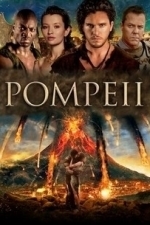

The disaster movie has always been a genre guaranteed to create incredible box-office returns. If you look at Roland Emmerich’s impressive blockbuster hit 2012, which grossed over $750million, it is clear that destroying well-known landmarks = bums on seats.
However since 2012‘s 2009 release the genre has fallen into a dormant state. Nevertheless, four years later Paul W.S. Anderson attempts to reawaken this box-office behemoth with his take on the tragic true events at Pompeii, but does the film succeed in its task?
Partially is the short answer. Anderson’s first film since 2012’s disaster Resident Evil: Retribution is as cheesy as a Dairylea triangle, but it also has some stunning special effects to give it some life.
Game of Thrones’ Kit Harington stars as Milo, a slave captured by the Romans after they wiped out his entire family. He is taken to a gloriously recreated Pompeii and immediately sets his sights on the very beautiful Lady Cassia, played by a rather dull Emily Browning, who just so happens to be the daughter of the city ruler, Severus. I’m sure you can guess the plot…
What ensues is a cheesy mess of terrible acting and stilted dialogue that jars with the period nature of the film. Only the knowing of what is to come from Mt Vesuvius, which is beautifully rendered in CGI, stops the film from grinding to a halt.
Kiefer Sutherland dons a downright ridiculous English accent for the role of Senator Corvus, the chief antagonist in the film. He is on business in Pompeii to see if trade can be established and investment can be agreed with the great city of Rome – though this plot point gets lost along the way.
Another issue is the true story which Pompeii is based on. The great tale of tragedy and mother nature showing her ruthless side is one we all know – but all we really want to see is the mountain going boom. Unfortunately we must wait whilst Anderson tries his best to make us care about the characters with their sickly back-stories, for which he fails in breathtaking fashion.
Finally after nearly an hour of what feels like a poor-mans Gladiator we are treat to a stunning spectacle, as Mt Vesuvius explodes in rip-roaring style. As the mountain blows and the fireballs rage Anderson once again tries to get us interested in the paper-thin story, thankfully not pushing too hard this time, and he lets the special effects take over.
Historical accuracy is, surprisingly, very good. According to the director, Pompeii was faithfully recreated for the film with aerial shots of the city as it stands today topped up with CGI to show the thriving metropolis we see in the film.
Unfortunately, scientific accuracy takes a back-seat for the sake of high drama, which is the case with many films of this nature. The iconic pyroclastic flow, attributed to killing the majority of Pompeii’s inhabitants due to its huge speed and massive temperatures is slowed right down to ensure the film can last another ten minutes or so – though this is perhaps to be expected.
Overall, Paul W.S. Anderson has created a film which certainly looks the part, but is lacking in so many other areas. Kiefer Sutherland’s villain is completely upstaged by the constant shots of the volcano, which are almost pantomime like in their ‘it’s behind you’ staging, and the rest of the cast are wooden and not particularly likeable.
However, what it lacks in story and acting finesse it makes up in the beautiful special effects and engaging cinematography. It’s worth a watch just to see Pompeii get obliterated – which is probably not a very nice thing to say at all.
https://moviemetropolis.net/2014/05/03/pompeii-3d-review/
However since 2012‘s 2009 release the genre has fallen into a dormant state. Nevertheless, four years later Paul W.S. Anderson attempts to reawaken this box-office behemoth with his take on the tragic true events at Pompeii, but does the film succeed in its task?
Partially is the short answer. Anderson’s first film since 2012’s disaster Resident Evil: Retribution is as cheesy as a Dairylea triangle, but it also has some stunning special effects to give it some life.
Game of Thrones’ Kit Harington stars as Milo, a slave captured by the Romans after they wiped out his entire family. He is taken to a gloriously recreated Pompeii and immediately sets his sights on the very beautiful Lady Cassia, played by a rather dull Emily Browning, who just so happens to be the daughter of the city ruler, Severus. I’m sure you can guess the plot…
What ensues is a cheesy mess of terrible acting and stilted dialogue that jars with the period nature of the film. Only the knowing of what is to come from Mt Vesuvius, which is beautifully rendered in CGI, stops the film from grinding to a halt.
Kiefer Sutherland dons a downright ridiculous English accent for the role of Senator Corvus, the chief antagonist in the film. He is on business in Pompeii to see if trade can be established and investment can be agreed with the great city of Rome – though this plot point gets lost along the way.
Another issue is the true story which Pompeii is based on. The great tale of tragedy and mother nature showing her ruthless side is one we all know – but all we really want to see is the mountain going boom. Unfortunately we must wait whilst Anderson tries his best to make us care about the characters with their sickly back-stories, for which he fails in breathtaking fashion.
Finally after nearly an hour of what feels like a poor-mans Gladiator we are treat to a stunning spectacle, as Mt Vesuvius explodes in rip-roaring style. As the mountain blows and the fireballs rage Anderson once again tries to get us interested in the paper-thin story, thankfully not pushing too hard this time, and he lets the special effects take over.
Historical accuracy is, surprisingly, very good. According to the director, Pompeii was faithfully recreated for the film with aerial shots of the city as it stands today topped up with CGI to show the thriving metropolis we see in the film.
Unfortunately, scientific accuracy takes a back-seat for the sake of high drama, which is the case with many films of this nature. The iconic pyroclastic flow, attributed to killing the majority of Pompeii’s inhabitants due to its huge speed and massive temperatures is slowed right down to ensure the film can last another ten minutes or so – though this is perhaps to be expected.
Overall, Paul W.S. Anderson has created a film which certainly looks the part, but is lacking in so many other areas. Kiefer Sutherland’s villain is completely upstaged by the constant shots of the volcano, which are almost pantomime like in their ‘it’s behind you’ staging, and the rest of the cast are wooden and not particularly likeable.
However, what it lacks in story and acting finesse it makes up in the beautiful special effects and engaging cinematography. It’s worth a watch just to see Pompeii get obliterated – which is probably not a very nice thing to say at all.
https://moviemetropolis.net/2014/05/03/pompeii-3d-review/
The Miner (2017)
5.0 Rate It
Movie Watch
2009, Slovenia, European Union. For 30 years, Alija, the miner, has been one of the many Bosnian...
international drama history biography

Cynthia Armistead (17 KP) rated A Free Man of Color (Benjamin January, #1) in Books
Mar 1, 2018


Historical fiction isn't my favorite genre, but I'm much more willing to read it when it's mixed with mystery. I've read some of Hambly's work before and know her to be a fine writer, and I'd read good reviews of this series by people I respect, so I decided to give it a whirl.
I suppose all the descriptions of people's clothing would have mattered much more to someone who cared about such things, but I do realize that they were important in the context of the story. Personally, I was relieved when the main character went on a journey! I would have been happier had his medical skills been utilized more frequently than they were, but I suppose his experiences were fairly true to life for a "colored" man of his time.
I did learn quite a lot—things that I intend to verify in non-fiction sources shortly. The information about the black code, for instance, and the explanation of the distinction between "black" and "colored" people seemed too precise to be fabricated.
I knew, too, that Louisiana is the only U.S. state whose laws are based on French rather than English common law, which seemed silly to me. Why wouldn't they go with the standard everyone else used? After reading this novel, I'm starting to realize that there may have been rights given to citizens under French law that were lost under English law.
I'm not sure as to whether or not I'll go forward in the series, as I'm not sure that I can handle the unhappiness I can see foreshadowed even in some of the titles. However, I will say that this volume is well-written and well-plotted. I certainly didn't guess who the killer was or why the murder was committed before the big reveal, and that was a pleasant change!
I suppose all the descriptions of people's clothing would have mattered much more to someone who cared about such things, but I do realize that they were important in the context of the story. Personally, I was relieved when the main character went on a journey! I would have been happier had his medical skills been utilized more frequently than they were, but I suppose his experiences were fairly true to life for a "colored" man of his time.
I did learn quite a lot—things that I intend to verify in non-fiction sources shortly. The information about the black code, for instance, and the explanation of the distinction between "black" and "colored" people seemed too precise to be fabricated.
I knew, too, that Louisiana is the only U.S. state whose laws are based on French rather than English common law, which seemed silly to me. Why wouldn't they go with the standard everyone else used? After reading this novel, I'm starting to realize that there may have been rights given to citizens under French law that were lost under English law.
I'm not sure as to whether or not I'll go forward in the series, as I'm not sure that I can handle the unhappiness I can see foreshadowed even in some of the titles. However, I will say that this volume is well-written and well-plotted. I certainly didn't guess who the killer was or why the murder was committed before the big reveal, and that was a pleasant change!

Trumpet Blues: The Life of Harry James
Book
Swing is back in style, and with it a renewed interest in the Big Band Era. And few players...

Veronica Pena (690 KP) rated Inherit the Wind (1960) in Movies
Feb 1, 2020


I found this movie incredibly interesting. Not only is it based on a true story, I think it's a film that transcends time because of its themes. All of the issues discussed in this movie are ones that we still talk about today. We see all the time arguments for more religion in schools or less, and religion itself is argued and where its place is in our lives. I think this movie does a beautiful job of pushing those boundaries and causing you to question why it is we believe what we do and why we're so set on others believing it too.
As far as the cast and the acting, I think it's phenomenal. Obviously, with powerhouses like Gene Kelly, Spencer Tracy, and Fredric March, their performances are incredible. I find the women in the film to be less believable but I think it's more the time and the way women acted in the '60s and less to do with the women themselves. The overdramatic, falling after their husband or fiancé, in one case, is just played out - but that also might just be me speaking from my own experience.
Overall, I think this movie is great. It holds up 60 years after its initial release and I'm sure it will hold up for another 60 years. I think it pushes positive conversations and forces you to think outside of your own experiences and your own life and in general, I think that's what art (in any form) should do. Would definitely recommend this film.
As far as the cast and the acting, I think it's phenomenal. Obviously, with powerhouses like Gene Kelly, Spencer Tracy, and Fredric March, their performances are incredible. I find the women in the film to be less believable but I think it's more the time and the way women acted in the '60s and less to do with the women themselves. The overdramatic, falling after their husband or fiancé, in one case, is just played out - but that also might just be me speaking from my own experience.
Overall, I think this movie is great. It holds up 60 years after its initial release and I'm sure it will hold up for another 60 years. I think it pushes positive conversations and forces you to think outside of your own experiences and your own life and in general, I think that's what art (in any form) should do. Would definitely recommend this film.

Bob Mann (459 KP) rated The Light Between Oceans (2016) in Movies
Sep 29, 2021
“You only have to forgive once. To resent, you have to do it all day, every day”.
In my review of “The Two Faces of January” I described it as a film that “will be particularly enjoyed by older viewers who remember when story and location were put far ahead of CGI-based special effects”. In watching this film I was again linking in my mind to that earlier film… and that was before the lead character suddenly brought up the two faces of Janus!
For this is a good old-fashioned weepy melodrama: leisurely, character based and guaranteed to give the tear ducts a good old cleaning out.
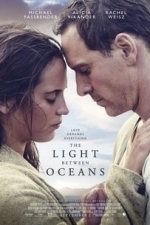
It’s 1918 and Michael Fassbender plays Tom Sherbourne, a damaged man seeking solitude and reflection after four years of hell in the trenches. As a short-term job he takes the post of lighthouse keeper on the isolated slab of rock called Janus – sat between two oceans (presumably as this is Western Australia, the Indian and the Southern Oceans). The isolation of the job previously sent his predecessor off his trolley.
En route to his workplace he is immediately attracted to headmaster’s daughter Isabel (Alicia Vikander) who practically THROWS herself at Tom (the hussy), given that they only have snatches of a day at a time to be together during shore leave. Tom falls for her (as a hot blooded man, and with Vikander’s performance, this is entirely believable!) and the two marry to retire to their ‘fortress of solitude’ together to raise a family and live happily ever after…. or not… For the path of true motherhood runs not smoothly for poor Isabel, and a baby in a drifting boat spells both joy and despair for the couple as the story unwinds.
(I’ll stop my synopsis there, since I think the trailer – and other reviews I’ve read – give too much away).
While Fassbender again demonstrates what a mesmerising actor he is, the acting kudos in this one really goes again to Vikander, who pulls out all the stops in a role that demands fragility, naivety, resentment, anger and despair across its course. While I don’t think the film in general will trouble the Oscars, this is a leading actress performance that I could well see nominated. In a supporting role, with less screen-time, is Rachel Weisz who again needs to demonstrate her acting stripes in a demanding role. (Also a shout-out to young Florence Clery who is wonderfully naturalistic as the 4 year old Lucy-Grace.)
So this is a film with a stellar class, but it doesn’t really all gel together satisfyingly into a stellar – or at least particularly memorable – movie. After a slow start, director Derek Cianfrance (“The Place Beyond the Pines”) ladles on the melodrama interminably, and over a two hour running time the word overwrought comes to mind.
The script (also by Cianfrance, from the novel by M.L.Stedman) could have been tightened up, particularly in the first reel, and the audience given a bit more time to reflect and absorb in the second half.
The film is also curiously ‘place-less’. I assumed this was somewhere off Ireland until someone suddenly starting singing “Waltzing Matilda” (badly) and random people started talking in Aussie accents: most strange.
Cinematography by Adam Arkapaw (“Macbeth”) is also frustratingly inconsistent. The landscapes of the island, steam trains, sunsets and the multiple boatings in between is just beautiful (assisted by a delicate score by the great Alexandre Desplat which is well used) but get close up (and the camera does often get VERY close up) and a lack of ‘steadicam’ becomes infuriating, with faces dancing about the screen and – in one particular scene early on – wandering off on either side with the camera apparently unsure which one to follow!
A memorable cinema experience only for Vikander’s outstanding performance. Now where are those tissues…
For this is a good old-fashioned weepy melodrama: leisurely, character based and guaranteed to give the tear ducts a good old cleaning out.
It’s 1918 and Michael Fassbender plays Tom Sherbourne, a damaged man seeking solitude and reflection after four years of hell in the trenches. As a short-term job he takes the post of lighthouse keeper on the isolated slab of rock called Janus – sat between two oceans (presumably as this is Western Australia, the Indian and the Southern Oceans). The isolation of the job previously sent his predecessor off his trolley.
En route to his workplace he is immediately attracted to headmaster’s daughter Isabel (Alicia Vikander) who practically THROWS herself at Tom (the hussy), given that they only have snatches of a day at a time to be together during shore leave. Tom falls for her (as a hot blooded man, and with Vikander’s performance, this is entirely believable!) and the two marry to retire to their ‘fortress of solitude’ together to raise a family and live happily ever after…. or not… For the path of true motherhood runs not smoothly for poor Isabel, and a baby in a drifting boat spells both joy and despair for the couple as the story unwinds.
(I’ll stop my synopsis there, since I think the trailer – and other reviews I’ve read – give too much away).
While Fassbender again demonstrates what a mesmerising actor he is, the acting kudos in this one really goes again to Vikander, who pulls out all the stops in a role that demands fragility, naivety, resentment, anger and despair across its course. While I don’t think the film in general will trouble the Oscars, this is a leading actress performance that I could well see nominated. In a supporting role, with less screen-time, is Rachel Weisz who again needs to demonstrate her acting stripes in a demanding role. (Also a shout-out to young Florence Clery who is wonderfully naturalistic as the 4 year old Lucy-Grace.)
So this is a film with a stellar class, but it doesn’t really all gel together satisfyingly into a stellar – or at least particularly memorable – movie. After a slow start, director Derek Cianfrance (“The Place Beyond the Pines”) ladles on the melodrama interminably, and over a two hour running time the word overwrought comes to mind.
The script (also by Cianfrance, from the novel by M.L.Stedman) could have been tightened up, particularly in the first reel, and the audience given a bit more time to reflect and absorb in the second half.
The film is also curiously ‘place-less’. I assumed this was somewhere off Ireland until someone suddenly starting singing “Waltzing Matilda” (badly) and random people started talking in Aussie accents: most strange.
Cinematography by Adam Arkapaw (“Macbeth”) is also frustratingly inconsistent. The landscapes of the island, steam trains, sunsets and the multiple boatings in between is just beautiful (assisted by a delicate score by the great Alexandre Desplat which is well used) but get close up (and the camera does often get VERY close up) and a lack of ‘steadicam’ becomes infuriating, with faces dancing about the screen and – in one particular scene early on – wandering off on either side with the camera apparently unsure which one to follow!
A memorable cinema experience only for Vikander’s outstanding performance. Now where are those tissues…

Chris Sawin (602 KP) rated 127 Hours (2010) in Movies
Jun 23, 2019
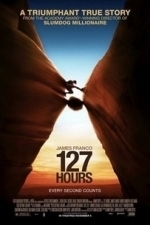
127 Hours is based on the true story of Aron Ralston, a mountain climber who was trapped under a rock for five days only to amputate his own arm to survive. Directed by Danny Boyle (Slumdog Millionaire, 28 Days Later) and starring James Franco (Pineapple Express, Spider-Man), 127 Hours sucker punches you with its ability to be both absorbing and compelling.
The first thing to notice about 127 Hours is that it contains excellent editing. The opening credits illustrate this to a certain extent, but the best example comes at the peak of Aron's struggle once he's trapped and fighting for his life. His delusions begin overlapping with his memories as the screen is divided into three separate vertical segments representing how desperate and how dangerously close Aron has come to the brink of insanity.
127 Hours looks spectacular, as well. The desert is a mostly dry and bleak place that no one would want to visit, but it's shown in a light here that makes it makes it look both appealing and beautiful in a way that almost makes you forget that it lacks civilization. The film does an incredible job of making you feel like you're right there in these crevices with Aron without giving the overbearing sensation of claustrophobia. Captivating cinematography makes even the most simple things like a dripping faucet and air bubbles settling in a water bottle appear like more of a spectacle than they really are.
James Franco is also quite impressive. He is the only one on-screen for the majority of the film and has no one to play off of but himself. Events of his life flashing before his eyes and the decisions he should've but didn't make, Scooby Doo hallucinations, and premonitions of the future on top of his uphill battle to survive aren't only incredibly engaging but arguably some of the best scenes in the film.
127 Hours is enthralling, incredibly powerful, and easily one of the best films of the year. James Franco delivers what is quite possibly his strongest and most intriguing performance to date while Danny Boyle adds another visually brilliant and superbly written film to his repertoire that is a potential award winner.
The first thing to notice about 127 Hours is that it contains excellent editing. The opening credits illustrate this to a certain extent, but the best example comes at the peak of Aron's struggle once he's trapped and fighting for his life. His delusions begin overlapping with his memories as the screen is divided into three separate vertical segments representing how desperate and how dangerously close Aron has come to the brink of insanity.
127 Hours looks spectacular, as well. The desert is a mostly dry and bleak place that no one would want to visit, but it's shown in a light here that makes it makes it look both appealing and beautiful in a way that almost makes you forget that it lacks civilization. The film does an incredible job of making you feel like you're right there in these crevices with Aron without giving the overbearing sensation of claustrophobia. Captivating cinematography makes even the most simple things like a dripping faucet and air bubbles settling in a water bottle appear like more of a spectacle than they really are.
James Franco is also quite impressive. He is the only one on-screen for the majority of the film and has no one to play off of but himself. Events of his life flashing before his eyes and the decisions he should've but didn't make, Scooby Doo hallucinations, and premonitions of the future on top of his uphill battle to survive aren't only incredibly engaging but arguably some of the best scenes in the film.
127 Hours is enthralling, incredibly powerful, and easily one of the best films of the year. James Franco delivers what is quite possibly his strongest and most intriguing performance to date while Danny Boyle adds another visually brilliant and superbly written film to his repertoire that is a potential award winner.

BookwormMama14 (18 KP) rated The Painter's Daughter in Books
Jan 2, 2019
When Sophie is betrayed by the man she loves, she is forced to choose between living a respectable life and living for love. Will she be able to find love and acceptance on the path she has chosen?
Sophie Dupont is not only the daughter of a painter, but an accomplished artist herself. Although, she does not see the value in her work. When Wesley Overtree sweeps in and captures Sophie's love, she is sure he will marry her. But when he leaves her in a dire predicament, she has no one to turn to. Captain Stephen Overtree has become accustomed to picking up the pieces after his brother, but will he be able to rescue Sophie? With Wesley gone, and no promise of return or marriage, Sophie accepts Captain Overtree's proposal of marriage, in name only. Although her heart longs for his brother, she is grateful for the opportunity to save her reputation and give her child a fresh start in life. Will a marriage that is based on convenience ever have a chance at true love? Or will fate intervene and prevent the chance for love to bloom at all?
I have to be completely honest, it took me quite awhile to get into this book. All of the other books that I have read by Julie Klassen have sucked me right in and I devoured them like candy. But once I got about half way through The Painter's Daughter I was really beginning to enjoy it! There is a lot (and I mean A LOT) of tension throughout the story. Sophie being married to one Overtree, but in love with another for example. I found myself holding my breath through more than one scene. There are many supporting characters that I found to be quite entertaining and endearing. The message of sin, repentance and redemption is very clear within the pages of this book. It is a good reminder to live life to the fullest, but to be careful of the path we choose. We will have to live with the consequences, whatever the choices we choose. Overall this was a very good book, not my favorite by Julie Klassen (that would be The Secret of Pembrooke Park), but still an excellent story.
I received a free digital copy of The Painter's Daughter from Bethany House Publishers through NetGalley in exchange for my honest review.
Sophie Dupont is not only the daughter of a painter, but an accomplished artist herself. Although, she does not see the value in her work. When Wesley Overtree sweeps in and captures Sophie's love, she is sure he will marry her. But when he leaves her in a dire predicament, she has no one to turn to. Captain Stephen Overtree has become accustomed to picking up the pieces after his brother, but will he be able to rescue Sophie? With Wesley gone, and no promise of return or marriage, Sophie accepts Captain Overtree's proposal of marriage, in name only. Although her heart longs for his brother, she is grateful for the opportunity to save her reputation and give her child a fresh start in life. Will a marriage that is based on convenience ever have a chance at true love? Or will fate intervene and prevent the chance for love to bloom at all?
I have to be completely honest, it took me quite awhile to get into this book. All of the other books that I have read by Julie Klassen have sucked me right in and I devoured them like candy. But once I got about half way through The Painter's Daughter I was really beginning to enjoy it! There is a lot (and I mean A LOT) of tension throughout the story. Sophie being married to one Overtree, but in love with another for example. I found myself holding my breath through more than one scene. There are many supporting characters that I found to be quite entertaining and endearing. The message of sin, repentance and redemption is very clear within the pages of this book. It is a good reminder to live life to the fullest, but to be careful of the path we choose. We will have to live with the consequences, whatever the choices we choose. Overall this was a very good book, not my favorite by Julie Klassen (that would be The Secret of Pembrooke Park), but still an excellent story.
I received a free digital copy of The Painter's Daughter from Bethany House Publishers through NetGalley in exchange for my honest review.

Gareth von Kallenbach (980 KP) rated Thor (2011) in Movies
Aug 7, 2019
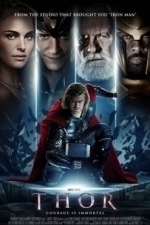

The latest Marvel comic based film has arrived and continues a trend of top-notch cinematic adaptations of Marvel characters. THOR stars Chris Hemsworth as the brash and bold Asgard warrior who is next in line for the kingdoms throne. His father Odin (Anthony Hopkins), has ruled the kingdom for many years and as such has been responsible for maintaining the peace for Asgard and all the other known realms. After being surprised by an incursion by an ancient enemy previously defeated by Odin, the God of Thunder leads a group of warriors on a mission of retribution against his father’s orders which soon has the Asgard people facing the spectre of war.
Instead of his planned coronation, Thor finds himself cast out of Asgard and forced to live as a mortal on Earth. Truly a fish out of water, the brash and arrogant Thor is befriended by scientist Jane Watson (Natalie Portman), the first person Thor encounters upon his arrival. Unsure of his true identity, Jane and her colleagues are drawn to the mysterious stranger despite his tales which, to the humans, are the stuff of ancient Norse legends.
While initially dismissed as a drifter, Thor soon gains the respect of Jane and her colleagues when he stands up to a mysterious government organization that has seized her work. Thor soon finds himself battling enemies on multiple fronts on both his present and former home where he must battle to regain his lost honor and status and prove himself the rightful leader of his people. What follows is a highly entertaining mix of action, comedy, and a touch of romance that sets the film apart from many of its peers.
Director Kenneth Branagh fleshes out the characters from their two-dimensional origins and paces the film well never allowing the elaborate effects or action sequences of the film to overshadow the characters or the story. J. Michael Straczynski used many of the lessons he learned as the creator of the Babylon 5 and in his recent work with Marvel comics to provide a character-driven story that is true to the source material while providing interweaving storylines and ever-changing characters.
The supporting cast was strong, especially Tom Hiddleston as Thor’s younger sibling Loki. The visuals of the film match the action perfectly as Asgard and some of the other realms are truly breathtaking. The only issue I had with the film was that, sadly, Paramount felt the need to use a post filming 3-D conversion on the film which in my opinion offered very little to the finished product. Had the film been shot with 3-D cameras it truly would’ve taken it to the next level but as it was actually done, the 3D conversion offers little to the visual experience.
Hemsworth commands the screen in every scene in which he appears. He is a charismatic presence that deftly walks the line between brash warrior and leader seeking redemption, who never lets his performance become cartoony or forced. I absolutely loved every part the film from beginning to end and in my opinion Thor has set the bar very high for the next series of comic book themed movies to aspire to and is not to be missed.
Instead of his planned coronation, Thor finds himself cast out of Asgard and forced to live as a mortal on Earth. Truly a fish out of water, the brash and arrogant Thor is befriended by scientist Jane Watson (Natalie Portman), the first person Thor encounters upon his arrival. Unsure of his true identity, Jane and her colleagues are drawn to the mysterious stranger despite his tales which, to the humans, are the stuff of ancient Norse legends.
While initially dismissed as a drifter, Thor soon gains the respect of Jane and her colleagues when he stands up to a mysterious government organization that has seized her work. Thor soon finds himself battling enemies on multiple fronts on both his present and former home where he must battle to regain his lost honor and status and prove himself the rightful leader of his people. What follows is a highly entertaining mix of action, comedy, and a touch of romance that sets the film apart from many of its peers.
Director Kenneth Branagh fleshes out the characters from their two-dimensional origins and paces the film well never allowing the elaborate effects or action sequences of the film to overshadow the characters or the story. J. Michael Straczynski used many of the lessons he learned as the creator of the Babylon 5 and in his recent work with Marvel comics to provide a character-driven story that is true to the source material while providing interweaving storylines and ever-changing characters.
The supporting cast was strong, especially Tom Hiddleston as Thor’s younger sibling Loki. The visuals of the film match the action perfectly as Asgard and some of the other realms are truly breathtaking. The only issue I had with the film was that, sadly, Paramount felt the need to use a post filming 3-D conversion on the film which in my opinion offered very little to the finished product. Had the film been shot with 3-D cameras it truly would’ve taken it to the next level but as it was actually done, the 3D conversion offers little to the visual experience.
Hemsworth commands the screen in every scene in which he appears. He is a charismatic presence that deftly walks the line between brash warrior and leader seeking redemption, who never lets his performance become cartoony or forced. I absolutely loved every part the film from beginning to end and in my opinion Thor has set the bar very high for the next series of comic book themed movies to aspire to and is not to be missed.

La Biblia Reina Valera (Spanish Bible)HD
Education and Book
App
La Biblia Reina Valera (Spanish Bible)for iPad contains full text of the most popular version of...