
Elementary Probability with Applications
Book
Elementary Probability with Applications, Second Edition shows students how probability has...
Two-Dimensional Information Theory and Coding: With Applications to Graphics Data and High-Density Storage Media
Jorn Justesen and Soren Forchhammer
Book
This complete introduction to two-dimensional (2-D) information theory and coding provides the key...

Sport and Health
Daniel Parnell and Peter Krustrup
Book
It is a common assumption that sport is good for us and that participation in sport embodies public...

Kristy H (1252 KP) rated Where the Crawdads Sing in Books
Aug 12, 2021
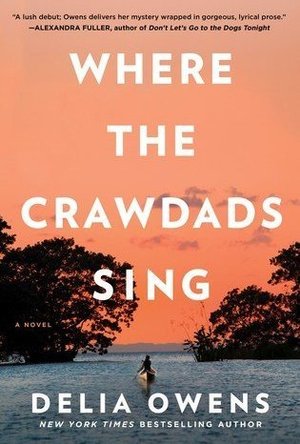

I'm not sure there's much I can add to the many reviews of this popular book. I read it as part of my new reading project--choosing books off my shelves based on their Goodreads rankings. This is my third book of the project, forcing me out of my comfort zone and to try books in genres I don't usually read! I'm glad I finally read it-- it's a very mesmerizing tale, and Kya's improbable life on the marsh quickly drew me in.
This is part a character-driven and coming of age story combined with a mystery and courtroom drama. It covers a lot of Kya's life, but focuses on her growing up in the marsh. There's a lot that seems hard to believe--especially that no one does anything to help this parent-less child, growing up alone in the marsh. The book covers a lot of heady topics, including racism, sexual assault, and more. Its description of nature and the marsh are beautiful. At the heart of the story is Kya, and it's impossible not to root for our heroine. She's tough and smart, and the way she loves her marsh is simply beautiful.
Overall, rating on pure enjoyment, I really liked this book. If I don't delve too deep into pondering about the inner workings of the plot, this was a great read--mesmerizing, haunting, and lovely. 4+ stars.
A Quick Guide to Writing Business Stories: Crafting Basic Business Stories
Book
Business journalism is of critical importance to society, though it may appear to some that it...

China Online: Netspeak and Wordplay Used by Over 700 Million Chinese Internet Users
Michel Veronique and Claude Muller
Book
Dive into China's new web-based subculture of tech-savy, subversive netizens with China Online!...
Objects as Actors: Props and the Poetics of Performance in Greek Tragedy
Book
Objects as Actors charts a new approach to Greek tragedy based on an obvious, yet often overlooked,...
Night School: Wake up to the power of sleep
Book
Almost a third of your whole life is spent asleep. Night School uncovers the scientific truth about...

David McK (3877 KP) rated Bird Box (2018) in Movies
Aug 23, 2020 (Updated Jan 17, 2023)
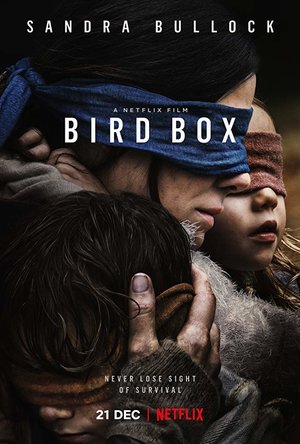


Starring Sandra Bullock, this was sold on the (strong) imagery of a blindfolded woman leading two equally blindfolded children through a river journey - the film, later, makes it clear that this is because a mysterious entity has decimated the population, driving whoever sees it (we don't) mad and causing them to commit suicide.
The film is actually told in both the 'now' of the journey and '5 year previously' (when this first started happening), with Sandra Bullock's character of Malorie heavily pregnant and trapped in a house with other survivors - we know, of course (they're not in the 'now'!) that they're all going to be bumped off one by one, but the suspense is in the how and when.
The ending also, apparently, is a lot less dark that the book on which it is based, and I still have little idea why the film is even called Bird Box!
Phil Leader (619 KP) rated On the Steel Breeze in Books
Nov 21, 2019

Taking up the story several years after Blue Remembered Earth the main (human) protagonist is Chiku Akinya, daughter of Sunday Akinya from the first book. She has cloned herself and the three Chikus pursue different fates but their stories inevitably interact with each other.even across light years of space.
One is lost in space, presumed dead. Another is on a colony ship heading to a planet that images have shown has a clearly alien structure on the surface. The third remains on Earth, presumably in safety.
As the colony ships near the destination planet they are riven by internal strife and politics just as Chiku finds that things are not as they seem. There are secrets both within the colony ship and with the planet itself, secrets that are bound to cause conflict when they are brought to light. On earth it is clear that some important information has been hidden and Chiku must risk her safe existence to uncover the truth, but at a high cost.
The book starts slowly, maybe a little too keen to establish who Chiku is and reinforce how the world she inhabits is different from ours. However once the story moves to the colony ships it moves along at a good pace with enough twists and surprises to keep the reader's interest. There is plenty of intrigue and it really is hard to tell where the story is going next.
We have the usual 'hard physics' at work as should be expected in a Reynolds book. Except for the hand wavium 'Chibesa physics' that powers the ships, the laws of physics are rigidly adhered to. Again we see how a battle across millions of miles of space could be achieved.
I found the ending to be satisfying (I have read reviews criticising it). It ties up the story of the earth based Chiku. The story for the colonists is clearly only beginning and the third book in the series is set up neatly in the epilogue, while at the same time providing closure on the fate of the colonists.
My only real criticism of the book (and it in no way detracted from it) was the cloning-and-memory-merging gimmick used for the Chiku clones. Although this neatly allowed the story to move between the colony ships and the solar system, I felt that this had been explored better (and with more justification) in Reynold's novel House Of Suns. Here it just seems to be a 'sci-fieqsue' way of allowing the main protagonists to communicate and empathise across the vast tracts of space and otherwise seemed superfluous given the complex set up.
Overall another excellent book from Reynolds, definitely up there with the best 'space opera' novels. I am looking forward to the third book immensely.