
Lean Production Simplified: A Plain-Language Guide to the World's Most Powerful Production System
Book
Following in the tradition of its Shingo Prize-winning predecessors, Lean Production Simplified,...
Real Deceptions: The Contemporary Reinvention of Realism
Book
Real Deceptions develops a new theory of realism through close consideration of myriad contemporary...
Decision Neuroscience: An Integrative Perspective
Jean-Claude Dreher and Leon Tremblay
Book
Decision Neuroscience addresses fundamental questions about how the brain makes perceptual,...
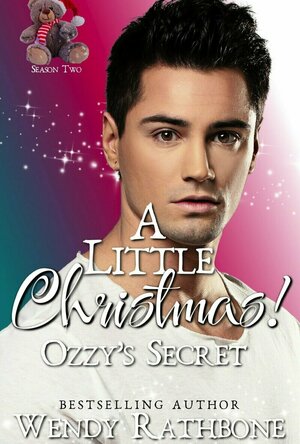
A Little Christmas: Ozzy's Secret (Season Two)
8.0 Rate It
Book
My former Daddy made me cower while at the same time telling me he was giving me what I had asked...
Contemporary MM Romance Age Play Seasonal
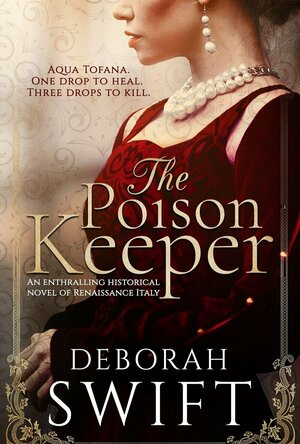
The Poison Keeper
8.0
Rate It
Book
Naples 1633 Aqua Tofana – One drop to heal. Three drops to kill. Giulia Tofana longs for...
Historical Fiction Renaissance Italian
BookInspector (124 KP) rated Dinner At The Happy Skeleton in Books
Sep 24, 2020
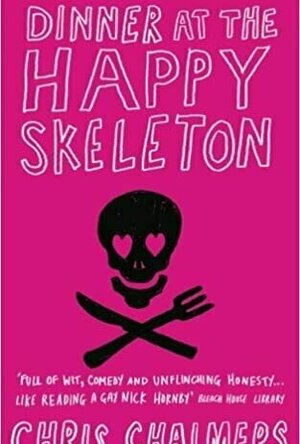

When I was approached by the author, I was a little bit unsure, how I am going to react to this book. Before this book, I haven’t read other books about gay guys, but because I like to read different types of books (you will not know whether you like it until you try it), I decided to give this book a go, and I had very educational experience with this novel.
The blurb above described this novel very very accurately. The main character in this novel is Dan, and the whole book was told from Dan’s perspective. I really liked Dan’s personality in this book, I think he is very believable, funny, nice person, and I would like to have a friend like Dan.
The whole narrative of this book felt a lot like a diary. I really enjoyed reading not only Dan’s present life events but also, his memories about his ex-boyfriend, who brought Dan a lot of trust issues. As a person, who knows very little about gay people’s lives, I found this book very educational. I learned about gay guys lifestyle, and it was very interesting to have an insight into how they feel. This book for me felt a lot like reading a Chick lit book, but instead of a girl telling a story, it was a guy. (I hope you get what I mean…) The whole story is flowing very evenly, and I was missing the depth in this book, some deep conflict, which Dan could battle. The whole plot of this book has very close resemblance with author’s bio down below, so I strongly believe, that there are some true facts and stories which author shared in this novel, and it just increased my curiosity, of which parts are true, and which ones are fictional.
The writing style of this book is really pleasant and I really enjoyed how Chris Chalmers portrayed all the little details about London, Dan’s personal feelings and interesting experiences. The chapters used in this novel are pretty short, so it was easy to read and it didn’t leave me bored. I would like to throw in a DISCLAIMER, that there is quite a lot of sex scenes/ talks in this book. The ending of this novel left me satisfied, as it is well deserved and rounds up this book really nicely. So, to conclude, it was a very interesting experience for me, where I got to feed my curiosity, and read some pretty interesting stories, which could’ve been based on true facts, and I do recommend to give it a try, you never know, you might enjoy it. 🙂
Was given this book by the author for an honest review.
Medicine, Knowledge and Venereal Diseases in England, 1886-1916: 2016
Book
This book reveals the ever-present challenges of patient care at the forefront of medical knowledge....

Ethnic Politics and State Power in Africa: The Logic of the Coup-Civil War Trap
Book
Why are some African countries trapped in vicious cycles of ethnic exclusion and civil war, while...
Modern NMR Approaches to the Structure Elucidation of Natural Products: Volume 2: Data Acquisition and Applications to Compound Classes
Antony Williams, Gary Martin, David Rovnyak and Kirk Gustafson
Book
The Ghanian plant Cryptolepis sanguinolenta is the source of a series of fascinating indoloquinoline...
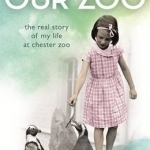

Many people in Britain may have recently watched the drama series Our Zoo on BBC1 about the Mottershead family who moved to Oakfield, Upton in 1930 with the aim of building a zoo without bars. Based on a true story the drama over exaggerated the difficulties the family faced in developing what became to be the famous Chester Zoo. Until 2010 when TV producer Adam Kemp approached her, June Mottershead had never thought about making her history available to the public. As the truth had to be bent slightly for the television production with the removal of certain characters and added romance, and, of course, the laws preventing chimpanzees from being filmed, June Mottershead has penned the true story, also called Our Zoo, which is just as fascinating as what was shown on screen.
June was only four when she moved to Upton with her parents, grandparents, and her fourteen-year-old sister Muriel as well as a selection of animals. The BBC1 drama only showed up until the point that her father, George, had finally been given permission to build his zoo despite the petition against it. In the book, however, this occurs within the first few chapters and then continues on until June’s marriage to her husband Fred Williams in 1949. In fact the time period of the narrative jumps around depending on the animals or events that June is describing.
A large chunk of the book is focused on the effect the Second World War had on the zoo. As can be expected the rationings of vital products took its toll on the animals’ diets and, although the zoo never took a direct hit, the Liverpool blitz caused havoc by destroying the glass tanks in the aquarium. On the other hand, the amount of animals rapidly grew, as it was not just humans that became refugees during the war.
It was a delight to read about June’s relationships with some of the animals, particularly Mary the chimpanzee who was also June’s best friend as a child and behaved in a humanlike manner. Alas, as well as the happy moments there were the inevitable upsetting accounts of the deaths some of the animals, either from old age, illness or accidents.
While Our Zoo cannot be described as a novel, it neither has the feel of an autobiography. The conversational tone of the writing made it a pleasure to read and easy to visualize (admittedly watching the televised version had already provided a certain image).
This easy to read book is a strong recommendation for those who enjoyed the BBC adaptation and wish to find out what happened next. It does not matter if you have not watched the drama, as it is overall a fascinating story to read.