

Brumpolarbears (22 KP) rated The Hobbit in Tabletop Games
Jun 18, 2019
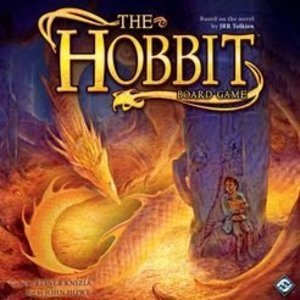

Gathering four of my best companions to join me on the adventure, we settled down for an evening of troll slaying and dragon fighting.
Based on the J.R.R Tolkien book as opposed to the film releases, The Hobbit is a game for 2-5 players which utilises a scorecard system rather than individual player pieces. The aim of the game, kill Smaug and find the treasure – simple enough surely?
When opening the box we were pleasantly surprised by the level of detail of the board as well as some rather beautifully illustrated dwarf cards. A lot of work had gone into these which is why we were a bit surprised by the Bilbo and Smaug figures which were plastic and painted red
Having laid out all of the pieces we then tackled the game instructions, which actually took as long as Bilbo’s journey to the Lonely Mountain. Having passed the instructions around we decided to just play the game and when we came to a segment we weren’t sure about, we would refer back. Despite the initial hiatus, The Hobbit is a rather enjoyable game, however not for unseasoned gamers.
The game is split into four adventures. Players must level up their initiative, cunning, and strength in order to battle goblins, fight wolves and escape elves before confronting Smaug himself. On the way, players will also collect gems which is ultimately the aim of the game as the player with the most is declared the winner at the end.
Each adventure comes with a series of adventure cards which break down into Gifts, Abilities and Travelcards. Gift cards present players with attribute benefits; Abilities assist players with battles; and Travelcards move Bilbo along his adventure. When encountering a battle, players must roll five dice in order to match certain conditions before moving on. Should the conditions not be met, players must draw a Dragon card, which incurs penalties and may result in Smaug moving across the board. Should Smaug reach Laketown, the game is over and the player with the most gems is declared the winner.
Having played the game with four other players we did actually have fun once we got into it and overcame the rather confusing rules. My best advice would be to have someone read the instructions before you and your friends sit down together as it can eat into the evening.

Introduction to Exercise Science
Terry J. Housh, Dona J. Housh and Glen O. Johnson
Book
The fifth edition of Introduction to Exercise Science introduces students to every core area of...

Managing it Performance to Create Business Value
Book
Managing IT Performance to Create Business Value provides examples, case histories, and current...
Once Upon A (The Stained Duet #1)
7.5 Rate It
Book
Alana Williams is three published authors. She has been for years, but now she wants to add another...
anti-hero bdsm contemporary dark erotic romance
A Tolkien Tapestry: Pictures to Accompany The Lord of the Rings
Book
This brand new full-colour art book reveals in sumptuous detail more than 100 paintings based on The...
Minecraft Construction Handbook - Updated Edition: An Official Minecraft Book from Mojang
Book
Minecraft is a multi-platform block-based gaming sensation available on Xbox, PlayStation, PC and...
graveyardgremlin (7194 KP) rated The Taken (Celestial Blues, #1) in Books
Feb 15, 2019

Meet one of the two main characters, rockabilly girl Katherine "Kit" Craig. She's an eternally optimistic and peppy reporter whose best friend and co-worker, Nicole, was just murdered while following a lead. Our other MC is a haunted Centurion angel named Griffin Shaw who ushers the newly murdered into the afterlife, otherwise known as the Everlast, while bemoaning the murders of both himself and his wife Evie back in 1960. After making a mistake concerning Nicole, he's been sent back to earth as a human with some angelic senses still intact. Kit and Grif soon meet up and begin investigating the circumstances around Nicole's death, whilst Griffin seeks out any details involving his own.
Problem Number One:
The Cardboard Characters
Character development is supposed to unfold over the course of a book, in this case it actually appeared to deteriorate as the book went on. Kit never developed into anything but one of those annoyingly chipper people you just want to hit with a sledgehammer, while Grif started promisingly enough but then stagnated. They were both very shallow characterizations, and on top of that, I never understood Kit's actions or reactions to just about anything. I never felt her sadness about her best friend's death, whom she rarely gave a passing thought, believed she was smart (by the end, I thought her a dolt), or seem in any way human with nary a rational thought in her head. About mid-way through the book, Grif tells her he's an angel after they kiss, so what does she do? Does she a) run away screaming, b) think he's a few feathers short of a goose and tell him to get hell out of her house and life, or c) have a calm Q&A session followed by giving him a whatfor that consists of "I won't kiss you again" and "you're watching me walk out that door (in her own house) because you can't handle any emotion blah, blah, blah by pretending you're an angel" and then proceed to attend a charity event wherein she acts and converses normally, like nothing happened? If you picked "c" *ding ding ding*, you're a winner! Because as we all know, any sensible guy will pull out the "I'm an angel" trick and expect a woman to believe him. *rolls eyes* Never was it ever crystal clear if Kit thought Grif was either crazy or a liar. It was all a bit hazy, but what can you expect from someone we're never allowed to know? All we discern is she dresses and lives (somewhat) rockabilly, but it's all a veneer to her hollowness inside, which led me to dub her Rockabilly Barbie.
<img src="http://i272.photobucket.com/albums/jj183/piscesrain/reviews/RockabillyBarbie.jpg">;
Because that's all she is and nothing more. The only character that I found a little more well-rounded was the secondary character Bridget Moore and the two Centurions introduced close to the end. Everyone else was either forgettably two-dimensional or they were a caricature, a la Caleb Chambers and Paul Raggio.
Problem Number Two:
The Relationship(s)
I'm expected to believe in a possible relationship between Grif and Rockabilly Barbie, err I mean Kit, but there's not much there to believe in. Like the characters, it was shallow with the same descriptions reiterated over and over again. Basically it's a case of telling instead of showing. I felt no love, maybe some attraction, but that's all she wrote. Likewise I never bought that Kit and Paul could ever have gotten far enough to be married, they were just too different. Most people don't do a 180 after they get married, the seed of who Paul really was deep down inside would have already been there and if Kit was even a fraction astute, she should have caught that. All this served was to be a plot point in the book.
Problem Number Three:
The Plot(s)
The main plot involving Nicole's death and Chambers had a "been there, done that" quality to it. The plot didn't shock me or seem like anything new, I've come across the same before or at least plots that were very close, and it wasn't even told in a fresh way. So I wasn't as affected by anything in the book as I probably should have been, partially due to the indifference I felt and the fact that I figured out everything long before the author dropped, what I guess she thought, were informational bombshells.
The book had three major plotlines: Grif and Evie's deaths, Nicole's death/prostitution ring, and Grif and the Pure Anas' philosophical moments. They weren't juggled well at all. Ms. Pettersson should have picked only one and paid more attention to developing that specific plot and the characters. The scenes with Anas (or Anne) especially didn't mesh with the other stories and felt as if the author was overreaching the boundaries set up by the book. One scene in particular was extremely bizarre and pointless to the book as a whole.
Where was the noir? I've seen enough film noirs to know it ain't here.
Problem Number Four:
The Ending
What happened at the end is what I'd expect in a book that's exclusively romance and not in a mystery/urban fantasy hybrid, which made the rushed ending seem even more ridiculous and sappy. It was incredibly unbelievable to the story and didn't seem to set up the next book in any way. Also, one of the plotlines was all but left dangling with no foreshadowing or anything. Poor, poor, poor execution. Don't expound on a storyline if you're not going to finish it up or at least leave it dangling in a way that makes the reader want to come back. All that boring set-up for a completely stupid and cheesy ending. I expected rainbows and unicorns to pop out at any moment.
Overall the book felt more like a rough copy than a finished one and definitely could have used a few more goings over. Several descriptions were rushed and chaotic or simply poorly done so that I was scrambling to picture what was going on. The book is almost 400 pages and it is simply too long. With so many storylines, I'm not sure how they managed to both crawl and have very little action at the same time. I was going to give this two stars because I didn't hate the book, that would imply that it elicited any feelings what-so-ever, but the truth of the matter is that there isn't one thing I really liked about the book either. The only way I'd read a sequel to the bafflingly-named Celestial Blues series is if it featured different leads like the aforementioned Centurions, and even then I'd cautiously dip my toes into the book.
Originally reviewed: June 29
Received: Amazon Vine

Kristy H (1252 KP) rated My Not So Perfect Life: A Novel in Books
Feb 1, 2018
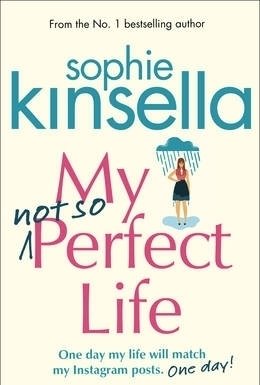

I'm not a Sophie Kinsella disciple (I haven't even read the Shopaholic series, don't kill me), but this book was so popular among my Goodreads friends that I couldn't help but pick it up. <i>It's certainly a cute, entertaining read</i>, based mainly on the strength of her main character.
There's something about Katie. She can be irritating, but she's gutsy and smart. She has dreams and goals, and she truly wants to achieve them. She's also insightful and kind. You can't help but be drawn to her and root for her character. It also helps that she's not spoiled, like so many of her co-workers and the people she encounters. While the book may play on the "rich" versus "poor" dichotomy a bit much, it's clear that Katie is fairly grounded, and you like her all the more for it.
The book certainly has some comedic moments, which I wasn't completely expecting, and Katie even has a bit of a dry wit. Things definitely move along in a bit of a cliched fashion sometimes, with Katie's realizations about life coming a tad too easily at moments. Still, there's a little twist in the plot that I didn't see coming that engages you and keeps the last quarter of the novel moving quite briskly.
Overall, the book winds up all its loose ends way too easily, but, of course, you really wouldn't have it any other way. I found myself grinning goofily in a few parts, because I'm totally a sucker for stories like these sometimes. Katie is endearing, her romance is fun, and the plot moves quickly and easily. This was an enjoyable, breezy read, and I'm glad I picked it up. 3.5 stars.
<center><a href="http://justacatandabookatherside.blogspot.com/">Blog</a>; ~ <a href="https://twitter.com/mwcmoto">Twitter</a>; ~ <a href="https://www.facebook.com/justacatandabook/">Facebook</a>; ~ <a href="https://plus.google.com/u/0/+KristyHamiltonbooks">Google+</a></center>;
King John
William Shakespeare and Eugene Giddens
Book
King John - today remembered as the villainous opponent of Robin Hood and the Magna Carta - was for...
Experiencing Liveness in Contemporary Performance: Interdisciplinary Perspectives
Matthew Reason and Anja Molle Lindelof
Book
This volume brings together dynamic perspectives on the concept of liveness in the performing arts,...