

Gareth von Kallenbach (980 KP) rated Elle (2016) in Movies
Jul 12, 2019
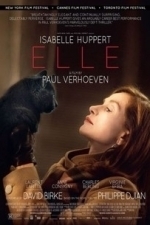


‘Elle’ ( meaning ‘her’ or ‘she’ in French) is an internationally co-produced psychological thriller directed by Paul Verhoeven. Yes, THAT Paul Verhoeven of ‘RoboCop’ , ‘Basic Instinct’, ‘Starship Troopers’, ‘Showgirls’, and ‘Total Recall’ fame. Hold on a second. Before you take his track record of recent works into account just hear me out. The film is based on the 2012 novel “Oh …. ” by French/Armenian author Philippe Djian which won the prix Interallie literary award for a novel written by journalist. ‘Elle’ is Verhoeven’s first French language film and his first film since 2006’s ‘Black Book’.
The film stars Isabelle Huppert as business woman Michele Leblanc. Mother, divorce, and head of a video game company who is viciously attacked and raped in her home late one night by an unknown assailant wearing a ski mask. Rather than report this to the police, she quickly ‘cleans up the mess’ and carries on with life as usual. The film also features several subplots that intricately weave into the film’s main storyline. Michele has a son Vincent (Jonas Bloquet) who is engaged to his unfaithful and domineering girlfriend Josie (Alice Isaac). Their relationship is strained due to Vincent’s lack of direction and his refusal to break off the relationship with Josie who is pregnant by the man she cheated on Vincent with. Michele’s relationship with her mother is also strained due to her mother’s narcissism and preference for younger men. A point of increasing animosity between Michelle and her mother is the fact that Michelle refuses her mother’s request to visit Michelle’s father, a convicted cereal killer, in prison. Meanwhile, Michele is carrying on an affair with Robert (Christian Berkele). The husband of her business partner and best friend Anna (Anne Consigny) while at the same time developing a fixation with Patrick (Laurent Lafitte). A banker and husband of Michele’s religiously devout neighbor Rebecca (Virginie Efira). All this, combined with the turmoil going on within Michele’s company make her reluctant to involve the police in anyway.
Soon Michele grows suspicious of all the men in her life and begins to ‘stalk in reverse’ those in particular might have the strongest motivation to do her harm. At first she suspects Kurt (Lucas Prisor). A particularly resentful employee of her company and even her ex-husband Richard (Charles Berling) who Michele inadvertently pepper-sprays while he was hiding outside her home checking on her safety. Despite pleas from Richard, her friends, and fearing another media frenzy similar to the one that occurred during her childhood when her father was arrested Michele continues with life as usual on the surface. In secret though, Michele is arming herself and using her company’s resources in an attempt to find her attacker and exact her own vision of retribution in this twisted cat and mouse game.
This film is by far one of the best thrillers I’ve seen in the last few years. In my opinion, we here in America don’t partake in enough of the films our neighbors in other countries have to offer. This film doesn’t ‘play it safe’. The story plays out in a realistic and believable manner. This is another one of those rare stories where there are really no ‘happy endings’ in the situation such as depicted in the film. It’s harsh, it’s in your face, it’s plausible, the innocent unfortunately suffer along with the guilty. Punishing the guilty is never enough and sometimes harms the victim(s) even more over the course of time. The film is rated R for depictions of physical and sexual violence and clocks in just past 2 hours. If you’re searching for a well written, well directed, and even better acted film. This psychological thriller is definitely for you. I expect this film will continue to garner more acclaim and even more awards. I’m giving this one 4 out of 5 stars.

Ludwig Polzer-Hoditz, a European: A Biography
T.H. Meyer and Terry M. Boardman
Book
Finally available in English, Thomas Meyer's major biography of Ludwig Polzer-Hoditz (1869-1945)...

Fiete Puzzle - Kids Games with Animals
Education and Games
10.0 Rate It
App
The game Fiete Puzzle lets children discover cute animated animals in beautiful picture book...

Whiskey Cocktails: Rediscovered Classics and Contemporary Craft Drinks Using the World's Most Popular Spirit
5.0 Rate It
Book
Grab your bow tie and a rocks glass, because we're talking all about one of the most classic - and...

Bookapotamus (289 KP) rated Unsheltered in Books
Jun 22, 2018
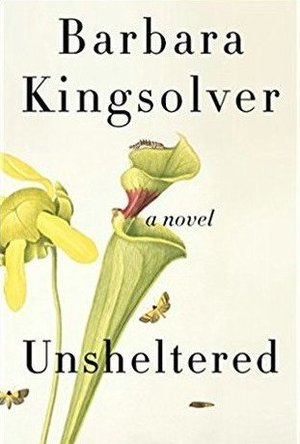


The book is set in two different eras, in the same town, on the same street, in Vineland, NJ. Willa Knox, present day, is fictional. AS is her family. Mary Treat in 1871, is apparently a real person, a lover of science, plants and creatures. The connection between the two stories is a bit weak I felt. Not sure if it was intentional, but it just didn't really capture my attention in the way I believe it was supposed to. In 1871, Thatcher Greenwood (fictional as well I believe?) meets Mary, and they get along because their beliefs mesh well - they believe in science, and follow Darwin's teachings, and Thatcher finds himself in a bit of jam as the town is "ruled" by Landis, a strict believer that God has created everything, and science is witchcraft.
Willa, is struggling when we meet her - in fact, her entire family - every single one of them seems to have some serious issues! I found it depressing and really didn't find myself liking any of the family very much. We see some similar struggles to Thatcher (their houses are both falling down around them) but not much else mirrors the past.
I do know based on initial talk of this novel, and the title of course, that the joining of the past vs present is in the "Unsheltered" aspect of both of these stories, the way Landis mirrors Trump, the ways a world can come unraveled by rules and rulers, as well as the courage to stand for what you believe in. But it just wasn't there for me - it was so subtle, uninspiring, slow and boring.
I did LOVE the plants and stuff - it's the main reason I wanted to read this book, but sadly they just weren't too heavily featured. The little tidbits of random facts about Pitcher Plants and Venus Fly Traps, and some other plants and bugs was pretty fun and fascinating and I wish there was more of it.
In the end - this just fell really flat for me. I know some of the people and events are real, but some are not (which was hard for me to follow) and Barbara's research and writing is top-notch. I just really wanted an engaging story, with a bit more interest, and a lot less heavy eyelid.

Cody Cook (8 KP) rated Writings Of Thomas Paine Volume 4 (1794 1796); The Age Of Reason in Books
Jun 29, 2018

The book seems to have had three major objectives: the support of deism, the ridicule of what Paine found loathsome in Christian theology, and the demonstration of how poor an example the Bible is as a reflection of God.
In a sense, Paine's arguments against Christian theology and scripture were meant to prop up his deistic philosophy. Paine hoped that in demonizing Christianity while giving evidences for God, he would somehow have made the case for deism. But this is not so. If Christianity is false, but God exists nonetheless, we are not left only with deism. There are an infinite number of possibilities for us to examine regarding the nature of God, and far too many left over once we have eliminated the obviously false ones. In favor of deism Paine has only one argument—his dislike of supernatural revelation, which is to say that deism appeals to his culturally derived preferences. In any case, Paine's thinking on the matter seemed to be thus: if supernatural revelation could be shown to be inadequate and the development of complex theology shown to be an error, one could still salvage a belief in God as Creator, but not as an interloper in human affairs who required mediators.
That being said, in his support of deism, Paine makes some arguments to demonstrate the reasonableness in belief in, if not the logical necessity of the existence of, God which could be equally used by Christians.
For instance, just as the apostle Paul argued in his epistle to the Romans that, "what can be known about God is plain to [even pagans], because God has shown it to them. For his invisible attributes, namely, his eternal power and divine nature, have been clearly perceived, ever since the creation of the world, in the things that have been made" (Romans 1:19-20, ESV), so also Paine can say that, "the Creation speaketh an universal language [which points to the existence of God], independently of human speech or human language, multiplied and various as they be."
The key point on which Paine differs from Paul on this issue is in his optimism about man's ability to reason to God without His assisting from the outside. Whereas Paul sees the plainness of God from natural revelation as an argument against the inherent goodness of a species which can read the record of nature and nevertheless rejects its Source's obvious existence, Paine thinks that nature and reason can and do lead us directly to the knowledge of God's existence apart from any gracious overtures or direct revelation.
On the witness of nature, Paine claims, and is quite correct, that, "THE WORD OF GOD IS THE CREATION WE BEHOLD: And it is in this word, which no human invention can counterfeit or alter, that God speaketh universally to man." What is not plainly clear, however, is that man is free enough from the noetic effects of sin to reach such an obvious conclusion on his own. Indeed, the attempts of mankind to create a religion which represents the truth have invariably landed them at paganism. By paganism I mean a system of belief based, as Yehezkel Kaufmann and John N. Oswalt have shown, on continuity.iv In polytheism, even the supernatural is not really supernatural, but is perhaps in some way above humans while not being altogether distinct from us. What happens to the gods is merely what happens to human beings and the natural world writ large, which is why the gods are, like us, victims of fate, and why pagan fertility rituals have attempted to influence nature by influencing the gods which represent it in accordance with the deeper magic of the eternal universe we all inhabit.
When mankind has looked at nature without the benefit of supernatural revelation, he has not been consciously aware of a Being outside of nature which is necessarily responsible for it. His reasoning to metaphysics is based entirely on his own naturalistic categories derived from his own experience. According to Moses, it took God revealing Himself to the Hebrews for anyone to understand what Paine thinks anyone can plainly see.
The goal of deism is to hold onto what the western mind, which values extreme independence of thought, views as attractive in theism while casting aside what it finds distasteful. But as C.S. Lewis remarked, Aslan is not a tame lion. If a sovereign God exists, He cannot be limited by your desires of what you'd like Him to be. For this reason, the deism of men like Paine served as a cultural stepping stone toward the atheism of later intellectuals.
For Paine, as for other deists and atheists like him, it is not that Christianity has been subjected to reason and found wanting, but that it has been subjected to his own private and culturally-determined tastes and preferences and has failed to satisfy. This is the flipside of the anti-religious claim that those who believe in a given religion only do so because of their cultural conditioning: the anti-religionist is also conditioned in a similar way. Of course, how one comes to believe a certain thing has no bearing on whether that thing is true in itself, and this is true whether Christianity, atheism, or any other view is correct. But it must be stated that the deist or atheist is not immune from the epistemic difficulties which he so condescendingly heaps on theists.
One of the befuddling ironies of Paine's work is that around the time he was writing about the revealed religions as, “no other than human inventions set up to terrify and enslave mankind, and monopolize power and profit," the French were turning churches into “temples of reason” and murdering thousands at the guillotine (an instrument of execution now most strongly identified with France's godless reign of terror). Paine, who nearly lost his own life during the French Revolution, saw the danger of this atheism and hoped to stay its progress, despite the risk to his own life in attempting to do so.
What is odd is that Paine managed to blame this violent atheism upon the Christian faith! Obfuscated Paine:
"The Idea, always dangerous to Society as it is derogatory to the Almighty, — that priests could forgive sins, — though it seemed to exist no longer, had blunted the feelings of humanity, and callously prepared men for the commission of all crimes. The intolerant spirit of church persecution had transferred itself into politics; the tribunals, stiled Revolutionary, supplied the place of an Inquisition; and the Guillotine of the Stake. I saw many of my most intimate friends destroyed; others daily carried to prison; and I had reason to believe, and had also intimations given me, that the same danger was approaching myself."
That Robespierre's deism finally managed to supplant the revolutionary state's atheism and that peace, love, and understanding did not then spread throughout the land undermines Paine's claims. Paine felt that the revolution in politics, especially as represented in America, would necessarily lead to a revolution in religion, and that this religious revolution would result in wide acceptance of deism. The common link between these two revolutions was the idea that the individual man was sovereign and could determine for himself what was right and wrong based on his autonomous reason. What Paine was too myopic to see was that in France's violence and atheism was found the logical consequence of his individualistic philosophy. In summary, it is not Christianity which is dangerous, but the spirit of autonomy which leads inevitably into authoritarianism by way of human desire.
As should be clear by now, Paine failed to understand that human beings have a strong tendency to set impartial reason aside and to simply evaluate reality based on their desires and psychological states. This is no more obvious than in his own ideas as expressed in The Age of Reason. Like Paine's tendency to designate every book in the Old Testament which he likes as having been written originally by a gentile and translated into Hebrew, so many of his criticisms of Christian theology are far more a reflection upon himself than of revealed Christianity. One has only to look at Paine's description of Jesus Christ as a “virtuous reformer and revolutionist” to marvel that Paine was so poor at introspection so as to not understand that he was describing himself.
There is much more that could be said about this work, but in the interest of being somewhat concise, I'll end my comments here. If you found this analysis to be useful, be sure to check out my profile and look for my work discussing Paine and other anti-Christian writers coming soon.

Steven Sklansky (231 KP) rated Live By Night (2017) in Movies
Sep 10, 2017
Ben Affleck really does love Boston, because once again that where this whole thing begins. I didn't live in the 20's but the Boston accent must not have been established yet. It was quite refreshing not to hear it in a movie. I really didn't know Boston's backstory but I guess like everywhere on the East Coast there was a mob presence. They did a really good job showing the life of someone in the mob. It wasn't just the killing and booze. It really went deep with the love story of both women and what he had to go though to keep the love and them alive. Even though one of them turned out to be a backstabbing bitch.
When the story progressed to Tampa it was interesting to see something that I don't think has been portrayed in movies. Or I have never seen it. The mob in Florida. The interactions between the Irish and Italian mob in a world of Mexicans and Cubans was done very well. There was a lot going on and it never got boring. The only part of the story that got a little off was rivalry of the mob in Tampa and Miami. You never saw the fights between them until the end. I just thought it was over and done with after the Italians were run out of town. Or maybe I just missed it.
I won't tell you what happened to anyone at the end but the gun fight was amazing. So may parts put in and the chirography was done very well. I think the very end could have been done differently. To me it was very off putting and didn't understand why they choose to go that direction. Granted it was based off a book that I never read and maybe that's the way it had to be. But it could have been written better in the book too. Books seem to get the point across better anyway.
If you like gangster movies, see it. If you like Ben Affleck, see it. If you just want to watch a movie not to be bored, see it.

State Repression in Post-Disaster Societies
Book
A natural hazard is a physical event but a disaster is a social and political phenomenon. Natural...
Rethinking International Skilled Migration
Micheline van Riemsdijk and Qingfang Wang
Book
In today's global knowledge economy, competition for the best and brightest workers has intensified....

Hazel (1853 KP) rated The Snow Child in Books
May 30, 2017
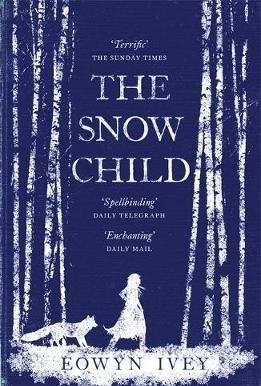
Set in Alaska during the 1920s this is the story of a couple, Jack and Mabel, who, aside from a stillbirth, have not had any children despite their desperate longing. Now that they are both approaching fifty years of age they know that they will never be able to have a son or daughter of their own. One winter, during the first snowfall, the two of them on an uncharacteristic, spur of the moment impulse build a snowman next to their cabin. Rather than building a large snowman they make a smaller one in the shape of a girl, decorating her with scarves and mittens – they have made a snow girl.
Eowyn Ivey has based her novel on a Russian fairy tale, Snegurochka, which in English translates to The Snow Maiden. It was Arthur Ransome’s retelling, Little Daughter of the Snow, which inspired Ivey, but the general storyline is essentially the same, although some versions have alternative endings. For those who are familiar with Snegurochka and its variants will know that it does not end happily therefore it seems inevitable that The Snow Child will head in the same direction. However which ending will it most resemble?
Throughout the novel it is impossible to be absolutely sure that the little girl who turns up outside the cabin the day after the snowman has been built (and destroyed) is in fact the snow girl magically transformed into flesh and bone; or whether it is a lost child and the circumstance are purely coincidental. There is a third option: Jack and Mabel could be imagining things through their desperate longing, but this is easy to rule out.
The snow is understandably a key theme throughout the story. At the beginning the anticipated Alaskan winter is imagined as a “cold on the valley like a coming death”. Not only will it be unbearably freezing, Jack and Mabel will struggle to make do with their limited amount of food and supplies. After the arrival of the child the winter becomes a happy occasion. Jack and Mabel’s relationship improves and they become less isolated after befriending some neighbours. The only heartbreak is when the girl, Faina, disappears in the spring; but as she comes back as soon as it snows, winter becomes something to look forward to. Another snowy link in the story is Faina’s name, which she claims means “the colour on snow when the sun turns” in Russian. This also makes the idea of her truly being the snow girl more convincing.
The novel does predictably have an unhappy ending but the epilogue makes up for this by revealing the contentment of the remaining characters a few years into the future.
As already mentioned, The Snow Child was not a very gripping read, but it was a beautiful tale in the way that fairy tales, even those with unhappy endings, often can be.