Search

Search only in certain items:

G
Glow
8
8.0 (1 Ratings)
Book Rating
I have a love hate relationship with Glow, an upcoming young adult novel from Megan E. Bryant. Earlier this year, I read The Radium Girls by Kate Moore - an absolutely horrifying account of injustices committed against young women under the guise of patriotism. Before Moore, I cannot recall ever hearing about the dial painters. This book provides a fictional account based heavily on true stories about the girls that met their untimely demise.

The main character of Glow is a young woman of eighteen by the name of Jubilee - but don't you dare call her that! She prefers Julie. After making the ultimate sacrifice for her mother, she spends the summer unraveling the mysteries behind paintings she finds at thrift stores while her best friend prepares for college.

Between each chapter, readers find an epistolary account from the mind of Lydia Grayson. Like her sisters, Lydia is one of the many girls that worked for the American Radium Company (I think I got that right). The Grayson sisters, for those that haven't read The Radium Girls in order to make the comparison, appears to be based loosely on the Maggia sisters, while the company is, obviously, a fictionalized version of the United States Radium Corporation. (Amelia "Mollie" Maggia was the first of the Radium Girls to die.)

Unlike most books that attempt this method, I do not find the switch between perspectives and styles to be detrimental or clunky - if anything, it is inconvenient. Rather than wrap up preceding chapters, Bryant uses these switches to leave Julie's story on a cliffhanger more than once throughout the book. This style can easily be avoided, considering the letters written from Lydia to her boyfriend are interesting enough on their own to propel the reader forward.

While Julie's story offers an plot that appeals to younger readers, I feel Glow would have worked just fine without it. For that purpose, I'm caught between a three and a four on this book. Ultimately, I lean toward the latter and must applaud Bryant on the amount of research she obviously put into writing this book. Julie's story is unbelievable and full of things that I simply have no interest in, but the haunting tale that the Grayson sisters weave is horrifying.

I would like to thank NetGalley and the publisher for providing me with a copy of this book for the purpose of unbiased review.
  
40x40

Olivier Assayas recommended Rififi (1955) in Movies (curated)
 
Rififi (1955)
Rififi (1955)
1955 | Crime, Drama, Thriller
(0 Ratings)
Movie Favorite

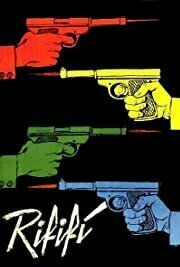
"Rififi is a strange animal, based on a novel by a typically French crime writer, Auguste Le Breton, and shot in Paris as the first foreign-language film by a great American filmmaker at the height of his powers, whose career had been broken by McCarthyism. Jules Dassin’s previous film, made in London five years earlier, Night and the City, is his masterpiece. This inspired hybrid of French and American noir—which I discovered as a child on French TV—has constantly impressed me with its violence, its despair, its darkness, and its beauty. It has also been hugely influential, not only on Melville—so much of his work derives from Rififi—but also on a lot of minor figures of French genre. Dassin reinvented the whole syntax, and the after-effects have been felt for a long time. I am a fan of Michael Mann; he is one of the most inspired stylists in American cinema today, but it was all there from the start. In Thief, his first feature, you have echoes of Melville (it goes full circle), a sharp eye for realism, but also profound human characters with precisely drawn relationships, and great acting. Mann’s fascination with a geometrical modernity, even if it is always mediated by genre filmmaking, is genuinely reminiscent of Antonioni—explicitly so in the last scenes of Heat."

Source
  
40x40

Olivier Assayas recommended Thief (1981) in Movies (curated)
 
Thief (1981)
Thief (1981)
1981 | Action, Drama, Mystery
(0 Ratings)
Movie Favorite

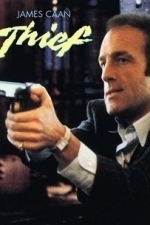
"Rififi is a strange animal, based on a novel by a typically French crime writer, Auguste Le Breton, and shot in Paris as the first foreign-language film by a great American filmmaker at the height of his powers, whose career had been broken by McCarthyism. Jules Dassin’s previous film, made in London five years earlier, Night and the City, is his masterpiece. This inspired hybrid of French and American noir—which I discovered as a child on French TV—has constantly impressed me with its violence, its despair, its darkness, and its beauty. It has also been hugely influential, not only on Melville—so much of his work derives from Rififi—but also on a lot of minor figures of French genre. Dassin reinvented the whole syntax, and the after-effects have been felt for a long time. I am a fan of Michael Mann; he is one of the most inspired stylists in American cinema today, but it was all there from the start. In Thief, his first feature, you have echoes of Melville (it goes full circle), a sharp eye for realism, but also profound human characters with precisely drawn relationships, and great acting. Mann’s fascination with a geometrical modernity, even if it is always mediated by genre filmmaking, is genuinely reminiscent of Antonioni—explicitly so in the last scenes of Heat."

Source
  
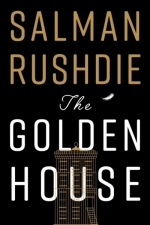
The Golden House
The Golden House
Salman Rushdie | 2017 | Fiction & Poetry
8
9.0 (2 Ratings)
Book Rating
Insightful and readable
This novel by Salman Rushdie is a present day commentary on modern day America in the build up to Trump and how fact and fiction as well as art and reality collapse into one other. There have been a number of books written in the wake of the shock of Trump (this desperate need to make sense of things) and Rushdie’s novel definitely helps shed light (or explain the darkness) upon the situation.

Narrated by René, an aspiring filmmaker, this account feels very similar to the likes of The Great Gatsby, in which everything is rather hyperbolic because it is written from the perspective of an outsider. Following the exceedingly wealthy Golden family, René attempts to figure out the mysterious circumstances of their arrival from India, and the subsequent, often cataclysmic events surrounding them, in which the narrator plays a part. The slow emergence of a dark history of corruption and evil is paralleled by Rushdie's perception of the rise of ignorance, untruth, bigotry and hatred, and of "The Joker" (i.e. Trump, although he is never named).

The writing is brilliant. It is discursive, sometimes addresses the reader directly, even sometimes adopts the form of a screenplay and has a wonderful voice of its own. The context surrounding the Mumbai bombings is intriguing as much of it is based on factual information. The truth is, after all, stranger than fiction.

While the style is not flawless, as the postmodern blurring between supposedly objective narrative and things René has "made up" for his screenplay did get a little haphazard, however, this may be Rushdie's attempt to reflect how "post-truths" are disseminated in a similar fashion. Nonetheless, I thought The Golden House was enjoyable. Even after all these years, Rushdie is able to adapt his writing to suit a modern generation.
  
40x40

Martin Scorsese recommended The Leopard (1963) in Movies (curated)

 
The Leopard (1963)
The Leopard (1963)
1963 | International, Classics, Drama
(0 Ratings)
Movie Favorite

"Another masterpiece about Sicily, another meditation on eternity, and an endlessly rich historical tapestry, meticulously composed in color and on 70 mm. Luchino Visconti based the picture on the Count Giuseppe Tomasi di Lampedusa’s posthumously published novel, about a Sicilian prince at the time of the Italian unification, or Risorgimento, who steps away from power and influence because he realizes that the life he and his family have led is coming to an end, that he has to get out of the way for younger and more ambitious men like his nephew Tancredi. Visconti and his fellow screenwriters (there were four of them, including his frequent collaborators Suso Cecchi D’Amico and Enrico Medioli) took Lampedusa’s novel and fashioned a whole new work on a grand scale, an epic but of a very unusual type. Time itself is the protagonist of The Leopard: the cosmic scale of time, of centuries and epochs, on which the prince muses; Sicilian time, in which days and nights stretch to infinity; and aristocratic time, in which nothing is ever rushed and everything happens just as it should happen, as it has always happened. The landscapes, the extraordinary settings with their painstakingly selected objects and designs, the costumes, the ceremonies and rituals—it’s all at the service of deepening our sense of time and large-scale change, and the entire picture culminates in an hour-long sequence at a ball in which you can feel, through the eyes of the prince, an entire way of life (one that Visconti himself knew quite well) in the process of fading away. Like Contempt, The Leopard was initially overshadowed by the circumstances around it, namely, the casting of Burt Lancaster as the prince. Here in America, we saw the picture in a shortened and dubbed version (Lancaster was speaking English) that was a little unsatisfying: you could clearly see that the movie Visconti had intended wasn’t quite all there, and it was jarring to watch Lancaster speaking in his normal voice surrounded by Alain Delon and Claudia Cardinale and Paolo Stoppa dubbed into American English. When I got to see the whole thing, I was astonished by the picture and by Lancaster, who gives all of himself to the role and to the world of the film. Visconti had wanted Laurence Olivier, and he was initially very curt with Lancaster, but the actor won him over and they became lifelong friends. I could go on and on about The Leopard. It’s a film that has become more and more important to me as the years have gone by."

Source
  
The Art of Escaping
The Art of Escaping
8
7.3 (4 Ratings)
Book Rating
Fast read
I really enjoyed The Art of Escaping by Erin Callahan a lot more than I thought I would. This novel was a super cute contemporary and a fast, fun read. I loved seeing the characters grow and develop as the story went on. The friendship that starts between Mattie and Will, and later with Frankie and Stella, is an inspiring relationship that most people can connect with and would love to have in their own lives. Together, they overcome their fears and come into their own, as well as helping the people around them grow and learn. The character of Miyu was probably my favorite, I loved her attitude and learning about her and her mom Akiko. I would love to read a whole book based off of these two characters, and to learn more about their relationship. Overall, I really enjoyed this ya contemporary story, and would definitely recommend for all ages.