

My Kingdom for the Princess HD
Games
App
It offers plenty of hours of entertainment in a simple resource management framework, making it an...

Jim LeBaron (69 KP) rated Terraforming Mars in Tabletop Games
Mar 12, 2019 (Updated Mar 12, 2019)
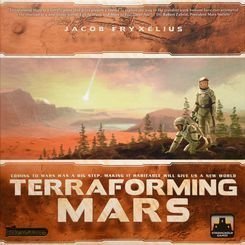


The games I have played have been 2-3 hours which is fine for me but tends to be a little long for more casual gamers. Each game has been different since you get a random corporation and you don't know which cards you are going to end up with. I'm looking forward to getting the expansions which have additional maps and more cards.
The player boards end up with a lot of cubes on them and if the table gets bumped it can be disastrous so I would recommend the overlay trays that keep the cubes in place. These can be 3d printed or purchased from several locations. It would be great if they fixed this by doing a raised board in a future printing.

Winning Go: Successful Moves from the Opening to the Endgame
Peter Shotwell and Richard Bozulich
Book
Master the game of Go with this expert guide. Go is a two player board game that first originated in...

The Search for Planet X
Tabletop Game
At the edge of our solar system, a dark planet may lurk. In 2015, astronomers estimated a large...

Dune: House Secrets
Tabletop Game
Featuring the co-operative game system used in Portal's award-winning Detective: A Modern Crime...

Deep Sea Adventure
7.0 Rate It
Tabletop Game
From the rulebook: A group of poor explorers hoping to get rich quickly heads out to recover...

123 Kids Fun EDUCATION Math & Alphabet Cool Games
Games and Education
App
123 Kids Fun EDUCATION - Free Educational Games for Preschool Kids and Toddlers including counting,...

Peter Shephard (2822 KP) rated Merchants Cove in Tabletop Games
Jun 4, 2021
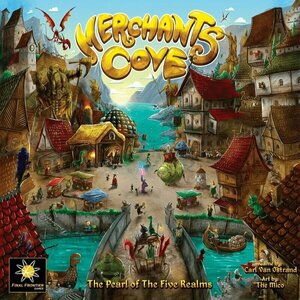
The pieces (ships, meeples, and individual gaming boards) are fantastic (although a couple are a little fiddly/weak) and every single character has their own flavour and type of sub-game;
The Alchemist makes potions by drawing marbles, firstly from a bag, then from a "decanter" (echoes of Quacks of Quiddlingberg)
The Blacksmith makes weapons and armour from dice rolls and combos in furnaces (not quite Yahtzee)
The Captain sails her fleet of ships to go fishing and treasure hunting using a spinning compass mechanism (can't put my finger what this reminds me of)
The Chronomancer (a great Back to the Future nod) travels through time portals to get pieces of technology, using a slide-and-shift board (like a mini Labrynth)
The Dragon rancher (believe it or not) hatches, raises and sells dragons; a couple of mechanics which work well together (even if one is shovelling poop) but not really like a game I've played
The Innkeeper is a great sub-sub-game; he can only sell drinks at one point, but he can put people up in his Inn which gives a bonus. A little bit of prediction work, but not like a other game I can think of.
The Oracle uses a scatter/dish for her fetishes and dice, and this limits what she can do - but I'd say she has the most varied scope of games (dots, predictions, and a few others)
The aim of the game is to be the Merchant who makes the most money, without attracting too much Corruption. Each game is played over three days, and each day has a limited amount of time. Each task the characters do has a different amount of time-cost - it might take 1h to brew potions, but it takes 2h to get ingredients from the decanter and prepare the potions. At several points each day, random Adventurers are drawn from the bag, and put into the travelling ships, as chosen by the drawer. However, there are also rogues who take up space and don't buy anything!
My only real complaint with the game is the comparatively long set up (5-10 minutes seems to be our average) for a 30-45m play time for 2 players - but it is really worth it. If/when this goes to retail, I'd say every gaming group who enjoys a combination of resource management, meeple and worker placement, and beautiful set-piece games, should give this a try.

Purple Phoenix Games (2266 KP) rated Kingdoms of the Deep in Tabletop Games
Dec 26, 2020
Kingdoms of the Deep is an abstracted area-control game set in the ocean for one to six players. In it players lead a faction of creatures intent on ruling the underwater kingdom. The player who scores the most VP at the end of the game is the winner, and as their king the player must rule with a strong pectoral fin. Okay, that last part isn’t in the rules, but it should be.
DISCLAIMER: We were provided a prototype copy of this game for the purposes of this preview. These are preview copy components, and the final components may be different from these shown. Also, it is not my intention to detail every rule in the game, but to give our readers an idea of how the game plays. You are invited to back the game on Kickstarter launching January 12, 2021, order from your FLGS, or purchase through any retailers stocking it after it is fulfilled. -T
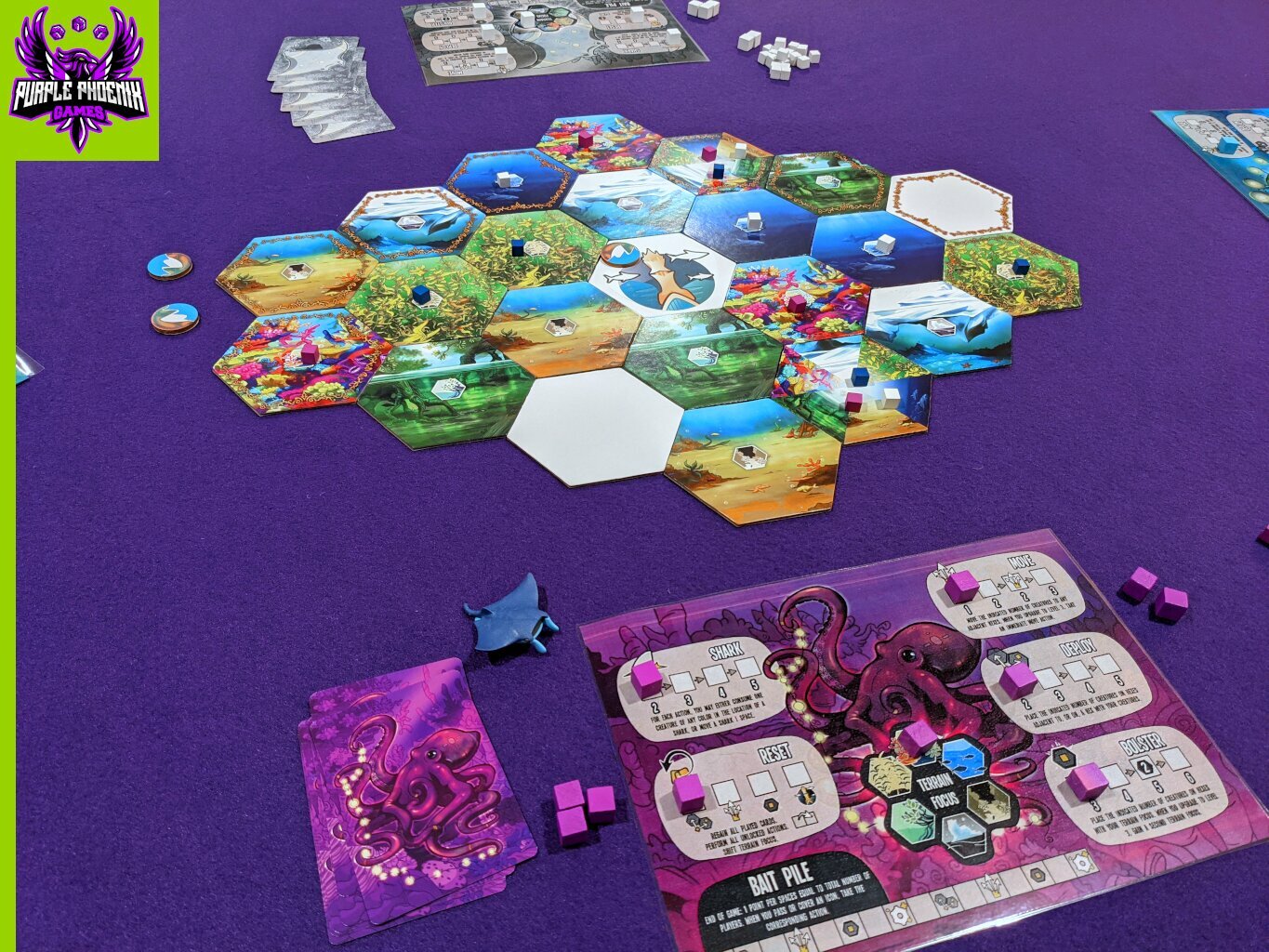
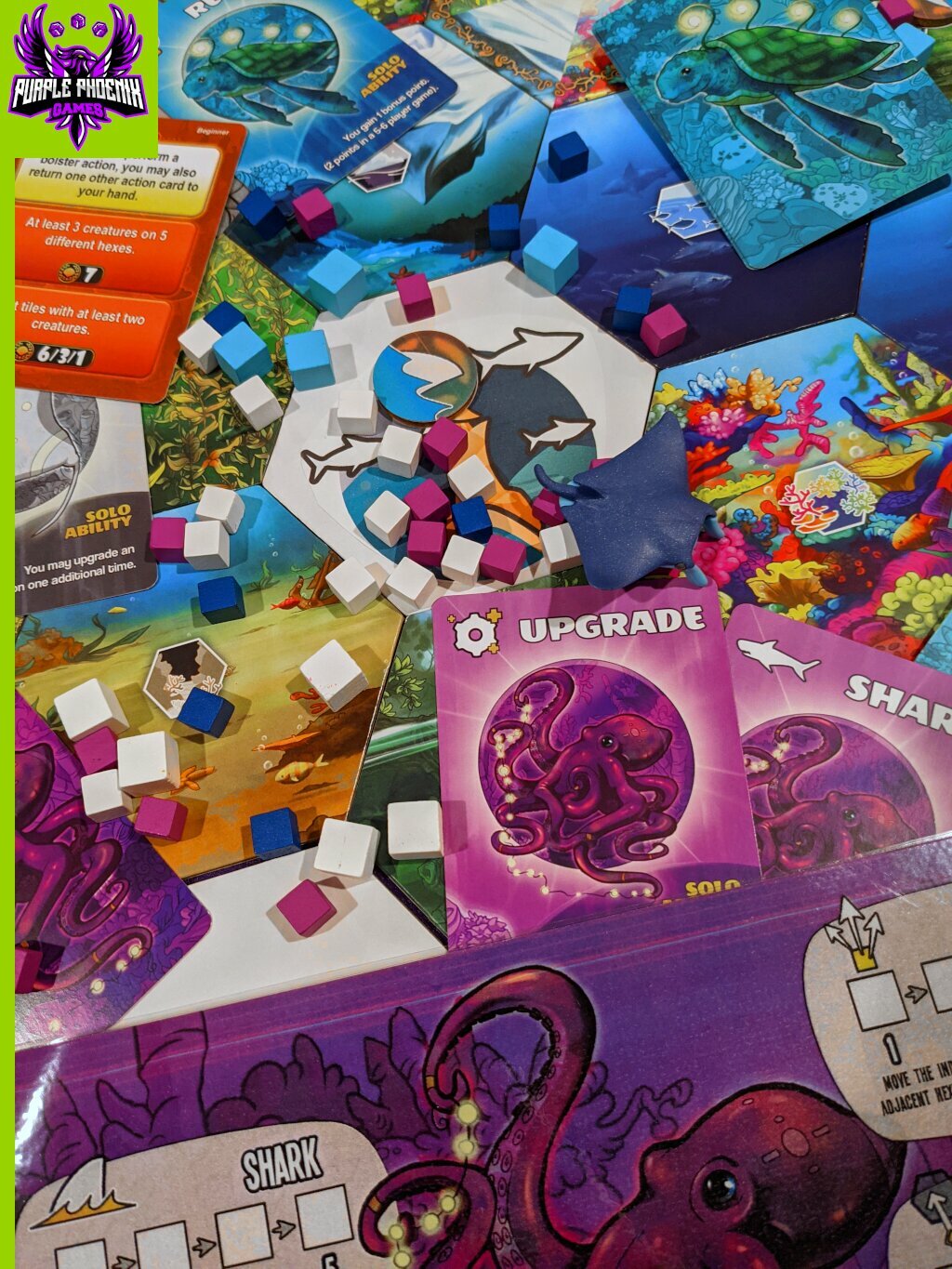
To setup players will choose a color and take all components of that color. Obviously, the best choice is purple. Next the central board will be built of large hex tiles surrounding an Atlantis tile. Upon Atlantis one Shark token will be placed. The Score Board is placed near the central hex board and upon it is placed the Round Marker, the End Game Scoring tile, and the three Goal cards. Players then populate the board with their Influence Cubes on their specific preferred terrain types. Upgrade Cubes (discs in the final version) are then placed on each player’s individual play mats on the furthest value to the left, save for the Reset upgrades: players will choose one to place a cube. Give the starting player the Start Player token (a manta ray in this prototype) and the game may begin!
On a turn each player will choose a card from their hand of Action cards to be flipped simultaneously. The starting player will resolve their card first and play will continue around the table thenceforth. Each player will take their action and prepare for the next round. Should a player choose a card that no other player had chosen for the round they will also be able to activate the Solo Ability printed on the card. Typically these Solo Abilities are a furtherance of the action chosen. For example, should a player choose the Deploy Action card and be the only one to do so, they will be able to deploy one additional Influence Cube on the board than normal. The actions are Bolster, Deploy, Move, Upgrade, Shark, and Reset. Each action is limited to a number of cubes added, spaces moved, or upgrades allowed according to where the player board discs (large cubes in the prototype) lie on the player’s mat.
The Bolster action allows the player to add a number of Influence Cubes to the board on the player’s current preferred terrain type. To Deploy units is to add Influence Cubes to the board on hexes already containing their Influence or hexes directly adjacent to those already containing their Influence cubes. When a player chooses the Move action they are able to move creatures (Influence Cubes of any player and Shark tokens) a number of spaces that can be used for once creature or split between several. Players will certainly wish to Upgrade their actions throughout the game by increasing their player board discs’ spaces on their mat. For example, upgrading the Move action could allow the player to move creatures three spaces instead of two. The Shark action allows the player to move the Shark token(s) and chomp creatures on the same hex. Once a Shark feeds, the controlling player will increase their standing on their own Bait Pile track on their play mat. Certain increments on this track will provide the player with one instance of an action (Move, Deploy, etc), and the creature’s Influence Cube is returned to the matching player. Reset actions allow the player to recall their played Action cards to their hands, but also provide whichever action the player originally chose at setup. Should a player wish to Upgrade their Reset action more actions will become available to them each time they utilize the Reset action. Additionally, at the end of the player’s turn having used the Reset action card the Round Marker token is moved one space closer to the end of the game on its track. More on this later.
During play, some creatures may be moved onto the Atlantis tile in the middle of the board via the Deploy or Move actions. When this happens the player who moved the cube onto the Atlantis tile will score a point immediately, and the creature cube is placed in the Atlantis castle (cloth bag in the prototype, but a castle component in the final version). At the end of the game points are awarded to the player with the most creatures in Atlantis.
Every three movements of the Round Marker token signifies a scoring round takes place. Players will consult the current Goal card for any scoring round bonuses and points are earned. The Goal card is then discarded to reveal the next Goal card in sequence on which players can concentrate during the next rounds of play. Also during the first two of these scoring rounds another Shark token is added to the board on the Atlantis tile to be moved around seeking lunch. Once the Round Marker reaches the final scoring round the game ends and points are tallied to arrive at the winner.
Components. Again, this is a prototype version of the game, and while I know certain things will be different in the final version, I do not know what else may be upgraded as a result of any stretch goals reached. Therefore I do not want to comment on the quality of the components, but rather the art style and direction this game is heading toward actual production.
The art on this one is simply gorgeous. The style is the same as that of Animal Kingdoms, which is also a release from Galactic Raptor. All the art I have seen in this game is sublime and permeates the theme into every portion of the game. It is so beautifully colorful and the creatures are all unique and interesting that it may be difficult to concentrate on the actual game for some people, I imagine.
All that aside, I really do think this is a good game. It certainly gives me the Witch’s Brew/Broom Service vibe with benefits for the player who chooses something the others have not. Combine that feeling with that of the chaos of Survive!: Escape from Atlantis area control of constantly-shifting cube placement and I think Galactic Raptor has a hit here. Again, I am excited to see the final product with the more premium components and tweaked rules, but what I have here is still a good implementation of the mechanics with a hard-to-beat theme.
I do quite like the Shark ability to chomp not only everyone else’s creatures, but also your own to take those cubes back into your supply to be Bolstered or Deployed elsewhere. I also really like being able to Upgrade any action I wish to truly personalize my style and tactics during play. I like being able to Move other players’ creatures into Atlantis for that immediate point, but also to remove that cube from play altogether. It creates quite an interesting dynamic and strategy to facilitate other players’ majority status in Atlantis in order to gain quick points and board control right away. There are so many thing to like about this game, and I am so glad I was able to give it a chance on the table.
If you enjoy games similar to those I mentioned previously, then check out Kingdoms of the Deep. It is beautiful, offers quite a bit of strategy and tactics, and stands to become an excellent mid-weight simultaneous action, area control game WITH SHARKS. While I probably won’t be playing this one every game night, I can certainly see myself introducing it to many of my fellow gamers. I urge you to check out the Kickstarter campaign for Kingdoms of the Deep once it launches in January. Tell ’em Old Travis sent ya.



Rikki Hammond (33 KP) rated King of Tokyo in Tabletop Games
Jun 4, 2019
King of Tokyo is one of the first games I bought for myself, when I got back into board gaming years ago, and it's definitely a fantastic light filler game, that will appeal to all ages.
Players choose a monster, and then take it in turns rolling six custom dice up to three times (like Yahtzee,) to either attack other players, heal their own health, gain 1,2 or 3 victory points, or collect energy.
Once one player attacks another, they enter Tokyo, and gain an extra victory point for each turn they are in there, however, everyone else can attack you, and you can't heal, but your attacks hurt everyone else to counteract this. You can decide to exit Tokyo, which will put the last player who attacked you in there instead.
Energy is used to buy special cards that help you out in one way or another. This can be anything from allowing you to roll an additional die, to giving you an extra life if you are destroyed. Each card has a different energy cost to buy them, and generally the better cards cost more, although some cards cost very little, but can be very overpowered, which can throw a little imbalance in the game.
A player wins by either destroying all other monsters, or by gaining 20 victory points (although it's usually the former that occurs.)
King of Tokyo is a lot of fun, but sometimes the games can be over far too quickly, especially if someone gets lucky with the attack rolls and card purchases, and sometimes players can be eliminated early on, leaving them to sit and watch as the rest of the game is played.
Overall, I would recommend King of Tokyo to casual gamers, and those starting out in gaming, especially those with kids, as it's light, easy to teach, and fun to play.