Search
Search results

Rikki Hammond (33 KP) rated Dominant Species in Tabletop Games
Jun 12, 2019 (Updated Jun 12, 2019)



Interesting term mechanism (2 more)
Each species plays slightly differently
Some interesting event card powers
Woefully long at high player counts (2 more)
Boring to look at
Can be almost impossible to come back from losing
An absolute slog of a game
Dominant species is one of those games that you will either love or hate. Now I don't despise many games but this is definitely one of them.
Players choose one of many different types of species in the game, and try to become the dominant species of the game by expanding their species across the different hexagonal tiles on the board, through migrating, reproducing, and attacking other animals. If a player has more animals on a tile than other players, they are considered the dominant species of that tile and can therefore gain victory points from doing so.
Turns are determined by players placing their action pawns on different spaces on the grid to the right of the board. Once everyone has placed their pawns on the grid, actions are then worked from the top of the grid to the bottom. These actions include, but are not limoted to moving your species to another tile, attacking another species, or picking up an event card to use later. The game ends once this stack of event cards runs out, and final scoring takes place.
Each species starts out with a certain traits which means they are suited to a certain type of terrain. You can use one of your actions to gain different traits and therefore allows you to expand your species into different terrain tiles. The event cards are also useful in that they give you special abilities or can change the game in some way. This could be having your species migrate more than once in a turn, to removing every other species from your own tiles.
I like the way the turn mechanism works as it gives each player a little bit of freedom as to where they can place their pawns, and how soon they want their turn to be taken. There are a finite amount of spaces on each place of the grid so if you're action is taken up by other players before you get to it then that's just tough luck. I also like that the different species are slightly different and so gives the game a slight bit of replayability.
These are all the positives that I can give this game however. The game in general is just incredibly dull and boring to look at. Each species is differentiated by different coloured cubes and cones on the board. Take the player boards away and this game could literally be about anything you want.
The game also goes on for far too long especially at higher player counts, and especially if people don't quickly pick up those event cards, as that is the only way the game will end.
The game can also be horrendously unfair to a player. If you make one or two wrong judgements at the start of the game it can be nigh on impossible to come back from being in last place which to me, does not sound fun at all.
Personally I do not recommend dominant species as a game and I do think there are much better ones out there.
Players choose one of many different types of species in the game, and try to become the dominant species of the game by expanding their species across the different hexagonal tiles on the board, through migrating, reproducing, and attacking other animals. If a player has more animals on a tile than other players, they are considered the dominant species of that tile and can therefore gain victory points from doing so.
Turns are determined by players placing their action pawns on different spaces on the grid to the right of the board. Once everyone has placed their pawns on the grid, actions are then worked from the top of the grid to the bottom. These actions include, but are not limoted to moving your species to another tile, attacking another species, or picking up an event card to use later. The game ends once this stack of event cards runs out, and final scoring takes place.
Each species starts out with a certain traits which means they are suited to a certain type of terrain. You can use one of your actions to gain different traits and therefore allows you to expand your species into different terrain tiles. The event cards are also useful in that they give you special abilities or can change the game in some way. This could be having your species migrate more than once in a turn, to removing every other species from your own tiles.
I like the way the turn mechanism works as it gives each player a little bit of freedom as to where they can place their pawns, and how soon they want their turn to be taken. There are a finite amount of spaces on each place of the grid so if you're action is taken up by other players before you get to it then that's just tough luck. I also like that the different species are slightly different and so gives the game a slight bit of replayability.
These are all the positives that I can give this game however. The game in general is just incredibly dull and boring to look at. Each species is differentiated by different coloured cubes and cones on the board. Take the player boards away and this game could literally be about anything you want.
The game also goes on for far too long especially at higher player counts, and especially if people don't quickly pick up those event cards, as that is the only way the game will end.
The game can also be horrendously unfair to a player. If you make one or two wrong judgements at the start of the game it can be nigh on impossible to come back from being in last place which to me, does not sound fun at all.
Personally I do not recommend dominant species as a game and I do think there are much better ones out there.
MONOPOLY Bingo!
Games and Entertainment
9.0 Rate It
App
Play MONOPOLY Bingo games FREE with the award-winning mobile bingo app! Combine classic MONOPOLY...

Purple Phoenix Games (2266 KP) rated Hey, That's My Fish! in Tabletop Games
Jul 1, 2020



How do you like your games, reader? Heavy and themeless? Dark and themey? ZANY AND KOOKY?! Well, this game is a combination of several categories of game type. I consider it cute and cutthroat. There aren’t many games that can fall into those two categories simultaneously, and maybe that’s why we like this one. Spoilers, sweetie.
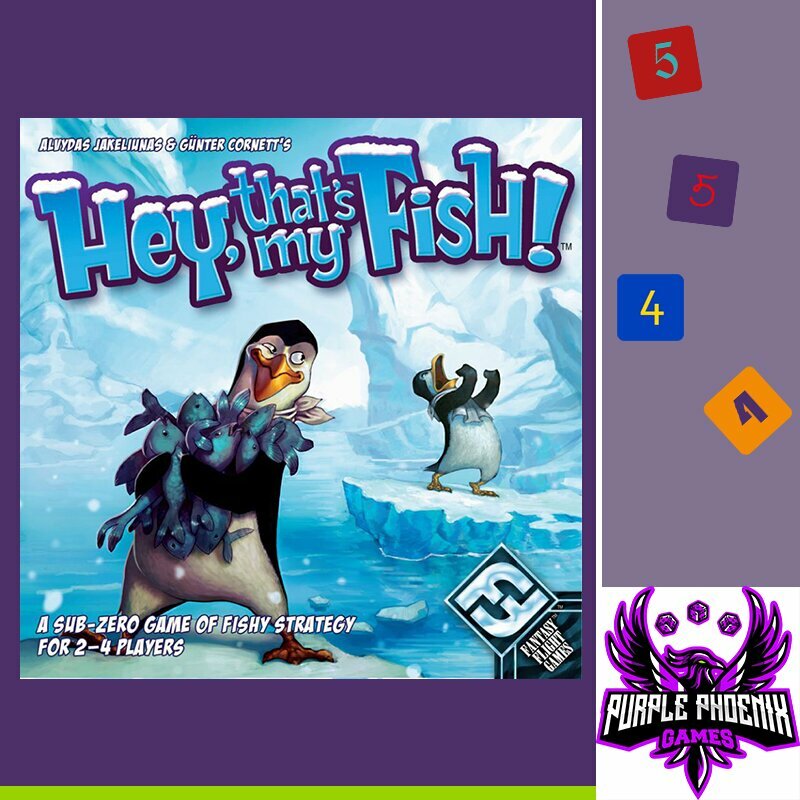
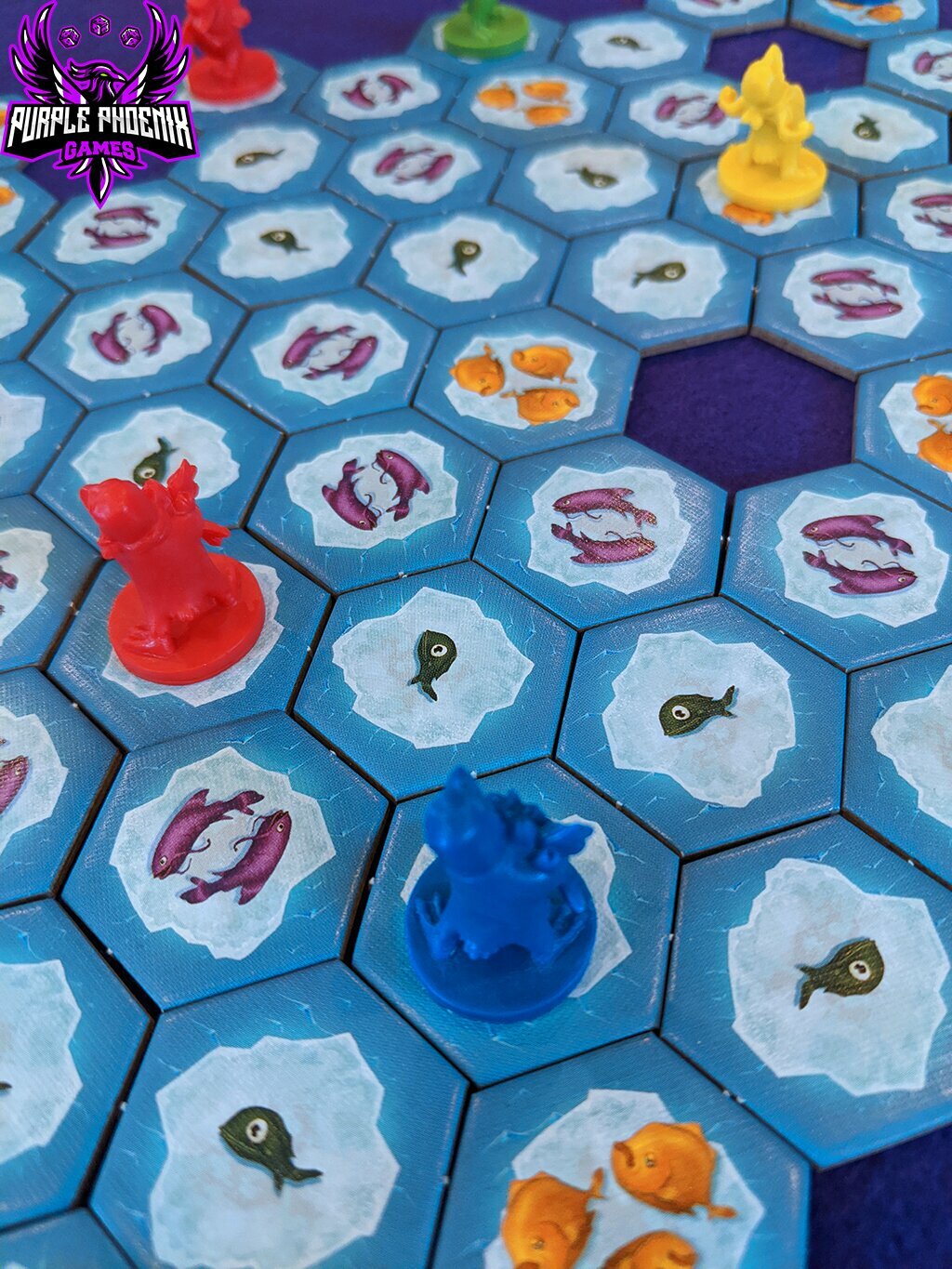
Hey, That’s My Fish! is a game of attempting to gather the most fish possible before climate change engulfs your little penguin minis. I mean, before the land sinks into the sea. To setup, place all the shuffled fish tiles in a grid of alternating 8 and 7-tile rows. Then, each player will, in turn, place their penguins on tiles showing one fish until their play pieces are on the board. That’s the setup. Quick and easy.
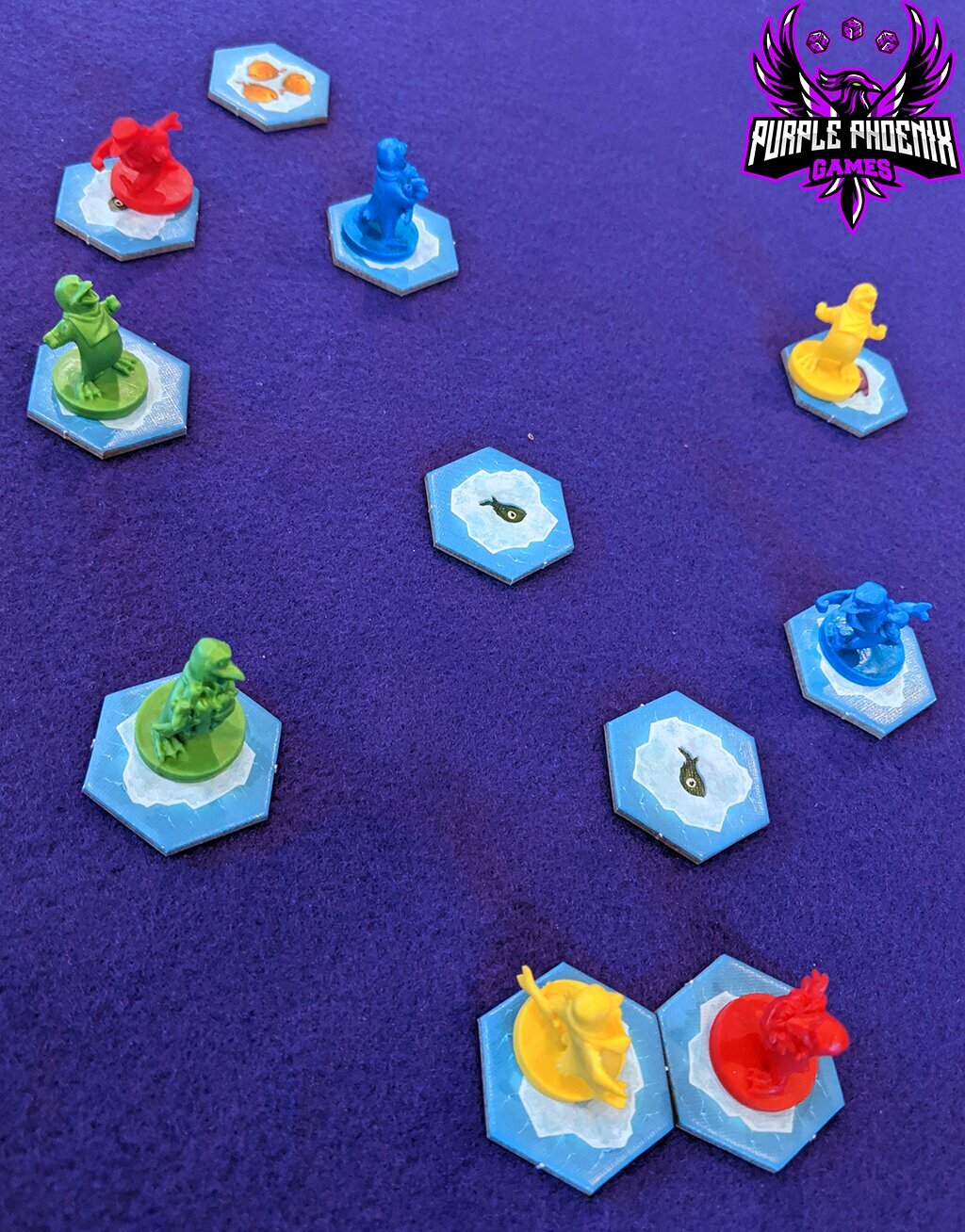
Like I said, the idea here is to gather the most fish to be crowned the winner. You can gather fish tiles by simply moving off them and onto another tile. Choose a direction to travel from your hex, and travel to any fish tile along a straight line – stopping before jumping over any penguin and not travelling over a blank space. Collect the fish tile from where you originally left and add it to your pile. Play continues in this fashion until all players are stalemated and can no longer make any further legal moves on the ever-shrinking board of fish snacks.
So here’s the rub with this one. It’s simple. Like, really simple. Pick up your penguieeple (sheesh) and move them to another hex tile in a straight line without jumping over any obstacle. Take the tile from which you left. Repeat. It sounds so stinking boring. But when you actually have your little peng… minis… and you are trying to get those elusive 3-fish tiles, but you have no way of getting there because your dang brother cut off your route so that only he and Josh can get them because they’re jerks – sorry. I got a bit carried away. But it really do be like that sometimes.
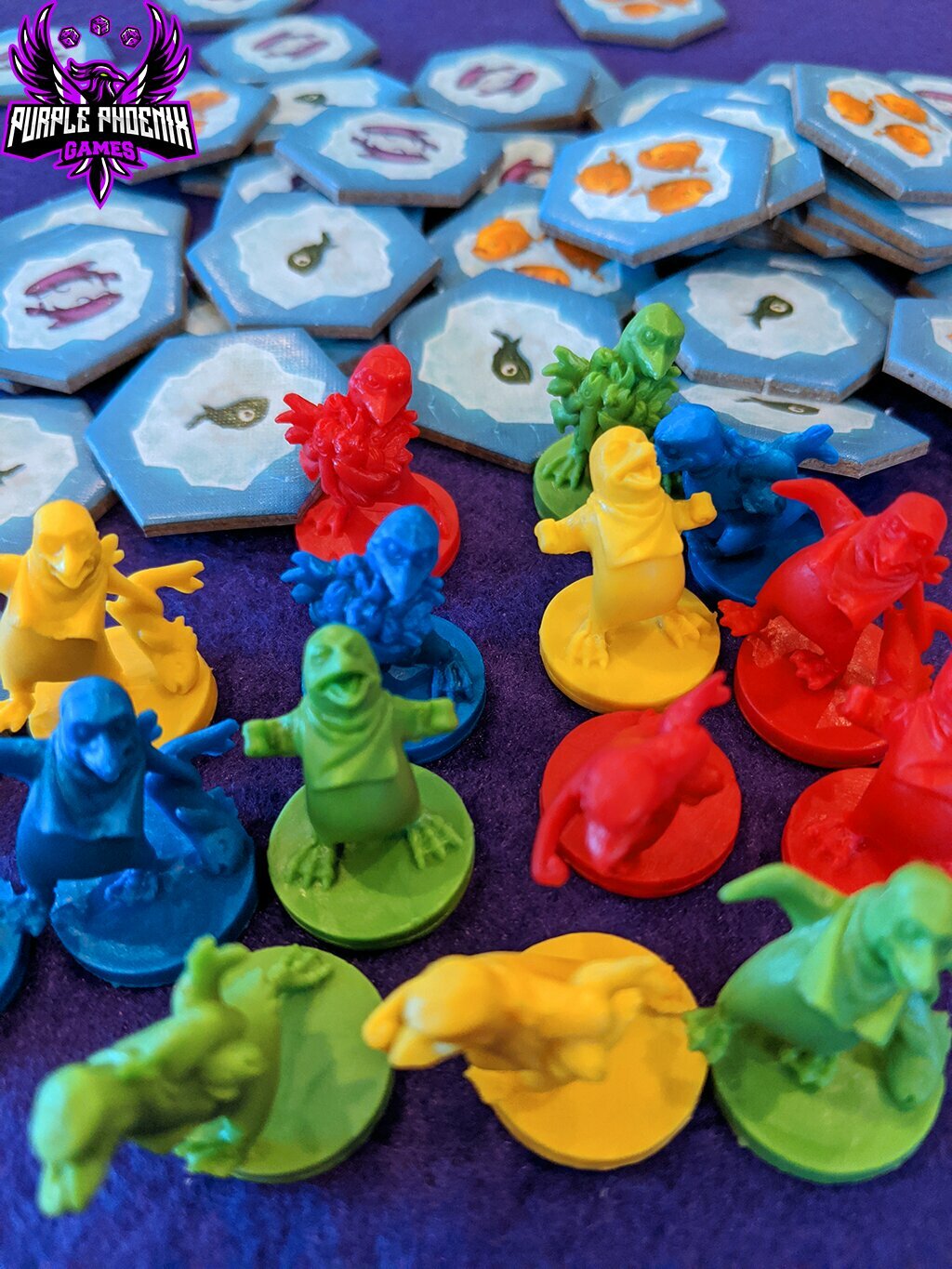
Components. This is an easy one. There are a bunch of cardboard hex tiles and some great little penguineeples. The penguins are brightly colored, and the hexes are very easy to understand and read. No issues here at all. Bonus: the pengeeples have such awesome little sassy poses hahahaha!
So what do I think? As a seasoned gamer and the most elder of our group, I absolutely adore it. It’s not the greatest game ever published, but sometimes you want to let off some steam and play a little cutthroat. So don’t let the cute penguins fool you – this is survival and you NEEEEED those little fishies! I have now owned this game twice (which my wife totally loves when she hears that), because I did miss having it available to me. So it is no surprise that we at Purple Phoenix Games give this little darling a fishy-fishy-bite-my-hook 18 / 24. Go on, grab a copy and destroy friendships!
Hey, That’s My Fish! is a game of attempting to gather the most fish possible before climate change engulfs your little penguin minis. I mean, before the land sinks into the sea. To setup, place all the shuffled fish tiles in a grid of alternating 8 and 7-tile rows. Then, each player will, in turn, place their penguins on tiles showing one fish until their play pieces are on the board. That’s the setup. Quick and easy.
Like I said, the idea here is to gather the most fish to be crowned the winner. You can gather fish tiles by simply moving off them and onto another tile. Choose a direction to travel from your hex, and travel to any fish tile along a straight line – stopping before jumping over any penguin and not travelling over a blank space. Collect the fish tile from where you originally left and add it to your pile. Play continues in this fashion until all players are stalemated and can no longer make any further legal moves on the ever-shrinking board of fish snacks.
So here’s the rub with this one. It’s simple. Like, really simple. Pick up your penguieeple (sheesh) and move them to another hex tile in a straight line without jumping over any obstacle. Take the tile from which you left. Repeat. It sounds so stinking boring. But when you actually have your little peng… minis… and you are trying to get those elusive 3-fish tiles, but you have no way of getting there because your dang brother cut off your route so that only he and Josh can get them because they’re jerks – sorry. I got a bit carried away. But it really do be like that sometimes.
Components. This is an easy one. There are a bunch of cardboard hex tiles and some great little penguineeples. The penguins are brightly colored, and the hexes are very easy to understand and read. No issues here at all. Bonus: the pengeeples have such awesome little sassy poses hahahaha!
So what do I think? As a seasoned gamer and the most elder of our group, I absolutely adore it. It’s not the greatest game ever published, but sometimes you want to let off some steam and play a little cutthroat. So don’t let the cute penguins fool you – this is survival and you NEEEEED those little fishies! I have now owned this game twice (which my wife totally loves when she hears that), because I did miss having it available to me. So it is no surprise that we at Purple Phoenix Games give this little darling a fishy-fishy-bite-my-hook 18 / 24. Go on, grab a copy and destroy friendships!
Jewel Mania™
Games and Entertainment
App
Jewel Mania - The new match 3 sensation is here, with brilliant jewels in over 600 dazzling puzzles!...
Purple Phoenix Games (2266 KP) rated Munchkin in Tabletop Games
Jan 6, 2020
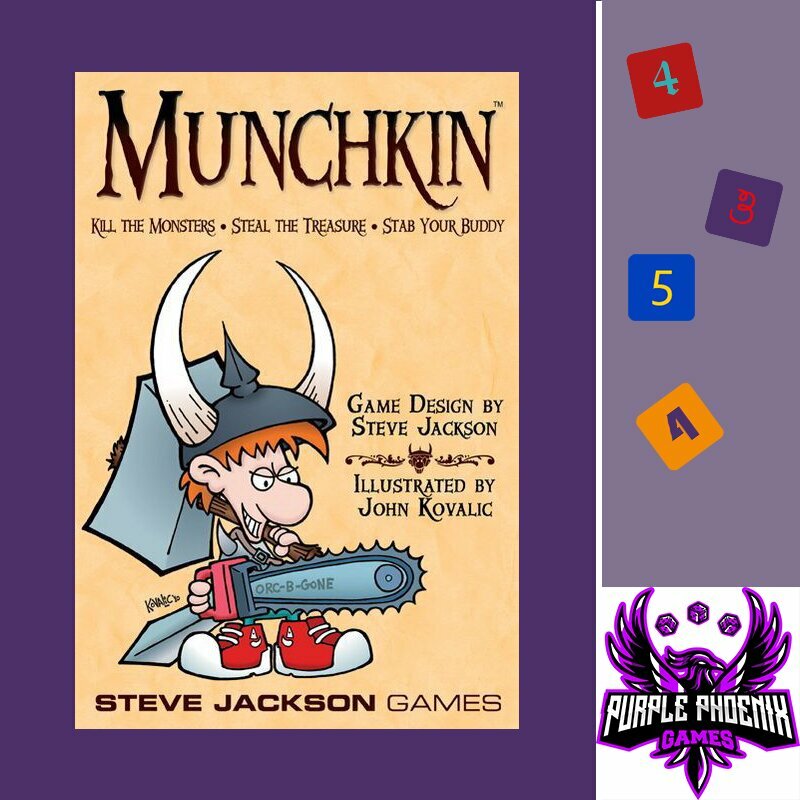
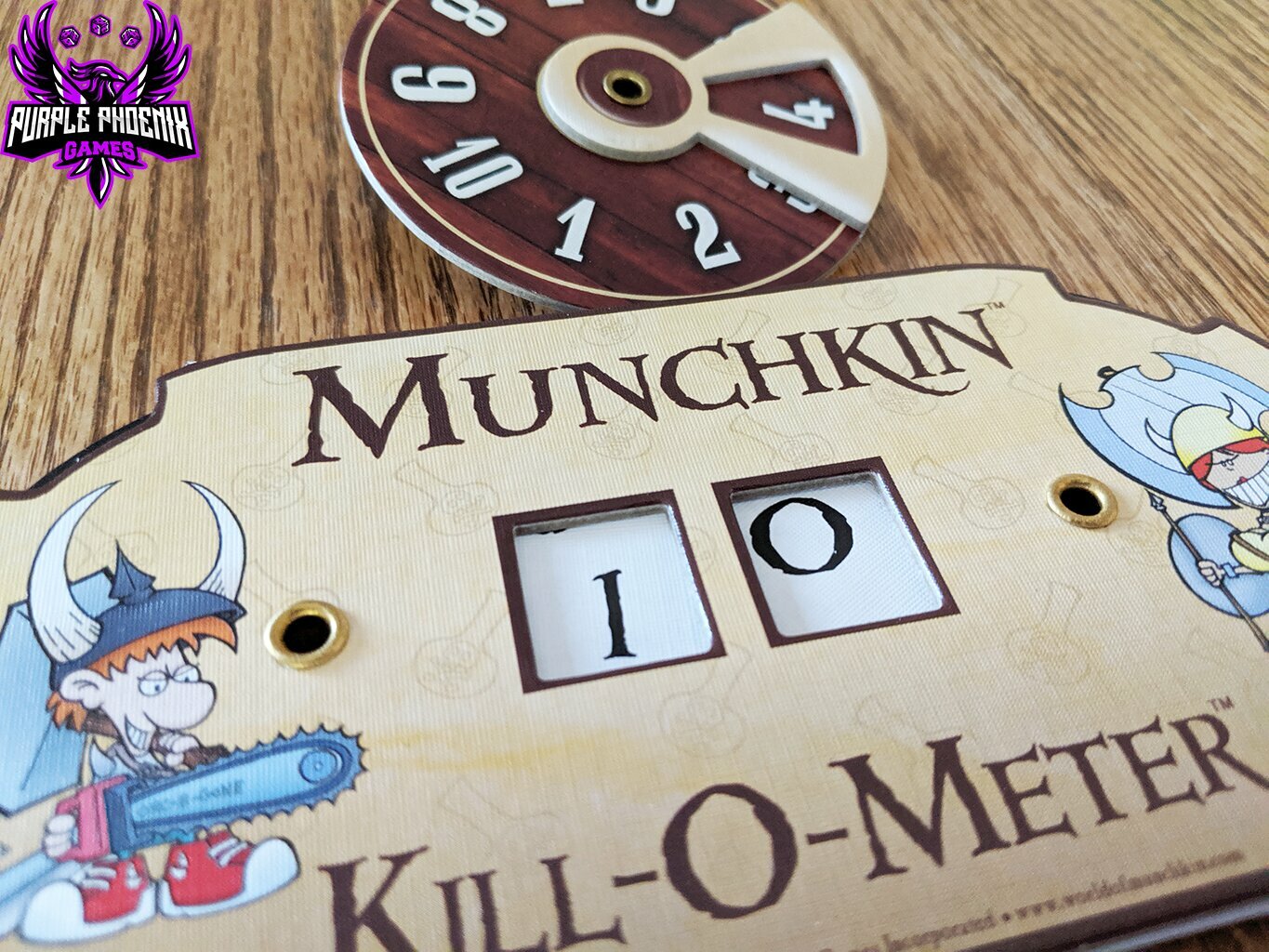
A “Munchkin,” in gamer terms, is someone who is only out to better themselves with treasure and power at the expense of everyone else in their adventuring party. That rings so very true in the Munchkin line of games, as you are trying to be the first to gain 10th Level in a VERY loosely-based RPG setting. OG vanilla Munchkin (pictured above) was my first entry into hobby board gaming. Many many games later I ask myself: How has this system of games aged for me as my gaming tastes have changed? Let’s see.
In Munchkin games, you are trying to become the first player to reach 10th Level. That’s the goal. You take on the persona of a 1st Level basic human (no Starbucks jokes please) who will be adventuring with a party of your opponents through a dungeon. You will be kicking down doors, fighting monsters, placing curses on your fellow party members, and buffing yourself with cards featuring funny art and punny references. Your party mates are also trying to achieve 10th Level and will do everything they can to block your progress, so be prepared!
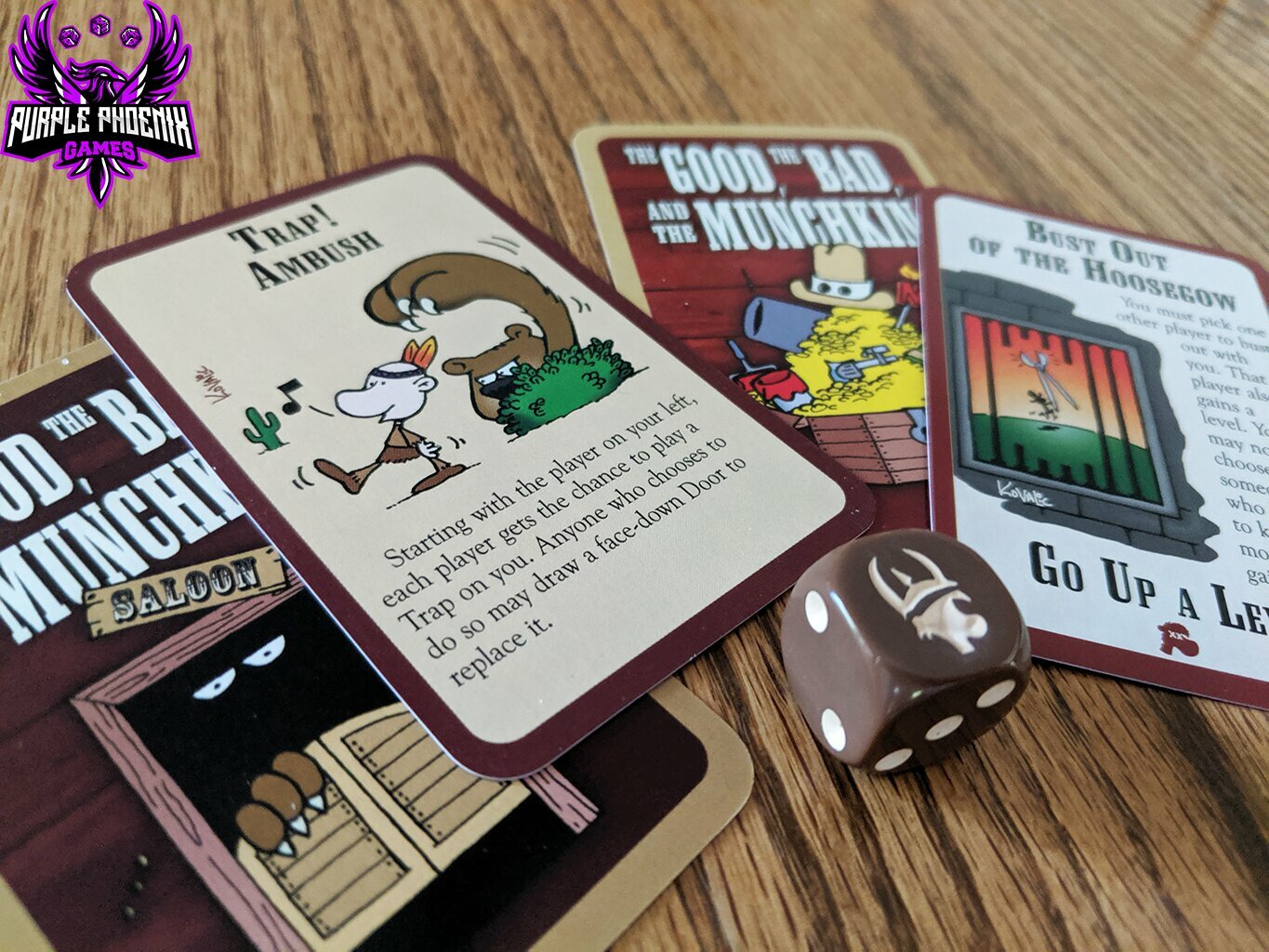
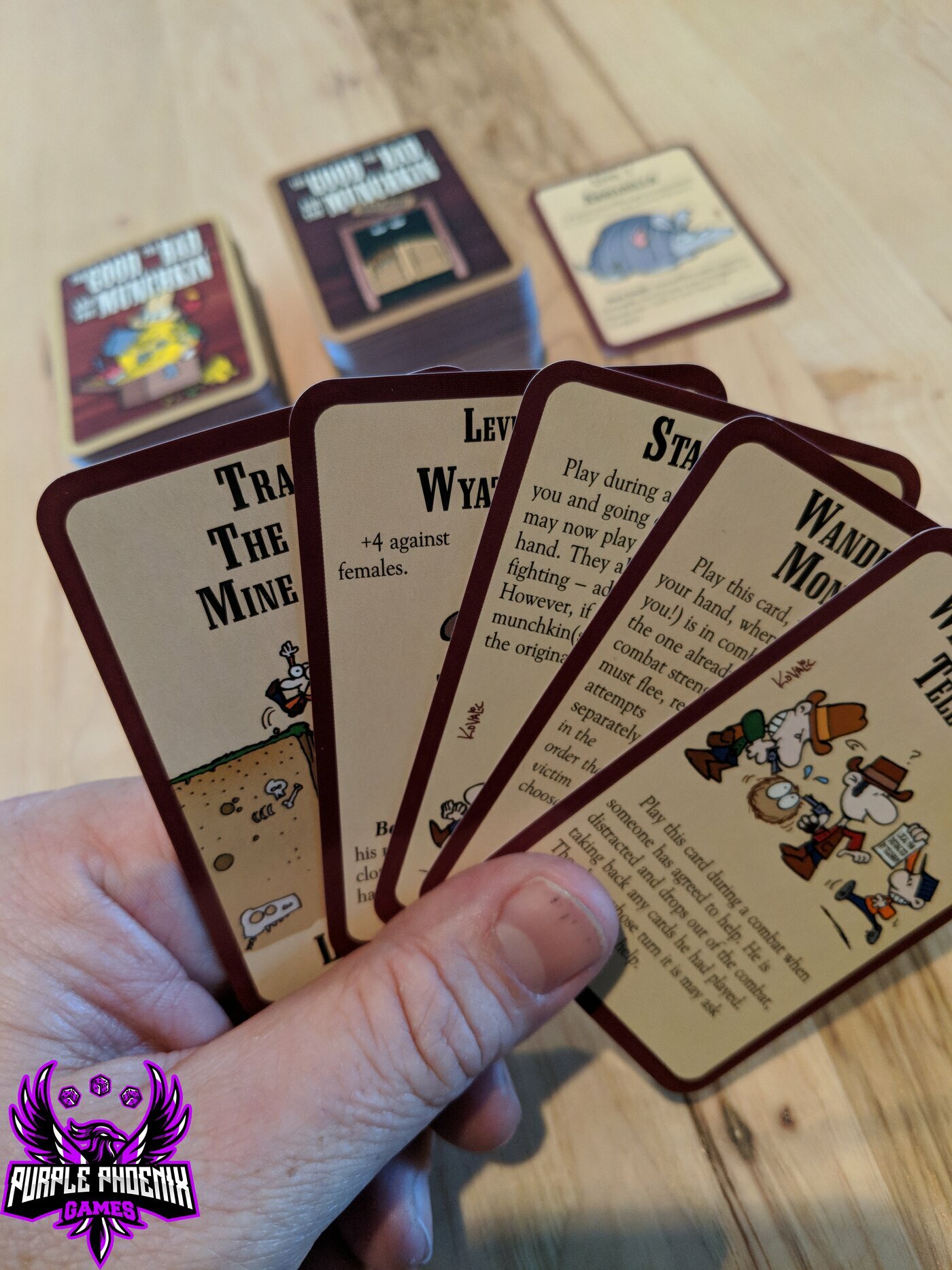
DISCLAIMER: This review is not for a specific game within the Munchkin universe, but for the system as a whole. All Munchkin games will pretty much use similar, if not exactly the same, rules to play the game with minor variations and different theming. I will be using The Good, The Bad, and The Munchkin for my review as it is one of the two versions I still own of the franchise. Also, I will not be detailing every rule in the book(s), but giving a brief overview of how the game plays. -T
Setup is easy: shuffle the deck of Door cards and the deck of Treasure cards. Deal cards to the players for their opening hands and keep the included die handy.
Your turn consists of just a few phases: Open a Door, Look for Trouble, Loot the Room, and Charity. To Open a Door, flip over the top card of the Door deck. If it is a monster you must fight it or run. If not a monster, you can move on to the next phase. If it IS a monster, prepare for combat. Combat is simple in that you add up all your bonuses from your gear cards you have attached to your character and try to beat the strength of the monster. Your party mates can screw with you during combat by adding strength to the monster or adding monsters to the fight to make it a more difficult encounter. If you win, you gain a Level on the spot. Some monsters are worth even more than one Level. If you did not encounter a monster, you will add the non-monster card you drew to your hand and you may Look for Trouble by playing a monster card from your hand to initiate a combat. This fight will work the same way and you will be susceptible to pile-ons as before. You may Loot the Room if you defeated a monster on your turn by drawing Treasure cards equal to the printed reward on the bottom of the monster card you defeated. If you defeated the monster yourself, unaided, these are drawn in secret. If you were given help by your mates then you may have to split up the loot per any agreements made. These cards are usually very advantageous to you so they are usually very valuable to others as they attempt to steal away your goods. If you did not fight a monster yet this turn, you may draw another secret card from the Door deck to add to your hand. Should your hand size climb above your limit (dictated by your Race card, if any) you will slide into the Charity phase to relieve your hand of extra cards. Give all excess cards to the player of lowest Level, or split them among those that share the lowest Level. It is now the next player’s turn and you continue play until someone reaches 10th Level.
Components. It’s a bunch of cards and one die. The cards are of okay quality. Nothing to write home about. The die is nice with one of the faces having the Munchkin logo head imprinted on it. It will also have a color scheme that matches the version of Munchkin you are playing, so it’s easy to match them back up if they become integrated with each other. Overall, the components are fine, but not wonderful. That’s probably why these are pretty inexpensive to purchase.
Okay, so like I said earlier the original vanilla Munchkin was the first hobby board game I ever purchased. My friends and family had no idea hobby games existed, so there was actually a pretty steep learning curve for us. Once we figured it out, however, we began to play it a ton and really love it! The cards are cute, the game play is pretty easy if you have played hobby games before, and the puns kept us rolling for a good while. There was a time when I owned every version of Munchkin in circulation and we never even played half of them. Seeing this I got rid of them through BGG Auctions. I have The Good, The Bad, and The Munchkin and Munchkin Zombies right now and I feel that will be plenty for me from here on out – unless they make a Doctor Who or Firefly set or something /*checks warehouse23 to find out if these are available/.
Do I still love Munchkin? No, not really. I LIKE it, but I don’t really want to play it all the time any more. Why? Well, as my gamer experience increases and I level up, my game tastes also level up. I see why people enjoy and even love this game system. I myself loved it for a time. But there are better games out there that accomplish the same feelings without being as sophomoric and have better choices to be made. Will I still play these games? Heck yeah! If someone asks to play a Munchkin game I am all in. I have different tastes and preferences now, but I’m no snob. Just come prepared, because I won’t go easy on you.
We at Purple Phoenix Games give this family of titles a backstabby 16 / 24.
In Munchkin games, you are trying to become the first player to reach 10th Level. That’s the goal. You take on the persona of a 1st Level basic human (no Starbucks jokes please) who will be adventuring with a party of your opponents through a dungeon. You will be kicking down doors, fighting monsters, placing curses on your fellow party members, and buffing yourself with cards featuring funny art and punny references. Your party mates are also trying to achieve 10th Level and will do everything they can to block your progress, so be prepared!
DISCLAIMER: This review is not for a specific game within the Munchkin universe, but for the system as a whole. All Munchkin games will pretty much use similar, if not exactly the same, rules to play the game with minor variations and different theming. I will be using The Good, The Bad, and The Munchkin for my review as it is one of the two versions I still own of the franchise. Also, I will not be detailing every rule in the book(s), but giving a brief overview of how the game plays. -T
Setup is easy: shuffle the deck of Door cards and the deck of Treasure cards. Deal cards to the players for their opening hands and keep the included die handy.
Your turn consists of just a few phases: Open a Door, Look for Trouble, Loot the Room, and Charity. To Open a Door, flip over the top card of the Door deck. If it is a monster you must fight it or run. If not a monster, you can move on to the next phase. If it IS a monster, prepare for combat. Combat is simple in that you add up all your bonuses from your gear cards you have attached to your character and try to beat the strength of the monster. Your party mates can screw with you during combat by adding strength to the monster or adding monsters to the fight to make it a more difficult encounter. If you win, you gain a Level on the spot. Some monsters are worth even more than one Level. If you did not encounter a monster, you will add the non-monster card you drew to your hand and you may Look for Trouble by playing a monster card from your hand to initiate a combat. This fight will work the same way and you will be susceptible to pile-ons as before. You may Loot the Room if you defeated a monster on your turn by drawing Treasure cards equal to the printed reward on the bottom of the monster card you defeated. If you defeated the monster yourself, unaided, these are drawn in secret. If you were given help by your mates then you may have to split up the loot per any agreements made. These cards are usually very advantageous to you so they are usually very valuable to others as they attempt to steal away your goods. If you did not fight a monster yet this turn, you may draw another secret card from the Door deck to add to your hand. Should your hand size climb above your limit (dictated by your Race card, if any) you will slide into the Charity phase to relieve your hand of extra cards. Give all excess cards to the player of lowest Level, or split them among those that share the lowest Level. It is now the next player’s turn and you continue play until someone reaches 10th Level.
Components. It’s a bunch of cards and one die. The cards are of okay quality. Nothing to write home about. The die is nice with one of the faces having the Munchkin logo head imprinted on it. It will also have a color scheme that matches the version of Munchkin you are playing, so it’s easy to match them back up if they become integrated with each other. Overall, the components are fine, but not wonderful. That’s probably why these are pretty inexpensive to purchase.
Okay, so like I said earlier the original vanilla Munchkin was the first hobby board game I ever purchased. My friends and family had no idea hobby games existed, so there was actually a pretty steep learning curve for us. Once we figured it out, however, we began to play it a ton and really love it! The cards are cute, the game play is pretty easy if you have played hobby games before, and the puns kept us rolling for a good while. There was a time when I owned every version of Munchkin in circulation and we never even played half of them. Seeing this I got rid of them through BGG Auctions. I have The Good, The Bad, and The Munchkin and Munchkin Zombies right now and I feel that will be plenty for me from here on out – unless they make a Doctor Who or Firefly set or something /*checks warehouse23 to find out if these are available/.
Do I still love Munchkin? No, not really. I LIKE it, but I don’t really want to play it all the time any more. Why? Well, as my gamer experience increases and I level up, my game tastes also level up. I see why people enjoy and even love this game system. I myself loved it for a time. But there are better games out there that accomplish the same feelings without being as sophomoric and have better choices to be made. Will I still play these games? Heck yeah! If someone asks to play a Munchkin game I am all in. I have different tastes and preferences now, but I’m no snob. Just come prepared, because I won’t go easy on you.
We at Purple Phoenix Games give this family of titles a backstabby 16 / 24.
Purple Phoenix Games (2266 KP) rated Deckscape: Crew vs Crew - The Pirate's Island in Tabletop Games
May 20, 2021
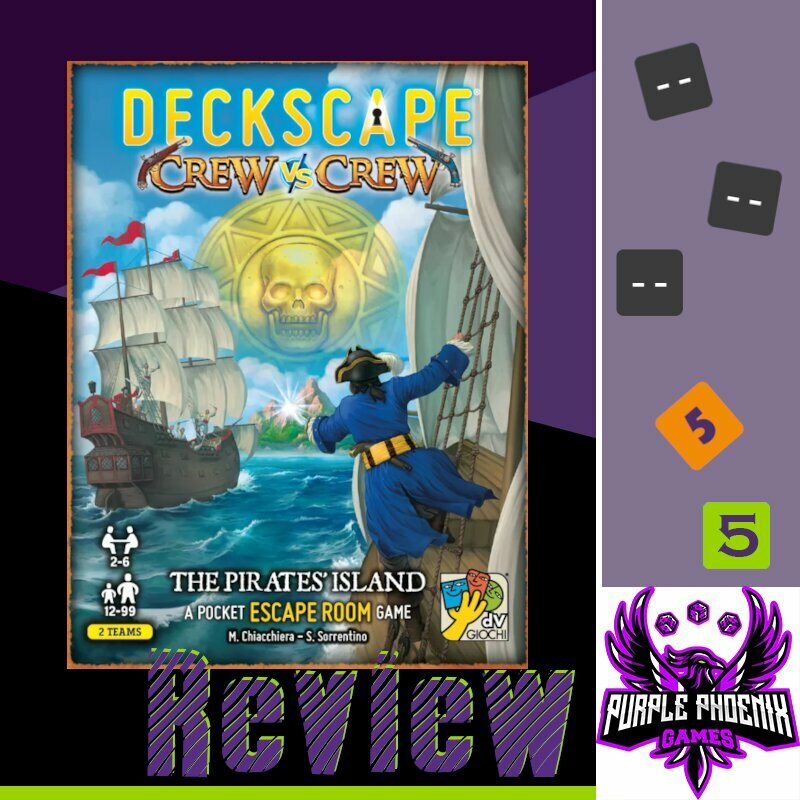
Who out there has ever gone to an escape room and not enjoyed themselves? I know nobody (though if that’s you, it’s okay). I have only been to one in my life (eek!) and I absolutely loved it! I have watched videos of celebrities tackling escape rooms and have been riveted. I like the shows you can now find streaming of similar type activities and am always glued to the screen. Heck, I have played the EXIT and Unlock systems of board games and enjoyed them as well. So having the experience I have and having played two other Deckscape games, how did this one fare for me? Much better. Read on.
These one-shot escape room style games are difficult to explain without major spoilers, so I will try to explain what I can as best I can. Please don’t flame me for being vague. I am protecting you.
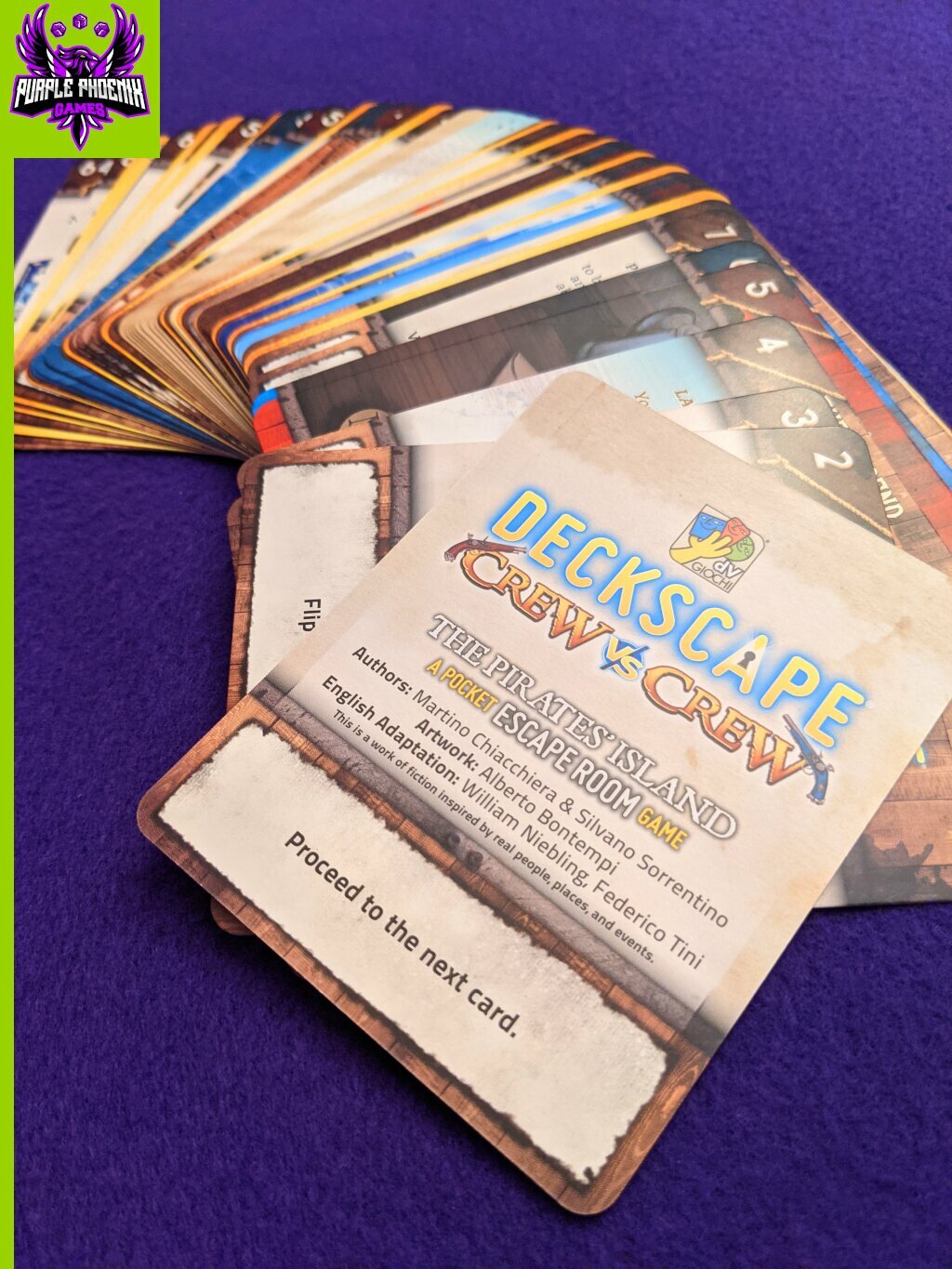
DISCLAIMER: We were provided a copy of this game for the purposes of this review. This is a retail copy of the game, so what you see in these photos is exactly what would be received in your box. I will describe the overall game flow and major rule set so that our readers may get a sense of how the game plays. For more info, you may purchase a copy online or from your FLGS. -T
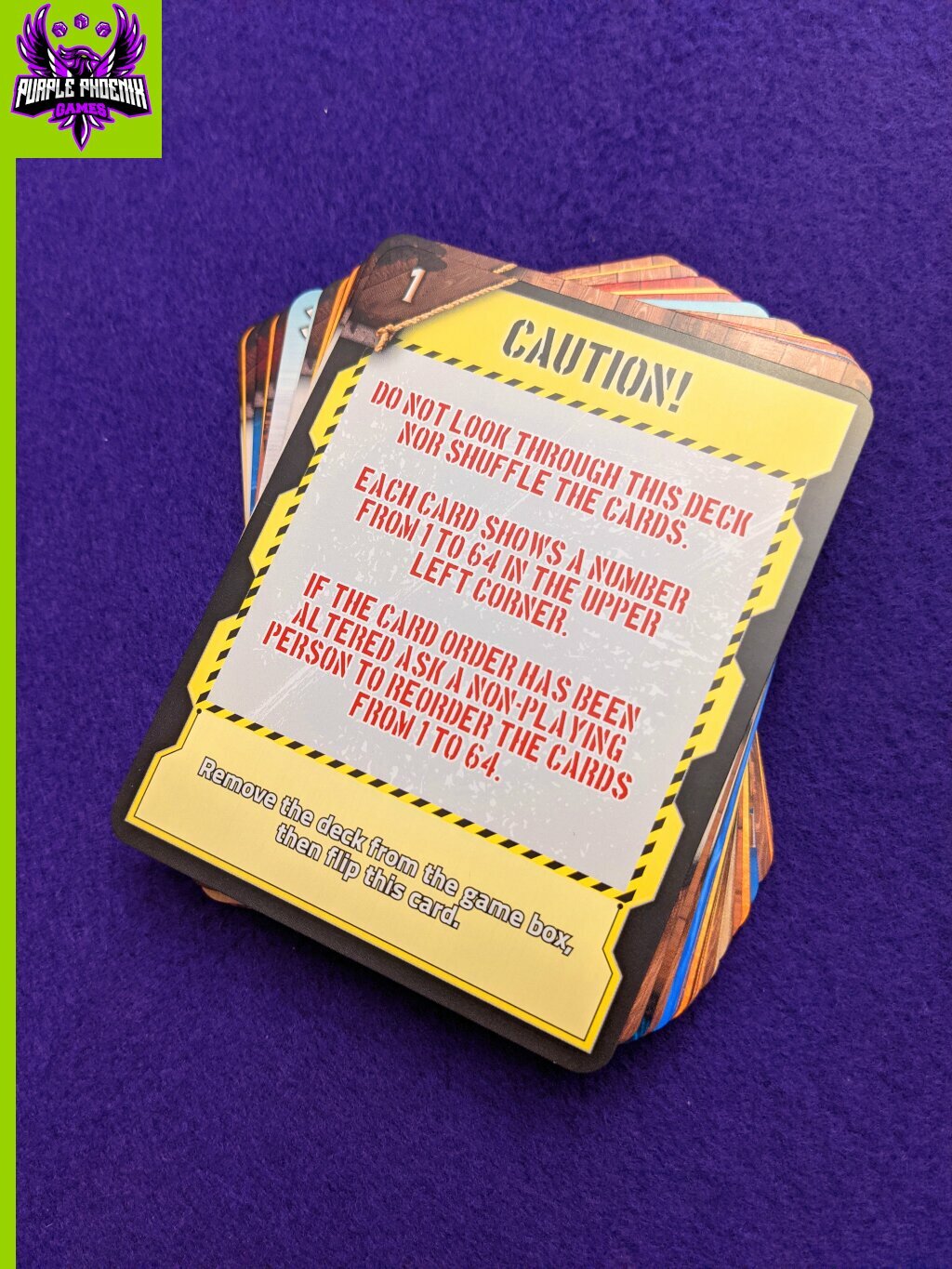
To setup, open the box and take out the cards. Done. Read Card 1.
This one is quite a bit different from previous Deckscape games I have played in several ways. First, this is a head-to-head game where two players (or teams of players) will be taking sides of two pirate captains and attempting to figure out the answers to puzzles offered on cards in the game. Each side will have equal time and opportunity to solve the puzzles, but the first side to claim that they have solved it will be able to flip over the puzzle card to check for accurate answers. If they have succeeded, they earn the booty. If they fail, the other team has a chance to complete the puzzle successfully.
Play continues through the deck of cards with each side engaging in battles of wits until the end of the game draws near. The side with the most booty earned will be the winner and the game can then be passed along to another group of players to enjoy.
Components. This is a box of cards. The cards are all bigger than normal playing cards and feature pretty great art and vivid colors. I totally dig the pirate theme, so I was already destined to enjoy to aesthetic, but I do believe this is the better-looking game of the ones I have tried in its family.
Gameplay is also so different from the other two games in the Deckscape system and that’s a great thing. Having this head-to-head style really suited my situation when I played it: my 10-year-old niece was bored while her twin brother was at baseball practice, so I invited her to play this with me. Long story short, she ended up beating me by one point in the end, so that made her incredibly happy. I also highly enjoyed my playthrough of it, even in defeat.
I wish I could speak more on the specifics why I liked this, but again, as River Song would say, “Spoilers.” Do know that of the three Deckscape games I have played, I believe this is the best of the group. The puzzles are all fantastic, and I feel like I had a good handle on the solutions, but my niece obviously beat me to them more often than I would have liked to have admitted. That said, I can recommend this one to anyone interested in the Deckscape system with one caveat: this is head-to-head instead of the typical cooperative experience in the series. So you have been warned. It’s very good, though, so do check it out. Purple Phoenix Games (with guest score from my niece Keira) gives this one a puzzly 10 / 12, If you are wanting a little different flavor in your bottle of rum, grab a copy of this and enjoy. Just play it with someone your own age, or prepare to BE owned.
These one-shot escape room style games are difficult to explain without major spoilers, so I will try to explain what I can as best I can. Please don’t flame me for being vague. I am protecting you.
DISCLAIMER: We were provided a copy of this game for the purposes of this review. This is a retail copy of the game, so what you see in these photos is exactly what would be received in your box. I will describe the overall game flow and major rule set so that our readers may get a sense of how the game plays. For more info, you may purchase a copy online or from your FLGS. -T
To setup, open the box and take out the cards. Done. Read Card 1.
This one is quite a bit different from previous Deckscape games I have played in several ways. First, this is a head-to-head game where two players (or teams of players) will be taking sides of two pirate captains and attempting to figure out the answers to puzzles offered on cards in the game. Each side will have equal time and opportunity to solve the puzzles, but the first side to claim that they have solved it will be able to flip over the puzzle card to check for accurate answers. If they have succeeded, they earn the booty. If they fail, the other team has a chance to complete the puzzle successfully.
Play continues through the deck of cards with each side engaging in battles of wits until the end of the game draws near. The side with the most booty earned will be the winner and the game can then be passed along to another group of players to enjoy.
Components. This is a box of cards. The cards are all bigger than normal playing cards and feature pretty great art and vivid colors. I totally dig the pirate theme, so I was already destined to enjoy to aesthetic, but I do believe this is the better-looking game of the ones I have tried in its family.
Gameplay is also so different from the other two games in the Deckscape system and that’s a great thing. Having this head-to-head style really suited my situation when I played it: my 10-year-old niece was bored while her twin brother was at baseball practice, so I invited her to play this with me. Long story short, she ended up beating me by one point in the end, so that made her incredibly happy. I also highly enjoyed my playthrough of it, even in defeat.
I wish I could speak more on the specifics why I liked this, but again, as River Song would say, “Spoilers.” Do know that of the three Deckscape games I have played, I believe this is the best of the group. The puzzles are all fantastic, and I feel like I had a good handle on the solutions, but my niece obviously beat me to them more often than I would have liked to have admitted. That said, I can recommend this one to anyone interested in the Deckscape system with one caveat: this is head-to-head instead of the typical cooperative experience in the series. So you have been warned. It’s very good, though, so do check it out. Purple Phoenix Games (with guest score from my niece Keira) gives this one a puzzly 10 / 12, If you are wanting a little different flavor in your bottle of rum, grab a copy of this and enjoy. Just play it with someone your own age, or prepare to BE owned.

Purple Phoenix Games (2266 KP) rated Bohnanza in Tabletop Games
Jun 12, 2019

Bean farmin’. Don’t get better’n that. Unless you’re corn farmin’. An’ we should know. We are from the Quad Cities, the booger of the man made by Iowa, Missouri, Arkansas, and Louisiana. Look here. Yes, we are surrounded by corn fields, but our home is not within a corn field. Actually, we live in a somewhat-midsize metropolitan area that boasts a population near 475,000. I’m off track again, aren’t I? Right. Bean farming. Lame theme, but Bohnanza shines in gameplay that just can’t be beat. Right, Bryan?
Okay, so bean farming isn’t for everyone. It’s not for me, it’s probably not for you. And honestly, the theme in Bohnanza doesn’t really come through all that strongly. But that’s only part of the reason we game. It’s also about the experience of gaming and the memories you make while playing. This game certainly delivers on those points. So many hilarious moments have been brought to us by Bohnanza. Bohnanza, the zany little card game about planting and trading beans.
I remember one time, when playing with family, there was a VERY heated back-and-forth bargaining that involved the lowly Chili Bean. Screaming. Throwing hands in the air. It was glorious. And the Chili Bean shall thenceforth be known as nothing other than the Chilla Bean.
So I’m not going to bore you with the rules explanation, but I will tell you that some of the mechanics found in this little game can be found elsewhere in other games, but the combination of the mechanics coupled with the ridiculous theme elevates this game for many. It has set collection, hand management (NO shuffling your hand or even sorting – you keep those cards in the same order you received them, youngster!), trading, bluffing, take that. It has so much packed into this small box. So much ridiculousness. But it’s wonderful.
I have taught this to brand new gamers and those who are very inexperienced with modern board games. It’s a smash with nearly everyone. I will be keeping my copy, even though my brother suggests pretty much ANY other game when we pull it out (as evidenced by his rating of 2 out of 6). We at Purple Phoenix Games give Bohnanza a 17 / 24.
https://purplephoenixgames.wordpress.com/2018/12/19/bohnanza-review/
Okay, so bean farming isn’t for everyone. It’s not for me, it’s probably not for you. And honestly, the theme in Bohnanza doesn’t really come through all that strongly. But that’s only part of the reason we game. It’s also about the experience of gaming and the memories you make while playing. This game certainly delivers on those points. So many hilarious moments have been brought to us by Bohnanza. Bohnanza, the zany little card game about planting and trading beans.
I remember one time, when playing with family, there was a VERY heated back-and-forth bargaining that involved the lowly Chili Bean. Screaming. Throwing hands in the air. It was glorious. And the Chili Bean shall thenceforth be known as nothing other than the Chilla Bean.
So I’m not going to bore you with the rules explanation, but I will tell you that some of the mechanics found in this little game can be found elsewhere in other games, but the combination of the mechanics coupled with the ridiculous theme elevates this game for many. It has set collection, hand management (NO shuffling your hand or even sorting – you keep those cards in the same order you received them, youngster!), trading, bluffing, take that. It has so much packed into this small box. So much ridiculousness. But it’s wonderful.
I have taught this to brand new gamers and those who are very inexperienced with modern board games. It’s a smash with nearly everyone. I will be keeping my copy, even though my brother suggests pretty much ANY other game when we pull it out (as evidenced by his rating of 2 out of 6). We at Purple Phoenix Games give Bohnanza a 17 / 24.
https://purplephoenixgames.wordpress.com/2018/12/19/bohnanza-review/

Lola Panda’s Math Train 2 – Learn Counting, Addition, and Subtraction with Lola!
Games and Education
App
Lola is back for even more math train adventures in Lola’s Math Train 2! Even more challenging...
Purple Phoenix Games (2266 KP) rated Jetpack Joyride in Tabletop Games
Jan 8, 2020 (Updated Jan 8, 2020)

It should come as no surprise that I love to play board games. Hence my involvement in this wonderful group! But besides board games, I also enjoy my fair share of video games too. These two worlds of gaming occasionally collide when a classic from one realm is transferred over to the other! Is the adaptation as fun as the original, or does it leave much to be desired?
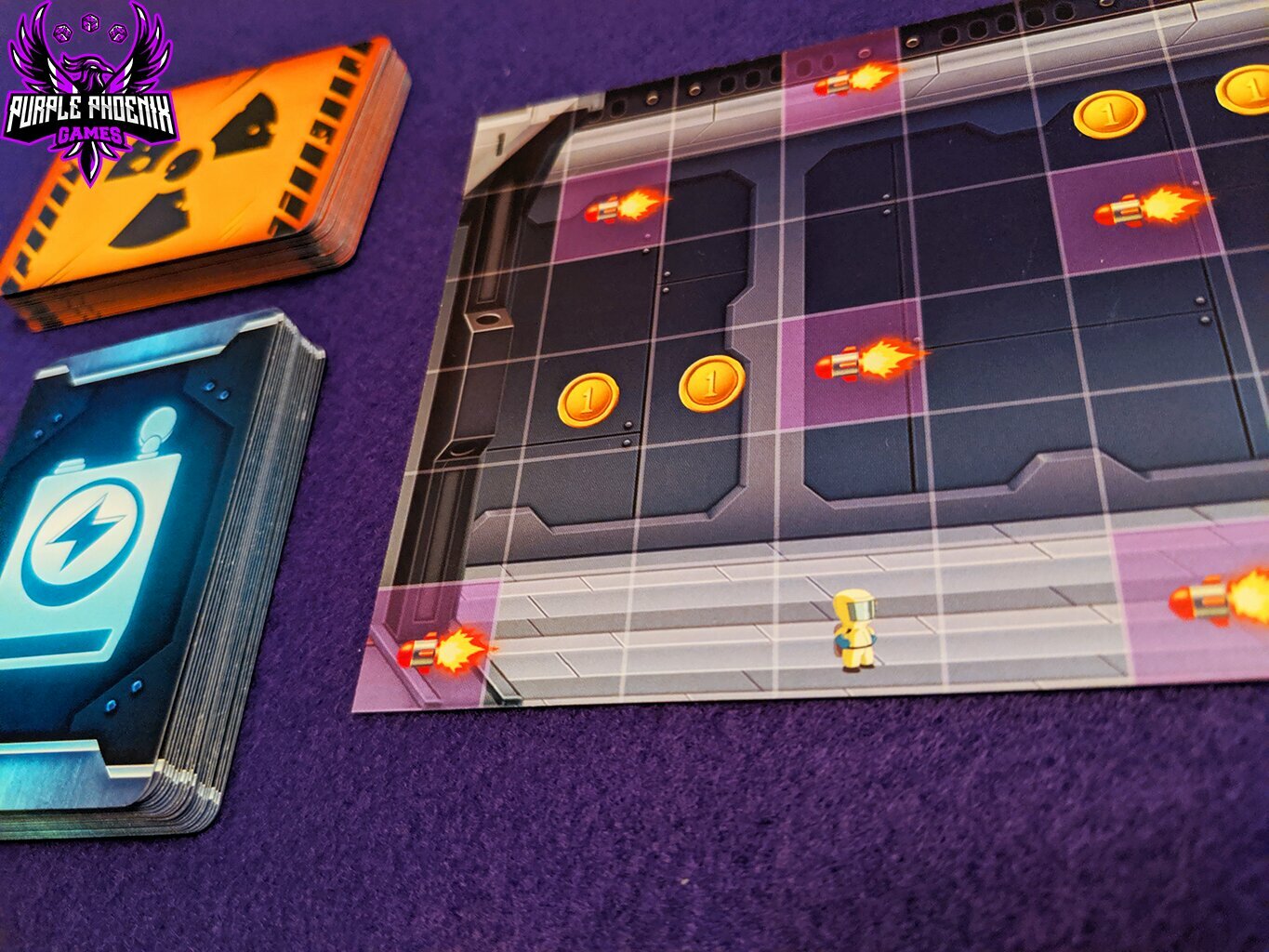
Originally a mobile game, Jetpack Joyride follows our main character, Barry, as he attempts to escape a top-secret lab with a stolen jetpack! He must avoid being hit by zappers, annihilated by lasers, and blown away by missiles in the process. If Barry succeeds, he escapes with not only the high-tech jetpack, but also with as many gold coins and other top-secret gadgets as he can get his hands on! So the risk is definitely worth the reward. But if Barry is unable to escape, he will face the consequences for his unauthorized joyride… In all honesty, I had never heard of Jetpack Joyride before I Kickstarted the board game version, so I downloaded it on my phone to see how it plays. Do you remember Flappy Bird? The mobile version of Jetpack Joyride is kiiiinda like that, but more exciting and way less infuriating. It’s free to download in the App Store and Google Play Store, so check it out if you’re interested! Anyway, back to the board game version. The premise is the same as the app – you have to create a path for Barry to use for his escape from the lab, utilizing the gadgets available to you and collecting gold coins on your way.
DISCLAIMER: We are using the Kickstarter Deluxe version of the game. We do have the expansions from the KS campaign, but will not be using those for this review. Also, we do not intend to cover every single rule included in the rule book, but will describe the overall game flow and major rule set so that our readers may get a sense of how the game plays. For more in depth rules, you may purchase a copy from the publisher directly or from your FLGS. -T
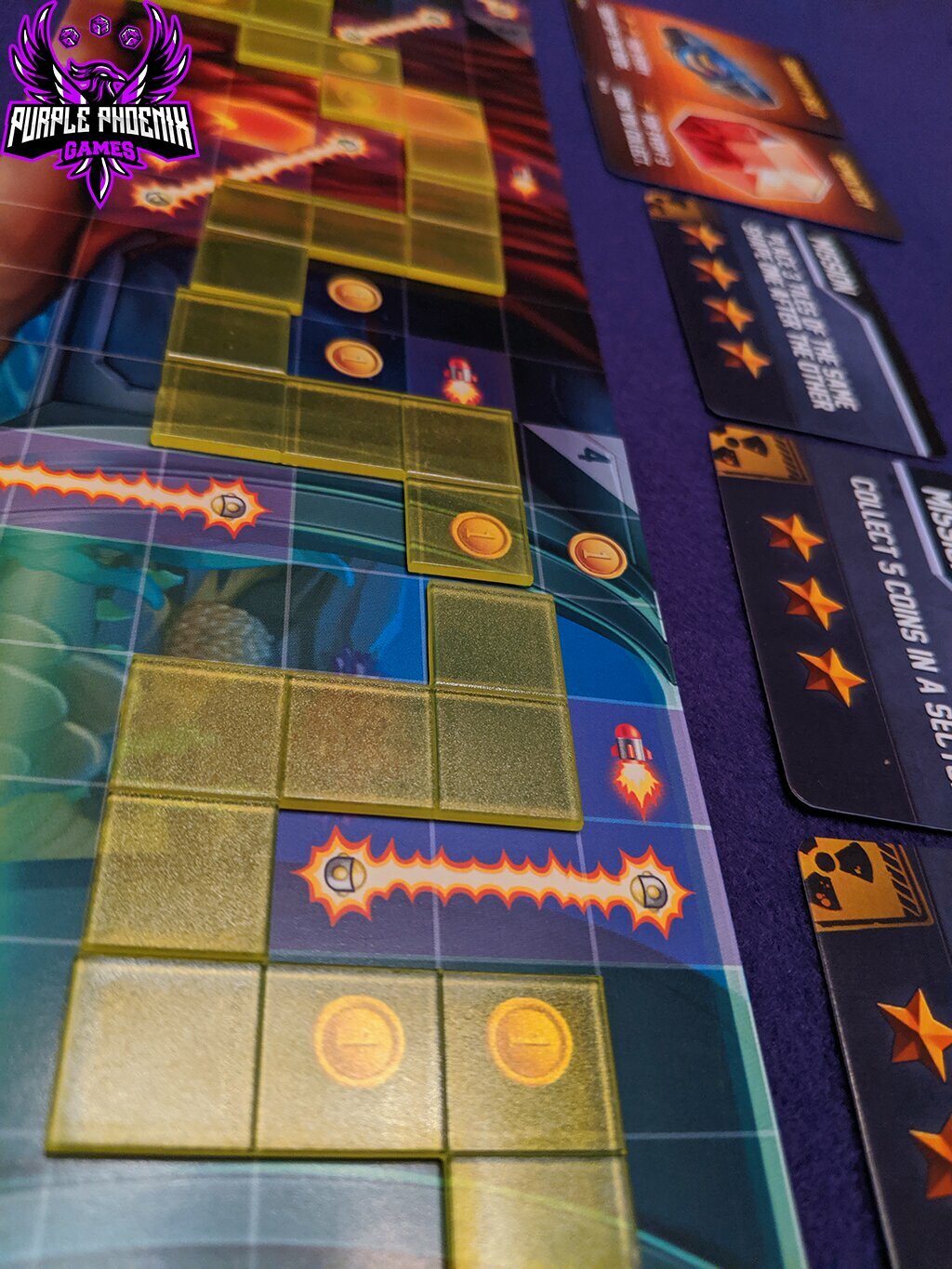
Jetpack Joyride is a real-time game of tile placement in which players are racing to see who can complete their run (path through the lab) the fastest. The game lasts for 3 runs, and points are earned throughout all runs. To setup, each player receives a set of 4 lab sector cards and sets them on the table in front of them in numerical order, 1-4. Three mission cards (cards that score points at the end of the run) are revealed and available for all players. Players may also have gadgets, available only to them, to help score extra points. When a run begins, all players grab translucent polyominoes (like matte versions of bits from Blokus) from the common pool and place them on their lab cards to create an unbroken path through the lab. There are specific placement restrictions that I will leave for you to discover in the rulebook. The game has no set time limit for each run, but it is a race to complete a path before your opponents. At the end of the run, points are tallied for completed missions and gadget cards. Easy, right? Here’s a small twist – before starting the next run, all players pick up their lab cards and pass them to the player on their left. So each run, players are looking at new cards and must find new paths through the lab! New mission cards and gadgets are revealed before subsequent runs as well. The player with the most points at the end of all 3 runs is the winner!
Jetpack Joyride is a fast-paced, exciting, and surprisingly strategic game that keeps all players engaged and entertained. And that’s what I love about it. First of all, real-time games are always high-energy, at least in my opinion. It’s nearly impossible to stay calm and collected when you’re literally racing against your opponents! Jetpack Joyride is definitely not a passive game, and there’s so much action and excitement that you sometimes forget you’re literally just laying tiles on cards. The next thing I love about this game is how deceptively strategic it is. Laying tiles to form a legal path across cards is not complicated, but doing so while also trying to earn extra points by completing missions (like placing 3 tiles of the same shape in a row, for example) adds a strategic element that you don’t expect. You’re not only trying to finish your run the fastest, but you’ve also got to fulfill the requirements for multiple mission and gadget cards too. One misplaced tile could decimate a run for you, so you’ve always got to be thinking several tiles in advance.
Going along with that, another neat thing about Jetpack Joyride is that all players are drawing tiles from a common pool. There is a finite number of tiles, and a specific number of the different shapes, so if the shape of tile you need is gone from the pool, you’re outta luck! You have to think and move quickly, otherwise you might get knocked out of a run, and that costs you valuable end-game points. For such a simple game, Jetpack Joyride also has a lot of variability. All lab cards are double-sided, and can be mixed and matched in any combination, as long as they are in a numerical set of 1-4. There are so many possibilities, chances are you won’t ever play with the same card combo twice….and if you do, chances are you won’t remember it 😛 All of these aspects elevate this game from a simple party game to a strategically fun game that can be played with any player count.
Overall, I think Jetpack Joyride is great. After my first play, I rated it a 4+, but after a few more I’ve changed my rating to a 5. As you can see from our scores above, Travis and our guest judge Luke enjoyed it as well. It’s a nice, light game that can be used as a filler between heavier games, or as a main-event game all on its own. Definitely a game I will use with newer gamers, and the strategic side will keep me coming back for more. I think Jetpack Joyride will get a lot of playtime from me, and it was worth my investment on Kickstarter. Purple Phoenix Games gives it a jet-powered 15 / 18.
Originally a mobile game, Jetpack Joyride follows our main character, Barry, as he attempts to escape a top-secret lab with a stolen jetpack! He must avoid being hit by zappers, annihilated by lasers, and blown away by missiles in the process. If Barry succeeds, he escapes with not only the high-tech jetpack, but also with as many gold coins and other top-secret gadgets as he can get his hands on! So the risk is definitely worth the reward. But if Barry is unable to escape, he will face the consequences for his unauthorized joyride… In all honesty, I had never heard of Jetpack Joyride before I Kickstarted the board game version, so I downloaded it on my phone to see how it plays. Do you remember Flappy Bird? The mobile version of Jetpack Joyride is kiiiinda like that, but more exciting and way less infuriating. It’s free to download in the App Store and Google Play Store, so check it out if you’re interested! Anyway, back to the board game version. The premise is the same as the app – you have to create a path for Barry to use for his escape from the lab, utilizing the gadgets available to you and collecting gold coins on your way.
DISCLAIMER: We are using the Kickstarter Deluxe version of the game. We do have the expansions from the KS campaign, but will not be using those for this review. Also, we do not intend to cover every single rule included in the rule book, but will describe the overall game flow and major rule set so that our readers may get a sense of how the game plays. For more in depth rules, you may purchase a copy from the publisher directly or from your FLGS. -T
Jetpack Joyride is a real-time game of tile placement in which players are racing to see who can complete their run (path through the lab) the fastest. The game lasts for 3 runs, and points are earned throughout all runs. To setup, each player receives a set of 4 lab sector cards and sets them on the table in front of them in numerical order, 1-4. Three mission cards (cards that score points at the end of the run) are revealed and available for all players. Players may also have gadgets, available only to them, to help score extra points. When a run begins, all players grab translucent polyominoes (like matte versions of bits from Blokus) from the common pool and place them on their lab cards to create an unbroken path through the lab. There are specific placement restrictions that I will leave for you to discover in the rulebook. The game has no set time limit for each run, but it is a race to complete a path before your opponents. At the end of the run, points are tallied for completed missions and gadget cards. Easy, right? Here’s a small twist – before starting the next run, all players pick up their lab cards and pass them to the player on their left. So each run, players are looking at new cards and must find new paths through the lab! New mission cards and gadgets are revealed before subsequent runs as well. The player with the most points at the end of all 3 runs is the winner!
Jetpack Joyride is a fast-paced, exciting, and surprisingly strategic game that keeps all players engaged and entertained. And that’s what I love about it. First of all, real-time games are always high-energy, at least in my opinion. It’s nearly impossible to stay calm and collected when you’re literally racing against your opponents! Jetpack Joyride is definitely not a passive game, and there’s so much action and excitement that you sometimes forget you’re literally just laying tiles on cards. The next thing I love about this game is how deceptively strategic it is. Laying tiles to form a legal path across cards is not complicated, but doing so while also trying to earn extra points by completing missions (like placing 3 tiles of the same shape in a row, for example) adds a strategic element that you don’t expect. You’re not only trying to finish your run the fastest, but you’ve also got to fulfill the requirements for multiple mission and gadget cards too. One misplaced tile could decimate a run for you, so you’ve always got to be thinking several tiles in advance.
Going along with that, another neat thing about Jetpack Joyride is that all players are drawing tiles from a common pool. There is a finite number of tiles, and a specific number of the different shapes, so if the shape of tile you need is gone from the pool, you’re outta luck! You have to think and move quickly, otherwise you might get knocked out of a run, and that costs you valuable end-game points. For such a simple game, Jetpack Joyride also has a lot of variability. All lab cards are double-sided, and can be mixed and matched in any combination, as long as they are in a numerical set of 1-4. There are so many possibilities, chances are you won’t ever play with the same card combo twice….and if you do, chances are you won’t remember it 😛 All of these aspects elevate this game from a simple party game to a strategically fun game that can be played with any player count.
Overall, I think Jetpack Joyride is great. After my first play, I rated it a 4+, but after a few more I’ve changed my rating to a 5. As you can see from our scores above, Travis and our guest judge Luke enjoyed it as well. It’s a nice, light game that can be used as a filler between heavier games, or as a main-event game all on its own. Definitely a game I will use with newer gamers, and the strategic side will keep me coming back for more. I think Jetpack Joyride will get a lot of playtime from me, and it was worth my investment on Kickstarter. Purple Phoenix Games gives it a jet-powered 15 / 18.