
Search

Bob Mann (459 KP) rated The Hitman's Bodyguard (2017) in Movies
Sep 29, 2021
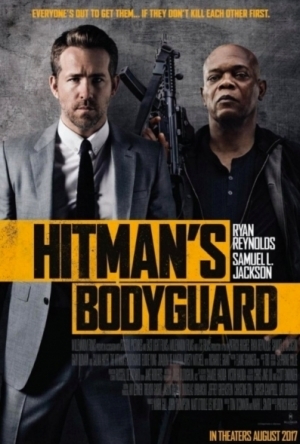

A plethora of clichés.
2017’s summer blockbusters fizzle to a halt with this formulaic action comedy. Ryan Reynolds (“Deadpool“) plays Michael Bryce: a cocksure “Triple A rated” bodyguard, always planning three steps ahead so that he can protect his clients without killing anyone in the process. With such arrogance, a fall is inevitable. On the other side of the legal scales is Darius Kincaid (Samuel L Jackson, “The Hateful Eight“), a contract killer who always gets his man. But the incarcerated Kincaid is offered a deal to release his equally incarcerated wife Sonia (Selma Hayek) in return for testifying against the fearsome Belarus president Vladislav Dukhovich (Gary Oldman, “Dawn of the Planet of the Apes”), on trial for war crimes at The Hague. An Interpol team led by Bryce’s’s ex-squeeze Amelia Roussel (the striking Elodie Yung) now have to get Kincaid to Belgium unscathed with Dukhovich’s well-trained and well-armed thugs stopping at nothing to ensure he won’t be there to testify. Fate transpires that Bryce and Kincaid become an unlikely team in trying to bring Dukhovich to justice.
After losing your no claims bonus, hysterical laughter is the only way forwards. Ryan Reynolds and Samuel L Jackson.
This is a movie whose script seems to have been glued together from a patchwork of other movie scenes:
– the bad guy / bad guy partner relationship of “The Nice Guys“. Check.
– the street ambush of “Clear and Present Danger”. Check.
– the Amsterdam boat chase of “Puppet on a Chain”. Check.
– the comedic bar-room brawl from “Airplane”. Check.
Many of the action scenes are done with panache and some great stunt work. But it’s all stuff we’ve seen countless times before, so what is needed for differentiation is the relationships between Bryce and Kincaid: this needs to be the cornerstone of the film. But it just doesn’t quite work. Jackson’s contribution is never in doubt, even though we’ve seen this motherf-ing shtick countless times before: he’s still magnetic, charismatic and a joy to watch. But unfortunately Reynolds just doesn’t deliver the acting goods to make the banter believable: there is a reason “Deadpool” is his best film – he wears a mask for most of it! His ‘puppy-dog look’ gets rolled out multiple times, but it’s unconvincing in the extreme. Together they are no match for Gosling/Crowe in “The Nice Guys“.
Nun but the brave. Jackson (if not Reynolds) get happy clappy.
On firmer ground is the quirky relationship between Mr and Mrs Kincaid. Although sharing limited screen time together, Hayek and Jackson spark off each other wonderfully. Seeing Selma Hayek in uncharacteristically sweary and belligerent mode was highly entertaining (although it’s worth commenting that my wife took great offence to the ‘comic’ bullying of an overweight cellmate).
“I had to ask the guy next to me to pinch me to make sure I wasn’t dreaming” – the future Mr and Mrs Kincaid meet in a rough place… the seediest dive on the wharf.
Elsewhere in the acting roll call, Elodie Yung delivers just the right measure of cuteness, toughness and passion as Roussel, but Oldman delivers a full-on retread of his Ivan “Get off my plane” Korshunov from “Air Force One”. There is also a change to Oldman’s character’s face at the end of the film in the form of a rampant skin complaint which is ‘explained’ by a clumsily inserted news item about an “attempted poisoning”: it’s such a clunky and bizarre addition to the script that it made me wonder whether the actor has some unexpected ailment (like shingles) during filming…. but I can see nothing related to this online.
The striking Elodie Yung as the Interpol agent Roussel.
The screenplay by relative newcomer Tom O’Connor bumps along from implausible action scene to implausible action scene, with more that its fair share of ‘WTF’ moments. For example, after a random chase through multiple Amsterdam alleys and shops, Jackson pulls up outside the very DIY shop Reynolds ends up in to pick him up! The script is also tonally uneven throughout: given this is supposed to be an “action comedy” the action is often brutal and unpleasant and the comedy – in the main – just not funny enough. (About the funniest thing in the film are the most ineffective sub machine guns known to man, most notably in the mildly ludicrous, if well staged, boat chase scene!)
An entertaining cameo from Richard E Grant as a businessman in danger.
The film also manages to offend, in more ways than the 15-rated violence and language used: I’m not sure WHEN this movie was actually filmed, but the use of an articulated lorry as a terrorist weapon towards the end of the film is certainly in very poor taste after the events of Nice, London and Barcelona. Not appreciated.
Directed by Patrick Hughes (“The Expendables 3″…. say no more) this hodge-podge of a flick is sporadically entertaining, but is one I will struggle to remember in a couple of months time.
After losing your no claims bonus, hysterical laughter is the only way forwards. Ryan Reynolds and Samuel L Jackson.
This is a movie whose script seems to have been glued together from a patchwork of other movie scenes:
– the bad guy / bad guy partner relationship of “The Nice Guys“. Check.
– the street ambush of “Clear and Present Danger”. Check.
– the Amsterdam boat chase of “Puppet on a Chain”. Check.
– the comedic bar-room brawl from “Airplane”. Check.
Many of the action scenes are done with panache and some great stunt work. But it’s all stuff we’ve seen countless times before, so what is needed for differentiation is the relationships between Bryce and Kincaid: this needs to be the cornerstone of the film. But it just doesn’t quite work. Jackson’s contribution is never in doubt, even though we’ve seen this motherf-ing shtick countless times before: he’s still magnetic, charismatic and a joy to watch. But unfortunately Reynolds just doesn’t deliver the acting goods to make the banter believable: there is a reason “Deadpool” is his best film – he wears a mask for most of it! His ‘puppy-dog look’ gets rolled out multiple times, but it’s unconvincing in the extreme. Together they are no match for Gosling/Crowe in “The Nice Guys“.
Nun but the brave. Jackson (if not Reynolds) get happy clappy.
On firmer ground is the quirky relationship between Mr and Mrs Kincaid. Although sharing limited screen time together, Hayek and Jackson spark off each other wonderfully. Seeing Selma Hayek in uncharacteristically sweary and belligerent mode was highly entertaining (although it’s worth commenting that my wife took great offence to the ‘comic’ bullying of an overweight cellmate).
“I had to ask the guy next to me to pinch me to make sure I wasn’t dreaming” – the future Mr and Mrs Kincaid meet in a rough place… the seediest dive on the wharf.
Elsewhere in the acting roll call, Elodie Yung delivers just the right measure of cuteness, toughness and passion as Roussel, but Oldman delivers a full-on retread of his Ivan “Get off my plane” Korshunov from “Air Force One”. There is also a change to Oldman’s character’s face at the end of the film in the form of a rampant skin complaint which is ‘explained’ by a clumsily inserted news item about an “attempted poisoning”: it’s such a clunky and bizarre addition to the script that it made me wonder whether the actor has some unexpected ailment (like shingles) during filming…. but I can see nothing related to this online.
The striking Elodie Yung as the Interpol agent Roussel.
The screenplay by relative newcomer Tom O’Connor bumps along from implausible action scene to implausible action scene, with more that its fair share of ‘WTF’ moments. For example, after a random chase through multiple Amsterdam alleys and shops, Jackson pulls up outside the very DIY shop Reynolds ends up in to pick him up! The script is also tonally uneven throughout: given this is supposed to be an “action comedy” the action is often brutal and unpleasant and the comedy – in the main – just not funny enough. (About the funniest thing in the film are the most ineffective sub machine guns known to man, most notably in the mildly ludicrous, if well staged, boat chase scene!)
An entertaining cameo from Richard E Grant as a businessman in danger.
The film also manages to offend, in more ways than the 15-rated violence and language used: I’m not sure WHEN this movie was actually filmed, but the use of an articulated lorry as a terrorist weapon towards the end of the film is certainly in very poor taste after the events of Nice, London and Barcelona. Not appreciated.
Directed by Patrick Hughes (“The Expendables 3″…. say no more) this hodge-podge of a flick is sporadically entertaining, but is one I will struggle to remember in a couple of months time.

Mandy and G.D. Burkhead (26 KP) rated Kushiel's Dart (Phèdre's Trilogy, #1) in Books
May 20, 2018
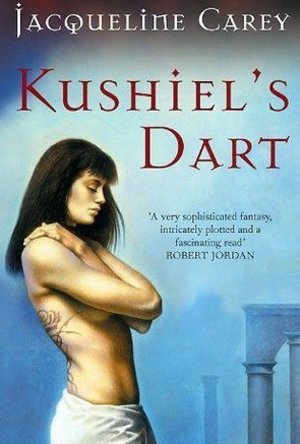


Shelf Life – Kushiel’s Legacy, the Naamah Trilogy, and How Jacqueline Carey Ruined My Ability to Be Impartial About Them
Contains spoilers, click to show
I can honestly say that the nine books that comprise these three trilogies are among the best fantasy available today as well as nine of my all-time favorite books I’ve ever read.
The Spoiler-Free Overview
If you want the shorter, less spoilery answer for what I think of these books: holy crap, yes, they’re as good as everyone says they are. Jacqueline Carey has a way of making me just…feel stuff like no other author can. Plenty of books have caught and held my interest enough that I didn’t want to put them down, but few have made the act of putting them down anyway so torturous. More than once, I hit a point in these stories where I had to drop whatever else I was gonna do that day (that I could realistically drop) just because I had to keep reading to make sure the characters were going to be okay.
This is character-driven fiction at its finest, with people in the pages who come alive and subtly win your heart. More than once, I’ve found reading about their ordeals to be worrying, a little bit painful, and a little bit infuriating (all in a good way, though), and I had to stop and remind myself that these weren’t real people that I was so concerned over and angry for. So if you ever wanted to be really, really invested in the story you’re reading and the people in it, Terre d’Ange is the place to go. All of the eroticism that everyone talks about is just a really nice bonus.
If you want an even shorter answer: do you watch Game of Thrones? Have you read George R.R. Martin’s A Song of Ice and Fire books? Have you at least heard of the fan hype around these stories? The Kushiel and Naamah books are like that, except sexier and with deeper court intrigue. And a lot less incest.
If you want the long answer…
A Dizzying Amount of Adventure Mileage
One thing that has to be said for Kushiel’s Legacy and the Naamah trilogy is that you definitely get your money’s worth of story out of each book. There’s a pattern that I’ve noticed with each of them, which is that you’ll follow the heroine/hero through a massive tribulation, see them endure their hardships and take their small victories where they can, then finally watch matters come to a crux, a climax, and a satisfying resolution…only to realize that you’re only a third of the way through the full page count.
Where most books are content to have one major conflict, Carey packs hers with about three each. The best part is that they’re not laid out in rigid sequence like a series of video game side quests – fight this problem, win, check it off the list, leave it behind and find a new one to fill the word count. No, each new adventure in the same book arises completely organically from the story overall. It makes you realize just how huge a scope these characters’ destinies really are, and just how incredibly wearying it can be and how much seemingly inhuman endurance it takes to be one of the gods’ chosen.
For instance, the first book to kick everything off, Kushiel’s Dart, begins slowly and simply enough. Phedre is an unwanted child who is basically sold into indentured servitude, then trained to be a spy and courtesan while we’re introduced to Terre d’Ange through her eyes over the next couple hundred pages, learning more about the politics and the players in time to watch the drama around them steadily unfold and escalate.
And then her wise mentor gets killed (as wise mentors tend to do), she and her bodyguard companion are betrayed, and the both of them get sold into full-on slavery to the vikings of Skaldia. Plenty of conflict and hardship and planning later, they make their escape and flee into harsh, snowy mountain terrain, falling in love for good measure while they fend off the deadly cold and the pursuit from their enemies. Finally, they make it back to their homeland and clear their names.
This is where most books would be content to stop and maybe leave further contentions for a sequel. Kushiel’s Dart would have been well within its rights to do so as well, and I wouldn’t have complained if it did. But no, it reminds readers, we’re not done yet. There’s a war coming, remember? We talked about this. Catch your breath for a moment, but then we gotta go rally our armies.
So Phedre and Joscelin set off to the wild and secluded island nation of Alba on the other side of an enchanted strait, a body of water where a vengeful, divine power known as the Master of the Straits lives and for some reason prevents almost all contact between the two nations. Arriving safely enough, they find that Alba is also war-torn at the moment, and the armies they had hoped to rally are busy defending their land from another foe. More plotting and intrigue ensues, alliances and promises are made, and with our heroes’ help, the two sides clash in a decisive battle that gains the side we’re rooting for victory as well as gives them their rightful sovereignty back. Now Phedre has the army she needs. After a sudden and unexpected stop at the Master of the Straits’ island, where they learn the secret of his power and guarantee indefinite safe passage between the nations in return for Phedre losing her closest friend, our heroes finally make it back to their homeland again with their army in tow.
Finally! After all of that struggle, we get a happy ending after all. But wait, not yet you don’t, the chunk of pages left at the end remind you. All you did was get your forces together. Good for you. Now you still gotta go actually fight the war with the Skaldi invaders to determine the fate of your entire nation.
So they do. And only after an awesome last-stand battle (the excitement and careful strategy of which will take you completely by surprise if you first entered this book expecting little more than kinky sex scenes) is the story allowed to wrap up in earnest, our heroes finally earning their long-deserved rest. The dangerous and cunning warlord is defeated, the invading army has been pushed back, the new Queen has ascended the throne, Terre d’Ange has been saved, and Phedre and Joscelin are free to finally be together – with the only little niggle being that the real mastermind behind all of their problems is still loose and taunting them. But we can get to that in the next book. Or five.
The Spoiler-Free Overview
If you want the shorter, less spoilery answer for what I think of these books: holy crap, yes, they’re as good as everyone says they are. Jacqueline Carey has a way of making me just…feel stuff like no other author can. Plenty of books have caught and held my interest enough that I didn’t want to put them down, but few have made the act of putting them down anyway so torturous. More than once, I hit a point in these stories where I had to drop whatever else I was gonna do that day (that I could realistically drop) just because I had to keep reading to make sure the characters were going to be okay.
This is character-driven fiction at its finest, with people in the pages who come alive and subtly win your heart. More than once, I’ve found reading about their ordeals to be worrying, a little bit painful, and a little bit infuriating (all in a good way, though), and I had to stop and remind myself that these weren’t real people that I was so concerned over and angry for. So if you ever wanted to be really, really invested in the story you’re reading and the people in it, Terre d’Ange is the place to go. All of the eroticism that everyone talks about is just a really nice bonus.
If you want an even shorter answer: do you watch Game of Thrones? Have you read George R.R. Martin’s A Song of Ice and Fire books? Have you at least heard of the fan hype around these stories? The Kushiel and Naamah books are like that, except sexier and with deeper court intrigue. And a lot less incest.
If you want the long answer…
A Dizzying Amount of Adventure Mileage
One thing that has to be said for Kushiel’s Legacy and the Naamah trilogy is that you definitely get your money’s worth of story out of each book. There’s a pattern that I’ve noticed with each of them, which is that you’ll follow the heroine/hero through a massive tribulation, see them endure their hardships and take their small victories where they can, then finally watch matters come to a crux, a climax, and a satisfying resolution…only to realize that you’re only a third of the way through the full page count.
Where most books are content to have one major conflict, Carey packs hers with about three each. The best part is that they’re not laid out in rigid sequence like a series of video game side quests – fight this problem, win, check it off the list, leave it behind and find a new one to fill the word count. No, each new adventure in the same book arises completely organically from the story overall. It makes you realize just how huge a scope these characters’ destinies really are, and just how incredibly wearying it can be and how much seemingly inhuman endurance it takes to be one of the gods’ chosen.
For instance, the first book to kick everything off, Kushiel’s Dart, begins slowly and simply enough. Phedre is an unwanted child who is basically sold into indentured servitude, then trained to be a spy and courtesan while we’re introduced to Terre d’Ange through her eyes over the next couple hundred pages, learning more about the politics and the players in time to watch the drama around them steadily unfold and escalate.
And then her wise mentor gets killed (as wise mentors tend to do), she and her bodyguard companion are betrayed, and the both of them get sold into full-on slavery to the vikings of Skaldia. Plenty of conflict and hardship and planning later, they make their escape and flee into harsh, snowy mountain terrain, falling in love for good measure while they fend off the deadly cold and the pursuit from their enemies. Finally, they make it back to their homeland and clear their names.
This is where most books would be content to stop and maybe leave further contentions for a sequel. Kushiel’s Dart would have been well within its rights to do so as well, and I wouldn’t have complained if it did. But no, it reminds readers, we’re not done yet. There’s a war coming, remember? We talked about this. Catch your breath for a moment, but then we gotta go rally our armies.
So Phedre and Joscelin set off to the wild and secluded island nation of Alba on the other side of an enchanted strait, a body of water where a vengeful, divine power known as the Master of the Straits lives and for some reason prevents almost all contact between the two nations. Arriving safely enough, they find that Alba is also war-torn at the moment, and the armies they had hoped to rally are busy defending their land from another foe. More plotting and intrigue ensues, alliances and promises are made, and with our heroes’ help, the two sides clash in a decisive battle that gains the side we’re rooting for victory as well as gives them their rightful sovereignty back. Now Phedre has the army she needs. After a sudden and unexpected stop at the Master of the Straits’ island, where they learn the secret of his power and guarantee indefinite safe passage between the nations in return for Phedre losing her closest friend, our heroes finally make it back to their homeland again with their army in tow.
Finally! After all of that struggle, we get a happy ending after all. But wait, not yet you don’t, the chunk of pages left at the end remind you. All you did was get your forces together. Good for you. Now you still gotta go actually fight the war with the Skaldi invaders to determine the fate of your entire nation.
So they do. And only after an awesome last-stand battle (the excitement and careful strategy of which will take you completely by surprise if you first entered this book expecting little more than kinky sex scenes) is the story allowed to wrap up in earnest, our heroes finally earning their long-deserved rest. The dangerous and cunning warlord is defeated, the invading army has been pushed back, the new Queen has ascended the throne, Terre d’Ange has been saved, and Phedre and Joscelin are free to finally be together – with the only little niggle being that the real mastermind behind all of their problems is still loose and taunting them. But we can get to that in the next book. Or five.

Kara Skinner (332 KP) rated The Band 4: The Air We Breathe in Books
Sep 10, 2019


Genre: Contemporary, Inspirational
Page Count: 324 pages (of nauseation)
Average Goodreads Rating: 3/5 stars (why, Goodreads? You’re usually so tough on books)
My Rating: 1.5/ 5 stars
Truthfully, this is actually a great story. Yeah. So great. It’s the perfect backstory for its horror sequel: The Martins Trump Manson on Body Count.
As a romance it fucking sucks.
I don’t even know where to begin. This book is so full of sugary sap that it makes pasta covered in maple and chocolate syrup and marshmallows look appetizing.
original
Still not as sweet as The Air We Breathe
Here’s the thing: I’m not actually a bitter and cynical person. I like sap and fluff. I smile and giggle during romance scenes, I’ve obsessively written cute and romantic fanfiction and my boyfriend and I were arguably the most nauseatingly cute couple to ever walk the halls of John Bapst Memorial High School.
But I gagged reading this book for the amount of love-doveyness.
Marguerite is on holiday in London, recovering from the sudden deaths of her parents which liberated her from 27 years of being suffocated and controlled by them. While there, she has a random chance encounter with Chase Martin, a depressed rock star exhausted from touring with his band. Chase and Marguerite are drawn together by a strange unknown force. They don’t know why they have such a strong connection to each other, but they do know that life without the other would not be living at all.
I actually really liked the beginning and thought that it would shape up to be an interesting and sweet romance. We see them before they meet in the coffee shop, miserable and depressed, and then while sipping her drink and reading her book, Marguerite feels Chase’s anxiety. So she buys him a decaf drink and gives it to him, saying she could feel his anxiety from across the shop. That’s great.
The two of them realize they’re drawn together and can find each other happiness and Marguerite ends up spending the night at Chase’s house just so they can find comfort in having another human being near them. That’s great, too.
The beginning is by far my favorite part because it has promise for a good story and has more vivid scenes than any other part of the book.
But then it moves too quickly from there.
From that moment on, the two of them are so deep in love they make Romeo and Juliet look reserved and cautious. They are constantly “blown away” by each other and moved to tears every minute by each other. They “get a kick out of” every little joke they make to each other, and they start living together immediately after they meet. After a week (that’s right, a flipping week), Chase proposes to her.
And if I had a pin for every time one of those quoted phrases appeared in this novel, I could pulverize a voodoo doll. The repeated phrases and excessive emotion of the characters is definitely the worst part.
I’m still not that aggravated with this book, yet. Yeah, the insta love irks me, but I figure there will be a great plot with lots of trouble between the two of them after they marry. After all, they barely know each other and they need to figure out what this psychic connection means. Maybe they’re the incarnated souls of Hawkgirl and Hawkman and they’re about to get killed by an immortal psychopath (did I mention I’m a huge nerd?).
Nope. The two of them agree on everything, right down to how to decorate the house and the new rule that shoes are off upon entering. And things continue to be hunky dory for practically forever. All of Chase’s friends, and their girlfriends, love Marguerite and nobody questions their whirlwind romance. Yeah, because a severely depressed person getting engaged after a week of dating isn’t a cry for help or anything.
And there is so much to dislike about Chase’s and Marguerite’s decisions. Marguerite is forced to quit her job so she can move to London to be with Chase.
Never mind that she liked her job in Pennsylvania and didn’t express any wish to be a housewife. Never mind that Chase was getting tired of touring and thinking about quitting the band anyway. It’s her life that gets turned upside down.
Also, so much for her newfound freedom following her parents’ deaths! Now she’s shadowed by a bodyguard wherever she goes, needs to sneak into the backs of restaurant when she wants to eat out, and can’t even walk to the store for fear of being accosted by her husbands’ fans.
Yes, Chase’s life gets changed too. He now has a wife that cooks meals for him, cleans for him, furnishes and decorates his house for him, and hands him a cold towel when he walks off stage. He made some real damn sacrifices when he married Marguerite.
bitch_please_by_teslapunk-d32znko
But life goes on. With a lot of summary and over thirty years, it goes on.
Aside from dialogues and scenes peppered here and there, the book is mostly sweet and sappy summary of their lives. Dark things happen now and then but they’re glossed over and smothered in fluff.
If this storyline was done by a competent writer, this actually could have been an entertaining series about the Martin family. There is actually plenty of material between the psychic connection, Marguerite’s tragic background, a miscarriage, a huge celebrity drugging conspiracy, two sets of twins, a near death experience, and a baby on the doorstep.
But somehow it becomes boring and plotless when it’s all crammed into one book that seems to drag on forever. During all of this my main concern, the psychic connection, was never explained. It’s just a gift from God. One that turns their “perfect” (as in creepily well behaved and mature) children into kids from The Shining. Because they also have a psychic connection. They can “feel” each other and their parents. Oh, and talk to their dead sister, apparently, when their dead sister wants to tell them about babies being left on their doorstep.
“This is Baby Sarah,” Matt said.
“Baby Sarah?” Marguerite asked.
(Both sets of twins) said “Yes. We knew she was coming.”
Chase asked, “How did you know?”
“Baby Margaret told us,” Mark said.
Also, when Chase and Marguerite choose Sarah’s full name, all four children, in a different room, wake up from a dead sleep, sit up in unison, and announce that the baby is named.
May I present the newest additions to the Martin family?
If you want to read a rockstar romance, I recommend Love’s Rhythm by Lexxie Couper, which isn’t perfectly crafted, but leagues beyond The Band 4: The Air We Breathe.
Page Count: 324 pages (of nauseation)
Average Goodreads Rating: 3/5 stars (why, Goodreads? You’re usually so tough on books)
My Rating: 1.5/ 5 stars
Truthfully, this is actually a great story. Yeah. So great. It’s the perfect backstory for its horror sequel: The Martins Trump Manson on Body Count.
As a romance it fucking sucks.
I don’t even know where to begin. This book is so full of sugary sap that it makes pasta covered in maple and chocolate syrup and marshmallows look appetizing.
original
Still not as sweet as The Air We Breathe
Here’s the thing: I’m not actually a bitter and cynical person. I like sap and fluff. I smile and giggle during romance scenes, I’ve obsessively written cute and romantic fanfiction and my boyfriend and I were arguably the most nauseatingly cute couple to ever walk the halls of John Bapst Memorial High School.
But I gagged reading this book for the amount of love-doveyness.
Marguerite is on holiday in London, recovering from the sudden deaths of her parents which liberated her from 27 years of being suffocated and controlled by them. While there, she has a random chance encounter with Chase Martin, a depressed rock star exhausted from touring with his band. Chase and Marguerite are drawn together by a strange unknown force. They don’t know why they have such a strong connection to each other, but they do know that life without the other would not be living at all.
I actually really liked the beginning and thought that it would shape up to be an interesting and sweet romance. We see them before they meet in the coffee shop, miserable and depressed, and then while sipping her drink and reading her book, Marguerite feels Chase’s anxiety. So she buys him a decaf drink and gives it to him, saying she could feel his anxiety from across the shop. That’s great.
The two of them realize they’re drawn together and can find each other happiness and Marguerite ends up spending the night at Chase’s house just so they can find comfort in having another human being near them. That’s great, too.
The beginning is by far my favorite part because it has promise for a good story and has more vivid scenes than any other part of the book.
But then it moves too quickly from there.
From that moment on, the two of them are so deep in love they make Romeo and Juliet look reserved and cautious. They are constantly “blown away” by each other and moved to tears every minute by each other. They “get a kick out of” every little joke they make to each other, and they start living together immediately after they meet. After a week (that’s right, a flipping week), Chase proposes to her.
And if I had a pin for every time one of those quoted phrases appeared in this novel, I could pulverize a voodoo doll. The repeated phrases and excessive emotion of the characters is definitely the worst part.
I’m still not that aggravated with this book, yet. Yeah, the insta love irks me, but I figure there will be a great plot with lots of trouble between the two of them after they marry. After all, they barely know each other and they need to figure out what this psychic connection means. Maybe they’re the incarnated souls of Hawkgirl and Hawkman and they’re about to get killed by an immortal psychopath (did I mention I’m a huge nerd?).
Nope. The two of them agree on everything, right down to how to decorate the house and the new rule that shoes are off upon entering. And things continue to be hunky dory for practically forever. All of Chase’s friends, and their girlfriends, love Marguerite and nobody questions their whirlwind romance. Yeah, because a severely depressed person getting engaged after a week of dating isn’t a cry for help or anything.
And there is so much to dislike about Chase’s and Marguerite’s decisions. Marguerite is forced to quit her job so she can move to London to be with Chase.
Never mind that she liked her job in Pennsylvania and didn’t express any wish to be a housewife. Never mind that Chase was getting tired of touring and thinking about quitting the band anyway. It’s her life that gets turned upside down.
Also, so much for her newfound freedom following her parents’ deaths! Now she’s shadowed by a bodyguard wherever she goes, needs to sneak into the backs of restaurant when she wants to eat out, and can’t even walk to the store for fear of being accosted by her husbands’ fans.
Yes, Chase’s life gets changed too. He now has a wife that cooks meals for him, cleans for him, furnishes and decorates his house for him, and hands him a cold towel when he walks off stage. He made some real damn sacrifices when he married Marguerite.
bitch_please_by_teslapunk-d32znko
But life goes on. With a lot of summary and over thirty years, it goes on.
Aside from dialogues and scenes peppered here and there, the book is mostly sweet and sappy summary of their lives. Dark things happen now and then but they’re glossed over and smothered in fluff.
If this storyline was done by a competent writer, this actually could have been an entertaining series about the Martin family. There is actually plenty of material between the psychic connection, Marguerite’s tragic background, a miscarriage, a huge celebrity drugging conspiracy, two sets of twins, a near death experience, and a baby on the doorstep.
But somehow it becomes boring and plotless when it’s all crammed into one book that seems to drag on forever. During all of this my main concern, the psychic connection, was never explained. It’s just a gift from God. One that turns their “perfect” (as in creepily well behaved and mature) children into kids from The Shining. Because they also have a psychic connection. They can “feel” each other and their parents. Oh, and talk to their dead sister, apparently, when their dead sister wants to tell them about babies being left on their doorstep.
“This is Baby Sarah,” Matt said.
“Baby Sarah?” Marguerite asked.
(Both sets of twins) said “Yes. We knew she was coming.”
Chase asked, “How did you know?”
“Baby Margaret told us,” Mark said.
Also, when Chase and Marguerite choose Sarah’s full name, all four children, in a different room, wake up from a dead sleep, sit up in unison, and announce that the baby is named.
May I present the newest additions to the Martin family?
If you want to read a rockstar romance, I recommend Love’s Rhythm by Lexxie Couper, which isn’t perfectly crafted, but leagues beyond The Band 4: The Air We Breathe.
Bob Mann (459 KP) rated Darkest Hour (2017) in Movies
Sep 29, 2021
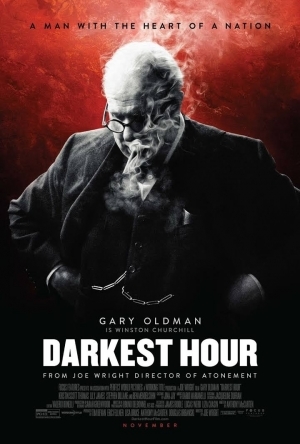
Not buggering it up.
As Doctor Who repeatedly points out, time is most definitely a tricksy thing. As I think I’ve commented on before, the events of 1940-45 are not in my lifetime but were sufficiently fresh to my parents that they were still actively talked about… so they still appear “current” to me. But I find it astonishing to realize that to a teen viewer this film is equivalent in timeframe to the sinking of the Titanic! #ancienthistory! So I suspect your connection to this film will be strongly affected by your age, and that was definitely reflected in the average age at my showing which must have been at least 60.
It’s 1940 and Western Europe is under siege. Neville Chamberlain (Ronald Pickup, “The Second Best Exotic Marigold Hotel“) is the Conservative Prime Minister but is voted out of office in an attempt to form a grand coalition government with Labour leader Clement Atlee (David Schofield). Despite appearing a shoe-in for the role, Viscount Halifax (Stephen Dillane) turns it down, thinking that his alternative (and bête noire) would drink from the poisoned chalice and be quickly be out of his (and Chamberlain’s) hair. For that alternative choice is the volatile and unpredictable Churchill (Gary Oldman), grudgingly invited into the job by King George VI (Ben Mendelsohn, “Rogue One“). With the Nazi’s bearing down on the 300,000 encircled troops at Dunkirk, and with calls from his war cabinet to capitulate and seek terms of settlement, this is indeed both Churchill’s, and the country’s, ‘darkest hour’.
Despite the woeful lack of historical knowledge among today’s youngsters, most will be at least aware of the story of Dunkirk, with many having absorbed Christopher Nolan’s film of last summer. This film is almost the matching bookend to that film, showing the terrifying behind-closed-door events that led up to that miracle. For it was terrifying seeing how close Britain came to the brink, and I’m not sure even I really appreciated that before. While this might have been a “thriller” if it had been a fictional story, we well know the outcome of the story: but even with this knowledge I still found the film to be extremely tense and claustrophobic as the net draws in around Churchill’s firmly-held beliefs.
Gary Oldman’s performance is extraordinary, and his award nominations are well-deserved. We have grown so used to some of his more over-the-top Russian portrayals in films like “Air Force One” and last year’s (pretty poor) “The Hitman’s Bodyguard” that it is easy to forget what a nuanced and flexible actor he is. Ever since that “No, surely not!” moment of that first glimpse of the film’s trailer, it has almost been impossible to ‘see’ Oldman behind the brilliant make-up of the character (Kazuhiro Tsuji gets a special credit for it). But his eyes are in there, and there are some extreme close-ups (for example, during a bizarre and tense phone call with Roosevelt (David Strathairn)) when you suddenly see “There you are!”.
The supportive wife – Clemmie (Kristin Scott Thomas) gives Winston (Gary Oldman) a hug.
While I have nothing against Brian Cox as an actor, I far prefer the portrayal of Churchill on show here compared to last year’s “Churchill“: true that that film was set three or four stressful years later, but Cox’s Churchill was portrayed as an incompetent fool, an embarrassment to the establishment that have to work around him. Oldman’s Churchill is irascible, unreasonable, but undeniably a leader and a great orator.
Mirroring “Churchill” though, the action is seen through the eyes of Churchill’s put-upon secretary, here played delightfully by Lily James (“Downton Abbey”, “Baby Driver“) who perfectly looks and sounds the part. The character is more successful than that of Ella Purnell’s Garrett in that she is given more room to develop her character and for the audience to warm to her. Oldman is getting all the kudos, but Lily James really deserves some for her touching and engaging performance here.
Perfectly cast: Lily James as Churchill’s secretary Elizabeth Layton.
Also in Oldman’s shadow is the always marvelous Kristin Scott Thomas (“Four Weddings and a Funeral”, “The English Patient”) as Clemmie Churchill, expressing all the love and frustration associated with being a long-suffering wife to an over-worked husband in the public service.
At the pen is “The Theory of Everything” writer Anthony McCarten, and I’d like to say its a great script but with most of the best lines (“a sheep in sheep’s clothing” – LoL) coming from Winston himself it’s difficult to tell. Some of the scenes can get a bit laborious and at 125 minutes – though not long by any means – the script could still perhaps have had a nip and tuck here and there.
Where some of this time is well spent though is in some sedate shots of London street life, across two separate scenes panning across everyday folk as the stresses of war start to become more evident. This is just one of the areas where director Joe Wright (“Atonement”, “Pride and Prejudice”) shows considerable panache, ably assisted by the cinematography of Bruno Delbonnel (“Inside Llewyn Davis“): a boy closes his telescope-fingers around Churchill’s plane; a bomb’s eye-view of the beleaguered Brigadier Nicholson in Calais; and – very impressively – the smoky imperiousness of the House of Commons set.
An atmospheric chamber: the recreation of the wartime House of Commons is spectacular (with production design by Sarah Greenwood (“Anna Karenina”, “Atonement”)).
And most-importantly Wright delivers what Christopher Nolan couldn’t deliver in “Dunkirk“: a properly CGI’d vista of hundred of small boats crossing the channel to Dunkirk. Now THAT is a scene that Kenneth Branagh could justly have looked in awe at!!!
There are a number of scenes that require disbelief to be suspended though: the biggest one being a tube train ride – very moving and effective I must say – but one that features the longest journey between any two stations on the District Line than has ever been experienced!
One stop on the District Line via Westminster…. via Harrow-on-the-Hill!
So this is a great film for really reliving a knife-edge moment in British history, and is highly recommended particularly for older viewers. If I’m honest though, between “Darkest Hour”, “Churchill” and John Lithgow’s excellent portrayal in “The Crown” I’m all over portrayals of the great man for a few years. Can we please move on now Hollywood?
It’s 1940 and Western Europe is under siege. Neville Chamberlain (Ronald Pickup, “The Second Best Exotic Marigold Hotel“) is the Conservative Prime Minister but is voted out of office in an attempt to form a grand coalition government with Labour leader Clement Atlee (David Schofield). Despite appearing a shoe-in for the role, Viscount Halifax (Stephen Dillane) turns it down, thinking that his alternative (and bête noire) would drink from the poisoned chalice and be quickly be out of his (and Chamberlain’s) hair. For that alternative choice is the volatile and unpredictable Churchill (Gary Oldman), grudgingly invited into the job by King George VI (Ben Mendelsohn, “Rogue One“). With the Nazi’s bearing down on the 300,000 encircled troops at Dunkirk, and with calls from his war cabinet to capitulate and seek terms of settlement, this is indeed both Churchill’s, and the country’s, ‘darkest hour’.
Despite the woeful lack of historical knowledge among today’s youngsters, most will be at least aware of the story of Dunkirk, with many having absorbed Christopher Nolan’s film of last summer. This film is almost the matching bookend to that film, showing the terrifying behind-closed-door events that led up to that miracle. For it was terrifying seeing how close Britain came to the brink, and I’m not sure even I really appreciated that before. While this might have been a “thriller” if it had been a fictional story, we well know the outcome of the story: but even with this knowledge I still found the film to be extremely tense and claustrophobic as the net draws in around Churchill’s firmly-held beliefs.
Gary Oldman’s performance is extraordinary, and his award nominations are well-deserved. We have grown so used to some of his more over-the-top Russian portrayals in films like “Air Force One” and last year’s (pretty poor) “The Hitman’s Bodyguard” that it is easy to forget what a nuanced and flexible actor he is. Ever since that “No, surely not!” moment of that first glimpse of the film’s trailer, it has almost been impossible to ‘see’ Oldman behind the brilliant make-up of the character (Kazuhiro Tsuji gets a special credit for it). But his eyes are in there, and there are some extreme close-ups (for example, during a bizarre and tense phone call with Roosevelt (David Strathairn)) when you suddenly see “There you are!”.
The supportive wife – Clemmie (Kristin Scott Thomas) gives Winston (Gary Oldman) a hug.
While I have nothing against Brian Cox as an actor, I far prefer the portrayal of Churchill on show here compared to last year’s “Churchill“: true that that film was set three or four stressful years later, but Cox’s Churchill was portrayed as an incompetent fool, an embarrassment to the establishment that have to work around him. Oldman’s Churchill is irascible, unreasonable, but undeniably a leader and a great orator.
Mirroring “Churchill” though, the action is seen through the eyes of Churchill’s put-upon secretary, here played delightfully by Lily James (“Downton Abbey”, “Baby Driver“) who perfectly looks and sounds the part. The character is more successful than that of Ella Purnell’s Garrett in that she is given more room to develop her character and for the audience to warm to her. Oldman is getting all the kudos, but Lily James really deserves some for her touching and engaging performance here.
Perfectly cast: Lily James as Churchill’s secretary Elizabeth Layton.
Also in Oldman’s shadow is the always marvelous Kristin Scott Thomas (“Four Weddings and a Funeral”, “The English Patient”) as Clemmie Churchill, expressing all the love and frustration associated with being a long-suffering wife to an over-worked husband in the public service.
At the pen is “The Theory of Everything” writer Anthony McCarten, and I’d like to say its a great script but with most of the best lines (“a sheep in sheep’s clothing” – LoL) coming from Winston himself it’s difficult to tell. Some of the scenes can get a bit laborious and at 125 minutes – though not long by any means – the script could still perhaps have had a nip and tuck here and there.
Where some of this time is well spent though is in some sedate shots of London street life, across two separate scenes panning across everyday folk as the stresses of war start to become more evident. This is just one of the areas where director Joe Wright (“Atonement”, “Pride and Prejudice”) shows considerable panache, ably assisted by the cinematography of Bruno Delbonnel (“Inside Llewyn Davis“): a boy closes his telescope-fingers around Churchill’s plane; a bomb’s eye-view of the beleaguered Brigadier Nicholson in Calais; and – very impressively – the smoky imperiousness of the House of Commons set.
An atmospheric chamber: the recreation of the wartime House of Commons is spectacular (with production design by Sarah Greenwood (“Anna Karenina”, “Atonement”)).
And most-importantly Wright delivers what Christopher Nolan couldn’t deliver in “Dunkirk“: a properly CGI’d vista of hundred of small boats crossing the channel to Dunkirk. Now THAT is a scene that Kenneth Branagh could justly have looked in awe at!!!
There are a number of scenes that require disbelief to be suspended though: the biggest one being a tube train ride – very moving and effective I must say – but one that features the longest journey between any two stations on the District Line than has ever been experienced!
One stop on the District Line via Westminster…. via Harrow-on-the-Hill!
So this is a great film for really reliving a knife-edge moment in British history, and is highly recommended particularly for older viewers. If I’m honest though, between “Darkest Hour”, “Churchill” and John Lithgow’s excellent portrayal in “The Crown” I’m all over portrayals of the great man for a few years. Can we please move on now Hollywood?