Search
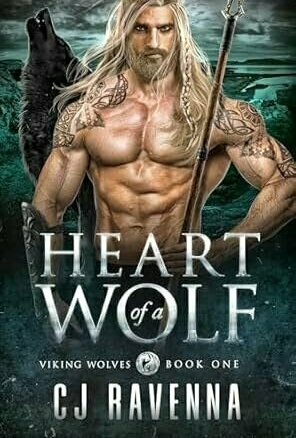
Heart of a Wolf (Viking Wolves #1)
Book
How to get over a breakup: 1: Go to Iceland 2: Get sent back in time 3: Get abducted by a hot,...
Vikings Shifters Paranormal Time Travel MM Romance
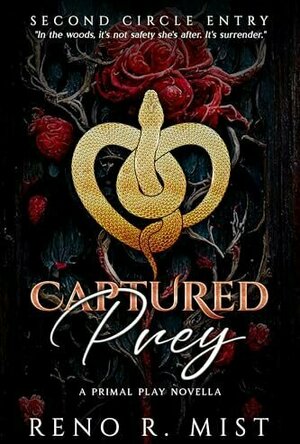
Captured Prey (Second Circle Entry #1)
Book
I want to be hunted…but not by just anyone. No – it must be by the monster I have secretly...
Primal Play Erotica Monster Romance
Becs (244 KP) rated Beasts of the Frozen Sun in Books
Sep 22, 2019
The plot - so bloody action-packed that leaves you exhausted at times (3 more)
The Villain - makes you want to fall in love with him but then he does something terrible and you want to dismiss him
The enemies to lovers - the MC's are everything
The writing - Jill Criswell does an amazing job with descriptive text and lyrical writing. I was enthralled throughout.
This book is so underrated and it deserves all the hype!
You can also find this review on my blog: bookingwayreads.wordpress.com
TRIGGER WARNINGS: war, violence, blood, gore, talk of sexual assault, child abuse, emotional abuse, animal violence, animal sacrifice, death of an animal, anger issues, arsony, death, murder, talk of drowning, absent parent, death of a parent, disowning, forced marriage, death of a sibling, manipulation, mind control, slavery, starvation, torture, trauma
REVIEW: First off, I want to say to not let all of those trigger warnings deter you from reading this breathtaking novel. Beasts of the Frozen Sun was extremely well-written and I will keep screaming this from the rooftops for as long as I am alive of how amazing this novel is.
Beasts of the Frozen Sun is loaded with badassery and brutally epic scenes. Also, that cover is one of the most beautiful covers I’ve ever seen. There was complexity to the world-building, relatable characters that you just can’t help but fall in love with, brutal wars and men as monstrous as some of the men in the world today. This fantasy novel was defiantly on the darker side, but it D E L I V E R E D ! And it delivered an immersive read that drowned you in the world until the very end.
Beasts of the Frozen Sun follows Lira, the heroine who is gifted from the gods and goddess’. This gift, the ability to read a person’s soul by just touching their chest, was used by others – mainly Lira’s father and uncle. But then a golden-haired giant washes ashore and Lira decides to help him heal. She hides him away and the two of them grow close, forming a bond that is forbidden by both of their clans. But then, the Dragon comes into the story and Lira is left fighting for her life, Reyker’s soul, and her people’s freedom.
Things I loved about Beasts of the Frozen Sun:
1. The main character being a badass heroine who gets angry when her sword is taken from her.
2. The love interest being a tough “bad boy” on the outside, but deep down he’s a big ole softie.
3. Gods/Goddess’ that walk the Earth with humans (even sometimes messing with them)
4. Magical powers that were once used for evil but now are used for good.
5. The whole ‘pretend to be sick so we can get close’ ordeal.
“Looking into his eyes was like gazing at the ocean – swirling shades of deep cobalt and steel gray. Fathomless. Familiar.”
When each of the characters were introduced, I was amazed at how spectacular, unique, and so very strong each of them were! Lira and Reyker’s bond was intense and absolutely addictive. They are literally EVERYTHING. The two are star-crossed lovers but also enemies to lovers and I NEED MORE OF THEM.
The world is out to keep them apart but the two are magnets. And nothing can keep them apart for very long, not even the world no matter how hard it tries too. Reyker is the beast. He was saved from drowning by Lira, who helped him heal by hiding him away. She teaches him her language and she stands by his side. Even when the rest of the world has chewed him up and spit him back out.
Lira battles with being used and caged. She hates feeling like “property” by her father and uncle. She also refuses to believe that Reyker isn’t worth saving. She is one badass heroine and I strive to be her. Smash these two together and you get one powerful couple!
I also want to take a moment to say that Quinlan has my heart and I need to see more of him in book 2 please dear author! I will pay you in my tears and heart if I have too.
“If I die in a cage tomorrow, or I die in a cage in ten years – what is the difference? A cage is not a life.”
The world-building in Beasts of the Frozen Sun was… OMG seriously some of the best I’ve ever read. With history, there is always brutality and this novel does include that. Death, torture, the treatment of woman were all horrible and at times a bit hard to read but Jill Criswell has such raw talent at describing things that she does an amazing job writing those style of scenes. And with this being a story set back in history, those themes are inevitable. But each theme included, made Beasts of the Frozen Sun seem more and more realistic with each passing page.
The plot of this novel is everything!! Wars to villages raids to snuggles between Lira and Reyker. There was never a boring moment within Beasts of the Frozen Sun. It was packed with so much intensity that at times, it left you a bit exhausted. The plot was also dark and brutal but it fit with the story. This was a bloody amazing action-packed novel of magic and redemption, high stakes and brutal fights, powerful woman and monstrous men.
I am on my first ever book hangover. That ending… Jill Criswell is a cruel woman to leave me hanging in the way she did. But OHMAGAWD, I CAN NOT WAIT for book two of this series. Please, if you only ever pick up one book that I recommend, please please please pick this amazing novel up!
“When that dark womb of stillness engulfed him, he embraced it with a flood of relief. Reyker welcomed whatever torments waited him on the other side of this world, knowing it was nothing less than he deserved.”
TRIGGER WARNINGS: war, violence, blood, gore, talk of sexual assault, child abuse, emotional abuse, animal violence, animal sacrifice, death of an animal, anger issues, arsony, death, murder, talk of drowning, absent parent, death of a parent, disowning, forced marriage, death of a sibling, manipulation, mind control, slavery, starvation, torture, trauma
REVIEW: First off, I want to say to not let all of those trigger warnings deter you from reading this breathtaking novel. Beasts of the Frozen Sun was extremely well-written and I will keep screaming this from the rooftops for as long as I am alive of how amazing this novel is.
Beasts of the Frozen Sun is loaded with badassery and brutally epic scenes. Also, that cover is one of the most beautiful covers I’ve ever seen. There was complexity to the world-building, relatable characters that you just can’t help but fall in love with, brutal wars and men as monstrous as some of the men in the world today. This fantasy novel was defiantly on the darker side, but it D E L I V E R E D ! And it delivered an immersive read that drowned you in the world until the very end.
Beasts of the Frozen Sun follows Lira, the heroine who is gifted from the gods and goddess’. This gift, the ability to read a person’s soul by just touching their chest, was used by others – mainly Lira’s father and uncle. But then a golden-haired giant washes ashore and Lira decides to help him heal. She hides him away and the two of them grow close, forming a bond that is forbidden by both of their clans. But then, the Dragon comes into the story and Lira is left fighting for her life, Reyker’s soul, and her people’s freedom.
Things I loved about Beasts of the Frozen Sun:
1. The main character being a badass heroine who gets angry when her sword is taken from her.
2. The love interest being a tough “bad boy” on the outside, but deep down he’s a big ole softie.
3. Gods/Goddess’ that walk the Earth with humans (even sometimes messing with them)
4. Magical powers that were once used for evil but now are used for good.
5. The whole ‘pretend to be sick so we can get close’ ordeal.
“Looking into his eyes was like gazing at the ocean – swirling shades of deep cobalt and steel gray. Fathomless. Familiar.”
When each of the characters were introduced, I was amazed at how spectacular, unique, and so very strong each of them were! Lira and Reyker’s bond was intense and absolutely addictive. They are literally EVERYTHING. The two are star-crossed lovers but also enemies to lovers and I NEED MORE OF THEM.
The world is out to keep them apart but the two are magnets. And nothing can keep them apart for very long, not even the world no matter how hard it tries too. Reyker is the beast. He was saved from drowning by Lira, who helped him heal by hiding him away. She teaches him her language and she stands by his side. Even when the rest of the world has chewed him up and spit him back out.
Lira battles with being used and caged. She hates feeling like “property” by her father and uncle. She also refuses to believe that Reyker isn’t worth saving. She is one badass heroine and I strive to be her. Smash these two together and you get one powerful couple!
I also want to take a moment to say that Quinlan has my heart and I need to see more of him in book 2 please dear author! I will pay you in my tears and heart if I have too.
“If I die in a cage tomorrow, or I die in a cage in ten years – what is the difference? A cage is not a life.”
The world-building in Beasts of the Frozen Sun was… OMG seriously some of the best I’ve ever read. With history, there is always brutality and this novel does include that. Death, torture, the treatment of woman were all horrible and at times a bit hard to read but Jill Criswell has such raw talent at describing things that she does an amazing job writing those style of scenes. And with this being a story set back in history, those themes are inevitable. But each theme included, made Beasts of the Frozen Sun seem more and more realistic with each passing page.
The plot of this novel is everything!! Wars to villages raids to snuggles between Lira and Reyker. There was never a boring moment within Beasts of the Frozen Sun. It was packed with so much intensity that at times, it left you a bit exhausted. The plot was also dark and brutal but it fit with the story. This was a bloody amazing action-packed novel of magic and redemption, high stakes and brutal fights, powerful woman and monstrous men.
I am on my first ever book hangover. That ending… Jill Criswell is a cruel woman to leave me hanging in the way she did. But OHMAGAWD, I CAN NOT WAIT for book two of this series. Please, if you only ever pick up one book that I recommend, please please please pick this amazing novel up!
“When that dark womb of stillness engulfed him, he embraced it with a flood of relief. Reyker welcomed whatever torments waited him on the other side of this world, knowing it was nothing less than he deserved.”
Hazel (1853 KP) rated Broken Realms (The Chronicles of Mara Lantern, #1) in Books
Dec 7, 2018
<i>This eBook was provided by the publisher via NetGalley in exchange for an honest review</i>
<i>Broken Realms</i> is a brilliant science fiction novel and first installment of <i>The Chronicles of Mara Lantern</i> by D. W. Moneypenny. Set in present day Oregon it deals with metaphysical ideas and bizarre creatures – a very intriguing read.
Mara Lantern is a young adult who has left school to work in a gadget repair shop where her amazing natural talent for restoring machinery is put to good use. At the commencement of the book she is being driven to the airport by her New Age obsessed mother in order to fly out to San Francisco to visit her father. Once the plane is airborne it is clear there is something terribly wrong. Bright blue light flashes throughout the aircraft and the passengers around Mara appear to be distorting: growing fangs and snouts, and changing eye colour. What is even stranger is a redheaded boy is running down the aisle closely pursued by a clone of Mara.
In an attempt at an emergency landing, the plane crashes into the Columbia River – a crash impossible to survive – however everyone does. All the passengers and crew are pulled out of the river unharmed; all except Mara who is strangely found unconscious on the pavement with a head wound.
Detective Daniel Bohannon is assigned to the case investigating the cause of the crash, but when some of the survivors start displaying super-human or animalistic traits it becomes clear this was no ordinary situation.
Whilst the investigation continues, Mara begins to deal with what she saw on the plane. With the help of a fellow survivor, Ping, and the redheaded boy, Sam (who claims he is her brother) she begins to learn that her world, her life and human existence in general is not all she believed it to be.
Although <i>Broken Realms</i> is accurately described as a science fiction and fantasy novel there were times, particularly during the police investigations, that it also felt a little like a crime thriller. There is nothing particularly bad about that but to begin with it was as though there were two different genres competing with each other depending on which character point of view was being read.
What helped to make this book so great were the excellent writing skills of D. W. Moneypenny. It was written so clearly that vivid images came to mind whilst reading. The pace of the narrative was fairly quick and at no point did it ever stop being exciting.
Another good thing (admittedly others may not see it as such) was that there were no romantic attachments between any of the characters to detract from the main storyline. This meant the novel was completely focused on the plot without any unnecessary interruptions.
<i>Broken Realms</i> is a highly recommended book for science fiction and fantasy lovers. It does, however, leave the reader wanting to know what is going to happen next. So now the wait for the next book in <i>The Chronicles of Mara Lantern</i> begins.
<i>Broken Realms</i> is a brilliant science fiction novel and first installment of <i>The Chronicles of Mara Lantern</i> by D. W. Moneypenny. Set in present day Oregon it deals with metaphysical ideas and bizarre creatures – a very intriguing read.
Mara Lantern is a young adult who has left school to work in a gadget repair shop where her amazing natural talent for restoring machinery is put to good use. At the commencement of the book she is being driven to the airport by her New Age obsessed mother in order to fly out to San Francisco to visit her father. Once the plane is airborne it is clear there is something terribly wrong. Bright blue light flashes throughout the aircraft and the passengers around Mara appear to be distorting: growing fangs and snouts, and changing eye colour. What is even stranger is a redheaded boy is running down the aisle closely pursued by a clone of Mara.
In an attempt at an emergency landing, the plane crashes into the Columbia River – a crash impossible to survive – however everyone does. All the passengers and crew are pulled out of the river unharmed; all except Mara who is strangely found unconscious on the pavement with a head wound.
Detective Daniel Bohannon is assigned to the case investigating the cause of the crash, but when some of the survivors start displaying super-human or animalistic traits it becomes clear this was no ordinary situation.
Whilst the investigation continues, Mara begins to deal with what she saw on the plane. With the help of a fellow survivor, Ping, and the redheaded boy, Sam (who claims he is her brother) she begins to learn that her world, her life and human existence in general is not all she believed it to be.
Although <i>Broken Realms</i> is accurately described as a science fiction and fantasy novel there were times, particularly during the police investigations, that it also felt a little like a crime thriller. There is nothing particularly bad about that but to begin with it was as though there were two different genres competing with each other depending on which character point of view was being read.
What helped to make this book so great were the excellent writing skills of D. W. Moneypenny. It was written so clearly that vivid images came to mind whilst reading. The pace of the narrative was fairly quick and at no point did it ever stop being exciting.
Another good thing (admittedly others may not see it as such) was that there were no romantic attachments between any of the characters to detract from the main storyline. This meant the novel was completely focused on the plot without any unnecessary interruptions.
<i>Broken Realms</i> is a highly recommended book for science fiction and fantasy lovers. It does, however, leave the reader wanting to know what is going to happen next. So now the wait for the next book in <i>The Chronicles of Mara Lantern</i> begins.
Nighty Night! - The bedtime story app for children
Book and Education
App
The most popular bedtime story on the App Store! Over 4 million downloads. „App of Year“...
Nighty Night! - The bedtime story app
Book and Education
App
The most popular bedtime story on the App Store! Over 4 million downloads. „App of Year“...
Kristy H (1252 KP) rated Heartbreak for Hire in Books
Aug 19, 2021
A wreck of a romance
Brinkley Saunders tells everyone she works as an administrative assistant. But she really works at
Heartbreak for Hire, an undercover operation that specializes in a variety of revenge schemes for jilted lovers, annoyed coworkers, and more. She dropped out of grad school in the aftermath of a disastrous relationship--much to the despair of her mother--but the job helps Brinkley save for her dream of opening her own art gallery. However, when her boss Margo announces she's hiring male Heartbreakers for the first time, Brinkley starts questioning her purpose, especially when one of the new hires is a target she was paid to take down. Markus Cavanaugh is an adjunct anthropology professor at University of Chicago. He doesn't seem like the backstabbing academic she was told to go after... and as she gets to know Markus more and continues to question her role as a Heartbreaker, Brinkley realizes a lot of things aren't what they seem.
"I had my career, my cat, control. The Three C's of avoiding that hopeless cycle of loving someone who didn't love me back."
I feel awful, but this book just did not work for me at all. I almost didn't finish it, but I really try to complete all my ARCs. Ironically I hated most of it except the end, which was actually pretty good. But most of this one had me cringing. Brinkley's job is terrible and makes no sense--I couldn't even see how Heartbreakers and the division of "Egos, Players, Cheaters, and Grifters" would even possibly translate to the real world. Her boss is absolutely awful.
"If we trained men to break women's hearts, what did that say about our mission? What did that say about us?"
The book is filled with ridiculous contrived fights and plot-lines, and I didn't buy the relationship between her and Markus at all. They like each other, hate each other, rinse and repeat, with a bunch of silly "twists" thrown in over and over to keep them apart. Do something and stop whining (this applies equally to them both). It was just boring and stupid, and I couldn't handle all the bad decisions. If there's going to be conflict, I want it to be realistic, and if there's going to be romance, I want to buy into the couple and feel a genuine affection toward them. But with everyone being so hateful to each other, an entire profession created toward tearing people down, and a bunch of random contrived obstacles thrown up to keep Markus and Brinkley apart... I just couldn't handle it.
A lot of other people enjoyed this one far more than me, so hopefully you will too.
I received a copy of this book from Gallery Books and Netgalley in return for an unbiased review.
Heartbreak for Hire, an undercover operation that specializes in a variety of revenge schemes for jilted lovers, annoyed coworkers, and more. She dropped out of grad school in the aftermath of a disastrous relationship--much to the despair of her mother--but the job helps Brinkley save for her dream of opening her own art gallery. However, when her boss Margo announces she's hiring male Heartbreakers for the first time, Brinkley starts questioning her purpose, especially when one of the new hires is a target she was paid to take down. Markus Cavanaugh is an adjunct anthropology professor at University of Chicago. He doesn't seem like the backstabbing academic she was told to go after... and as she gets to know Markus more and continues to question her role as a Heartbreaker, Brinkley realizes a lot of things aren't what they seem.
"I had my career, my cat, control. The Three C's of avoiding that hopeless cycle of loving someone who didn't love me back."
I feel awful, but this book just did not work for me at all. I almost didn't finish it, but I really try to complete all my ARCs. Ironically I hated most of it except the end, which was actually pretty good. But most of this one had me cringing. Brinkley's job is terrible and makes no sense--I couldn't even see how Heartbreakers and the division of "Egos, Players, Cheaters, and Grifters" would even possibly translate to the real world. Her boss is absolutely awful.
"If we trained men to break women's hearts, what did that say about our mission? What did that say about us?"
The book is filled with ridiculous contrived fights and plot-lines, and I didn't buy the relationship between her and Markus at all. They like each other, hate each other, rinse and repeat, with a bunch of silly "twists" thrown in over and over to keep them apart. Do something and stop whining (this applies equally to them both). It was just boring and stupid, and I couldn't handle all the bad decisions. If there's going to be conflict, I want it to be realistic, and if there's going to be romance, I want to buy into the couple and feel a genuine affection toward them. But with everyone being so hateful to each other, an entire profession created toward tearing people down, and a bunch of random contrived obstacles thrown up to keep Markus and Brinkley apart... I just couldn't handle it.
A lot of other people enjoyed this one far more than me, so hopefully you will too.
I received a copy of this book from Gallery Books and Netgalley in return for an unbiased review.
Hazel (1853 KP) rated A Notable Woman: The Romantic Journals of Jean Lucey Pratt in Books
May 25, 2017
Looooong
I received this book for free through Goodreads First Reads.
Whilst researching a previous book, Simon Garfield came across the diaries of Jean Lucey Pratt amongst journals collected during the Second World War for Mass Observation. Intrigued by her observations and character, Garfield became determined to learn more about her. After eventually receiving permission from Jean’s niece, he was able to read all forty-five of her diaries, edit them, and produce this huge manuscript for publication: A Notable Woman.
Jean began writing her journals in the April of 1925 at the young age of fifteen. Although she did not write everyday, she continued putting down her thoughts and experiences up until her death in 1986. Jean Lucey Pratt was not a celebrity, although she did write an, unfortunately, unsuccessful book; nor did she achieve anything spectacular during her lifetime. What makes her diaries worth publishing is the fact that she was “ordinary,” a woman who wrote not to impress other people, but to honestly express her emotions and opinions.
For the majority of her life Jean lived on her own in Burnham Beeches, Buckinghamshire, where she yearned for a husband. Her dreams of finding the perfect man yet only attracting a handful of lovers is both amusing and saddening. The most interesting part of her written records, however, has got to be the experiences of war. Unlike other diarist such as Anne Frank, who feared for their lives, or those that experienced the fighting up front, Jean provides the perspective of the average British citizen. She comments on the rationing, the blackout curtains as well as the political propaganda, providing her own opinions, which often changed as the war progressed. Jean amuses the reader by revealing she often slept through an air raid, only waking up at the sound of the All Clear.
The war ends midway through the book, thus delivering accounts of the latter half of her life, from career to ill health, incorporating in family events and, of course, her enormous horde of cats. Although a rather introverted, lonely individual, Jean’s relationship and love for her brother is often heartwarming. Separated by oceans and only seeing him every so many years, it is clear that the siblings are strongly supportive of each other. Jean often refers to her brother as Pooh (as in Winnie the Pooh), to which he responds by calling her Piglet.
Initially Jean did not intend to let anyone read her diaries but later began to imagine how other people would react to what she had written. She toyed with the idea of posthumous publication, but presumed only family and friends would read them – how wrong she was! Regardless of whether her diaries were to be viewed by outsiders or not, Jean usually referred to people by their initials. Whether she did this for a particular reason or merely to save time when writing remains debatable, however it does cause a bit of confusion when reading. Helpfully the editor, Garfield, has provided a character list that can be referred back to as needed.
Simon Garfield has done a magnificent job of compiling the diary entries together to produce an interesting, moving and occasionally amusing story about life during the 1900s. He has painstakingly sorted through handwritten entries, deciding what bits to omit and conducting further research in order to explain in footnotes the sections or references that would not make sense if left alone. Garfield has made the majority of Jean’s journals flow like a novel, only becoming erratic towards the end of her life when she would only write once every few months.
A Notable Woman gives a fantastic insight into the lives of ordinary people during an era of hardship and change. Readers are more likely to read an accurate description of the war and subsequent years in this book than in any emotionally detached textbook or biased account. Without a doubt this book is worth a read, although do not expect to be able to rush through it as some may do with a work of fiction. Garfield if highly praised for his efforts, and one hopes that Jean would be proud to finally have a writing success.
Whilst researching a previous book, Simon Garfield came across the diaries of Jean Lucey Pratt amongst journals collected during the Second World War for Mass Observation. Intrigued by her observations and character, Garfield became determined to learn more about her. After eventually receiving permission from Jean’s niece, he was able to read all forty-five of her diaries, edit them, and produce this huge manuscript for publication: A Notable Woman.
Jean began writing her journals in the April of 1925 at the young age of fifteen. Although she did not write everyday, she continued putting down her thoughts and experiences up until her death in 1986. Jean Lucey Pratt was not a celebrity, although she did write an, unfortunately, unsuccessful book; nor did she achieve anything spectacular during her lifetime. What makes her diaries worth publishing is the fact that she was “ordinary,” a woman who wrote not to impress other people, but to honestly express her emotions and opinions.
For the majority of her life Jean lived on her own in Burnham Beeches, Buckinghamshire, where she yearned for a husband. Her dreams of finding the perfect man yet only attracting a handful of lovers is both amusing and saddening. The most interesting part of her written records, however, has got to be the experiences of war. Unlike other diarist such as Anne Frank, who feared for their lives, or those that experienced the fighting up front, Jean provides the perspective of the average British citizen. She comments on the rationing, the blackout curtains as well as the political propaganda, providing her own opinions, which often changed as the war progressed. Jean amuses the reader by revealing she often slept through an air raid, only waking up at the sound of the All Clear.
The war ends midway through the book, thus delivering accounts of the latter half of her life, from career to ill health, incorporating in family events and, of course, her enormous horde of cats. Although a rather introverted, lonely individual, Jean’s relationship and love for her brother is often heartwarming. Separated by oceans and only seeing him every so many years, it is clear that the siblings are strongly supportive of each other. Jean often refers to her brother as Pooh (as in Winnie the Pooh), to which he responds by calling her Piglet.
Initially Jean did not intend to let anyone read her diaries but later began to imagine how other people would react to what she had written. She toyed with the idea of posthumous publication, but presumed only family and friends would read them – how wrong she was! Regardless of whether her diaries were to be viewed by outsiders or not, Jean usually referred to people by their initials. Whether she did this for a particular reason or merely to save time when writing remains debatable, however it does cause a bit of confusion when reading. Helpfully the editor, Garfield, has provided a character list that can be referred back to as needed.
Simon Garfield has done a magnificent job of compiling the diary entries together to produce an interesting, moving and occasionally amusing story about life during the 1900s. He has painstakingly sorted through handwritten entries, deciding what bits to omit and conducting further research in order to explain in footnotes the sections or references that would not make sense if left alone. Garfield has made the majority of Jean’s journals flow like a novel, only becoming erratic towards the end of her life when she would only write once every few months.
A Notable Woman gives a fantastic insight into the lives of ordinary people during an era of hardship and change. Readers are more likely to read an accurate description of the war and subsequent years in this book than in any emotionally detached textbook or biased account. Without a doubt this book is worth a read, although do not expect to be able to rush through it as some may do with a work of fiction. Garfield if highly praised for his efforts, and one hopes that Jean would be proud to finally have a writing success.
Haley Mathiot (9 KP) rated Once Dead, Twice Shy (Madison Avery, #1) in Books
Apr 27, 2018
Madison Avery doesn't believe in fate—until a combination of fate and free will brings her to live with her dad (which her mom thinks is a good thing for her since she can't stay out of trouble at home), gets her a pity-date ("you got your boss to get his son to ask me out? what?"), and kills her (at her junior prom. On her seventeenth birthday. of all the luck.). Now, after having claimed the amulet of the timekeeper who killed her (which is the only thing that keeps her looking like she's alive), she has to learn how to live with death. If that's even possible.
But the dark timekeeper who killed her isn't happy, because she's got his amulet, and she's not all the way dead (just sort of dead). Teaming up with Barnabas—who may or may not be a fallen angel—and the light time keeper, Chronos (or Ron for short), a guardian angel (who she forces to guard someone else) and enlisting the human help of her ex-prom date Josh (who she didn't realize she had a crush on), she has to attempt to save her soul.
All in a day's work for a dead high-schooler… right?
This was the second time I've read Once Dead, Twice Shy. I still can't figure out what the title means. Whatever it means, it was a pretty exciting book. There wasn't a second of "down-time." Madison was always up to something, learning something, running to—or from—something, or saving someone. Every chapter had little pieces of the puzzle, and the way it all fit together at the end, was priceless, hilarious, and promising.
I will say that I don't like where the story picks up. I think Harrison should have actually included the beginning of the story, where she gets killed. I read it before I read this book and I would have been rather lost without it. It was a short story included in Prom Nights from Hell. I don't care if this is technically a "book 1" in the series. It should have been book 2, or at least had the beginning of the story included in it.
I really liked Madison. I liked her character (though not some of her choices—but hey, if I was a dead seventeen year old trying to keep her dad from knowing that she could bend time, I probably would have made those same choices) and I liked her interior monologue. She was serious enough to be nerve-wracking and exciting, but sarcastic enough to give everything a touch of comic relief. I really didn't like Josh in the short prequel to this book, but as his character began to be more clear, I really started to like him. I hope things turn out well between him and Madison. I would have liked a little more romantic tension between them, but what was there was clean and innocent—a little too innocent for Madison Avery.
I don't particularly like Kim Harrison's writing style. It's very casual, it has those dreaded fragments, and it's nothing out of the ordinary. However, her way of describing both physical images and emotional feelings was very good, and I could see everything, hear everything, and feel everything her characters were experiencing. As I mentioned above, I liked the comic relief. I also liked her lack of language through the story. Madison had her own set of "words" and phrases that she used that weren't offensive in any way, and it made the story much more enjoyable. However, the only word I can think of to describe her writing is mediocre, and that and the lack of tension between Madison and Josh are the only reasons I don't give this book five stars.
Content: clean of language, violence, and sexuality of any kind. Thank you Harrison, for writing clean YA fiction!
Recommendation: Ages 12+ to lovers of sci-fi, fantasy, and general YA fiction.
This review is copyright Haley Mathiot and Night Owl Reviews.
But the dark timekeeper who killed her isn't happy, because she's got his amulet, and she's not all the way dead (just sort of dead). Teaming up with Barnabas—who may or may not be a fallen angel—and the light time keeper, Chronos (or Ron for short), a guardian angel (who she forces to guard someone else) and enlisting the human help of her ex-prom date Josh (who she didn't realize she had a crush on), she has to attempt to save her soul.
All in a day's work for a dead high-schooler… right?
This was the second time I've read Once Dead, Twice Shy. I still can't figure out what the title means. Whatever it means, it was a pretty exciting book. There wasn't a second of "down-time." Madison was always up to something, learning something, running to—or from—something, or saving someone. Every chapter had little pieces of the puzzle, and the way it all fit together at the end, was priceless, hilarious, and promising.
I will say that I don't like where the story picks up. I think Harrison should have actually included the beginning of the story, where she gets killed. I read it before I read this book and I would have been rather lost without it. It was a short story included in Prom Nights from Hell. I don't care if this is technically a "book 1" in the series. It should have been book 2, or at least had the beginning of the story included in it.
I really liked Madison. I liked her character (though not some of her choices—but hey, if I was a dead seventeen year old trying to keep her dad from knowing that she could bend time, I probably would have made those same choices) and I liked her interior monologue. She was serious enough to be nerve-wracking and exciting, but sarcastic enough to give everything a touch of comic relief. I really didn't like Josh in the short prequel to this book, but as his character began to be more clear, I really started to like him. I hope things turn out well between him and Madison. I would have liked a little more romantic tension between them, but what was there was clean and innocent—a little too innocent for Madison Avery.
I don't particularly like Kim Harrison's writing style. It's very casual, it has those dreaded fragments, and it's nothing out of the ordinary. However, her way of describing both physical images and emotional feelings was very good, and I could see everything, hear everything, and feel everything her characters were experiencing. As I mentioned above, I liked the comic relief. I also liked her lack of language through the story. Madison had her own set of "words" and phrases that she used that weren't offensive in any way, and it made the story much more enjoyable. However, the only word I can think of to describe her writing is mediocre, and that and the lack of tension between Madison and Josh are the only reasons I don't give this book five stars.
Content: clean of language, violence, and sexuality of any kind. Thank you Harrison, for writing clean YA fiction!
Recommendation: Ages 12+ to lovers of sci-fi, fantasy, and general YA fiction.
This review is copyright Haley Mathiot and Night Owl Reviews.
Hazel (1853 KP) rated A Notable Woman: The Romantic Journals of Jean Lucey Pratt in Books
Dec 7, 2018
<i>I received this book for free through Goodreads First Reads.</i>
Whilst researching a previous book, Simon Garfield came across the diaries of Jean Lucey Pratt amongst journals collected during the Second World War for Mass Observation. Intrigued by her observations and character, Garfield became determined to learn more about her. After eventually receiving permission from Jean’s niece, he was able to read all forty-five of her diaries, edit them, and produce this huge manuscript for publication: <i>A Notable Woman</i>.
Jean began writing her journals in the April of 1925 at the young age of fifteen. Although she did not write everyday, she continued putting down her thoughts and experiences up until her death in 1986. Jean Lucey Pratt was not a celebrity, although she did write an, unfortunately, unsuccessful book; nor did she achieve anything spectacular during her lifetime. What makes her diaries worth publishing is the fact that she was “ordinary,” a woman who wrote not to impress other people, but to honestly express her emotions and opinions.
For the majority of her life Jean lived on her own in Burnham Beeches, Buckinghamshire, where she yearned for a husband. Her dreams of finding the perfect man yet only attracting a handful of lovers is both amusing and saddening. The most interesting part of her written records, however, has got to be the experiences of war. Unlike other diarist such as Anne Frank, who feared for their lives, or those that experienced the fighting up front, Jean provides the perspective of the average British citizen. She comments on the rationing, the blackout curtains as well as the political propaganda, providing her own opinions, which often changed as the war progressed. Jean amuses the reader by revealing she often slept through an air raid, only waking up at the sound of the All Clear.
The war ends midway through the book, thus delivering accounts of the latter half of her life, from career to ill health, incorporating in family events and, of course, her enormous horde of cats. Although a rather introverted, lonely individual, Jean’s relationship and love for her brother is often heartwarming. Separated by oceans and only seeing him every so many years, it is clear that the siblings are strongly supportive of each other. Jean often refers to her brother as Pooh (as in <i>Winnie the Pooh</i>), to which he responds by calling her Piglet.
Initially Jean did not intend to let anyone read her diaries but later began to imagine how other people would react to what she had written. She toyed with the idea of posthumous publication, but presumed only family and friends would read them – how wrong she was! Regardless of whether her diaries were to be viewed by outsiders or not, Jean usually referred to people by their initials. Whether she did this for a particular reason or merely to save time when writing remains debatable, however it does cause a bit of confusion when reading. Helpfully the editor, Garfield, has provided a character list that can be referred back to as needed.
Simon Garfield has done a magnificent job of compiling the diary entries together to produce an interesting, moving and occasionally amusing story about life during the 1900s. He has painstakingly sorted through handwritten entries, deciding what bits to omit and conducting further research in order to explain in footnotes the sections or references that would not make sense if left alone. Garfield has made the majority of Jean’s journals flow like a novel, only becoming erratic towards the end of her life when she would only write once every few months.
<i>A Notable Woman</i> gives a fantastic insight into the lives of ordinary people during an era of hardship and change. Readers are more likely to read an accurate description of the war and subsequent years in this book than in any emotionally detached textbook or biased account. Without a doubt this book is worth a read, although do not expect to be able to rush through it as some may do with a work of fiction. Garfield if highly praised for his efforts, and one hopes that Jean would be proud to finally have a writing success.
Whilst researching a previous book, Simon Garfield came across the diaries of Jean Lucey Pratt amongst journals collected during the Second World War for Mass Observation. Intrigued by her observations and character, Garfield became determined to learn more about her. After eventually receiving permission from Jean’s niece, he was able to read all forty-five of her diaries, edit them, and produce this huge manuscript for publication: <i>A Notable Woman</i>.
Jean began writing her journals in the April of 1925 at the young age of fifteen. Although she did not write everyday, she continued putting down her thoughts and experiences up until her death in 1986. Jean Lucey Pratt was not a celebrity, although she did write an, unfortunately, unsuccessful book; nor did she achieve anything spectacular during her lifetime. What makes her diaries worth publishing is the fact that she was “ordinary,” a woman who wrote not to impress other people, but to honestly express her emotions and opinions.
For the majority of her life Jean lived on her own in Burnham Beeches, Buckinghamshire, where she yearned for a husband. Her dreams of finding the perfect man yet only attracting a handful of lovers is both amusing and saddening. The most interesting part of her written records, however, has got to be the experiences of war. Unlike other diarist such as Anne Frank, who feared for their lives, or those that experienced the fighting up front, Jean provides the perspective of the average British citizen. She comments on the rationing, the blackout curtains as well as the political propaganda, providing her own opinions, which often changed as the war progressed. Jean amuses the reader by revealing she often slept through an air raid, only waking up at the sound of the All Clear.
The war ends midway through the book, thus delivering accounts of the latter half of her life, from career to ill health, incorporating in family events and, of course, her enormous horde of cats. Although a rather introverted, lonely individual, Jean’s relationship and love for her brother is often heartwarming. Separated by oceans and only seeing him every so many years, it is clear that the siblings are strongly supportive of each other. Jean often refers to her brother as Pooh (as in <i>Winnie the Pooh</i>), to which he responds by calling her Piglet.
Initially Jean did not intend to let anyone read her diaries but later began to imagine how other people would react to what she had written. She toyed with the idea of posthumous publication, but presumed only family and friends would read them – how wrong she was! Regardless of whether her diaries were to be viewed by outsiders or not, Jean usually referred to people by their initials. Whether she did this for a particular reason or merely to save time when writing remains debatable, however it does cause a bit of confusion when reading. Helpfully the editor, Garfield, has provided a character list that can be referred back to as needed.
Simon Garfield has done a magnificent job of compiling the diary entries together to produce an interesting, moving and occasionally amusing story about life during the 1900s. He has painstakingly sorted through handwritten entries, deciding what bits to omit and conducting further research in order to explain in footnotes the sections or references that would not make sense if left alone. Garfield has made the majority of Jean’s journals flow like a novel, only becoming erratic towards the end of her life when she would only write once every few months.
<i>A Notable Woman</i> gives a fantastic insight into the lives of ordinary people during an era of hardship and change. Readers are more likely to read an accurate description of the war and subsequent years in this book than in any emotionally detached textbook or biased account. Without a doubt this book is worth a read, although do not expect to be able to rush through it as some may do with a work of fiction. Garfield if highly praised for his efforts, and one hopes that Jean would be proud to finally have a writing success.