
Search
Search results

Sensitivemuse (246 KP) rated The Ritual in Books
Nov 17, 2017
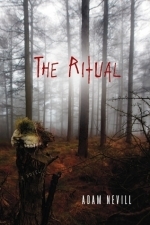

Great Horror, Could have been shorter.
So you know when you’re watching a horror movie and there’s an unseen being involved and you only catch little glimpses here and there throughout the film, and when you do actually see it you think (or more likely, scream out) WHAT THE HELL IS THAT?
Yeah that’s basically what you get throughout the book. It could be similar horror elements like Blair Witch Project, only you do find out what it is towards the latter part of the story. (And it’s still pretty creepy to figure out and picture).
I really do enjoy the horror aspects in this book and the feelings it invokes. You can really feel the desperation, frustration, and anguish felt within the characters. Tempers flare and understandably fights happen from within the group. You feel Luke’s anger and his highs and lows as you follow him throughout this horror journey.
There’s not many twists or blindside moments in this book it’s pretty much standard that you would see in horror books but the setting is very well done. A remote forest in Scandinavia while there’s something big and bad out there provides great atmosphere for the dark and scary.
It does drag out through the last third of the novel where you just have to feel for Luke and you wonder how much the human spirit can take. The ending really should have ended about 50 pages ago and there is repetition through the novel that some may find a trial to go through when reading. It’s manageable most of the time but I was close to losing my interest towards the end of the novel but powered through. It was still an enjoyable read, and recommended for those that want a good solid horror.
I’ll be reading more of his books for sure. I enjoyed the thrill and can only imagine what his other books will be like.
Yeah that’s basically what you get throughout the book. It could be similar horror elements like Blair Witch Project, only you do find out what it is towards the latter part of the story. (And it’s still pretty creepy to figure out and picture).
I really do enjoy the horror aspects in this book and the feelings it invokes. You can really feel the desperation, frustration, and anguish felt within the characters. Tempers flare and understandably fights happen from within the group. You feel Luke’s anger and his highs and lows as you follow him throughout this horror journey.
There’s not many twists or blindside moments in this book it’s pretty much standard that you would see in horror books but the setting is very well done. A remote forest in Scandinavia while there’s something big and bad out there provides great atmosphere for the dark and scary.
It does drag out through the last third of the novel where you just have to feel for Luke and you wonder how much the human spirit can take. The ending really should have ended about 50 pages ago and there is repetition through the novel that some may find a trial to go through when reading. It’s manageable most of the time but I was close to losing my interest towards the end of the novel but powered through. It was still an enjoyable read, and recommended for those that want a good solid horror.
I’ll be reading more of his books for sure. I enjoyed the thrill and can only imagine what his other books will be like.
Sophia (Bookwyrming Thoughts) (530 KP) rated The Polaris Uprising (Polaris, #1) in Books
Jan 23, 2020
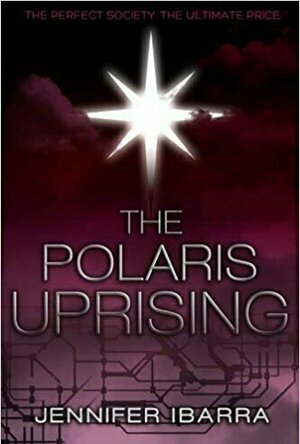

Another bystander review yet again. T_T But throughout the story, I was making connections – yet again – to movies and books:
Corsets – Incarceron. Mercifully no prisons.
Probe Bots – *that seriously cute voice from that one movie* Wall-E! Of course, those robots had inflection and it's not Wall-E's voice I'm calling cute.
Arranged Marriages – At the time I started The Polaris Uprising, I completed Delirium not too long ago and it turned out to be a TERRIBLE experience. Fortunately, this book fared better off and it's not similar to Delirium. *phew* In fact... this quote got me quite worried:
<blockquote>When you’re president, this will all be a distant memory.</blockquote>
Is this similar to "When you're cured, this will all be a distant memory" or what? I could have sworn I saw that exact same sentence in Delirium a million times maybe. O_O (Obviously I didn't let that stop me from continuing).
Truth Serum – Welcome to the Candor faction. Need I say more?
That one sentence before this: And then all hell broke loose – Similar to The Hunger Games, but different. And no, that's no spoiler. Close, but no.
<blockquote>Alanna! Alanna!</blockquote>
e_e 1984's B! B! B! That book was quite dreadful, so I'm surprised I still remember the letter B! (that was not me in exclamation).
Now that I've gone through my dreadful (and some positive) experiences with some dystopians, let's get on with some positive notes and why I gave The Polaris Uprising a high rating:
~ The message comes across clearly throughout the book. Maybe confusing at first (switching views from the prologue and first chapter), but everything fits in nicely later.
~ Here's the big plus: it's different from other dystopians. As in really different. How? It's like many years later, a dystopian AFTER another dystopian failed. At least, that's what I assume. The signs were there, which brings me to my next point.
~ Dare to be different. I would've had to choose a faction back in September if I were in Divergent (Movie's out in 28 DAYS). Here, you're an adult at 25. That gives me what? 7-8 years to be a semi-kid? Yippee.
~ This might actually take a different end from other dystopians. Of course, there's no guarantee, so don't take that word for granted.
But overall, an impressive debut novel for Jennifer Ibarra.
-----------------------
Review copy provided by the author for review on the blog tour
Formatting is lost due to copy and paste
This review and more can be found at <a href="http://bookwyrming-thoughts.blogspot.com/2014/02/blog-tour-the-polaris-uprising-by-jennifer-ibarra-review-and-giveaway.html">Bookwyrming Thoughts</a>
<a href="http://bookwyrming-thoughts.blogspot.com/"><img src="http://4.bp.blogspot.com/-Gi5Rk5yLloA/UtliaUbdL3I/AAAAAAAACbE/J27z92_qrYU/s1600/Official+Banner.png"; /></a>
Corsets – Incarceron. Mercifully no prisons.
Probe Bots – *that seriously cute voice from that one movie* Wall-E! Of course, those robots had inflection and it's not Wall-E's voice I'm calling cute.
Arranged Marriages – At the time I started The Polaris Uprising, I completed Delirium not too long ago and it turned out to be a TERRIBLE experience. Fortunately, this book fared better off and it's not similar to Delirium. *phew* In fact... this quote got me quite worried:
<blockquote>When you’re president, this will all be a distant memory.</blockquote>
Is this similar to "When you're cured, this will all be a distant memory" or what? I could have sworn I saw that exact same sentence in Delirium a million times maybe. O_O (Obviously I didn't let that stop me from continuing).
Truth Serum – Welcome to the Candor faction. Need I say more?
That one sentence before this: And then all hell broke loose – Similar to The Hunger Games, but different. And no, that's no spoiler. Close, but no.
<blockquote>Alanna! Alanna!</blockquote>
e_e 1984's B! B! B! That book was quite dreadful, so I'm surprised I still remember the letter B! (that was not me in exclamation).
Now that I've gone through my dreadful (and some positive) experiences with some dystopians, let's get on with some positive notes and why I gave The Polaris Uprising a high rating:
~ The message comes across clearly throughout the book. Maybe confusing at first (switching views from the prologue and first chapter), but everything fits in nicely later.
~ Here's the big plus: it's different from other dystopians. As in really different. How? It's like many years later, a dystopian AFTER another dystopian failed. At least, that's what I assume. The signs were there, which brings me to my next point.
~ Dare to be different. I would've had to choose a faction back in September if I were in Divergent (Movie's out in 28 DAYS). Here, you're an adult at 25. That gives me what? 7-8 years to be a semi-kid? Yippee.
~ This might actually take a different end from other dystopians. Of course, there's no guarantee, so don't take that word for granted.
But overall, an impressive debut novel for Jennifer Ibarra.
-----------------------
Review copy provided by the author for review on the blog tour
Formatting is lost due to copy and paste
This review and more can be found at <a href="http://bookwyrming-thoughts.blogspot.com/2014/02/blog-tour-the-polaris-uprising-by-jennifer-ibarra-review-and-giveaway.html">Bookwyrming Thoughts</a>
<a href="http://bookwyrming-thoughts.blogspot.com/"><img src="http://4.bp.blogspot.com/-Gi5Rk5yLloA/UtliaUbdL3I/AAAAAAAACbE/J27z92_qrYU/s1600/Official+Banner.png"; /></a>

Acanthea Grimscythe (300 KP) rated Three Heart Echo in Books
May 16, 2018
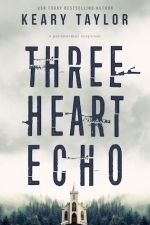

Three Heart Echo by Keary Taylor ended up on my reading list by yet another mislabeling on NetGalley, I must admit. As seen in the title image above, the book is a paranormal suspense. If you’ve read my blog for any length of time, you’ll no doubt guess that I grabbed it from the horror genre titles. Fortunately, after revisiting its cover I can at least say that its actual genre is the right one. While Three Heart Echo does have some elements of horror, it reads more like a paranormal-themed Lifetime movie.
Taking place soon after the death of Jack Caraway, Three Heart Echo tells the story of two vastly different people meeting and, you guessed it, falling in love. It’s not that simple though, and several of the more twisted things that one might expect from a horror novel surface throughout the plot. Iona Faye, a frail woman mourning the death of her fiance, seeks out Sully Whitmore, a man rumored to be able to speak to the dead. Together, the two unravel the darkness of Jack’s past while racing against time to unravel not one, but two curses.
The plot is fairly linear, with only one unexpected twist at the end. That twist defines much of the book though, and I have to admit that I actually felt anger flare up within me. I’ve gotta give Taylor kudos for that one. What I don’t like, besides the heavily romantic subplot, is the fact that, as readers see in many romance books, we’re dealing with two Mary Sue characters. Iona is described as a beautiful fawn whilst Sully is a giant Viking of a man. Catch my drift? Oh, and poor dead Jack? Apparently, he’s a stunner too.
While the plot is straightforward, Taylor also alternates between perspectives on chapters. Now, as a reader, you may think I mean she goes back and forth between past and present. It’s common enough when we read books, after all. Unfortunately, what I mean is that Taylor switches between perspectives of Sully and Iona. For the most part, the switches follow a pattern. There is some story overlap/repetition within those shifts, but it isn’t terrible. What perturbs me about these perspectives is that every now and then, there’s a break to the pattern where it may take some readers a moment to realize that the book has suddenly shifted to the past without warning.
Back to the romance side of things, there are far too many cliches. Poor, helpless main character gets an indescribable pain in their chest and they can’t fathom why it feels like their heart races when they look upon their love interest. As if that’s not bad enough, you know from the get-go that there’s going to be a love story involved. It’s not well enough to leave it a paranormal suspense, we might as well make it a romance too. Because y’know, two attractive people can’t simply be friends!
Speaking of chest pain, there’s another thing about this book that absolutely irked me. I could understand if one character had an odd need to count things. It happens and OCD is a real thing; but, what I’m referring to, is the need by both characters to take exactly five steps, to blink four times, to wait for three heartbeats before they do something so much as take a breath.
Finally, what the hell is a grand opus? The actual term is magnum opus. I’lll hope it was just a typo that was fixed in the final, published copy of the Three Heart Echo. Overall, the story itself is engaging to a degree, but it definitely wasn’t my style. I think it belongs more in the paranormal romance genre than it does horror.
I’d like to thank NetGalley and the author for providing me with a free copy for the purpose of review.
Taking place soon after the death of Jack Caraway, Three Heart Echo tells the story of two vastly different people meeting and, you guessed it, falling in love. It’s not that simple though, and several of the more twisted things that one might expect from a horror novel surface throughout the plot. Iona Faye, a frail woman mourning the death of her fiance, seeks out Sully Whitmore, a man rumored to be able to speak to the dead. Together, the two unravel the darkness of Jack’s past while racing against time to unravel not one, but two curses.
The plot is fairly linear, with only one unexpected twist at the end. That twist defines much of the book though, and I have to admit that I actually felt anger flare up within me. I’ve gotta give Taylor kudos for that one. What I don’t like, besides the heavily romantic subplot, is the fact that, as readers see in many romance books, we’re dealing with two Mary Sue characters. Iona is described as a beautiful fawn whilst Sully is a giant Viking of a man. Catch my drift? Oh, and poor dead Jack? Apparently, he’s a stunner too.
While the plot is straightforward, Taylor also alternates between perspectives on chapters. Now, as a reader, you may think I mean she goes back and forth between past and present. It’s common enough when we read books, after all. Unfortunately, what I mean is that Taylor switches between perspectives of Sully and Iona. For the most part, the switches follow a pattern. There is some story overlap/repetition within those shifts, but it isn’t terrible. What perturbs me about these perspectives is that every now and then, there’s a break to the pattern where it may take some readers a moment to realize that the book has suddenly shifted to the past without warning.
Back to the romance side of things, there are far too many cliches. Poor, helpless main character gets an indescribable pain in their chest and they can’t fathom why it feels like their heart races when they look upon their love interest. As if that’s not bad enough, you know from the get-go that there’s going to be a love story involved. It’s not well enough to leave it a paranormal suspense, we might as well make it a romance too. Because y’know, two attractive people can’t simply be friends!
Speaking of chest pain, there’s another thing about this book that absolutely irked me. I could understand if one character had an odd need to count things. It happens and OCD is a real thing; but, what I’m referring to, is the need by both characters to take exactly five steps, to blink four times, to wait for three heartbeats before they do something so much as take a breath.
Finally, what the hell is a grand opus? The actual term is magnum opus. I’lll hope it was just a typo that was fixed in the final, published copy of the Three Heart Echo. Overall, the story itself is engaging to a degree, but it definitely wasn’t my style. I think it belongs more in the paranormal romance genre than it does horror.
I’d like to thank NetGalley and the author for providing me with a free copy for the purpose of review.

Bob Mann (459 KP) rated Wordslingers: The Story of Self-Publishing (2021) in Movies
Sep 28, 2021
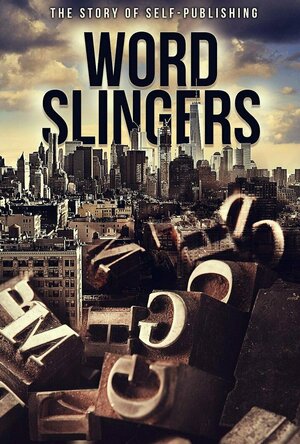
They say that everyone has a book in them. I guess the key question is whether anyone else wants to read it. Such is the subject of this new documentary from A. Brooks Bennett. As a publisher says at one point “Writing a book is a creative act; publishing a book is a business”.
The democratization of publishing
The internet has brought many advantages to modern life, but perhaps one of the most interesting is the democratization of publishing. No longer is control in the hands of publishing houses, who might glance at and immediately dismiss new ideas in literature. It’s worth remembering that 12 publishing houses turned down J.K. Rowling’s draft for Harry Potter! Now anyone can be creative in writing and self-publish on the web. My own wife – Sue Mann – did just this, self-publishing the WW1 poems and reminiscences of two of her great-uncles. (It’s available from all good bookshops… oh, no…. actually just from here!) Are the poems artistically any good? I have no idea! Will it sell many copies? Clearly not! Was it a personal goal achieved in honouring their memory? Absolutely! Different people want different things from the medium.
Very ‘American’.
It’s probably down to the pioneer spirit, but as a generalisation Americans seem far more ambitious than Brits: or at least, more OPENLY ambitious. Whereas most Brits will quietly get on with building their careers, some Americans will go hell-for-leather towards their vision of “success” no matter the cost: no guts; no glory; and be noisy about it!
But for every J.K. Rowling or Bill Bryson there are several thousand writers who have ‘failed to launch’.
Here we follow two budding authors – one from California; the other from North Carolina – self-publishing their work and seeking sales.
One – Giles A (“Andy”) Anderson – has self-published a seemingly disturbing work called “Vidu” – the first of what he hopes will be a five-part series. He first talks from a ghoulish bookstore, speaking psycho-babble with the requisite hyperbole of an ‘artiste’. (It suggests how the books might read… but perhaps that’s misjudging). It comes then as a surprise when we find he doesn’t live alone in a coffin playing video games on his own, but has a lovely wife and two young and perfectly normal children. So his book is an “off the beaten track kinda book”, but the man seems well-grounded and following his dream in bite-size pieces.
Moral: Avoid the Travel Books
As is often the case though, the documentary homes in on, and spends most of its time with, the other author – Adam Shephard. Shephard is struggling to launch as an author and also – in parallel – wrestling with the Green Card process for his supportive and vivacious Croatian wife Ivana. The problem is that Shephard has written an extended travel blog: ten-a-penny on sites like WordPress.
I read a Forbes article last year that reported that – astonishingly – in a survey 11% of American respondents had never travelled outside of their home state and 40% had never left the country. For such a well-heeled country, the US is incredibly insular. So Shephard’s vision is to encourage youngsters to step outside of their comfort zone and jump on that plane to Guatemala. It’s a fine objective. But does anyone want to listen? And – crucially – is the book any good and commercial enough? As the famous ‘founder of self-publishing’, the late Dan Poynter (to who the film is dedicated) says “You can’t make any money off a travel book”.
The film never goes as far as having either of the featured books critically reviewed: that might have added some extra spice to the story (and possibly provoked some painful reactions). But the piles of unopened boxes in Adam’s clinically white storage facility rather speaks for itself. Since Shephard never seems to do anything by halves, the boxes are piled high and thus the fall from grace is hard, long…. and absolutely riveting. (Ivana’s support and love in such difficult circumstances is commendable: he is a truly blessed man).
Jaw-dropping Walmart scene
At least at the start of the film, Adam’s self-belief and confidence in himself is infectious. The peak of his bravado, and a jaw-dropping highpoint in the movie for me, was a scene filmed in Walmart. Shephard, in a case of “reverse shoplifting”, sneaks HIS books onto the bookshelves of Walmart. What happens when they then try to buy one? It’s a real eye-opener and worth watching the documentary for in its own right.
It’s an interesting legal position: if Walmart were to be upset about this scene, what on earth could they charge them with!? Littering?
Highs and lows.
Shephard seems to have talent as a speaker, and it struck me that he would be genuinely suited to a job in sales. In the movie we see him performing self-confidence-building pitches to young people (and, boy, could we sometimes use that in the UK post-Brexit). A few books sold. But another event barely breaking even. The pattern becomes familiar and, in a way, rather tragic.
There are unexpected highs and lows for Adam and Ivana along the way though, unrelated to the publishing story, and the filmmaker skillfully weaves them into the narrative to good effect.
Thought-provoking.
I watched this on a whim and thought I’d probably switch off after 10 minutes. Documentaries normally are not my thing! But no. It had me gripped to see how things would turn out – like watching a slow-motion car crash! The journey was well-worth the ride: a real page-turner you might say.
The democratization of publishing
The internet has brought many advantages to modern life, but perhaps one of the most interesting is the democratization of publishing. No longer is control in the hands of publishing houses, who might glance at and immediately dismiss new ideas in literature. It’s worth remembering that 12 publishing houses turned down J.K. Rowling’s draft for Harry Potter! Now anyone can be creative in writing and self-publish on the web. My own wife – Sue Mann – did just this, self-publishing the WW1 poems and reminiscences of two of her great-uncles. (It’s available from all good bookshops… oh, no…. actually just from here!) Are the poems artistically any good? I have no idea! Will it sell many copies? Clearly not! Was it a personal goal achieved in honouring their memory? Absolutely! Different people want different things from the medium.
Very ‘American’.
It’s probably down to the pioneer spirit, but as a generalisation Americans seem far more ambitious than Brits: or at least, more OPENLY ambitious. Whereas most Brits will quietly get on with building their careers, some Americans will go hell-for-leather towards their vision of “success” no matter the cost: no guts; no glory; and be noisy about it!
But for every J.K. Rowling or Bill Bryson there are several thousand writers who have ‘failed to launch’.
Here we follow two budding authors – one from California; the other from North Carolina – self-publishing their work and seeking sales.
One – Giles A (“Andy”) Anderson – has self-published a seemingly disturbing work called “Vidu” – the first of what he hopes will be a five-part series. He first talks from a ghoulish bookstore, speaking psycho-babble with the requisite hyperbole of an ‘artiste’. (It suggests how the books might read… but perhaps that’s misjudging). It comes then as a surprise when we find he doesn’t live alone in a coffin playing video games on his own, but has a lovely wife and two young and perfectly normal children. So his book is an “off the beaten track kinda book”, but the man seems well-grounded and following his dream in bite-size pieces.
Moral: Avoid the Travel Books
As is often the case though, the documentary homes in on, and spends most of its time with, the other author – Adam Shephard. Shephard is struggling to launch as an author and also – in parallel – wrestling with the Green Card process for his supportive and vivacious Croatian wife Ivana. The problem is that Shephard has written an extended travel blog: ten-a-penny on sites like WordPress.
I read a Forbes article last year that reported that – astonishingly – in a survey 11% of American respondents had never travelled outside of their home state and 40% had never left the country. For such a well-heeled country, the US is incredibly insular. So Shephard’s vision is to encourage youngsters to step outside of their comfort zone and jump on that plane to Guatemala. It’s a fine objective. But does anyone want to listen? And – crucially – is the book any good and commercial enough? As the famous ‘founder of self-publishing’, the late Dan Poynter (to who the film is dedicated) says “You can’t make any money off a travel book”.
The film never goes as far as having either of the featured books critically reviewed: that might have added some extra spice to the story (and possibly provoked some painful reactions). But the piles of unopened boxes in Adam’s clinically white storage facility rather speaks for itself. Since Shephard never seems to do anything by halves, the boxes are piled high and thus the fall from grace is hard, long…. and absolutely riveting. (Ivana’s support and love in such difficult circumstances is commendable: he is a truly blessed man).
Jaw-dropping Walmart scene
At least at the start of the film, Adam’s self-belief and confidence in himself is infectious. The peak of his bravado, and a jaw-dropping highpoint in the movie for me, was a scene filmed in Walmart. Shephard, in a case of “reverse shoplifting”, sneaks HIS books onto the bookshelves of Walmart. What happens when they then try to buy one? It’s a real eye-opener and worth watching the documentary for in its own right.
It’s an interesting legal position: if Walmart were to be upset about this scene, what on earth could they charge them with!? Littering?
Highs and lows.
Shephard seems to have talent as a speaker, and it struck me that he would be genuinely suited to a job in sales. In the movie we see him performing self-confidence-building pitches to young people (and, boy, could we sometimes use that in the UK post-Brexit). A few books sold. But another event barely breaking even. The pattern becomes familiar and, in a way, rather tragic.
There are unexpected highs and lows for Adam and Ivana along the way though, unrelated to the publishing story, and the filmmaker skillfully weaves them into the narrative to good effect.
Thought-provoking.
I watched this on a whim and thought I’d probably switch off after 10 minutes. Documentaries normally are not my thing! But no. It had me gripped to see how things would turn out – like watching a slow-motion car crash! The journey was well-worth the ride: a real page-turner you might say.

Kristy H (1252 KP) rated Saving Grace in Books
Feb 13, 2018

I was somewhat disappointed by <i>Saving Grace</i> and I'm not exactly sure why. I think because its plot synopsis reminded me somewhat of a Liane Moriarty book and by the end of Green's novel, I felt that Moriarty had done it much better.
<i>Saving Grace</i> tells the story of Grace and Ted Chapman. Ted is a famous and beloved author, though one in the bit of a decline, and Grace his faithful wife, well-known mostly for her style and grace (haha). To an outsider, the Chapmans look to be the perfect couple, but we learn that Ted is quick to rage and Grace continually finds herself walking on eggshells around her husband.
The one person who seems able to calm these rages is his assistant, Ellen. When she leaves to care for her ailing mother, Grace finds herself in despair. She feels as if her life is falling apart, trying to care for her house and Ted's needs. (At this point, I find myself a little frustrated and flabbergasted. Seriously? Join the real world, lady.) However, she feels like her prayers have been answered when her daughter, Clemmie, introduces her to Beth. Beth becomes Ted's assistant and also Grace's helpmate. But Grace quickly feels as if Beth is taking over -- not just as Ted's assistant, but over Grace's life. We're left to wonder, is Grace crazy? Or Beth?
The story itself is sort of a compelling one -- assistant moves in and takes over perfect wife's life. It sounds quite exciting (Lifetime movie, anyone?. However, Grace is not that compelling of a character, and her whiny ways did not garner a ton of sympathy with me, even if Beth was a horrible person. Her husband was clearly an ass, but we really didn't get to learn much about his character, either. Or, really, even Beth's. There's also a lot of far-fetched plot points - yes, Ted is under Beth's spell, but would he really believe some of the tales she weaves about his wife? It's all just very strange.
All in all, I read the book fairly quickly, interested to see what would happen to Grace, mostly for the sake of finding out. However, in the end, I just felt Green could have done so much more with the story, and with Grace's character.
<i>Saving Grace</i> tells the story of Grace and Ted Chapman. Ted is a famous and beloved author, though one in the bit of a decline, and Grace his faithful wife, well-known mostly for her style and grace (haha). To an outsider, the Chapmans look to be the perfect couple, but we learn that Ted is quick to rage and Grace continually finds herself walking on eggshells around her husband.
The one person who seems able to calm these rages is his assistant, Ellen. When she leaves to care for her ailing mother, Grace finds herself in despair. She feels as if her life is falling apart, trying to care for her house and Ted's needs. (At this point, I find myself a little frustrated and flabbergasted. Seriously? Join the real world, lady.) However, she feels like her prayers have been answered when her daughter, Clemmie, introduces her to Beth. Beth becomes Ted's assistant and also Grace's helpmate. But Grace quickly feels as if Beth is taking over -- not just as Ted's assistant, but over Grace's life. We're left to wonder, is Grace crazy? Or Beth?
The story itself is sort of a compelling one -- assistant moves in and takes over perfect wife's life. It sounds quite exciting (Lifetime movie, anyone?. However, Grace is not that compelling of a character, and her whiny ways did not garner a ton of sympathy with me, even if Beth was a horrible person. Her husband was clearly an ass, but we really didn't get to learn much about his character, either. Or, really, even Beth's. There's also a lot of far-fetched plot points - yes, Ted is under Beth's spell, but would he really believe some of the tales she weaves about his wife? It's all just very strange.
All in all, I read the book fairly quickly, interested to see what would happen to Grace, mostly for the sake of finding out. However, in the end, I just felt Green could have done so much more with the story, and with Grace's character.
Never Look at the Empty Seats: A Memoir
Book
A tale of hard work, musical discovery, and faith, Charlie Daniels’s journey has been one of a...
Music biography
Bob Mann (459 KP) rated Paddington 2 (2017) in Movies
Sep 29, 2021


Bear faced brilliance.
I never went to see “Paddington 2” at the cinema when it came out. Well, it’s a kids film isn’t it? And my grandkids I thought… well, their probably a bit too young for the long haul on this one. But – after catching up with it recently on a transatlantic flight – I’m sorry I missed it. For it is brilliant in its own way.
Having not seen the first “Paddington”, also directed by Paul King, there is a useful little flashback to the Peruvian origins of the little chap before we pitch into the plot proper. Paddington (voiced by Ben Wishaw, “Spectre“) has nicely settled down to life with The Brown’s in their London home and is a well-loved member of the community (well, well loved that is by everyone except the cranky Mr Curry (Peter Capaldi, “Dr Who“, “World War Z“). But he longs to buy his Aunt Lucy (Imelda Staunton, “Finding Your Feet“) a special birthday present – a pop-up book of London scenes that he’s seen in a local antique shop. But for that he needs a lot of cash, and so proceeds to earn it through a variety of different jobs.
However, fading actor Phoenix Buchanan (Hugh Grant, “Florence Foster Jenkins“, “The Man From U.N.C.L.E.“) also shows an unhealty interest in the book and, after it disappears from the shop with Paddington’s paw prints all over the scene, the poor bear finds himself on the wrong side of the law.
This is a continually inventive movie, which rockets along with truly impressive verve and panache from scene to scene. As a particular example of this, an animated walk through the pop-up book is marvellously done: a tribute to the 2D retro nature (even in those days!) of the TV animation of the 70’s that will go over the heads of younger viewers. There are plenty of slapstick scenes – notably of Paddington trying window cleaning, and his job in a barber’s shop – which will not only delight younger children but also made this 57 year old laugh out loud too! The prison sequence also delights, with a laundry blunder by the bear leading into a comical showdown with the prison’s chief poisoner, sorry, head chef played by Brendan Gleeson (“Alone in Berlin“, “Live By Night“).
Vision AND sound! Paddington with incarcerated friends, including Brendan Gleeson (centre).
The cast all seem to revel in their parts, with Hugh Bonneville (“Viceroy’s House“, “The Monuments Men“) energetic as Mr Brown and Oscar runner-up (surely!) Sally Hawkins (“The Shape of Water“) very chirpy as Mrs Brown. All of the residents of Windsor Gardens are a who’s who of UK film and TV, and each cameo has a lovely little tale behind it: Julie Walters (“Brooklyn“) as Mrs Bird, the Brown’s help; Sanjeev Bhaskar as Dr Jafri, forever nearly locking himself out; Miss Kitts (Jessica Hynes) and the crusty Colonel Lancaster (Ben Miller) in a ‘will they/won’t they’ potential romance. Elsewhere, Jim Broadbent (“Bridget Jones Baby“, “Eddie the Eagle“) is great as the antique store owner; Tom Conti adds both gravitas and humour as Judge Biggleswade and Richard Ayoade (“The Double“) is very funny as a forensic expert.
The Brown family: from left; Mr Brown (Hugh Bonneville); Jonathan (Samuel Joslin); Mrs Brown (Sally Hawkins); Mrs Bird (Julie Walters); and Judy Brown (Madeleine Harris).
Head and shoulders above all of them though is Hugh Grant who is just outstandingly good as the puffed-up and self-important ham-actor. His Best Supporting Actor nomination for a BAFTA was surprising, but having seen the film so very much deserved. Hang around in the end credits for his last words of the film which are cornily hilarious! One can only hope that Phoenix Buchanen returns for Paddington 3.
A career best… Hugh Grant as the devilishly slippery Phoenix Buchanan.
I would have thought that some of the scenes towards the end of the film, particularly one where Paddington seems doomed to a watery end, might be a little frightening for younger viewers. Thank heavens Sally Hawkins has gills! 🙂
Overall, this is a movie I would gladly watch again, with or without kids. In a movie landscape that is pretty devoid of good comedy, here is a movie that really did make me laugh out loud.
Having not seen the first “Paddington”, also directed by Paul King, there is a useful little flashback to the Peruvian origins of the little chap before we pitch into the plot proper. Paddington (voiced by Ben Wishaw, “Spectre“) has nicely settled down to life with The Brown’s in their London home and is a well-loved member of the community (well, well loved that is by everyone except the cranky Mr Curry (Peter Capaldi, “Dr Who“, “World War Z“). But he longs to buy his Aunt Lucy (Imelda Staunton, “Finding Your Feet“) a special birthday present – a pop-up book of London scenes that he’s seen in a local antique shop. But for that he needs a lot of cash, and so proceeds to earn it through a variety of different jobs.
However, fading actor Phoenix Buchanan (Hugh Grant, “Florence Foster Jenkins“, “The Man From U.N.C.L.E.“) also shows an unhealty interest in the book and, after it disappears from the shop with Paddington’s paw prints all over the scene, the poor bear finds himself on the wrong side of the law.
This is a continually inventive movie, which rockets along with truly impressive verve and panache from scene to scene. As a particular example of this, an animated walk through the pop-up book is marvellously done: a tribute to the 2D retro nature (even in those days!) of the TV animation of the 70’s that will go over the heads of younger viewers. There are plenty of slapstick scenes – notably of Paddington trying window cleaning, and his job in a barber’s shop – which will not only delight younger children but also made this 57 year old laugh out loud too! The prison sequence also delights, with a laundry blunder by the bear leading into a comical showdown with the prison’s chief poisoner, sorry, head chef played by Brendan Gleeson (“Alone in Berlin“, “Live By Night“).
Vision AND sound! Paddington with incarcerated friends, including Brendan Gleeson (centre).
The cast all seem to revel in their parts, with Hugh Bonneville (“Viceroy’s House“, “The Monuments Men“) energetic as Mr Brown and Oscar runner-up (surely!) Sally Hawkins (“The Shape of Water“) very chirpy as Mrs Brown. All of the residents of Windsor Gardens are a who’s who of UK film and TV, and each cameo has a lovely little tale behind it: Julie Walters (“Brooklyn“) as Mrs Bird, the Brown’s help; Sanjeev Bhaskar as Dr Jafri, forever nearly locking himself out; Miss Kitts (Jessica Hynes) and the crusty Colonel Lancaster (Ben Miller) in a ‘will they/won’t they’ potential romance. Elsewhere, Jim Broadbent (“Bridget Jones Baby“, “Eddie the Eagle“) is great as the antique store owner; Tom Conti adds both gravitas and humour as Judge Biggleswade and Richard Ayoade (“The Double“) is very funny as a forensic expert.
The Brown family: from left; Mr Brown (Hugh Bonneville); Jonathan (Samuel Joslin); Mrs Brown (Sally Hawkins); Mrs Bird (Julie Walters); and Judy Brown (Madeleine Harris).
Head and shoulders above all of them though is Hugh Grant who is just outstandingly good as the puffed-up and self-important ham-actor. His Best Supporting Actor nomination for a BAFTA was surprising, but having seen the film so very much deserved. Hang around in the end credits for his last words of the film which are cornily hilarious! One can only hope that Phoenix Buchanen returns for Paddington 3.
A career best… Hugh Grant as the devilishly slippery Phoenix Buchanan.
I would have thought that some of the scenes towards the end of the film, particularly one where Paddington seems doomed to a watery end, might be a little frightening for younger viewers. Thank heavens Sally Hawkins has gills! 🙂
Overall, this is a movie I would gladly watch again, with or without kids. In a movie landscape that is pretty devoid of good comedy, here is a movie that really did make me laugh out loud.

Gareth von Kallenbach (980 KP) rated Super (2011) in Movies
Aug 7, 2019
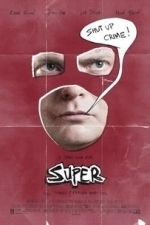


When I first heard about Super, written and directed by James Gunn, my first thought was “Dwight (from The Office) will be a superhero?” However what I saw on the screen was anything but Dwight, it was 75% awesome and 25% “I can’t believe they did that!”
The film begins with Frank (excellently played by Rainn Wilson) happily married to Sarah (Liv Tyler) who is a recovering drug addict. The happiness is shattered when Sarah begins using again, thanks to Jacques the drug dealer (Kevin Bacon) and then one day she disappears. Frank searches for Sarah and eventually finds her under the control of Jacques. Unable to get her away from Jacques, Frank goes to the police for help. Unfortunately because Sarah left on her own accord, no law has been broken (except for the drug stuff) so they are unable to help him.
Frank tries to move on, but without Sarah life seems meaningless. Then in his darkest hour he has a vision of The Holy Avenger (Nathan Fillion). Heeding the vision, Frank becomes The Crimson Bolt, pledges to fight crime and to save Sarah. There is just one small problem – Frank has no idea how to be a superhero. Research is needed, so off to the comic book store he goes, of course, and there he meets Libby (Ellen Page). Libby advises him which comics to read that have superheroes who do not have powers. Armed with this knowledge, The Crimson Bolt officially begins fighting crime in the most unusual of ways and not too long after, Libby becomes Boltie, his trusted, sexy sidekick.
This very entertaining, action-filled, dark comedy has more twists and turns than a game of Chutes and Ladders, and it will keep you glued to the screen until the end. Will they save the city from villainy? Will they save Sarah’s bacon? (Sorry, with Kevin Bacon playing the bad guy I couldn’t resist.)
Super has a different take on the superhero genre than what I’ve seen in past movies. Only Rainn Wilson could have properly portrayed the uniqueness that is Frank/Crimson Bolt and the same goes for Ellen Page in regards to Libby/Boltie (possibly the best sidekick ever). To make a long review short, let me sum up this way, everyone in the movie no matter the length of their part did an amazing job in their role. With that said, my only wish was that the story would have allowed for more screen time for Gregg Henry (Detective John Felkner) and a musical number for Fillion’s Holy Avenger. if you liked Fillion as Captain Hammer in Dr. Horrible’s Singalong Blog, then you’ll love him in this role. But those things would have most likely thrown off the perfect balance of action, humor and character interaction that made this movie so enjoyable.
The film begins with Frank (excellently played by Rainn Wilson) happily married to Sarah (Liv Tyler) who is a recovering drug addict. The happiness is shattered when Sarah begins using again, thanks to Jacques the drug dealer (Kevin Bacon) and then one day she disappears. Frank searches for Sarah and eventually finds her under the control of Jacques. Unable to get her away from Jacques, Frank goes to the police for help. Unfortunately because Sarah left on her own accord, no law has been broken (except for the drug stuff) so they are unable to help him.
Frank tries to move on, but without Sarah life seems meaningless. Then in his darkest hour he has a vision of The Holy Avenger (Nathan Fillion). Heeding the vision, Frank becomes The Crimson Bolt, pledges to fight crime and to save Sarah. There is just one small problem – Frank has no idea how to be a superhero. Research is needed, so off to the comic book store he goes, of course, and there he meets Libby (Ellen Page). Libby advises him which comics to read that have superheroes who do not have powers. Armed with this knowledge, The Crimson Bolt officially begins fighting crime in the most unusual of ways and not too long after, Libby becomes Boltie, his trusted, sexy sidekick.
This very entertaining, action-filled, dark comedy has more twists and turns than a game of Chutes and Ladders, and it will keep you glued to the screen until the end. Will they save the city from villainy? Will they save Sarah’s bacon? (Sorry, with Kevin Bacon playing the bad guy I couldn’t resist.)
Super has a different take on the superhero genre than what I’ve seen in past movies. Only Rainn Wilson could have properly portrayed the uniqueness that is Frank/Crimson Bolt and the same goes for Ellen Page in regards to Libby/Boltie (possibly the best sidekick ever). To make a long review short, let me sum up this way, everyone in the movie no matter the length of their part did an amazing job in their role. With that said, my only wish was that the story would have allowed for more screen time for Gregg Henry (Detective John Felkner) and a musical number for Fillion’s Holy Avenger. if you liked Fillion as Captain Hammer in Dr. Horrible’s Singalong Blog, then you’ll love him in this role. But those things would have most likely thrown off the perfect balance of action, humor and character interaction that made this movie so enjoyable.

The Bandersnatch (199 KP) rated Goodnight Mister Tom in Books
Nov 7, 2019
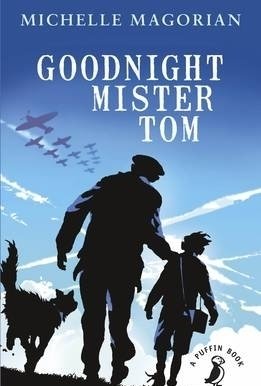
In September 1939, as Britain stands on the brink of the war, many young children from the cities are evacuated tot he countryside to escape an imminent German bombardment. Willie Beech, a boy from Deptford who is physically and emotionally abused by his mother, arrives at the home of Tom Oakley, a widower in his sixties who lives in the village of Little Weirwold. The boy is thinly clad, underfed and covered with painful bruises, and believes he is full of sin, a result of his upbringing by his mother, a domineering, insane, God-fearing widow.
"Mister Tom", as William christens his new guardian, is reclusive and bad-tempered, and as such is avoided by the community. Willie lives with him as his Mother wants him to live with someone who is either religious or lives next to a church. Though initially distant, he is touched after discovering William's home-life and treats him with kindness and understanding, helping to educate him. Under his care, William begins to thrive, forming a small circle of friends at school among his classmates including fellow-evacuee Zach. He also becomes proficient in drawing and dramatics. As William is changed by Tom, so is Tom transformed by William's presence in his home. It is revealed that Tom lost his wife and baby son to Scarlatina some 40 years previously, and he has become reclusive because of this.
The growing bond between William and Tom is threatened when William's mother requests that the boy returns to her in the city, telling him she is sick. At first, William thinks this will be a good thing, as he can be helpful to his mother. However, his mother is not pleased to learn the details of his time with Tom, feeling that he has not been disciplined properly. While William has been away, she has become pregnant and had a girl, but is neglecting the baby. After a bad reunion, where his mother becomes furious upon learning the details of her son's life with Tom, abhorring his association with the Jewish Zach among other things, she hits William and puts him in the under-stairs cupboard, chains him to the piping. William regains consciousness briefly to find himself in the cupboard – he has been stripped of his clothes, minus his underwear, and his ankle is twisted. He quietly sobs for Tom, before he falls asleep.
Back in Little Weirwold, Tom has a premonition that something is not right with William. Although he has never travelled beyond his immediate locality, he ventures into London and eventually locates William's neighbourhood of Deptford and his home. He persuades a local policeman to break down the door of the apparently empty home, to be greeted with a vile stench. They find William in the closet with the baby, who had also been locked under the stairs by William's mother and has now died. William is malnourished and badly bruised as he had been locked under the stairs for a number of days. William is hospitalised, but whilst there suffers horrific nightmares and is drugged simply to prevent his screams from disturbing other children. Tom is warned that it is likely that William will be taken to a children's home, and, unable to observe William's distress any longer, kidnaps him from the hospital and takes him back to Little Weirwold.
Back with Mister Tom, William is much damaged by his ordeal and is also blaming himself for the death of his sister as he had not been able to provide enough milk to feed her whilst locked away, and becomes very depressed. Later, when his favourite teacher Annie Hartridge has a baby, William is shocked to learn from Zach that a woman cannot conceive a child on her own, and realises that his mother was having a relationship with a man, even though she had previously told him that it was wrong for unmarried couples to live together or have children together (something which society in general had regarded as unacceptable at this time). Tom is traced by the authorities, who have come to tell William that his mother is dead, having committed suicide. They also offer him a place in a children's home, as they've been unable to trace any other relatives who may have been able to take care of him. Luckily the authorities realise that William has already found a good home and allow Tom to adopt him.
Tom, William and Zach then enjoy a holiday at the seaside village of Salmouth, where they stay in the house of a widow whose sons have been sent out to war. Zach then receives news that his father has been injured by a German bomb in London and he hurries home on the next train saying farewell to all his friends. Unfortunately this is the last time they see him. William later learns that Zach has been killed and is grief-stricken for some time, but his grief is later healed by another recluse, Geoffery Sanderton. Geoffery, a young man who had lost a leg during the war and takes William for private art lessons,recognises the signs of grief and gives William a pipe to paint along with a picture of two smiling young men. One of the men is Geoffery and he tells William about the loss of his own best friend, the other man in the picture and the owner of the pipe. This is when William starts to come to terms with Zach's death. Adding to this, Doctor Little, the village doctor, who was Zach's guardian while he was evacuated, is surprised but pleased when William asks to have Zach's bike. Through learning to ride it, William realises that Zach lives on inside him and he will never forget his wonderful companion that Zach was.
In the months following, William grows closer to Carrie, one of his friends. One night, on returning home to Tom (whom he now calls "Dad"), he thinks back on how much he has changed since arriving in Little Weirwold and realises that he is growing.
Goodnight Mr Tom Wiki.
Goodnight Mr Tom was published by Kestrel in 1981 and later on in that same year in the US by Harper and Row. The book won Author Michelle Magorian the annual Guardian Children's fiction prize. Magorian was also a runner up for the Carnegie Medal. The book has been adapted as a Movie, a play and a musical. The most recent theatrical adaption won the Laurence Olivier award for Best Entertainment.
I came across the book when I was 10/11 years old. I needed the book for English at primary school, since we needed to read the book and complete a series of assignments for our teacher. I have in the subsequent years read and re-read the book. The book is rather good and I recommand it for children from the ages of 9/10 upwards. The book is a good representation of what happened during WW2 in a fictional setting. And William and Mr Tom healing each other from what they both experienced (Tom loosing family to Scarlatina and William being abused by his mother). I give the book an 8/10.
"Mister Tom", as William christens his new guardian, is reclusive and bad-tempered, and as such is avoided by the community. Willie lives with him as his Mother wants him to live with someone who is either religious or lives next to a church. Though initially distant, he is touched after discovering William's home-life and treats him with kindness and understanding, helping to educate him. Under his care, William begins to thrive, forming a small circle of friends at school among his classmates including fellow-evacuee Zach. He also becomes proficient in drawing and dramatics. As William is changed by Tom, so is Tom transformed by William's presence in his home. It is revealed that Tom lost his wife and baby son to Scarlatina some 40 years previously, and he has become reclusive because of this.
The growing bond between William and Tom is threatened when William's mother requests that the boy returns to her in the city, telling him she is sick. At first, William thinks this will be a good thing, as he can be helpful to his mother. However, his mother is not pleased to learn the details of his time with Tom, feeling that he has not been disciplined properly. While William has been away, she has become pregnant and had a girl, but is neglecting the baby. After a bad reunion, where his mother becomes furious upon learning the details of her son's life with Tom, abhorring his association with the Jewish Zach among other things, she hits William and puts him in the under-stairs cupboard, chains him to the piping. William regains consciousness briefly to find himself in the cupboard – he has been stripped of his clothes, minus his underwear, and his ankle is twisted. He quietly sobs for Tom, before he falls asleep.
Back in Little Weirwold, Tom has a premonition that something is not right with William. Although he has never travelled beyond his immediate locality, he ventures into London and eventually locates William's neighbourhood of Deptford and his home. He persuades a local policeman to break down the door of the apparently empty home, to be greeted with a vile stench. They find William in the closet with the baby, who had also been locked under the stairs by William's mother and has now died. William is malnourished and badly bruised as he had been locked under the stairs for a number of days. William is hospitalised, but whilst there suffers horrific nightmares and is drugged simply to prevent his screams from disturbing other children. Tom is warned that it is likely that William will be taken to a children's home, and, unable to observe William's distress any longer, kidnaps him from the hospital and takes him back to Little Weirwold.
Back with Mister Tom, William is much damaged by his ordeal and is also blaming himself for the death of his sister as he had not been able to provide enough milk to feed her whilst locked away, and becomes very depressed. Later, when his favourite teacher Annie Hartridge has a baby, William is shocked to learn from Zach that a woman cannot conceive a child on her own, and realises that his mother was having a relationship with a man, even though she had previously told him that it was wrong for unmarried couples to live together or have children together (something which society in general had regarded as unacceptable at this time). Tom is traced by the authorities, who have come to tell William that his mother is dead, having committed suicide. They also offer him a place in a children's home, as they've been unable to trace any other relatives who may have been able to take care of him. Luckily the authorities realise that William has already found a good home and allow Tom to adopt him.
Tom, William and Zach then enjoy a holiday at the seaside village of Salmouth, where they stay in the house of a widow whose sons have been sent out to war. Zach then receives news that his father has been injured by a German bomb in London and he hurries home on the next train saying farewell to all his friends. Unfortunately this is the last time they see him. William later learns that Zach has been killed and is grief-stricken for some time, but his grief is later healed by another recluse, Geoffery Sanderton. Geoffery, a young man who had lost a leg during the war and takes William for private art lessons,recognises the signs of grief and gives William a pipe to paint along with a picture of two smiling young men. One of the men is Geoffery and he tells William about the loss of his own best friend, the other man in the picture and the owner of the pipe. This is when William starts to come to terms with Zach's death. Adding to this, Doctor Little, the village doctor, who was Zach's guardian while he was evacuated, is surprised but pleased when William asks to have Zach's bike. Through learning to ride it, William realises that Zach lives on inside him and he will never forget his wonderful companion that Zach was.
In the months following, William grows closer to Carrie, one of his friends. One night, on returning home to Tom (whom he now calls "Dad"), he thinks back on how much he has changed since arriving in Little Weirwold and realises that he is growing.
Goodnight Mr Tom Wiki.
Goodnight Mr Tom was published by Kestrel in 1981 and later on in that same year in the US by Harper and Row. The book won Author Michelle Magorian the annual Guardian Children's fiction prize. Magorian was also a runner up for the Carnegie Medal. The book has been adapted as a Movie, a play and a musical. The most recent theatrical adaption won the Laurence Olivier award for Best Entertainment.
I came across the book when I was 10/11 years old. I needed the book for English at primary school, since we needed to read the book and complete a series of assignments for our teacher. I have in the subsequent years read and re-read the book. The book is rather good and I recommand it for children from the ages of 9/10 upwards. The book is a good representation of what happened during WW2 in a fictional setting. And William and Mr Tom healing each other from what they both experienced (Tom loosing family to Scarlatina and William being abused by his mother). I give the book an 8/10.
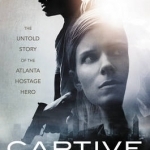
Captive: The Untold Story of the Atlanta Hostage Hero
Ashley Smith and Stacy Mattingly
Book
Now a stirring movie from Paramount Pictures-starring Kate Mara (House of Cards and Fantastic Four)...