
Daniel Boyd (1066 KP) rated Polar (2019) in Movies
Feb 7, 2019 (Updated Feb 7, 2019)
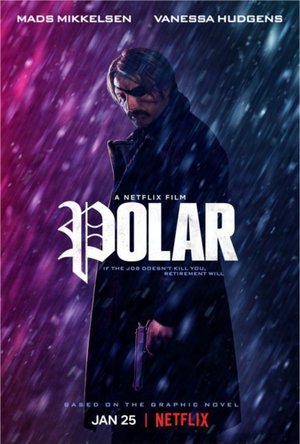


Think diet John Wick meets an immature, garish comic book full of pantomime villains and you have Polar. Sometimes you see a movie and can't help but wonder, "What the hell were they thinking?" Unfortunately this is one of those times. There are folks out there that have crafted a solid script and are struggling to get their movie funded and made, meanwhile there is low level trash like this being paid for and distributed by a huge platform like Netflix?! It is an outrageous and pretty sad state of affairs.
Without a doubt the worst part of this thing is the god awful assortment of villains. They are so annoying and infuriating in every scene they are in and only get worse as the movie goes on. Half the movie is spent following this massively irritating group as they hunt for Mads Mikkelsen's character and they are so unlikable, but not in the way that they are supposed to be. They all work for the main villain, who is inexplicably played by Matt Lucas from Little Britain. That's right, Vicky Pollard is this movie's main antagonist. He is god awful here and I genuinely don't even know what they were attempting to do with this character. Every scene that he is in feels like a discarded Little Britain sketch.
The one bright spot in the film is Mads Mikkelsen's turn as Duncan, the ex-hitman being hunted throughout the film by his ex-employers who serves as our main protagonist. I love seeing Mads in anything he appears in, so I actually found the scenes with him in them pretty enjoyable, and frankly they were the only thing that stopped this movie from being scored a pathetic 1/10.
Overall, this is total mess. It is the worst type of comic book movie and doesn't seem appealing to anyone over the age of 12. Please don't waste your time with this garbage, there are much better movies out there based on graphic novels that don't only cater to horny, brain-dead teenagers.

Adam Colclough (3 KP) rated Slow Horses in Books
Mar 12, 2018

The crew of misfits incarcerated there under the command of the objectionable Jackson Lamb are called back to active service when a terrorist gang kidnap a teenager and threaten to behead him live online. Suddenly the awkward squad are players in a deadly game with only one possible winner.
In this book, first published in 2010 and part of an award-winning quartet, Mick Herron delivers all the thrills you would expect as he pits his cast of oddballs against a chillingly plausible enemy.
Spy novels often describe hidden worlds as a way of talking about the one with which we are all familiar. In the Sixties Le Carre wrote about a secret service that resembled nothing so much as minor Oxbridge college down on its luck but clinging tightly to past glories. Any similarity to a Britain that for all the promises of wonders delivered by the ‘white heat of technology’ was starting to look decidedly seedy was entirely intentional.
Mick Herron writes about a service that has been capture by bean counters and career obsessed middle managers. Drowning in paperwork, stymied by procedure and inclined to try and be a little too clever for its own good.
He also creates delightfully complex characters, the ‘slow horses’ of the title may all be difficult individuals, but that gives them fears and failings that make them infinitely more interesting than monochrome supermen like Bond or Bourne. By the book’s end he even manages to provide them with if not redemption than the unexpected feeling they may have a purpose after all.
The best spy novels are always about more than just chasing after a McGuffin. This book is unafraid to look at troubling ideas and to present characters who don’t tick the boxes of traditional heroism. That puts it in the running to become a classic of the genre.
The Prince Who Would be King: The Life and Death of Henry Stuart
Book
Henry Stuart's life is the last great forgotten Jacobean tale. Shadowed by the gravity of the Thirty...
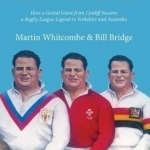
The Indomitable Frank Whitcombe: How a Genial Giant from Cardiff Became a Rugby League Legend in Yorkshire and Australia
Book
Frank Whitcombe, described as 'one of the greatest Welsh rugby league forwards of all time', played...
Nell and the Girls
Book
'Goodbye! There's my good girl.' The German got hold of Papa's arm roughly and said, 'Come on!' They...
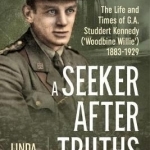
A Seeker After Truths: The Life and Times of G. A. Studdert Kennedy ('Woodbine Willie') 1883-1929
Book
Geoffrey Studdert Kennedy became one of the most famous army chaplains of the First World War,...
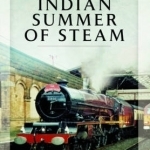
An Indian Summer of Steam
Book
'An Indian Summer of Steam' is the second volume of David Maidment's 'railway' autobiography,...

David McK (3883 KP) rated Death to the Emperor (Macro and Cato #21) in Books
Apr 10, 2023
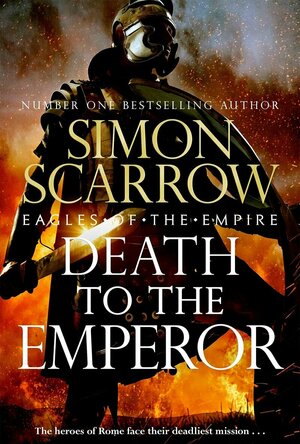

I wondered into a local branch of Eason's, and saw Under the Eagle on offer, sold for an introductory price (which I can't even remember), and with a blurb that sounded interesting. That, and a quote from the king of historical action-adventure fiction Bernard Cornwell that 'I really don't need this kind of competition ... a great read'.
Jump forward just over 20 years, and we're now onto book #20 in the series, and back in the Roman province of Brittania after the intervening books have had us all over the Roman Empire.
The series has also lost the 'Eagle' that was always included somewhere in the earlier titles (Under the Eagle, The Eagle's Conquest, The Eagle and the Wolves etc), with that word last used in the title in entry # 7 (The Eagle in the Sand).
That's not all that has changed: Cato is no longer the scared young man he had been in the first entries; Macro no longer the seasoned Centurion. Now, Macro is retired from active service whilst Cato - who now has a family of his own - has risen in rank above that that Macro ever reached but is still firm friends with the latter.
We've now also reached a pivotal moment in Roman Britain history, with the Boudicean revolt just about to kick off (as it does here) and as the Romans finally capture and raze the Druid stronghold of Mona.
Those two events form the backbone of this novel, with Cato involved in the attack on Mona whilst Macro is charged with the defence of Camulodunum (Colchester) and in charge of the Roman Reserves there whilst the main army is away on campaign, just after the Governor of Britain has further alienated their Icenian allies.
As with all of the Simon Scarrow books I've read, the history is worn lightly enough to make an enjoyable read: this is not a dry, stuffy retelling of events but rather uses the real historical events as the backbone for the story being built around it.
This, I have to say, is also the first in the series that I can remember ending in a definite cliffhanger ...
(I might have to go back and re-read the previous now)

Suswatibasu (1703 KP) rated The Crown - Season 2 in TV
Dec 9, 2017
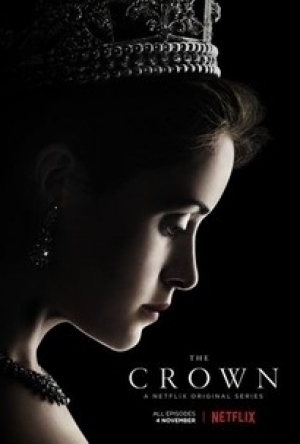

In this season, the Queen appears less timid, far more self-assured and stoic as a ruler, all the while attempting to hold the fort in her own growing household. Great Britain is flailing, with various political scandals arising, and as a result, she is heavily scrutinised. We see more of the Duke of Edinburgh's background as a child, while disturbing, it is also utterly heartbreaking. It's a much more realistic portrayal of the royal family than in the first series.
Andy K (10827 KP) Feb 7, 2019
Amailen (1 KP) Feb 11, 2019