

Bob Mann (459 KP) rated The Mercy (2018) in Movies
Sep 29, 2021
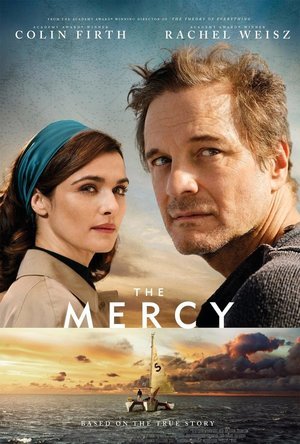


Lending him the money, under onerous terms, are local businessman Mr Best (Ken Stott, “The Hobbit“) and local newspaper editor Rodney Hallworth (David Thewlis, “Wonder Woman“, “The Theory of Everything“). With the race deadline upon him, Crowhurst is pressed into sailing away from his beloved wife Clare (Rachel Weisz, “Denial“, “The Lobster“) and young family in a trimaran that is well below par.
But what happens next is so ludicrous that it makes a mockery of whoever wrote this ridiculous work of fiction. Ah… but wait a minute… it’s a true story!
It is in fact such an astonishing story that this is a film that is easy to spoil in a review, a fact that seems to have passed many newspaper reviewers by (Arrrggghhh!!). So I will leave much comment to a “spoiler section” that follows the trailer (which is also best avoided). This is honestly a film worth seeing cold. What can I say that is spoiler-free then?
Firth and Weisz make a well-matched couple, and the rest of the cast is peppered with well-known faces from British film and (particularly) TV: Andrew Buchan and Jonathan Bailey (from “Broadchurch”); Mark Gatiss (“Sherlock”, “Out Kind of Traitor“); Adrian Schiller (“Victoria”; “Beauty and the Beast“).
The first part of the film is well executed and excellent value for older viewers. 60’s Devon is warm, bucolic and nostalgic. In fact, the film beautifully creates the late 60’s of my childhood, from the boxy hardwood furniture of the Crowhurst’s house to the Meccano set opened at Christmas time.
Once afloat though, the film is less successful at getting its sea-legs. The story is riveting, but quite a number of the scenes raise more questions than they answer. As stress takes hold it is perhaps not surprising that there are a few fantastical flights of movie fancy. But some specific elements in Scott Burns’ script don’t quite gel: a brass clock overboard is a case in point. What? Why?
And it seems to be light on the fallout from the race: there is a weighty scene in the trailer between Best and Hallworth that (unless I dozed off!) I don’t think appeared in the final cut, and I think was needed.
All in all, I was left feeling mildly dissatisfied: a potentially good film by “Theory of Everything” director James Marsh that rather goes off the rails in the final stretch.
This was a time where morality and honour were often rigidly adhered to – British “stiff upper lip” and all that – and seemed to carry a lot more weight than they do today. So some of the decisions in the film might mystify younger viewers. But for the packed older audience in my showing (Cineworld: this needs to be put on in a bigger screen!) then it was a gripping, stressful, but far from flawless watch.
I’d also like to take this opportunity to pay my respects to the film’s composer Jóhann Jóhannsson, who shockingly died last week at the ridiculously young age of 48. His strange and atmospheric music for films including “The Theory of Everything“, “Sicario” and (particularly) “Arrival” set him on the path to be a film composing great of the future. Like James Horner, another awful and untimely loss to the film music industry.

Haley Mathiot (9 KP) rated My Unfair Lady in Books
Apr 27, 2018


Genre: Historical fiction, Historical Romance
Rating: 4/5
Summary (from the back of the book):
HE CREATED THE PERFECT WOMAN… the impoverished Duke of Monchester despises the rich Americans who flock to London, seeking to buy their way into the ranks of the British peerage. So when railroad heiress Summer Wine Lee offers him a king’s ransom if he’ll teach her to become a proper lady, he’s prepared to rebuff her. But when he meets the petite beauty with the knife in her boot, it’s not her fortune he finds impossible to resist…
…FOR THE ARMS OF ANOTHER MAN. Frontier-bred Summer Wine Lee has no interest in winning over London society—it’s the New York bluebloods and her future mother-in-law she’s determined to impress. She knows the cost of smoothing her rough-and-tumble frontier edges will be high. But she never imagined it might cost her her heart…
Review: This book is so cute! The dialogue is lively, the characters are likeable (or in the case of the “bad ones”, hate-able), and the images and descriptions are clear and visible. I loved it by the end of the first chapter.
Summer was my kind of girl. She grinned when things were funny instead of trying to remain indifferent, she wasn’t afraid to show how she felt—but she could also throw a knife, shoot an arrow better than the woman champion of their day, and mount and ride a horse bareback (which I think is so cool!). She has a love for animals—and odd ones at that. She owns a three-legged dog, a dog with four legs but the size of a small horse, a monkey, a pocket-sized puppy, a fox, and a cat with no back legs (it sits in a cart and rolls around the room). She was raised by an Indian (one of those childhood dreams that I never quite left behind…) and he was the one who had taught her all that great stuff. Watching her try to settle into society was hilarious.
MY UNFAIR LADY has a lot of tension in it—both inner turmoil from poor Summer, and also sexual tension between the characters. However, it wasn’t overpowering because was so funny. I found that I laughed just as often as tension was built, so there was a constant, even balance. The end was very exciting, and I found it impossible to put down. Overall, reading this book was a hilarious and wonderful experience, and an unforgettable escape from reality.
Plot: My Fair Lady (the movie) shows a girl who is transformed to a lady, then the man falls in love with her. I love the change that has taken place in MY UNFAIR LADY—The man doesn’t want to change her, because he loves her the way she is. I like this plot better than the first!
Writing: The writing was decent, acceptable, and more readable than a lot of newly published romances. Though it wasn’t Dante, it wasn’t hard to read either.
Content: Refreshingly, there was no language in this book. Summer has her own set of expletives, but they weren’t offensive (“Tarnation!”). As far as sex, let’s just say there were several scenes (pages) in this book that I skipped completely, and just started reading again where the dialogue picked up. I didn’t miss anything important.
Recommendation: Ages 18+ to lovers of Historical fiction, Romance in general, or anyone who loves a girl who can shoot a gun, wield a knife, or use a bow and arrow better than a man!
**Thanks to Danielle at Sourcebooks for supplying my review copy!**

A Basket Full Of Toys - Reading Planet series, authored by Sheetal Sharma, is a genre of imaginative fiction whose vibrant and bubbly characters discover the essence of good behaviour in a fun way
Book and Education
App
‘Reading Planet’ series, authored by Sheetal Sharma, is a genre of imaginative fiction whose...

World of Yesterday: Memoirs of a European
Anthea Bell, Stefan Zweig and David Pearson
Book
'The time provides the pictures, I merely speak the words to go with them, and it will not be so...

Doctor Who: TARDIS (Official)
Entertainment and Photo & Video
App
Turn your iDevice into the Doctor's TARDIS, and travel through space and time! Or see the TARDIS in...

Phil Leader (619 KP) rated The Rise of the Iron Moon (Jackelian #3) in Books
Nov 25, 2019
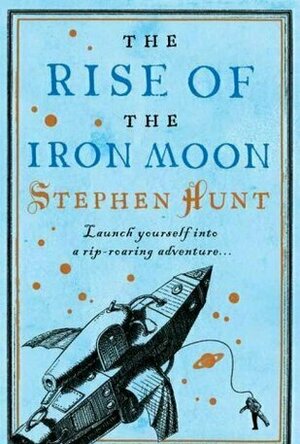
Although this is the third book of the series and there are plenty of references to events that must take place in the previous books, and despite the writing being immersive rather than explanatory, I found it easy to get into the story.
The world is very interesting. I have read other novels set in a faux Victorian Steampunk-like world but nothing like this. This is like an alternative history, extremely divergeant from ours but with enough similarities that the combination is quite striking.
For example there was a civil war in the past which parliament won, as in the 'real' British history. However all of the royals have been locked up ever since in the Royal Breeding House - kept as figureheads under constant house arrest and threat of execution at the whim of parliament to appease the masses.
There are also countries ruled by thinking, steam driven machines. Others beneath the waves or living strictly by some political principal.
However the world is under threat. All the countries are being slowly invaded from the North by a very aggressive foe. Under attack the land of Jackals itself calls on its heroes to save the day. Purity Blake, one of the inmates of the Royal Breeding House. Molly Templar, writer of penny dreadful science fiction stories and sometimes defender of the land. Coppertracks, a machine life steam man and scientist. Their companions must overcome impossible odds and put aside the enmity between nations to fight off the attackers. Against all the odds, can they succeed?
The book is a little slow to start up, as the characters are introduced in their diverse environments. But slowly the threads are drawn together and each play their part in the fight. And as they begin to weave into the plot the pace quickens. The story twists and turns, always astonishing in its concept and direction.
The outstanding part of this book is the imagination that has gone into it. Nearly everything is completely different from our world and yet it ties together convincingly into a land both of industry and grime, poverty and privilege but also of very real myth and legend.
The ending is a little bit Deus Ex Machina but really this fits in with the tone quite well and at least keeps the pace up in the final pages. There are enough wonderful and fantastic ideas let loose to wander around in this book for several novels.
Definitely a recommended book. I now need to search out the first book - The Court Of The Air - so I can find out what has happened to the characters before.

Nothing is Sacrosanct: No One Can Hide from Their Sins Forever
Book
Nothing is Sacrosanct: Intense, Raw Novel Takes Calculated Revenge on Child Abuse Aggressors;...

From the Fatherland with Love
Ryu Murakami, Charles De Wolf, Ralph McCarthy and Ginny Takemori
Book
An ambitious, epic dystopian novel - part political thriller and part satire. From the Fatherland,...
Beware of Pity
Anthea Bell, Stefan Zweig and David Pearson
Book
Stefan's Zweig's Beware of Pity is an almost unbearably tense and powerful tale of unrequited love...

Hazel (1853 KP) rated Runaway Girl: A beautiful girl. Trafficked for sex. Is there nowhere to hide? in Books
Dec 14, 2018
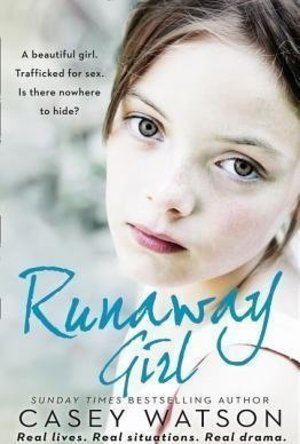

Casey Watson is a specialist foster carer who temporarily houses vulnerable children in emergency situations. Since working in this field for decades, she has been documenting her experiences in a series of books, each one focusing on a different child. Her thirteenth, and most recent book is <i>Runaway Girl</i>, aptly named about a (supposedly) fourteen-year-old girl, running away from several distressing situations.
Adrianna arrives on Casey’s doorstep with no possessions, no English and no passport. Apart from knowing she is Polish, Adrianna is a complete mystery to the Watson family and the services involved. With her sixth sense tingling, Casey is certain there is something important that Adrianna is hiding and, despite all her attempts, it is not until an emergency hospitalization that the frightened Polish girl starts telling the truth.
With a background of abuse, homelessness and sex trafficking, Adrianna’s story will open readers’ eyes to the shocking situations many foreign children find themselves. Unfortunately, Adrianna is only one out of 5,000 girls in the last decade and a half to be brought to England illegally and forced into prostitution.
Fortunately, Adrianna is lucky to have escaped and found a safe place to stay in the Watson household. Without Casey’s care and determination to provide a future for her, Adrianna would have remained one of the “hidden children” that arrive in England every year.
Casey writes in a novel-like format, describing Adrianna’s circumstances from a carer’s point of view. Slowly revealing the secrets of Adrianna’s past, Casey keeps the reader interested in the same way a fiction author would with a clever plot line. Emphasising the difficulties Adrianna has, not only coming to terms with the abuse she has faced, but also worrying about whether authorities will allow her to remain in England, Casey appeals to the readers’ emotions, making it clear that, although here illegally, trafficked children have every right to be protected and looked after by British authorities.
Although Casey writes under a pseudonym, and assumedly alters all names within the book, it is not certain how much of the storyline is true, or whether the situation has been accentuated in order to capture the reader’s attention. This, however, is not important – people will read this for entertainment, therefore the accuracy of the content is not as significant as the way in which it is told. <i>Runaway Girl</i>, whilst shocking, is engaging and easy to read, with a satisfying ending.
<i>Runaway Girl</i> is the only book I have read from Casey Watson, yet I can tell she is a worthy and successful author. Her stories – at least the blurbs – seem similar to other authors, such as Torey Hayden, who also write about their experiences helping vulnerable children. Casey Watson’s book need not be read in any particular order; therefore <i>Runaway Girl</i> is as good a place as any to begin.