
Search
The Princess & the Frog
Book and Education
App
--> Watch How A Magical Kiss Can Turn Anyone Into A Real Prince --> Fun interactions - Wholesome...

Green Riding Hood
Book and Games
App
* "Free App of the Week" in 2017 * iPad App of the Year 2015 (Best of App Store, Russia) * Winner of...

Hazel (1853 KP) rated Alice Takes Back Wonderland in Books
Dec 14, 2018
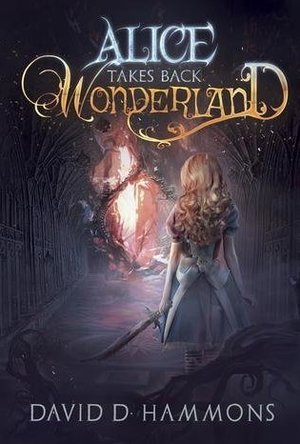


<i>This eBook was provided by the publisher via NetGalley in exchange for an honest review </i>
When a book starts with “‘Do you know fairy tales are real’ asked the cat,” you know you are in for a magical ride. Nearly everyone knows the tale of the seven-year-old girl from nineteenth century London who falls down a rabbit hole and spends a day of madness in the magical world of Wonderland. In David D. Hammons version, however, Alice was a young girl from twenty-first century Missouri. On her return to the real world she was diagnosed with ADHD and Schizophrenia and forced to believe that the Cheshire Cat and the Mad Hatter were figments of her imagination. But ten years later a white rabbit appears and leads Alice back to the world where nothing makes sense.
All is not well in Wonderland. The Cheshire Cat is dead and the Ace of Spades is in charge. Barely anything is the way Alice remembers. Everything looks far too “normal” and similar to the world she comes from. Ace is determined to remove the wonder from Wonderland and create a place where madness is forbidden. Alice has a big fight on her hands as she tries to end this former playing card’s tyrannous reign and restore Wonderland back to its original insanity.
<i>Alice Takes Back Wonderland</i> is not purely a retelling of Lewis Carrols famous story. Although many of the well known and loved characters appear in this book, so do others from a variety of different fairytales: <i>Peter Pan, Pinocchio</i>, and various tales from the <i>Brothers Grimm</i>. As readers will discover, all is not exactly as it should be for these characters either. Despite them being contrasting, magical stories, Hammons has successfully merged them all together in an imaginative manner resulting in a humorous young adult novel.
Although mostly focused on the goings on in Wonderland and the other fictional locations, it is also a subtle metaphor to describe what Alice’s life had been like back in present day America. For a decade Alice was forced to take medication to help her understand the difference between reality and fantasy. It got rid of most of the nonsense thoughts she picked up during her first visit to Wonderland. In a way, that is what the Ace of Spades is doing to characters he believes are mad. He is taking the wonder out of them, just like the pills to the wonder out of Alice.
Lovers of fairytales will definitely love this book, especially those who grew up loving <i>Alice in Wonderland</i> and <i>Peter Pan</i>. In some ways it is a continuation of the original tale, yet in other ways it could be viewed as an alternative way the story could have gone. Primarily targeted at young adults, <i>Alice Takes Back Wonderland</i> is much darker than Carrols version and combines a mix of real life with fantasy. It also goes to show that no one is too old for fairytales!
When a book starts with “‘Do you know fairy tales are real’ asked the cat,” you know you are in for a magical ride. Nearly everyone knows the tale of the seven-year-old girl from nineteenth century London who falls down a rabbit hole and spends a day of madness in the magical world of Wonderland. In David D. Hammons version, however, Alice was a young girl from twenty-first century Missouri. On her return to the real world she was diagnosed with ADHD and Schizophrenia and forced to believe that the Cheshire Cat and the Mad Hatter were figments of her imagination. But ten years later a white rabbit appears and leads Alice back to the world where nothing makes sense.
All is not well in Wonderland. The Cheshire Cat is dead and the Ace of Spades is in charge. Barely anything is the way Alice remembers. Everything looks far too “normal” and similar to the world she comes from. Ace is determined to remove the wonder from Wonderland and create a place where madness is forbidden. Alice has a big fight on her hands as she tries to end this former playing card’s tyrannous reign and restore Wonderland back to its original insanity.
<i>Alice Takes Back Wonderland</i> is not purely a retelling of Lewis Carrols famous story. Although many of the well known and loved characters appear in this book, so do others from a variety of different fairytales: <i>Peter Pan, Pinocchio</i>, and various tales from the <i>Brothers Grimm</i>. As readers will discover, all is not exactly as it should be for these characters either. Despite them being contrasting, magical stories, Hammons has successfully merged them all together in an imaginative manner resulting in a humorous young adult novel.
Although mostly focused on the goings on in Wonderland and the other fictional locations, it is also a subtle metaphor to describe what Alice’s life had been like back in present day America. For a decade Alice was forced to take medication to help her understand the difference between reality and fantasy. It got rid of most of the nonsense thoughts she picked up during her first visit to Wonderland. In a way, that is what the Ace of Spades is doing to characters he believes are mad. He is taking the wonder out of them, just like the pills to the wonder out of Alice.
Lovers of fairytales will definitely love this book, especially those who grew up loving <i>Alice in Wonderland</i> and <i>Peter Pan</i>. In some ways it is a continuation of the original tale, yet in other ways it could be viewed as an alternative way the story could have gone. Primarily targeted at young adults, <i>Alice Takes Back Wonderland</i> is much darker than Carrols version and combines a mix of real life with fantasy. It also goes to show that no one is too old for fairytales!
Sophia (Bookwyrming Thoughts) (530 KP) rated Camelot Burning (Metal & Lace, #1) in Books
Jan 23, 2020

I don't know much about Arthurian Lore it's probably one of the only story I've never read in it's original form aside from the original Grimm Brothers' Fairy Tales (but those are horrifying, so I'm not even going to bother). I somehow doubt that Magic Tree House who made Morgan LeFay a harmless fly or Wizard101's Avalonian world even counts, except for maybe the latter being used as visual aid. :p
But personally that's sort of the thrill in reading a retelling without reading the original one: no judging or comparing it's a mostly complete blank slate.
Camelot Burning follows Vivienne, a lady-in-waiting and Merlin's Apprentice, who wants a way out of Camelot's way of life. She even has a plan hatched at least until Morgan Le Fay enters the picture and she has to stay to build a weapon that could ultimately save Camelot.
Merlin is actually a fun character am I weird to say that I found him drunk yet wise? It's not an easy combo since most drunk people act... well, not wise at all. While I'm not exactly warm and fuzzy with the other characters yet, Merlin is a winner.
There's a very interesting way with magic Rose introduces. Usually when it comes to magic, the price is something minor or huge, depending on whatever is asked very similar to karma (or fate or etc.). Here though... it's the ultimate price if you use magic too much: *cues ominous music* your soul. That's like selling your soul to the devil! Unless you're a creepy villain who wants to take over the world, that's not usually the ultimate price. Minor = minor payback. Major = major payback. No ifs buts or wait, what's after that? o_O
<img border="0" src="http://2.bp.blogspot.com/-dV7rlbVhpPk/UyjGVWubEkI/AAAAAAAACyA/ngeF1DAiEmk/s1600/tumblr_m5x9n1xf3D1rqfhi2o1_500.gif"; height="143" width="200">
Behind the Blog Tidbit: Camelot Burning was one of those novels who got a neutral rating (rawly speaking). I would have rounded up to a 4.5 rather than a 4, but I chose not to for a few reasons:
~ Too predictable It could just be me, but I guessed that <spoiler>Vivienne was the coordinates to Avalon and Morgan Le Fay was acting innocent as a distraction.</spoiler>
~ Too much technicalities I felt like I was reading a foreign language, and that was not the words used in magic. It all felt really confusing.
~ It said The End.
<img border="0" src="http://1.bp.blogspot.com/-lsFMKEdcrBc/UyjG4_6Sj3I/AAAAAAAACyM/Q0tKlJ9xOLw/s1600/th.jpg"; height="155" width="200">
That last bullet didn't play a major impact. It's just a minor peeve, especially when it's the first novel in the series.
I fully enjoyed reading Kathryn Rose's debut novel. Camelot Burning takes a refreshing and unique spin on Arthurian lore, or more accurately Arthurian + Fantasy + Steampunk.
-----------------
Advance Review Copy provided by Flux for review
Original Review posted at <a href="http://bookwyrming-thoughts.blogspot.com/2014/05/arc-review-camelot-burning-by-kathryn-rose.html">Bookwyrming Thoughts</a>
<a href="http://bookwyrming-thoughts.blogspot.com/"><img src="http://4.bp.blogspot.com/-Gi5Rk5yLloA/UtliaUbdL3I/AAAAAAAACbE/J27z92_qrYU/s1600/Official+Banner.png"; /></a>
But personally that's sort of the thrill in reading a retelling without reading the original one: no judging or comparing it's a mostly complete blank slate.
Camelot Burning follows Vivienne, a lady-in-waiting and Merlin's Apprentice, who wants a way out of Camelot's way of life. She even has a plan hatched at least until Morgan Le Fay enters the picture and she has to stay to build a weapon that could ultimately save Camelot.
Merlin is actually a fun character am I weird to say that I found him drunk yet wise? It's not an easy combo since most drunk people act... well, not wise at all. While I'm not exactly warm and fuzzy with the other characters yet, Merlin is a winner.
There's a very interesting way with magic Rose introduces. Usually when it comes to magic, the price is something minor or huge, depending on whatever is asked very similar to karma (or fate or etc.). Here though... it's the ultimate price if you use magic too much: *cues ominous music* your soul. That's like selling your soul to the devil! Unless you're a creepy villain who wants to take over the world, that's not usually the ultimate price. Minor = minor payback. Major = major payback. No ifs buts or wait, what's after that? o_O
<img border="0" src="http://2.bp.blogspot.com/-dV7rlbVhpPk/UyjGVWubEkI/AAAAAAAACyA/ngeF1DAiEmk/s1600/tumblr_m5x9n1xf3D1rqfhi2o1_500.gif"; height="143" width="200">
Behind the Blog Tidbit: Camelot Burning was one of those novels who got a neutral rating (rawly speaking). I would have rounded up to a 4.5 rather than a 4, but I chose not to for a few reasons:
~ Too predictable It could just be me, but I guessed that <spoiler>Vivienne was the coordinates to Avalon and Morgan Le Fay was acting innocent as a distraction.</spoiler>
~ Too much technicalities I felt like I was reading a foreign language, and that was not the words used in magic. It all felt really confusing.
~ It said The End.
<img border="0" src="http://1.bp.blogspot.com/-lsFMKEdcrBc/UyjG4_6Sj3I/AAAAAAAACyM/Q0tKlJ9xOLw/s1600/th.jpg"; height="155" width="200">
That last bullet didn't play a major impact. It's just a minor peeve, especially when it's the first novel in the series.
I fully enjoyed reading Kathryn Rose's debut novel. Camelot Burning takes a refreshing and unique spin on Arthurian lore, or more accurately Arthurian + Fantasy + Steampunk.
-----------------
Advance Review Copy provided by Flux for review
Original Review posted at <a href="http://bookwyrming-thoughts.blogspot.com/2014/05/arc-review-camelot-burning-by-kathryn-rose.html">Bookwyrming Thoughts</a>
<a href="http://bookwyrming-thoughts.blogspot.com/"><img src="http://4.bp.blogspot.com/-Gi5Rk5yLloA/UtliaUbdL3I/AAAAAAAACbE/J27z92_qrYU/s1600/Official+Banner.png"; /></a>

Gareth von Kallenbach (980 KP) rated Into the Woods (2014) in Movies
Aug 6, 2019

For those seeking a big dose of magic this holiday season, Disney’s “Into the Woods” aims to deliver just that. Adapted to the silver screen from the original Broadway musical production by Stephen Sondheim, the plot intertwines several of the Grimm Brothers’ fairy tales to create one story.
At the center of the story is The Baker (James Corden) and The Baker’s Wife (Emily Blunt) who are desperate to break the curse, which keeps them from having a child. The Witch (Meryl Streep) who placed the curse weaves a devious web, entangling all of the characters in a tumultuous adventure.
Streep is terrifying and highly entertaining to watch in her role. Her vocal and facial expressions exude a character of pure evil.
Other characters incorporated into the story include Little Red Riding Hood (Lilla Crawford), Cinderella (Anna Kendrick), and Rapunzel (Mackenzie Mauzy), just to name a few.
Disney toned down several aspects of the original plot, which would not have been appropriate for children. However, the story still maintains a racy mix of seriousness and humor. Each scene highlights the absurdities of fairy tales only noticed by adults.
One scene which will have adults rolling with laughter is the sudden duet between Cinderella’s Prince (Chris Pine) and his brother, Rapunzel’s Prince (Billy Magnusson). They sing about the challenges of literally chasing the ladies of their desire and their refusal to acknowledge any possibility of rejection.
Certain scenes test the limits of appropriateness and are almost perverse, or perhaps even err on the side horror.
One example of this is the role of The Wolf (Johnny Depp). As he stalks Little Red Riding Hood through the forest he sings about how she is fresh, supple, and young. Through the lyrics and the choice to use a human in the role, rather than a CGI wolf, a strange glimmer of pedophilia surfaces. This is taken a step further when The Wolf reveals a jacket full of candy in his attempt to lure the child.
The element of horror enters the film in a scene where Cinderella’s Stepmother cuts the feet of the ugly stepsisters to try and force them into the glass slipper offered by the Prince. This is not graphically shown. However, it is implied as she waves around a knife and sings about it.
Despite a few of these adult twists, the film should be fun for the whole family to watch. Just keep in mind that, like the original tales, some short scenes may be a bit horrifying for young children.
As is tradition with fairy tales, the good comes with the bad. The moral messages of each fairy tale are combined into one larger message: One should be careful what they wish for, because in the grander scheme of life the ramifications of those wishes may be unforeseen.
It is also a visually stunning piece of work. Nothing comes off as overdone or cheesy. The tales truly come to life and transport viewers into a land of fantasy.
The majority of the film is very exciting and fast moving. That being said, the film is lengthy with a runtime of 124 minutes. Unfortunately, the last 30 minutes begins to drag on and feel tiring. This would have been an easy fix if perhaps the last few songs had been shortened, or the last thirty minutes was cut completely.
All in all, the film is a truly magical cinematic experience. I give “Into the Woods” 4 out of 5 stars.
At the center of the story is The Baker (James Corden) and The Baker’s Wife (Emily Blunt) who are desperate to break the curse, which keeps them from having a child. The Witch (Meryl Streep) who placed the curse weaves a devious web, entangling all of the characters in a tumultuous adventure.
Streep is terrifying and highly entertaining to watch in her role. Her vocal and facial expressions exude a character of pure evil.
Other characters incorporated into the story include Little Red Riding Hood (Lilla Crawford), Cinderella (Anna Kendrick), and Rapunzel (Mackenzie Mauzy), just to name a few.
Disney toned down several aspects of the original plot, which would not have been appropriate for children. However, the story still maintains a racy mix of seriousness and humor. Each scene highlights the absurdities of fairy tales only noticed by adults.
One scene which will have adults rolling with laughter is the sudden duet between Cinderella’s Prince (Chris Pine) and his brother, Rapunzel’s Prince (Billy Magnusson). They sing about the challenges of literally chasing the ladies of their desire and their refusal to acknowledge any possibility of rejection.
Certain scenes test the limits of appropriateness and are almost perverse, or perhaps even err on the side horror.
One example of this is the role of The Wolf (Johnny Depp). As he stalks Little Red Riding Hood through the forest he sings about how she is fresh, supple, and young. Through the lyrics and the choice to use a human in the role, rather than a CGI wolf, a strange glimmer of pedophilia surfaces. This is taken a step further when The Wolf reveals a jacket full of candy in his attempt to lure the child.
The element of horror enters the film in a scene where Cinderella’s Stepmother cuts the feet of the ugly stepsisters to try and force them into the glass slipper offered by the Prince. This is not graphically shown. However, it is implied as she waves around a knife and sings about it.
Despite a few of these adult twists, the film should be fun for the whole family to watch. Just keep in mind that, like the original tales, some short scenes may be a bit horrifying for young children.
As is tradition with fairy tales, the good comes with the bad. The moral messages of each fairy tale are combined into one larger message: One should be careful what they wish for, because in the grander scheme of life the ramifications of those wishes may be unforeseen.
It is also a visually stunning piece of work. Nothing comes off as overdone or cheesy. The tales truly come to life and transport viewers into a land of fantasy.
The majority of the film is very exciting and fast moving. That being said, the film is lengthy with a runtime of 124 minutes. Unfortunately, the last 30 minutes begins to drag on and feel tiring. This would have been an easy fix if perhaps the last few songs had been shortened, or the last thirty minutes was cut completely.
All in all, the film is a truly magical cinematic experience. I give “Into the Woods” 4 out of 5 stars.

Chris Sawin (602 KP) rated Midsommar (2019) in Movies
Jun 26, 2019 (Updated Jul 4, 2019)
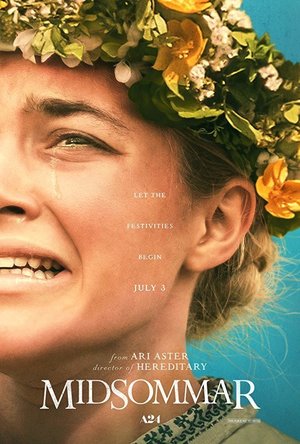

When a director like Ari Aster only has two full-length features under his belt, it’s difficult not to compare his works but the truth of the matter is that Hereditary and Midsommar are two incredibly different films. Hereditary seemed to thrive on lurking in the shadows visually to assist in its dark storytelling. Nearly all of Midsommar takes place under blinding sunlight making the horrific events that unfold feel stranger and even more out of place, confusing, and bizarrely unsettling. Based on his two films though, Aster does seem to flock towards a few common themes. Grief, loss, and the inability to cope have plagued the main characters of his films while the importance of family takes a high precedence. Hereditary was more about a specific family attempting to stay together while already being in shambles and Midsommar attempts to create a new family on more than one occasion with the possibility of constant expansion.
Dani’s (Florence Pugh) life is turned inside out once a devastating tragedy leaves her dumbstruck. She leans on her boyfriend of four years, Christian (Jack Reynor), for support, but their relationship is obviously strained. Along with their friends Josh (William Jackson Harper) and Mark (Will Poulter), Dani and Christian end up going on vacation to rural Sweden. They travel to a small village where their friend Pelle (Vilhelm Blomgren) grew up and now serves as their host. A rare nine-day festival that only occurs once every 90 years is being celebrated. Josh is utilizing the trip as a means to bulk up his folklore thesis for college while Mark is more interested in partaking in the Swedish women. Christian is attempting to figure out what his thesis will be while Dani searches for some sort of guidance after such a tragic occurrence. Their trip becomes increasingly more peculiar the longer they stay as they’re forced to witness violent rituals and are encouraged to embrace the ways of a Pagan cult.
The intricate illustrations throughout the film like in the opening shot, the elongated love potion cloth, or the walls of the barn-like structure Dani and her friends sleep in, give Midsommar this dark fairy tale aspect to it that a film like Pan’s Labyrinth would be proud of. The Pagan roots of Pelle’s village and the film’s metaphorical feet being so firmly planted in such rich folklore give Midsommar this cautiously fanciful aesthetic. The film capitalizes on the nostalgic sensation of when fairy tales and children’s books were read to you as a child. There are consistent signs that things aren’t right, paranoia lurks around every corner, and the locals set off every ominous alarm in your body, but there’s that naïve part of us buried deep down that wishes for and hopes for a happy ending because cosmetically we believe that is what resides at the end of every fairy tale not written by Jakob and Wilhelm Grimm (The Brothers Grimm).
It’s also interesting observing the main and supporting characters of the film or basically all of the “outsider” guests of the festival. Pelle acts as a conduit/guide between his village and the outside world, Josh is a historian/researcher, Mark is a mocker/fool, Dani and Christian are a strained couple, and Connie (Ellora Torchia) and Simon (Archie Madekwe) are a flourishing one. According to Wikipedia, Ari Aster based Dani and Christian’s relationship on a bad breakup. Midsommar is also way funnier than it has any right to be; something Hereditary completely distanced itself from. Midsommar goes out of its way to boast about who Dani’s real family is in the film. The unified chanting, outrageous theatrics, and harmonized moaning may seem like mockery or complete insanity to some. While it is humorous at times, it seems like this is the way the locals can experience everything everyone else does as a cohesive unit. This seems relevant to emotions, hallucinogens, and even sustenance; this cult does everything together.
Midsommar isn’t going to sit right with a lot of people, especially since Ari Aster desired to be confusing when it came to making the film. With all of the drug-taking in the film being so common, Midsommar may leave you feeling as groggy and disoriented as the characters on screen. However, in between the sacrifices, the brutality, the graphic nature of the film, inbred oracles, and plethora of naked mature women moaning in unison there’s something unique and brilliant about Midsommar you can’t find elsewhere. It may draw parallels to films like Robin Hardy’s The Wicker Man and may feel like a bleaker version of The Wizard of Oz on a bad acid trip, but Midsommar is unlike any other film you’ll see this year. In a way, Dani and her friends all get exactly what they came for but the end outcome is that the majority of them bit off more than they could chew. Truth be told, you’ll never look at a bear in a film the same way again even if it does remind you of the Tanooki suit Mario wore in Super Mario Bros 3. This is the type of film where you could literally tell someone everything that happens and it wouldn’t really spoil the film for them. The context of these events is important to witness in succession and in their entirety since what each individual takes away from the film will likely differ person to person.
There’s a deliberate pacing of the film many will find too slow and uneventful as the film’s two and a half hour runtime will already feel daunting. Aster has teased that the original cut of the film was three hours and 45 minutes and he has a version of the film that is 25 minutes longer that was difficult to cut down to the theatrical cut currently in theaters. An extended cut of the film or a large amount of deleted scenes on the Blu-ray (how about that levitation sequence from the trailer?) would certainly be intriguing.
If you enjoy ambiguous filmmaking where everything isn’t explained and the film’s imagery can mean more than one specific thing, then Midsommar may be worth checking out. It is an outlandish experiment by Ari Aster that a large quantity will likely deem a failure. Personally speaking though, Midsommar is such an unconventionally different ceremonial fever dream loaded with preposterousness, beautiful cinematography, hilarity, and anxiety-fueled-dread that it’s not only memorable and bold but also the type of one-of-a-kind film experience I crave whenever the lights dim and the quiet hum of a projector accelerates into a dull yet soothing roar.
Dani’s (Florence Pugh) life is turned inside out once a devastating tragedy leaves her dumbstruck. She leans on her boyfriend of four years, Christian (Jack Reynor), for support, but their relationship is obviously strained. Along with their friends Josh (William Jackson Harper) and Mark (Will Poulter), Dani and Christian end up going on vacation to rural Sweden. They travel to a small village where their friend Pelle (Vilhelm Blomgren) grew up and now serves as their host. A rare nine-day festival that only occurs once every 90 years is being celebrated. Josh is utilizing the trip as a means to bulk up his folklore thesis for college while Mark is more interested in partaking in the Swedish women. Christian is attempting to figure out what his thesis will be while Dani searches for some sort of guidance after such a tragic occurrence. Their trip becomes increasingly more peculiar the longer they stay as they’re forced to witness violent rituals and are encouraged to embrace the ways of a Pagan cult.
The intricate illustrations throughout the film like in the opening shot, the elongated love potion cloth, or the walls of the barn-like structure Dani and her friends sleep in, give Midsommar this dark fairy tale aspect to it that a film like Pan’s Labyrinth would be proud of. The Pagan roots of Pelle’s village and the film’s metaphorical feet being so firmly planted in such rich folklore give Midsommar this cautiously fanciful aesthetic. The film capitalizes on the nostalgic sensation of when fairy tales and children’s books were read to you as a child. There are consistent signs that things aren’t right, paranoia lurks around every corner, and the locals set off every ominous alarm in your body, but there’s that naïve part of us buried deep down that wishes for and hopes for a happy ending because cosmetically we believe that is what resides at the end of every fairy tale not written by Jakob and Wilhelm Grimm (The Brothers Grimm).
It’s also interesting observing the main and supporting characters of the film or basically all of the “outsider” guests of the festival. Pelle acts as a conduit/guide between his village and the outside world, Josh is a historian/researcher, Mark is a mocker/fool, Dani and Christian are a strained couple, and Connie (Ellora Torchia) and Simon (Archie Madekwe) are a flourishing one. According to Wikipedia, Ari Aster based Dani and Christian’s relationship on a bad breakup. Midsommar is also way funnier than it has any right to be; something Hereditary completely distanced itself from. Midsommar goes out of its way to boast about who Dani’s real family is in the film. The unified chanting, outrageous theatrics, and harmonized moaning may seem like mockery or complete insanity to some. While it is humorous at times, it seems like this is the way the locals can experience everything everyone else does as a cohesive unit. This seems relevant to emotions, hallucinogens, and even sustenance; this cult does everything together.
Midsommar isn’t going to sit right with a lot of people, especially since Ari Aster desired to be confusing when it came to making the film. With all of the drug-taking in the film being so common, Midsommar may leave you feeling as groggy and disoriented as the characters on screen. However, in between the sacrifices, the brutality, the graphic nature of the film, inbred oracles, and plethora of naked mature women moaning in unison there’s something unique and brilliant about Midsommar you can’t find elsewhere. It may draw parallels to films like Robin Hardy’s The Wicker Man and may feel like a bleaker version of The Wizard of Oz on a bad acid trip, but Midsommar is unlike any other film you’ll see this year. In a way, Dani and her friends all get exactly what they came for but the end outcome is that the majority of them bit off more than they could chew. Truth be told, you’ll never look at a bear in a film the same way again even if it does remind you of the Tanooki suit Mario wore in Super Mario Bros 3. This is the type of film where you could literally tell someone everything that happens and it wouldn’t really spoil the film for them. The context of these events is important to witness in succession and in their entirety since what each individual takes away from the film will likely differ person to person.
There’s a deliberate pacing of the film many will find too slow and uneventful as the film’s two and a half hour runtime will already feel daunting. Aster has teased that the original cut of the film was three hours and 45 minutes and he has a version of the film that is 25 minutes longer that was difficult to cut down to the theatrical cut currently in theaters. An extended cut of the film or a large amount of deleted scenes on the Blu-ray (how about that levitation sequence from the trailer?) would certainly be intriguing.
If you enjoy ambiguous filmmaking where everything isn’t explained and the film’s imagery can mean more than one specific thing, then Midsommar may be worth checking out. It is an outlandish experiment by Ari Aster that a large quantity will likely deem a failure. Personally speaking though, Midsommar is such an unconventionally different ceremonial fever dream loaded with preposterousness, beautiful cinematography, hilarity, and anxiety-fueled-dread that it’s not only memorable and bold but also the type of one-of-a-kind film experience I crave whenever the lights dim and the quiet hum of a projector accelerates into a dull yet soothing roar.