
Search
Search results
Kirk Bage (1775 KP) rated Game Of Thrones in TV
Aug 6, 2020
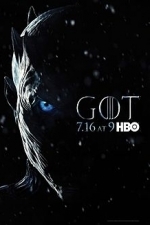


Look on the bright side, we all said, without really believing it, when lockdown hit in March – time to watch those box sets we’ve been putting off. Well that was, of course, a great idea! For me that box set was possibly the biggest of all: the behemoth that is GOT.
Much like when a new band gets big quickly and you refuse to listen to the hype, I avoided watching the biggest show in the world, even when it was on in the same room as I tried to read a book in the other corner. It wasn’t that I thought I wouldn’t like it, but more that I didn’t believe it could be anywhere near as good as folk were making it out to be, especially as season one looked like only a slight step up on the swords and sandles exploitation-fests that had been going around. I labelled it “Tits and Dragons” and got on with my life for the next 8 years.
March 2020 will go down in history as the biggest spike in streaming TV services the globe will ever see. Literally millions of previously casual watchers, who had been busy having lives and jobs, turned to Netflix, Amazon Prime, Now TV and iPlayer etc, in search of endless hours of easy entertainment they could immerse their bored and twitchy minds inside of. Without internet at home, I had to go a bit more old school and rely on my daughter posting me the DVDs of GOT season by season.
I found season one enjoyable, with caveats, as it seemed to be one massive exposition (and sexposition) workshop. Obviously the main characters were being set up for big storylines down the road. In which sense it reminded me of a soap opera; in how it flitted between characters and relationships, never dwelling on one plot point for more than two minutes. I liked the way the production had set itself up though – the sets and costumes were of a much higher level than was usual for this kind of thing. Then there was those great opening credits, which become impossible not to hum along to as you get more into it.
Sadly, the first big shock moment didn’t shock me, as I’d heard so much about it on social media 9 years ago. But it was still very well done. Bold and brave; to take out a big name that early was a master stroke. By the end of S1E9 I was properly hooked. Although it helped I didn’t have anything else to do!
The next two weeks I had to wait for season two to be posted out, so I embarked on watching all the DVD commentaries too to kill some time in the evenings whilst I waited. This is almost certainly something I wouldn’t have done under normal circumstances and I believe it is what cemented my enjoyment of it as a whole. Listening to the cast and crew reminisce about what a great time they had, and how close they all were, really helped put it into context for me. I was already loving Peter Dinklage and Lena Headey, but their humour and irreverence in the commentaries made it feel like there were pals in the room watching it with me.
By season two and beyond, I was looking at maps, memorizing every minor character’s name, house and motto, and just immersing in it to the point of obsession. As, I guess, millions of people had already done over the years, but now I got what the fuss was all about. It is an addictive show; you have to know what happens next, you simply can’t leave it alone! Whether it is hissing and booing at Joffrey, or loving to hate Cersei, or siding with the bastards and broken things, there is always something engaging going on – and when a character you disliked dies horribly it is so satisfying!
It is a weird mix, however, of moments so horribly signposted, with some dubious acting, and moments of real surprise and emotion delivered with great acting. Many of the characters really grow into their skins as the actors get more familiar and comfortable being them. The writers too get better at putting the right words in their mouths, and learn to minimise the exposition moments. The young ones in particular really grow impressively as it goes on into seasons 3 and 4. Maisie Williams as the slightly sadistic loner Arya Stark especially. I loved how none stereotypical that character was, and have to say her relationship with The Hound was my favourite thing in the whole show.
At the climax of season four, which I believe was the peak of it artistically, the story arc of Dinklage as Tyrion Lannister, aka The Imp, becomes so compellingly good you can’t take your eyes off him. I had already come to the conclusion that his scenes were the best ones, but this went to 11 on the dial. And it gets better thinking back on it too. Which can’t truly be said of where they go with John Snow and Daenarys, who are ostensibly the main draw by this point, as all storylines seem to mirror their journeys on opposite sides of the world; a song of ice and fire, indeed.
Seasons 5 and 6 continued to be great, even though the dramatic peaks were hard to top. What did improve was the big set pieces, as episodes such as Hardhome and Battle of the Bastards upper the bar on huge battles, staged masterfully. There were things happening that I had never seen in a TV show before, both creatively and budget spent. Watching some of the making of documentaries was fascinating in this regard. The props department alone was astonishingly detailed, to Lord of the Rings degrees, properly impressive!
To go into story and scene details here is pointless, and I don’t want to include any more spoilers than I already have, just in case there is anyone else like me, that hasn’t done the whole journey yet. Obviously, there was some controversy in where seasons 7 and especially 8 went with some storylines and characters. I thought it was mostly fine, to be honest, I just went with it. But it did become a little stretched and hurried, as it raced towards its conclusion. It’s hard for me to get a proper impression of how tense and then annoying it would be to wait a long time for a new season and then have it not go where you imagined it would. Not a problem for me, as I blitzed the final 4 seasons in about a week.
As the episode ratings of season 8 on IMDb indicate, folk were not happy. There was an element of anti-climax, to be fair, but what else could it have been, now so many people claim it as their own? The end isn’t perfect, and that may have a lot to do with the fact they stopped following the books, because they hadn’t been written. In all honestly, I didn’t care. It was spectacular and diverting enough to keep my attention, and my investment in the characters not brutally killed off was not teenage enough to take it personally. I do have sympathy for fans that felt their loyalty betrayed, but come on… it’s just a TV show.
Watching the same fictional world for more than 70 actual hours can do things to you brain. In conclusion I would say I loved going there! The good things always outweighed the annoying things, and it is an experience I would recommend to anyone who hasn’t done it. Whatever age you are, it is a must see phenomenon, like The Sopranos – oh wait, I haven’t seen that yet either…
Much like when a new band gets big quickly and you refuse to listen to the hype, I avoided watching the biggest show in the world, even when it was on in the same room as I tried to read a book in the other corner. It wasn’t that I thought I wouldn’t like it, but more that I didn’t believe it could be anywhere near as good as folk were making it out to be, especially as season one looked like only a slight step up on the swords and sandles exploitation-fests that had been going around. I labelled it “Tits and Dragons” and got on with my life for the next 8 years.
March 2020 will go down in history as the biggest spike in streaming TV services the globe will ever see. Literally millions of previously casual watchers, who had been busy having lives and jobs, turned to Netflix, Amazon Prime, Now TV and iPlayer etc, in search of endless hours of easy entertainment they could immerse their bored and twitchy minds inside of. Without internet at home, I had to go a bit more old school and rely on my daughter posting me the DVDs of GOT season by season.
I found season one enjoyable, with caveats, as it seemed to be one massive exposition (and sexposition) workshop. Obviously the main characters were being set up for big storylines down the road. In which sense it reminded me of a soap opera; in how it flitted between characters and relationships, never dwelling on one plot point for more than two minutes. I liked the way the production had set itself up though – the sets and costumes were of a much higher level than was usual for this kind of thing. Then there was those great opening credits, which become impossible not to hum along to as you get more into it.
Sadly, the first big shock moment didn’t shock me, as I’d heard so much about it on social media 9 years ago. But it was still very well done. Bold and brave; to take out a big name that early was a master stroke. By the end of S1E9 I was properly hooked. Although it helped I didn’t have anything else to do!
The next two weeks I had to wait for season two to be posted out, so I embarked on watching all the DVD commentaries too to kill some time in the evenings whilst I waited. This is almost certainly something I wouldn’t have done under normal circumstances and I believe it is what cemented my enjoyment of it as a whole. Listening to the cast and crew reminisce about what a great time they had, and how close they all were, really helped put it into context for me. I was already loving Peter Dinklage and Lena Headey, but their humour and irreverence in the commentaries made it feel like there were pals in the room watching it with me.
By season two and beyond, I was looking at maps, memorizing every minor character’s name, house and motto, and just immersing in it to the point of obsession. As, I guess, millions of people had already done over the years, but now I got what the fuss was all about. It is an addictive show; you have to know what happens next, you simply can’t leave it alone! Whether it is hissing and booing at Joffrey, or loving to hate Cersei, or siding with the bastards and broken things, there is always something engaging going on – and when a character you disliked dies horribly it is so satisfying!
It is a weird mix, however, of moments so horribly signposted, with some dubious acting, and moments of real surprise and emotion delivered with great acting. Many of the characters really grow into their skins as the actors get more familiar and comfortable being them. The writers too get better at putting the right words in their mouths, and learn to minimise the exposition moments. The young ones in particular really grow impressively as it goes on into seasons 3 and 4. Maisie Williams as the slightly sadistic loner Arya Stark especially. I loved how none stereotypical that character was, and have to say her relationship with The Hound was my favourite thing in the whole show.
At the climax of season four, which I believe was the peak of it artistically, the story arc of Dinklage as Tyrion Lannister, aka The Imp, becomes so compellingly good you can’t take your eyes off him. I had already come to the conclusion that his scenes were the best ones, but this went to 11 on the dial. And it gets better thinking back on it too. Which can’t truly be said of where they go with John Snow and Daenarys, who are ostensibly the main draw by this point, as all storylines seem to mirror their journeys on opposite sides of the world; a song of ice and fire, indeed.
Seasons 5 and 6 continued to be great, even though the dramatic peaks were hard to top. What did improve was the big set pieces, as episodes such as Hardhome and Battle of the Bastards upper the bar on huge battles, staged masterfully. There were things happening that I had never seen in a TV show before, both creatively and budget spent. Watching some of the making of documentaries was fascinating in this regard. The props department alone was astonishingly detailed, to Lord of the Rings degrees, properly impressive!
To go into story and scene details here is pointless, and I don’t want to include any more spoilers than I already have, just in case there is anyone else like me, that hasn’t done the whole journey yet. Obviously, there was some controversy in where seasons 7 and especially 8 went with some storylines and characters. I thought it was mostly fine, to be honest, I just went with it. But it did become a little stretched and hurried, as it raced towards its conclusion. It’s hard for me to get a proper impression of how tense and then annoying it would be to wait a long time for a new season and then have it not go where you imagined it would. Not a problem for me, as I blitzed the final 4 seasons in about a week.
As the episode ratings of season 8 on IMDb indicate, folk were not happy. There was an element of anti-climax, to be fair, but what else could it have been, now so many people claim it as their own? The end isn’t perfect, and that may have a lot to do with the fact they stopped following the books, because they hadn’t been written. In all honestly, I didn’t care. It was spectacular and diverting enough to keep my attention, and my investment in the characters not brutally killed off was not teenage enough to take it personally. I do have sympathy for fans that felt their loyalty betrayed, but come on… it’s just a TV show.
Watching the same fictional world for more than 70 actual hours can do things to you brain. In conclusion I would say I loved going there! The good things always outweighed the annoying things, and it is an experience I would recommend to anyone who hasn’t done it. Whatever age you are, it is a must see phenomenon, like The Sopranos – oh wait, I haven’t seen that yet either…
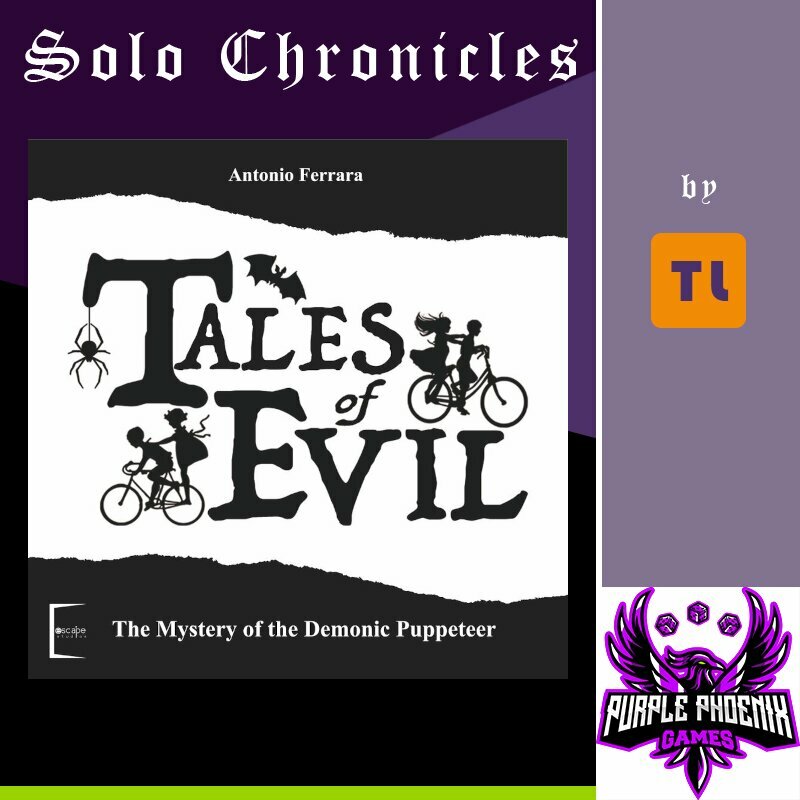
Purple Phoenix Games (2266 KP) rated Tales of Evil in Tabletop Games
Oct 1, 2020
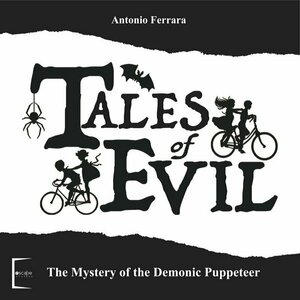
It is no surprise that following the enormous success of Netflix’s “Stranger Things” that creators would begin developing ideas borrowed from the show’s setting or characters. Of course we have seen games in this “80s kids Goonie-esque adventure game” genre before, and I have to say that I love the setting. When I saw the Kickstarter campaign for Tales of Evil I was immediately drawn to it. Did my investment pay off or is this one a gnarly bust?
Tales of Evil is a cooperative, horror, storytelling, adventure game that uses a unique new “Fusion System” throughout the game. Players will be taking on personas of kids from the 1980s who belong to a club named “Pizza & Investigation.” I do not wish to reveal too much in this review, so I will be covering this as a Solo Chronicles using one character going through the introductory tutorial mission.
DISCLAIMER: We are using the Kickstarter Deluxe version of the game. We do have the expansions from the KS campaign, but will not be using those for this review. Also, we do not intend to cover every single rule included in the rule book, but will describe the overall game flow and major rule set so that our readers may get a sense of how the game plays. For more in depth rules, you may purchase a copy from the publisher directly or from your FLGS. -T
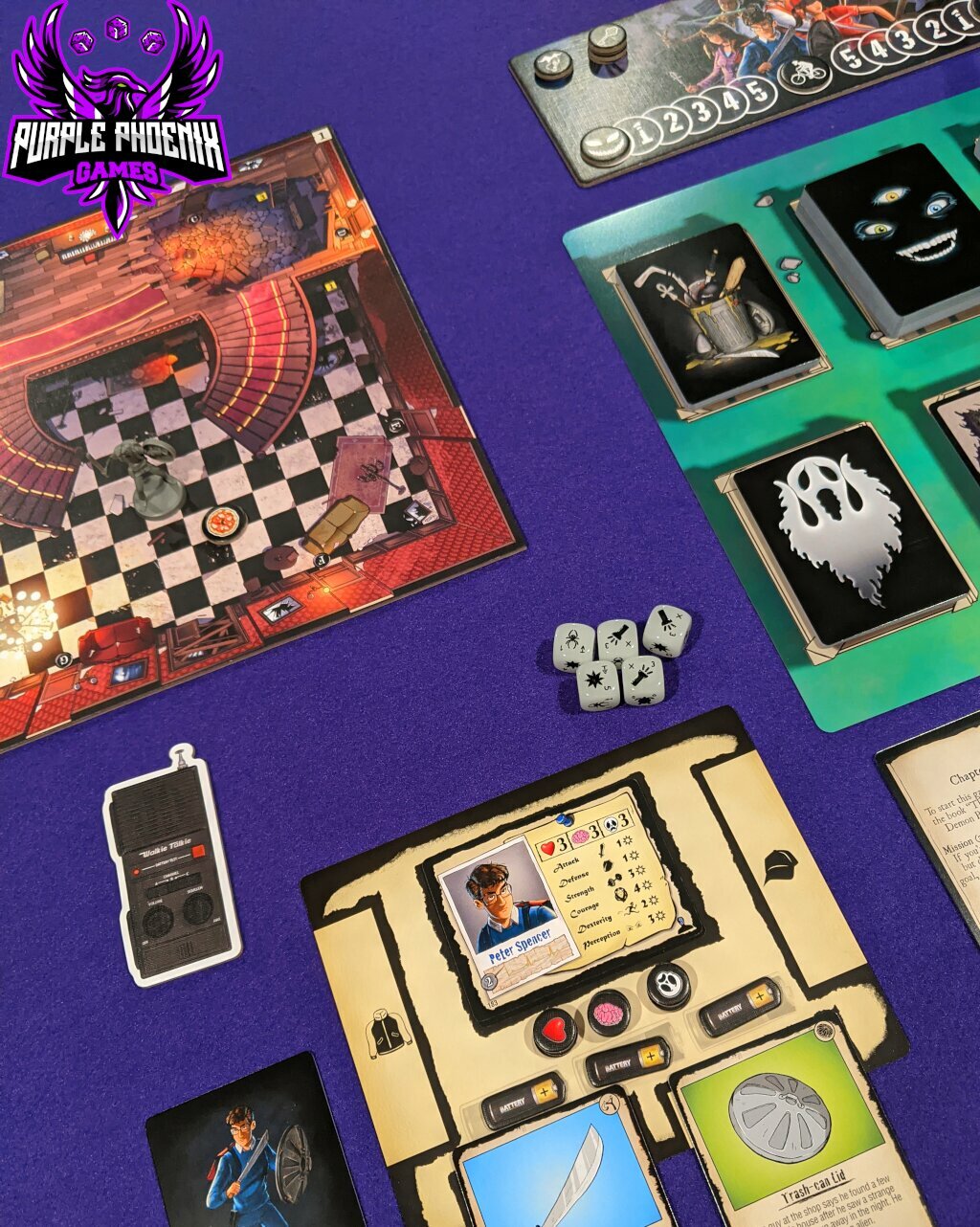
To setup, well, just follow the setup instructions in the rulebook. There’s too much for me to explain here. For one character playing the tutorial scenario, the game setup should look similar to what is pictured below. Maybe. The rulebook does not specifically state WHERE each item should be placed, so players will have ultimate freedom to setup items where they see fit to be most efficient for themselves.
Players in Tales of Evil will have no real “turn structure” as most games do, because all players will be adventuring together as a group. So characters will be moving as a group and never splitting the party (RPGers breathe a sigh of relief… maybe). However, as with many adventure games of this style, once players explore into new areas certain markers will placed on the board (Clue, Darkness, Mystery, Search, etc). These markers signify different actions that can be taken, or entrances to areas that are blocked or found, or something that could be traced from one area to another. The leader of the group for the time being is in possession of the Walkie-Talkie and will make all final decisions for the group after any discussion (for solo players, it is just a nice prop). Usually searching for items will result in a card draw and upon the card will be a test to pass using the stats on the player character mat to roll dice for successes. Of course, the other side of that are horrible losses as well.
Players will be traipsing through the area and reading passages from two actual books: the Story Book and the Event Book. Most of the action happens in the Story Book and it will guide players through the story and once choices are made or tests succeeded/failed, the book will instruct players what to do next and to which section to turn to further the story (a la Tales of the Arabian Nights). The game continues in this fashion until the story ends with victory or defeat.
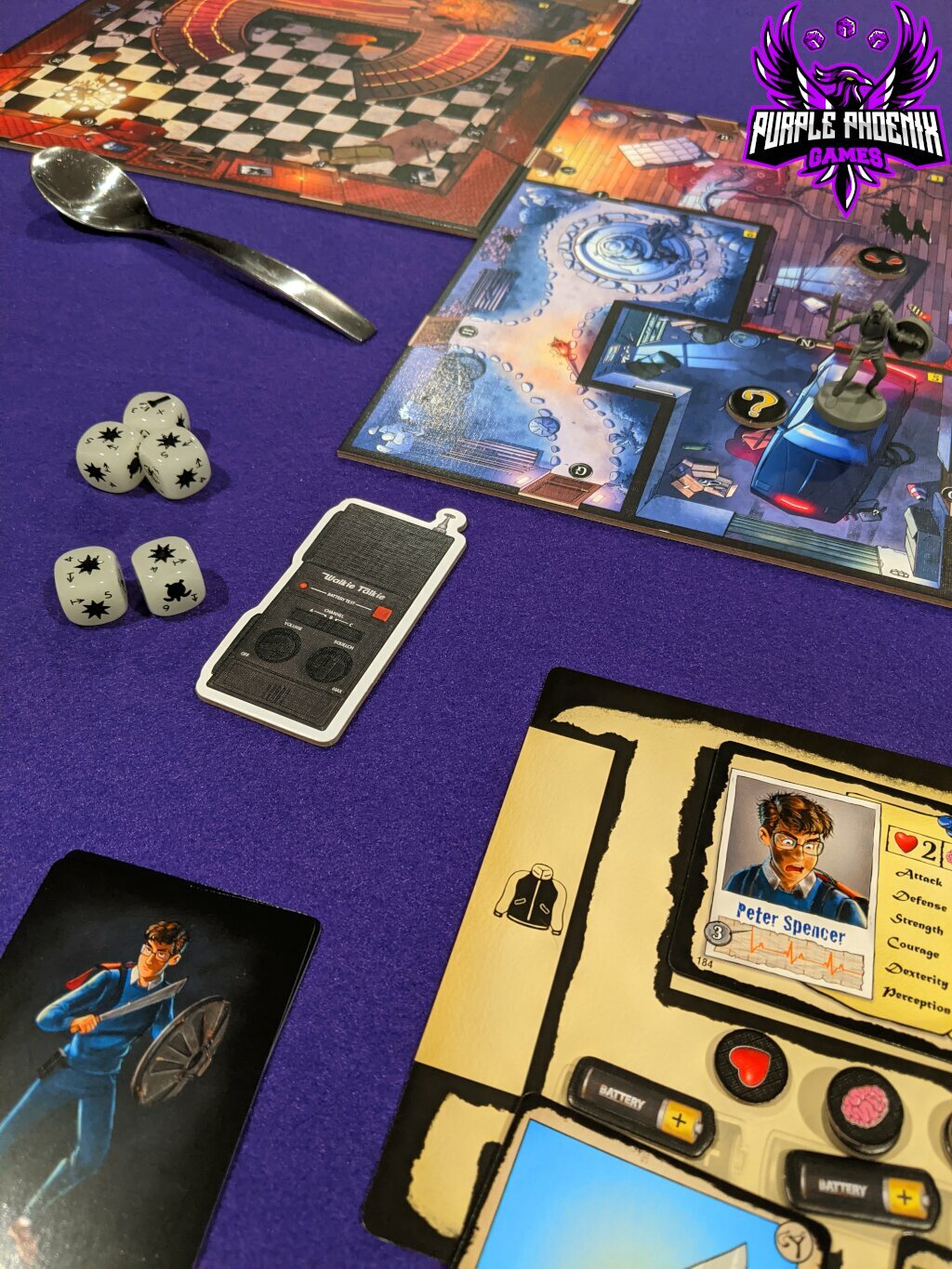
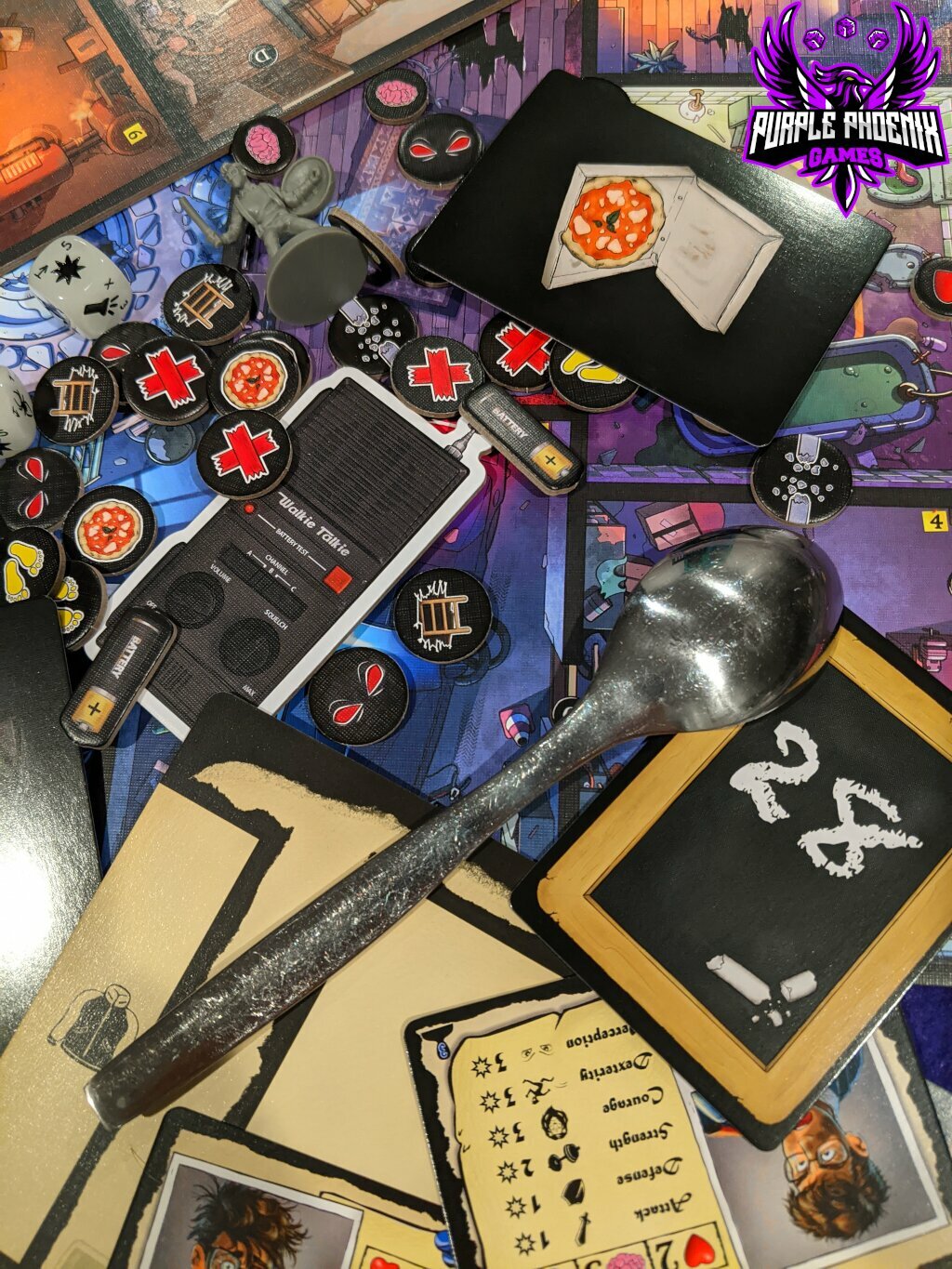
Components. Why yes, that is a real spoon in the photo above. No, it does not come with the game. I will explain in a bit. The components in this game are great. Each character has their own mat for organization, action cards, equipment cards, and status cards that dictate the difficulty of the game and how the character degrades over time in the horror-filled mission. Some components are even glow-in-the-dark! A nice touch, but certainly unnecessary. I find everything to be wonderful quality, even the cards that are kind of polarizing on the KS comments are nice (people are complaining that they are not linen-finished, but I believe the publisher made the right call to make them matte finished if the linen obscured the look and art on them). Thumbs up for components from me.
I wanted to wait until my final thoughts to explain the whole “Fusion System” that is in play here. Tales of Evil uses the catchphrase, “You will get into the game and the game will get into you!” Now, I’m not sure exactly how this game is getting into me, but I’m certainly digging the game and this Fusion System. You see, some cards (in the tutorial, remember, so I’m not really giving much away here) will give players 60 seconds to grab a kitchen spoon for some benefit and a debilitation if they are unable to find one – hence the spoon in my photos. Another card relies on the character (and also then the player) removing their shoes. Still yet another deals with fire or people smoking in the vicinity. If there is fire nearby in real life, it affects the effects of the card drawn. It’s ingenious and I love every little bit of it! I can’t wait to see how the Fusion System will work in this game more and how it can be applied to other games in the future.
All in all I love everything about Tales of Evil. The setting is great, the Pizza & Investigation kids are awesome, and the game itself is incredibly engaging and makes you really think about the choices you make within. Perhaps the haunting feeling of doubting some choices is how the game gets into you, because I did find myself wondering what would have happened had I chosen a different course for some instances. I am very drawn to this game and I want to tackle all of the scenarios. Even solo! And another great thing about Tales of Evil is the fact that a player (or players) can join a game already in progress! So if I am exploring solo and my wife decides she wants to hop in, she just grabs a character mat, sets up the character, and dives right in with me. I LOVE games like that. So versatile.
While I should probably stop gushing at this point I just can’t. This game is so much fun and worth every penny spent on it. I implore you, if you are a fan of exploration adventure games in this vein you definitely need to snatch up a copy whenever you see one. And if you love it as much as I do let me know. We can swap adventure stories.
Oh did I mention the designer is even created a way for us normies to create our own scenarios and upload them to other Tales of Evil players? Yeah, I’m fascinated by that as well…
Tales of Evil is a cooperative, horror, storytelling, adventure game that uses a unique new “Fusion System” throughout the game. Players will be taking on personas of kids from the 1980s who belong to a club named “Pizza & Investigation.” I do not wish to reveal too much in this review, so I will be covering this as a Solo Chronicles using one character going through the introductory tutorial mission.
DISCLAIMER: We are using the Kickstarter Deluxe version of the game. We do have the expansions from the KS campaign, but will not be using those for this review. Also, we do not intend to cover every single rule included in the rule book, but will describe the overall game flow and major rule set so that our readers may get a sense of how the game plays. For more in depth rules, you may purchase a copy from the publisher directly or from your FLGS. -T
To setup, well, just follow the setup instructions in the rulebook. There’s too much for me to explain here. For one character playing the tutorial scenario, the game setup should look similar to what is pictured below. Maybe. The rulebook does not specifically state WHERE each item should be placed, so players will have ultimate freedom to setup items where they see fit to be most efficient for themselves.
Players in Tales of Evil will have no real “turn structure” as most games do, because all players will be adventuring together as a group. So characters will be moving as a group and never splitting the party (RPGers breathe a sigh of relief… maybe). However, as with many adventure games of this style, once players explore into new areas certain markers will placed on the board (Clue, Darkness, Mystery, Search, etc). These markers signify different actions that can be taken, or entrances to areas that are blocked or found, or something that could be traced from one area to another. The leader of the group for the time being is in possession of the Walkie-Talkie and will make all final decisions for the group after any discussion (for solo players, it is just a nice prop). Usually searching for items will result in a card draw and upon the card will be a test to pass using the stats on the player character mat to roll dice for successes. Of course, the other side of that are horrible losses as well.
Players will be traipsing through the area and reading passages from two actual books: the Story Book and the Event Book. Most of the action happens in the Story Book and it will guide players through the story and once choices are made or tests succeeded/failed, the book will instruct players what to do next and to which section to turn to further the story (a la Tales of the Arabian Nights). The game continues in this fashion until the story ends with victory or defeat.
Components. Why yes, that is a real spoon in the photo above. No, it does not come with the game. I will explain in a bit. The components in this game are great. Each character has their own mat for organization, action cards, equipment cards, and status cards that dictate the difficulty of the game and how the character degrades over time in the horror-filled mission. Some components are even glow-in-the-dark! A nice touch, but certainly unnecessary. I find everything to be wonderful quality, even the cards that are kind of polarizing on the KS comments are nice (people are complaining that they are not linen-finished, but I believe the publisher made the right call to make them matte finished if the linen obscured the look and art on them). Thumbs up for components from me.
I wanted to wait until my final thoughts to explain the whole “Fusion System” that is in play here. Tales of Evil uses the catchphrase, “You will get into the game and the game will get into you!” Now, I’m not sure exactly how this game is getting into me, but I’m certainly digging the game and this Fusion System. You see, some cards (in the tutorial, remember, so I’m not really giving much away here) will give players 60 seconds to grab a kitchen spoon for some benefit and a debilitation if they are unable to find one – hence the spoon in my photos. Another card relies on the character (and also then the player) removing their shoes. Still yet another deals with fire or people smoking in the vicinity. If there is fire nearby in real life, it affects the effects of the card drawn. It’s ingenious and I love every little bit of it! I can’t wait to see how the Fusion System will work in this game more and how it can be applied to other games in the future.
All in all I love everything about Tales of Evil. The setting is great, the Pizza & Investigation kids are awesome, and the game itself is incredibly engaging and makes you really think about the choices you make within. Perhaps the haunting feeling of doubting some choices is how the game gets into you, because I did find myself wondering what would have happened had I chosen a different course for some instances. I am very drawn to this game and I want to tackle all of the scenarios. Even solo! And another great thing about Tales of Evil is the fact that a player (or players) can join a game already in progress! So if I am exploring solo and my wife decides she wants to hop in, she just grabs a character mat, sets up the character, and dives right in with me. I LOVE games like that. So versatile.
While I should probably stop gushing at this point I just can’t. This game is so much fun and worth every penny spent on it. I implore you, if you are a fan of exploration adventure games in this vein you definitely need to snatch up a copy whenever you see one. And if you love it as much as I do let me know. We can swap adventure stories.
Oh did I mention the designer is even created a way for us normies to create our own scenarios and upload them to other Tales of Evil players? Yeah, I’m fascinated by that as well…

Make Dirty Millions the Clean Way!!
Book
How to make dirty millions the clean way, was written as part of my life's goal to end world hunger...
self-help

Emma @ The Movies (1786 KP) rated Halloween (2018) in Movies
Sep 25, 2019
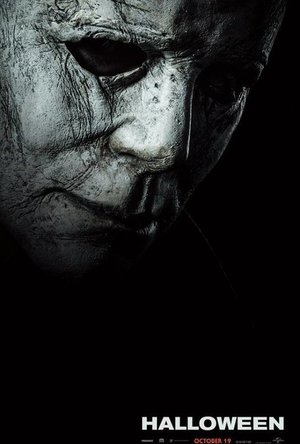
First off I want to address the elephant in the room, or more accurately, the serial killer in the room. Kudos to Cineworld for always engaging in dressing up banter for their movies, but honestly, I don't need to be tormented by them during the movie too. We're all familiar with the hovering member of staff who checks the screens during the performance. When the titles started to role on Halloween I was aware of the lurking figure, unlike other times though when I glanced out of the corner of my eye I wasn't greeted with the friendly face of an employee but rather the mask-clad face of a serial killer. At least he wasn't creeping up on me otherwise I would have unleashed the power of my flying handbag... you try and scare people there WILL be consequences! Saying that I would love them to re-release Scream so I could dress up as Ghostface and just tilt my head at people.
Anyway, to the film!
Having just seen the original I found it very easy to draw parallels between the two. The links were everywhere and it made for a nice familiar touch, which I found surprising as it isn't a film that I'm really that well versed in.
The opening credits were obviously a highlight and it was fun to watch the scene unfold, literally. Having not seen many of the other Halloween offerings I don't know how they dealt with Michael and Laurie's connection, not that it really matters I suppose as they tossed out the rest of the timeline out of the window for this one.
Comparing the two films you can really see how they've given Laurie some of Michael's traits. He's so much a part of her that she's even taken to lurking like him outside the school watching her granddaughter. She progresses through the film much like he did in the first, with little flashes of him in her actions like when we see her exit a restaurant and stand at the end of the path like he did after murdering his sister.
We see the escape from the transfer but we don't really know how it happened, although I had my suspicions. Yet again we see a mirror of events from the first film. The patients are roaming around and Michael attacks without mercy to get what he wants/needs.
I'll take a quick diversion here to talk about one of my dislikes about the film. The journalists doing the interviews with Michael and Laurie. I understand why they were there. Michael needed to get his identity back and some groundwork needed to be laid so that the audience could see what Laurie had been working to her whole life... but... I didn't find either character to be particularly effective and the small monologues for the tape seemed poorly executed. Yes, yes, they're just making audio notes for the final piece, but as a film they're supposed to be crafting the scene in a way that flows, and they really don't. Of course as I said, they need to be there so that Michael can get his face back so *shrug* their fate wasn't such a sad one for the story line.
I think what makes Michael so effective as the bad guy is that he's just so brazen. He's got one objective and his single mindedness means that he never stops. It doesn't matter that he's wearing his hospital clothing, he has to do something and that confidence makes him invisible to almost everyone until it's too late. Seeing him in the background of shots brings on the anticipation of what's to come. When it's dark you're squinting at an area that seems unusually framed waiting to see that face emerge from the gloom. It works incredibly well and brings almost a glee to the watcher. You know something that the characters don't... you could survive this thing.
Movies these days seem to be finding some very talented kids and the writers are furnishing them with excellent lines. Jibrail Nantambu as Julian, the ill-fated babysitting job of Haddonfield, brings the comedy in what is otherwise the bleak slasher-fest you'd expect. He's got the witty banter, the attitude, and he delivers perfectly. Watch out for my favourite piece of the movie where Vicky his babysitter attempts to go and investigate for a possible intruder. Julian knows where horror films are at, and he knows who's expendable, good job kid.
As a sequel I think it works really well. Trying to erase the knowledge that there were films in between was challenging though. It's an 18 certificate though and the more I watch them these days the more I wonder exactly how TV and film has jaded my perception of things. Sure, there's a lot of murdering! But none of it seemed particularly graphic or violent to me. Like I say... perhaps I've just become accustomed to it.
What you should do
If you enjoy horror films then I think this one would appeal. Especially if you see the original before you go. I'm sure it would work as a standalone film with only basic knowledge of the first, but there's no denying how well they'll work together in a double bill.
Movie thing you wish you could take home
As with the original, I would still like some of Laurie Strode's luck at surviving against the odds.
Anyway, to the film!
Having just seen the original I found it very easy to draw parallels between the two. The links were everywhere and it made for a nice familiar touch, which I found surprising as it isn't a film that I'm really that well versed in.
The opening credits were obviously a highlight and it was fun to watch the scene unfold, literally. Having not seen many of the other Halloween offerings I don't know how they dealt with Michael and Laurie's connection, not that it really matters I suppose as they tossed out the rest of the timeline out of the window for this one.
Comparing the two films you can really see how they've given Laurie some of Michael's traits. He's so much a part of her that she's even taken to lurking like him outside the school watching her granddaughter. She progresses through the film much like he did in the first, with little flashes of him in her actions like when we see her exit a restaurant and stand at the end of the path like he did after murdering his sister.
We see the escape from the transfer but we don't really know how it happened, although I had my suspicions. Yet again we see a mirror of events from the first film. The patients are roaming around and Michael attacks without mercy to get what he wants/needs.
I'll take a quick diversion here to talk about one of my dislikes about the film. The journalists doing the interviews with Michael and Laurie. I understand why they were there. Michael needed to get his identity back and some groundwork needed to be laid so that the audience could see what Laurie had been working to her whole life... but... I didn't find either character to be particularly effective and the small monologues for the tape seemed poorly executed. Yes, yes, they're just making audio notes for the final piece, but as a film they're supposed to be crafting the scene in a way that flows, and they really don't. Of course as I said, they need to be there so that Michael can get his face back so *shrug* their fate wasn't such a sad one for the story line.
I think what makes Michael so effective as the bad guy is that he's just so brazen. He's got one objective and his single mindedness means that he never stops. It doesn't matter that he's wearing his hospital clothing, he has to do something and that confidence makes him invisible to almost everyone until it's too late. Seeing him in the background of shots brings on the anticipation of what's to come. When it's dark you're squinting at an area that seems unusually framed waiting to see that face emerge from the gloom. It works incredibly well and brings almost a glee to the watcher. You know something that the characters don't... you could survive this thing.
Movies these days seem to be finding some very talented kids and the writers are furnishing them with excellent lines. Jibrail Nantambu as Julian, the ill-fated babysitting job of Haddonfield, brings the comedy in what is otherwise the bleak slasher-fest you'd expect. He's got the witty banter, the attitude, and he delivers perfectly. Watch out for my favourite piece of the movie where Vicky his babysitter attempts to go and investigate for a possible intruder. Julian knows where horror films are at, and he knows who's expendable, good job kid.
As a sequel I think it works really well. Trying to erase the knowledge that there were films in between was challenging though. It's an 18 certificate though and the more I watch them these days the more I wonder exactly how TV and film has jaded my perception of things. Sure, there's a lot of murdering! But none of it seemed particularly graphic or violent to me. Like I say... perhaps I've just become accustomed to it.
What you should do
If you enjoy horror films then I think this one would appeal. Especially if you see the original before you go. I'm sure it would work as a standalone film with only basic knowledge of the first, but there's no denying how well they'll work together in a double bill.
Movie thing you wish you could take home
As with the original, I would still like some of Laurie Strode's luck at surviving against the odds.
KittyMiku (138 KP) rated Flowers for Algernon in Books
Mar 24, 2019
A must read
Contains spoilers, click to show
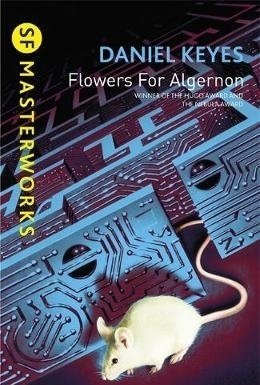
Flowers for Algernon is an amazing journey that makes you take a step back and rethink things. It brings up a lot of issues that, no matter what time we are in, always seem to be around us, whether we notice or not. I found this story to be touching and in ways a bit disturbing. The journey in which this book takes you on, definitely makes you rethink things you may have done or witnessed in the past. It will have you thinking differently about those with learning disabilities and other mental issues. To see it from the point of view of someone who would go through these hardships, you are able to get the feel and understanding of things that you may not have had before.
Charlie is mentally retarded and it shows in his progress reports, which is where the whole story lies in. His grammar is horrible and his spelling can make it hard to read at first. It was hard to remind myself over the first few pages that the way it was written is exactly how someone like Charlie would write. However, it is very clear from the beginning he wants to "get smart." However, his reasoning behind it makes me shudder. I don't shudder because it makes me scared, but because of the disgust I feel towards how people treat him. He states he wants to please his teacher and be able to join in on conversations with his co-workers. He feels isolated and wants to be more than he is. Even though its clear people are making fun of him, he doesn't see it that way because they are laughing and smiling. To him, that means they are his friends. It isn't until later her realizes they are laughing at him that he begins to understand things.
I really liked how as Charlie learned new things and became more intelligent than he was, his progress reports became clearer and easier to read. But with his intelligence growing, he noticed other areas of his life were lacking. He no longer acted the way he had before, began to think very differently and still had the emotions of a child but in a whole new aspect. He was smart, but it was clear he was happier before the operation and the rise in his I.Q. It kind of goes to show that being smart doesn't always means you will be happy. He had to suffer to understand that the way his mind was changing wasn't exactly what he wanted. He wanted so much and even though he got smarter like he wanted, he lost the motivating factors behind it. He ended up losing his job and a lot of the people who surrounded him because of how his personality changed. It was heartbreaking to see him go through the hardships and feel so alone.
I found myself enjoying the fact that even during these hardships, he remained close with Algernon, the mouse who proved the operation worked. Charlie spoke fondly of the mouse, even though at first he hated him. It was pleasant to see that Charlie still had a friend, even if it was just a mouse. Especially with his memories torturing him whenever they decided to pop up. I found Charlie's childhood heartbreaking and exceptionally disturbing. His mother's ideals seemed to be wrong in my opinion. I don't know what she went through, but to be so harsh on a child and to not believe anyone because of how it might make her look to her neighbors and other people, was quite disturbing to me. I found myself hating the woman, and yet I know there are plenty of people who would do the same to their child, even in this day and age.
I have to say the ending was the most heartbreaking thing I have ever read. I understand there will always be risks to experiments that mess with ones brain, but I had really hoped for the best for Charlie. I wasn't fond of his intellectual self because of how he acted towards others and how he thought, but at the same time, to have him lose everything made me tear up and cry. It was truly not a desirable ending. However, seeing him put others first again was heartwarming. It goes to show you, sometimes it those who don't really understand things that are the kindest of people out there. It makes me think of those social studies of people asking others for money and it is the homeless who will try to help out versus those who have a lot they could give. I firmly believe that this book was created to show just how things can appear to be okay and its really not.
I would recommend this book to anyone and everyone who is in 9th grade or higher. I think we all need a reality check from time to time. I have read this book in high school for a book report and even though I am a decade older, rereading it reminded me of how much I loved this book. It has a bunch of underlying meanings and not just on intelligence. I loved the little hidden lessons and thoughts behind this book. It definitely gets your brain working and really puts our society in a truthful light. Even though its based on mental retardation, you can easily apply a lot of what is discussed in Charlie's progress reports and the things it hints at to other sources of discrimination . I would ultimately rate this book 5 stars out of stars. Though the book seems simple to read, it touches base on things in our everyday world that we normally wouldn't think twice about, and probably should. Flowers for Algernon is truly an amazing read.
Charlie is mentally retarded and it shows in his progress reports, which is where the whole story lies in. His grammar is horrible and his spelling can make it hard to read at first. It was hard to remind myself over the first few pages that the way it was written is exactly how someone like Charlie would write. However, it is very clear from the beginning he wants to "get smart." However, his reasoning behind it makes me shudder. I don't shudder because it makes me scared, but because of the disgust I feel towards how people treat him. He states he wants to please his teacher and be able to join in on conversations with his co-workers. He feels isolated and wants to be more than he is. Even though its clear people are making fun of him, he doesn't see it that way because they are laughing and smiling. To him, that means they are his friends. It isn't until later her realizes they are laughing at him that he begins to understand things.
I really liked how as Charlie learned new things and became more intelligent than he was, his progress reports became clearer and easier to read. But with his intelligence growing, he noticed other areas of his life were lacking. He no longer acted the way he had before, began to think very differently and still had the emotions of a child but in a whole new aspect. He was smart, but it was clear he was happier before the operation and the rise in his I.Q. It kind of goes to show that being smart doesn't always means you will be happy. He had to suffer to understand that the way his mind was changing wasn't exactly what he wanted. He wanted so much and even though he got smarter like he wanted, he lost the motivating factors behind it. He ended up losing his job and a lot of the people who surrounded him because of how his personality changed. It was heartbreaking to see him go through the hardships and feel so alone.
I found myself enjoying the fact that even during these hardships, he remained close with Algernon, the mouse who proved the operation worked. Charlie spoke fondly of the mouse, even though at first he hated him. It was pleasant to see that Charlie still had a friend, even if it was just a mouse. Especially with his memories torturing him whenever they decided to pop up. I found Charlie's childhood heartbreaking and exceptionally disturbing. His mother's ideals seemed to be wrong in my opinion. I don't know what she went through, but to be so harsh on a child and to not believe anyone because of how it might make her look to her neighbors and other people, was quite disturbing to me. I found myself hating the woman, and yet I know there are plenty of people who would do the same to their child, even in this day and age.
I have to say the ending was the most heartbreaking thing I have ever read. I understand there will always be risks to experiments that mess with ones brain, but I had really hoped for the best for Charlie. I wasn't fond of his intellectual self because of how he acted towards others and how he thought, but at the same time, to have him lose everything made me tear up and cry. It was truly not a desirable ending. However, seeing him put others first again was heartwarming. It goes to show you, sometimes it those who don't really understand things that are the kindest of people out there. It makes me think of those social studies of people asking others for money and it is the homeless who will try to help out versus those who have a lot they could give. I firmly believe that this book was created to show just how things can appear to be okay and its really not.
I would recommend this book to anyone and everyone who is in 9th grade or higher. I think we all need a reality check from time to time. I have read this book in high school for a book report and even though I am a decade older, rereading it reminded me of how much I loved this book. It has a bunch of underlying meanings and not just on intelligence. I loved the little hidden lessons and thoughts behind this book. It definitely gets your brain working and really puts our society in a truthful light. Even though its based on mental retardation, you can easily apply a lot of what is discussed in Charlie's progress reports and the things it hints at to other sources of discrimination . I would ultimately rate this book 5 stars out of stars. Though the book seems simple to read, it touches base on things in our everyday world that we normally wouldn't think twice about, and probably should. Flowers for Algernon is truly an amazing read.

Tesco Groceries for iPad
Shopping and Food & Drink
7.0 Rate It
App
The Tesco Groceries app makes your shopping easier, quicker and more convenient than ever. Order...

Tesco Groceries for iPhone
Shopping and Food & Drink
App
The Tesco Groceries app makes your shopping easier, quicker and more convenient than ever. Order...

BankofMarquis (1832 KP) rated The Florida Project (2017) in Movies
Feb 18, 2018


Not Strong Enough To Keep My Attention
THE FLORIDA PROJECT is one of those "slice of life" films, shot on a low budget that doesn't really have a plot but exposes the audience to 2 hours of what it would be like to live the life of someone - usually a disaffected fringe group. There is no real plot, so the film needs to hang itself onto how interesting the characters - and the situation they find themselves - are.
These types of films are not usually my cup of tea, and this film was no exception.
THE FLORIDA PROJECT, conceived, written and directed by Sean Baker (who did a similar-type of film about the transgender community, TANGERINE), is about the community of people living just at the poverty line in the shadow of Walt Disney World. These people are constantly scrambling to earn money to eat and live and to pay rent at one of the seedy, rundown motels boarding just outside "the happiest place on earth".
We see this world through the eyes of Moonee - a "precocious" (I would say farel) youth who lives at one of these hotels with her mother, Halley. Moonee runs wild all day, doing whatever she wants and just 'living her life" while her mother hustles to make ends meet - all under the watchful eye of the motel's Manager, Bobby.
There is no real plot to this film. We just follow Moonee and her pals Scooty, Dicky and Jancey as they go about their day getting into misadventures. 6 year old Brooklyn Prince (in her film debut) stars as Moonee and she is an engaging enough presence, but not nearly strong enough to keep my attention for the entire 2 hours of the film - and that's the issue with this film. It relies heavily on the audience's fascination with this 6 year old and I wasn't fascinated enough to watch her for 2 hours.
Much more interesting to me to watch was another new actress, Bria Vinaite as her mother, Halley. I said she spends the film hustling - and I mean that in every sense of the word. Every interaction with another person is laced with the thought "what can I get out of this". She is always working an angle, looking for the quick score. She was a fascinating character, and I would have preferred that she would be the focus of this story.
Overseeing these two - and the other denizen's of his Motel - is Willem DaFoe playing against type as the kindly, caring Manager, Bobby. DaFoe is nominated for an Oscar for his work in this film - and it is strong work (it's good to see DaFoe with something to sink his teeth into), but is it enough for an Oscar? I don't think so. Much like Mary J. Blige in MUDBOUND, I think it is a very good performance, but I kept waiting for the "Academy Award" scene from him, and it just didn't come.
Ultimately, a labor of love for Sean Baker. It looks like a film that was made on a shoestring budget - and I'm sure that was intentional. The look and feel of this film mimics the circumstance that the characters find themselves in - including some "guerilla" filmmaking at Disney's Magic Kingdom itself. He made the type of film he wanted to make.
It just isn't the kind of film I wanted - or am interested - in seeing.
Letter Grade: C+
5 (out of 10) stars and you can take that to the Bank(ofMarquis)
These types of films are not usually my cup of tea, and this film was no exception.
THE FLORIDA PROJECT, conceived, written and directed by Sean Baker (who did a similar-type of film about the transgender community, TANGERINE), is about the community of people living just at the poverty line in the shadow of Walt Disney World. These people are constantly scrambling to earn money to eat and live and to pay rent at one of the seedy, rundown motels boarding just outside "the happiest place on earth".
We see this world through the eyes of Moonee - a "precocious" (I would say farel) youth who lives at one of these hotels with her mother, Halley. Moonee runs wild all day, doing whatever she wants and just 'living her life" while her mother hustles to make ends meet - all under the watchful eye of the motel's Manager, Bobby.
There is no real plot to this film. We just follow Moonee and her pals Scooty, Dicky and Jancey as they go about their day getting into misadventures. 6 year old Brooklyn Prince (in her film debut) stars as Moonee and she is an engaging enough presence, but not nearly strong enough to keep my attention for the entire 2 hours of the film - and that's the issue with this film. It relies heavily on the audience's fascination with this 6 year old and I wasn't fascinated enough to watch her for 2 hours.
Much more interesting to me to watch was another new actress, Bria Vinaite as her mother, Halley. I said she spends the film hustling - and I mean that in every sense of the word. Every interaction with another person is laced with the thought "what can I get out of this". She is always working an angle, looking for the quick score. She was a fascinating character, and I would have preferred that she would be the focus of this story.
Overseeing these two - and the other denizen's of his Motel - is Willem DaFoe playing against type as the kindly, caring Manager, Bobby. DaFoe is nominated for an Oscar for his work in this film - and it is strong work (it's good to see DaFoe with something to sink his teeth into), but is it enough for an Oscar? I don't think so. Much like Mary J. Blige in MUDBOUND, I think it is a very good performance, but I kept waiting for the "Academy Award" scene from him, and it just didn't come.
Ultimately, a labor of love for Sean Baker. It looks like a film that was made on a shoestring budget - and I'm sure that was intentional. The look and feel of this film mimics the circumstance that the characters find themselves in - including some "guerilla" filmmaking at Disney's Magic Kingdom itself. He made the type of film he wanted to make.
It just isn't the kind of film I wanted - or am interested - in seeing.
Letter Grade: C+
5 (out of 10) stars and you can take that to the Bank(ofMarquis)

Goddess in the Stacks (553 KP) rated Wintersong in Books
Dec 27, 2018
So I knew this was inspired by Jim Henson's Labyrinth. That's partially why I picked it up, as I love that movie and David Bowie as the Goblin King. I didn't expect to get, basically, Labyrinth fanfiction. That was my first impression. As the book carries on, though, and especially as you get into the second book, it's more like a musician's fever-dream of their favorite childhood movie. There are so many elements taken from the movie, but they are deconstructed and put back together in such unexpected ways.
You'll recognize a line or two from the movie. The fairies still bite. The Goblin King is still beautiful and angular and strange. Liesl's after a stolen sibling. But Liesl and her family live in rural, probably 18th century Bavaria. She is not a spoiled, baby-sitting half-sister. Her grandmother has taught her the old stories, and unbeknownst to her, she's played music for The Goblin King her entire childhood.
The first book concerns Liesl's first foray into the Underground to save her sister when The Goblin King steals her to be his bride. This is where the acid trip starts. If you're familiar with Labyrinth, remember the ballroom scene? With people whirling about and appearing and disappearing and mirrors and the sense of disorientation as it all falls apart? Yeah, that's basically the entire time in the Underground. Though there is a ball scene, and it is especially trippy.
While Liesl manages to save her sister (that's a spoiler, but it isn't much of one), she has a harder time saving herself. Whether she actually does or not could be debated.
The second book of the duology, Shadowsong, has an interesting author's note in the front of it. The author first gives a content warning for self-harm, suicidal ideations, addiction, and reckless behaviors. She goes on to say Liesl has bipolar disorder, and further, that so does she. (The author.) She says Wintersong was her bright mirror, and Shadowsong her dark one. I can see that. Wintersong is a much happier book than Shadowsong, but the story would be incomplete without both books. Wintersong does end in a satisfactory conclusion, but Shadowsong just completes the tale in a way that I, at least, really enjoyed.
Shadowsong also contains more throwbacks to the movie - she falls and is caught by goblin hands; goblins form a giant face that talks to her about the old laws. These things don't happen in the same scene, though.
I loved the elements of music woven throughout the story; Liesl is a composer, and music - her music - is almost a character in its own right. It's definitely a huge plot element. It's in her connection to her brother, and her connection to The Goblin King. It's her way into the Underground, and her way out, and her way to reach back in.
It's an enchanting duology; I don't know if it would be as good for someone who didn't love Labyrinth the way I do. If you dislike the movie, I would probably advise against reading these. But if you like it or have simply never seen it, these would be good, atmospheric books to read in the dead of winter.
You can read all my reviews at http://goddessinthestacks.com
You'll recognize a line or two from the movie. The fairies still bite. The Goblin King is still beautiful and angular and strange. Liesl's after a stolen sibling. But Liesl and her family live in rural, probably 18th century Bavaria. She is not a spoiled, baby-sitting half-sister. Her grandmother has taught her the old stories, and unbeknownst to her, she's played music for The Goblin King her entire childhood.
The first book concerns Liesl's first foray into the Underground to save her sister when The Goblin King steals her to be his bride. This is where the acid trip starts. If you're familiar with Labyrinth, remember the ballroom scene? With people whirling about and appearing and disappearing and mirrors and the sense of disorientation as it all falls apart? Yeah, that's basically the entire time in the Underground. Though there is a ball scene, and it is especially trippy.
While Liesl manages to save her sister (that's a spoiler, but it isn't much of one), she has a harder time saving herself. Whether she actually does or not could be debated.
The second book of the duology, Shadowsong, has an interesting author's note in the front of it. The author first gives a content warning for self-harm, suicidal ideations, addiction, and reckless behaviors. She goes on to say Liesl has bipolar disorder, and further, that so does she. (The author.) She says Wintersong was her bright mirror, and Shadowsong her dark one. I can see that. Wintersong is a much happier book than Shadowsong, but the story would be incomplete without both books. Wintersong does end in a satisfactory conclusion, but Shadowsong just completes the tale in a way that I, at least, really enjoyed.
Shadowsong also contains more throwbacks to the movie - she falls and is caught by goblin hands; goblins form a giant face that talks to her about the old laws. These things don't happen in the same scene, though.
I loved the elements of music woven throughout the story; Liesl is a composer, and music - her music - is almost a character in its own right. It's definitely a huge plot element. It's in her connection to her brother, and her connection to The Goblin King. It's her way into the Underground, and her way out, and her way to reach back in.
It's an enchanting duology; I don't know if it would be as good for someone who didn't love Labyrinth the way I do. If you dislike the movie, I would probably advise against reading these. But if you like it or have simply never seen it, these would be good, atmospheric books to read in the dead of winter.
You can read all my reviews at http://goddessinthestacks.com
Goddess in the Stacks (553 KP) rated Shadowsong (Wintersong #2) in Books
Dec 27, 2018

So I knew this was inspired by Jim Henson's Labyrinth. That's partially why I picked it up, as I love that movie and David Bowie as the Goblin King. I didn't expect to get, basically, Labyrinth fanfiction. That was my first impression. As the book carries on, though, and especially as you get into the second book, it's more like a musician's fever-dream of their favorite childhood movie. There are so many elements taken from the movie, but they are deconstructed and put back together in such unexpected ways.
You'll recognize a line or two from the movie. The fairies still bite. The Goblin King is still beautiful and angular and strange. Liesl's after a stolen sibling. But Liesl and her family live in rural, probably 18th century Bavaria. She is not a spoiled, baby-sitting half-sister. Her grandmother has taught her the old stories, and unbeknownst to her, she's played music for The Goblin King her entire childhood.
The first book concerns Liesl's first foray into the Underground to save her sister when The Goblin King steals her to be his bride. This is where the acid trip starts. If you're familiar with Labyrinth, remember the ballroom scene? With people whirling about and appearing and disappearing and mirrors and the sense of disorientation as it all falls apart? Yeah, that's basically the entire time in the Underground. Though there is a ball scene, and it is especially trippy.
While Liesl manages to save her sister (that's a spoiler, but it isn't much of one), she has a harder time saving herself. Whether she actually does or not could be debated.
The second book of the duology, Shadowsong, has an interesting author's note in the front of it. The author first gives a content warning for self-harm, suicidal ideations, addiction, and reckless behaviors. She goes on to say Liesl has bipolar disorder, and further, that so does she. (The author.) She says Wintersong was her bright mirror, and Shadowsong her dark one. I can see that. Wintersong is a much happier book than Shadowsong, but the story would be incomplete without both books. Wintersong does end in a satisfactory conclusion, but Shadowsong just completes the tale in a way that I, at least, really enjoyed.
Shadowsong also contains more throwbacks to the movie - she falls and is caught by goblin hands; goblins form a giant face that talks to her about the old laws. These things don't happen in the same scene, though.
I loved the elements of music woven throughout the story; Liesl is a composer, and music - her music - is almost a character in its own right. It's definitely a huge plot element. It's in her connection to her brother, and her connection to The Goblin King. It's her way into the Underground, and her way out, and her way to reach back in.
It's an enchanting duology; I don't know if it would be as good for someone who didn't love Labyrinth the way I do. If you dislike the movie, I would probably advise against reading these. But if you like it or have simply never seen it, these would be good, atmospheric books to read in the dead of winter.
You can read all my reviews at http://goddessinthestacks.com
You'll recognize a line or two from the movie. The fairies still bite. The Goblin King is still beautiful and angular and strange. Liesl's after a stolen sibling. But Liesl and her family live in rural, probably 18th century Bavaria. She is not a spoiled, baby-sitting half-sister. Her grandmother has taught her the old stories, and unbeknownst to her, she's played music for The Goblin King her entire childhood.
The first book concerns Liesl's first foray into the Underground to save her sister when The Goblin King steals her to be his bride. This is where the acid trip starts. If you're familiar with Labyrinth, remember the ballroom scene? With people whirling about and appearing and disappearing and mirrors and the sense of disorientation as it all falls apart? Yeah, that's basically the entire time in the Underground. Though there is a ball scene, and it is especially trippy.
While Liesl manages to save her sister (that's a spoiler, but it isn't much of one), she has a harder time saving herself. Whether she actually does or not could be debated.
The second book of the duology, Shadowsong, has an interesting author's note in the front of it. The author first gives a content warning for self-harm, suicidal ideations, addiction, and reckless behaviors. She goes on to say Liesl has bipolar disorder, and further, that so does she. (The author.) She says Wintersong was her bright mirror, and Shadowsong her dark one. I can see that. Wintersong is a much happier book than Shadowsong, but the story would be incomplete without both books. Wintersong does end in a satisfactory conclusion, but Shadowsong just completes the tale in a way that I, at least, really enjoyed.
Shadowsong also contains more throwbacks to the movie - she falls and is caught by goblin hands; goblins form a giant face that talks to her about the old laws. These things don't happen in the same scene, though.
I loved the elements of music woven throughout the story; Liesl is a composer, and music - her music - is almost a character in its own right. It's definitely a huge plot element. It's in her connection to her brother, and her connection to The Goblin King. It's her way into the Underground, and her way out, and her way to reach back in.
It's an enchanting duology; I don't know if it would be as good for someone who didn't love Labyrinth the way I do. If you dislike the movie, I would probably advise against reading these. But if you like it or have simply never seen it, these would be good, atmospheric books to read in the dead of winter.
You can read all my reviews at http://goddessinthestacks.com