
Search
Search results

Movie Metropolis (309 KP) rated Deepwater Horizon (2016) in Movies
Jun 10, 2019 (Updated Jun 10, 2019)


Disaster with feeling
“Based on true events”. I can’t think of anything more disconcerting when I sit down to watch a film. When it comes to blockbusters inspired by real-life situations, the outcome can be a poignant movie that captures the heart and emotion of the episode – a la American Sniper.
Unfortunately, films in this genre can also be a disaster from start to finish with a story barely related to its real-life counterpart. You can forgive me then for going into Deepwater Horizon with an air of scepticism, but was it justified?
Thankfully, director Peter Berg (Hancock, Battleship) strikes the right balance between pleasing the movie-going masses and respecting the events that took the lives of eleven people aboard the Deepwater Horizon oil rig.
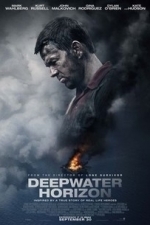
Based on the events that occurred in the Gulf of Mexico on April 20, 2010, the story chronicles the courage of those who worked on the Deepwater Horizon and the extreme moments of bravery and survival in the face of what would become one of the biggest man-made disasters in world history.
Mark Wahlberg takes the helm of this intriguing action thriller as Mike Williams, an electrician working on the rig during the explosion. A supporting cast that includes Kurt Russell, Gina Rodriguez, John Malkovich and The Maze Runner’s Dylan O’Brien bolster Wahlberg’s natural charisma and each of the aforementioned actors give first-rate performances.
The acting from all sides is superb. Mark Wahlberg in particular excels, being one of his best roles to date. His work has been decidedly dodgy over the last few years but his performance here shows just how good he is with the right material.
Nevertheless, at its core, Deepwater Horizon is a simple disaster movie, and carries the genre’s traits to a tee; there’s the obligatory hero (Mark Wahlberg), the boss/politician who doesn’t believe anything is wrong (John Malkovich), the bombastic score (courtesy of Steve Jablonsky) and the damsel in distress (Gina Rodriguez). What it does differently however is focus more on the human elements of the plot – something helped by the fact the scriptwriters had factual events to pick from.
The special effects are astounding, aided greatly by Peter Berg’s often hectic camerawork. There’s very little shaky-cam but the claustrophobic nature of the rig itself is beautifully utilised in low angled shots and sweeping exterior sequences. The scenes showing the rig on fire are so intense you can virtually feel the heat radiating from them.
It almost feels like a documentary, and a very good one at that. The audience is given references throughout the film of Deepwater Horizon’s many functions and the scale of the behemoth is apparent throughout.
Overall, to say Deepwater Horizon is a cracking disaster film feels like a slight disservice to the eleven people who died aboard it in 2010. Having Peter Berg direct was a risky move when looking at his back-catalogue but after a viewing, it’s hard to think of anyone else better suited.
This is a disaster movie with feeling and it’s one of the best films of the year.
https://moviemetropolis.net/2016/09/30/disaster-with-feeling-deepwater-horizon-review/
Unfortunately, films in this genre can also be a disaster from start to finish with a story barely related to its real-life counterpart. You can forgive me then for going into Deepwater Horizon with an air of scepticism, but was it justified?
Thankfully, director Peter Berg (Hancock, Battleship) strikes the right balance between pleasing the movie-going masses and respecting the events that took the lives of eleven people aboard the Deepwater Horizon oil rig.
Based on the events that occurred in the Gulf of Mexico on April 20, 2010, the story chronicles the courage of those who worked on the Deepwater Horizon and the extreme moments of bravery and survival in the face of what would become one of the biggest man-made disasters in world history.
Mark Wahlberg takes the helm of this intriguing action thriller as Mike Williams, an electrician working on the rig during the explosion. A supporting cast that includes Kurt Russell, Gina Rodriguez, John Malkovich and The Maze Runner’s Dylan O’Brien bolster Wahlberg’s natural charisma and each of the aforementioned actors give first-rate performances.
The acting from all sides is superb. Mark Wahlberg in particular excels, being one of his best roles to date. His work has been decidedly dodgy over the last few years but his performance here shows just how good he is with the right material.
Nevertheless, at its core, Deepwater Horizon is a simple disaster movie, and carries the genre’s traits to a tee; there’s the obligatory hero (Mark Wahlberg), the boss/politician who doesn’t believe anything is wrong (John Malkovich), the bombastic score (courtesy of Steve Jablonsky) and the damsel in distress (Gina Rodriguez). What it does differently however is focus more on the human elements of the plot – something helped by the fact the scriptwriters had factual events to pick from.
The special effects are astounding, aided greatly by Peter Berg’s often hectic camerawork. There’s very little shaky-cam but the claustrophobic nature of the rig itself is beautifully utilised in low angled shots and sweeping exterior sequences. The scenes showing the rig on fire are so intense you can virtually feel the heat radiating from them.
It almost feels like a documentary, and a very good one at that. The audience is given references throughout the film of Deepwater Horizon’s many functions and the scale of the behemoth is apparent throughout.
Overall, to say Deepwater Horizon is a cracking disaster film feels like a slight disservice to the eleven people who died aboard it in 2010. Having Peter Berg direct was a risky move when looking at his back-catalogue but after a viewing, it’s hard to think of anyone else better suited.
This is a disaster movie with feeling and it’s one of the best films of the year.
https://moviemetropolis.net/2016/09/30/disaster-with-feeling-deepwater-horizon-review/

Kirk Bage (1775 KP) rated Jim & Andy: The Great Beyond (2017) in Movies
Mar 3, 2020
Documentaries, they can’t be trusted, can they? There is always a purpose and a message the film-maker’s have manufactured and edited to suit themselves, I find. They often leave you with more questions than answers. The best ones are open to interpretation enough to allow you in; allowing the source material to speak for itself. The worst ones rely on talking heads too much and can feel very manipulative.
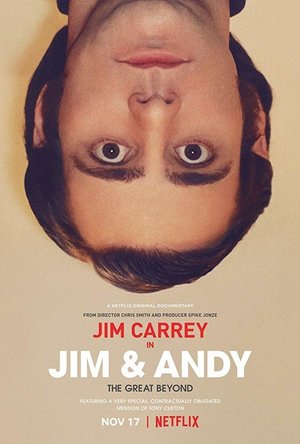
Jim and Andy: The Great Beyond, is fortunately much more of the former than the latter. However, two days after watching this mind-blowing exposé of how Jim Carrey behaved on set of the excellent Man On The Moon, playing genius / lunatic Andy Kaufman, I am still left pondering what to think of it all. Is Carrey an ego maniac who belongs in a straight-jacket, or is he a hippie genius, dedicated to his art, who would do anything to achieve a perfect performance?
It focuses on a fully bearded Carrey reliving his memories of 20 years ago. Reinforced by a plethora of behind the scenes footage, which at turns is hilarious, shocking, confusing and revealing, in uncomfortable and fascinating ways. The premise is that at the time of being cast Kaufman’s spirit inhabited Carrey, allowing him to channel the actual man, and BE him, rather than merely play him!
Whatever your thoughts on method acting, and how indulgent that can be, it is always astonishing to see just how far he went! And why everyone else allowed him to get away with it? Director Milos Forman is forced to cope with never talking to “Jim”, only to “Andy”, and seems often at the point of break-down. Fellow cast members seem to deal with it in different ways too. Danny DeVito seems in awe; Courtney Love seems to embrace it; Paul Giamatti seems very uncomfortable. But the whole show goes ahead with Carrey as king. Simply extraordinary!
The thing is, both 1999 Jim and 2017 Jim never seem entirely insane, but rather totally in control and eloquent. It seems as if every “crazy” thing he did was a choice, conscious or unconscious, that as an actor he was happy to be part of; as if the performance was all that mattered. There have always been mental health questions about Carrey, and this throws a bright spotlight on his technique, personality and self-awareness. At some point you just have to say “wow” and to a degree applaud it.
Your enjoyment of it hinges on how much of a Carrey fan you are? If you have never liked or got him as a performer then you will be screaming at the screen in consternation. If you love his work then this is indespesible viewing! Either way, there is something wondrous about it! Just consider, Carrey won a Golden Globe for this role, and remains the only person ever to do so not to be Oscar nominated…
There is also a suggestion the whole thing is a joke, in typical Kaufman style, using the footage to create a trick on the audience… Documentaries, they can’t be trusted, can they? You decide.
Jim and Andy: The Great Beyond, is fortunately much more of the former than the latter. However, two days after watching this mind-blowing exposé of how Jim Carrey behaved on set of the excellent Man On The Moon, playing genius / lunatic Andy Kaufman, I am still left pondering what to think of it all. Is Carrey an ego maniac who belongs in a straight-jacket, or is he a hippie genius, dedicated to his art, who would do anything to achieve a perfect performance?
It focuses on a fully bearded Carrey reliving his memories of 20 years ago. Reinforced by a plethora of behind the scenes footage, which at turns is hilarious, shocking, confusing and revealing, in uncomfortable and fascinating ways. The premise is that at the time of being cast Kaufman’s spirit inhabited Carrey, allowing him to channel the actual man, and BE him, rather than merely play him!
Whatever your thoughts on method acting, and how indulgent that can be, it is always astonishing to see just how far he went! And why everyone else allowed him to get away with it? Director Milos Forman is forced to cope with never talking to “Jim”, only to “Andy”, and seems often at the point of break-down. Fellow cast members seem to deal with it in different ways too. Danny DeVito seems in awe; Courtney Love seems to embrace it; Paul Giamatti seems very uncomfortable. But the whole show goes ahead with Carrey as king. Simply extraordinary!
The thing is, both 1999 Jim and 2017 Jim never seem entirely insane, but rather totally in control and eloquent. It seems as if every “crazy” thing he did was a choice, conscious or unconscious, that as an actor he was happy to be part of; as if the performance was all that mattered. There have always been mental health questions about Carrey, and this throws a bright spotlight on his technique, personality and self-awareness. At some point you just have to say “wow” and to a degree applaud it.
Your enjoyment of it hinges on how much of a Carrey fan you are? If you have never liked or got him as a performer then you will be screaming at the screen in consternation. If you love his work then this is indespesible viewing! Either way, there is something wondrous about it! Just consider, Carrey won a Golden Globe for this role, and remains the only person ever to do so not to be Oscar nominated…
There is also a suggestion the whole thing is a joke, in typical Kaufman style, using the footage to create a trick on the audience… Documentaries, they can’t be trusted, can they? You decide.

Kristy H (1252 KP) rated The Trespasser: Dublin Murder Squad in Books
Feb 1, 2018
We're up to the sixth installment in Tana French's Dublin Murder Squad series and she's still going strong. In this one, we hear from Antoinette Conway, the partner of Stephen Moran from French's previous novel, [b:The Secret Place|20821043|The Secret Place (Dublin Murder Squad, #5)|Tana French|https://images.gr-assets.com/books/1396671263s/20821043.jpg|21598636]. Being a Detective on the Murder Squad isn't everything Antoinette hoped for. She isn't fitting in on the male squad--most of whom tease and prank her viciously--and she and Steve seem only to receive the most bland, boring cases. Not much bothers Antoinette, but she's about ready to leave the Squad behind for good. So when the latest case comes in--handed straight to Conway and Moran by their boss--it looks like much of the same: another domestic dispute. Beautiful, blond Aislinn Murray has been killed in her home. It looks like a typical lover's quarrel gone wrong. Aislinn's table is set for a romantic dinner, and she's dressed up for a beau. But as Antoinette and Steve investigate, they find things aren't exactly what they seem. Why is their colleague, Detective Breslin, so involved in their case? Why does Antoinette keep seeing someone following her home? And why is the local media out to get her? Antoinette knows the Squad doesn't like her, but now it seems like the hatred is wrapped up in her case, too. Who can she trust--and where will it end?
I'll say it up front: this was an excellent mystery. Just a wonderful read. I love all of French's novels, but thoroughly enjoyed this one. Antoinette was a refreshing voice and completely relatable. Her case was interesting and well-plotted, leaving you constantly guessing. As per a typical French novel, you don't receive just a simple mystery; each of her books comes with a backstory. In this one, we see Antoinette battling her demons and her inability to fit in with her Squad. Are they really out to get her, or is it all in her head? It's true that French's books probably aren't for everyone. There's a lot of talking, a lot of expounding, and a lot of knowing what her characters are thinking. But, in turn, you're presented with characters who are so complex, so rich and in-depth. It's amazing. I've said it in previous reviews, but I love that when I open one of French's novels, I know that I'll be completely transported into another world for a few days. Her writing is strong that you completely inhabit her characters and their environment.
Antoinette, as mentioned, is a complex female character -- strong yet vulnerable and just completely refreshing to find in a detective novel. Her relationship with Moran was very enjoyable to read about, especially after hearing about their initial early meeting in [b:The Secret Place|20821043|The Secret Place (Dublin Murder Squad, #5)|Tana French|https://images.gr-assets.com/books/1396671263s/20821043.jpg|21598636] from Moran's point of view. There's a humor to Conway, lending levity when needed, but also a dark side. She's bitter with the world for a reason. Because the entire book is told from her perspective, we're figuring out the mystery with her, learning facts and alibis as she does, and unraveling the plot along with our detective. Of course, we're limited to seeing the case from her perspective, too. As Moran and Conway try to determine who they can trust, so do we. The book expertly leaves you guessing with the plot; it takes you in one direction early in an incredibly convincing matter. It also skillfully takes you inside the Squad, allowing us to see not only how a case is run, but the inner politics.
In this way, the novel is not just a well-crafted mystery but a lovely treatise on relationships and friendships and the lengths we go for both. I'm also left amazed at how much French can put into a novel. Her way with words is magical, and I just love her books, her stories, and her characters. I highly recommend this novel, or any of her earlier work. 4.5 stars.
I'll say it up front: this was an excellent mystery. Just a wonderful read. I love all of French's novels, but thoroughly enjoyed this one. Antoinette was a refreshing voice and completely relatable. Her case was interesting and well-plotted, leaving you constantly guessing. As per a typical French novel, you don't receive just a simple mystery; each of her books comes with a backstory. In this one, we see Antoinette battling her demons and her inability to fit in with her Squad. Are they really out to get her, or is it all in her head? It's true that French's books probably aren't for everyone. There's a lot of talking, a lot of expounding, and a lot of knowing what her characters are thinking. But, in turn, you're presented with characters who are so complex, so rich and in-depth. It's amazing. I've said it in previous reviews, but I love that when I open one of French's novels, I know that I'll be completely transported into another world for a few days. Her writing is strong that you completely inhabit her characters and their environment.
Antoinette, as mentioned, is a complex female character -- strong yet vulnerable and just completely refreshing to find in a detective novel. Her relationship with Moran was very enjoyable to read about, especially after hearing about their initial early meeting in [b:The Secret Place|20821043|The Secret Place (Dublin Murder Squad, #5)|Tana French|https://images.gr-assets.com/books/1396671263s/20821043.jpg|21598636] from Moran's point of view. There's a humor to Conway, lending levity when needed, but also a dark side. She's bitter with the world for a reason. Because the entire book is told from her perspective, we're figuring out the mystery with her, learning facts and alibis as she does, and unraveling the plot along with our detective. Of course, we're limited to seeing the case from her perspective, too. As Moran and Conway try to determine who they can trust, so do we. The book expertly leaves you guessing with the plot; it takes you in one direction early in an incredibly convincing matter. It also skillfully takes you inside the Squad, allowing us to see not only how a case is run, but the inner politics.
In this way, the novel is not just a well-crafted mystery but a lovely treatise on relationships and friendships and the lengths we go for both. I'm also left amazed at how much French can put into a novel. Her way with words is magical, and I just love her books, her stories, and her characters. I highly recommend this novel, or any of her earlier work. 4.5 stars.

Eilidh G Clark (177 KP) rated Sunsett Song in Books
May 14, 2017

there are better things than your books or studies or loving or bedding, there’s the countryside your own […] in the days when you’re neither bairn nor woman.’ I
Sunset Song by Lewis Grassic Gibbon, published in 1932 became the ‘cream of the crop’ in a poll organised by The Scottish Book Trust last year. Not only was it voted as Scotland’s favourite novel, First Minister Nicola Sturgeon described it as ‘timeless’ in an interview with the BBC, ‘ it said something about the history of the country I grew up in and it resonated with me very strongly as a young Scottish woman.’ I have to say that I am in agreement with the First Minister. Sunset Song is a beautifully written aesthetic novel that follows the life and internal conflict of the protagonist Chris Guthrie. By presenting Chris as a kind of cultural double, Gibbon is showing the reader the problems that result in Chris’s separation from the community and her parents conflicting interests regarding her upbringing. Chris’ father, hoping to enhance his daughter’s natural intelligence, is aware of the negative impact that the community might have on her progression, ‘Stick to your lessons and let’s see you make a name for yourself, you’ve no time for friends.’ John Guthrie, a progressive man, regards Chris’s peers as ‘servant queans.’ Whilst this may read as a cultural attack on the lower classes, John Guthrie, is simply reacting to his own working class conditions as a farmer. His motivation is to raise Chris out of the environment that he himself has struggled in and to give her better opportunities. Chris refers to her intelligent self as ‘English’ and identifies a cultural otherness between herself and those of her community. Chris’ mother Jean, on the other hand, has a view of the world that is from a much older time. Before marriage she was a free spirit, ‘there are better things than your books or studies or loving or bedding, there’s the countryside your own […] in the days when you’re neither bairn nor woman.’ It was Gibbon’s intention to create a heteroglossic view of education between Chris’ parents in order to create a protagonist whose future is a conflict between progression and an older unstructured way of life. It is through Chris’s thoughts, however, that her true self can be found. Her English self forms an escape, a place that is simpler, refined and an improvement on how she perceives Scottish culture as a result of her class, ‘the furrows went criss and cross, you wanted this and you wanted that, books and the fineness of them no more than empty gabble sometimes, and then sharn and the snapping that sickened you and drove you back to books.’ It is clear that Gibbon wanted to show the reader that Scottish culture does evaporate with progression. Culture lives in all of us, in the people, the land and in the struggles that we have faced and will face in the future. Chris Guthrie is the perfect example of hope, for a future which is rich in learning while still embracing her Scottish roots, I guess a future we can all identify with.
Kristy H (1252 KP) rated The Widow's House in Books
Feb 8, 2018

Jess and Clare Martin met at Bailey College, in the Hudson River valley, but have been living in New York for years. Jess wrote a successful first novel not long after graduation, but that money has long been spent. He's been working on his second book for ages; it's long overdue, and he needs a new muse. So the two decide to move back to the Hudson River area, where Jess can focus on the book without distractions. They take on duties as caretakers at Riven House, the home of their former college professor, Monty. They can live in a nearby cottage in exchange for helping the elderly Monty with chores. But the setup has its own issues: it's Monty, after all, who wrote a review of Jess' first book that torments him to this day. And as they settle in, Clare begins to hear a baby crying at night and see shadowy figures around the pond of Monty's property. As she investigates local history, she thinks what she sees may be tied to the house's tormented past. The locals say the place is haunted and destroys everyone who stays there. Are Clare and Jess next?
You know how sometimes you start a novel and immediately know, from the first page, that you'll enjoy it? THE WIDOW'S HOUSE was that way for me. It sucked me in immediately and kept me interested throughout; I read it in about 24 hours. The book is filled with complicated characters, starting with Clare. You start to realize she's the ultimate unreliable narrator, but are never able to tell exactly how much. She appears unhappy with her selfish author husband and her marriage. She had a rough childhood--growing up in the Hudson Valley not far from Monty's estate, which has clearly affected the way she sees the world. The entire story is told from her point of view, and we're stuck with all events being filtered through her lens. It's genius really, and it is a refreshing change from so many novels lately that change narrators and time periods. You find yourself working and guessing with Clare as she unravels local history and the events unfolding at Riven House.
The novel is certainly told in the Gothic tradition. I first fell for Goodman via her excellent novel, [b:The Lake of Dead Languages|120274|The Lake of Dead Languages|Carol Goodman|http://images.gr-assets.com/books/1320554718s/120274.jpg|3159707], and this book reminded me of that one in some ways. Unlike some Gothic novels, you do not have to suspend much disbelief as the creepy events unfold around Clare and Jess. There are parts of this book that are incredibly spooky, and it's quite well-done. I loved that I was frantically flipping the pages, constantly second guessing everything and wondering what was happening. There are some great twists that shock you, even as you're still trying to figure things out in you're head (much like Clare). This novel will leave you guessing. It's crazy and confusing, but fascinating and incredibly hard to put down. It's completely enjoyable and stays with you after you've finished it, going over various plot points. Highly recommend.
I received a copy of this novel from the publisher and Edelweiss (thank you!) in return for an unbiased review; it is available everywhere as of 03/07/2017.
<center><a href="http://justacatandabookatherside.blogspot.com/">Blog</a>; ~ <a href="https://twitter.com/mwcmoto">Twitter</a>; ~ <a href="https://www.facebook.com/justacatandabook/">Facebook</a>; ~ <a href="https://plus.google.com/u/0/+KristyHamiltonbooks">Google+</a></center>;
You know how sometimes you start a novel and immediately know, from the first page, that you'll enjoy it? THE WIDOW'S HOUSE was that way for me. It sucked me in immediately and kept me interested throughout; I read it in about 24 hours. The book is filled with complicated characters, starting with Clare. You start to realize she's the ultimate unreliable narrator, but are never able to tell exactly how much. She appears unhappy with her selfish author husband and her marriage. She had a rough childhood--growing up in the Hudson Valley not far from Monty's estate, which has clearly affected the way she sees the world. The entire story is told from her point of view, and we're stuck with all events being filtered through her lens. It's genius really, and it is a refreshing change from so many novels lately that change narrators and time periods. You find yourself working and guessing with Clare as she unravels local history and the events unfolding at Riven House.
The novel is certainly told in the Gothic tradition. I first fell for Goodman via her excellent novel, [b:The Lake of Dead Languages|120274|The Lake of Dead Languages|Carol Goodman|http://images.gr-assets.com/books/1320554718s/120274.jpg|3159707], and this book reminded me of that one in some ways. Unlike some Gothic novels, you do not have to suspend much disbelief as the creepy events unfold around Clare and Jess. There are parts of this book that are incredibly spooky, and it's quite well-done. I loved that I was frantically flipping the pages, constantly second guessing everything and wondering what was happening. There are some great twists that shock you, even as you're still trying to figure things out in you're head (much like Clare). This novel will leave you guessing. It's crazy and confusing, but fascinating and incredibly hard to put down. It's completely enjoyable and stays with you after you've finished it, going over various plot points. Highly recommend.
I received a copy of this novel from the publisher and Edelweiss (thank you!) in return for an unbiased review; it is available everywhere as of 03/07/2017.
<center><a href="http://justacatandabookatherside.blogspot.com/">Blog</a>; ~ <a href="https://twitter.com/mwcmoto">Twitter</a>; ~ <a href="https://www.facebook.com/justacatandabook/">Facebook</a>; ~ <a href="https://plus.google.com/u/0/+KristyHamiltonbooks">Google+</a></center>;

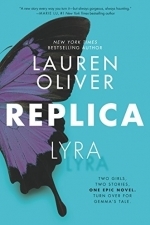
Replica is a fascinating novel about human cloning that is written from two points of view. It's really unique because it can be read in three different ways. The first is from Lena's perspective. Lena is a replica, or clone, and has only known a life at Haven. The second is from Gemma's point of view. Gemma is a normal girl who doesn't feel like she fits in. The final method, and way I chose to read the book, was alternating chapters. The two stories are woven together seamlessly and make for a great read.
On an island surrounded by guard towers and fences, ocean and marsh, alligators and water mocassins is Have - Lyra's home. Each day she is told when to eat, sleep and take her medication. Her life is not her own. It's not even considered a life by most of the staff who address her as "it".. if they recognize her at all.
Gemma attends high school and has two overprotective parents. she was very sick as a child and her parents never quite got over it. Gemma isn't even allowed to participate in gym, which doesn't help shield her from school bullies. Instead, it makes her more of a target. Her only true friend is April.
Somehow, Gemma and April manage to convince their parents to allow them to spend their spring break at April's grandparent's house in Florida. Just days before their trip, there is an explosion at Haven. Gemma overhears her parents fighting about it and suddenly she's not longer allowed on her trip. hurt and confused, Gemma begins to dig into Haven wondering why it is so important. She discovers a world of conspiracies and realized she must uncover the truth.
Catching a ride to Florida with a classmate, Pete, Gemma rebels for the first time in her life. She goes on a harrowing adventure and her path eventually crosses with Lyra's. Together, they begin to learn the truth and uncover life-altering information about Haven and themselves.
Both Lyra and Gemma are well-written characters that the reader can relate to. Lyra, or number 24, is new to the world and slow to trust. Gemma is caring and curious. Personally, I related to Gemma more than Lyra but I know a lot of people say the opposite. They are joined by the talkative and reliable Pete; the only person to ever make it to Haven Jake; and a fellow Haven resident number 72, or Caelum. Each boy has a unique personality and purpose in the story.
The world of Haven and the replicas is fascinating. Unfortunately, we only know as much as out protagonists do. I eagerly await more world building in future books. The backstory was a giant mystery involving Gemma's father, but she slowly discovers little pieces and the world is exposed to us bit by bit.
The story immediately draws you in and you can't put the book down (or at least I couldn't!) Recommended for fans of science fiction (or fact) and mystery young adult books. Even if you don't normally gravitate towards science related fiction, this book is very accessible. Fans of BBC's Orphan Black will find themselves in love with this novel. Definitely a must read!
On an island surrounded by guard towers and fences, ocean and marsh, alligators and water mocassins is Have - Lyra's home. Each day she is told when to eat, sleep and take her medication. Her life is not her own. It's not even considered a life by most of the staff who address her as "it".. if they recognize her at all.
Gemma attends high school and has two overprotective parents. she was very sick as a child and her parents never quite got over it. Gemma isn't even allowed to participate in gym, which doesn't help shield her from school bullies. Instead, it makes her more of a target. Her only true friend is April.
Somehow, Gemma and April manage to convince their parents to allow them to spend their spring break at April's grandparent's house in Florida. Just days before their trip, there is an explosion at Haven. Gemma overhears her parents fighting about it and suddenly she's not longer allowed on her trip. hurt and confused, Gemma begins to dig into Haven wondering why it is so important. She discovers a world of conspiracies and realized she must uncover the truth.
Catching a ride to Florida with a classmate, Pete, Gemma rebels for the first time in her life. She goes on a harrowing adventure and her path eventually crosses with Lyra's. Together, they begin to learn the truth and uncover life-altering information about Haven and themselves.
Both Lyra and Gemma are well-written characters that the reader can relate to. Lyra, or number 24, is new to the world and slow to trust. Gemma is caring and curious. Personally, I related to Gemma more than Lyra but I know a lot of people say the opposite. They are joined by the talkative and reliable Pete; the only person to ever make it to Haven Jake; and a fellow Haven resident number 72, or Caelum. Each boy has a unique personality and purpose in the story.
The world of Haven and the replicas is fascinating. Unfortunately, we only know as much as out protagonists do. I eagerly await more world building in future books. The backstory was a giant mystery involving Gemma's father, but she slowly discovers little pieces and the world is exposed to us bit by bit.
The story immediately draws you in and you can't put the book down (or at least I couldn't!) Recommended for fans of science fiction (or fact) and mystery young adult books. Even if you don't normally gravitate towards science related fiction, this book is very accessible. Fans of BBC's Orphan Black will find themselves in love with this novel. Definitely a must read!

Gareth von Kallenbach (980 KP) rated Brave (2012) in Movies
Aug 7, 2019
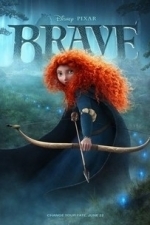
The digital wizards at Pixar have an incredible dossier of Academy award-winning animated films. Their latest film “Brave“, is a prime example of the bold new direction for the company behind such classics as “Finding Nemo“, “Toy Story“, “The Incredible’s“, and “Monsters, Inc.” just to name a few. This time out Scotland provides the setting for the animation masters to weave their magic, and they do in a splendid 3-D feast of sight, sound, and color that captures the breathtaking beauty of the Scottish Highlands.
For Princess Merida (Kelly Madonald), life is filled with joy and frustration. As the daughter to King Fergus (Billy Connolly), and Queen Elinor (Emma Thompson), she has to walk a fine line between the duties and expectation of her mother and her freewheeling lifestyle of daring and adventure. The young Princess is content to ride through the countryside astride her horse Angus, and perfect her already admirable archery skills.
When Merida learns that her parents have summoned the other major clans so that a worthy suitor can be chosen, Merida rebels openly at their plan and causes great embarrassment to her family during a competition. In a fit of rebellious anger, Merida rides into the woods, and comes upon a witch who promises to create for the young princess a spell that will forever change her destiny. Although not done out of malice, the spell has some on expected consequences that threatens the future of the kingdom as well as the safety of Merida’s family.
The film has some outstanding performances, not the least of which is Connolly, who was an absolute delight whenever his character was on screen. Supporting work by Craig Ferguson and Robbie Coltrane complement the leads well. Since my mother is a Scot, I am all-too-familiar with not only the history but culture of Scotland. I had been concerned when I first heard the project that it would play up on certain stereotypes and miss the true complexity and splendor of Scotland and its people, as well as it’s extremely rich history which is filled with numerous technical and literary achievements over the centuries.
Thankfully my concerns were allayed very early in the film not simply because of the amazing visual detail of the movie but also because of the lovable but quirky characters. The writers and animators managed to capture the very nature of the people and the culture, which is no easy thing in an animated film. Kudos for the casting of the mostly Scottish cast who played their roles with relish. I can honestly say hearing King Fergus address the clans brought to mind my aunts, uncles and cousins thanks to the distinct Scottish brogue. I especially liked the fact that when conflict erupted (of course) amongst even the best of friends, there are some very clever ways that laughs were gained without turning the characters into buffoons or being overly cute.
While the film plays it fairly safe with the story, Pixar’s first female heroine gives us a very fun and enjoyable tale that offers something for the entire family without talking down to the audience or having to resort to crude humor. A few scenes may be a bit intense for youngsters and while it will not be cited for any technological breakthroughs Brave, nonetheless, is highly entertaining.
For Princess Merida (Kelly Madonald), life is filled with joy and frustration. As the daughter to King Fergus (Billy Connolly), and Queen Elinor (Emma Thompson), she has to walk a fine line between the duties and expectation of her mother and her freewheeling lifestyle of daring and adventure. The young Princess is content to ride through the countryside astride her horse Angus, and perfect her already admirable archery skills.
When Merida learns that her parents have summoned the other major clans so that a worthy suitor can be chosen, Merida rebels openly at their plan and causes great embarrassment to her family during a competition. In a fit of rebellious anger, Merida rides into the woods, and comes upon a witch who promises to create for the young princess a spell that will forever change her destiny. Although not done out of malice, the spell has some on expected consequences that threatens the future of the kingdom as well as the safety of Merida’s family.
The film has some outstanding performances, not the least of which is Connolly, who was an absolute delight whenever his character was on screen. Supporting work by Craig Ferguson and Robbie Coltrane complement the leads well. Since my mother is a Scot, I am all-too-familiar with not only the history but culture of Scotland. I had been concerned when I first heard the project that it would play up on certain stereotypes and miss the true complexity and splendor of Scotland and its people, as well as it’s extremely rich history which is filled with numerous technical and literary achievements over the centuries.
Thankfully my concerns were allayed very early in the film not simply because of the amazing visual detail of the movie but also because of the lovable but quirky characters. The writers and animators managed to capture the very nature of the people and the culture, which is no easy thing in an animated film. Kudos for the casting of the mostly Scottish cast who played their roles with relish. I can honestly say hearing King Fergus address the clans brought to mind my aunts, uncles and cousins thanks to the distinct Scottish brogue. I especially liked the fact that when conflict erupted (of course) amongst even the best of friends, there are some very clever ways that laughs were gained without turning the characters into buffoons or being overly cute.
While the film plays it fairly safe with the story, Pixar’s first female heroine gives us a very fun and enjoyable tale that offers something for the entire family without talking down to the audience or having to resort to crude humor. A few scenes may be a bit intense for youngsters and while it will not be cited for any technological breakthroughs Brave, nonetheless, is highly entertaining.

Men's Hairstyles
Lifestyle and Photo & Video
App
Men's Hairstyles was the first hairstyle app focused on hairstyles for men. We have been perfecting...

Purple Phoenix Games (2266 KP) rated Ninja: Silent But Deadly in Tabletop Games
Aug 20, 2020
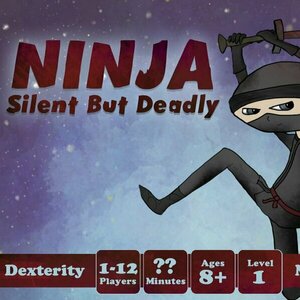

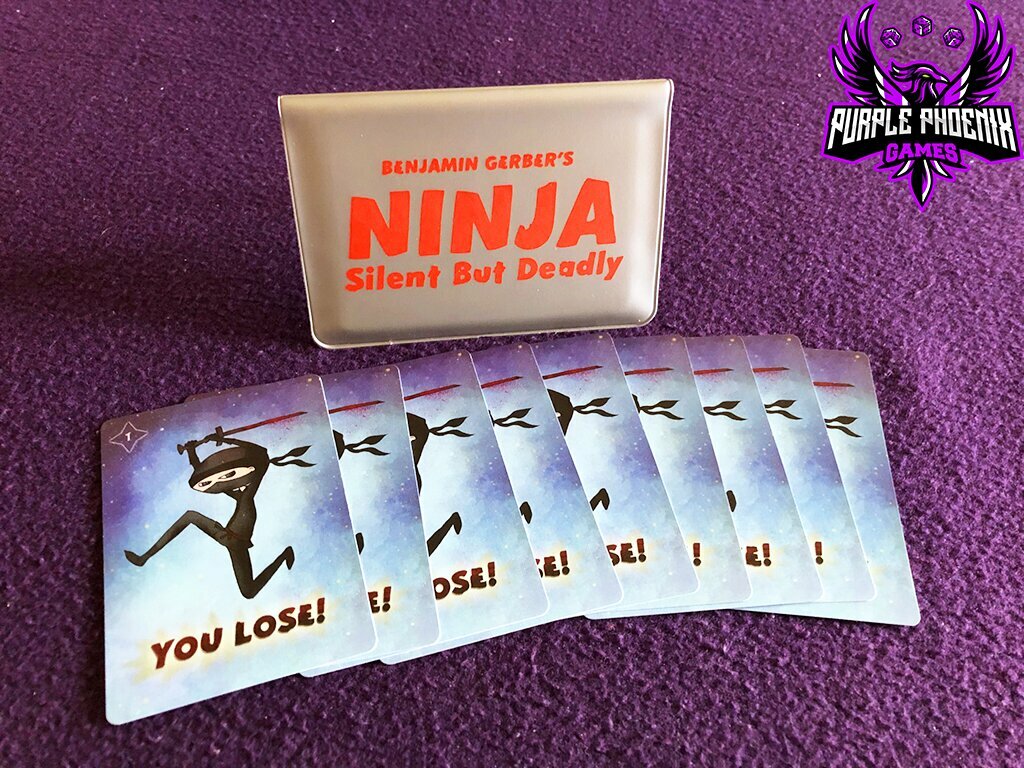
Playing games is so much fun, sometimes I wish I could play two games at the same time! Enter Ninja: Silent But Deadly. From the people who brought us Pretense, Button Shy Games delivers again with another meta-game card game that lasts the entire game night. So don’t get too caught up in the current game on the table, because there are Ninjas out to get you!
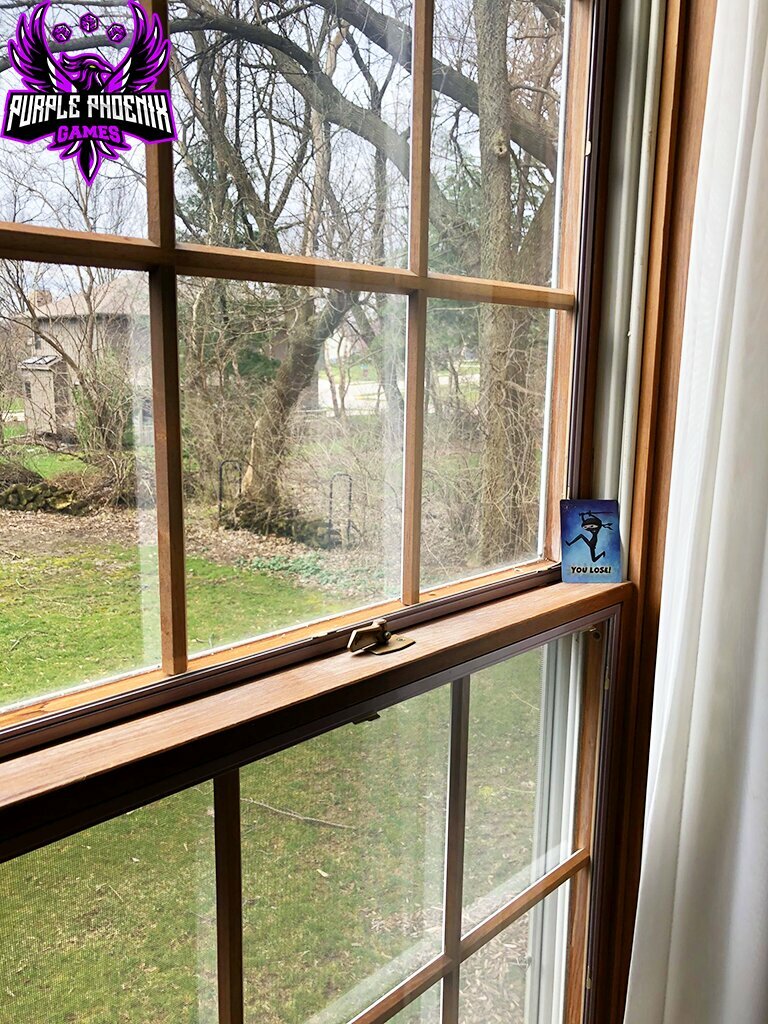
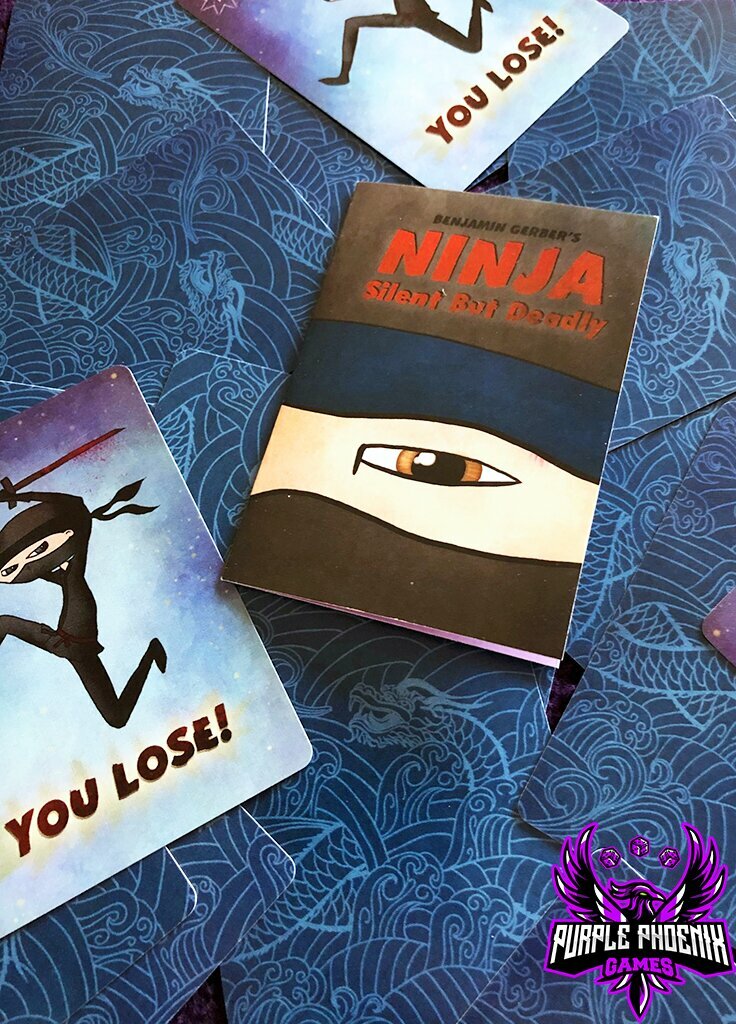
Ninja: Silent But Deadly (referred to simply as Ninja from here on out) is a party game of player elimination in which the goal is to be the last player standing. The setup is simple – each player receives 1 Ninja card. Yeah, that’s it. The gameplay is the fun part. Each player has until the end of the game night to hide/place their card in a spot where another player will be forced to see/find it. For example, maybe you drop some dice on the floor and ask your neighbor to pick it up for you. When they lean down, they see you also dropped your Ninja card as well! Upon their discovery, they are eliminated from the game and must forfeit their own Ninja card. The game continues with players being eliminated, until there is only one player left. That player is the winner! Be careful, though, because if another player sees you trying to sneak your Ninja card somewhere, they can call out “Ninja!” and you are eliminated from the game. It’s a game of stealth, cunning, and mistrust, and it makes for an entertaining experience.
Based on the above description, I’m sure you are thinking that Ninja is just a silly game. And you would be correct. It is no brain burner or king of strategy, but rather a fun way to keep the party engaged throughout the entire game night. Everyone has to be on their toes, and everyone is trying to come up with the most clever way to trick someone into finding their card. You have to be innovative and sly when hiding your card, as well as being wary of anything someone might ask you to do all night. Although games of player elimination can sometimes be cutthroat, Ninja feels light-hearted enough to be enjoyed by all gamers.
That being said, the problem with player elimination games is that only the players who have yet to be eliminated get to participate in the game to the fullest. If you are the first player out, the magic is kind of over and you just get to spend the rest of the game night as normal, watching others continue playing a game while you sit on the sidelines. That’s probably my biggest qualm with this game.
So overall, how is Ninja? I think it’s a cute little game. It is silly, light-hearted, and easily accessible to all ages and types of players. Having played Button Shy’s other meta-game, Pretense, however, I would say that Ninja falls a little flat. In Pretense, players are eliminated only if they have fulfilled the requirement on your individual role card. In Ninja, you are just automatically eliminated if you find a Ninja card. Pretense takes a little bit more strategy, and that makes the game more engaging for me. But all in all, Ninja: Silent But Deadly is a cute game that I will definitely bring out at larger game nights for some light-hearted fun! Purple Phoenix Games gives it a stealthy 5 / 12.
Ninja: Silent But Deadly (referred to simply as Ninja from here on out) is a party game of player elimination in which the goal is to be the last player standing. The setup is simple – each player receives 1 Ninja card. Yeah, that’s it. The gameplay is the fun part. Each player has until the end of the game night to hide/place their card in a spot where another player will be forced to see/find it. For example, maybe you drop some dice on the floor and ask your neighbor to pick it up for you. When they lean down, they see you also dropped your Ninja card as well! Upon their discovery, they are eliminated from the game and must forfeit their own Ninja card. The game continues with players being eliminated, until there is only one player left. That player is the winner! Be careful, though, because if another player sees you trying to sneak your Ninja card somewhere, they can call out “Ninja!” and you are eliminated from the game. It’s a game of stealth, cunning, and mistrust, and it makes for an entertaining experience.
Based on the above description, I’m sure you are thinking that Ninja is just a silly game. And you would be correct. It is no brain burner or king of strategy, but rather a fun way to keep the party engaged throughout the entire game night. Everyone has to be on their toes, and everyone is trying to come up with the most clever way to trick someone into finding their card. You have to be innovative and sly when hiding your card, as well as being wary of anything someone might ask you to do all night. Although games of player elimination can sometimes be cutthroat, Ninja feels light-hearted enough to be enjoyed by all gamers.
That being said, the problem with player elimination games is that only the players who have yet to be eliminated get to participate in the game to the fullest. If you are the first player out, the magic is kind of over and you just get to spend the rest of the game night as normal, watching others continue playing a game while you sit on the sidelines. That’s probably my biggest qualm with this game.
So overall, how is Ninja? I think it’s a cute little game. It is silly, light-hearted, and easily accessible to all ages and types of players. Having played Button Shy’s other meta-game, Pretense, however, I would say that Ninja falls a little flat. In Pretense, players are eliminated only if they have fulfilled the requirement on your individual role card. In Ninja, you are just automatically eliminated if you find a Ninja card. Pretense takes a little bit more strategy, and that makes the game more engaging for me. But all in all, Ninja: Silent But Deadly is a cute game that I will definitely bring out at larger game nights for some light-hearted fun! Purple Phoenix Games gives it a stealthy 5 / 12.
Gareth von Kallenbach (980 KP) rated Call of Duty: Advanced Warfare - Reckoning in Video Games
Jun 19, 2019
It is hard to believe that it is already time for the fourth and final DLC pack for Call of Duty: Advanced Warfare but the Reckoning DLC is here and completes Advanced Warfare in a big way.
The collection consists of four maps and the great finale of the Exo-Zombies series and is a very diverse and satisfying collection which can be purchased by itself or as part of a Season Pass.
The four maps are as follows…
Overwatch
Set in a luxury hotel, this map has plenty of courtyard battles and intense opulence to house your action. The highlight for me is seeing the Plasma Fountains ignite and using them to torch enemies that get in the kill zone.
The map has an emphasis on medium and long ranged combat so be prepared for plenty of sniping and camping when you enter the fray.
Quarantine
This was a really creative and fun map that was set in a Bio Lab where players have to battle amongst the labs and parking lots all the while avoiding an incinerator that comes on line during prolonged battles.
The close quarters really is great for Run and Gun players who want to reach the score streak and unleash and assault of ship-fired rounds on their enemies.
Fracture
Battling on an ice flow complete with drilling rigs and tubing Is a logistical challenge in and of itself. Now add in cracking ice, plenty of areas for enemies to hide and strike from and you will see why this is a real action-packed zone.
This was the first map that I played in the collection and I can say it is always one of my favorites when its turn in the rotation arises.
Swarm
This map is a real challenge as it has very close-set buildings and areas for enemies to hide and strike from. The long streets and numerous windows and ledges make this a place where ranged shooters, snipers, campers, and more thrive. It can be frustrating but getting the drop on a row of shooters who are waiting for the next person on the street below to come into range is highly satisfying.
Of course the maps are not the only thing this collection offers as the star-studded Exo-Zombies campaign comes to a conclusion as you battle deep in the heart of an underwater city against an unending legion of Undead.
I got right up to the end my second time playing it before our team was taken out but it was a very enjoyable and intense experience.
The Reckoning does not try to reinvent the wheel but instead focuses on giving core fans of the series more of what they love, intense action and new and creative ways to take down other players in detailed maps with plenty of challenge.
While it will not convert you if you were not a fan of Advanced Warfare, it will be a satisfying chapter for those who are fans.
http://sknr.net/2015/09/18/call-of-duty-advanced-warfare-reckoning/
The collection consists of four maps and the great finale of the Exo-Zombies series and is a very diverse and satisfying collection which can be purchased by itself or as part of a Season Pass.
The four maps are as follows…
Overwatch
Set in a luxury hotel, this map has plenty of courtyard battles and intense opulence to house your action. The highlight for me is seeing the Plasma Fountains ignite and using them to torch enemies that get in the kill zone.
The map has an emphasis on medium and long ranged combat so be prepared for plenty of sniping and camping when you enter the fray.
Quarantine
This was a really creative and fun map that was set in a Bio Lab where players have to battle amongst the labs and parking lots all the while avoiding an incinerator that comes on line during prolonged battles.
The close quarters really is great for Run and Gun players who want to reach the score streak and unleash and assault of ship-fired rounds on their enemies.
Fracture
Battling on an ice flow complete with drilling rigs and tubing Is a logistical challenge in and of itself. Now add in cracking ice, plenty of areas for enemies to hide and strike from and you will see why this is a real action-packed zone.
This was the first map that I played in the collection and I can say it is always one of my favorites when its turn in the rotation arises.
Swarm
This map is a real challenge as it has very close-set buildings and areas for enemies to hide and strike from. The long streets and numerous windows and ledges make this a place where ranged shooters, snipers, campers, and more thrive. It can be frustrating but getting the drop on a row of shooters who are waiting for the next person on the street below to come into range is highly satisfying.
Of course the maps are not the only thing this collection offers as the star-studded Exo-Zombies campaign comes to a conclusion as you battle deep in the heart of an underwater city against an unending legion of Undead.
I got right up to the end my second time playing it before our team was taken out but it was a very enjoyable and intense experience.
The Reckoning does not try to reinvent the wheel but instead focuses on giving core fans of the series more of what they love, intense action and new and creative ways to take down other players in detailed maps with plenty of challenge.
While it will not convert you if you were not a fan of Advanced Warfare, it will be a satisfying chapter for those who are fans.
http://sknr.net/2015/09/18/call-of-duty-advanced-warfare-reckoning/