
Search
Search results

Carma (21 KP) rated Untamed Cowboy (Gold Valley, #2) in Books
Jun 17, 2019

4.5 stars of out 5 for Untamed Cowboy by Maisey Yates
Kaylee Capshaw has loved Bennett Dodge for 17 years. Ever since he took pity on the new shy girl and became her friend. She spends her days saying WWBD (What would Bennett do) and really has no idea how to act otherwise. She needs to get him out of her head once and for all. But with his recent breakup with Olivia, could this finally be her time?
Bennett Dodge likes lists and plans. He had his life planned out, wife, kids, ranch all with Olivia. Then one day she falls in love with his friend Luke and his plan goes to hell. He was never in love with Olivia though, just the idea of her and the life he thought he wanted. His best friend Kaylee is there for him as always but something about her is making him look at her differently now. A surprise on his doorstep helps knock any other plans hed made right out the window.
Kaylee needs to go all in. Going all in with Bennett or all in with someone to take his place. She cant continue on this roller coaster of emotions where he is concerned. She doesnt want to lose their decades old friendship above anything though. When he calls in a panic she rushes to him ready to help him through whatever obstacle lies ahead.
As usual, Ms Yates blends the perfect tale of 2 people and their HEA. Throw in the obligatory family meddling, a 15-year-old Say What moment, and a casual offer for sex and you have the perfect mix of fun, love and family, Dodge Style.
Gold Valley continues on where Copper Ridge left off. A good, homegrown, family centered town, with Hot Cowboys of course. I cant wait to read the next chapter in Gold Valley, Good Time Cowboy!!
Kaylee Capshaw has loved Bennett Dodge for 17 years. Ever since he took pity on the new shy girl and became her friend. She spends her days saying WWBD (What would Bennett do) and really has no idea how to act otherwise. She needs to get him out of her head once and for all. But with his recent breakup with Olivia, could this finally be her time?
Bennett Dodge likes lists and plans. He had his life planned out, wife, kids, ranch all with Olivia. Then one day she falls in love with his friend Luke and his plan goes to hell. He was never in love with Olivia though, just the idea of her and the life he thought he wanted. His best friend Kaylee is there for him as always but something about her is making him look at her differently now. A surprise on his doorstep helps knock any other plans hed made right out the window.
Kaylee needs to go all in. Going all in with Bennett or all in with someone to take his place. She cant continue on this roller coaster of emotions where he is concerned. She doesnt want to lose their decades old friendship above anything though. When he calls in a panic she rushes to him ready to help him through whatever obstacle lies ahead.
As usual, Ms Yates blends the perfect tale of 2 people and their HEA. Throw in the obligatory family meddling, a 15-year-old Say What moment, and a casual offer for sex and you have the perfect mix of fun, love and family, Dodge Style.
Gold Valley continues on where Copper Ridge left off. A good, homegrown, family centered town, with Hot Cowboys of course. I cant wait to read the next chapter in Gold Valley, Good Time Cowboy!!

Gareth von Kallenbach (980 KP) rated Fantastic Beasts: Crimes of Grindelwald (2018) in Movies
Jun 19, 2019
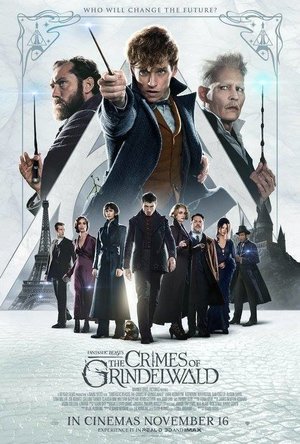


Newt Scamander (Eddie Redmayne), is back in the second installment of the
Fantastic Beasts series. The film opens with Grinderlwald (Johnny Depp),
conducting an elaborate escape from custody which in turn starts off a
search to find him and bring him to justice.
After a few months of fruitless searching; the Ministry of Magic offers
Newt a chance to have his travel ban lifted if he will locate and
eliminate Grindelwald. Newt refuses especially since he would have to
join his brother’s division as an Orator and instead opts to travel to
Paris to help Jacob and Queeenie find Tina. Newt still has strong
feelings for Tina and is eager to resolve a misunderstanding which has
arisen.
At the same time, Grindelwald as well as forces from the Ministry are
eagerly trying to find Credence (Ezra Miller), who has become obsessed
with finding his mother.
To say there is a lot going on would be an understatement as I have not
even touched upon Dumbledore (Jude Law) and his conflicts with the
Ministry over his unwillingness to fight Grindlelwald and you can get a
sense of just how busy and at times convoluted the plot can be.
There are plenty of nice visuals and the cast works well with one another
but the film has a darker tone than the previous one and there are aspects
of the film which will appeal to the hardcore fans but will be lost by
newer or more casual fans.
The entire films plays more as a setup to the next chapter in the series
so aside from a few moments, there is little real resolution as most of
the film is simply setting up what is to be the focus of the remaining
films.
While it does entertain; it does seem to be better suited to the hardcore
versus the casual fan who might need more than the magical splendor it
offers.
http://sknr.net/2018/11/15/fantastic-beasts-the-crimes-of-grindlewald/
Fantastic Beasts series. The film opens with Grinderlwald (Johnny Depp),
conducting an elaborate escape from custody which in turn starts off a
search to find him and bring him to justice.
After a few months of fruitless searching; the Ministry of Magic offers
Newt a chance to have his travel ban lifted if he will locate and
eliminate Grindelwald. Newt refuses especially since he would have to
join his brother’s division as an Orator and instead opts to travel to
Paris to help Jacob and Queeenie find Tina. Newt still has strong
feelings for Tina and is eager to resolve a misunderstanding which has
arisen.
At the same time, Grindelwald as well as forces from the Ministry are
eagerly trying to find Credence (Ezra Miller), who has become obsessed
with finding his mother.
To say there is a lot going on would be an understatement as I have not
even touched upon Dumbledore (Jude Law) and his conflicts with the
Ministry over his unwillingness to fight Grindlelwald and you can get a
sense of just how busy and at times convoluted the plot can be.
There are plenty of nice visuals and the cast works well with one another
but the film has a darker tone than the previous one and there are aspects
of the film which will appeal to the hardcore fans but will be lost by
newer or more casual fans.
The entire films plays more as a setup to the next chapter in the series
so aside from a few moments, there is little real resolution as most of
the film is simply setting up what is to be the focus of the remaining
films.
While it does entertain; it does seem to be better suited to the hardcore
versus the casual fan who might need more than the magical splendor it
offers.
http://sknr.net/2018/11/15/fantastic-beasts-the-crimes-of-grindlewald/
Raising Ryland: Our Story of Parenting a Transgender Child with No Strings Attached
Book
This powerful, moving story-which has already touched more than seven million through a viral video...
Gareth von Kallenbach (980 KP) rated The Amazing Spider-Man (2012) in Movies
Aug 7, 2019


Initially when a franchise reboots a series not five years from its last installment this can often be seen as a sign that they’ve run out of ideas. It was reportedly the inability to find a suitable script that drove director-producer Sam Raimi and the stars of the Spider-man series away from a possible fourth outing and forced Sony/Columbia start fresh.
Selecting the relatively new Marc Webb who, outside of “500 Days of Summer”, had worked on music videos and most recently directed episode of The Office and the pilot for Lone Star, seemed like a very odd choice to turn over the billion-dollar franchise. The selection of American-born English actor Andrew Garfield also seemed to be an interesting choice to don the tights of the wall crawler.
Thankfully this is exactly the fresh start that the series needed. Even though I went into the film with guarded and reserved expectations I must say that I’m absolutely delighted with how the final product came out as this is a very fresh and faithful adaptation of the beloved comic book character that, in my opinion is the best adaptation to date on film.
The screenplay by James Vanderbilt was based on a story credited to three other writers all of whom clearly understand the character and the source material and are focused first and foremost with being respectful to it rather than putting their own unique stamp and take on the franchise.
The film does take a little bit of liberty by showing Peter Parker’s parents as they place young Peter in the custody of Ben and May Parker (Martin Sheen and Sally Fields) as they flee into a rainy night from implied danger, never to be seen again.
The film continues with teenage Peter (Andrew Garfield), plodding his way through high school. As brilliant as Peter is academically, he is extremely awkward around girls especially the lovely Gwen Stacy (Emma Stone), who never fails to catch his eye. When a clue from his father’s past arises, Peter finds himself at Oscorp where Gwen works as an intern. Peter also finds himself on the radar of his dad’s former partner Dr. Curt Connors (Rhys Ifans), who becomes intrigued by young Peter’s scientific theories and even more so in his abilities when he learns that he is the offspring of his former partner.
Dr. Connors is working on cross species genetics and hopes that not only will it someday replaces missing arm, but will also pave a bold new direction for humanity. During a visit to the lab Peter, is bitten by a radioactive spider, and as any fan of the series knows, begins to exhibit amazing strength, agility, and perception, as well as the ability to walk on walls and cling to ceilings. In a very refreshing return to form, Peter fashions his famous web slingers rather than have them be organic as the previous film series did.
When a twist of fate puts Peter on the path of vengeance, he becomes a masked vigilante who uses his newfound abilities to rid New York some of its less pleasant citizens. These activities do not sit well with Captain Stacy (Denis Leary), who also happens to be Gwen’s father. As Peter and Gwen become closer, the duality of hiding his new identity from Capt. Stacy and Aunt May becomes even more imperative.
Naturally, it would not be much of a superhero film without a super villain, and Dr. Connors is more than willing to step up to this. Faced with pressure from his bosses he decides to use an experimental serum on himself. At first he is delighted as he seems to regrow his lost limb, but then in a Jekyll & Hyde-like transformation he transforms into a gigantic lizard creature bent on revenge and destruction as he attempts to complete a plan that will devastate millions of New York citizens.
Since Peter helped provide the equation that led to the formula that transform Dr. Connors, he feels obligated to stop the raging creature and to save his mentor no matter the cost. What follows are some truly spectacular action sequences including sewer battles in an extremely memorable finale across the Manhattan skyline.
While the film did take its time getting started as it established its back story and introduced the characters, once it got rolling it was an extremely fun and exhilarating ride. Garfield and Stone have a very good chemistry with one another and the reports of them recently dating off screen further solidifies their on-screen bond. Garfield wonderfully captures the conflicted emotions of Peter Parker as well as the brilliantly awkward genius that he is.
He runs the gamut of emotions from showing his anger and frustration to the dopey awkwardness of his interactions with Gwen and very believable manner. When he becomes infused with his new abilities you can almost share the glee that he has as he swings and flips around the landscape. The sheltered, socially awkward young man disappears when he dons the mask. He’s free to let himself go and Garfield does this with a childlike delight as well as the trademark quips and wisecracks that made the character such a beloved icon.
Garfield handles the physical duties of the role quite well and shines both in and out of the costume. I thought Tobey Maguire did a fantastic job bringing the character to life previously, but in my opinion Garfield has captured the essence of Peter Parker/ Spider-man and made it his own with a truly wonderful performance all around.
Stone does a great job as the love interest in the film as she is more than just eye candy and the typical damsel in distress far too common with this type of film. She challenges Peter and you can see some gleeful delight in her eyes when Peter awkwardly stumbles around her in an attempt to ask her out. Because she clearly enjoys the situation Gwen is not about to make it any easier on Peter, even though she’s been waiting for him to muster the courage for ages. She’s a strong and determined woman who gives a good range of emotions in her scenes and complements Garfield exceptionally well.
The supporting cast was very good especially Leary and Fields and Ifans does a good job as the quietly restrained Connors. In what could’ve easily been a scenery chewing, over-the-top Machiavellian bad guy, Ifans portrays Connors as a very sympathetic and understandable figure. He is a scientist first and foremost who is trying to do what he believes is right. He is not suited for the political machinations of a large corporation and when he begins this transformation and the animal side takes over there is still a hint of humanity amongst all the CGI work for the re-imagined Lizard.
While it did take me a while to get used to the look of The Lizard having become accustomed to his portrayal in comics and cartoons, I have to say it was a good updating it still stayed faithful to the essence of the original character.
Webb wisely decided to shoot in 3-D and not do a post filming conversion. It is the visually captivating and at times stunning cinema photography that really sets the tone for the film. You can truly get an idea of what it is like to be Spider-man as he swings and flips through the city and the point of view shots of his web firing out to latch onto objects and take down opponents are a lot of fun. Webb clearly knows the subject matter and gets the most out of his very talented cast and tells a very entertaining yet human action story and lets the effects support the film rather than carry it.
The film was much better than “Spider-man 3”. I am so happy that the franchise is in good hands and is moving forward in the right direction. Although the movie did take a while to get up to speed once it got rolling I did not want it to end, and I commented to my wife that I don’t want to have to wait 2 to 3 years for the next installment of the film I’m ready for more now. As a lifelong fan of comic I can honestly say I am beyond delighted with the new film, cast, director, and direction for the series.
Selecting the relatively new Marc Webb who, outside of “500 Days of Summer”, had worked on music videos and most recently directed episode of The Office and the pilot for Lone Star, seemed like a very odd choice to turn over the billion-dollar franchise. The selection of American-born English actor Andrew Garfield also seemed to be an interesting choice to don the tights of the wall crawler.
Thankfully this is exactly the fresh start that the series needed. Even though I went into the film with guarded and reserved expectations I must say that I’m absolutely delighted with how the final product came out as this is a very fresh and faithful adaptation of the beloved comic book character that, in my opinion is the best adaptation to date on film.
The screenplay by James Vanderbilt was based on a story credited to three other writers all of whom clearly understand the character and the source material and are focused first and foremost with being respectful to it rather than putting their own unique stamp and take on the franchise.
The film does take a little bit of liberty by showing Peter Parker’s parents as they place young Peter in the custody of Ben and May Parker (Martin Sheen and Sally Fields) as they flee into a rainy night from implied danger, never to be seen again.
The film continues with teenage Peter (Andrew Garfield), plodding his way through high school. As brilliant as Peter is academically, he is extremely awkward around girls especially the lovely Gwen Stacy (Emma Stone), who never fails to catch his eye. When a clue from his father’s past arises, Peter finds himself at Oscorp where Gwen works as an intern. Peter also finds himself on the radar of his dad’s former partner Dr. Curt Connors (Rhys Ifans), who becomes intrigued by young Peter’s scientific theories and even more so in his abilities when he learns that he is the offspring of his former partner.
Dr. Connors is working on cross species genetics and hopes that not only will it someday replaces missing arm, but will also pave a bold new direction for humanity. During a visit to the lab Peter, is bitten by a radioactive spider, and as any fan of the series knows, begins to exhibit amazing strength, agility, and perception, as well as the ability to walk on walls and cling to ceilings. In a very refreshing return to form, Peter fashions his famous web slingers rather than have them be organic as the previous film series did.
When a twist of fate puts Peter on the path of vengeance, he becomes a masked vigilante who uses his newfound abilities to rid New York some of its less pleasant citizens. These activities do not sit well with Captain Stacy (Denis Leary), who also happens to be Gwen’s father. As Peter and Gwen become closer, the duality of hiding his new identity from Capt. Stacy and Aunt May becomes even more imperative.
Naturally, it would not be much of a superhero film without a super villain, and Dr. Connors is more than willing to step up to this. Faced with pressure from his bosses he decides to use an experimental serum on himself. At first he is delighted as he seems to regrow his lost limb, but then in a Jekyll & Hyde-like transformation he transforms into a gigantic lizard creature bent on revenge and destruction as he attempts to complete a plan that will devastate millions of New York citizens.
Since Peter helped provide the equation that led to the formula that transform Dr. Connors, he feels obligated to stop the raging creature and to save his mentor no matter the cost. What follows are some truly spectacular action sequences including sewer battles in an extremely memorable finale across the Manhattan skyline.
While the film did take its time getting started as it established its back story and introduced the characters, once it got rolling it was an extremely fun and exhilarating ride. Garfield and Stone have a very good chemistry with one another and the reports of them recently dating off screen further solidifies their on-screen bond. Garfield wonderfully captures the conflicted emotions of Peter Parker as well as the brilliantly awkward genius that he is.
He runs the gamut of emotions from showing his anger and frustration to the dopey awkwardness of his interactions with Gwen and very believable manner. When he becomes infused with his new abilities you can almost share the glee that he has as he swings and flips around the landscape. The sheltered, socially awkward young man disappears when he dons the mask. He’s free to let himself go and Garfield does this with a childlike delight as well as the trademark quips and wisecracks that made the character such a beloved icon.
Garfield handles the physical duties of the role quite well and shines both in and out of the costume. I thought Tobey Maguire did a fantastic job bringing the character to life previously, but in my opinion Garfield has captured the essence of Peter Parker/ Spider-man and made it his own with a truly wonderful performance all around.
Stone does a great job as the love interest in the film as she is more than just eye candy and the typical damsel in distress far too common with this type of film. She challenges Peter and you can see some gleeful delight in her eyes when Peter awkwardly stumbles around her in an attempt to ask her out. Because she clearly enjoys the situation Gwen is not about to make it any easier on Peter, even though she’s been waiting for him to muster the courage for ages. She’s a strong and determined woman who gives a good range of emotions in her scenes and complements Garfield exceptionally well.
The supporting cast was very good especially Leary and Fields and Ifans does a good job as the quietly restrained Connors. In what could’ve easily been a scenery chewing, over-the-top Machiavellian bad guy, Ifans portrays Connors as a very sympathetic and understandable figure. He is a scientist first and foremost who is trying to do what he believes is right. He is not suited for the political machinations of a large corporation and when he begins this transformation and the animal side takes over there is still a hint of humanity amongst all the CGI work for the re-imagined Lizard.
While it did take me a while to get used to the look of The Lizard having become accustomed to his portrayal in comics and cartoons, I have to say it was a good updating it still stayed faithful to the essence of the original character.
Webb wisely decided to shoot in 3-D and not do a post filming conversion. It is the visually captivating and at times stunning cinema photography that really sets the tone for the film. You can truly get an idea of what it is like to be Spider-man as he swings and flips through the city and the point of view shots of his web firing out to latch onto objects and take down opponents are a lot of fun. Webb clearly knows the subject matter and gets the most out of his very talented cast and tells a very entertaining yet human action story and lets the effects support the film rather than carry it.
The film was much better than “Spider-man 3”. I am so happy that the franchise is in good hands and is moving forward in the right direction. Although the movie did take a while to get up to speed once it got rolling I did not want it to end, and I commented to my wife that I don’t want to have to wait 2 to 3 years for the next installment of the film I’m ready for more now. As a lifelong fan of comic I can honestly say I am beyond delighted with the new film, cast, director, and direction for the series.

Mandy and G.D. Burkhead (26 KP) rated The Grey Bastards in Books
May 20, 2018
Shelf Life – The Grey Bastards Exemplifies Grimdark Fantasy at Its Damn Finest
Contains spoilers, click to show
The Grey Bastards is a fun, foul-mouthed read. If you’re turned off by bad language, steamy sex, or a good plot with plenty of action and twists, then this book isn’t for you. The Grey Bastards falls into the fantasy sub-genre known as grimdark. Where high fantasy has your Tolkien beautiful and noble elves, dwarves, humans, and wizards with epic battles between good and evil, grimdark takes all of that and covers it in shit, pus, and blood. Notice how in high fantasy nobody ever takes a piss or fucks? In grimdark, everyone does.
But don’t be fooled into thinking this book will be any less intelligent, epic, or heartfelt for it. The Grey Bastards is all of that and more. The novel follows Jackal, a half-breed orc living in the Lot Lands, the barren desert wasteland of Hispartha. He is a Grey Bastard, one of many half-orc hoofs, each protecting its own small town in the Lots. Members of a hoof are elite warriors that ride out on their Barbarians—giant warthogs—and slaughter invading bands of orcs.
Hispartha is a vibrant world, with a mix of fantastical species (orcs, half-orcs, elves, humans, halflings, and centaurs) with unique cultures and religions. Hispartha itself takes influences from Reconquista Spain, which is especially noticeable in the nomenclature, geography, and architecture.
The primarily atheistic half-orcs recently won their freedom from slavery at the hands of humans. Humans treat the half-orcs like second-class citizens, but tolerate them because of their strength, using them as a shield from the orcs. The elves are beautiful, reclusive, and probably the most cliché; there is one important elf character, but for the most part, we don’t get a good look into their culture in the first book. The centaurs worship Romanesque deities and go on crazed, Bacchanalian killing sprees during the blood moon.
Besides the half-orcs, the halflings are perhaps the most interesting. I still have a hard time visualizing them, trying to figure out if they are thin, pixie-like creatures or more stocky like dwarves. Their small stature and black skin makes me think of pygmies. They worship a god they expect will reincarnate someday, (view spoiler)
One thing that has always annoyed me about fantasy is that many authors feel that the characters of their world, being pre-industrial and thus “medieval,” must all be white, straight, Christian (or proto-Christian), cisgender males. If a woman appears at all is to act as the damsel, prize, or, if she’s lucky, a mystical enchantress to guide the heroes or provide a maguffin. It has come to the point in which this has become a tired and accepted baseline for fantasy. I don’t necessarily think that these fantasy authors are intentionally trying to be uninclusive, so much as they just seem to forget that other groups of people can exist in fantasy thanks to its fathers, Tolkien and Lewis.
But enough with my rant, the purpose of which is to highlight why I am often drawn to grimdark fantasy: at the very least I know that women, people of color, lgbt people, and other religions will be present, even if they are often victimized. This is because grimdark fantasy honestly depicts the horrors of rape, war, murder, slavery, and racism (or rather, speciesism in most cases) and has heroes and villains that are morally grey.
However, many authors describe these atrocities and then leave it at that, assuming that simply depicting them is enough to make a book mature and meaningful. They often fail to make any sort of statement on evil, and thus can seem to be, at best, blindly accepting it and, at worst, glorifying it (this often happens in the cases of magnificent bastard characters, who are absolute monsters but are so charming you almost respect or like them).
Jonathan French, however, does not fall short of the mark as many authors do, and for two main reasons: humor and humanity.
Let’s start with the humor. This book is hilarious. I mean in the I literally laughed out loud while reading it way. Sure, the jokes are often crass, but I have a dirty mind, so inappropriate humor is my favorite kind. The dialogue is especially top-notch, and the interactions between Jackal and his friends Fetching and Oats feel genuine, full of in-jokes, insults, and sexually-charged humor, all of which are exactly how I interact with my own close friends. And every major character in this book is so damn witty that I’m honestly jealous of them. If I could be quick enough to make even one of their zingers at the right time in a conversation, I would feel proud of myself for the rest of the day.
Humor is necessary to prevent any grimdark fantasy from becoming too over-the-top or depressing. And honestly, humor is needed most when the world is a dark and frightening place. But too much humor could accidentally downplay the point of grimdark: the brutally honest depiction of the atrocities that people are capable of.
And this is where it is important to have an element of humanity. By this I mean that the “good guys” must make some action or statement on those atrocities. Too often I read or watch hardened badass characters with no emotion who can watch a person get tortured and killed without flinching (maybe even do it themselves) and who never stop to question the nature of their society (even as part of their character growth), and I have difficulty finding them at all relatable or even the least bit interesting.
Now, often for this type of character, he or she is dead inside as a coping mechanism and part of their character arc is learning to allow themselves to feel their repressed emotions: heartbreak, anger, fear, etc. This can be done very well (see The Hunger Games for a great example—dystopian scifi and grimdark fantasy have very similar undertones). But most times it just ends up falling flat.
But Jackal already starts out with more personality than most grimdark protagonists. He is a humorous and light-hearted person. Sure, he lives in a desert wasteland, his race is entirely created by rape, he’s treated as a second-class citizen, and his life and the lives of those around him are in constant danger of rape and/or murder by invading orcs or blood-crazed centaurs. But despite all of that, he still has a sense of humor, people he loves, a community, ambitions, moral code, and all of the other things that these protagonists are often lacking.
Don’t get me wrong, he can be an asshole, and he’s often acts rashly before he thinks. But the scene that really stuck with me the most was [when Jackal and the wizard Crafty come across an unconscious elf sex-slave. I was expecting him to say something along the lines of “There’s nothing we can do for her, we have to save ourselves” or “This isn’t any of our business” or “It would be best to just put her out of her mercy.” These are the typical lines that a grimdark protagonist might utter while their companion—accused of being a bleeding heart—frees the slave. But this was not the case. Jackal and Crafty both immediately set out to free the girl and steal her away from her owner, despite the danger to themselves. And when he comes across an entire castle-full of these women, Jackal again sets about freeing them without a moment’s hesitation. (hide spoiler)]
And it’s no surprise that Jackal has a serious problem with rape. As I’ve mentioned before, half-orcs are entirely the product of roving bands of orcs raping human, elven, or even half-orc women. [When Jackal learns that Starling, the elf slave he rescued, is pregnant with a half-orc baby, he is not only furious with the orcs that gang-raped her, but also disturbed by the fact that elven society shuns any of their women who have been raped, and that these victims often end up taking their own lives rather than give birth to an impure half-elf. (hide spoiler)]
Furthermore, Jackal, unlike many people in Hispartha, does not buy into misogyny or sexism. His best friend Fetching is the first female half-orc to have joined a group of riders. Not only does Jackal respect Fetching, he understands the emotional turmoil that she is dealing with being the first female rider and how she overcompensates as a result to earn the respect of the other men.
While there is quite a bit of speciesism (pretty much none of the species get along with one another), the inhabitants of Hispartha come in every skin color and nobody gives a damn. Furthermore, sexuality is primarily treated as each person’s individual preference and nobody else’s business. While characters may make jokes about acting “backy” (gay), these are made in good humor between friends, and nobody gets particularly offended by them. Fetching is herself openly bisexual (though she seems to suppress her heterosexual desires more than her homosexual ones out of that same need to be “one of the boys”), and Oats and Jackal are one of my favorite bromantic pairings.
Grimdark fantasy can often be depressing to read. But Jonathan French does an excellent job of infusing hope into his narrative. The story actually has a happier ending than I was expecting. [I was especially pleased when Jackal chooses Fetching to be the new leader of the hoof (she is voted in unanimously by the other riders). I find it incredibly annoying in books and movies when revolutionaries/usurpers decide to appoint themselves leaders, as the former does not qualify you for the latter. Part of Jackal’s arc is realizing that he is not meant to lead the hoof like he’d once desired. (hide spoiler)]
For the sequel, The True Bastards, I’m hoping to see [if a cure can be found for the thrice-blood child now infected with plague, how Fetching is doing leading the hoof, and what the mysterious Starling is up to (I don’t buy for a second that she’s killed herself). And of course, I fully expect that Jackal is going to have to fulfill his empty promise to the halfling’s resurrected god, Belico.
But don’t be fooled into thinking this book will be any less intelligent, epic, or heartfelt for it. The Grey Bastards is all of that and more. The novel follows Jackal, a half-breed orc living in the Lot Lands, the barren desert wasteland of Hispartha. He is a Grey Bastard, one of many half-orc hoofs, each protecting its own small town in the Lots. Members of a hoof are elite warriors that ride out on their Barbarians—giant warthogs—and slaughter invading bands of orcs.
Hispartha is a vibrant world, with a mix of fantastical species (orcs, half-orcs, elves, humans, halflings, and centaurs) with unique cultures and religions. Hispartha itself takes influences from Reconquista Spain, which is especially noticeable in the nomenclature, geography, and architecture.
The primarily atheistic half-orcs recently won their freedom from slavery at the hands of humans. Humans treat the half-orcs like second-class citizens, but tolerate them because of their strength, using them as a shield from the orcs. The elves are beautiful, reclusive, and probably the most cliché; there is one important elf character, but for the most part, we don’t get a good look into their culture in the first book. The centaurs worship Romanesque deities and go on crazed, Bacchanalian killing sprees during the blood moon.
Besides the half-orcs, the halflings are perhaps the most interesting. I still have a hard time visualizing them, trying to figure out if they are thin, pixie-like creatures or more stocky like dwarves. Their small stature and black skin makes me think of pygmies. They worship a god they expect will reincarnate someday, (view spoiler)
One thing that has always annoyed me about fantasy is that many authors feel that the characters of their world, being pre-industrial and thus “medieval,” must all be white, straight, Christian (or proto-Christian), cisgender males. If a woman appears at all is to act as the damsel, prize, or, if she’s lucky, a mystical enchantress to guide the heroes or provide a maguffin. It has come to the point in which this has become a tired and accepted baseline for fantasy. I don’t necessarily think that these fantasy authors are intentionally trying to be uninclusive, so much as they just seem to forget that other groups of people can exist in fantasy thanks to its fathers, Tolkien and Lewis.
But enough with my rant, the purpose of which is to highlight why I am often drawn to grimdark fantasy: at the very least I know that women, people of color, lgbt people, and other religions will be present, even if they are often victimized. This is because grimdark fantasy honestly depicts the horrors of rape, war, murder, slavery, and racism (or rather, speciesism in most cases) and has heroes and villains that are morally grey.
However, many authors describe these atrocities and then leave it at that, assuming that simply depicting them is enough to make a book mature and meaningful. They often fail to make any sort of statement on evil, and thus can seem to be, at best, blindly accepting it and, at worst, glorifying it (this often happens in the cases of magnificent bastard characters, who are absolute monsters but are so charming you almost respect or like them).
Jonathan French, however, does not fall short of the mark as many authors do, and for two main reasons: humor and humanity.
Let’s start with the humor. This book is hilarious. I mean in the I literally laughed out loud while reading it way. Sure, the jokes are often crass, but I have a dirty mind, so inappropriate humor is my favorite kind. The dialogue is especially top-notch, and the interactions between Jackal and his friends Fetching and Oats feel genuine, full of in-jokes, insults, and sexually-charged humor, all of which are exactly how I interact with my own close friends. And every major character in this book is so damn witty that I’m honestly jealous of them. If I could be quick enough to make even one of their zingers at the right time in a conversation, I would feel proud of myself for the rest of the day.
Humor is necessary to prevent any grimdark fantasy from becoming too over-the-top or depressing. And honestly, humor is needed most when the world is a dark and frightening place. But too much humor could accidentally downplay the point of grimdark: the brutally honest depiction of the atrocities that people are capable of.
And this is where it is important to have an element of humanity. By this I mean that the “good guys” must make some action or statement on those atrocities. Too often I read or watch hardened badass characters with no emotion who can watch a person get tortured and killed without flinching (maybe even do it themselves) and who never stop to question the nature of their society (even as part of their character growth), and I have difficulty finding them at all relatable or even the least bit interesting.
Now, often for this type of character, he or she is dead inside as a coping mechanism and part of their character arc is learning to allow themselves to feel their repressed emotions: heartbreak, anger, fear, etc. This can be done very well (see The Hunger Games for a great example—dystopian scifi and grimdark fantasy have very similar undertones). But most times it just ends up falling flat.
But Jackal already starts out with more personality than most grimdark protagonists. He is a humorous and light-hearted person. Sure, he lives in a desert wasteland, his race is entirely created by rape, he’s treated as a second-class citizen, and his life and the lives of those around him are in constant danger of rape and/or murder by invading orcs or blood-crazed centaurs. But despite all of that, he still has a sense of humor, people he loves, a community, ambitions, moral code, and all of the other things that these protagonists are often lacking.
Don’t get me wrong, he can be an asshole, and he’s often acts rashly before he thinks. But the scene that really stuck with me the most was [when Jackal and the wizard Crafty come across an unconscious elf sex-slave. I was expecting him to say something along the lines of “There’s nothing we can do for her, we have to save ourselves” or “This isn’t any of our business” or “It would be best to just put her out of her mercy.” These are the typical lines that a grimdark protagonist might utter while their companion—accused of being a bleeding heart—frees the slave. But this was not the case. Jackal and Crafty both immediately set out to free the girl and steal her away from her owner, despite the danger to themselves. And when he comes across an entire castle-full of these women, Jackal again sets about freeing them without a moment’s hesitation. (hide spoiler)]
And it’s no surprise that Jackal has a serious problem with rape. As I’ve mentioned before, half-orcs are entirely the product of roving bands of orcs raping human, elven, or even half-orc women. [When Jackal learns that Starling, the elf slave he rescued, is pregnant with a half-orc baby, he is not only furious with the orcs that gang-raped her, but also disturbed by the fact that elven society shuns any of their women who have been raped, and that these victims often end up taking their own lives rather than give birth to an impure half-elf. (hide spoiler)]
Furthermore, Jackal, unlike many people in Hispartha, does not buy into misogyny or sexism. His best friend Fetching is the first female half-orc to have joined a group of riders. Not only does Jackal respect Fetching, he understands the emotional turmoil that she is dealing with being the first female rider and how she overcompensates as a result to earn the respect of the other men.
While there is quite a bit of speciesism (pretty much none of the species get along with one another), the inhabitants of Hispartha come in every skin color and nobody gives a damn. Furthermore, sexuality is primarily treated as each person’s individual preference and nobody else’s business. While characters may make jokes about acting “backy” (gay), these are made in good humor between friends, and nobody gets particularly offended by them. Fetching is herself openly bisexual (though she seems to suppress her heterosexual desires more than her homosexual ones out of that same need to be “one of the boys”), and Oats and Jackal are one of my favorite bromantic pairings.
Grimdark fantasy can often be depressing to read. But Jonathan French does an excellent job of infusing hope into his narrative. The story actually has a happier ending than I was expecting. [I was especially pleased when Jackal chooses Fetching to be the new leader of the hoof (she is voted in unanimously by the other riders). I find it incredibly annoying in books and movies when revolutionaries/usurpers decide to appoint themselves leaders, as the former does not qualify you for the latter. Part of Jackal’s arc is realizing that he is not meant to lead the hoof like he’d once desired. (hide spoiler)]
For the sequel, The True Bastards, I’m hoping to see [if a cure can be found for the thrice-blood child now infected with plague, how Fetching is doing leading the hoof, and what the mysterious Starling is up to (I don’t buy for a second that she’s killed herself). And of course, I fully expect that Jackal is going to have to fulfill his empty promise to the halfling’s resurrected god, Belico.

Text Extractor & Translator
Travel and Utilities
App
Do you want to read a restaurant menu, a manual or a road side billboard written in a language that...
Gareth von Kallenbach (980 KP) rated Call of Duty: Black Ops 4 in Video Games
Jun 19, 2019
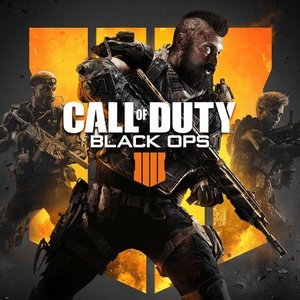
The latest in the popular Call of Duty series has arrived with Call of Duty: Black Ops IIII. The game has made the controversial decision to forgo the traditional campaign in favor of a Battle Royale mode known as Blackout and a more expansive online experience which includes more Zombie modes and a greater emphasis on gameplay.
I played the game first at E3 and then again during the Beta phases for the game so I had a decent familiarity with what to expect when the full release version of the game arrived.
After several days of playing the game, I have to say it is to me a mixed bag and many aspects of it disappointed me which is very frustrating as fan of the series since the very first game.
The look and feel of the game does not come across to me as a new game but instead to me look and play like DLC for Call of Duty: Black Ops 3. Many of the maps seem familiar and have been updated from their appearances in previous games. The same holds true for the weapons and kill streaks. I am not saying it is not fun, but it all has a sense of having seen most of it before.
Another very annoying change to the game is the severe limitation of grenades in the game. Usually a player has a grenade option which comes in handy when Snipers setup behind cover. Without the ability to lob a grenade to get Snipers out from cover, players are easy pickings, especially when the first appear on the screen. You can unload a full clip into a player at a distance and still end up dead with one shot from a sniper. As such you have to wait until you reach level 42 in order to add them to your customized loadout and even then they are very Nerfed from what players have come to expect.
The multiplayer modes are what you have come to expect as there are the Team Deathmatch variations as well as the Capture and Control modes and a new mode called Heist where players need to capture or prevent the capture of a target.
For me the most enjoyable aspect of the game was the Zombie modes as not only were the players I was matched with usually very helpful, but they were also much friendlier than many of the other people I encountered.
The Blackout mode is very popular with gamers but not being a fan of the One and Done mode of play, I found myself enjoying the vast details of the map and preferring to work with a team, capturing vehicles, and such. I have seen multiple players unload point blank on a player in this mode only to see them walk away and one shot kill their attackers. This is either a hack or an example of how imbalanced things can be at times and you will see multiple instances of players taking numerous hits and walking away while others go down with one shot.
Black Ops IIII does not have a regenerative health system and instead requires players to use a timed injection in order to restore health.
This is all designed to foster teamwork and to make the game more appealing to the eSports community. While this is nice, it deviates from much of what has made the game so appealing from the start.
The game to me seems like it was hurried to market as it released on October 12th vs the traditional November release date. I am sure a big part of this was a desire to beat Red Dead Redemption 2 to market but in doing so it seems that things are missing from the final product.
There is much to like about the game as it is still an exciting and intense experience but to me is the first Call of Duty game to not feel shiny and new but instead more of the same in many cases.
The developers have supported the game with numerous updates and there are more on the way as well as planned DLC down the road so the game as it is now is likely to change in the next few months as more feedback is given to developers and new features are added.
Hopefully they will also look to add a campaign at a later date as although it is fun, it seems lacking and dated in many aspects as the changes seem like a step back to me rather than progress.
http://sknr.net/2018/10/23/call-of-duty-black-ops-iiii-2/
I played the game first at E3 and then again during the Beta phases for the game so I had a decent familiarity with what to expect when the full release version of the game arrived.
After several days of playing the game, I have to say it is to me a mixed bag and many aspects of it disappointed me which is very frustrating as fan of the series since the very first game.
The look and feel of the game does not come across to me as a new game but instead to me look and play like DLC for Call of Duty: Black Ops 3. Many of the maps seem familiar and have been updated from their appearances in previous games. The same holds true for the weapons and kill streaks. I am not saying it is not fun, but it all has a sense of having seen most of it before.
Another very annoying change to the game is the severe limitation of grenades in the game. Usually a player has a grenade option which comes in handy when Snipers setup behind cover. Without the ability to lob a grenade to get Snipers out from cover, players are easy pickings, especially when the first appear on the screen. You can unload a full clip into a player at a distance and still end up dead with one shot from a sniper. As such you have to wait until you reach level 42 in order to add them to your customized loadout and even then they are very Nerfed from what players have come to expect.
The multiplayer modes are what you have come to expect as there are the Team Deathmatch variations as well as the Capture and Control modes and a new mode called Heist where players need to capture or prevent the capture of a target.
For me the most enjoyable aspect of the game was the Zombie modes as not only were the players I was matched with usually very helpful, but they were also much friendlier than many of the other people I encountered.
The Blackout mode is very popular with gamers but not being a fan of the One and Done mode of play, I found myself enjoying the vast details of the map and preferring to work with a team, capturing vehicles, and such. I have seen multiple players unload point blank on a player in this mode only to see them walk away and one shot kill their attackers. This is either a hack or an example of how imbalanced things can be at times and you will see multiple instances of players taking numerous hits and walking away while others go down with one shot.
Black Ops IIII does not have a regenerative health system and instead requires players to use a timed injection in order to restore health.
This is all designed to foster teamwork and to make the game more appealing to the eSports community. While this is nice, it deviates from much of what has made the game so appealing from the start.
The game to me seems like it was hurried to market as it released on October 12th vs the traditional November release date. I am sure a big part of this was a desire to beat Red Dead Redemption 2 to market but in doing so it seems that things are missing from the final product.
There is much to like about the game as it is still an exciting and intense experience but to me is the first Call of Duty game to not feel shiny and new but instead more of the same in many cases.
The developers have supported the game with numerous updates and there are more on the way as well as planned DLC down the road so the game as it is now is likely to change in the next few months as more feedback is given to developers and new features are added.
Hopefully they will also look to add a campaign at a later date as although it is fun, it seems lacking and dated in many aspects as the changes seem like a step back to me rather than progress.
http://sknr.net/2018/10/23/call-of-duty-black-ops-iiii-2/

Bob Mann (459 KP) rated Kingsman: The Golden Circle (2017) in Movies
Sep 29, 2021
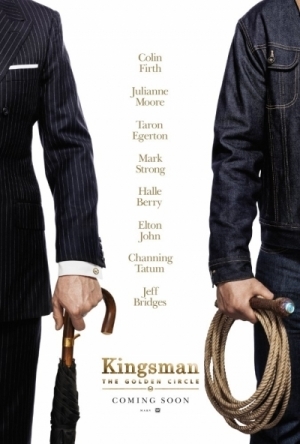
Vaughn and Golding cross the pond to deliver more of the same.
You would probably need to be living under a rock not to know that “Kingsman: The Golden Circle” is the follow-up film to Matthew Vaughn and Jane Goldman’s highly successful 2015 offering “Kingsman: The Secret Service”: a raucous, violent and rude entry into the spy-caper genre. And the sequel is more of the same: why mess with a crowd-pleasing formula?
The fledgling agent Eggsy (Taron Egerton (“Eddie the Eagle“), curiously called “Eggy” at various points in the film for reasons I didn’t understand) is now the new “Galahad” following the demise in the first film of the original, played by Colin Firth (“Magic in the Moonlight“, “Bridget Jones’ Baby“). But just as he’s getting into his stride the whole Kingsman organisation, now headed by Michael Gambon (“Harry Potter”) as Arthur , is ripped apart by an evil drugs cartel called “The Golden Circle” headed by smiling but deadly Poppy (Juliane Moore, “Still Alice”).
Eggsy and Lancelot (Mark Strong, “Miss Sloane“) in desperation turn to Statesman – the US equivalent organisation – and together with some surprising allies set out to defeat the evil plot to poison all casual drug users.
Subtle this film certainly is not, featuring brash and absurdly unrealistic action scenes that are 90% CGI but – for me at least – enormous fun to watch. As with the first film (and I’m thinking of the grotesquely violent church scene here) the action moves however from ‘edgy’ to “over-the-top/offensive” at times. The ‘burger scene’ and (particularly) the ‘Glastonbury incident’ are the standout moments for all the wrong reasons. I have a theory about how these *might* have come about…
One Mann’s Movies Showcase Theatre
The scene: Matthew Vaughn and Jane Golding are working “The Golden Circle” script at Goldman’s English home.
Vaughn: “OK, so Eggsy is in the tent with Clara and needs to plant the tracking device on her.”
Goldman’s husband Jonathan Ross sticks his head round the door.
Ross: “Hey Guys, I’ve an idea about that. I was on the phone to Wussell Bwand and we came up with a GWEAT idea.”
Vaughn: (rolling his eyes, mutters to himself): “Oh God, not again…”
Ross: “We thought that Eggsy could use his finger to stick the tracker right up her – ahem – ‘lady canal’ and… and… here’s the really great bit… the camera’s gonna be his finger. A camera up the muff! It’ll be weally weally funny!”
Vaughn: “But Jonathan…”.
Goldman nudges him hard.
Goldman (whispering): “Just let it go Matthew… you know what he’s like if he doesn’t get at least a couple of his ideas into the film”.
You can only hope a stunt vagina was used for this scene, else Poppy Delavigne (older sister of Cara) is going to find it very hard to find credible future work. One can only guess what tasteful interlude is being planned for Kingsman 3 – – a prostate-based tracker perhaps?
The film works best when the core team of Taron Egerton, Mark Strong and Colin Firth (yes, Colin Firth!) are together. Jeff Bridges (“Hell or High Water“), Channing Tatum (“Foxcatcher“) and Halle Berry (“Monster’s Ball”) all turn up as key members of ‘Statesman’ – adding star power but not a lot else – together with Pedro Pascal (“The Great Wall“) as ‘Whiskey’…. who I expected to be someone equally famous behind the moustache but wasn’t!
There’s also a very entertaining cameo from a star (no spoilers from me) whose foul-mouthed tirades I found very funny, and who also has the funniest line in the film (playing off one of the most controversial elements of the first film). It’s fair to say though that others I’ve spoken to didn’t think this appearance fitted the film at all.
Julianne Moore makes for an entertaining – if less than credible – villain, as does Bruce Greenwood (“Star Trek: Into Darkness”) as a barely disguised Trump. None of the motivations of the bad ‘uns however support any scrutiny whatsoever: this is very much a “park your brain at the door” film.
I really shouldn’t enjoy this crass, brash, brainless movie fast-food… and I know many have hated it! But my guilty secret is that I really did like it – one of the best nights of unadulterated escapist fun I’ve had since “Baby Driver”. Classy it’s certainly NOT, but I enjoyed this just as much as the original.
The fledgling agent Eggsy (Taron Egerton (“Eddie the Eagle“), curiously called “Eggy” at various points in the film for reasons I didn’t understand) is now the new “Galahad” following the demise in the first film of the original, played by Colin Firth (“Magic in the Moonlight“, “Bridget Jones’ Baby“). But just as he’s getting into his stride the whole Kingsman organisation, now headed by Michael Gambon (“Harry Potter”) as Arthur , is ripped apart by an evil drugs cartel called “The Golden Circle” headed by smiling but deadly Poppy (Juliane Moore, “Still Alice”).
Eggsy and Lancelot (Mark Strong, “Miss Sloane“) in desperation turn to Statesman – the US equivalent organisation – and together with some surprising allies set out to defeat the evil plot to poison all casual drug users.
Subtle this film certainly is not, featuring brash and absurdly unrealistic action scenes that are 90% CGI but – for me at least – enormous fun to watch. As with the first film (and I’m thinking of the grotesquely violent church scene here) the action moves however from ‘edgy’ to “over-the-top/offensive” at times. The ‘burger scene’ and (particularly) the ‘Glastonbury incident’ are the standout moments for all the wrong reasons. I have a theory about how these *might* have come about…
One Mann’s Movies Showcase Theatre
The scene: Matthew Vaughn and Jane Golding are working “The Golden Circle” script at Goldman’s English home.
Vaughn: “OK, so Eggsy is in the tent with Clara and needs to plant the tracking device on her.”
Goldman’s husband Jonathan Ross sticks his head round the door.
Ross: “Hey Guys, I’ve an idea about that. I was on the phone to Wussell Bwand and we came up with a GWEAT idea.”
Vaughn: (rolling his eyes, mutters to himself): “Oh God, not again…”
Ross: “We thought that Eggsy could use his finger to stick the tracker right up her – ahem – ‘lady canal’ and… and… here’s the really great bit… the camera’s gonna be his finger. A camera up the muff! It’ll be weally weally funny!”
Vaughn: “But Jonathan…”.
Goldman nudges him hard.
Goldman (whispering): “Just let it go Matthew… you know what he’s like if he doesn’t get at least a couple of his ideas into the film”.
You can only hope a stunt vagina was used for this scene, else Poppy Delavigne (older sister of Cara) is going to find it very hard to find credible future work. One can only guess what tasteful interlude is being planned for Kingsman 3 – – a prostate-based tracker perhaps?
The film works best when the core team of Taron Egerton, Mark Strong and Colin Firth (yes, Colin Firth!) are together. Jeff Bridges (“Hell or High Water“), Channing Tatum (“Foxcatcher“) and Halle Berry (“Monster’s Ball”) all turn up as key members of ‘Statesman’ – adding star power but not a lot else – together with Pedro Pascal (“The Great Wall“) as ‘Whiskey’…. who I expected to be someone equally famous behind the moustache but wasn’t!
There’s also a very entertaining cameo from a star (no spoilers from me) whose foul-mouthed tirades I found very funny, and who also has the funniest line in the film (playing off one of the most controversial elements of the first film). It’s fair to say though that others I’ve spoken to didn’t think this appearance fitted the film at all.
Julianne Moore makes for an entertaining – if less than credible – villain, as does Bruce Greenwood (“Star Trek: Into Darkness”) as a barely disguised Trump. None of the motivations of the bad ‘uns however support any scrutiny whatsoever: this is very much a “park your brain at the door” film.
I really shouldn’t enjoy this crass, brash, brainless movie fast-food… and I know many have hated it! But my guilty secret is that I really did like it – one of the best nights of unadulterated escapist fun I’ve had since “Baby Driver”. Classy it’s certainly NOT, but I enjoyed this just as much as the original.
A Bibliophagist (113 KP) rated Wuthering Heights in Books
Feb 12, 2020

Stands up (2 more)
Enthralling
Unique
Dislikable characters (1 more)
Difficult accents without translations
I will do my best to review this, however, I didn't heed the intro, this tour de force really does leave you as quickly as it comes, and reading another book before reviewing this one was a mistake.
In reading reviews prior to reading this book, I learned three major things; 1, people either love or hate this book, 2. I had no idea what I was actually in for, and 3. this may have not been the romantic pick for February I was expecting it to be.
So yes, PSA for anyone out there considering going into this thinking it's a romance. It is NOT. There are love stories in this, absolutely, powerful love stories that made me read quotes to my boyfriend with snarky statements like "if you don't say this at my funeral, did you ever really love me?". But it is NOT a romance. If anything this has more in common with "The Count of Monte Cristo" than it does "Pride and Prejudice". Honestly, the only thing it has in common with other, romantic books of this time, is the time period. But beware, no balls and high society and Mr. Darcy's await you in this novel. I feel a number of the reviews decrying the book, calling the characters "monstrous" both were the orchestrators of their own disappointment by assuming it to be like an Austin, and really need to look in the mirror and reflect on if they are really as perfect as they think they are. Especially if they were in the circumstances that surround this tale.
I find that Heathcliff himself addresses this mistake many readers had going into this book.
"picturing in me a hero of romance, and expecting unlimited indulgences from my chivalrous devotion. I can hardly regard her in the light of a rational creature, so obstinately has she persisted in forming a fabulous notion of my character and actin gon false impressions she cherished."
SO many readers went into this expecting Heathcliff to be some misunderstood brute or one harsh but salvaged by the purity of his love of Catherine. But this isn't the case.
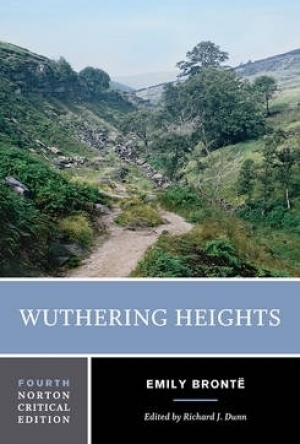
Wuthering Heights tells the story of (I guess technically 3) but really 2 generations of families. Living in the Yorkshire Moors, isolated from high society. We have the Liptons, primmer and properer and more in touch with society, and the Earnshaws which become a little rough around the edges in their isolation and loss. Papa Earnshaw has two children, Catherine and Hindley, and adopts a small boy of unknown heritage but is implied to be Romani or of mixed race (sorry Tom Hardy and nearly every portrayal of Heathcliff), that he names, simply, Heathcliff. He loves Heathcliff, and dotes on him greatly, much to the chagrin of Hindly who grows to resent Heathcliff, treating him terribly until Hindly leaves for school. Catherine and Heathcliff become great playmates, their care is given primarily to a maid scarcely older than them, as Papa Earnshaw is a single daddy. They are wild things, as children I would assume would be, in such isolation as the Yorkshire Moors in a time before the creature comforts and entertainment we have. They grow very close, obsessively close. Upon Papa Earnshaw's death, Hindley returns (at around the age of 23) to run the household, and take over the care of these two youngsters, one of which, he hates. So, Cinderella-style, Heathcliff gets treated worse and worse and treated like a servant rather than the adoptive child that Papa Earnshaw loved so dearly. Suddenly Heathcliff is nothing, treated terribly, and has the most important thing in his life banned from him, Catherine. Meanwhile, the Liptons also have two children, not wild, but spoilt in their own ways, Edgar and Isabella, close in age to Heathcliff and Catherine. When H and C run off on a camping adventure and find themselves at the Lipton's house, Catherine is injured and stays with the Liptons, in their higher society for 5 weeks. Leaving Heathcliff to the abuse of her brother and further isolation. She returns much more a lady and with her connection to Heathcliff slightly burned. In an attempt to protect Heathcliff, and because Heathcliff is now no more than a servant and not an option to marry, Catherine intends to marry Edgar. Causing our resident bad boy to run off for a number of years. Only to return a proper, but still broody gentleman, and confuse Catherine's affection much to the displeasure of Edgar.
Now, this is where a number of shows and movies end things. With a focus on Catherine and Heathcliff's whirlwind romance, obsession. It has some of the most to the point and beautiful lines regarding love, not all flowery, not "I love you most ardently" but rather cries of "I am Heathcliff" by Catherine. Absolutely heart-rending, even though I didn't like Catherine. But this is not where the book ends. The book goes on to follow Heathcliff's obsession with revenge, with his treatment as a child, his rage against Hindley, and against losing Catherine to Edgar. He spends years slowly ruining everyone's lives. Not that you could really ruin Hindley's life, he was a mean drunk. But he even goes as far as to meddle with the next generation, Hindley's son Hareton is raised terribly and is a bit of a wild thing (those his redemption and love story is quite beautiful), Catherine's daughter Cathy and Heathcliff's son Lipton are whisked up into a big scheme by Heathcliff to take everything. Heathcliff even marry's out of pure spite.
Love does not redeem this man, he's barely an antihero without his youth story. He is angry and passionate and obsessed. Which for the first half of the book I didn't fault him for, but he does do some damnable things in the second half that you cannot argue away. No matter how romantic and beautiful and heartrending his lamentations can be. I was quite the character arc, quite the tale of revenge and loss. He was unredeemable because of his big sprawling schemes and harsh intentions. Catherine for me was unredeemable because she was an obnoxious, selfish thing, that honestly if Heathcliff had stopped thinking about two minutes would have found a better woman in every town. She whined and treated Edgar (who was honestly super sweet) so terribly, she had an anger problem and would work herself up until she was sick. But it is in this imperfection that I fell in love more with the book. Here is something unique and real, this is no Elizabeth Bennett. The isolation and hermetic lifestyle created very different characters than what we see in Jane Austin or even in Emily's sister's novel.
It's no wonder this book was harshly critiqued upon release, here is a woman, writing a revenge story, with love stories in it. That based on the biographical intro had some parallels to her own life. She lived an isolated existence, surrounded by the death of the majority of her family young. She was in her late 20s when she wrote this and died a year after publication. She made humans of monsters and monsters of humans and wrote something unexpected and truly unique.
It's hard for me to explain, amongst the harshness and bleakness of this novel, why I loved it so much. But I did, I loved every bit. The anger, the passion, the love, the scheming, I loved it all.
I also feel it's important to note that this whole story is told by a maid to a new tenant. So the narrator is unreliable. Were these people truly this way? Or is it clouded by this maid's opinions of them? How much is omitted due to the maid not being privy to an event?
Truly a fantastic read, that punched me in my chest and gut, grabbed and twisted my insides and refuses to let go. I would argue it's a cult classic rather than a classic. So please, shed all preconceived notions of what this book is, shake that Austin out of your mind and read this tale of obsession and revenge. It's well worth it.
In reading reviews prior to reading this book, I learned three major things; 1, people either love or hate this book, 2. I had no idea what I was actually in for, and 3. this may have not been the romantic pick for February I was expecting it to be.
So yes, PSA for anyone out there considering going into this thinking it's a romance. It is NOT. There are love stories in this, absolutely, powerful love stories that made me read quotes to my boyfriend with snarky statements like "if you don't say this at my funeral, did you ever really love me?". But it is NOT a romance. If anything this has more in common with "The Count of Monte Cristo" than it does "Pride and Prejudice". Honestly, the only thing it has in common with other, romantic books of this time, is the time period. But beware, no balls and high society and Mr. Darcy's await you in this novel. I feel a number of the reviews decrying the book, calling the characters "monstrous" both were the orchestrators of their own disappointment by assuming it to be like an Austin, and really need to look in the mirror and reflect on if they are really as perfect as they think they are. Especially if they were in the circumstances that surround this tale.
I find that Heathcliff himself addresses this mistake many readers had going into this book.
"picturing in me a hero of romance, and expecting unlimited indulgences from my chivalrous devotion. I can hardly regard her in the light of a rational creature, so obstinately has she persisted in forming a fabulous notion of my character and actin gon false impressions she cherished."
SO many readers went into this expecting Heathcliff to be some misunderstood brute or one harsh but salvaged by the purity of his love of Catherine. But this isn't the case.
Wuthering Heights tells the story of (I guess technically 3) but really 2 generations of families. Living in the Yorkshire Moors, isolated from high society. We have the Liptons, primmer and properer and more in touch with society, and the Earnshaws which become a little rough around the edges in their isolation and loss. Papa Earnshaw has two children, Catherine and Hindley, and adopts a small boy of unknown heritage but is implied to be Romani or of mixed race (sorry Tom Hardy and nearly every portrayal of Heathcliff), that he names, simply, Heathcliff. He loves Heathcliff, and dotes on him greatly, much to the chagrin of Hindly who grows to resent Heathcliff, treating him terribly until Hindly leaves for school. Catherine and Heathcliff become great playmates, their care is given primarily to a maid scarcely older than them, as Papa Earnshaw is a single daddy. They are wild things, as children I would assume would be, in such isolation as the Yorkshire Moors in a time before the creature comforts and entertainment we have. They grow very close, obsessively close. Upon Papa Earnshaw's death, Hindley returns (at around the age of 23) to run the household, and take over the care of these two youngsters, one of which, he hates. So, Cinderella-style, Heathcliff gets treated worse and worse and treated like a servant rather than the adoptive child that Papa Earnshaw loved so dearly. Suddenly Heathcliff is nothing, treated terribly, and has the most important thing in his life banned from him, Catherine. Meanwhile, the Liptons also have two children, not wild, but spoilt in their own ways, Edgar and Isabella, close in age to Heathcliff and Catherine. When H and C run off on a camping adventure and find themselves at the Lipton's house, Catherine is injured and stays with the Liptons, in their higher society for 5 weeks. Leaving Heathcliff to the abuse of her brother and further isolation. She returns much more a lady and with her connection to Heathcliff slightly burned. In an attempt to protect Heathcliff, and because Heathcliff is now no more than a servant and not an option to marry, Catherine intends to marry Edgar. Causing our resident bad boy to run off for a number of years. Only to return a proper, but still broody gentleman, and confuse Catherine's affection much to the displeasure of Edgar.
Now, this is where a number of shows and movies end things. With a focus on Catherine and Heathcliff's whirlwind romance, obsession. It has some of the most to the point and beautiful lines regarding love, not all flowery, not "I love you most ardently" but rather cries of "I am Heathcliff" by Catherine. Absolutely heart-rending, even though I didn't like Catherine. But this is not where the book ends. The book goes on to follow Heathcliff's obsession with revenge, with his treatment as a child, his rage against Hindley, and against losing Catherine to Edgar. He spends years slowly ruining everyone's lives. Not that you could really ruin Hindley's life, he was a mean drunk. But he even goes as far as to meddle with the next generation, Hindley's son Hareton is raised terribly and is a bit of a wild thing (those his redemption and love story is quite beautiful), Catherine's daughter Cathy and Heathcliff's son Lipton are whisked up into a big scheme by Heathcliff to take everything. Heathcliff even marry's out of pure spite.
Love does not redeem this man, he's barely an antihero without his youth story. He is angry and passionate and obsessed. Which for the first half of the book I didn't fault him for, but he does do some damnable things in the second half that you cannot argue away. No matter how romantic and beautiful and heartrending his lamentations can be. I was quite the character arc, quite the tale of revenge and loss. He was unredeemable because of his big sprawling schemes and harsh intentions. Catherine for me was unredeemable because she was an obnoxious, selfish thing, that honestly if Heathcliff had stopped thinking about two minutes would have found a better woman in every town. She whined and treated Edgar (who was honestly super sweet) so terribly, she had an anger problem and would work herself up until she was sick. But it is in this imperfection that I fell in love more with the book. Here is something unique and real, this is no Elizabeth Bennett. The isolation and hermetic lifestyle created very different characters than what we see in Jane Austin or even in Emily's sister's novel.
It's no wonder this book was harshly critiqued upon release, here is a woman, writing a revenge story, with love stories in it. That based on the biographical intro had some parallels to her own life. She lived an isolated existence, surrounded by the death of the majority of her family young. She was in her late 20s when she wrote this and died a year after publication. She made humans of monsters and monsters of humans and wrote something unexpected and truly unique.
It's hard for me to explain, amongst the harshness and bleakness of this novel, why I loved it so much. But I did, I loved every bit. The anger, the passion, the love, the scheming, I loved it all.
I also feel it's important to note that this whole story is told by a maid to a new tenant. So the narrator is unreliable. Were these people truly this way? Or is it clouded by this maid's opinions of them? How much is omitted due to the maid not being privy to an event?
Truly a fantastic read, that punched me in my chest and gut, grabbed and twisted my insides and refuses to let go. I would argue it's a cult classic rather than a classic. So please, shed all preconceived notions of what this book is, shake that Austin out of your mind and read this tale of obsession and revenge. It's well worth it.
Gareth von Kallenbach (980 KP) rated Les Misérables (2012) in Movies
Aug 7, 2019
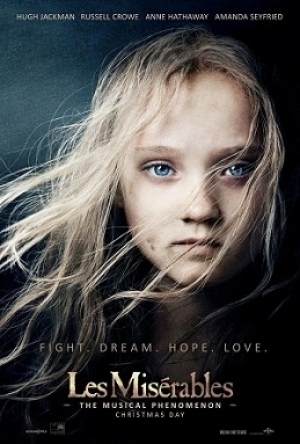
Words cannot express how amazing this movie is. For those of you who have shouldered through the modern-day musical revival; suffering through the questionable singing talents of many stars as “Phantom of the Opera,” “Chicago,” “Moulin Rouge,” “Sweeny Todd,” and that abysmal rendition of “Nine” – I can assure you, that “Les Mis” will change that perception. For once, the casting crew took the time to select a cast capable of the repertoire’s vocal demands (and Les Mis is very vocally demanding – as most operatic pieces are). It’s apparent that each singer was heavily vocally coached and trained, some faring more so than others. While this is no replacement for raw talent, I can assure you that the cast was downright fantastic.
For years I studied and sang opera. I know music and I’ve sung my fair share of Les Mis pieces in my past. I adore Victor Hugo and “Les Misérables” is by far one of my favorite literary works. When I began to watch this movie, I was keyed up to be critical on the vocal spectrum, the literary aspect, and the representation of one of my favorite Broadway/London pieces. To be frank, I wasn’t disappointed at all.
For those unfamiliar with Hugo’s work or what to expect with Les Mis, let me give you a brief synopsis on its plot and the history of the French revolution in which this takes place. France has just endured her infamous Revolution (the one with the guillotine, Marie-Antoinette, and the Sans Culottes movement) and her people are still suffering. There is no money for food, the country is in the midst of a depression, and the Napoleonic regime is yet to come to fruition. Thus, you find Fantine (Hathaway), a poor but determined (and beautiful) woman trying desperately to make enough money to support her daughter, Cosette, who resides with friends in another city. The book reveals that Madame Thénardier (Bonham-Carter) and her husband, Thénardier (Baron-Cohen) were supposed to be taking the money that Fantine had given to them to provide for her daughter, Cosette. Instead, however, Cosette is forced to live in absolute poverty while Thénardier’s daughter, Eponine, lives the life of opulence. Meanwhile, Jean Valjean (Jackman), an ex-convict, is trying desperately to find legitimate work after his stint in prison for stealing a loaf of bread to provide for his starving family. The infamous policeman, Javert (Crowe), feels Valjean will re-offend and makes it his mission to pursue Valjean until the end.
Finding the world a terrible place as an ex-convict, Valjean seeks to steal from a church her silver, believing he has no other way to survive. It is the love of a good priest, however, who gives Valjean the silver he seeks under the pledge he will become a servant of God and provide for others the same good he has provided for him. Thus, years later, we find Valjean a reformed man (who has skipped on his parole and assumed a new name), running a factory in which Fantine works. And so, when Fantine is fired from her job and takes to a life of prostitution in order to provide for her daughter, it is Valjean who feels the burden of her demise and takes it upon himself to save Cosette and raise her as his own.
Of course, this entire time, Javert is pursuing Valjean and a new revolution is starting to take place amongst Paris’ people. Years later we find Cosette grown to womanhood (now played by Seyfried), and falling in love with one of the revolution’s key players, a youth by the name of Marius (Redmayne). The Thénardiers are back again and we find their once-grand lifestyle has resorted to a life of gutter-crime and Éponine (now played by Barks), is desperately in love with Marius as well (although her love is unrequited). For those unfamiliar with how the story plays out, I will leave it at that.
I will caution those who have never seen this play to prepare for a long show. It is very dramatic and very intense, but visually breath-taking and emotionally moving in so many ways. Vocally, there are times when the legato is lacking and some transitions seemed forced (Crowe struggled many times with allowing his natural vibrato to come through instead of pushing a sustained note; Seyfried’s vibrato is very trill-like and sometimes distracts from the pure quality of her spinto-soprano range). However, I must say that I was blown away by Hathway’s performance (she brought me to tears with “I Dreamed a Dream” due to her emotional rendition) and her ability to truly escape into her character. Similarly, Tviet (he played Enjolras) was stunning with his vocal command and Redmayne was equally as impressive. Jackman will amaze you with his rich tenor and, surprisingly, I found Crowe to have a fantastic baritone when he didn’t force his work. Baron-Cohen and Bonham-Carter provided a much needed comical respite throughout the film (and both sing beautifully as well, although this movie didn’t focus on their vocal command as much). Barks did a lovely job for most of her work; although I found her rendition of “On My Own” a bit forced (she is a true mezzo but seemed to push her high notes, although this may have been where her voice shifted into her head voice which is no fault of her own).
Overall, if you are an avid musical lover and have been waiting for a proper rendition of this production, this movie will astound you. Visually, the movie is breath-taking and the acting is absolutely fantastic. I’m still haunted by the revolutionary song, to be honest. If you’ve been waiting for a musical worthy of the big screen, this one is it. Look for it to sweep the Oscars this year.
This movie deserves an A all around.
For years I studied and sang opera. I know music and I’ve sung my fair share of Les Mis pieces in my past. I adore Victor Hugo and “Les Misérables” is by far one of my favorite literary works. When I began to watch this movie, I was keyed up to be critical on the vocal spectrum, the literary aspect, and the representation of one of my favorite Broadway/London pieces. To be frank, I wasn’t disappointed at all.
For those unfamiliar with Hugo’s work or what to expect with Les Mis, let me give you a brief synopsis on its plot and the history of the French revolution in which this takes place. France has just endured her infamous Revolution (the one with the guillotine, Marie-Antoinette, and the Sans Culottes movement) and her people are still suffering. There is no money for food, the country is in the midst of a depression, and the Napoleonic regime is yet to come to fruition. Thus, you find Fantine (Hathaway), a poor but determined (and beautiful) woman trying desperately to make enough money to support her daughter, Cosette, who resides with friends in another city. The book reveals that Madame Thénardier (Bonham-Carter) and her husband, Thénardier (Baron-Cohen) were supposed to be taking the money that Fantine had given to them to provide for her daughter, Cosette. Instead, however, Cosette is forced to live in absolute poverty while Thénardier’s daughter, Eponine, lives the life of opulence. Meanwhile, Jean Valjean (Jackman), an ex-convict, is trying desperately to find legitimate work after his stint in prison for stealing a loaf of bread to provide for his starving family. The infamous policeman, Javert (Crowe), feels Valjean will re-offend and makes it his mission to pursue Valjean until the end.
Finding the world a terrible place as an ex-convict, Valjean seeks to steal from a church her silver, believing he has no other way to survive. It is the love of a good priest, however, who gives Valjean the silver he seeks under the pledge he will become a servant of God and provide for others the same good he has provided for him. Thus, years later, we find Valjean a reformed man (who has skipped on his parole and assumed a new name), running a factory in which Fantine works. And so, when Fantine is fired from her job and takes to a life of prostitution in order to provide for her daughter, it is Valjean who feels the burden of her demise and takes it upon himself to save Cosette and raise her as his own.
Of course, this entire time, Javert is pursuing Valjean and a new revolution is starting to take place amongst Paris’ people. Years later we find Cosette grown to womanhood (now played by Seyfried), and falling in love with one of the revolution’s key players, a youth by the name of Marius (Redmayne). The Thénardiers are back again and we find their once-grand lifestyle has resorted to a life of gutter-crime and Éponine (now played by Barks), is desperately in love with Marius as well (although her love is unrequited). For those unfamiliar with how the story plays out, I will leave it at that.
I will caution those who have never seen this play to prepare for a long show. It is very dramatic and very intense, but visually breath-taking and emotionally moving in so many ways. Vocally, there are times when the legato is lacking and some transitions seemed forced (Crowe struggled many times with allowing his natural vibrato to come through instead of pushing a sustained note; Seyfried’s vibrato is very trill-like and sometimes distracts from the pure quality of her spinto-soprano range). However, I must say that I was blown away by Hathway’s performance (she brought me to tears with “I Dreamed a Dream” due to her emotional rendition) and her ability to truly escape into her character. Similarly, Tviet (he played Enjolras) was stunning with his vocal command and Redmayne was equally as impressive. Jackman will amaze you with his rich tenor and, surprisingly, I found Crowe to have a fantastic baritone when he didn’t force his work. Baron-Cohen and Bonham-Carter provided a much needed comical respite throughout the film (and both sing beautifully as well, although this movie didn’t focus on their vocal command as much). Barks did a lovely job for most of her work; although I found her rendition of “On My Own” a bit forced (she is a true mezzo but seemed to push her high notes, although this may have been where her voice shifted into her head voice which is no fault of her own).
Overall, if you are an avid musical lover and have been waiting for a proper rendition of this production, this movie will astound you. Visually, the movie is breath-taking and the acting is absolutely fantastic. I’m still haunted by the revolutionary song, to be honest. If you’ve been waiting for a musical worthy of the big screen, this one is it. Look for it to sweep the Oscars this year.
This movie deserves an A all around.