
Search
Search results

Christine A. (965 KP) rated His and Hers in Books
Jul 29, 2020
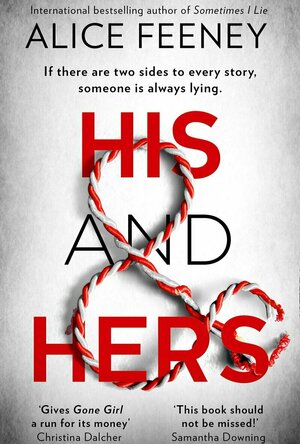

Will keep you guessing until the big reveal
I was provided with a complimentary copy of this book so I could give an honest review. The opinions are entirely my own, and any quotes are taken from the ARC and may be different in the final published copy.
There are three sides to every story, his, hers, and the truth. In Alice Feeney's latest, His & Hers, there is his, hers, and a killer out for vengeance.
Narrators Richard Armitage and Stephanie Racine skillfully bring Feeney's thriller to life as a detective and his news journalist ex-wife who are separately trying to solve/report the murders of people from their past while trying to stay out of the crosshairs of a serial killer on a mission. The chapters alternate between DCI Jack Harper and Anna Andrews, which allows us to see the story from both sides as it unfolds. The killer, using a voice disguiser, breaks the fourth wall to explain his/her reasons.
Because of Feeney's clever writing, I was unable to figure out the killer until the big reveal. I switched suspects with each suspenseful chapter I read. Her red herrings were flawless.
Richard Armitage is an actor and audio-book narrator known for his role as Thorin in The Hobbit trilogy. Stephanie Racine narrated numerous novels, including Feeney's three best-sellers, Sometimes I Lie, I Know Who You Are, and His & Hers.
Goodreads lists Feeney's next novel, as of yet untitled, to be released in 2021.
This 200-word review was published on Philomathinphila.com on 7/28/20.
There are three sides to every story, his, hers, and the truth. In Alice Feeney's latest, His & Hers, there is his, hers, and a killer out for vengeance.
Narrators Richard Armitage and Stephanie Racine skillfully bring Feeney's thriller to life as a detective and his news journalist ex-wife who are separately trying to solve/report the murders of people from their past while trying to stay out of the crosshairs of a serial killer on a mission. The chapters alternate between DCI Jack Harper and Anna Andrews, which allows us to see the story from both sides as it unfolds. The killer, using a voice disguiser, breaks the fourth wall to explain his/her reasons.
Because of Feeney's clever writing, I was unable to figure out the killer until the big reveal. I switched suspects with each suspenseful chapter I read. Her red herrings were flawless.
Richard Armitage is an actor and audio-book narrator known for his role as Thorin in The Hobbit trilogy. Stephanie Racine narrated numerous novels, including Feeney's three best-sellers, Sometimes I Lie, I Know Who You Are, and His & Hers.
Goodreads lists Feeney's next novel, as of yet untitled, to be released in 2021.
This 200-word review was published on Philomathinphila.com on 7/28/20.
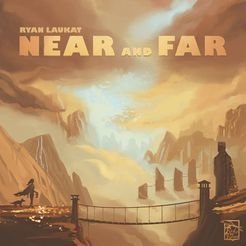
Near and Far
8.4 Rate It
Tabletop Game
Four wanderers search for the Last Ruin, a city that legends say contains an artifact that will...
Boardgames StoryGames LaukatGames

Fraternity: An Inside Look at a Year of College Boys Becoming Men
Book
Two real-life stories. One stunning twist. Meet Jake, a studious freshman weighing how far to go to...

Mark @ Carstairs Considers (2662 KP) rated The Bootlegger’s Daughter in Books
May 2, 2024
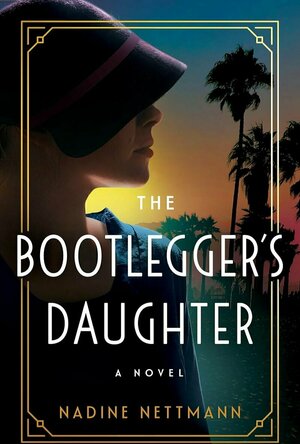
Danger in Prohibition-era Los Angeles
It’s 1927, and Letty Hart is struggling to keep the family vineyard afloat on the outskirts of Los Angeles. When their contract to provide sacramental wine is canceled abruptly, the discovery of some illegal alcohol her father left behind seems too good to pass up. Meanwhile, Annabel Forman is trying to prove she deserves the promotion to detective in the LAPD. She is assigned a joke of a case, but she quickly begins to think she’s stumbled on a connection between several murdered bootleggers.
Obviously, these two women are destined to meet. The story along the way is enjoyable, and the further I got into the book, the more I wanted to keep reading. There are some surprises on the way to a suspenseful climax. I did feel like a few aspects of the plot were rushed, but that’s a minor complaint overall. We get the story from three different character’s points of view, Letty in first person and the other two in third person. These changes happen at chapter breaks and are all clearly labeled. The book is written in present tense, and once my brain got used to it, it didn’t matter. Many of the supporting characters don’t get much page time to be fully developed, but they feel real in the time they have. Letty and Annabel, however, are wonderful characters, and I enjoyed watching them deal with what life has given them. If you are looking for a historic crime story, you’ll be glad you picked this one up.
Obviously, these two women are destined to meet. The story along the way is enjoyable, and the further I got into the book, the more I wanted to keep reading. There are some surprises on the way to a suspenseful climax. I did feel like a few aspects of the plot were rushed, but that’s a minor complaint overall. We get the story from three different character’s points of view, Letty in first person and the other two in third person. These changes happen at chapter breaks and are all clearly labeled. The book is written in present tense, and once my brain got used to it, it didn’t matter. Many of the supporting characters don’t get much page time to be fully developed, but they feel real in the time they have. Letty and Annabel, however, are wonderful characters, and I enjoyed watching them deal with what life has given them. If you are looking for a historic crime story, you’ll be glad you picked this one up.
Mark @ Carstairs Considers (2662 KP) rated The Drinking Gourd in Books
Jul 13, 2022 (Updated Jul 13, 2022)
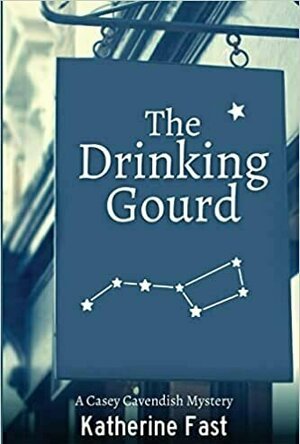

Casey’s Past Comes Back to Haunt Her
After spending ten years in jail for drug dealing, Casey Cavendish is back in her home town, the small college town of Oberlin, Ohio, trying to finally get her college degree. She also still maintains her innocence to the charges against her. However, drug dealing seems to have picked up in town recently, so the rumors aren’t leaving her alone. When her former best friend is found dead, Casey finds herself caught up in a murder investigation. Can she figure out what is happening so she doesn’t go back to jail?
The premise of this book sounded intriguing, so I jumped in eagerly. However, the end result doesn’t quite work the way it should. The story is as much about Casey dealing with what happened to her and it is the current crime. While interesting, it meant some of the other characters were really driving the investigation. In fact, there are several storylines that felt more important than the sub-plots than they should have been. The story does have some good twists, but they feel a little abrupt when they happen. A few things felt forced into the story, and I didn’t get a good feel for the 1970’s setting. This isn’t one of my cozies, but I was mostly okay with the content, except for one chapter that definitely crossed some lines. When I was reading the book, I got caught up in the story, but there were too many issues to keep me from completely enjoying it.
The premise of this book sounded intriguing, so I jumped in eagerly. However, the end result doesn’t quite work the way it should. The story is as much about Casey dealing with what happened to her and it is the current crime. While interesting, it meant some of the other characters were really driving the investigation. In fact, there are several storylines that felt more important than the sub-plots than they should have been. The story does have some good twists, but they feel a little abrupt when they happen. A few things felt forced into the story, and I didn’t get a good feel for the 1970’s setting. This isn’t one of my cozies, but I was mostly okay with the content, except for one chapter that definitely crossed some lines. When I was reading the book, I got caught up in the story, but there were too many issues to keep me from completely enjoying it.

Merissa (14190 KP) rated Black Ice Heart (Unveiled Magic #1) in Books
Oct 22, 2021 (Updated Jul 12, 2023)
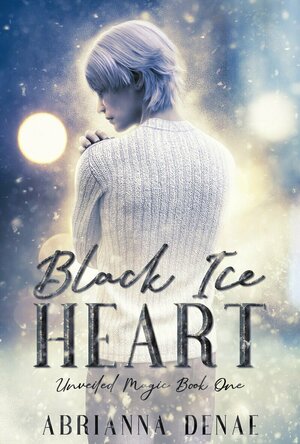
BLACK ICE HEART is the first in the Unveiled Magic series. In it, we meet Jack, Summer, Spring, Autumn, Mother, and Old Man. Do these names sound familiar? They should do. This is the story of the seasons, of Mother Nature, Old Man Time, and Jack Frost, with its own unique spin as given by Abrianna Denae.
This is a dark story in places, with moments of torture and heartbreak, so please be aware of the trigger warning! There are also moments of love, friendship, and hope, that will keep you turning the pages.
There are a host of amazing characters in here, plus characters I've yet to meet properly, or fully understand. I'm hoping this will happen in future books as, being 100% honest here, some of them haven't made such a good impression.
Told from multiple perspectives, some characters only share their voice for one chapter. Others have multiple. So take your time reading and find out just who is speaking when - it will make it all so much easier.
The story feels almost complete until you reach the epilogue, and then it takes a whole new turn and you're left not knowing what will happen next.
Black Ice Heart kept my attention from beginning to end and I have no hesitation in recommending it.
** same worded review will appear elsewhere **
* A copy of this book was provided to me with no requirements for a review. I voluntarily read this book, and the comments here are my honest opinion. *
Merissa
Archaeolibrarian - I Dig Good Books!
Oct 22, 2021
This is a dark story in places, with moments of torture and heartbreak, so please be aware of the trigger warning! There are also moments of love, friendship, and hope, that will keep you turning the pages.
There are a host of amazing characters in here, plus characters I've yet to meet properly, or fully understand. I'm hoping this will happen in future books as, being 100% honest here, some of them haven't made such a good impression.
Told from multiple perspectives, some characters only share their voice for one chapter. Others have multiple. So take your time reading and find out just who is speaking when - it will make it all so much easier.
The story feels almost complete until you reach the epilogue, and then it takes a whole new turn and you're left not knowing what will happen next.
Black Ice Heart kept my attention from beginning to end and I have no hesitation in recommending it.
** same worded review will appear elsewhere **
* A copy of this book was provided to me with no requirements for a review. I voluntarily read this book, and the comments here are my honest opinion. *
Merissa
Archaeolibrarian - I Dig Good Books!
Oct 22, 2021
Mark @ Carstairs Considers (2662 KP) rated Racing the Light in Books
Jun 17, 2023
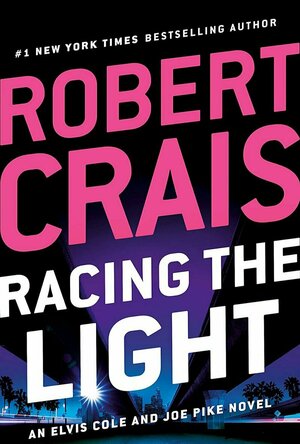
Elvis Cole is in a Race to Find a Missing Man
PI Elvis Cole’s latest client is a mother who insists that her son, Josh, is missing. She sounds like a conspiracy nut, and it doesn’t help that Josh hosts a podcast about aliens and other out there topics. But Elvis gives himself a day to figure out what he thinks of the case, and in that time he realizes that someone dangerous is very interested in where Josh is. Can Elvis find him in time?
As usual, this book was a mixed bag for me. The case was interesting, although some of the events were entirely predictable to anyone who has read this series on a regular basis. While I do like Elvis and his partner, Joe Pike, I still find Joe to be a rather thin character. The new characters are also definitely on the thin side, and many of them are annoying. In fact, at times the plot seemed to be based on the characters doing the absolutely stupidest things they could do and Elvis trying to save them. There’s also quite a bit of adult content in this book, more so than I really thought it needed. There are lots of point of view changes, but I never had a hard time with them since they were clearly labeled and happened at chapter breaks. Fans will be interested in the sub-plot here. There are things I enjoyed, but once again, this is an average entry in an average series.
As usual, this book was a mixed bag for me. The case was interesting, although some of the events were entirely predictable to anyone who has read this series on a regular basis. While I do like Elvis and his partner, Joe Pike, I still find Joe to be a rather thin character. The new characters are also definitely on the thin side, and many of them are annoying. In fact, at times the plot seemed to be based on the characters doing the absolutely stupidest things they could do and Elvis trying to save them. There’s also quite a bit of adult content in this book, more so than I really thought it needed. There are lots of point of view changes, but I never had a hard time with them since they were clearly labeled and happened at chapter breaks. Fans will be interested in the sub-plot here. There are things I enjoyed, but once again, this is an average entry in an average series.

Cassie Osbourne (6 KP) rated The Toymaker in Books
Nov 9, 2018


As a kid who was into books with a dark, almost gothic feel to them when I picked this up at the age of thirteen I really loved it. What wasn't to like? Very creepy cover, exciting concepts, dark scenes and mortal peril - it had all of those boxes ticked. Yes, I can safely say that teenage me thought this book was excellent. So when I found this book under my bed a few weeks ago, I decided to give the book another read to see if it was as good as I remembered.
Sadly it wasn't. Don't get me wrong, this is still a good book (although three stars it is the higher end) but reading it eight years on there are particular aspects of this book that my adult brain has picked out more than my teen one.
The characters are alright; I suppose, but they are incredibly simplistic with very little character development. Katta (a joint protagonist with Mathias) is the only character who feels like she could be more interesting and have a little more about her than the rest, but I was still very unsure about whether I liked her or not (and the way she speaks really annoyed me). I would also have liked to see some more complex relationships - especially between Koenig and Stefan and Katta and Stefan (whose relationship was a very simplistic 'I hate you because of X' but nothing beyond that so got quite boring after a while). However, this is a kid's/young teen's book and didn't bother me too much when I first read it so I guess I can cut it a little slack.
The atmosphere was the thing that I most remembered this book for (there still being a couple of chapters fixed in my mind for how creepy they were), and I'm glad to say that this really held up. The book is dark most of the way through, and the sections/chapters where de Quidt really sees how dark he can be are the best and most memorable parts of the book. Any chapter with Marguerite is brilliant and I absolutely loved the carnival sections. Any bit where it's just Katta on her own away from the rest of the group is really dark (a little seedy perhaps) and just great. The one thing that is perhaps a little too far for me personally is the very vivid and graphic descriptions of the injuries/wounds (and there are a lot) and how they feel which, for someone like me who is a bit squeamish, can be a bit much. It was really nice that the thing that I most remembered the book for is still as great as when I first read it.
For the most part, the writing style is good. There are, however, occasional moments when the wording/phrasing and punctuation are a bit off or clunky. This makes it quite confusing at times and is a little distracting but I think this might be a translation (maybe) so I'll give it the benefit of the doubt. This is the only thing that I can really remember bugging me when I was thirteen.
The plot is pretty good for what it is (four people solving a mystery about a blank piece of paper while villains follow and try to stop them) but I felt like this was more a sort of vehicle for creating a creepy atmosphere, which is no bad thing really. I have to say that when I found the book after so many years, I honestly couldn't remember the plot and I daresay I'll have forgotten it again in a few months time.
The intrigue with which this book grips the reader is, in no small part, down to the atmosphere that is created. I am someone who gets distracted very quickly, especially when reading, but when I picked this book up, I would find myself not able to put it down unless I was called away from it or found that it was 1 am and I should probably get some sleep. This is an excellent sign in any book but especially one aimed at teenagers.
The logic in 'The Toymaker' is hit and miss at best. The characters are wounded for what seems like forever but they don't really succumb to them apart from getting a little paler and being in pain most of the time. There are also lots of things that are not explained or just flat out make no sense. Yes, there is a bit of magic in the story but there still has to be some kind of logic or explanation for it rather than it being used as a kind of jarring deus ex machina to quickly (and a bit clumsily and lazily) move the story along. I can't really say whether or not this bothered me when I read it eight years ago because it's all tied up with the plot and, like I said earlier, I didn't really remember much of it.
Overall, I did enjoy this book. I enjoyed delving back into Jeremy de Quidt's dark and creepy world and it was great revisiting, what I call, a nostalgia read but I think that now it is time to give my copy to a charity shop so another younger teenager can find and enjoy it while it's space on my bookshelf can be given to a book that I will enjoy as an adult.
Characters: 5.5/10
Atmosphere: 9/10
Writing Style: 7/10
Plot: 6/10
Intrigue: 8/10
Logic: 4.5/10
Enjoyment: 7/10
Sadly it wasn't. Don't get me wrong, this is still a good book (although three stars it is the higher end) but reading it eight years on there are particular aspects of this book that my adult brain has picked out more than my teen one.
The characters are alright; I suppose, but they are incredibly simplistic with very little character development. Katta (a joint protagonist with Mathias) is the only character who feels like she could be more interesting and have a little more about her than the rest, but I was still very unsure about whether I liked her or not (and the way she speaks really annoyed me). I would also have liked to see some more complex relationships - especially between Koenig and Stefan and Katta and Stefan (whose relationship was a very simplistic 'I hate you because of X' but nothing beyond that so got quite boring after a while). However, this is a kid's/young teen's book and didn't bother me too much when I first read it so I guess I can cut it a little slack.
The atmosphere was the thing that I most remembered this book for (there still being a couple of chapters fixed in my mind for how creepy they were), and I'm glad to say that this really held up. The book is dark most of the way through, and the sections/chapters where de Quidt really sees how dark he can be are the best and most memorable parts of the book. Any chapter with Marguerite is brilliant and I absolutely loved the carnival sections. Any bit where it's just Katta on her own away from the rest of the group is really dark (a little seedy perhaps) and just great. The one thing that is perhaps a little too far for me personally is the very vivid and graphic descriptions of the injuries/wounds (and there are a lot) and how they feel which, for someone like me who is a bit squeamish, can be a bit much. It was really nice that the thing that I most remembered the book for is still as great as when I first read it.
For the most part, the writing style is good. There are, however, occasional moments when the wording/phrasing and punctuation are a bit off or clunky. This makes it quite confusing at times and is a little distracting but I think this might be a translation (maybe) so I'll give it the benefit of the doubt. This is the only thing that I can really remember bugging me when I was thirteen.
The plot is pretty good for what it is (four people solving a mystery about a blank piece of paper while villains follow and try to stop them) but I felt like this was more a sort of vehicle for creating a creepy atmosphere, which is no bad thing really. I have to say that when I found the book after so many years, I honestly couldn't remember the plot and I daresay I'll have forgotten it again in a few months time.
The intrigue with which this book grips the reader is, in no small part, down to the atmosphere that is created. I am someone who gets distracted very quickly, especially when reading, but when I picked this book up, I would find myself not able to put it down unless I was called away from it or found that it was 1 am and I should probably get some sleep. This is an excellent sign in any book but especially one aimed at teenagers.
The logic in 'The Toymaker' is hit and miss at best. The characters are wounded for what seems like forever but they don't really succumb to them apart from getting a little paler and being in pain most of the time. There are also lots of things that are not explained or just flat out make no sense. Yes, there is a bit of magic in the story but there still has to be some kind of logic or explanation for it rather than it being used as a kind of jarring deus ex machina to quickly (and a bit clumsily and lazily) move the story along. I can't really say whether or not this bothered me when I read it eight years ago because it's all tied up with the plot and, like I said earlier, I didn't really remember much of it.
Overall, I did enjoy this book. I enjoyed delving back into Jeremy de Quidt's dark and creepy world and it was great revisiting, what I call, a nostalgia read but I think that now it is time to give my copy to a charity shop so another younger teenager can find and enjoy it while it's space on my bookshelf can be given to a book that I will enjoy as an adult.
Characters: 5.5/10
Atmosphere: 9/10
Writing Style: 7/10
Plot: 6/10
Intrigue: 8/10
Logic: 4.5/10
Enjoyment: 7/10

Haley Mathiot (9 KP) rated Wolfhound Century in Books
Apr 27, 2018
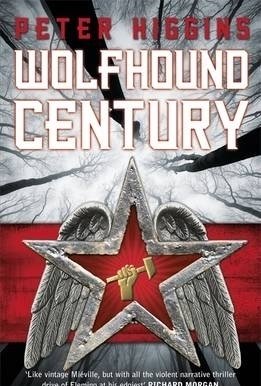

When I first started reading (well, listening) to this book, I got a little confused and disoriented. There were a lot of names and places that, although they were English, they weren’t words or names that I knew, so I had trouble keeping track of what was going on. Part of the problem was I listened to a chapter here, a chapter there. So I put it aside, listened to something else, and went back to it later when I had hours upon hours to invest into it.
Boy am I glad I listened to this story.
I cannot describe to you how beautiful this story was. It was exciting and nerve wracking and terrifying. It was totally new and different and unique from anything else I’ve ever read. It had a love story, but it was an epic love story, not a romance as defined by the modern-day genre. It was sweet and beautiful and enthralling. It’s fantasy, but it’s not “elves and dwarves and fairies” fantasy… it’s fantastical and imaginary and connected with nature, but there aren’t warlocks. Higgins has his own set of creatures, his own city and country, his own history, his own world, and I loved it (though I didn’t want to live there. Read the summary, you wouldn’t either). On top of that, the writing was descriptive and concrete, and I felt like I was a part of the world. I felt like I was Lom an Marucia and Raku (I have no idea how to spell their names because I listened to the audio). I seriously didn’t want it to end.
Man, it’s been a good year for audiobooks! Guys, get this one asap. Give it thirty minutes of your time, and you’ll be sucked in.
Neil Dickson, the narrator, was also wonderful. He’s done a few other audiobooks, including the dramatized edition of The Importance of Being Earnest, and James Patterson’s The Jester. I’m definitely going to keep my eyes open for other work he does.
Content/Recommendation: Some violence, darker themes. Ages 16+
Boy am I glad I listened to this story.
I cannot describe to you how beautiful this story was. It was exciting and nerve wracking and terrifying. It was totally new and different and unique from anything else I’ve ever read. It had a love story, but it was an epic love story, not a romance as defined by the modern-day genre. It was sweet and beautiful and enthralling. It’s fantasy, but it’s not “elves and dwarves and fairies” fantasy… it’s fantastical and imaginary and connected with nature, but there aren’t warlocks. Higgins has his own set of creatures, his own city and country, his own history, his own world, and I loved it (though I didn’t want to live there. Read the summary, you wouldn’t either). On top of that, the writing was descriptive and concrete, and I felt like I was a part of the world. I felt like I was Lom an Marucia and Raku (I have no idea how to spell their names because I listened to the audio). I seriously didn’t want it to end.
Man, it’s been a good year for audiobooks! Guys, get this one asap. Give it thirty minutes of your time, and you’ll be sucked in.
Neil Dickson, the narrator, was also wonderful. He’s done a few other audiobooks, including the dramatized edition of The Importance of Being Earnest, and James Patterson’s The Jester. I’m definitely going to keep my eyes open for other work he does.
Content/Recommendation: Some violence, darker themes. Ages 16+

Advanced Physics of Electron Transport in Semiconductors and Nanostructures: Electronic Properties and Transport: 2016
Massimo V. Fischetti, William G. Vandenberghe and Shela Aboud
Book
This textbook is aimed at second-year graduate students in Physics, Electrical Engineer-ing, or...