
Search
Search results

Marine Rules & Signals
Navigation and Sports
App
The reference guide to rules and signals at sea. Part of a series of Marine Navigation apps, Rules &...

Debbiereadsbook (1801 KP) rated Rock Crush and Roll in Books
Jun 2, 2024


not overly explicit but very steamy in places!
Independent reviewer for Archaeolibrarian, I was gifted my copy of this book.
From what I can see, this is a debut author, and I enjoyed this!
Tyler has crushed on Cary for some time. And Cary has crushed on Tyler too, but they work together, sorta, and Tyler has a strict no musicians rule after being hurt badly by one. But with very little effort, they start to see the person behind the mask, and
maybe, just maybe, Tyler can find her Happy Ever After.
This is cute, it really is. I liked that Tyler and Cary knew each other for a long time before they started a relationship. I liked that both of them fell fast and hard. I liked that Cary tried to spoil Tyler, but she managed to not let him get away with too
much.
It’s not overly explicit, but it does get steamy in places. Just the right amount for these two, I think.
Both Cary and Tyler have a say in the third person, The change usually occurs as the chapter changes, but sometimes in the middle. Each change is clearly headed and I liked that.
Lots and LOTS of one liners from well-known songs (each with the artist named too) and some not so well known to me. Didn’t take anything away from the story, but I found myself trying to spot them all! And then to proceed to sing said song in my head til I
came across the next one!
I struggled a bit with the workings of the music industry and found Tyler’s boss a slimeball, but he does get his comeuppence!
A great start from this author. When I come across a new (or new to me) author, my first question is always “Do I want to read more by this author?” and my answer here is a resounding “yes!”
So cute, and warm and fuzzies and a good solid 3 stars
*same worded review will appear elsewhere
From what I can see, this is a debut author, and I enjoyed this!
Tyler has crushed on Cary for some time. And Cary has crushed on Tyler too, but they work together, sorta, and Tyler has a strict no musicians rule after being hurt badly by one. But with very little effort, they start to see the person behind the mask, and
maybe, just maybe, Tyler can find her Happy Ever After.
This is cute, it really is. I liked that Tyler and Cary knew each other for a long time before they started a relationship. I liked that both of them fell fast and hard. I liked that Cary tried to spoil Tyler, but she managed to not let him get away with too
much.
It’s not overly explicit, but it does get steamy in places. Just the right amount for these two, I think.
Both Cary and Tyler have a say in the third person, The change usually occurs as the chapter changes, but sometimes in the middle. Each change is clearly headed and I liked that.
Lots and LOTS of one liners from well-known songs (each with the artist named too) and some not so well known to me. Didn’t take anything away from the story, but I found myself trying to spot them all! And then to proceed to sing said song in my head til I
came across the next one!
I struggled a bit with the workings of the music industry and found Tyler’s boss a slimeball, but he does get his comeuppence!
A great start from this author. When I come across a new (or new to me) author, my first question is always “Do I want to read more by this author?” and my answer here is a resounding “yes!”
So cute, and warm and fuzzies and a good solid 3 stars
*same worded review will appear elsewhere

Hazel (2934 KP) rated The Collaborator's Daughter in Books
Apr 16, 2023
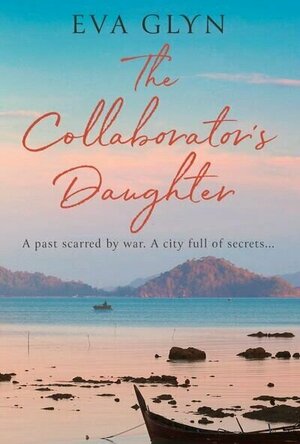

This is something a little bit different to what a normally read but I enjoyed it nonetheless.
Set in two timeliness - 2010 and 1944 - the story is written from the point of view of Fran (Safranka) in Sussex in 2010 and her father, Branko in Dubrovnik in 1944. Fran was born in Dubrovnik but left with her mother when she was just a baby and never knew her father but was always told he was a hero.
Fran is now in her 60's; her stepfather has recently passed away having lost her mother a number of years earlier. With her son having grown up with his own family and having found out that her father's remains have been found in a mass grave containing fascists and collaborators from World War II; Fran decides to return to her country of birth to learn more about her father and to find out what she wants to do with the rest of her life now she has no one left to care for.
I loved the characters and particularly the fact that they were of an older generation which was a refreshing change proving that it's never too late to change your life although it remains a scary concept. I loved the setting and the descriptions of Dubrovnik which really made me want to visit. I found the sections set in 1944 were my favourite parts, I wish they had been longer and more in depth however, the author has explained why this was very difficult due to the lack of information available.
Overall, an enjoyable read and whilst I don't usually like a book that has quite such a focus on romance, it did work well with this particular story and it made for a gentle and easy read.
My thanks go to HarperCollins UK, One More Chapter and NetGalley for enabling me to read and share my thoughts of The Collaborator's Daughter.
Set in two timeliness - 2010 and 1944 - the story is written from the point of view of Fran (Safranka) in Sussex in 2010 and her father, Branko in Dubrovnik in 1944. Fran was born in Dubrovnik but left with her mother when she was just a baby and never knew her father but was always told he was a hero.
Fran is now in her 60's; her stepfather has recently passed away having lost her mother a number of years earlier. With her son having grown up with his own family and having found out that her father's remains have been found in a mass grave containing fascists and collaborators from World War II; Fran decides to return to her country of birth to learn more about her father and to find out what she wants to do with the rest of her life now she has no one left to care for.
I loved the characters and particularly the fact that they were of an older generation which was a refreshing change proving that it's never too late to change your life although it remains a scary concept. I loved the setting and the descriptions of Dubrovnik which really made me want to visit. I found the sections set in 1944 were my favourite parts, I wish they had been longer and more in depth however, the author has explained why this was very difficult due to the lack of information available.
Overall, an enjoyable read and whilst I don't usually like a book that has quite such a focus on romance, it did work well with this particular story and it made for a gentle and easy read.
My thanks go to HarperCollins UK, One More Chapter and NetGalley for enabling me to read and share my thoughts of The Collaborator's Daughter.
Lindsay (1812 KP) rated A Season on the Wind in Books
Oct 26, 2022
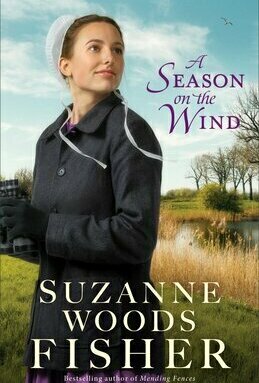

This book is about two lovely Amish folks. One named Micah and his older sister Penny. We meet a fellow twitcher who looks a little lost and does not seem to want to remember his past. Will he remember Penny Weaver? Or will he be a stranger?
We have birds, and bird logs mentioned at the end of each chapter. Will Ben see his way back to the Amish and find that his love is the one that sparked his love for birds? Will there be romance sparked for Penny and Ben and maybe even Micah? Ben's cousin seems to may have found a love interest.
Ben seems to need to get over an illness but does not know he has it. While he is in town, Happ seems to recognize Ben, and so does Penny when she first steps and arrives at Lost Creek Farm. What will Ben do, and will Ben go bird searching with Micah? They seem to be on a rare hunt for a White-Winged Tern.
We are getting more of the relationships from Natalie and Boyd. Micah seems to be interested in Shelley Yoder. But is Shelley into Micah? Ben seems to be on the edge of his past life and does not want to see his father. All because of his brother Levi. But will Ben come around soon? He keeps getting memories of this little brother Levi. Are they good or not? It seems the lord is working on them all. Including Penny. Will Ben and Penny get together?
The CBC is around, and all of them are trying to partner up for the big event. The Christmas Bird Count is the first for StoneyRidge. How will it go, and Will Ben catch his rare bird? It seems to be evading Micah and Ben, this little White Tail Tern. Natalie may be falling for Boyd, but will she run away too? I hope she stops comparing Boyd to her ex-husband Joel. But we will have to see.
We have birds, and bird logs mentioned at the end of each chapter. Will Ben see his way back to the Amish and find that his love is the one that sparked his love for birds? Will there be romance sparked for Penny and Ben and maybe even Micah? Ben's cousin seems to may have found a love interest.
Ben seems to need to get over an illness but does not know he has it. While he is in town, Happ seems to recognize Ben, and so does Penny when she first steps and arrives at Lost Creek Farm. What will Ben do, and will Ben go bird searching with Micah? They seem to be on a rare hunt for a White-Winged Tern.
We are getting more of the relationships from Natalie and Boyd. Micah seems to be interested in Shelley Yoder. But is Shelley into Micah? Ben seems to be on the edge of his past life and does not want to see his father. All because of his brother Levi. But will Ben come around soon? He keeps getting memories of this little brother Levi. Are they good or not? It seems the lord is working on them all. Including Penny. Will Ben and Penny get together?
The CBC is around, and all of them are trying to partner up for the big event. The Christmas Bird Count is the first for StoneyRidge. How will it go, and Will Ben catch his rare bird? It seems to be evading Micah and Ben, this little White Tail Tern. Natalie may be falling for Boyd, but will she run away too? I hope she stops comparing Boyd to her ex-husband Joel. But we will have to see.

Hadley (567 KP) rated Beautiful Creatures (Caster Chronicles, #1) in Books
Sep 3, 2019
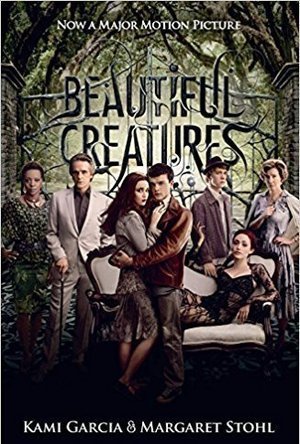
Great story (1 more)
Witches and supernatural beings!
A lot of inconsistencies (1 more)
Bad writing
Given the great success of the 'Harry Potter' series, witchcraft has become a prevalent theme in most books written in the last decade. 'Beautiful Creatures' may not have a wizard school, but they do have the old town of Gatlin, South Carolina.
'Beautiful Creatures,' is a witchy novel series by Kami Garcia and Margaret Stohl, that brings the family of witches (among other supernatural creatures) to life: focusing on the niece, Lena, who just came to town to live with her shut-in uncle, Macon. Readers soon find out that Lena belongs to one of the oldest families in the Southern town of Gatlin.
Yet, the main character of this book isn't Lena, but a young man named Ethan Wate; a long time resident of Gatlin who attends the local high school. When we meet Ethan, we find out that he has been having dreams of a girl and a song for some time before Lena showed up, but when he overhears Lena playing the exact same song from his dream, he's sure it's her he's dreaming of.
Suddenly, the two, are able to communicate telepathically. This part is written in a way that is not believable for the reader because Ethan has been feeling that he is going crazy up until this point: hearing the song being played by Lena caused him to flee the school, as with some other things (not to give away too much), but when he can suddenly speak to Lena telepathically, it's as if this is completely normal to him. A more believable part would have had Ethan freaking out as he did before, maybe even more so.
The story takes a dramatic turn when Ethan finds an old locket out in a garden beside Macon's house. He and Lena are quickly transported to visions of a past event that happened nearby involving that very locket. For most of the book, the two are trying to find out more about this locket and who it belonged to. Each time Ethan and Lena touch the locket together, they are transported to another event in the same vision. They soon find out that the locket belonged to the loved one of a distant relative belonging to Lena's family from 1865. And as the reader continues, this locket and it's visions hold a very important key to the story.
Throughout the story, it's hinted at that Ethan may not just be a human, but may have some supernatural powers of his own, but unfortunately, this never comes to fruition. Being that this is the first of four books, and I have only read this one, the other books may bring light to this subject. Lena, on the other hand, is about to turn sixteen, and turning sixteen in her family means you will be 'claimed.' Lena explains: " 'In my family, when you turn sixteen, you're Claimed. Your fate is chosen for you, and you become Light, like Aunt Del and Reece, or you become Dark, like Ridley. Dark or Light, Black or White. There's no grey in my family. We can't choose, and we can't undo it once we're Claimed. ' " In summary, Lena's family either become good witches (or whatever supernatural being they are) or bad witches (and such). Lena, by family, is considered a Natural at this point, where she can control the weather, write on walls without her hands or a pen,and break glass at will, so they believe she is most likely to be a Light witch, and they try to reinforce this thought into her throughout the entire book.
'Beautiful Creatures' is a great story, but it has quite a few flaws. The flow of the story is good, but when you come across so many inconsistencies, it can break the connection between story and reader, such as Lena suddenly revealing that her family had a word for what they called the telepathic communication between her and Ethan:
" 'Who knew Kelting would save my life.'
I had missed something, as usual. 'What's Kelting?'
'That's what it's called, the way we're able to communicate with each other no matter where we are. Some Casters can Kelt, some can't. Ridley and I used to be able to talk to each other at school that way, but---' ." Up until this scene, the reader is left to believe that this has never happened to Lena before, so to just bring this out so suddenly leaves us to think that this was a quick add-on to give Lena and her sister, Ridley, more of a connection,. Another time is when the popular girls at the local high school have it out for Lena, Lena lets on that she can't face them, but the very next page she's telling Ethan that she has to:
" I tried to pull her up, but she pulled me back down. She shrunk back next to the tire. 'I just need a minute.'
'Are you okay?'
'Look at them. They think I'm a monster. They formed a club.'
'They can't stand outsiders, and you're the new girl. A window broke. They need someone to blame. This is just a ---'
'Witch hunt.'
I wasn't going to say that.
But you were thinking it.
I squeezed her hand and my hair stood on end.
You don't have to do this.
Yes I do. I let people like them run me out of my last school. I'm not going to let it happen again. "
The story continues with Lena fearing that she is going to go Dark, so her and Ethan come across a locket vision of a witchcraft book that may be of help called 'the Book of Moons.' This is, personally, one of my favorite parts of 'Beautiful Creatures' because, in order for them to get the book, they have to go to a specific grave and dig it up! In this very chapter, we get to see a ghost - and this is the only chapter we see a ghost - and it is done wonderfully:
" She was only partially materialized, a mix of cloudy haze and light, fading in and out as the air moved through her ghostly form, but there was no mistaking it. It was Genevieve, the woman in the painting. She had the same golden eyes and long, wavy red hair. Her hair blew gently in the wind, as if she was just a woman sitting on a bench at the bus stop, instead of an apparition sitting on a headstone in a graveyard. She was beautiful, even in her present state, and terrifying at the same time. "
The majority of the story involves Lena's family and Ethan trying everything they can to keep her from being claimed Dark. This seems to be a nod to reality, where all of us have a choice to be a good person or a bad person, but in 'Beautiful Creatures,' the authors play off of the fear that many people have: that they are just like their family, and have no control over who they are or will be. Overall, I believe readers of the 'Harry Potter' series would like this book, but would I read this again, although I gave it a very low rating? Yes, the story is that intriguing, but the writing could use quite a bit of work.
'Beautiful Creatures,' is a witchy novel series by Kami Garcia and Margaret Stohl, that brings the family of witches (among other supernatural creatures) to life: focusing on the niece, Lena, who just came to town to live with her shut-in uncle, Macon. Readers soon find out that Lena belongs to one of the oldest families in the Southern town of Gatlin.
Yet, the main character of this book isn't Lena, but a young man named Ethan Wate; a long time resident of Gatlin who attends the local high school. When we meet Ethan, we find out that he has been having dreams of a girl and a song for some time before Lena showed up, but when he overhears Lena playing the exact same song from his dream, he's sure it's her he's dreaming of.
Suddenly, the two, are able to communicate telepathically. This part is written in a way that is not believable for the reader because Ethan has been feeling that he is going crazy up until this point: hearing the song being played by Lena caused him to flee the school, as with some other things (not to give away too much), but when he can suddenly speak to Lena telepathically, it's as if this is completely normal to him. A more believable part would have had Ethan freaking out as he did before, maybe even more so.
The story takes a dramatic turn when Ethan finds an old locket out in a garden beside Macon's house. He and Lena are quickly transported to visions of a past event that happened nearby involving that very locket. For most of the book, the two are trying to find out more about this locket and who it belonged to. Each time Ethan and Lena touch the locket together, they are transported to another event in the same vision. They soon find out that the locket belonged to the loved one of a distant relative belonging to Lena's family from 1865. And as the reader continues, this locket and it's visions hold a very important key to the story.
Throughout the story, it's hinted at that Ethan may not just be a human, but may have some supernatural powers of his own, but unfortunately, this never comes to fruition. Being that this is the first of four books, and I have only read this one, the other books may bring light to this subject. Lena, on the other hand, is about to turn sixteen, and turning sixteen in her family means you will be 'claimed.' Lena explains: " 'In my family, when you turn sixteen, you're Claimed. Your fate is chosen for you, and you become Light, like Aunt Del and Reece, or you become Dark, like Ridley. Dark or Light, Black or White. There's no grey in my family. We can't choose, and we can't undo it once we're Claimed. ' " In summary, Lena's family either become good witches (or whatever supernatural being they are) or bad witches (and such). Lena, by family, is considered a Natural at this point, where she can control the weather, write on walls without her hands or a pen,and break glass at will, so they believe she is most likely to be a Light witch, and they try to reinforce this thought into her throughout the entire book.
'Beautiful Creatures' is a great story, but it has quite a few flaws. The flow of the story is good, but when you come across so many inconsistencies, it can break the connection between story and reader, such as Lena suddenly revealing that her family had a word for what they called the telepathic communication between her and Ethan:
" 'Who knew Kelting would save my life.'
I had missed something, as usual. 'What's Kelting?'
'That's what it's called, the way we're able to communicate with each other no matter where we are. Some Casters can Kelt, some can't. Ridley and I used to be able to talk to each other at school that way, but---' ." Up until this scene, the reader is left to believe that this has never happened to Lena before, so to just bring this out so suddenly leaves us to think that this was a quick add-on to give Lena and her sister, Ridley, more of a connection,. Another time is when the popular girls at the local high school have it out for Lena, Lena lets on that she can't face them, but the very next page she's telling Ethan that she has to:
" I tried to pull her up, but she pulled me back down. She shrunk back next to the tire. 'I just need a minute.'
'Are you okay?'
'Look at them. They think I'm a monster. They formed a club.'
'They can't stand outsiders, and you're the new girl. A window broke. They need someone to blame. This is just a ---'
'Witch hunt.'
I wasn't going to say that.
But you were thinking it.
I squeezed her hand and my hair stood on end.
You don't have to do this.
Yes I do. I let people like them run me out of my last school. I'm not going to let it happen again. "
The story continues with Lena fearing that she is going to go Dark, so her and Ethan come across a locket vision of a witchcraft book that may be of help called 'the Book of Moons.' This is, personally, one of my favorite parts of 'Beautiful Creatures' because, in order for them to get the book, they have to go to a specific grave and dig it up! In this very chapter, we get to see a ghost - and this is the only chapter we see a ghost - and it is done wonderfully:
" She was only partially materialized, a mix of cloudy haze and light, fading in and out as the air moved through her ghostly form, but there was no mistaking it. It was Genevieve, the woman in the painting. She had the same golden eyes and long, wavy red hair. Her hair blew gently in the wind, as if she was just a woman sitting on a bench at the bus stop, instead of an apparition sitting on a headstone in a graveyard. She was beautiful, even in her present state, and terrifying at the same time. "
The majority of the story involves Lena's family and Ethan trying everything they can to keep her from being claimed Dark. This seems to be a nod to reality, where all of us have a choice to be a good person or a bad person, but in 'Beautiful Creatures,' the authors play off of the fear that many people have: that they are just like their family, and have no control over who they are or will be. Overall, I believe readers of the 'Harry Potter' series would like this book, but would I read this again, although I gave it a very low rating? Yes, the story is that intriguing, but the writing could use quite a bit of work.
postapocalypticplayground (27 KP) rated Six of Crows in Books
Jan 9, 2018
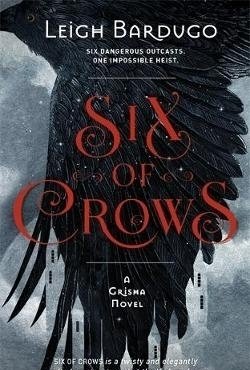


Every so often a book will come along which will make you re-evaluate all the 5 star reviews you have given in the past. Six of Crows for me is that book. Set in Leigh Bardugo's "Grishaverse" it is the tale of an impossible heist where the rewards far outweigh the risk. Our main protagonist Kaz Brekker is fast becoming a legend in the bowels of the Barrel, the criminal underworld of Ketterdam. He is young, but a driven and ruthless trickster, with a team to match. They are tasked with breaching the heavily fortified Ice Court to rescue a scientist held hostage. It's a feat which has never been achieved, but with the promise of a reward that will take Kaz and his team out of the bottom of the Barrel it's risk he's willing to take, after all, just how many things could go wrong?
Six of Crows is told in multiple points of view, which can sometimes be confusing for me but there were only a couple of occasions that I found myself flipping back to the start of the chapter to remind myself who in the limelight. I felt that this was a style that worked really well with this story as the main six often found themselves in different places with different tasks and this way of storytelling allowed it all to come seamlessly together. Whilst it does majorly involve the Grisha, I found it was a world that I easily fell into pace with, without having read the Grisha Trilogy first. I'm told there are a number of nods which are present but I never felt lost or like I was missing out.
The characters are fantastic, my favourite by far was Inej, the wraith. Rescued from the oldest profession by Kaz, she is a force to be reckoned with, a silent assassin. There are no walls she can't climb or secrets she can't glean. I felt most for her, what she had been through before joining with Kaz and how it had driven her to become who she now was. I loved the sense of purpose that grew within her throughout the story. The others too though all have their stories to tell, a proper band of misfits all with their secrets and terrible histories that have shaped them. It's hard to remember that they are all teenagers, but then that makes them easier to underestimate.
The audacity behind Kaz's plan is immeasurable and it is through this that I am just in awe of the writing. At just shy of 500 pages there was not a single moment of rest for the reader, I felt on edge every step of the way. I felt fear for these characters, trepidation but also the good humour that only a rag tag bunch of forgotten teenagers could have in the circumstances they faced. I simply did not want to put this down, at all. The last of the six sections I tried to slow down as I knew it was coming to an end but it pulled me in and wouldn't let go. It's rare for a book to leave me breathless, but this one really did. It's the first of a duology and I can't wait for pay day to roll round so I can pick up Crooked Kingdom. If I could give this six stars I would, It's a truly amazing read and If you're a YA fantasy fan you will not be disappointed!
Six of Crows is told in multiple points of view, which can sometimes be confusing for me but there were only a couple of occasions that I found myself flipping back to the start of the chapter to remind myself who in the limelight. I felt that this was a style that worked really well with this story as the main six often found themselves in different places with different tasks and this way of storytelling allowed it all to come seamlessly together. Whilst it does majorly involve the Grisha, I found it was a world that I easily fell into pace with, without having read the Grisha Trilogy first. I'm told there are a number of nods which are present but I never felt lost or like I was missing out.
The characters are fantastic, my favourite by far was Inej, the wraith. Rescued from the oldest profession by Kaz, she is a force to be reckoned with, a silent assassin. There are no walls she can't climb or secrets she can't glean. I felt most for her, what she had been through before joining with Kaz and how it had driven her to become who she now was. I loved the sense of purpose that grew within her throughout the story. The others too though all have their stories to tell, a proper band of misfits all with their secrets and terrible histories that have shaped them. It's hard to remember that they are all teenagers, but then that makes them easier to underestimate.
The audacity behind Kaz's plan is immeasurable and it is through this that I am just in awe of the writing. At just shy of 500 pages there was not a single moment of rest for the reader, I felt on edge every step of the way. I felt fear for these characters, trepidation but also the good humour that only a rag tag bunch of forgotten teenagers could have in the circumstances they faced. I simply did not want to put this down, at all. The last of the six sections I tried to slow down as I knew it was coming to an end but it pulled me in and wouldn't let go. It's rare for a book to leave me breathless, but this one really did. It's the first of a duology and I can't wait for pay day to roll round so I can pick up Crooked Kingdom. If I could give this six stars I would, It's a truly amazing read and If you're a YA fantasy fan you will not be disappointed!
Sass Perilla (36 KP) rated Frankenstein in Books
Aug 9, 2019

The plot and major themes. (1 more)
Further work it inspired.
Readable, but disjointed and repetitive in parts.
Contains spoilers, click to show
Fundamentally, the problem with this book is the narrator, Victor. He is thoroughly detestable. A selfish, cowardly, irresponsible, excuse ridden, narcissistic d****e-bag of the highest order. And unfortunately, it is Victor Frankenstein’s POV that we are forced into for the majority of the novel.
My hatred for and frustration with the self-pitying, feckless behaviour of the (pseudo)
protagonist made this an irritating read for me- and to an extent I think this was Shelley’s intention. Victor isn’t designed to be the likable, affable, morally “good” man fallen from grace he believes himself to be, and the horrific events that befall those around him are of his making.
However, this doesn’t make him any less grating! The "monster" (to me reminiscent of Caliban with his lyrical speech and enforced isolation, being neither man nor not man) is eloquent and persuasive when he asks his creator to account for his misdoings. So, you’ve got to ask yourself, if an infanticidal, demonic, bag of sew together corpses is actually more engaging than the main storyteller, is that storyteller really the
right character to be telling the story?
Now, with all that said, it is an important book. A work by a female author with strong female characters (albeit background characters) who was only nineteen when she wrote the initial draft. Very impressive. But, for me her youth is evident. When we teach secondary school pupils to write creatively, we often give them the ambiguous instruction “show don’t tell”, and for me the book is more of a list of horrible and horrific events told in a Chinese puzzle box style story within a story, rather than an engaging and “complete” narrative. It feels like she chooses to place focus on the wrong “bits”- for example the whole of chapter nineteen where Victor travels the British Isles, comments briefly on the local architecture of each town and city and
then repetitively reminds us that he couldn’t enjoy the surroundings because of his angst.
And I would have at least like to have seen some of the courtroom drama when Victor is tried for the death of Clerval...
So, I hate to be “that” gal, who poo-poos these fantastic works of fiction (we know they’re great because some clever-britches told us they were) but in all honesty, the novel ain’t that good, and I’ll maintain that stance no matter how clever the britches of the opposing schools of thought.
I think the continuing appeal is in it’s universal themes: parenting, nature versus
nurture; morality and scientific advancement- and the whole idea of stitching a creature out of
corpse-parts and electrocuting it to life is pretty darn cool. And there are some really effective
horror scenes, such as the vignette of Victor ripping apart project lady-monster (I kind wish she had a name- a working title- but given he can’t even be bothered to name monster number one I guess this was all too much to hope for).
It’s readable, but it’s value, for me at any rate, lies in the offshoots and creativity it has spawned, rather than the work itself.
My hatred for and frustration with the self-pitying, feckless behaviour of the (pseudo)
protagonist made this an irritating read for me- and to an extent I think this was Shelley’s intention. Victor isn’t designed to be the likable, affable, morally “good” man fallen from grace he believes himself to be, and the horrific events that befall those around him are of his making.
However, this doesn’t make him any less grating! The "monster" (to me reminiscent of Caliban with his lyrical speech and enforced isolation, being neither man nor not man) is eloquent and persuasive when he asks his creator to account for his misdoings. So, you’ve got to ask yourself, if an infanticidal, demonic, bag of sew together corpses is actually more engaging than the main storyteller, is that storyteller really the
right character to be telling the story?
Now, with all that said, it is an important book. A work by a female author with strong female characters (albeit background characters) who was only nineteen when she wrote the initial draft. Very impressive. But, for me her youth is evident. When we teach secondary school pupils to write creatively, we often give them the ambiguous instruction “show don’t tell”, and for me the book is more of a list of horrible and horrific events told in a Chinese puzzle box style story within a story, rather than an engaging and “complete” narrative. It feels like she chooses to place focus on the wrong “bits”- for example the whole of chapter nineteen where Victor travels the British Isles, comments briefly on the local architecture of each town and city and
then repetitively reminds us that he couldn’t enjoy the surroundings because of his angst.
And I would have at least like to have seen some of the courtroom drama when Victor is tried for the death of Clerval...
So, I hate to be “that” gal, who poo-poos these fantastic works of fiction (we know they’re great because some clever-britches told us they were) but in all honesty, the novel ain’t that good, and I’ll maintain that stance no matter how clever the britches of the opposing schools of thought.
I think the continuing appeal is in it’s universal themes: parenting, nature versus
nurture; morality and scientific advancement- and the whole idea of stitching a creature out of
corpse-parts and electrocuting it to life is pretty darn cool. And there are some really effective
horror scenes, such as the vignette of Victor ripping apart project lady-monster (I kind wish she had a name- a working title- but given he can’t even be bothered to name monster number one I guess this was all too much to hope for).
It’s readable, but it’s value, for me at any rate, lies in the offshoots and creativity it has spawned, rather than the work itself.

Phil Leader (619 KP) rated Brood of Bones (Lady of Gems #1) in Books
Nov 11, 2019
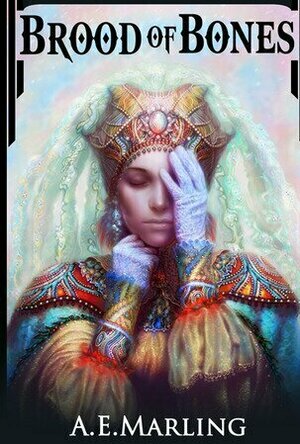
I got this book because I wanted to read some of Marling's work and it seemed a good starting point. I downloaded it at the same time as a lot of other works, intending just to skim the first chapter of each and then decide which one I was going to read.
I read the first part of this novel and I was hooked. The story unfolds really well and there is real suspense. The writing is a joy to read and the descriptions of the world are really evocative.
The story revolves around Elder Enchantress Hiresha who having become a powerful practitioner of magic is requested to return to her home town. There she quickly realises that something is very wrong - all the women are pregnant, and all are due around the same time. Clearly this is not normal, but what is the cause and why has it happened?
Hiresha must unravel the threads to work out what is going on and exactly what the threat to the town is. Perhaps the pregnancies are the divine work of a god, but for what purpose? Or perhaps the dark Lord of the Feast is involved so that he may dine on the fears of the population in the night? Hiresha must find the truth - and quickly - and along the way she will make both questionable alliances and bitter enemies. But who can really be trusted when the fate of the city is at stake?
The world is immersive, and Marling does well to convey just enough information to ensure the reader is not overwhelmed by some of the stranger aspects of his world. I have read other (more well known) authors who struggle in this regard. The characterisations are good, particularly impressive is Hiresha who despite her mastery of magic is very human, with many faults and failings which she must overcome during the course of the story. The supporting characters are also well drawn and have a depth. There is a real impression that they are leading their own lives outside of the story.
The story itself is mainly a fantasy 'whodunnit' with Hiresha gathering evidence and suspects, as well has finding out exactly what the pregnancies entail. The main twist is that she suffers from a form of narcolepsy and finds it hard to keep awake - and when awake she is not very perceptive. But when sleeps she is able to perform her magic and analyse what she has seen while awake.
Once the culprit is revealed, the ending is hard to put down as Hiresha has put herself - and possibly the whole town - in grave danger in order to find out the truth. The final part of the story is a breathtaking battle as powerful forces fight over the fate of the town.
I really could not stop reading this book. I looked forward to picking it up and was reluctant to put it down. The story is really very compelling and despite having a lot of swords and sorcery in it, this does not fall into any of the well trodden paths of fantasy. The writing moves the story on at a good pace and is full of fantastic descriptions and little details that really bring the world alive.
I rate this book very highly. I know it is only January but already I feel that this is easily one of the best books I will read this year. Very highly recommended
I read the first part of this novel and I was hooked. The story unfolds really well and there is real suspense. The writing is a joy to read and the descriptions of the world are really evocative.
The story revolves around Elder Enchantress Hiresha who having become a powerful practitioner of magic is requested to return to her home town. There she quickly realises that something is very wrong - all the women are pregnant, and all are due around the same time. Clearly this is not normal, but what is the cause and why has it happened?
Hiresha must unravel the threads to work out what is going on and exactly what the threat to the town is. Perhaps the pregnancies are the divine work of a god, but for what purpose? Or perhaps the dark Lord of the Feast is involved so that he may dine on the fears of the population in the night? Hiresha must find the truth - and quickly - and along the way she will make both questionable alliances and bitter enemies. But who can really be trusted when the fate of the city is at stake?
The world is immersive, and Marling does well to convey just enough information to ensure the reader is not overwhelmed by some of the stranger aspects of his world. I have read other (more well known) authors who struggle in this regard. The characterisations are good, particularly impressive is Hiresha who despite her mastery of magic is very human, with many faults and failings which she must overcome during the course of the story. The supporting characters are also well drawn and have a depth. There is a real impression that they are leading their own lives outside of the story.
The story itself is mainly a fantasy 'whodunnit' with Hiresha gathering evidence and suspects, as well has finding out exactly what the pregnancies entail. The main twist is that she suffers from a form of narcolepsy and finds it hard to keep awake - and when awake she is not very perceptive. But when sleeps she is able to perform her magic and analyse what she has seen while awake.
Once the culprit is revealed, the ending is hard to put down as Hiresha has put herself - and possibly the whole town - in grave danger in order to find out the truth. The final part of the story is a breathtaking battle as powerful forces fight over the fate of the town.
I really could not stop reading this book. I looked forward to picking it up and was reluctant to put it down. The story is really very compelling and despite having a lot of swords and sorcery in it, this does not fall into any of the well trodden paths of fantasy. The writing moves the story on at a good pace and is full of fantastic descriptions and little details that really bring the world alive.
I rate this book very highly. I know it is only January but already I feel that this is easily one of the best books I will read this year. Very highly recommended
Ivana A. | Diary of Difference (1171 KP) rated Strange Weather in Tokyo in Books
Oct 5, 2020
<a href="https://amzn.to/2Wi7amb">Wishlist</a>; | <a
<a href="https://diaryofdifference.com/">Blog</a>; | <a href="https://www.facebook.com/diaryofdifference/">Facebook</a>; | <a href="https://twitter.com/DiaryDifference">Twitter</a>; | <a href="https://www.instagram.com/diaryofdifference/">Instagram</a>; | <a href="https://www.pinterest.co.uk/diaryofdifference/pins/">Pinterest</a>;
<img src="https://diaryofdifference.com/wp-content/uploads/2020/08/Book-Review-Banner-33.png"/>;
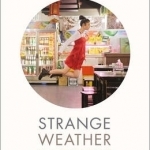
Being born in Macedonia, I grew up reading books that were mostly translated. Because of that, I always appreciate the amazing job that translators do and have always cherished translated copies of my books. Strange Weather in Tokyo is no different, and Allison Markin Powell did an amazing job translating this book.
I read this book in August as part of the Tandem and Granta Books Instagram readalong - to celebrate #Kawakamimonth as well as Women in Translation month - and I am so glad I was able to join.
<b><i>Synopsis:</i></b>
One night when she is drinking alone in a local bar, Tsukiko finds herself sitting next to her former high school teacher. Over the coming months they share food and drink sake, and as seasons pass - from spring cherry blossom to autumnal mushrooms - Tsukiko and her teacher develop a hesitant intimacy that tilts awkwardly and poignantly towards love.
<b><i>My Thoughts:</i></b>
From the very first chapter, we travel to Japan and the whole mood changes. I could grasp the culture, taste the food and feel the weather changing through the seasons. The writing is brief and concise, yet full of emotion and wisdom. Both the characters and the scene had something very special about their description - they appeared so close, so real, as if you could just reach out your hand and touch them, feel them, taste them. This feeling stayed with me and I will cling on to it, because it happens so rarely these days.
Even though I am not a fan of student-teacher relationships, this relationship in particular kept me intrigued, simply because it was so much different than anything I have encountered before.
Tsukiko is young and tries to live in the modern world, while Sensei is much older and very traditional. They meet in the bar and talk. There are no dates, nor arranged meetings. They may see each other, and they may not. Sometimes it could be months before they bump into each other again. And that’s the beauty of their relationship. They live their own lives independently, and having each other as company is an added bonus.
A few plot twists lingered in the way of their love. Tsukiko’s potential boyfriend, who is the same age as her, Sensei’s old age and what that might mean, and the numerous arguments that seem bizarre, but test their relationship on deeper levels. It was very refreshing to see the brutally honest issue that is age between couples. Sensei knows he doesn’t have too long to live, and he is honest with Tsukiko, as he wants her to truly understand what this means, and once she understands it, he wants to ensure she is okay to proceed the relationship, given those circumstances.
<b><i>I have mixed feelings about the ending of Strange Weather in Tokyo.</i></b>
I was surprised at how it ended, but then I understood why. Perhaps I wanted a complete closure, but I learned that life doesn’t do closures. There is no perfect or right time to do something. We only have the “now” and we should enjoy every moment while we can.
<a href="https://diaryofdifference.com/">Blog</a>; | <a href="https://www.facebook.com/diaryofdifference/">Facebook</a>; | <a href="https://twitter.com/DiaryDifference">Twitter</a>; | <a href="https://www.instagram.com/diaryofdifference/">Instagram</a>; | <a href="https://www.pinterest.co.uk/diaryofdifference/pins/">Pinterest</a>;
<img src="https://diaryofdifference.com/wp-content/uploads/2020/08/Book-Review-Banner-33.png"/>;
Being born in Macedonia, I grew up reading books that were mostly translated. Because of that, I always appreciate the amazing job that translators do and have always cherished translated copies of my books. Strange Weather in Tokyo is no different, and Allison Markin Powell did an amazing job translating this book.
I read this book in August as part of the Tandem and Granta Books Instagram readalong - to celebrate #Kawakamimonth as well as Women in Translation month - and I am so glad I was able to join.
<b><i>Synopsis:</i></b>
One night when she is drinking alone in a local bar, Tsukiko finds herself sitting next to her former high school teacher. Over the coming months they share food and drink sake, and as seasons pass - from spring cherry blossom to autumnal mushrooms - Tsukiko and her teacher develop a hesitant intimacy that tilts awkwardly and poignantly towards love.
<b><i>My Thoughts:</i></b>
From the very first chapter, we travel to Japan and the whole mood changes. I could grasp the culture, taste the food and feel the weather changing through the seasons. The writing is brief and concise, yet full of emotion and wisdom. Both the characters and the scene had something very special about their description - they appeared so close, so real, as if you could just reach out your hand and touch them, feel them, taste them. This feeling stayed with me and I will cling on to it, because it happens so rarely these days.
Even though I am not a fan of student-teacher relationships, this relationship in particular kept me intrigued, simply because it was so much different than anything I have encountered before.
Tsukiko is young and tries to live in the modern world, while Sensei is much older and very traditional. They meet in the bar and talk. There are no dates, nor arranged meetings. They may see each other, and they may not. Sometimes it could be months before they bump into each other again. And that’s the beauty of their relationship. They live their own lives independently, and having each other as company is an added bonus.
A few plot twists lingered in the way of their love. Tsukiko’s potential boyfriend, who is the same age as her, Sensei’s old age and what that might mean, and the numerous arguments that seem bizarre, but test their relationship on deeper levels. It was very refreshing to see the brutally honest issue that is age between couples. Sensei knows he doesn’t have too long to live, and he is honest with Tsukiko, as he wants her to truly understand what this means, and once she understands it, he wants to ensure she is okay to proceed the relationship, given those circumstances.
<b><i>I have mixed feelings about the ending of Strange Weather in Tokyo.</i></b>
I was surprised at how it ended, but then I understood why. Perhaps I wanted a complete closure, but I learned that life doesn’t do closures. There is no perfect or right time to do something. We only have the “now” and we should enjoy every moment while we can.

Comida y Cultura en el Mundo Hispanico (Food and Culture in the Hispanic World)
Book
English summary: This is the first Spanish textbook to use food as the vantage point from which to...