
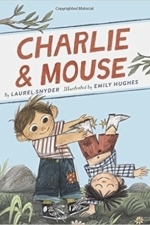
Charlie & Mouse
Emily Hughes and Laurel Snyder
Book
Four hilarious stories, two inventive brothers, one irresistible book! Join Charlie and Mouse as...
Children
BookblogbyCari (345 KP) rated The Naked Future in Books
Aug 5, 2018
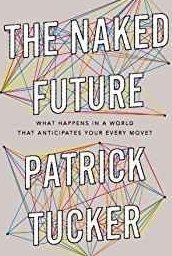

This is a book about how the digital footprint we leave behind us can be used to make predictions about our future in all aspects of our lives. But are we seeing the coming to being of a dystopian science fiction, or are we tapping into a new superpower?
Every app on every device we use leaves a digital trail about us, and this has implications in the fields of medicine and the spread of infections, education and learning, and crime prediction, through to movie preference and dating.
The book predominantly examines the value to society in general but also looks at the benefits to the individual. Of course, these benefits come at a cost to our privacy, which the book also briefly addresses. Each chapter is centered on its own topic. I will mention each but in the interests of brevity won’t go into detail on each topic.
Chapter 1 begins by describing how certain apps can be extremely useful warning providers, but by the end of the chapter, we are looking at how your smartphone apps can be used to locate you, even when your GPS is turned off and you’re not geo-tagging posts or tweets. With modern statistical models and enough data points, it’s possible to predict where you will be down to the hour and within a square block one and a half years from now. Turning off your GPS doesn't actually make you less predictable, it just makes your predictability level harder to detect - your future remains naked.
Similarly, in Chapter 2 which examines deliberate self-tracking, Tucker notes that Fitbit users who are confused or ignorant of the device’s privacy settings are inadvertently sharing the data details of their sexual activity.
This seems like frightening stuff, but then the conversation turns to more benevolent uses of such technology. Chapter 3, by way of an imagined story, examines how such technology can be used to predict the spread of dangerous infections, including the identification of new strains of virus as new mutations occur.
Chapter 4 looks at the use of such technology in weather forecasting, and how it’s been used to make way for insurance against the effects of the weather for affected businesses. Chapter 5 explores how movie/book choice and ratings can be used to predict what makes a good movie/book.
We go back to the frightening stuff in Chapter 6. Here Tucker talks about how the smartphone has become the ultimate shopping accessory. Knowing what habitual time an individual wants a coffee, cig, or beer, is ideal for online advertisers, who will be able to send you a voucher/coupon or a mere suggestion right there on the spot. There could also be surveillance systems examining what you pick up and consider buying but don't put into basket /trolley. Tucker goes on to describe how data brokers such as Acxiom have begun selling on to advertisers access to not only your data to also to your future decisions.
Chapter 7 looks at education and learning, and makes the following good points: “What telemetric education offers is the chance for all students to raise their hands and be heard, without fear of confirming some unflattering, broadly held perception about their social group.” And “Imagine for a moment the power of knowing beforehand how well you would perform on a test but how disempowered you would feel if that same future was naked to your competition, or to your future potential employers.”
I like the title of chapter 8 “When Your Phone Says You’re In Love”. Here Tucker tells how online dating sites have become a living social science lab. Again here your personal details can be sold on. In the future, you could be rating your actual get-togethers on the app. Already invented is a “sociometer” which detects unconscious biological signals which show what role you’re taking in a conversation, and can then produce predictions on how the rest of the conversation will go.
Chapters 9 and 10 look at predictions in the where, when and who of acts of crime. He discusses where it has worked so far. But on this Tucker says “Predictive policing in the wrong hands looks less like a boon to public safety and more like a totalitarian hammer.”
The book concludes with Chapter 11, titled “The World That Anticipates Your Every Move”. Here one interviewee said as “Privacy is a blip on the radar of history.” Indeed the chapter ends with an obituary to privacy, where Tucker says “we will feel increasingly powerless against the tide of transparency rendering this planet in a new form as surely as the movement of glaciers carved our canyons and valleys.”
I’ve highlighted here the more worrisome aspects of the topics, but it’s important to note that Tucker does aim to offer a prescription for the situation, though it’s spread out in occasional paragraphs here and there rather than as a useful reference at the end. That said I found the actionable advice was rather brief and unoriginal.
Tucker presents a fair and balanced view of this important and highly relevant topic of our times, and the book is clearly well-researched. Some chapters show a little humor which was fun, but although the book is aimed at the layman, I often felt like I was reading a science textbook. The book is a real eye-opener, especially if it’s something you hadn’t given much thought to. The overall message of the book is clear: our data is already out there, but it’s ours first and foremost, and we can be savvy and use it to our advantage.
Pig: Cooking with a Passion for Pork
Book
The pork on your fork is a truly succulent meat, able to hold its own against any red-meat rival....
Guarding The Tongue ( Backbiting and Gossip ) By Imaam An-Nawawee for iPad
Lifestyle and Reference
App
All praise is for Allaah and may the peace and blessings be on His Final Messenger, his family and...
Taryn K (444 KP) rated Otherworldly Izakaya Nobu Volume 2 (manga) in Books
May 15, 2022 (Updated May 15, 2022)

The book starts off with one of the soldiers from volume 1, Hans, stopping by the pub after training only to find out it's 'Kisu Day'. Hans is surprised to see Chef Nobu deep frying the tempura-battered fish and putting it on paper, which is a very expensive commodity in Aitheria. The little details really make this series special, I think.
In chapter 2, "Thief", we meet a new helper, a young girl trying to help out her family, named Effa. There is a bit of confusion, but we get to meet the new deacon in town, who has already become a regular.
Chapter 3, "An Uninvited Guest", Chef Nobu learns a 'new' recipe, and we are reminded that Shinobu can cook as well. A pompous little man and his gourmet aristocrat boss stop by in search of the Ankake Yudofu that pleased the bride-to-be in volume 1, as she praised it at her wedding. Each chapter builds ties to other people or builds ties between Shinobu/Chef and the regulars, which Is another thing I love. Ankake Yudofu is out of season, as it is no longer winter, so schnitzel is apparently just the ticket, if Chef just knew what it is.
Chapter 4, "Quarreling Craftsmen", sees two new characters introduced. Holga, a glassmaker who heard about Izakaya Nobu from the tax collector Gehrnot, who enjoyed the 'Spaghetti Napolitan' in volume 1, and Han's father, a woodworker named Laurenz. They spend most of the chapter arguing and trying each other's dishes, but it is a friendly rivalry that gets settled down by a surprising person.
Chapter 5, "The Commander's Weakness", is hilarious due to more puns on squid than I ever thought could be made, but Commander Bertholdt has to conquer his fear of squid before his arranged marriage to the daughter of a fisherman. Such a good chapter. One of my favorites. "He squidn't!"
Chapter 6, "Effa in Wonderland", sees Effa going through the back door of the pub into modern Japan. Not much cooking in this chapter, but we find out a little more about how the pub ended up being in two places at once. Thankfully, she gets back to Aitheria safe and sound.
I'm not completely sure about this being a review as much as a rundown of what happens. It's just a feel-good series, with just a hair of drama, but nothing that can't be resolved in a chapter or perhaps two. The characters are likeable, for the most part, and those who aren't are meant to be unlikeable. The interpersonal relationships are fun to see revealed. Definitely a good pre-bed book. 😊

Christine A. (965 KP) rated Love my home: 99 clutter-free tips in only 10 minutes a day in Books
Dec 9, 2018
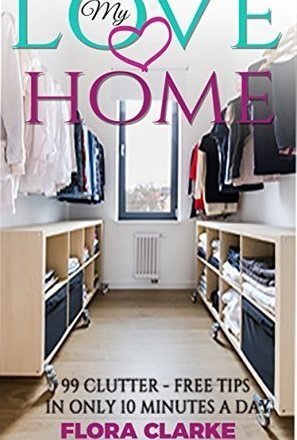

Tip #45, discusses demarcating the boundaries. Demarcate means to set the boundaries so the phrase is redundant. The word doesn’t fit with the rest of the vocabulary used.
Some of the language felt as if it was written by a person who does not live in the United States. We say bunk beds, not bunker beds. We write Tip #23, not #Tip 23. The term “netflix and chill” is often used as a euphemism for some form of sex in the US.
The book needs more editing. It’s an ARC book, but the cover states “only 10 minutes a day”, the inside title page states “20 minutes”.
This is a fast read but I could not recommend it.

EGW Writings
Reference and Book
App
EGW Writings application enables you to read and search the complete published writings of Ellen G....

Stage 7: Student Book
Book
Show students how to make progress towards Cambridge Checkpoint and IGCSE success with these...

Viscous Flow Applications
Book
The Boundary Element Method has now become a powerful tool of engineering analysis and is routinely...

MoMoBookDiary (20 KP) rated 13 Little Blue Envelopes (Little Blue Envelope, #1) in Books
Oct 1, 2018
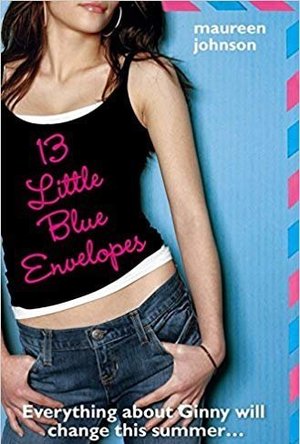

It had me hooked from the first envelope and read the book over a couple of days - only to find there is a follow-on novel out too!
I was luck enough to get this as a free book on Amazon kindle which is a fantastic way of discovering new authors. The book is aimed at teenage/young adult but I would recommend it for any age group.
MoMo’s Book Diary loved this delightful novel and recommends 13 Little Blue Envelopes as a 4 star read. (read May 2011)
This review is also published on http://www.momobookdiary.com and http://www.amazon.co.uk