
Search

Jordan Binkerd (567 KP) rated The Long Earth in Books
Aug 13, 2019
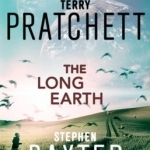


Note: this review is transposted from my personal review blog, and so was originally written several years ago. I figured if I reposted it here, someone might actually read it….
I’m a huge fan of Terry Pratchett’s work, in case you hadn’t noticed. I’m slowly working my way through his Discworld novels and Good Omens: The Nice and Accurate Predictions of Agnes Nutter, Witch, cowritten with Neil Gaiman, is among my favorite books of all time.* So when I discovered The Long Earth at my local library, I was ecstatic. I’d heard good things about Stephen Baxter, but never actually read any of his material. What I found was one of the best novels I have read in a very long time.
The premise here is that there are infinite worlds parallel to ours, spread out across the vast “contingency tree” of possible Earths, and in all of the Long Earth only one iteration has developed Human life–ours. Throughout our history there have always been a few with the natural ability to “step” between worlds at will, and still others who did so unintentionally and disappeared forever, but the world at large was unaware of this phenomenon until a reclusive scientist posted the blueprint for a “stepper” device on the internet and promptly disappeared from his apartment. Suddenly, the whole of the Long Earth is opened up to humanity. Suddenly, there is no shortage of land or resources. Economies are hard hit, jobs are lost, and once again humanity’s pioneer spirit is stirred to go out into the frontier and try to make their way….
Joshua Valiente is a so-called “natural stepper,” but he is probably unique among humanity. In the stress of childbirth, his mother stepped out of her world and into a parallel forest before slipping back without him. She managed to get back and recover him pretty quickly, but nevertheless young Joshua spent the first ten minutes or so of his life completely alone in his universe. As a result, he is uniquely attuned to the Long Earth. He can step between worlds without nausea, and is keenly sensitive to the number of people around, growing intensely uncomfortable the more crowded things get. Now, fifteen years after the world learned of the Long Earth, he spends most of his time exploring where no man has gone before. Lobsang, on the other hand, is a keenly intelligent AI, who may or may not be the latest reincarnation of a Tibetan motorcycle repairman. In collaboration with the shadowy Black Corporation, Lobsang has conceived a plan to test just how far the Long Earth goes. And he wants Joshua to go with him….the resulting journey is as much an exploration of what may have been as it is a geographical one, with most worlds mirroring our own, but a few display the effects of a cosmic “toss of a coin” going the other way–for example, there’s one where the Earth was completely destroyed by an asteroid strike sometime in the distant past.
Put quite plainly, this was the best thing I’ve read in a very long time. Very original, and to my (admittedly limited) understanding very faithful to the relevant science without losing quality of narrative or character. Pratchett’s humor and sardonic narrative voice shines through quite often in the interpersonal or introspective moments as well as those detailing more plot driven points–those scenes that would, in a film, become some form of montage showing that time is passing and this is what’s happening in the meantime. As I mentioned, I’ve never read Baxter before, so it’s harder to pick out his voice from their collaboration.
Infodumping has become something of a cardinal sin in the science fiction world, but sometimes you just have to throw some information at the reader so that he doesn’t get lost. I felt that The Long Earth handled that very well. We get our first glimpse at the long earth in montage mode, a series of vignettes that don’t make sense on their own, people popping in and out of worlds without understanding themselves what is going on. This is followed by the main story, twenty years after the discovery of the Long Earth, in which the bare bones are presented via a TV interview a character is half-watching while he waits. These bare bones of the conceptual basis of the book are then fleshed out in more detail as Joshua and Lobsang and introduced and get to know each other, discussing the various theories regarding the Long Earth at length in an effort to better understand it themselves. This is interspersed with flashbacks, sometimes Joshua recalling his experiences, sometimes Lobsang telling stories of other people based on his research into early encounters with the Long Earth. In this way Pratchett and Baxter manage to convey how humanity as a whole is dealing, not just Joshua and Lobsang. If I have one complaint with this it is not always clear why or how we are being told this–you don’t discover until the end of the chapter that Lobsang is telling this to Joshua instead of the authors just throwing in a tangential bit with no direct connection. And it is all connected–every revelation, every character you visit and then abandon early in the book will come back and have significance later on.
This is perhaps not the easiest read–you do have to engage it to understand it properly–but neither is it an incomprehensible enigma. As long as you pay attention you should be fine.
CONTENT: Some R-rated language, but not nearly what you could find elsewhere. Some violence, some grisly aftermath of violence. Sexual references, but nothing explicit.
*I’m frankly a little surprised I don’t have a review of that one up here, I must have reread it last just before I started doing this. I’ll have to fix that in the near future….
Original post: https://jordanbinkerd.wordpress.com/2013/09/18/review-the-long-earth-by-terry-pratchett-stephen-baxter/
I’m a huge fan of Terry Pratchett’s work, in case you hadn’t noticed. I’m slowly working my way through his Discworld novels and Good Omens: The Nice and Accurate Predictions of Agnes Nutter, Witch, cowritten with Neil Gaiman, is among my favorite books of all time.* So when I discovered The Long Earth at my local library, I was ecstatic. I’d heard good things about Stephen Baxter, but never actually read any of his material. What I found was one of the best novels I have read in a very long time.
The premise here is that there are infinite worlds parallel to ours, spread out across the vast “contingency tree” of possible Earths, and in all of the Long Earth only one iteration has developed Human life–ours. Throughout our history there have always been a few with the natural ability to “step” between worlds at will, and still others who did so unintentionally and disappeared forever, but the world at large was unaware of this phenomenon until a reclusive scientist posted the blueprint for a “stepper” device on the internet and promptly disappeared from his apartment. Suddenly, the whole of the Long Earth is opened up to humanity. Suddenly, there is no shortage of land or resources. Economies are hard hit, jobs are lost, and once again humanity’s pioneer spirit is stirred to go out into the frontier and try to make their way….
Joshua Valiente is a so-called “natural stepper,” but he is probably unique among humanity. In the stress of childbirth, his mother stepped out of her world and into a parallel forest before slipping back without him. She managed to get back and recover him pretty quickly, but nevertheless young Joshua spent the first ten minutes or so of his life completely alone in his universe. As a result, he is uniquely attuned to the Long Earth. He can step between worlds without nausea, and is keenly sensitive to the number of people around, growing intensely uncomfortable the more crowded things get. Now, fifteen years after the world learned of the Long Earth, he spends most of his time exploring where no man has gone before. Lobsang, on the other hand, is a keenly intelligent AI, who may or may not be the latest reincarnation of a Tibetan motorcycle repairman. In collaboration with the shadowy Black Corporation, Lobsang has conceived a plan to test just how far the Long Earth goes. And he wants Joshua to go with him….the resulting journey is as much an exploration of what may have been as it is a geographical one, with most worlds mirroring our own, but a few display the effects of a cosmic “toss of a coin” going the other way–for example, there’s one where the Earth was completely destroyed by an asteroid strike sometime in the distant past.
Put quite plainly, this was the best thing I’ve read in a very long time. Very original, and to my (admittedly limited) understanding very faithful to the relevant science without losing quality of narrative or character. Pratchett’s humor and sardonic narrative voice shines through quite often in the interpersonal or introspective moments as well as those detailing more plot driven points–those scenes that would, in a film, become some form of montage showing that time is passing and this is what’s happening in the meantime. As I mentioned, I’ve never read Baxter before, so it’s harder to pick out his voice from their collaboration.
Infodumping has become something of a cardinal sin in the science fiction world, but sometimes you just have to throw some information at the reader so that he doesn’t get lost. I felt that The Long Earth handled that very well. We get our first glimpse at the long earth in montage mode, a series of vignettes that don’t make sense on their own, people popping in and out of worlds without understanding themselves what is going on. This is followed by the main story, twenty years after the discovery of the Long Earth, in which the bare bones are presented via a TV interview a character is half-watching while he waits. These bare bones of the conceptual basis of the book are then fleshed out in more detail as Joshua and Lobsang and introduced and get to know each other, discussing the various theories regarding the Long Earth at length in an effort to better understand it themselves. This is interspersed with flashbacks, sometimes Joshua recalling his experiences, sometimes Lobsang telling stories of other people based on his research into early encounters with the Long Earth. In this way Pratchett and Baxter manage to convey how humanity as a whole is dealing, not just Joshua and Lobsang. If I have one complaint with this it is not always clear why or how we are being told this–you don’t discover until the end of the chapter that Lobsang is telling this to Joshua instead of the authors just throwing in a tangential bit with no direct connection. And it is all connected–every revelation, every character you visit and then abandon early in the book will come back and have significance later on.
This is perhaps not the easiest read–you do have to engage it to understand it properly–but neither is it an incomprehensible enigma. As long as you pay attention you should be fine.
CONTENT: Some R-rated language, but not nearly what you could find elsewhere. Some violence, some grisly aftermath of violence. Sexual references, but nothing explicit.
*I’m frankly a little surprised I don’t have a review of that one up here, I must have reread it last just before I started doing this. I’ll have to fix that in the near future….
Original post: https://jordanbinkerd.wordpress.com/2013/09/18/review-the-long-earth-by-terry-pratchett-stephen-baxter/

Lottie disney bookworm (1056 KP) rated As Old As Time in Books
Aug 16, 2019
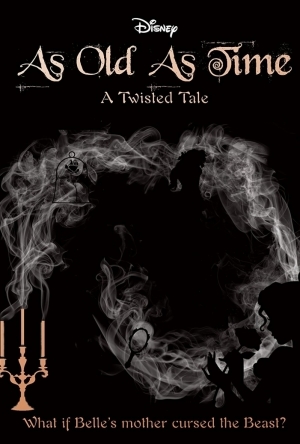

Review by Disney Bookworm
I’m going to come right out and say (although you will probably be able to tell if you make it to the end of this blog) that this is, so far, my favourite book in the twisted tale series. Seriously, this is the second time I have read it and I loved it just as much as the first time. I got just as engrossed in the story and I seriously think Liz Braswell and I could be best friends!
As Old As Time is the retelling of Beauty and the Beast and opens with the familiar story of the enchantress and the young, vain prince that we all know. You can probably still picture the stained-glass scene from the original 1991 movie and the dramatic ballroom scene in the 2017 remake.
Refusing to be eclipsed by these though, Braswell follows the well-known tale with: “It was a very good story. It often entertained the woman who lay in her black hole of a room, manacled to a hard, cold bed.”
Wait! What?
There, with one fell swoop, on the second page, Braswell brings an almost gothic darkness to the fairy tale. Of course, some would say it is already dark: very few people who are cursed to become a beast are particularly jolly about the situation! However, Braswell goes one step further by both revealing the story behind the enchantress and taking us on a journey to discover the ugly truth in the present.
Liz Braswell creates a kingdom where magic and non-magic people have lived together peacefully for years but where politics and a lack of cultural understanding is threatening to tear that apart as les charmantes find themselves persecuted by les naturels. (I can’t imagine where she draws her inspiration from(!))
It is in this kingdom that we meet a young dreamer called Maurice and the enchantress Rosalind, Belle’s mother (nicknamed Rose- so clever!). Maurice is very much a younger version of the character we grew up with: loveable and devoted to his inventions. Rosalind however is much more headstrong and impulsive: even changing her appearance on a whim. Her pride is fierce and we first meet her holding her own against a large man insulting ‘her kind’, calling her unnatural and a child of the devil. The bully soon learns the error of his ways when his nose is replaced by a pig’s snout but a warning runs all the way through this tale: “magic always comes back on itself”.
Maurice and Rosalind’s life is happy and settled at first but they soon start to witness the persecution of les charmantes for themselves. Thus, when the King and Queen call on Rosalind to protect them against the advancing plague, she passionately fights for her people…only to be rejected and turned away. Maurice, always the voice of reason, convinces Rosalind to at least protect the children and servants and so it comes to pass that Rosalind later visits the young prince, on the eve of his coronation, carrying with her the simple gift of a rose.
Braswell’s character development is, as always, impressive. Belle is immediately relatable as the kooky bookworm we know and love: her story running parallel to the film until we, as readers, develop a relationship with her parents. It is then that we discover there is a slight edge to Belle. Although clearly tortured by the fact her mother cursed a 10-year-old boy, Braswell’s Belle is desperate to be adventurous and heroic like the characters in her books but soon realises an adventure is not all it is cracked up to be. Like her mother, Belle can be quite impulsive: grabbing the enchanted rose before the beast can stop her and destroying any chance of breaking the spell. However, she is also quick and cunning, tricking the wardrobe into revealing the curse’s timeline. Nevertheless, the bravery of our protagonist can never be doubted and Belle embarks on one hell of a journey to discover the truth about her family and herself.
Uniquely, within As Old As Time we slowly see side-line characters weave their way into the lives and stories of our characters. Levi and Alaric, for example, are old friends of Maurice and Rosalind and are seemingly insignificant to the story at first. However, Levi is also the godfather to Belle and the village bookseller (“If you like it that much, it’s yours!” – that guy). Alaric on the other hand has a significant link to the castle and both carry clues with them that assist Belle on her quest.
Any Beauty and the Beast tale would not be complete without LeFou and Gaston – that infamous double act- but even Gaston is ever so slightly darker than his animated counterpart. Frederic: another friend from the past and, quite frankly, odd from the start also plays a pivotal role in the story but I won’t spoil the surprise for you!
As Old As Time is true to its name: weaving two stories into its plot at different points in time: the story that we all know and the story of how that came to be. It is an ominous tale with curses, murder, creepy ivy statues and a frankly terrifying tour of the lunatic asylum.
It is not all doom and gloom however; Liz Braswell takes a very tongue-in-cheek attitude towards the infamous scenes within Beauty and the Beast: invoking a dry sense of humour into the story. From a chapter named “Be Our … Oh You Know the Rest” to a direct reference to Stockholm Syndrome: Braswell makes sure that we do not expect her novel to be a copycat, heartfelt tale with a happy ending. Belle even remarks to the Beast that hoping she would fall in love with him within a month or so was wildly unrealistic.
This is very much a novel for the cynical Disney lovers amongst us and highly deserving of its title of a twisted tale!
As Old As Time is the retelling of Beauty and the Beast and opens with the familiar story of the enchantress and the young, vain prince that we all know. You can probably still picture the stained-glass scene from the original 1991 movie and the dramatic ballroom scene in the 2017 remake.
Refusing to be eclipsed by these though, Braswell follows the well-known tale with: “It was a very good story. It often entertained the woman who lay in her black hole of a room, manacled to a hard, cold bed.”
Wait! What?
There, with one fell swoop, on the second page, Braswell brings an almost gothic darkness to the fairy tale. Of course, some would say it is already dark: very few people who are cursed to become a beast are particularly jolly about the situation! However, Braswell goes one step further by both revealing the story behind the enchantress and taking us on a journey to discover the ugly truth in the present.
Liz Braswell creates a kingdom where magic and non-magic people have lived together peacefully for years but where politics and a lack of cultural understanding is threatening to tear that apart as les charmantes find themselves persecuted by les naturels. (I can’t imagine where she draws her inspiration from(!))
It is in this kingdom that we meet a young dreamer called Maurice and the enchantress Rosalind, Belle’s mother (nicknamed Rose- so clever!). Maurice is very much a younger version of the character we grew up with: loveable and devoted to his inventions. Rosalind however is much more headstrong and impulsive: even changing her appearance on a whim. Her pride is fierce and we first meet her holding her own against a large man insulting ‘her kind’, calling her unnatural and a child of the devil. The bully soon learns the error of his ways when his nose is replaced by a pig’s snout but a warning runs all the way through this tale: “magic always comes back on itself”.
Maurice and Rosalind’s life is happy and settled at first but they soon start to witness the persecution of les charmantes for themselves. Thus, when the King and Queen call on Rosalind to protect them against the advancing plague, she passionately fights for her people…only to be rejected and turned away. Maurice, always the voice of reason, convinces Rosalind to at least protect the children and servants and so it comes to pass that Rosalind later visits the young prince, on the eve of his coronation, carrying with her the simple gift of a rose.
Braswell’s character development is, as always, impressive. Belle is immediately relatable as the kooky bookworm we know and love: her story running parallel to the film until we, as readers, develop a relationship with her parents. It is then that we discover there is a slight edge to Belle. Although clearly tortured by the fact her mother cursed a 10-year-old boy, Braswell’s Belle is desperate to be adventurous and heroic like the characters in her books but soon realises an adventure is not all it is cracked up to be. Like her mother, Belle can be quite impulsive: grabbing the enchanted rose before the beast can stop her and destroying any chance of breaking the spell. However, she is also quick and cunning, tricking the wardrobe into revealing the curse’s timeline. Nevertheless, the bravery of our protagonist can never be doubted and Belle embarks on one hell of a journey to discover the truth about her family and herself.
Uniquely, within As Old As Time we slowly see side-line characters weave their way into the lives and stories of our characters. Levi and Alaric, for example, are old friends of Maurice and Rosalind and are seemingly insignificant to the story at first. However, Levi is also the godfather to Belle and the village bookseller (“If you like it that much, it’s yours!” – that guy). Alaric on the other hand has a significant link to the castle and both carry clues with them that assist Belle on her quest.
Any Beauty and the Beast tale would not be complete without LeFou and Gaston – that infamous double act- but even Gaston is ever so slightly darker than his animated counterpart. Frederic: another friend from the past and, quite frankly, odd from the start also plays a pivotal role in the story but I won’t spoil the surprise for you!
As Old As Time is true to its name: weaving two stories into its plot at different points in time: the story that we all know and the story of how that came to be. It is an ominous tale with curses, murder, creepy ivy statues and a frankly terrifying tour of the lunatic asylum.
It is not all doom and gloom however; Liz Braswell takes a very tongue-in-cheek attitude towards the infamous scenes within Beauty and the Beast: invoking a dry sense of humour into the story. From a chapter named “Be Our … Oh You Know the Rest” to a direct reference to Stockholm Syndrome: Braswell makes sure that we do not expect her novel to be a copycat, heartfelt tale with a happy ending. Belle even remarks to the Beast that hoping she would fall in love with him within a month or so was wildly unrealistic.
This is very much a novel for the cynical Disney lovers amongst us and highly deserving of its title of a twisted tale!
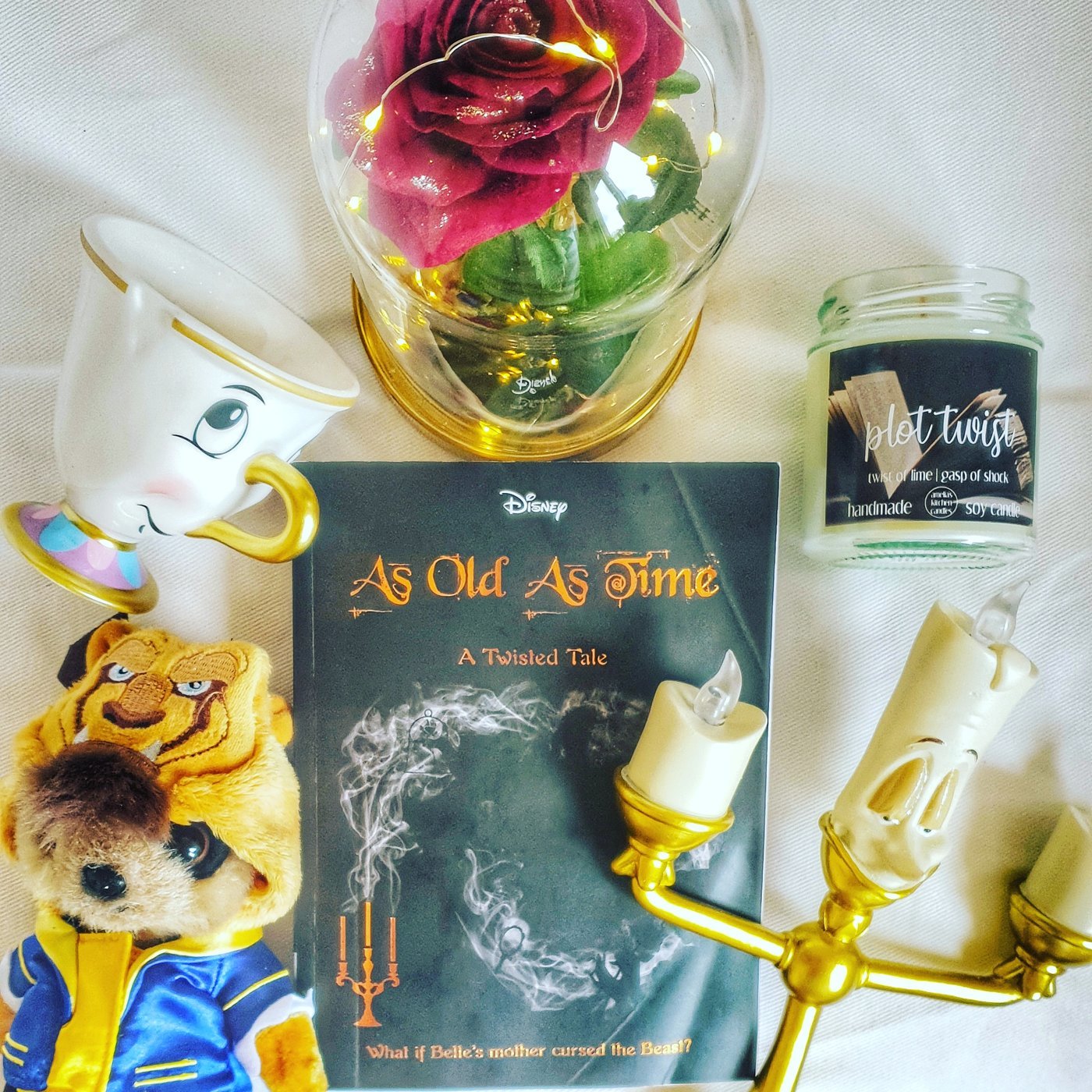

Mandy and G.D. Burkhead (26 KP) rated Sir Apropos of Nothing in Books
May 20, 2018
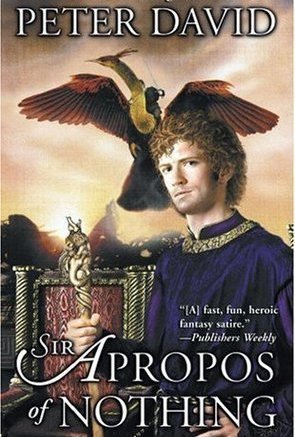

Shelf Life – Sir Apropos of Nothing Skewers the Hero’s Journey
Contains spoilers, click to show
Fantasy and satire are two of my favorite genres in any medium, but especially so in books. Satirical fantasy, then, holds a special place on my shelves. I grew up on Sir Terry Pratchett’s Discworld series, and desire to imitate him and his style is what led me in middle school to begin writing in earnest, for fun, and for myself rather than just for my teachers and their assignments.
So when I picked up Sir Apropos of Nothing, I did so based on the title pun and the back-of-the-book synopsis that promised “a berserk phoenix, murderous unicorns, mutated harpies, homicidal warrior kings, and – most problematic of all – a princess who may or may not be a psychotic arsonist.” I expected another lighthearted riff on the familiar archetypes. Murderous unicorns? Unicorns are not typically described as such! Oh teehee, how unexpectedly humorous!
Sir Apropos of Nothing is a satirical fantasy, just like it promised, though at times it’s hard to tell how much of the story is played for laughs and how much is played straight. See, the thing about satire that’s easy to forget at times is that it’s not synonymous with buffoonery. Make no mistake – Apropos is a funny book, full of witty dialogue and groan-inducing puns. It’s a book that takes great delight in lampshading traditional fantasy tropes and archetypes, as well as the entirety of Joseph Campbell’s Hero’s Journey idea. But it is not always a silly lampshade; sometimes a cliche or trope is pointed out to have its inherit ridiculousness laughed at, and sometimes it is pointed out because it is causing real and lasting pain or damage, either to the society in which it is set or, more often, to the titular Apropos himself and his ever-degrading esteem of both the people around him and himself.
The tone, at first, is hard to pin down. The story starts in media res with the main character being caught by a knight while in mid-coitus with that knight’s wife and escalates from there. The second chapter opens with a fourth wall-breaking narrative admission by Apropos himself that this was done with the express purpose of catching your attention, and now we’re going back to cover Apropos’s childhood, which ends up being equal parts dark, tragic, punny, and conveniently trope-filled – all of which Apropos, as narrator, approaches with the same resigned, blasé outlook.
If this sounds a bit jarring, well, it kind of is. Early on, I wasn’t sure what to think of where the story was trying to go or what I was expected to feel about it. After the first turn from cliché to dark and visceral to light and punny, all within a few pages, I caught myself thinking, “Crap, is this book gonna try and mix goofy jokes with serious drama and thoughtful moral quandary?”
The answer is yes. And it pulls it off fantastically.
This is due in large part to the interesting depths of the antihero, Apropos, who seems to be so named purely for the joke in the title. In Apropos we see a deep sense of justice and rightness that is entirely eclipsed by an even deeper cynicism and an unshakeable instinct for self-preservation. His life is objectively terrible, but rather than brood and lament, he adjusts. He keeps his head down when he can, weathers abuse when he can’t, and learns to deal with the constant shit storm, all the while bottling his growing anger and resentment at a world that would allow such amounts of suffering and hypocrisy to go unchecked. The fact that he himself becomes a selfish, hypocritical, and generally awful person is not lost on him, and the result is a flawed, unheroic, pathetic coward of a protagonist, a magnificently multifaceted bastard who doesn’t spare even himself from his vast and withering contempt.
And it’s a blast. It really is. Apropos is refreshingly pragmatic and unabashedly pessimistic, a welcome change from the typical righteous-yet-humble heroes of traditional fantasy, or even the loveable and untalented everyman in over his head of traditional fantasy spoofs. Despite a portentous birthmark (on his ass, no less) and beginnings that are not “humble” so much as “poverty of the dirtiest kind,” Apropos is everything a hero should not be short of outright evil.
And this, as it turns out, is entirely the point. This is where the satire, funny or otherwise, really shines through. This is the crux that elevates Sir Apropos of Nothing from a generically self-aware fantasy story to an original and memorable subversion of storytelling as a whole.
Without giving too much away, there comes a point in the plot where Apropos realizes that the events surrounding his miserable life are part of a heroic tale that has been preordained by Fate and is now being epically written out by Destiny. And despite his birthmark, his tragic past, and his mother’s constant reassurances that he has some sort of great destiny hovering over him, he is not the hero. He is only a minor character. A walk-on role on the hero’s stage. A brief pit-stop along the hero’s journey. An NPC whose dreams, desires, and continued existence are so far below importance to the story as to be utterly negligible.
And once this finally clicks with him, he violently, brazenly rebels against it. He gives an emphatic middle finger to Fate’s ideas and sets about making Destiny sit up and take notice of him again. He momentarily and violently overcomes his own abject cowardice just long enough to find a way to completely wreck the traditional heroic ballad in which he lives, all on the basis that, dammit, the world owes him more than this, and nobody should be so miserably cursed as to live their entire life as a foil character.
At this point in my own reading, I didn’t know whether to cheer him on or worry about the repercussions of his actions, because he doesn’t suddenly become heroic when this happens. He’s exactly as much of a selfish, lying bastard as before, and however bad you feel for him, you can completely understand why he was never cast for this role in the first place. Add to this the complete disregard of the author for following what seems to be the obvious progression of events in favor of twists that take you completely by surprise, but still make complete sense and arise organically from the story itself, and you eventually give up thinking that you have any sense of where the story’s going or how any event is going to play out. From beginning to end, it feeds you familiar ideas and then completely subverts them, introduces clichés and then proceeds to tear them apart, and you laugh and pity and feel something the entire way through.
In short, Sir Apropos of Nothing is a book that will keep you turning page after page – not necessarily because of the gripping drama (although it has that) or because of any breezy humor (although it has that too), or because the narration itself oozes suspense (although it often does), but because, with the rapid infusion of new and creative ideas and the hidden depths of character constantly bubbling to the surface in everyone involved, you honestly never know what’s going to happen next. If you like fantasy and can stand to have your expectations messed with, Apropos is certainly apropos.
So when I picked up Sir Apropos of Nothing, I did so based on the title pun and the back-of-the-book synopsis that promised “a berserk phoenix, murderous unicorns, mutated harpies, homicidal warrior kings, and – most problematic of all – a princess who may or may not be a psychotic arsonist.” I expected another lighthearted riff on the familiar archetypes. Murderous unicorns? Unicorns are not typically described as such! Oh teehee, how unexpectedly humorous!
Sir Apropos of Nothing is a satirical fantasy, just like it promised, though at times it’s hard to tell how much of the story is played for laughs and how much is played straight. See, the thing about satire that’s easy to forget at times is that it’s not synonymous with buffoonery. Make no mistake – Apropos is a funny book, full of witty dialogue and groan-inducing puns. It’s a book that takes great delight in lampshading traditional fantasy tropes and archetypes, as well as the entirety of Joseph Campbell’s Hero’s Journey idea. But it is not always a silly lampshade; sometimes a cliche or trope is pointed out to have its inherit ridiculousness laughed at, and sometimes it is pointed out because it is causing real and lasting pain or damage, either to the society in which it is set or, more often, to the titular Apropos himself and his ever-degrading esteem of both the people around him and himself.
The tone, at first, is hard to pin down. The story starts in media res with the main character being caught by a knight while in mid-coitus with that knight’s wife and escalates from there. The second chapter opens with a fourth wall-breaking narrative admission by Apropos himself that this was done with the express purpose of catching your attention, and now we’re going back to cover Apropos’s childhood, which ends up being equal parts dark, tragic, punny, and conveniently trope-filled – all of which Apropos, as narrator, approaches with the same resigned, blasé outlook.
If this sounds a bit jarring, well, it kind of is. Early on, I wasn’t sure what to think of where the story was trying to go or what I was expected to feel about it. After the first turn from cliché to dark and visceral to light and punny, all within a few pages, I caught myself thinking, “Crap, is this book gonna try and mix goofy jokes with serious drama and thoughtful moral quandary?”
The answer is yes. And it pulls it off fantastically.
This is due in large part to the interesting depths of the antihero, Apropos, who seems to be so named purely for the joke in the title. In Apropos we see a deep sense of justice and rightness that is entirely eclipsed by an even deeper cynicism and an unshakeable instinct for self-preservation. His life is objectively terrible, but rather than brood and lament, he adjusts. He keeps his head down when he can, weathers abuse when he can’t, and learns to deal with the constant shit storm, all the while bottling his growing anger and resentment at a world that would allow such amounts of suffering and hypocrisy to go unchecked. The fact that he himself becomes a selfish, hypocritical, and generally awful person is not lost on him, and the result is a flawed, unheroic, pathetic coward of a protagonist, a magnificently multifaceted bastard who doesn’t spare even himself from his vast and withering contempt.
And it’s a blast. It really is. Apropos is refreshingly pragmatic and unabashedly pessimistic, a welcome change from the typical righteous-yet-humble heroes of traditional fantasy, or even the loveable and untalented everyman in over his head of traditional fantasy spoofs. Despite a portentous birthmark (on his ass, no less) and beginnings that are not “humble” so much as “poverty of the dirtiest kind,” Apropos is everything a hero should not be short of outright evil.
And this, as it turns out, is entirely the point. This is where the satire, funny or otherwise, really shines through. This is the crux that elevates Sir Apropos of Nothing from a generically self-aware fantasy story to an original and memorable subversion of storytelling as a whole.
Without giving too much away, there comes a point in the plot where Apropos realizes that the events surrounding his miserable life are part of a heroic tale that has been preordained by Fate and is now being epically written out by Destiny. And despite his birthmark, his tragic past, and his mother’s constant reassurances that he has some sort of great destiny hovering over him, he is not the hero. He is only a minor character. A walk-on role on the hero’s stage. A brief pit-stop along the hero’s journey. An NPC whose dreams, desires, and continued existence are so far below importance to the story as to be utterly negligible.
And once this finally clicks with him, he violently, brazenly rebels against it. He gives an emphatic middle finger to Fate’s ideas and sets about making Destiny sit up and take notice of him again. He momentarily and violently overcomes his own abject cowardice just long enough to find a way to completely wreck the traditional heroic ballad in which he lives, all on the basis that, dammit, the world owes him more than this, and nobody should be so miserably cursed as to live their entire life as a foil character.
At this point in my own reading, I didn’t know whether to cheer him on or worry about the repercussions of his actions, because he doesn’t suddenly become heroic when this happens. He’s exactly as much of a selfish, lying bastard as before, and however bad you feel for him, you can completely understand why he was never cast for this role in the first place. Add to this the complete disregard of the author for following what seems to be the obvious progression of events in favor of twists that take you completely by surprise, but still make complete sense and arise organically from the story itself, and you eventually give up thinking that you have any sense of where the story’s going or how any event is going to play out. From beginning to end, it feeds you familiar ideas and then completely subverts them, introduces clichés and then proceeds to tear them apart, and you laugh and pity and feel something the entire way through.
In short, Sir Apropos of Nothing is a book that will keep you turning page after page – not necessarily because of the gripping drama (although it has that) or because of any breezy humor (although it has that too), or because the narration itself oozes suspense (although it often does), but because, with the rapid infusion of new and creative ideas and the hidden depths of character constantly bubbling to the surface in everyone involved, you honestly never know what’s going to happen next. If you like fantasy and can stand to have your expectations messed with, Apropos is certainly apropos.
The China Factor: Leveraging Emerging Business Strategies to Compete, Grow, and Win in the New Global Economy
Wiley, Amy Karam and Ken Wilcox
Book
The Innovation of Globalization proven strategies to succeed and out-compete emerging competition...