
Search
Search results

Movie Metropolis (309 KP) rated Transformers: Dark of the Moon (2011) in Movies
Jun 11, 2019


Michael Bay had a lot to prove with the third instalment of his big bot franchise. The scathing reviews of Revenge of the Fallen from nearly every critic who went to see it proved that even giant robots aren’t safe from the picky eyes of the global audience. Now, I may get lambasted for this but I preferred number 2 to number 1, so let’s see if number 3 can impress.
Here, Bay returns to helm the latest addition: Dark of the Moon, it’s a good film nonetheless but it’s sci-fi themes, more so than in either of the previous offerings fail to provide enough impact to make it the best in the series.
Transformers: Dark of the Moon picks up three years after the last film and a lot has changed. Sam Witwicky again played by the fantastic Shia LeBeouf is now living in Washington, envious of his new girlfriend Carly Spencer and her fabulous lifestyle. Carly, played by newcomer Rosie Huntington-Whitely is about as wooden as a character can get; Whitely’s performance is very laboured and her on screen scenes suffer as a result; she’s a disappointment in a film that doesn’t really require it’s characters to do much; so that shows how bad she actually is.
Megan Fox is actually missed this time around, but it’s not too much of a problem because Rosie’s character is given exactly the same clothes, the same pout and practically the same lines.
Michael Bay has also lined up the legendary John Malkovich as Sam’s troubled new boss, his screen time is worth a watch but he feels wasted considering his lines amount to about 10 minutes of screen time. Patrick Dempsey also stars as good guy gone back; Dylan Gould.
The special effects coupled with the fantastic 3D make Transformers 3 a spectacle to watch, the bots are seamlessly integrated into the picture alongside their human counterparts and deliver once again, these films really are the pinnacle now for special effects.
Bay has managed to fashion a half coherent story out of the toy franchise which many critics were sceptical of, but it works really well. The film focuses on the space race of the 60’s and the reasons why the US wanted to beat everyone to the moon. In short, the Decepticons are looking for something that crash-landed on the moon; if they find it, then Cybertron will be reborn, using Earth as a template; oh no!
The last hour is just carnage, carnage, carnage as the entire city of Chicago is plunged into a post-apocalyptic world where the Decepticons rule and the Autobots are, alongside humans as slaves. Here, Bay really showcases his prowess for stunning cinematography and first class special effects, one scene in particular, involving a glass skyscraper is particularly awe-inspiring.
Speaking of the robots themselves, all the favourites return with their fantastic voice acting. Peter Cullen delivers Optimus Prime in his usual, gruff manner and a welcome addition is Star Trek’s Leonard Nimoy as veteran Autobot leader Sentinel Prime. Hugo Weaving also returns as a rough looking Megatron.
The problem that blights Transformers 3 is that there’s too much going on. I found myself lost in parts of the story because the film is constantly rushing to get to the next plot line. It’s frustrating that a film franchise criticised for its lack of story is penalised for having too much of one this time around, but this is the case here. As such, some of the best characters don’t get screen time. Josh Duhamel is only in the film for 5 minutes at a time, whilst Sam’s parents only get brief appearances which is a tragic shame as they are, all in all, the best human characters in the franchise.
Overall, Transformers has become one of my favourite film franchises of all time; it delivers on its promise and doesn’t pretend it’s going to be something else. Yes, they’re far too long (this one is just short of 3 hours), they’re exceptionally loud and mind-numbingly obnoxious but that’s what you should want from an action film. Transformers 3 delivers, and it delivers it like a smack in the face; but it falls down in a couple of areas where the others didn’t.
Michael Bay is a very talented film director who gives the best out of everything, but in response to his critics from the last movie, he has developed too much of the story and as such, it feels disjointed and ultimately a little disappointing.
https://moviemetropolis.net/2011/07/07/transformers-dark-of-the-moon-2011/
Here, Bay returns to helm the latest addition: Dark of the Moon, it’s a good film nonetheless but it’s sci-fi themes, more so than in either of the previous offerings fail to provide enough impact to make it the best in the series.
Transformers: Dark of the Moon picks up three years after the last film and a lot has changed. Sam Witwicky again played by the fantastic Shia LeBeouf is now living in Washington, envious of his new girlfriend Carly Spencer and her fabulous lifestyle. Carly, played by newcomer Rosie Huntington-Whitely is about as wooden as a character can get; Whitely’s performance is very laboured and her on screen scenes suffer as a result; she’s a disappointment in a film that doesn’t really require it’s characters to do much; so that shows how bad she actually is.
Megan Fox is actually missed this time around, but it’s not too much of a problem because Rosie’s character is given exactly the same clothes, the same pout and practically the same lines.
Michael Bay has also lined up the legendary John Malkovich as Sam’s troubled new boss, his screen time is worth a watch but he feels wasted considering his lines amount to about 10 minutes of screen time. Patrick Dempsey also stars as good guy gone back; Dylan Gould.
The special effects coupled with the fantastic 3D make Transformers 3 a spectacle to watch, the bots are seamlessly integrated into the picture alongside their human counterparts and deliver once again, these films really are the pinnacle now for special effects.
Bay has managed to fashion a half coherent story out of the toy franchise which many critics were sceptical of, but it works really well. The film focuses on the space race of the 60’s and the reasons why the US wanted to beat everyone to the moon. In short, the Decepticons are looking for something that crash-landed on the moon; if they find it, then Cybertron will be reborn, using Earth as a template; oh no!
The last hour is just carnage, carnage, carnage as the entire city of Chicago is plunged into a post-apocalyptic world where the Decepticons rule and the Autobots are, alongside humans as slaves. Here, Bay really showcases his prowess for stunning cinematography and first class special effects, one scene in particular, involving a glass skyscraper is particularly awe-inspiring.
Speaking of the robots themselves, all the favourites return with their fantastic voice acting. Peter Cullen delivers Optimus Prime in his usual, gruff manner and a welcome addition is Star Trek’s Leonard Nimoy as veteran Autobot leader Sentinel Prime. Hugo Weaving also returns as a rough looking Megatron.
The problem that blights Transformers 3 is that there’s too much going on. I found myself lost in parts of the story because the film is constantly rushing to get to the next plot line. It’s frustrating that a film franchise criticised for its lack of story is penalised for having too much of one this time around, but this is the case here. As such, some of the best characters don’t get screen time. Josh Duhamel is only in the film for 5 minutes at a time, whilst Sam’s parents only get brief appearances which is a tragic shame as they are, all in all, the best human characters in the franchise.
Overall, Transformers has become one of my favourite film franchises of all time; it delivers on its promise and doesn’t pretend it’s going to be something else. Yes, they’re far too long (this one is just short of 3 hours), they’re exceptionally loud and mind-numbingly obnoxious but that’s what you should want from an action film. Transformers 3 delivers, and it delivers it like a smack in the face; but it falls down in a couple of areas where the others didn’t.
Michael Bay is a very talented film director who gives the best out of everything, but in response to his critics from the last movie, he has developed too much of the story and as such, it feels disjointed and ultimately a little disappointing.
https://moviemetropolis.net/2011/07/07/transformers-dark-of-the-moon-2011/

Gareth von Kallenbach (980 KP) rated Transformers: Age of Extinction (2014) in Movies
Jun 19, 2019
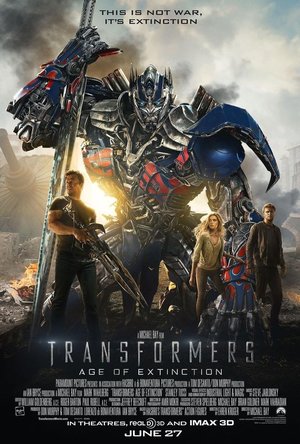

Director Michael Bay and the shape shifting Transfomers are back in a new cinematic adventure, “Transformers: Age of Extinction” which continues Bay’s fondness for over the top pyrotechnics, action, and chases.
It has been five years since the Autobots and Decepticons waged war in Chicago and in the aftermath, the U.S. government has ended working with the Autobots and has begun hunting down their enemies that are still in hiding.
Under the leadership of C.I.A. agent Harold Attinger (Kelsey Grammer), a covert group known as Cemetery Wind has been hunting down and killing all Transformers regardless of their allegiance as Attinger believes that it is time to keep humanity safe from the threat the pose.
At the same time in a small Texas town, an inventor named Cade Yeager (Mark Wahlberg), is trying to keep his home and deal with mounting debt and foreclosure while trying to get his daughter Tessa (Nicola Peltz), into college.
Convinced that one of his inventions will work and will allow them out of their financial mess, Cade purchases a derelict semi-truck convinced that the parts alone will get them an infusion of cash.
During his work on the truck, Cade uncovers that it appears to be a damaged Transfomer, which is confirmed when Optimus Prime transformers from the wreck.
His friend and daughter are convinced Cade should call the authorities and collect the sizeable reward for his find, but Cade decides to repair Prime who said he was injured in an ambush.
Soon after, Cemetery Wind arrives and threatens the life of Tessa and Cade which forces Prime into action. Soon, the humans along with Tessa’s secret boyfriend Shane (Jack Reynor) are racing for their lives from the deadly pursuit who is working secretly with a deadly Transformer.
As if this was not enough chaos, remember this is a Michael Bay film, a wealthy industrialist named Joshua Joyce (Stanley Tucci), has figured out the secret of the Transformers and working with Attinger in secret, plans to build and army of his own to usher in a new area of technology for humanity and of course lining his and Attinger’s pockets even further with their discovery.
The need to obtain more of the building components is key, and soon the action shifts to a new locale with the fate of a major city and humanity hanging in the balance.
Bay has crafted a film that is technically brilliant as it is an amazing visual spectacle, but yet is as cold and soulless as the very toys that inspired the series.
The film plays like a gigantic pyrotechnic and CGI demo reel as you can see countless examples of Bay orchestrating his fireworks to end in a grand finale.
It was almost comical how many explosions and car chases there were at the expense of the story. I think my wife summed it up best when she said that if the script was 50 pages long, at best 3 pages were devoted to dialogue.
I think it must have read something like this… explosion, explosion, gunfire, gunfire, car chase, explosion, Tessa!!, Dad!!! Vroom, vroom, explosion, car chase, bad line, repeat.
I do not see a film of this type expecting great acting or lines but some of them were so bad and out of place you could almost hear the cast of Mystery Science Theater chomping at the bit to get their hands on this one.
The film also blatantly sells out to appease Chinese audiences as we have a good segment of the film set in mainland China and Hong Kong which we get scenes of Chinese leaders being strong, decisive, and caring for the people, and other events in such a blatant Kowtow to ensure the film gets played in the all-important Chinese marketplace.
In the end the film does have plenty of visual entertainment but it drags out to the point where even the action and technical brilliance of the film and the 3D effects grows old. The biggest issues is that they have a strong and appealing cast, yet they are literally just along for the ride and are not given much to do.
The film is the first in a planned new trilogy so it is a safe bet, Bay and company will be back in a few years.
http://sknr.net/2014/06/27/transformers-age-of-extinction/
It has been five years since the Autobots and Decepticons waged war in Chicago and in the aftermath, the U.S. government has ended working with the Autobots and has begun hunting down their enemies that are still in hiding.
Under the leadership of C.I.A. agent Harold Attinger (Kelsey Grammer), a covert group known as Cemetery Wind has been hunting down and killing all Transformers regardless of their allegiance as Attinger believes that it is time to keep humanity safe from the threat the pose.
At the same time in a small Texas town, an inventor named Cade Yeager (Mark Wahlberg), is trying to keep his home and deal with mounting debt and foreclosure while trying to get his daughter Tessa (Nicola Peltz), into college.
Convinced that one of his inventions will work and will allow them out of their financial mess, Cade purchases a derelict semi-truck convinced that the parts alone will get them an infusion of cash.
During his work on the truck, Cade uncovers that it appears to be a damaged Transfomer, which is confirmed when Optimus Prime transformers from the wreck.
His friend and daughter are convinced Cade should call the authorities and collect the sizeable reward for his find, but Cade decides to repair Prime who said he was injured in an ambush.
Soon after, Cemetery Wind arrives and threatens the life of Tessa and Cade which forces Prime into action. Soon, the humans along with Tessa’s secret boyfriend Shane (Jack Reynor) are racing for their lives from the deadly pursuit who is working secretly with a deadly Transformer.
As if this was not enough chaos, remember this is a Michael Bay film, a wealthy industrialist named Joshua Joyce (Stanley Tucci), has figured out the secret of the Transformers and working with Attinger in secret, plans to build and army of his own to usher in a new area of technology for humanity and of course lining his and Attinger’s pockets even further with their discovery.
The need to obtain more of the building components is key, and soon the action shifts to a new locale with the fate of a major city and humanity hanging in the balance.
Bay has crafted a film that is technically brilliant as it is an amazing visual spectacle, but yet is as cold and soulless as the very toys that inspired the series.
The film plays like a gigantic pyrotechnic and CGI demo reel as you can see countless examples of Bay orchestrating his fireworks to end in a grand finale.
It was almost comical how many explosions and car chases there were at the expense of the story. I think my wife summed it up best when she said that if the script was 50 pages long, at best 3 pages were devoted to dialogue.
I think it must have read something like this… explosion, explosion, gunfire, gunfire, car chase, explosion, Tessa!!, Dad!!! Vroom, vroom, explosion, car chase, bad line, repeat.
I do not see a film of this type expecting great acting or lines but some of them were so bad and out of place you could almost hear the cast of Mystery Science Theater chomping at the bit to get their hands on this one.
The film also blatantly sells out to appease Chinese audiences as we have a good segment of the film set in mainland China and Hong Kong which we get scenes of Chinese leaders being strong, decisive, and caring for the people, and other events in such a blatant Kowtow to ensure the film gets played in the all-important Chinese marketplace.
In the end the film does have plenty of visual entertainment but it drags out to the point where even the action and technical brilliance of the film and the 3D effects grows old. The biggest issues is that they have a strong and appealing cast, yet they are literally just along for the ride and are not given much to do.
The film is the first in a planned new trilogy so it is a safe bet, Bay and company will be back in a few years.
http://sknr.net/2014/06/27/transformers-age-of-extinction/

Learn To Play Guitar Solos
Music and Education
App
Learn how to play guitar solos with this selection of 176 easy to follow tutorial lessons. ...

Hadley (567 KP) rated The Collector in Books
May 4, 2019
Contains spoilers, click to show
Whenever you move to a small town, there is always a hidden secret. When one of those secrets is children going missing, it makes for a great horror story. But 'the Collector' makes for an okay one,with most of its twist and turns being highly predictable.
Josie, the main character of 'the Collector,' has just been uprooted from Chicago with her younger sister, Anna, after their single mother just lost her job. They move in with their ailing grandmother in a small town far away, where she warns the girls to never enter the woods that surround her house. Very early in the book (literally within the first ten pages), Josie and Anna hear a voice coming from the forbidden woods, calling out their names. This isn't the best horror book I've ever read, but it has its quirks.
The reader gets to follow Josie through the story, from her time at a new school to nightmare fueled dreams. She watches her mother take care of her grandmother, who has Alzheimer's, but the grandmother constantly speaks of someone named Beryl, and how this woman knows and wants Josie and Anna. Fortunately, Josie meets a girl at her new school named Vanessa, who becomes a quick friend. Josie speaks about the woods around her grandmother's house, and how she and her sister weren't allowed to enter them, but Vanessa believes there's nothing to worry about: " 'There's nothing to be scared of in the woods,' she said. Her voice sounded different. Flat. Like she was reciting a line from a story she'd read, but didn't believe. 'It's just trees and animals.' "
Josie and Anna soon go over to Vanessa's house, where she lives with her aunt. Little did they know that the house was the one in the forbidden woods that their grandmother warned them about. Josie ignores the rule and enters the home; inside, they are met with a hoarding collection of porcelain dolls, lining the walls and the floors of the entire house. Although Josie has had dreams about this house before even meeting Vanessa, including a life-size doll that answered the door(which she later states looked just like Vanessa), she didn't put the easily accessible puzzle pieces together.
Ignoring the obvious, Josie invites Vanessa over for a sleep-over, where we witness Josie's grandmother instantly recognizing her friend. Vanessa quickly leaves, taking off into the woods towards her home without giving an excuse or getting her overnight bag. When Josie asks her grandmother how she knew Vanessa, her grandmother replies: " 'Beryl is coming!'... 'You've brought her in here. I can't protect you. Not anymore.' "
Josie becomes angry and decides to confront her friend, Vanessa, and find out why she left the way that she did. When she reaches Vanessa's house in the woods, she can hear her crying,but there's another voice - a voice from Josie's dreams of none other than Beryl! Josie overhears Beryl demanding that Vanessa bring her another child for her collection.
Anyone who ever enjoyed R.L. Stine's 'Goosebumps' or 'Fear Street' series will enjoy this book. The story follows the basics of all young adult horror books: one pre-teen/teen experiences something supernatural, and no one believes them, so they are left to fend off the threat by themselves. But this one leaves out the teen drama of a blossoming romance with a boy-crazy girl, instead focusing on an older sister's love for her sibling. "I felt I should apologize to her before dinner. I should try and show her that I was sorry by offering to bring her food or something. I had to protect her, and that meant she had to trust me again."
One aspect that was needed was character development - there is such a lack of backstory that the reader can't bring themselves to care about any of the characters. Alexander keeps the story going with no lulls of teen life, but very little human interaction. Josie spends a lot of time with her younger sister, Anna, but the interactions are quick and seem unimportant.
'The Collector' is good for a quick read with a few scares here and there. I would recommend this book for pre-teens that are interested in horror genre books, but not wanting to deal with the nightmares that horror books for an older generation might bring. Although the ending of the book seemed rush, with a quick death of our villain by the hands of Josie, we are left with an opening for a possible sequel: "Slowly, I opened my eyes, tried to make my vision adjuts. I couldn't believe what I saw. There was a doll on my nightstand. A doll that looked an awful lot like Beryl. " It ends like most horror movies end, but was it good enough for a sequel? I don't think so.
Josie, the main character of 'the Collector,' has just been uprooted from Chicago with her younger sister, Anna, after their single mother just lost her job. They move in with their ailing grandmother in a small town far away, where she warns the girls to never enter the woods that surround her house. Very early in the book (literally within the first ten pages), Josie and Anna hear a voice coming from the forbidden woods, calling out their names. This isn't the best horror book I've ever read, but it has its quirks.
The reader gets to follow Josie through the story, from her time at a new school to nightmare fueled dreams. She watches her mother take care of her grandmother, who has Alzheimer's, but the grandmother constantly speaks of someone named Beryl, and how this woman knows and wants Josie and Anna. Fortunately, Josie meets a girl at her new school named Vanessa, who becomes a quick friend. Josie speaks about the woods around her grandmother's house, and how she and her sister weren't allowed to enter them, but Vanessa believes there's nothing to worry about: " 'There's nothing to be scared of in the woods,' she said. Her voice sounded different. Flat. Like she was reciting a line from a story she'd read, but didn't believe. 'It's just trees and animals.' "
Josie and Anna soon go over to Vanessa's house, where she lives with her aunt. Little did they know that the house was the one in the forbidden woods that their grandmother warned them about. Josie ignores the rule and enters the home; inside, they are met with a hoarding collection of porcelain dolls, lining the walls and the floors of the entire house. Although Josie has had dreams about this house before even meeting Vanessa, including a life-size doll that answered the door(which she later states looked just like Vanessa), she didn't put the easily accessible puzzle pieces together.
Ignoring the obvious, Josie invites Vanessa over for a sleep-over, where we witness Josie's grandmother instantly recognizing her friend. Vanessa quickly leaves, taking off into the woods towards her home without giving an excuse or getting her overnight bag. When Josie asks her grandmother how she knew Vanessa, her grandmother replies: " 'Beryl is coming!'... 'You've brought her in here. I can't protect you. Not anymore.' "
Josie becomes angry and decides to confront her friend, Vanessa, and find out why she left the way that she did. When she reaches Vanessa's house in the woods, she can hear her crying,but there's another voice - a voice from Josie's dreams of none other than Beryl! Josie overhears Beryl demanding that Vanessa bring her another child for her collection.
Anyone who ever enjoyed R.L. Stine's 'Goosebumps' or 'Fear Street' series will enjoy this book. The story follows the basics of all young adult horror books: one pre-teen/teen experiences something supernatural, and no one believes them, so they are left to fend off the threat by themselves. But this one leaves out the teen drama of a blossoming romance with a boy-crazy girl, instead focusing on an older sister's love for her sibling. "I felt I should apologize to her before dinner. I should try and show her that I was sorry by offering to bring her food or something. I had to protect her, and that meant she had to trust me again."
One aspect that was needed was character development - there is such a lack of backstory that the reader can't bring themselves to care about any of the characters. Alexander keeps the story going with no lulls of teen life, but very little human interaction. Josie spends a lot of time with her younger sister, Anna, but the interactions are quick and seem unimportant.
'The Collector' is good for a quick read with a few scares here and there. I would recommend this book for pre-teens that are interested in horror genre books, but not wanting to deal with the nightmares that horror books for an older generation might bring. Although the ending of the book seemed rush, with a quick death of our villain by the hands of Josie, we are left with an opening for a possible sequel: "Slowly, I opened my eyes, tried to make my vision adjuts. I couldn't believe what I saw. There was a doll on my nightstand. A doll that looked an awful lot like Beryl. " It ends like most horror movies end, but was it good enough for a sequel? I don't think so.
Gareth von Kallenbach (980 KP) rated I, Robot (2004) in Movies
Aug 14, 2019

Tales of a dark and foreboding future where technology has run amuck have been cautioning viewers ever since Orwell made the phrase “Big Brother” a household expression. Other films such as ?”, “Westworld”, “Blade Runner” and “The Terminator” often show a dark and dangerous future where dependence upon technology created to serve mankind has lead to its eventual downfall.
In the film “I Robot” Director Alex Proyas who’s past work includes “The Crow” and “Dark City” tells the tale of a near future where robots have become commonplace and are entrusted to do all manner of tasks ranging from package delivery to waiting table and caring for households. The robots are assured to be safe as they are governed by a set of behavioral restrictors that require them to obey all human commands save for those to harm another human, as robots are not allowed to harm or by inaction allow to be harmed any human.
The film stars Will Smith as Del Spooner, a Chicago Homicide detective who does not trust robots and is highly suspicious of them. The fact that in 2035 there has yet to be one documented case worldwide of a robot ever being involved in a crime is of little concern to Del as he sees the potential for danger in technology that is so widely spread.
Del is in many ways a technophobe as aside from his modern car, he has a retro lifestyle including an old fashioned alarm clock, vintage 2004 shoes, and a fondness for music from the 1970’s. An incident in Del’s past has kept him off the force for a while and has only furthered his distaste for robotics and their growing place in society.
No sooner is Del back at work than an apparent suicide at U.S. Robotics by a friend sets the film into motion. What to all seems to be an open and shut case of suicide only causes Del to become more suspicious. Del soon discovers a new model robot locked in the office of the victim, who flees from crime scene and refuses to obey the orders to halt given to him.
The fact that the robot ignores command given by a human thus violating his central laws of programming is put off as a simple malfunction by Billionaire Lawrence Robertson (Bruce Greenwood), who does not want Del’s suspicions to disrupt his business plans on the eve of the largest rollout of new robots in history. It is explained that the new NX-5 model is about to be released to the public and soon there will be one robot for every 5 humans in the world and with so much invested in this, Robertson places a gag order on Del and the entire police force to forget about the renegade robot and not say a word to anyone.
Naturally Del does not follow this command and he suspects that there is a larger and much more serious threat posed to the public even though everyone around his says that he is paranoid and desperate to find or create any evidence to support his theory that robots are not as safe as everyone believes they are.
What follows is an action packed game of cat and mouse as Del and a U.S. Robotics scientist named Susan (Bridget Moynahan), start to uncover a deeper mystery, once in which the very world they have taken for granted is about to change.
The film is a visual marvel that shows you a fairly realistic view of the future as aside from the robots and futuristic highways, the world of 2035 does not look that much different than today.
Proyas knows that Smith is his star and he does a great job allowing him to carry the picture without allowing the visual effects to dominate the film, though they are spectacular. The futuristic highways and a great chase sequence were highlights of the film and had a surprising amount of tension and drama mixed into what was a solid action sequence.
Smith plays Spooner, as a man with demons yet never ceases to become a sensitive character despite his hard edge. He is a man that is determined to follow his instincts and do what is best for the people he is sworn to protect.
The film does only play lip service to the series of novels by Asimov, but it does tell a very good cautionary tale of human’s interaction and dependence upon technology without becoming preachy or losing site of the message that society must ensure to have a balance between humanity and technology in order to thrive.
If I had to find fault, it would be that many of the supporting roles were fairly bland, as Moynahan was not given much to do aside from play a Damsel in distress and the always solid James Cromwell and Bruce Greenwood were not used nearly enough. That being said “I Robot” delivers everything you want in a summer film and more.
In the film “I Robot” Director Alex Proyas who’s past work includes “The Crow” and “Dark City” tells the tale of a near future where robots have become commonplace and are entrusted to do all manner of tasks ranging from package delivery to waiting table and caring for households. The robots are assured to be safe as they are governed by a set of behavioral restrictors that require them to obey all human commands save for those to harm another human, as robots are not allowed to harm or by inaction allow to be harmed any human.
The film stars Will Smith as Del Spooner, a Chicago Homicide detective who does not trust robots and is highly suspicious of them. The fact that in 2035 there has yet to be one documented case worldwide of a robot ever being involved in a crime is of little concern to Del as he sees the potential for danger in technology that is so widely spread.
Del is in many ways a technophobe as aside from his modern car, he has a retro lifestyle including an old fashioned alarm clock, vintage 2004 shoes, and a fondness for music from the 1970’s. An incident in Del’s past has kept him off the force for a while and has only furthered his distaste for robotics and their growing place in society.
No sooner is Del back at work than an apparent suicide at U.S. Robotics by a friend sets the film into motion. What to all seems to be an open and shut case of suicide only causes Del to become more suspicious. Del soon discovers a new model robot locked in the office of the victim, who flees from crime scene and refuses to obey the orders to halt given to him.
The fact that the robot ignores command given by a human thus violating his central laws of programming is put off as a simple malfunction by Billionaire Lawrence Robertson (Bruce Greenwood), who does not want Del’s suspicions to disrupt his business plans on the eve of the largest rollout of new robots in history. It is explained that the new NX-5 model is about to be released to the public and soon there will be one robot for every 5 humans in the world and with so much invested in this, Robertson places a gag order on Del and the entire police force to forget about the renegade robot and not say a word to anyone.
Naturally Del does not follow this command and he suspects that there is a larger and much more serious threat posed to the public even though everyone around his says that he is paranoid and desperate to find or create any evidence to support his theory that robots are not as safe as everyone believes they are.
What follows is an action packed game of cat and mouse as Del and a U.S. Robotics scientist named Susan (Bridget Moynahan), start to uncover a deeper mystery, once in which the very world they have taken for granted is about to change.
The film is a visual marvel that shows you a fairly realistic view of the future as aside from the robots and futuristic highways, the world of 2035 does not look that much different than today.
Proyas knows that Smith is his star and he does a great job allowing him to carry the picture without allowing the visual effects to dominate the film, though they are spectacular. The futuristic highways and a great chase sequence were highlights of the film and had a surprising amount of tension and drama mixed into what was a solid action sequence.
Smith plays Spooner, as a man with demons yet never ceases to become a sensitive character despite his hard edge. He is a man that is determined to follow his instincts and do what is best for the people he is sworn to protect.
The film does only play lip service to the series of novels by Asimov, but it does tell a very good cautionary tale of human’s interaction and dependence upon technology without becoming preachy or losing site of the message that society must ensure to have a balance between humanity and technology in order to thrive.
If I had to find fault, it would be that many of the supporting roles were fairly bland, as Moynahan was not given much to do aside from play a Damsel in distress and the always solid James Cromwell and Bruce Greenwood were not used nearly enough. That being said “I Robot” delivers everything you want in a summer film and more.

Bob Mann (459 KP) rated The Big Sick (2017) in Movies
Sep 29, 2021

Just what the doctor ordered: a charming and thoughtful summer comedy.
Romance and comedy work together beautifully on film: love is innately ridiculous after all! But mix in a dramatic element – particularly a serious medical emergency – to a Rom Com and you walk a dangerous line between on the one hand letting the drama overwhelm the comedy ( “Well! I don’t feel like laughing now!”) and on the other hand diverging into shockingly mawkish finger-down-the-throat sentimentality. Fortunately the new comedy – “The Big Sick” – walks that line to perfection.
Kumail Nanjiani plays (who’d have thought it?) Kumail, a Pakistani-born comic-cum-Uber-driver struggling to get recognised on the Chicago comedy circuit. His performances mix traditional stand-up at a club with a rather po-faced one-man show where he explains at length the culture of Pakistan (Naan-splaining?), including intricate detail on the fielding positions and strategies of cricket. Kumail is heckled during a show by the young and perky Emily (Zoe Kazan, the middle daughter from “It’s Complicated”). Lust blossoms (mental note: stand up comedy seems a fabulous strategy for picking up women) and lust turns to romance as the pair grow closer to each other.
A surging romance. Uber gets love from A to B.
Unfortunately Kumail is aware of something Emily isn’t: his strictly Muslim parents Sharmeen and Azmat (Anupam Kher and Zenobia Schroff) believe in arranged marriages to ‘nice Pakistani girls’ and a relationship with – let alone a marriage to – Emily risks disgrace and familial exile. A medical crisis brings Kumail further into dispute, this time with Emily’s parents Beth and Terry (Holly Hunter and Ray Romano).
Stand-up is, I assert, a very nationalistic thing. It is a medium hugely dependant on context and while I’m sure great British comics like Peter Kay and Eddie Izzard might rate as only a 4 or a 5 out of 10 for most Americans, so most American stand-up comics tend to leave me cold. And perhaps it’s also a movie-thing, that stand-up on the big screen just doesn’t work well? Either way, the initial comedy-club scenes rather left me cold. (And I don’t think most of them were SUPPOSED to be particularly bad – since they seemed to fill the seats each night). As a result I thought this was a “comedy” that wasn’t going to be for me.
Stand up and be counted. Kumail Nanjiani doing the circuit.
But once Nanjiani and Kazan got together the chemistry was immediate and palpable and the duo completely won me round. Kazan in particular is a vibrant and joyous actress who I would love to see a lot more of: this should be a breakout movie for her.
Broader, but none less welcome, comedy is to be found in Kumail’s family home as his mother introduces serial Pakistani girls to the dinner table.
Holly Hunter (“Broadcast News” – one of my favourite films) and Ray Romano are also superb, delivering really thoughtful and nuanced performances that slowly unpeel the stresses inherent in many long-term marriages. The relationship that develops between Kumail and Beth is both poignant and truly touching.
Where the script succeeds is in never quite making the viewer comfortable about where the movie is going and whether the film will end with joy or heartbreak. And you will find no spoilers here!
So is it a comedy classic? Well, no, not quite. What’s a bit disappointing is that for a film as culturally topical as this, the whole question of Islamophobia in Trump’s America is juggled like a hot potato. Aside from one memorable scene in the club, with a redneck heckler, and an excruciating exchange about 9/11 between Kumail and Terry, the subject is completely ignored. This is a shame. The script (by Nanjiani and Emily Gordon) would have benefited enormously from some rather braver “Thick of It” style input from the likes of Armando Iannucci.
I also have to despair at the movie’s marketing executives who came up with this title. FFS! I know “East is East” has already gone, but could you have possibly come up with a less appealing title? I guess the title does serve one useful purpose in flagging up potential upset for those with bad historical experiences of intensive care. (Like “The Descendants” this is what we would term in our family #notaShawFamilyfilm).
Overall though this film, directed by Michael Showalter (no, me neither!) and produced by Judd Apatow (whose name gets the biggest billing), is a fun and engaging movie experience that comes highly recommended. A delightful antidote to the summer blockbuster season. The end titles also bring a delightful surprise (that I’ve seen spoiled since by some reviews) that was moving and brought added depth to the drama that had gone before.
More Hollywood please, more.
Kumail Nanjiani plays (who’d have thought it?) Kumail, a Pakistani-born comic-cum-Uber-driver struggling to get recognised on the Chicago comedy circuit. His performances mix traditional stand-up at a club with a rather po-faced one-man show where he explains at length the culture of Pakistan (Naan-splaining?), including intricate detail on the fielding positions and strategies of cricket. Kumail is heckled during a show by the young and perky Emily (Zoe Kazan, the middle daughter from “It’s Complicated”). Lust blossoms (mental note: stand up comedy seems a fabulous strategy for picking up women) and lust turns to romance as the pair grow closer to each other.
A surging romance. Uber gets love from A to B.
Unfortunately Kumail is aware of something Emily isn’t: his strictly Muslim parents Sharmeen and Azmat (Anupam Kher and Zenobia Schroff) believe in arranged marriages to ‘nice Pakistani girls’ and a relationship with – let alone a marriage to – Emily risks disgrace and familial exile. A medical crisis brings Kumail further into dispute, this time with Emily’s parents Beth and Terry (Holly Hunter and Ray Romano).
Stand-up is, I assert, a very nationalistic thing. It is a medium hugely dependant on context and while I’m sure great British comics like Peter Kay and Eddie Izzard might rate as only a 4 or a 5 out of 10 for most Americans, so most American stand-up comics tend to leave me cold. And perhaps it’s also a movie-thing, that stand-up on the big screen just doesn’t work well? Either way, the initial comedy-club scenes rather left me cold. (And I don’t think most of them were SUPPOSED to be particularly bad – since they seemed to fill the seats each night). As a result I thought this was a “comedy” that wasn’t going to be for me.
Stand up and be counted. Kumail Nanjiani doing the circuit.
But once Nanjiani and Kazan got together the chemistry was immediate and palpable and the duo completely won me round. Kazan in particular is a vibrant and joyous actress who I would love to see a lot more of: this should be a breakout movie for her.
Broader, but none less welcome, comedy is to be found in Kumail’s family home as his mother introduces serial Pakistani girls to the dinner table.
Holly Hunter (“Broadcast News” – one of my favourite films) and Ray Romano are also superb, delivering really thoughtful and nuanced performances that slowly unpeel the stresses inherent in many long-term marriages. The relationship that develops between Kumail and Beth is both poignant and truly touching.
Where the script succeeds is in never quite making the viewer comfortable about where the movie is going and whether the film will end with joy or heartbreak. And you will find no spoilers here!
So is it a comedy classic? Well, no, not quite. What’s a bit disappointing is that for a film as culturally topical as this, the whole question of Islamophobia in Trump’s America is juggled like a hot potato. Aside from one memorable scene in the club, with a redneck heckler, and an excruciating exchange about 9/11 between Kumail and Terry, the subject is completely ignored. This is a shame. The script (by Nanjiani and Emily Gordon) would have benefited enormously from some rather braver “Thick of It” style input from the likes of Armando Iannucci.
I also have to despair at the movie’s marketing executives who came up with this title. FFS! I know “East is East” has already gone, but could you have possibly come up with a less appealing title? I guess the title does serve one useful purpose in flagging up potential upset for those with bad historical experiences of intensive care. (Like “The Descendants” this is what we would term in our family #notaShawFamilyfilm).
Overall though this film, directed by Michael Showalter (no, me neither!) and produced by Judd Apatow (whose name gets the biggest billing), is a fun and engaging movie experience that comes highly recommended. A delightful antidote to the summer blockbuster season. The end titles also bring a delightful surprise (that I’ve seen spoiled since by some reviews) that was moving and brought added depth to the drama that had gone before.
More Hollywood please, more.
Hadley (567 KP) rated The Other Mrs. in Books
Apr 4, 2020


Mental illness done correctly (1 more)
Addictive
Mental illness.
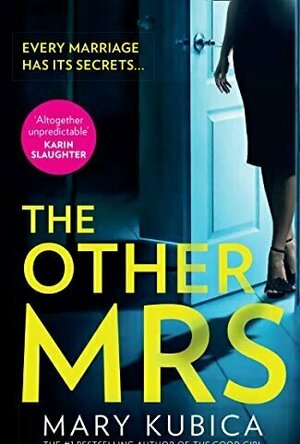
I've read a lot of horror books that cover this subject, watched horror movies covering this subject, listened to music covering this subject, but none of them have covered mental illness as well and correctly as Mary Kubica's "The Other Mrs.."
So, with that said, if you have any type of PTSD, this book may be hard for you to read. Otherwise, this novel is very addicting, filled with so many twists and turns that you won't be able to set it down for long. For me, someone who deals with C-PTSD, 'The Other Mrs.' by Mary Kubica has been a heartache to read, but also very fulfilling to finish.
Kubica is known for her best-selling novel 'the Good Girl' - - - a thriller following a mother and a detective in search of the the former's missing daughter that leads them down a twisted tale of family secrets. From highly acclaimed critics, 'the Other Mrs.' has out-done 'the Good Girl' as Kubica's best novel so far. Kubica sticks with her psychological thriller writing that she is known for in this newest novel. She keeps the reader guessing at what will happen next, and she plays out mental illnesses in a way that most who suffer can relate while winding in a mystery well enough that the reader won't be able to guess everything before the ending.
I can't give such a heavy review on this book because, to do so, would give away a lot of the ending, so I'll stick to talking about noteworthy characters that make up the novel. The main character is a woman named Sadie, whose family is being uprooted from Chicago and moved to a small island in Maine after her husband's sister dies, which leaves them with not only a house in the will, but a sixteen-year-old niece named Imogen.
Sadie is already a mother of two sons, both younger than sixteen, when she suddenly finds herself in-charge of the stereo-typical edgy teenager, Imogen. Sadie describes her the first time she sees Imogen: " But there she stands, a morose figure dressed in black. Black jeans, a black shirt, bare feet. Her hair is black, long with bangs that slant sideways across her face. Her eyes are outlined in a thick slash of black eyeliner. Everything black, aside from the white lettering on her shirt, which reads, I want to die. The septum of her nose is pierced. Her skin, in contrast to everything else, is white, pallid, ghostlike. She's thin. "
Early one morning when Sadie is heading off to work, she finds a word spelled on her car window. The word reads: "Die." Sadie, as most readers, quickly assumes that Imogen is responsibly for this, as she tries to explain: "I've tried to be understanding because of how awful the situation must be for her. Her life has been upended. She lost her mother and now must share her home with people she doesn't know. But that doesn't justify threatening me. Because Imogen doesn't mince words. She means just what she said. She wants me to die."
The next character that makes up a big part of this story is a confident, self-centered woman, whose name is Camille,and is also the 'other woman' in this story. Camille is a woman who gets what and who she wants, and won't let anyone get in her way, including Sadie, whose husband is someone Camille wants. I can't go much into the things that Camille's character does because it would give away a lot of the surprises in this novel - - - I can say though that there is murder and mystery throughout; the book will leave most readers guessing until the very end.
One other character who deserves mentioning is a little girl- - - with the nickname 'Mouse' - - - who finds herself suddenly dealing with a horrific stepmother, who abuses her physically and mentally unbeknownst to Mouse's father. One time, in which Mouse shows how smart she is to her the stepmother while being in front of her father (who Mouse likes to call 'Fake Mom'), later that night, when Mouse's father isn't looking, Fake Mom lets Mouse know how she felt about that:
" But later that night, when he father wasn't looking, Fake Mom got down into Mouse's face and told her if she ever made her look stupid again in front of her father, there would be hell to pay. Fake Mom's face got all red. She bared her teeth like a dog does when it's mad. A vein stuck out of her forehead. It throbbed. Fake Mom spit when she spoke, like she was so mad she couldn't stop herself from spitting. Like she was spitting mad. She spit on Mouse's face but Mouse didn't dare raise a hand to wipe it away."
Mental and physical abuse make up all that The Other Mrs. is about. So far, this is the best story I have read in a long time. My only problem with it is it's written like a YA novel, where it seems Kubica tried to keep that from happening by throwing in some heavy syllable words to make it more fitting for adults. But, luckily, she left out most of the wishy-washy elements that make up YA novels, so I believe most adults will enjoy this. I highly recommend this book to people who love murder mysteries!
I've read a lot of horror books that cover this subject, watched horror movies covering this subject, listened to music covering this subject, but none of them have covered mental illness as well and correctly as Mary Kubica's "The Other Mrs.."
So, with that said, if you have any type of PTSD, this book may be hard for you to read. Otherwise, this novel is very addicting, filled with so many twists and turns that you won't be able to set it down for long. For me, someone who deals with C-PTSD, 'The Other Mrs.' by Mary Kubica has been a heartache to read, but also very fulfilling to finish.
Kubica is known for her best-selling novel 'the Good Girl' - - - a thriller following a mother and a detective in search of the the former's missing daughter that leads them down a twisted tale of family secrets. From highly acclaimed critics, 'the Other Mrs.' has out-done 'the Good Girl' as Kubica's best novel so far. Kubica sticks with her psychological thriller writing that she is known for in this newest novel. She keeps the reader guessing at what will happen next, and she plays out mental illnesses in a way that most who suffer can relate while winding in a mystery well enough that the reader won't be able to guess everything before the ending.
I can't give such a heavy review on this book because, to do so, would give away a lot of the ending, so I'll stick to talking about noteworthy characters that make up the novel. The main character is a woman named Sadie, whose family is being uprooted from Chicago and moved to a small island in Maine after her husband's sister dies, which leaves them with not only a house in the will, but a sixteen-year-old niece named Imogen.
Sadie is already a mother of two sons, both younger than sixteen, when she suddenly finds herself in-charge of the stereo-typical edgy teenager, Imogen. Sadie describes her the first time she sees Imogen: " But there she stands, a morose figure dressed in black. Black jeans, a black shirt, bare feet. Her hair is black, long with bangs that slant sideways across her face. Her eyes are outlined in a thick slash of black eyeliner. Everything black, aside from the white lettering on her shirt, which reads, I want to die. The septum of her nose is pierced. Her skin, in contrast to everything else, is white, pallid, ghostlike. She's thin. "
Early one morning when Sadie is heading off to work, she finds a word spelled on her car window. The word reads: "Die." Sadie, as most readers, quickly assumes that Imogen is responsibly for this, as she tries to explain: "I've tried to be understanding because of how awful the situation must be for her. Her life has been upended. She lost her mother and now must share her home with people she doesn't know. But that doesn't justify threatening me. Because Imogen doesn't mince words. She means just what she said. She wants me to die."
The next character that makes up a big part of this story is a confident, self-centered woman, whose name is Camille,and is also the 'other woman' in this story. Camille is a woman who gets what and who she wants, and won't let anyone get in her way, including Sadie, whose husband is someone Camille wants. I can't go much into the things that Camille's character does because it would give away a lot of the surprises in this novel - - - I can say though that there is murder and mystery throughout; the book will leave most readers guessing until the very end.
One other character who deserves mentioning is a little girl- - - with the nickname 'Mouse' - - - who finds herself suddenly dealing with a horrific stepmother, who abuses her physically and mentally unbeknownst to Mouse's father. One time, in which Mouse shows how smart she is to her the stepmother while being in front of her father (who Mouse likes to call 'Fake Mom'), later that night, when Mouse's father isn't looking, Fake Mom lets Mouse know how she felt about that:
" But later that night, when he father wasn't looking, Fake Mom got down into Mouse's face and told her if she ever made her look stupid again in front of her father, there would be hell to pay. Fake Mom's face got all red. She bared her teeth like a dog does when it's mad. A vein stuck out of her forehead. It throbbed. Fake Mom spit when she spoke, like she was so mad she couldn't stop herself from spitting. Like she was spitting mad. She spit on Mouse's face but Mouse didn't dare raise a hand to wipe it away."
Mental and physical abuse make up all that The Other Mrs. is about. So far, this is the best story I have read in a long time. My only problem with it is it's written like a YA novel, where it seems Kubica tried to keep that from happening by throwing in some heavy syllable words to make it more fitting for adults. But, luckily, she left out most of the wishy-washy elements that make up YA novels, so I believe most adults will enjoy this. I highly recommend this book to people who love murder mysteries!
Gareth von Kallenbach (980 KP) rated The Greatest Showman (2017) in Movies
Jul 11, 2019

I can’t claim to know much about musicals. I don’t actively avoid them, but I don’t go out of my way to see them either. The few that I have seen and liked don’t seem to sit well with the musical theater crowd either. For instance, recently in conversation my defense of Russell Crowe as Javert in the latest adaptation of Les Misérables was shot down in a matter of seconds. My wife, with some frequency, reminds me that my (until now) secret admiration of Tim Burton’s Sweeney Todd is something that should never be declared in a public forum. For me, one of the best achievements in musical film will always be South Park: Bigger, Longer & Uncut; and though there is a general positivity about it, I’ve never seen it taken all that seriously as a contemporary musical (it was certainly a hell of a lot more memorable than 2003’s Best Picture winner, Chicago). So, if you haven’t already decided my opinion will be moot and stopped reading, I will, with the limited appreciation I have for this genre, give The Greatest Showman the fairest shake I can.
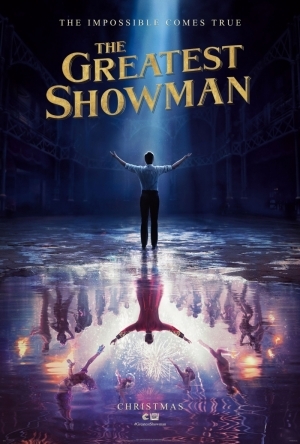
At a surprisingly short hour and forty-five minutes, this high-concept imagining of the meteoric rise of P.T. Barnum (Hugh Jackman), from the impoverished son of a tailor to one of the biggest names in the history of entertainment, should absolutely fly by. Tragically, it doesn’t. Beginning with an irresponsibly rushed first act that condenses decades of backstory into a few minutes, it dramatically stops dead between its second and third acts as we’re subjected to three songs in a row that not all that subtly beat us over the head with the inevitably that our leads are going to have to face some predictable, life-changing conflict before the big finale. Showman also suffers from the delusion that period pieces will be more engaging and relatable with a modern-inspired soundtrack, à la Baz Luhrmann’s misguided attempt at The Great Gatsby. The idea being that the music of the time, though antiquated to us now, would have sounded modern to people then, so why not put modern music, whether original or sourced, over period images in an attempt to bridge the gap between their world and ours? It’s a concept that might sound great on paper, but as Luhrmann already proved, the final results don’t so much complement each other as they expose each other’s weaknesses.
Its major flaw though, and why The Greatest Showman fails to be a great anything, is the insistence on force-feeding moments of attempted catharsis every 15-20 minutes, having earned almost none of them. A great many of the numbers are presented as such grand, climactic set pieces that they don’t feel as though they are working to serve a cohesive, larger whole. We are inundated with a blur of crescendo after crescendo and left little time to reflect on what we have just seen and heard before the film clumsily bounds off to the next song-and-dance laden plot point; and if you asked me to name any of the individual tunes now three days later, I’d be hard-pressed to do so. It’s an odd juxtaposition, and one I’ve very rarely experienced, wanting so badly for a film to end and at the same time wishing it had been given more time to fully realize its scope. Keep your ears open as well for an ill-advised line in which Barnum proudly compares himself to Napoleon. Isn’t Barnum supposed to be the “hero” of this piece, someone we are supposed to identify with and for whom we want to find success? Somebody please provide Showman’s writers a history lesson that didn’t just come off a Wikipedia page (for Barnum and Napoleon’s sakes).
With any negative criticism, I do like to try and go out on something positive, and if I have to concede anything to this movie, it’s that it finds its footing, albeit temporarily, while addressing issues of equality. Showman shines in the few moments where the supporting players portraying Barnum’s “oddities”, Keala Settle as Lettie Lutz in particular, are given the opportunity to stand toe-to-toe with the leads and, in many of these scenes, they rise above even the likes of Hugh Jackman. Another member of the cast who merits a little bit of praise (and I reserve the right to retract this at any time of my choosing, more than likely with whatever juvenile comedy he’ll be seen in next) is Zac Efron. Exposure to the likes of Nicole Kidman and John Cusack in 2012’s sadly overlooked The Paperboy, may finally be yielding results as he is the only lead who leaves an impression. Though his journey as a high society playwright begrudgingly brought into Barnum’s world definitely leans heavily on the saccharine side, it does provide a break of plausibility in amongst the unbridled chaos of the rest of the picture. I wouldn’t doubt that there is a much better movie that could have been made from expanding into its own feature the subplot of his character bucking the expectations of his status to fall in love with a circus performer.
At a surprisingly short hour and forty-five minutes, this high-concept imagining of the meteoric rise of P.T. Barnum (Hugh Jackman), from the impoverished son of a tailor to one of the biggest names in the history of entertainment, should absolutely fly by. Tragically, it doesn’t. Beginning with an irresponsibly rushed first act that condenses decades of backstory into a few minutes, it dramatically stops dead between its second and third acts as we’re subjected to three songs in a row that not all that subtly beat us over the head with the inevitably that our leads are going to have to face some predictable, life-changing conflict before the big finale. Showman also suffers from the delusion that period pieces will be more engaging and relatable with a modern-inspired soundtrack, à la Baz Luhrmann’s misguided attempt at The Great Gatsby. The idea being that the music of the time, though antiquated to us now, would have sounded modern to people then, so why not put modern music, whether original or sourced, over period images in an attempt to bridge the gap between their world and ours? It’s a concept that might sound great on paper, but as Luhrmann already proved, the final results don’t so much complement each other as they expose each other’s weaknesses.
Its major flaw though, and why The Greatest Showman fails to be a great anything, is the insistence on force-feeding moments of attempted catharsis every 15-20 minutes, having earned almost none of them. A great many of the numbers are presented as such grand, climactic set pieces that they don’t feel as though they are working to serve a cohesive, larger whole. We are inundated with a blur of crescendo after crescendo and left little time to reflect on what we have just seen and heard before the film clumsily bounds off to the next song-and-dance laden plot point; and if you asked me to name any of the individual tunes now three days later, I’d be hard-pressed to do so. It’s an odd juxtaposition, and one I’ve very rarely experienced, wanting so badly for a film to end and at the same time wishing it had been given more time to fully realize its scope. Keep your ears open as well for an ill-advised line in which Barnum proudly compares himself to Napoleon. Isn’t Barnum supposed to be the “hero” of this piece, someone we are supposed to identify with and for whom we want to find success? Somebody please provide Showman’s writers a history lesson that didn’t just come off a Wikipedia page (for Barnum and Napoleon’s sakes).
With any negative criticism, I do like to try and go out on something positive, and if I have to concede anything to this movie, it’s that it finds its footing, albeit temporarily, while addressing issues of equality. Showman shines in the few moments where the supporting players portraying Barnum’s “oddities”, Keala Settle as Lettie Lutz in particular, are given the opportunity to stand toe-to-toe with the leads and, in many of these scenes, they rise above even the likes of Hugh Jackman. Another member of the cast who merits a little bit of praise (and I reserve the right to retract this at any time of my choosing, more than likely with whatever juvenile comedy he’ll be seen in next) is Zac Efron. Exposure to the likes of Nicole Kidman and John Cusack in 2012’s sadly overlooked The Paperboy, may finally be yielding results as he is the only lead who leaves an impression. Though his journey as a high society playwright begrudgingly brought into Barnum’s world definitely leans heavily on the saccharine side, it does provide a break of plausibility in amongst the unbridled chaos of the rest of the picture. I wouldn’t doubt that there is a much better movie that could have been made from expanding into its own feature the subplot of his character bucking the expectations of his status to fall in love with a circus performer.

Acanthea Grimscythe (300 KP) rated The House by the Cemetery in Books
Jan 31, 2019 (Updated Feb 2, 2019)
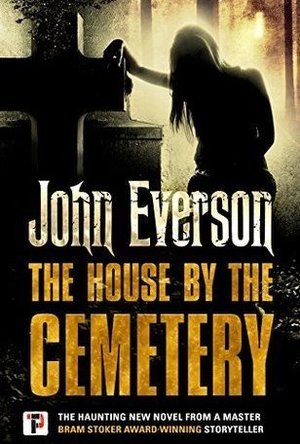
I have a love-hate relationship with The House by the Cemetery by John Everson, and it’s really tearing me apart. I absolutely enjoyed the story itself, but there’s a few issues, one of which is a huge red flag, that I simply can’t allow to go unspoken–and if other reviews are any clue, I’m not the only one that’s immensely bothered by it.
The story involves a witch that died in 1963, a haunted house, a haunted house attraction, and a lot of characters (too many to keep track of without a notebook, actually). Hired to repair the haunted house so that guests can safely walk through it, Mike Kostner spends much of his time drinking beer and talking with the girls, Katie and Emery. At the same time, Jeanie’s been hired on as a makeup artist for the upcoming attraction and drags her boyfriend, Bong, into it. Then there’s Jillie and Ted, paranormal investigators. And then there are three other groups of people to form more members of the cast, which I found to be extremely overwhelming.
At this point in my review, I usually talk about characters and their development, what I like about them, what I don’t, etc. In this case, I can’t really do that. The only character I managed to forge any sort of emotional connection with was Jeanie, and it’s mainly sympathetic. As for the rest of the roles played, I’m largely disappointed. Why? Because there’s a severe lack of sensitivity in this novel–which has been mentioned in several other reviews. There are four characters whose sole defining characteristic is either their race or their weight. There’s no depth given beyond that to them as an individual. The remarks dealing with weight are largely shaming and those dealing with race are stereotypical. And here’s where I’m going to take a moment to discuss the character Bong, which I feel is the most blatant insult to another race’s customs that I’ve seen in a long time.
Bong’s full name is Bong-soon Mon. Phonetically, that sounds a lot like “bong soon man.” It’s not overly obvious if you’re not familiar with Korean names, and Bong-soon is an actual name used in the drama Strong Woman Do Bong Soon. However, in this case, Everson shortens Bong-soon, which is actually the character’s name (whether it’s his first or last, I’m not sure), to Bong. Thus he makes it more of a laughing matter (really, it’s not funny), whether it’s intentional or unintentional. Usually I’m not sensitive to these types of material, but in this book the way it comes across is really bothersome and, like several other readers, I agree with the idea that this book desperately needs an edit for sensitivity. Please bear in mind that I read an arc of this book and so I’m not sure if any of these issues were addressed in the final publication.
EDIT: After speaking with the author, he explained to me that the reason he shortened the name as he did comes from personal experience with someone that had the same name, and what they went by. Everson also assured me it was not his intent to fat shame those characters. I really appreciate that he reached out to me, and feel it's important that my misconception be corrected, but not hidden.
Plotwise, I adored this book. I can’t go too much into detail without sharing spoilers, but I can say this: the Everson does have a talent for creating beautifully grisly, albeit somewhat repetitive, scenes. The bloodbath that takes place near the end of the book is a glorious gore-fest that I felt the rest of the story worked up to quite well, even if it crawled earlier on while Mike was working on the house. As for the setting, it’s well written. I liked the idea of a house next to a cemetery, and its easy to infer its age without being told: it’s too close to a turnpike to have been put there before the turnpike was built. I was, however, confused by the juxtaposition of a heavily wooded house and cemetery in close proximity to a city or town, as in my experience turnpikes usually don’t have exits between major locales. At least, not very many present-day ones do, as most of them have been converted to, or created as, a controlled-access highway, where intersecting roads tend to cross over or under so that they do not impede traffic. That said, it strikes me as weird that a single house and cemetery would have an exit from a turnpike.
So I decided to google cemeteries and turnpikes, and what did I find? Bachelor’s Grove Cemetery is an actual haunted locale found in the suburbs of Chicago. And yes, it actually is that close to a turnpike! If you like to watch Ghost Adventures, the cemetery was featured in a 2012 episode. Also, the cemetery is extremely old. Even better? Many of the ghost stories referenced in the book are actual tales surrounding the cemetery. It’s actually pretty fascinating and I wouldn’t even have known about it were it not for Everson’s book.
Overall, I did enjoy reading this book. I loved the homage to horror movies of all types, including lesser known genres. I absolutely adored the way in which some of the characters were manipulated, too. Hence why I stated early in this review that I have a love-hate relationship with it. Because of the lack of sensitivity though, and the way I was made to feel as a reader because of it (I’m overweight, after all), I can’t give it more than three skulls.
I’d like to thank the publisher and NetGalley for providing me with a free copy of this book for review.
The story involves a witch that died in 1963, a haunted house, a haunted house attraction, and a lot of characters (too many to keep track of without a notebook, actually). Hired to repair the haunted house so that guests can safely walk through it, Mike Kostner spends much of his time drinking beer and talking with the girls, Katie and Emery. At the same time, Jeanie’s been hired on as a makeup artist for the upcoming attraction and drags her boyfriend, Bong, into it. Then there’s Jillie and Ted, paranormal investigators. And then there are three other groups of people to form more members of the cast, which I found to be extremely overwhelming.
At this point in my review, I usually talk about characters and their development, what I like about them, what I don’t, etc. In this case, I can’t really do that. The only character I managed to forge any sort of emotional connection with was Jeanie, and it’s mainly sympathetic. As for the rest of the roles played, I’m largely disappointed. Why? Because there’s a severe lack of sensitivity in this novel–which has been mentioned in several other reviews. There are four characters whose sole defining characteristic is either their race or their weight. There’s no depth given beyond that to them as an individual. The remarks dealing with weight are largely shaming and those dealing with race are stereotypical. And here’s where I’m going to take a moment to discuss the character Bong, which I feel is the most blatant insult to another race’s customs that I’ve seen in a long time.
Bong’s full name is Bong-soon Mon. Phonetically, that sounds a lot like “bong soon man.” It’s not overly obvious if you’re not familiar with Korean names, and Bong-soon is an actual name used in the drama Strong Woman Do Bong Soon. However, in this case, Everson shortens Bong-soon, which is actually the character’s name (whether it’s his first or last, I’m not sure), to Bong. Thus he makes it more of a laughing matter (really, it’s not funny), whether it’s intentional or unintentional. Usually I’m not sensitive to these types of material, but in this book the way it comes across is really bothersome and, like several other readers, I agree with the idea that this book desperately needs an edit for sensitivity. Please bear in mind that I read an arc of this book and so I’m not sure if any of these issues were addressed in the final publication.
EDIT: After speaking with the author, he explained to me that the reason he shortened the name as he did comes from personal experience with someone that had the same name, and what they went by. Everson also assured me it was not his intent to fat shame those characters. I really appreciate that he reached out to me, and feel it's important that my misconception be corrected, but not hidden.
Plotwise, I adored this book. I can’t go too much into detail without sharing spoilers, but I can say this: the Everson does have a talent for creating beautifully grisly, albeit somewhat repetitive, scenes. The bloodbath that takes place near the end of the book is a glorious gore-fest that I felt the rest of the story worked up to quite well, even if it crawled earlier on while Mike was working on the house. As for the setting, it’s well written. I liked the idea of a house next to a cemetery, and its easy to infer its age without being told: it’s too close to a turnpike to have been put there before the turnpike was built. I was, however, confused by the juxtaposition of a heavily wooded house and cemetery in close proximity to a city or town, as in my experience turnpikes usually don’t have exits between major locales. At least, not very many present-day ones do, as most of them have been converted to, or created as, a controlled-access highway, where intersecting roads tend to cross over or under so that they do not impede traffic. That said, it strikes me as weird that a single house and cemetery would have an exit from a turnpike.
So I decided to google cemeteries and turnpikes, and what did I find? Bachelor’s Grove Cemetery is an actual haunted locale found in the suburbs of Chicago. And yes, it actually is that close to a turnpike! If you like to watch Ghost Adventures, the cemetery was featured in a 2012 episode. Also, the cemetery is extremely old. Even better? Many of the ghost stories referenced in the book are actual tales surrounding the cemetery. It’s actually pretty fascinating and I wouldn’t even have known about it were it not for Everson’s book.
Overall, I did enjoy reading this book. I loved the homage to horror movies of all types, including lesser known genres. I absolutely adored the way in which some of the characters were manipulated, too. Hence why I stated early in this review that I have a love-hate relationship with it. Because of the lack of sensitivity though, and the way I was made to feel as a reader because of it (I’m overweight, after all), I can’t give it more than three skulls.
I’d like to thank the publisher and NetGalley for providing me with a free copy of this book for review.

Gareth von Kallenbach (980 KP) rated Les Misérables (2012) in Movies
Aug 7, 2019
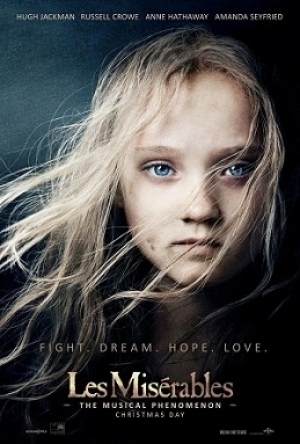
Words cannot express how amazing this movie is. For those of you who have shouldered through the modern-day musical revival; suffering through the questionable singing talents of many stars as “Phantom of the Opera,” “Chicago,” “Moulin Rouge,” “Sweeny Todd,” and that abysmal rendition of “Nine” – I can assure you, that “Les Mis” will change that perception. For once, the casting crew took the time to select a cast capable of the repertoire’s vocal demands (and Les Mis is very vocally demanding – as most operatic pieces are). It’s apparent that each singer was heavily vocally coached and trained, some faring more so than others. While this is no replacement for raw talent, I can assure you that the cast was downright fantastic.
For years I studied and sang opera. I know music and I’ve sung my fair share of Les Mis pieces in my past. I adore Victor Hugo and “Les Misérables” is by far one of my favorite literary works. When I began to watch this movie, I was keyed up to be critical on the vocal spectrum, the literary aspect, and the representation of one of my favorite Broadway/London pieces. To be frank, I wasn’t disappointed at all.
For those unfamiliar with Hugo’s work or what to expect with Les Mis, let me give you a brief synopsis on its plot and the history of the French revolution in which this takes place. France has just endured her infamous Revolution (the one with the guillotine, Marie-Antoinette, and the Sans Culottes movement) and her people are still suffering. There is no money for food, the country is in the midst of a depression, and the Napoleonic regime is yet to come to fruition. Thus, you find Fantine (Hathaway), a poor but determined (and beautiful) woman trying desperately to make enough money to support her daughter, Cosette, who resides with friends in another city. The book reveals that Madame Thénardier (Bonham-Carter) and her husband, Thénardier (Baron-Cohen) were supposed to be taking the money that Fantine had given to them to provide for her daughter, Cosette. Instead, however, Cosette is forced to live in absolute poverty while Thénardier’s daughter, Eponine, lives the life of opulence. Meanwhile, Jean Valjean (Jackman), an ex-convict, is trying desperately to find legitimate work after his stint in prison for stealing a loaf of bread to provide for his starving family. The infamous policeman, Javert (Crowe), feels Valjean will re-offend and makes it his mission to pursue Valjean until the end.
Finding the world a terrible place as an ex-convict, Valjean seeks to steal from a church her silver, believing he has no other way to survive. It is the love of a good priest, however, who gives Valjean the silver he seeks under the pledge he will become a servant of God and provide for others the same good he has provided for him. Thus, years later, we find Valjean a reformed man (who has skipped on his parole and assumed a new name), running a factory in which Fantine works. And so, when Fantine is fired from her job and takes to a life of prostitution in order to provide for her daughter, it is Valjean who feels the burden of her demise and takes it upon himself to save Cosette and raise her as his own.
Of course, this entire time, Javert is pursuing Valjean and a new revolution is starting to take place amongst Paris’ people. Years later we find Cosette grown to womanhood (now played by Seyfried), and falling in love with one of the revolution’s key players, a youth by the name of Marius (Redmayne). The Thénardiers are back again and we find their once-grand lifestyle has resorted to a life of gutter-crime and Éponine (now played by Barks), is desperately in love with Marius as well (although her love is unrequited). For those unfamiliar with how the story plays out, I will leave it at that.
I will caution those who have never seen this play to prepare for a long show. It is very dramatic and very intense, but visually breath-taking and emotionally moving in so many ways. Vocally, there are times when the legato is lacking and some transitions seemed forced (Crowe struggled many times with allowing his natural vibrato to come through instead of pushing a sustained note; Seyfried’s vibrato is very trill-like and sometimes distracts from the pure quality of her spinto-soprano range). However, I must say that I was blown away by Hathway’s performance (she brought me to tears with “I Dreamed a Dream” due to her emotional rendition) and her ability to truly escape into her character. Similarly, Tviet (he played Enjolras) was stunning with his vocal command and Redmayne was equally as impressive. Jackman will amaze you with his rich tenor and, surprisingly, I found Crowe to have a fantastic baritone when he didn’t force his work. Baron-Cohen and Bonham-Carter provided a much needed comical respite throughout the film (and both sing beautifully as well, although this movie didn’t focus on their vocal command as much). Barks did a lovely job for most of her work; although I found her rendition of “On My Own” a bit forced (she is a true mezzo but seemed to push her high notes, although this may have been where her voice shifted into her head voice which is no fault of her own).
Overall, if you are an avid musical lover and have been waiting for a proper rendition of this production, this movie will astound you. Visually, the movie is breath-taking and the acting is absolutely fantastic. I’m still haunted by the revolutionary song, to be honest. If you’ve been waiting for a musical worthy of the big screen, this one is it. Look for it to sweep the Oscars this year.
This movie deserves an A all around.
For years I studied and sang opera. I know music and I’ve sung my fair share of Les Mis pieces in my past. I adore Victor Hugo and “Les Misérables” is by far one of my favorite literary works. When I began to watch this movie, I was keyed up to be critical on the vocal spectrum, the literary aspect, and the representation of one of my favorite Broadway/London pieces. To be frank, I wasn’t disappointed at all.
For those unfamiliar with Hugo’s work or what to expect with Les Mis, let me give you a brief synopsis on its plot and the history of the French revolution in which this takes place. France has just endured her infamous Revolution (the one with the guillotine, Marie-Antoinette, and the Sans Culottes movement) and her people are still suffering. There is no money for food, the country is in the midst of a depression, and the Napoleonic regime is yet to come to fruition. Thus, you find Fantine (Hathaway), a poor but determined (and beautiful) woman trying desperately to make enough money to support her daughter, Cosette, who resides with friends in another city. The book reveals that Madame Thénardier (Bonham-Carter) and her husband, Thénardier (Baron-Cohen) were supposed to be taking the money that Fantine had given to them to provide for her daughter, Cosette. Instead, however, Cosette is forced to live in absolute poverty while Thénardier’s daughter, Eponine, lives the life of opulence. Meanwhile, Jean Valjean (Jackman), an ex-convict, is trying desperately to find legitimate work after his stint in prison for stealing a loaf of bread to provide for his starving family. The infamous policeman, Javert (Crowe), feels Valjean will re-offend and makes it his mission to pursue Valjean until the end.
Finding the world a terrible place as an ex-convict, Valjean seeks to steal from a church her silver, believing he has no other way to survive. It is the love of a good priest, however, who gives Valjean the silver he seeks under the pledge he will become a servant of God and provide for others the same good he has provided for him. Thus, years later, we find Valjean a reformed man (who has skipped on his parole and assumed a new name), running a factory in which Fantine works. And so, when Fantine is fired from her job and takes to a life of prostitution in order to provide for her daughter, it is Valjean who feels the burden of her demise and takes it upon himself to save Cosette and raise her as his own.
Of course, this entire time, Javert is pursuing Valjean and a new revolution is starting to take place amongst Paris’ people. Years later we find Cosette grown to womanhood (now played by Seyfried), and falling in love with one of the revolution’s key players, a youth by the name of Marius (Redmayne). The Thénardiers are back again and we find their once-grand lifestyle has resorted to a life of gutter-crime and Éponine (now played by Barks), is desperately in love with Marius as well (although her love is unrequited). For those unfamiliar with how the story plays out, I will leave it at that.
I will caution those who have never seen this play to prepare for a long show. It is very dramatic and very intense, but visually breath-taking and emotionally moving in so many ways. Vocally, there are times when the legato is lacking and some transitions seemed forced (Crowe struggled many times with allowing his natural vibrato to come through instead of pushing a sustained note; Seyfried’s vibrato is very trill-like and sometimes distracts from the pure quality of her spinto-soprano range). However, I must say that I was blown away by Hathway’s performance (she brought me to tears with “I Dreamed a Dream” due to her emotional rendition) and her ability to truly escape into her character. Similarly, Tviet (he played Enjolras) was stunning with his vocal command and Redmayne was equally as impressive. Jackman will amaze you with his rich tenor and, surprisingly, I found Crowe to have a fantastic baritone when he didn’t force his work. Baron-Cohen and Bonham-Carter provided a much needed comical respite throughout the film (and both sing beautifully as well, although this movie didn’t focus on their vocal command as much). Barks did a lovely job for most of her work; although I found her rendition of “On My Own” a bit forced (she is a true mezzo but seemed to push her high notes, although this may have been where her voice shifted into her head voice which is no fault of her own).
Overall, if you are an avid musical lover and have been waiting for a proper rendition of this production, this movie will astound you. Visually, the movie is breath-taking and the acting is absolutely fantastic. I’m still haunted by the revolutionary song, to be honest. If you’ve been waiting for a musical worthy of the big screen, this one is it. Look for it to sweep the Oscars this year.
This movie deserves an A all around.