Search
Search results
The Girl Who Could Breathe Under Water
Book Watch
The best fiction simply tells the truth. But the truth is never simple. When novelist Kendra...
contemporary fiction friendship fiction coming of age tragedy
Shadow Seer (Blood Shadows #2)
Book
Their Shadows recognize each other immediately. Their hearts need a little more time… Emma...
Adult Paranormal Romance
Hello Beautiful
Book
A rich, compassionate tale of four sisters and the love affair that fractures their family Best...
Family
ClareR (5911 KP) rated Sun Damage in Books
Jul 4, 2023
Sun Damage is a slow burn of a book, dripping in paranoia!
Ali and Sean are confidence tricksters: they get people to trust them, and then extract large amounts of money from them. Except something goes wrong when they try to con Lulu, and Ali goes on the run - with a large sum of money from Sean’s safe. Ali thinks she has found the perfect hiding place in a gîte in the South of France, but it seems inevitable that her past will catch up with her.
This is all set in the summer, when the heat is as oppressive as Ali’s paranoia. The whole novel feels claustrophobic - will Ali be found out? Will Sean find her? What will her employers do?
We see Ali’s past and childhood in some detail, and I found myself forgiving her for her terrible behaviour - although I doubt I would have been so forgiving if I was the one being swindled!
This is probably the ideal summer holiday read - great for by the pool, somewhere hot. Although you’ll be a lot more suspicious of anyone you don’t know trying to strike up a conversation!
Many thanks to The Pigeonhole for another great serialisation.
Ali and Sean are confidence tricksters: they get people to trust them, and then extract large amounts of money from them. Except something goes wrong when they try to con Lulu, and Ali goes on the run - with a large sum of money from Sean’s safe. Ali thinks she has found the perfect hiding place in a gîte in the South of France, but it seems inevitable that her past will catch up with her.
This is all set in the summer, when the heat is as oppressive as Ali’s paranoia. The whole novel feels claustrophobic - will Ali be found out? Will Sean find her? What will her employers do?
We see Ali’s past and childhood in some detail, and I found myself forgiving her for her terrible behaviour - although I doubt I would have been so forgiving if I was the one being swindled!
This is probably the ideal summer holiday read - great for by the pool, somewhere hot. Although you’ll be a lot more suspicious of anyone you don’t know trying to strike up a conversation!
Many thanks to The Pigeonhole for another great serialisation.
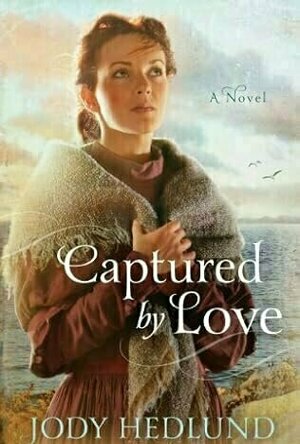
Captured by Love (Michigan Brides, #3)
Book
Michigan Territory, 1814 A voyageur and a young woman swept up in a time of upheaval and danger ...
Mark @ Carstairs Considers (2379 KP) rated Puzzle Me a Murder in Books
Aug 2, 2024
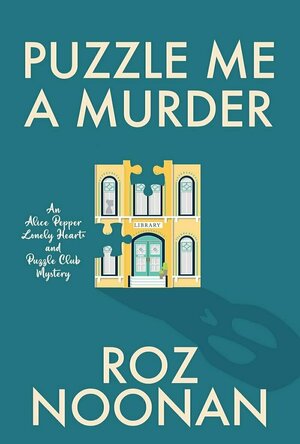
Missing Pieces
Alice Pepper enjoys having her friends over to work on puzzles most nights. Among the group is her childhood best friend Ruby Milliner. When Ruby arrives home from a business trip early, she catches her husband with his mistress. The next morning, Ruby’s husband is dead, and the police are looking at Ruby as their prime suspect. Alice jumps in to find the killer. But does she have all the pieces to solve this puzzle?
Despite the fact that I’m not much of a jigsaw puzzle guy, I thought this sounded like a fun premise for a series. Sadly, I was wrong. I didn’t feel like the characters ever went beyond being types, and it felt like they had too many interests or skills in their background. It felt like the author was checking boxes instead of making well rounded characters. There wasn’t attention to detail, so these things bumped me out of the book. The novel could have lost 60 pages without losing anything, the pacing was that off. And the climax, while logical, seemed abrupt to me. I really did want to like it more, but I won’t give this series another chance.
Merissa (13075 KP) rated Claimed by the Bear (Mokoaroa Shifters #2) in Books
Jun 11, 2025

CLAIMED BY THE BEAR is the second book in the Mokoaroa Shifters series, and features Liam and Ava, childhood friends who went their separate ways when Liam became an Alpha Elite and Ava didn't know about shifters.
This story has a lot of potential, but it also needs a run-through by an editor. The flow is disjointed in places, with times changing in just a paragraph, sometimes from one day to another, and the continuity needs checking as one moment Liam packs Ava's swimsuit, and the next, she has to borrow one. The perspective also changed from first to third person within the same paragraph. And Gormack, Liam's uncle, became Gormuck on more than one occasion.
All this meant I couldn't lose myself in the story as I wanted, especially when there is a great supporting cast of characters I would love to hear more from. All in all, a good read with great potential.
** Same worded review will appear elsewhere. **
* A copy of this book was provided to me with no requirements for a review. I voluntarily read this book; the comments here are my honest opinion. *
Merissa
Archaeolibrarian - I Dig Good Books!
Jun 11, 2025
This story has a lot of potential, but it also needs a run-through by an editor. The flow is disjointed in places, with times changing in just a paragraph, sometimes from one day to another, and the continuity needs checking as one moment Liam packs Ava's swimsuit, and the next, she has to borrow one. The perspective also changed from first to third person within the same paragraph. And Gormack, Liam's uncle, became Gormuck on more than one occasion.
All this meant I couldn't lose myself in the story as I wanted, especially when there is a great supporting cast of characters I would love to hear more from. All in all, a good read with great potential.
** Same worded review will appear elsewhere. **
* A copy of this book was provided to me with no requirements for a review. I voluntarily read this book; the comments here are my honest opinion. *
Merissa
Archaeolibrarian - I Dig Good Books!
Jun 11, 2025
I have a tough time reviewing books about Black Feminism. I enjoy reading them - well, maybe "enjoy" isn't quite the right word. They can be tough. I am glad to have read them. But how to review them? I'm a white woman, it's not really my place to critique these works. But it would be remiss of me to not talk about them - denying them the same space on my blog that I give to everything else I read is its own kind of erasure. I'm not sure how best to resolve this, but for this specific book, at least, I can talk about what I learned from it.
What I learned is that some of my childhood was straight-up racist. I always thought of my childhood as pretty idyllic - my parents were high school sweethearts, and to this day still adore each other. We lived in a house my parents owned. (My most formative years were actually spent in the house my mother grew up in; my parents bought it from my grandparents when I was seven.) We got to run around and play on a quiet neighborhood street where we knew all of our neighbors. We had pets of various species, we got technology fairly quickly since my father was a computer geek, we had a garden out back that Mom canned beans out of every year.
But I was homeschooled until eighth grade. (With Bob Jones and Abeka Books, notoriously Christian curriculum. I thought humans lived with dinosaurs well into my twenties.) We went to a conservative Christian church every Sunday. (And Tuesday. And some Fridays.) While my parents taught that I could be anything I wanted to be, the church definitely over rode that with "women should be subservient to men" and "don't trust your own judgment, ask God/your parents/the elders."
The incident that Jerkins' book brought back to mind, though, was a party I went to. I'm pretty sure it was someone's birthday party, but at a church. Not our church. There were a lot of people, though, so I could be wrong about the birthday party. It was this party where I got the tiny scar in my eyebrow - some kid broke the bat on the pinata and threw it behind him, where it hit me in the face. Before that, though, was the cake walk. There were footprints laid out on the concrete floor, and we paced around them while music played, kind of like musical chairs, I think. (I was younger than ten, my memory is a little fuzzy.) I won the cake! I thought nothing of this until reading This Will Be My Undoing.
"The cakewalk was a dance performed in the late nineteenth century at slave get-togethers. You lean or rear back and kick your feet out left and right or vice versa as you move forward......White people would watch them dance, fascinated by the exoticness of it all. These spectacles were purposeful humiliations. But the cakewalk evolved as slaves' own form of subversion. While serving at large and fancy parties in the early 1800s, they would watch well-to-do white people perform strict and stiff dances, like cotillions and quadrilles, and mimic them, exaggerating the bowing and small skips and hops and adding some high steps and jumps. In diaries kept by white people in the antebellum South, the cakewalk is not depicted as a form of satire. After all, why would a sweet slave mock his benevolent master? To white people's eyes, this imitation seemed like flattery. They were delighted that the slaves were attempting their civilized dances. In fact, they would hold competitions and the winning slaves would receive a cake, hence the name. Yet they were being mocked, right in front of their faces."
WHY WAS THIS BEING HELD AT A CHURCH PARTY? I don't recall if it was all white kids, but it probably was. My hometown was not very ethnically diverse. The more I learn - academically, politically, socially, secularly - the more I realize my childhood was pretty fucked up in a lot of different ways. I don't know if it was more or less fucked up than most white kids' childhoods - white supremacy is insidious. I was an ignorant child at the time, but to realize, decades later, how racist holding a cakewalk is, stopped me in my tracks. (Incidentally, this means that calling something "a cakewalk" has its roots in racism, like so many other things in our language. Cakewalks weren't easy - but the best dancers made them look that way.)
So that's what I can say about this book. I learned something about my childhood. Beyond that, all I will offer is that Jerkins is an excellent writer; the book flows well and is an easy read, despite the subject matter not being easy. Read it. It's important.
You can find all my reviews at http://goddessinthestacks.com
What I learned is that some of my childhood was straight-up racist. I always thought of my childhood as pretty idyllic - my parents were high school sweethearts, and to this day still adore each other. We lived in a house my parents owned. (My most formative years were actually spent in the house my mother grew up in; my parents bought it from my grandparents when I was seven.) We got to run around and play on a quiet neighborhood street where we knew all of our neighbors. We had pets of various species, we got technology fairly quickly since my father was a computer geek, we had a garden out back that Mom canned beans out of every year.
But I was homeschooled until eighth grade. (With Bob Jones and Abeka Books, notoriously Christian curriculum. I thought humans lived with dinosaurs well into my twenties.) We went to a conservative Christian church every Sunday. (And Tuesday. And some Fridays.) While my parents taught that I could be anything I wanted to be, the church definitely over rode that with "women should be subservient to men" and "don't trust your own judgment, ask God/your parents/the elders."
The incident that Jerkins' book brought back to mind, though, was a party I went to. I'm pretty sure it was someone's birthday party, but at a church. Not our church. There were a lot of people, though, so I could be wrong about the birthday party. It was this party where I got the tiny scar in my eyebrow - some kid broke the bat on the pinata and threw it behind him, where it hit me in the face. Before that, though, was the cake walk. There were footprints laid out on the concrete floor, and we paced around them while music played, kind of like musical chairs, I think. (I was younger than ten, my memory is a little fuzzy.) I won the cake! I thought nothing of this until reading This Will Be My Undoing.
"The cakewalk was a dance performed in the late nineteenth century at slave get-togethers. You lean or rear back and kick your feet out left and right or vice versa as you move forward......White people would watch them dance, fascinated by the exoticness of it all. These spectacles were purposeful humiliations. But the cakewalk evolved as slaves' own form of subversion. While serving at large and fancy parties in the early 1800s, they would watch well-to-do white people perform strict and stiff dances, like cotillions and quadrilles, and mimic them, exaggerating the bowing and small skips and hops and adding some high steps and jumps. In diaries kept by white people in the antebellum South, the cakewalk is not depicted as a form of satire. After all, why would a sweet slave mock his benevolent master? To white people's eyes, this imitation seemed like flattery. They were delighted that the slaves were attempting their civilized dances. In fact, they would hold competitions and the winning slaves would receive a cake, hence the name. Yet they were being mocked, right in front of their faces."
WHY WAS THIS BEING HELD AT A CHURCH PARTY? I don't recall if it was all white kids, but it probably was. My hometown was not very ethnically diverse. The more I learn - academically, politically, socially, secularly - the more I realize my childhood was pretty fucked up in a lot of different ways. I don't know if it was more or less fucked up than most white kids' childhoods - white supremacy is insidious. I was an ignorant child at the time, but to realize, decades later, how racist holding a cakewalk is, stopped me in my tracks. (Incidentally, this means that calling something "a cakewalk" has its roots in racism, like so many other things in our language. Cakewalks weren't easy - but the best dancers made them look that way.)
So that's what I can say about this book. I learned something about my childhood. Beyond that, all I will offer is that Jerkins is an excellent writer; the book flows well and is an easy read, despite the subject matter not being easy. Read it. It's important.
You can find all my reviews at http://goddessinthestacks.com
The daughter (and stepdaughter) of actors, Sally Field earned her first acting role at seventeen and was quickly on television in shows such as "Gidget" and "The Flying Nun." Those roles showcased Sally's youth and smiling personality. But, behind the scenes, Sally had a tumultuous childhood: her parents divorced when she was young, and her relationships with them and her stepfather were not easy. She found happiness, in many ways, as an actress, but also struggled to find roles that challenged her. In this, her first memoir, she tells the story of her childhood and her early years as an actress.
I listened to the majority of this (and then switched over to the book, I'm weird), and I'm not going to lie: this wasn't always a fun listen for me. This book is sort of depressing and stressful a lot of the time. I will be honest that I didn't know a lot about Sally Field going in--I knew of Gidget, her roles with Burt Reynolds, "Forrest Gump," and honestly, most recently, "Brothers & Sisters." I knew one of her sons was gay, and she supported him.
I did not know her mother was an actress. I did not know that a lot of really bad things happened to her. Seriously, this memoir contains a lot of Sally Field telling us all the awful memories of her childhood, and, later, her early acting days. I'm not saying that's bad--it's truly brave and powerful stuff. But, man, as you're in the car driving 2+ hours to work? It's draining. I felt horrible for her, I felt proud that she'd overcome it, and I felt a little exhausted by it all. I also was appalled by how much she had to deal with (alone) and the state of the acting community for women during that time period.
It did, however, seem to make the beginning of the book go by rather slowly. Or maybe that's just the audio format--this was only the second audiobook I've ever listened to and, coincidentally, the second audiobook I found slow. When Field got to the time period where she became a mom, it picked up for me, perhaps because I could relate better to her. I felt an odd kinship--I was headed off, leaving behind my kids for a work project, and many times, so was she. (Alas, I was doing a rather boring job and she was a famous actress, but hey, you try to find parallels where you can, right?)
No matter what, I applaud her for being unafraid to tell the truth about her life, including admitting her own faults. She supplements her memories with her journal entries, newspaper articles, letters, and more. The result is a very detailed and personal account of her life--up until about "Norma Rae." After that, it glosses over most of her career following that film, which is a little sad for anyone who enjoyed all her subsequent films. This memoir is clearly focused more on Field's personal growth versus a celebrity tell-all. And I get that, I do, but you can't help but wish for a few more juicy details.
In the end, this wasn't an easy read/listen, but it was a good one. I learned a great deal about Field's life, and I admire her so much more as a person now. She had to go through a great deal to get the acting career and overall life she desired. If you enjoy memoirs and autobiographies, you will probably like this one, especially if you like them detailed, versus just focused on celebrity fluff and laughs (though Field is very witty). 4 stars.
I listened to the majority of this (and then switched over to the book, I'm weird), and I'm not going to lie: this wasn't always a fun listen for me. This book is sort of depressing and stressful a lot of the time. I will be honest that I didn't know a lot about Sally Field going in--I knew of Gidget, her roles with Burt Reynolds, "Forrest Gump," and honestly, most recently, "Brothers & Sisters." I knew one of her sons was gay, and she supported him.
I did not know her mother was an actress. I did not know that a lot of really bad things happened to her. Seriously, this memoir contains a lot of Sally Field telling us all the awful memories of her childhood, and, later, her early acting days. I'm not saying that's bad--it's truly brave and powerful stuff. But, man, as you're in the car driving 2+ hours to work? It's draining. I felt horrible for her, I felt proud that she'd overcome it, and I felt a little exhausted by it all. I also was appalled by how much she had to deal with (alone) and the state of the acting community for women during that time period.
It did, however, seem to make the beginning of the book go by rather slowly. Or maybe that's just the audio format--this was only the second audiobook I've ever listened to and, coincidentally, the second audiobook I found slow. When Field got to the time period where she became a mom, it picked up for me, perhaps because I could relate better to her. I felt an odd kinship--I was headed off, leaving behind my kids for a work project, and many times, so was she. (Alas, I was doing a rather boring job and she was a famous actress, but hey, you try to find parallels where you can, right?)
No matter what, I applaud her for being unafraid to tell the truth about her life, including admitting her own faults. She supplements her memories with her journal entries, newspaper articles, letters, and more. The result is a very detailed and personal account of her life--up until about "Norma Rae." After that, it glosses over most of her career following that film, which is a little sad for anyone who enjoyed all her subsequent films. This memoir is clearly focused more on Field's personal growth versus a celebrity tell-all. And I get that, I do, but you can't help but wish for a few more juicy details.
In the end, this wasn't an easy read/listen, but it was a good one. I learned a great deal about Field's life, and I admire her so much more as a person now. She had to go through a great deal to get the acting career and overall life she desired. If you enjoy memoirs and autobiographies, you will probably like this one, especially if you like them detailed, versus just focused on celebrity fluff and laughs (though Field is very witty). 4 stars.