

David McK (3883 KP) rated Peter Pan (2003) in Movies
Apr 18, 2022 (Updated Apr 19, 2026)
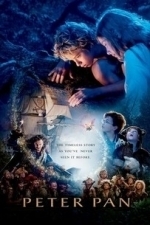


Anyway, it's all here: Peter Pan himself, Tinkerbell, Neverland (including some rather scary mermaids for a family film!), The Lost Boys, Smee and Captain Hook, the alarm-clock swallowing crocodile that follows the latter ...
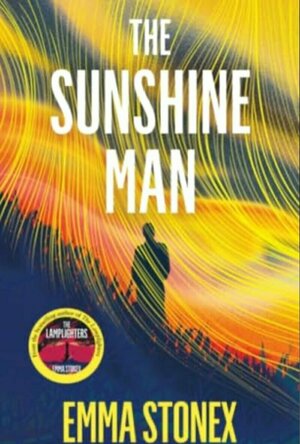
The Sunshine Man
8.0 Rate It
Book
One cold winter's morning, Birdie wakes to the news she’s been waiting eighteen years to hear:...
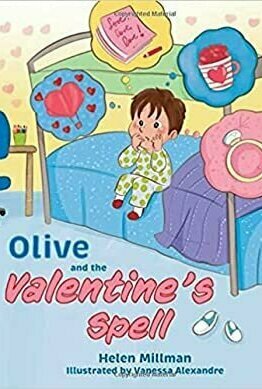
Olive and the Valentine's Spell
8.0
Rate It
Book
Olive is a sweet elementary school boy who is afraid to go to school on Valentine’s Day. ....
Holiday Valentine's Day Children Fears Picture Book kids

Love, Not War: A Charity Anthology for Ukraine
Yolanda Olson, Hazel Grace, N.M. Black, Cassia Briar, Dee Garcia, A.R. Hall, M. Johnson, M.R. Leahy, Emery LeeAnn, Katherine Moore, Sara A. Mosier, Summer O'Toole, Jensen Reed, Savannah Sloan, Elizabeth St. John, Jen Stevens and Suki Williams
Book
LOVE, NOT WAR — A charity Anthology for the Ukraine Crisis Fund 17 authors have come together...
Adult Romance Charity Anthology
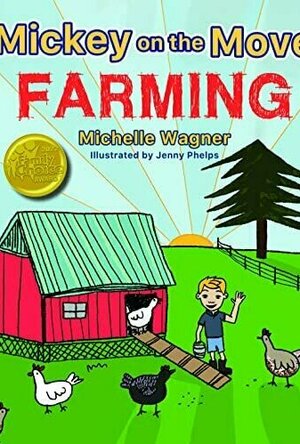
Mickey on the Move: Farming
8.0
Rate It
Book
Mickey is on the move again! He and his mom take pride in farming and gardening together, doing...
deaf Special Needs Children Hearing Loss Picture book hard of Hearing
![The Vanishing of Margaret Small [Audiobook]](/uploads/profile_image/292/07af28d6-184f-436e-a53d-a1ddb1c79292.jpg?m=1671380186)
The Vanishing of Margaret Small [Audiobook]
10.0 Rate It
Book
Meet Margaret Small: 75, plain spoken and a Cilla Black super fan. Shortly after the death of her...

Rachel King (13 KP) rated The Lens and the Looker in Books
Feb 11, 2019

Backing up, I was very interested in the present-day time period of 2347 and the few details that Kaufman spared regarding this society. Unfortunately, not much is explained about how this society came to be. A brief explanation is given for the planetary population of 300 million, along with other random details interspersed throughout the book, such as every child born is paired with an A.I., people are implanted with a device that keeps disease and infection at bay, and parents are only allowed to have one child with a lottery sometimes allowing for a second child. The purpose of the History Camps are explained through the rebellious attitudes of the three main characters and how they can easily manipulate the system for their own entertainment. As a parent, the word that continually echoed through my head regarding these children in the Hard-Time History Camp is "Spoiled!" Though they are supposed to be learning about how the rebellion of the human populations of the past caused everything from war, to disease, to poverty and famine, the way the children are coddled and protected from any sort of real pain or hardship makes me wonder how these History Camps ever accomplished anything of lasting value in any child.
Once the children are brought to the real Verona and abandoned as orphans, they finally begin to get a taste of real difficulty and hardship, but this is where the believability ends for me. The children had a single day in the History Camp Verona to get acquainted with their roles, and they show up in the real Verona as near-experts, maneuvering the details of their jobs to accommodate for comfort and ease of use that the family they work for is not familiar with, of course all with the help and direction of a very convenient genie. On top of all of this, the three children become agreeable, cooperative, and hard-working practically overnight, with little sign of the rebellious tendencies that put them in a History Camp in the first place. These transitions in character development felt forced to me.
Another aspect that really bugged me from the beginning of the book was the awkwardness of the dialog throughout the book, specifically regarding the children's speech. It felt stilted and over-simplified, and slowed down my reading because I consistently felt that children today did not speak like this. Some of the speech of the people native to the real Verona also seemed strange, but I attributed that to the speech of the time period.
Many of the characters took on unique facets that made them rather memorable to me, such as Ugilino's looks and arrogance, Signora della Cappa's madness, and Shamira's artistic inclinations. The budding romance between Hansum, or "Romero", and Guilietta copies the Shakespearean play, "Romeo and Juliet", in many ways, down to the presence of a Father Lurenzano, and I have to wonder about Kaufman's motivations for working this tale into the plot. And again, their romance also felt forced and over-the-top, missing the reality-warping conviction that is obvious in the original Shakespeare story.
I also have to wonder how these advancements that the three children are introducing to 1347 Verona are actually affecting the progression of time, since this is a much harped-upon concern regarding time travel. The only thing that is apparent to both the children and the reader is the quaint changes made to the appearance of the genie. Something else that is also mentioned early on is that this is also the same time period as the Black Plague, which has yet to make an appearance. Hopefully, the next book in the trilogy will address these things, The Bronze and the Brimstone: The Verona Trilogy, Book 2.
This book seemed geared to appeal to pre-teens and young teens in many ways, but as an adult reader, it left much to be desired for me.
Hazel (1853 KP) rated The Festival Shoes in Books
Aug 3, 2017
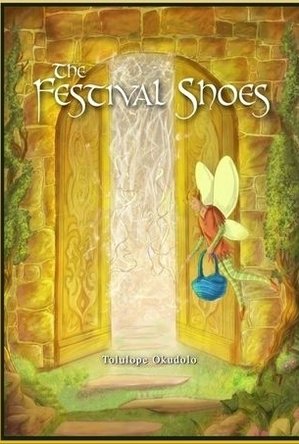
The Festival Shoes by Tolulope Okudolo is a fairy story (literally) for young children. Although referred to as “pixies,” the illustrations provided by Eric Scott Fisher look like typical western imagery associated with the magical, winged creatures. The main character, Drumlo, is an ebullient pixie who is about to embark on his first trip to Earth in order to deliver a very important gift. With so much relying on his success, it would be absolutely awful if something went wrong.
Weaverton, the name of the land of fairies, is an invisible world that lies above the Earth. Whenever a child has a good thought or does something virtuous, a colourful string, unseen by the human eye, snakes its way up to the hidden land. Collected by pixies, these threads are woven into magnificent presents, which are delivered to the children as rewards on the day of the Great Festival. In order to prove himself as capable, Drumlo has been charged with safely transporting a pair of shoes to a truly deserving girl. With an effulgent thread as a guide, Drumlo sets off on his exciting mission.
The author is the founder of the publishing company Magnifying Children’s Horizons, which aspires to inspire children physically, mentally and spiritually about the natural world. Tolulope Okudolo’s author biography implies she is a Christian and likes to bring this aspect of her life into her writing. Although, as far as we know, fairies and pixies only exist in folklore, Tolulope retains the idea of the existence of God by referring to an unseen High King who lives above Weaverton. In this respect, the Great Festival and gift giving become similar to our Christmas tradition.
The Festival Shoes, however, is not intended to be a Christian book. Its purpose is to enhance children’s creativity and character by showing them the impact of their good and bad behaviour by emphasising the idea of receiving rewards. Whilst Drumlo is on his journey to Earth, he passes through the land where all bad thoughts and actions go. Compared with everywhere else, this place looks dull and gloomy, which goes to show what happens when nature is neglected and not cared for.
Another important message The Festival Shoes shows children is to have faith in themselves to do something for the first time. Drumlo had never been given such responsibility before, but he believed he could do it. Even though something goes wrong, his faith sees him through. He does not give up, everything works out in the end.
Reading the book as an adult, The Festival Shoes is not all that interesting. The ending comes about too quickly and, although the author is trying to emphasise that Drumlo’s faith saves the day, he does not physically do anything to fix what goes wrong – slightly misleading, perhaps?
The coloured illustrations that appear on every other page are pretty but do not help to tell the story. It is not a picture book for very young children; it is the next stage up. With discussion questions at the end of the book, The Festival Shoes is for parents and children to read together and think about their own impact on the world and nature.
Unfortunately, the book does not look professionally produced. The choice of typeface is uninspiring and the illustrations do not always slot into place well, leaving awkward layouts. As an eBook, this does not matter too much, but if it were to be printed, sales are unlikely to rocket.
Hazel (1853 KP) rated The Festival Shoes in Books
Dec 17, 2018
The Festival Shoes</i> by Tolulope Okudolo is a fairy story (literally) for young children. Although referred to as “pixies,” the illustrations provided by Eric Scott Fisher look like typical western imagery associated with the magical, winged creatures. The main character, Drumlo, is an ebullient pixie who is about to embark on his first trip to Earth in order to deliver a very important gift. With so much relying on his success, it would be absolutely awful if something went wrong.
Weaverton, the name of the land of fairies, is an invisible world that lies above the Earth. Whenever a child has a good thought or does something virtuous, a colourful string, unseen by the human eye, snakes its way up to the hidden land. Collected by pixies, these threads are woven into magnificent presents, which are delivered to the children as rewards on the day of the Great Festival. In order to prove himself as capable, Drumlo has been charged with safely transporting a pair of shoes to a truly deserving girl. With an effulgent thread as a guide, Drumlo sets off on his exciting mission.
The author is the founder of the publishing company Magnifying Children’s Horizons, which aspires to inspire children physically, mentally and spiritually about the natural world. Tolulope Okudolo’s author biography implies she is a Christian and likes to bring this aspect of her life into her writing. Although, as far as we know, fairies and pixies only exist in folklore, Tolulope retains the idea of the existence of God by referring to an unseen High King who lives above Weaverton. In this respect, the Great Festival and gift giving become similar to our Christmas tradition.
<i>The Festival Shoes</i>, however, is not intended to be a Christian book. Its purpose is to enhance children’s creativity and character by showing them the impact of their good and bad behaviour by emphasising the idea of receiving rewards. Whilst Drumlo is on his journey to Earth, he passes through the land where all bad thoughts and actions go. Compared with everywhere else, this place looks dull and gloomy, which goes to show what happens when nature is neglected and not cared for.
Another important message <i>The Festival Shoes</i> shows children is to have faith in themselves to do something for the first time. Drumlo had never been given such responsibility before, but he believed he could do it. Even though something goes wrong, his faith sees him through. He does not give up, everything works out in the end.
Reading the book as an adult, <i>The Festival Shoes</i> is not all that interesting. The ending comes about too quickly and, although the author is trying to emphasise that Drumlo’s faith saves the day, he does not physically do anything to fix what goes wrong – slightly misleading, perhaps?
The coloured illustrations that appear on every other page are pretty but do not help to tell the story. It is not a picture book for very young children; it is the next stage up. With discussion questions at the end of the book, <i>The Festival Shoes</i> is for parents and children to read together and think about their own impact on the world and nature.
Unfortunately, the book does not look professionally produced. The choice of typeface is uninspiring and the illustrations do not always slot into place well, leaving awkward layouts. As an eBook, this does not matter too much, but if it were to be printed, sales are unlikely to rocket.

Lee (2222 KP) rated Instant Family (2019) in Movies
Jan 24, 2019 (Updated Jan 24, 2019)

Instant Family is based on the real life experience of the director Sean Anders and the adoption process he went through with his wife. In the movie, the couple are called Pete and Ellie (Mark Wahlberg and Rose Byrne), who earn their living by flipping houses (buy, renovate, sell). After Ellie has an argument with her sister regarding kids, they begin thinking about having children of their own. Worried about their age, they begin looking into fostering, with a view to eventually adopting an older child.
They visit an adoption agency, where they are joined by a number of other couples and single parents all looking to find out more and begin their journey to becoming parents. Octavia Spencer and Tig Notaro are social workers, there to guide them all through the process. A very funny double act, providing a lot of the movies hilariously well timed lines. In fact, all of the other potential adopters are well written and funny, continuing to crop up throughout the movie as we revisit how everyone is getting on with their fostered children. None of this is zany, particularly goofy or over the top though - it's made very clear that many of the children in the foster system have had a pretty awful life so far, and this honest piece of reality is never downplayed.
At a meet-and-greet with potential adoptive children, organised as an outdoor event in a park, Pete and Ellie are drawn to Lizzie (Isabela Moner), a fiery teenage girl who is hanging out with the other older kids - separated from the main gathering, having resigned themselves to the notion that they're never going to get chosen by the prospective parents. When the couple mark her down as a potential for fostering, they learn that she actually comes as part of a package, having a younger brother Juan and even younger sister Lita. Pete and Ellie decide to go for it and foster all three, convinced they can make a difference in these kids lives.
There follows a period of new parents being thrown in at the deep end - the stressful night time routine, the problems with getting kids to eat and dress properly, problems at school etc. But again, it's not over the top - rooted in reality and successfully managing to walk the line between comedy and drama without resorting to exaggerated comedy set pieces. The problems experienced are made all the more challenging as the couple trying to care for and raise children who haven't had a great start in life, and have been used to a very particular way of living. Made even more difficult when the children's birth mother appears on the scene later in the movie.
I wasn't expecting to enjoy this movie as much as I did. There are more laugh out loud moments than any movie I've seen in recent years that bills itself as a comedy, but at the same time it's also a really heartwarming feel-good drama. So many enjoyable characters too, and with a sharp script that brings out the best in them all. Hugely enjoyable.