
Search
Search results
TH

The History of Rome in Painting
Book
Traditionally founded by its namesake Romulus in 753 BC, Rome began modestly, as a little village of...
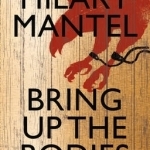
Bring Up the Bodies
Book
Read our exclusive interview with Hilary Mantel +++ Read the novel as an ebook Man Booker...
Caribou recommended Music for 18 Musicians by Steve Reich in Music (curated)

Graham Massey recommended Live Evil by Miles Davis in Music (curated)

Theodora: Actress, Empress, Saint
Book
Two of the most famous mosaics from the Byzantine period, from the church of San Vitale in Ravenna,...

Hudson Valley Ruins: Forgotten Landmarks of an American Landscape
Thomas Rinaldi and Robert J. Yasinsac
Book
Countless books have been published on the historical sites of the Hudson River Valley. But these...
Leanne Crabtree (480 KP) rated Angel: Book 1 in Books
Jan 6, 2021


This review and more can be found at my blog <a href="https://aromancereadersreviews.blogspot.com/">A Romance Reader's Reviews</a>
1.5 stars
I finally finished it!
This begins with Alex out on an angel kill, introducing us to what he does in life and the danger angels pose to the public. Then we meet Willow as she fixes a car in the school parking lot before a popular girl from school asks her to do a psychic reading on her and Willow reluctantly agrees. What she sees freaks her out and starts a train of events that cause her to be hunted down by every angel and member of the Church of Angels in America. Luckily she runs into Alex and together they go on a journey across the country to try and find out more about Willow's past and how to stop the angels forever.
I didn't buy this that long ago and got it cheap off a second hand site. I thought with it being a YA Paranormal book that I'd get sucked right into it but I didn't (I started it last November). It took over 100 pages for something exciting to happen and a little longer before it really got going and then I was sucked in enough to read about 50 pages at a time. It did turn into a quick read after that and I'd finished the book within three days but I wasn't really interested in the story, I just wanted to finish it.
I liked how the angels were bad in this, that is definitely new to me. They're normally the good guys come to save the world and the people who live on it, not the bad guys who are feeding off humans to survive.
I can't say I was fond of either main character and I felt their love for each other came out of nowhere. This book just didn't gel with me at all and I won't be continuing the series.
1.5 stars
I finally finished it!
This begins with Alex out on an angel kill, introducing us to what he does in life and the danger angels pose to the public. Then we meet Willow as she fixes a car in the school parking lot before a popular girl from school asks her to do a psychic reading on her and Willow reluctantly agrees. What she sees freaks her out and starts a train of events that cause her to be hunted down by every angel and member of the Church of Angels in America. Luckily she runs into Alex and together they go on a journey across the country to try and find out more about Willow's past and how to stop the angels forever.
I didn't buy this that long ago and got it cheap off a second hand site. I thought with it being a YA Paranormal book that I'd get sucked right into it but I didn't (I started it last November). It took over 100 pages for something exciting to happen and a little longer before it really got going and then I was sucked in enough to read about 50 pages at a time. It did turn into a quick read after that and I'd finished the book within three days but I wasn't really interested in the story, I just wanted to finish it.
I liked how the angels were bad in this, that is definitely new to me. They're normally the good guys come to save the world and the people who live on it, not the bad guys who are feeding off humans to survive.
I can't say I was fond of either main character and I felt their love for each other came out of nowhere. This book just didn't gel with me at all and I won't be continuing the series.
Rick Astley recommended Live at Carnegie Hall by Bill Withers in Music (curated)

Julian Schnabel recommended Andrei Rublev (1966) in Movies (curated)

BookInspector (124 KP) rated The Girl in the Letter in Books
Sep 24, 2020
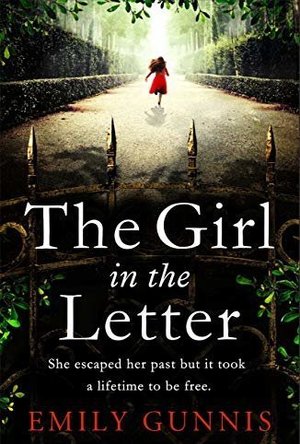

This novel is told from multiple perspectives, so there is no single protagonist in this novel. Sam is a journalist who finds a letter from Ivy, written in 1956, and she is trying to find out who Ivy was and is she related to her own family. Even though we learn about Ivy through her letters, the whole story kind of circles around her. I really liked all the characters chosen for this novel, I think they are well well developed and truly intriguing. I liked Sam, and her personality, but my most favourite one was Ivy. Her story is mesmerizing, and the way everything unfolds as you carry on reading left me unsettled.
The narrative of this novel is very creatively written, the plot keeps travelling between the present and the past, unravelling long forgotten secrets and mysteries. There is plenty of great turns and twists in this book, and I was kept on my toes page after page. There is plenty of great topics discussed in this book, such as mother-baby bond, couple relationships, family dramas, cruelty and abuse from church workers, revenge, and many more. I really loved the research done for this novel, I could feel the pain Ivy felt and see how this kind of institutions ruined lives instead of saving them.
The writing style of this book is easy to read but difficult emotionally. The setting of this novel constantly changes between different characters, so it doesn’t leave the reader bored. The chapters are pretty short and flew by really quickly for me. The ending rounded up the novel very nicely and left me satisfied with the outcome.
So, to conclude, it is a really powerful book, filled with pain, love, and broken lives. The characters are very well crafted and the narrative just sucked me in from the first pages. If you, like me, like the books about haunting and scary institutions from the past, this book is definitely for you!
The narrative of this novel is very creatively written, the plot keeps travelling between the present and the past, unravelling long forgotten secrets and mysteries. There is plenty of great turns and twists in this book, and I was kept on my toes page after page. There is plenty of great topics discussed in this book, such as mother-baby bond, couple relationships, family dramas, cruelty and abuse from church workers, revenge, and many more. I really loved the research done for this novel, I could feel the pain Ivy felt and see how this kind of institutions ruined lives instead of saving them.
The writing style of this book is easy to read but difficult emotionally. The setting of this novel constantly changes between different characters, so it doesn’t leave the reader bored. The chapters are pretty short and flew by really quickly for me. The ending rounded up the novel very nicely and left me satisfied with the outcome.
So, to conclude, it is a really powerful book, filled with pain, love, and broken lives. The characters are very well crafted and the narrative just sucked me in from the first pages. If you, like me, like the books about haunting and scary institutions from the past, this book is definitely for you!