
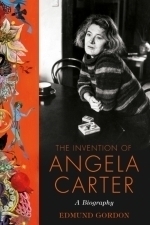
The Invention of Angela Carter: A Biography
Book
Selected as a Book of the Year 2016 in The Sunday Times, Daily Telegraph, Guardian, Financial Times,...

Chariot Racing in the Roman Empire
Fik Meijer and Liz Waters
Book
A massive crowd of people, cloaked in the colors of their beloved athletes, slowly fill a...

Where's Spot?
6.8 Rate It
Book
In Eric Hill's classic Where's Spot? lift the flaps to find Spot! In Spot's first adventure children...

Screenwriting Tips, You Hack: 150 Practical Pointers for Becoming a Better Screenwriter
Book
Screenwriting Tip #99 Voice-over usually feels like scaffolding. You know-something you left in...

LoganCrews (2861 KP) rated Joji Presents: The Extravaganza (2020) in Movies
Nov 27, 2020 (Updated Nov 27, 2020)


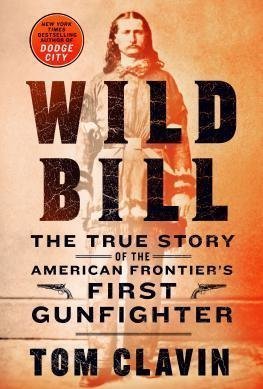
Wild Bill: The True Story of the American Frontier's First Gunfighter
Book
The definitive true story of Wild Bill, the first lawman of the Wild West, by the #1 New York Times...

Lindsay (1812 KP) rated The Lady Who Cried Murder (Mac Faraday Mystery #6) in Books
Apr 16, 2022

There seem to be more secrets and murders than one person can handle. We meet a mother who thinks her daughter has stood abducted. The daughter shows up at a press conference and has set up her mother. Her mother is angry and does some things and changes her will. Whatever happens to her daughter Khole?
David does not want to stand up once more, so he does the interviewer something by checking it out. But do they listen to him when he wants to make sure it is not a setup to make it a circus of the Spenser police department?
Does David find Khole killed and cut up? Who had done it and why? What is Khole's big announcement about what she would tell the interview? We seem to be working with David and Mac and Cameron and Joshua. The team appears to be paired up and works out who the killer is? Guess who gets pulled into these are their girlfriends. You will not guess who is behind all the murders. This one ended up having me guessing until the end. I still did not know who it was up to until the end.

Debbiereadsbook (1801 KP) rated Living on Air in Books
Mar 5, 2018
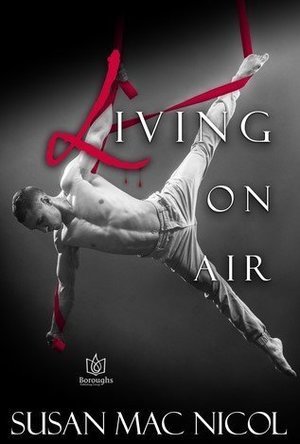

There comes along, once in a rare while, a book that PUSHES you. It pushes you out of your comfort zone. It pushes your skill at writing a coherent review, but most of all, it PUSHES you to get into the mind of someone close you, that you hadn't been able to before.
And OMG this book PUSHED me! So if my review goes awry, it's because I can't get the right words out, okay??
Cary has his own coping methods to deal with a major childhood trauma. Except, he isn't dealing with it, not really, he just deals with the pain his coping method causes. And he is good at hiding what he is doing. Rhys comes to the circus to take pictures, that's all. Pictures to go in a book. But Cary has a powerful reaction to Rhys, and vice versa, and the circus folk are amusing watching Rhys PUSH Cary. But they both carry scars, physical and emotional, and when Cary decides to confront his, he PUSHES Rhys away.
Finding to so difficult to write this, I really am, without bawling my eyes out.
I'm not giving anything away by saying Cary self harms, and from the very first PAGE we get it. And getting into Cary's mindset when he does what he does, THAT is the hardest thing I found to read in this book. Someone VERY close to me used to do this, not to the extent that Cary does, but close. I could never get my head round the why she did this, it made no sense to me at all. And their trauma was totally different to Cary's but getting into Cary's mind as he descends into oblivion, made me understand a little bit better WHY she did this.
And trust me when I say this, the amount of attention to detail, and research gone into this book, is OUTSTANDING! Cary's trauma and coping methods, what happened after. Rhys' own trauma, while not as in depth as Cary's, is bad too. Cary on his silks, I could SEE him, you know?? It was just like being there! And now?? Now I want to see the guy who Ms Mac Nicol used as inspiration for Cary and his silks.
The scene where the title came to make complete and total sense?? I had to go sit out the back for a few minutes, because I really did cry at that!
I started to read this at work (don't tell anyone!) and I had to keep putting it down. I had to keep putting it down when a particular chapter was difficult, or too emotional and I was getting upset. Had I been at home, I have no doubt I would have bawled my way through and read the whole book in one go.
Or at least I would have tried to. Because this is not a fluffy romance, it is not an easy read and it's not even a Happily Ever After.
But what it is, is an outstanding piece of work that Susan Mac Nicol should call her Masterpiece of writing.
There is a little author's note on the blurb, I strongly suggest you heed it.
While Cary and Rhys don't get a full Happily Ever After, they do get a Happy For Now. Both guys have a lot of healing to do, individually and as a couple. I just hope Ms Mac Nicol will write them a Happily Ever After, and SOON!!!
I can't word how much, even though it is an emotionally gut wrenching read, how much I LOVED this book. You know what?? Brand new shelf on Goodreads, just for books like this. It's title?? Masterpieces.
5 stars, but only because I can't give it anymore!
**same worded review will appear elsewhere**

tapestry100 (306 KP) rated The Queen of the Night in Books
Aug 2, 2017
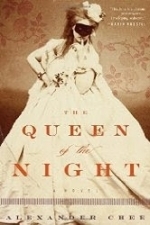


Chee seems to have thoroughly researched his setting for Lillet's journey, and his writing is strong and precise. Lilliet's life is quite an adventure, but it never seems to be dull, and I never felt like I was wishing that her tale would hurry along. I listened to the audio version, and Lisa Flanagan's narration is spot on; she truly became the voice of Lilliet for me. The only thing that I added to my own listening of the book that I think could possibly benefit other readers is that I listened to selections of the operas and other musical pieces that are mentioned in the book, to add that next level of enjoyment to the story.
Chee is an extraordinary storyteller and I'll definitely be reading more by him in the future.

Night Reader Reviews (683 KP) rated NOS4A2 in Books
Apr 26, 2020
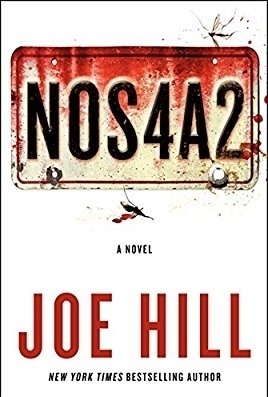
As a child, Vic discovers a bike that gives her the ability to cross the Shorter Way Bridge to locate lost things, so long as they are in a fixed position. The bad thing about this is that using the ability has its cost and the price she must pay is the risk of losing part of her mind each time she goes across. One day after fighting with her mother she takes off across the bridge looking for trouble and finds just that in Charles Manx. Luckily she manages to escape but Charles Manx will forever hold a grudge against her and she will see him again after she is an adult and has convinced herself that the Shorter Way Bridge was just a fantasy from a delusional mind.
I highly recommend this book. The only reason why it did not get a 5 out of 5 was that while the story was original the world felt to firmly set in the Stephen King universe and I am not sure if that was intentional or if it was just a by-product of the household that Joe Hill grew up in.
For more reviews check out Night Reader on Smashbomb.com or Night Reader Reviews on Facebook