
Search
Search results

Bob Mann (459 KP) rated Fantastic Beasts: Crimes of Grindelwald (2018) in Movies
Sep 28, 2021
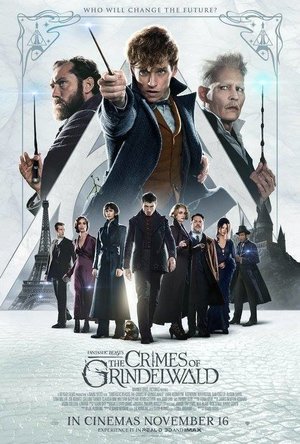


Lestranger than fiction.
I must be one of the last people to watch this in the cinema, thanks to an irritating bout of sickness and – well – frankly total bloody apathy! For me this is the franchise that nobody asked for and nobody wanted. (Well, “nobody” is probably overstating the case, since there is probably a bunch of Potterheads out there who are shouting at me right now). But judging from the opinion of my daughter-in-law, who could win “Mastermind” with her knowledge of the original Potter series as her specialist subject, I am certainly not alone in my lack of enthusiasm.
The Plot
I’d really love to tell you about the plot. I really would! But I would struggle to pull all the multitude of strands together from J.K. Rowling’s story and coherently explain them to anyone. If Rowling had put ten thousand monkeys (not a million – it’s no bloody Shakespeare) into a room with typewriters and locked the door I wouldn’t be surprised.
Let me try at a high level….. The arch-criminal wizard Grindelwald (Johnny Depp) is being tortured in ‘Trump Tower’, but manages to escape and flees to Paris in pursuit of a mysterious circus performer called Credence (Ezra Miller) and his bewitched companion Nagini (nudge, nudge, wink, wink) played fetchingly by Claudia Kim. Someone needs to stop him, and all eyes are on Albus Dumbledore (Jude Law). But he is unable to do so, since he and Grindelwald are “closer than brothers” (nudge, nudge, wink, wink). So a reluctant and UK-grounded Newt Scamander (Eddie Redmayne) is smuggled into the danger zone… which suits him just fine since his love Tina (Katherine Waterston) is working for the ministry there, and the couple are currently estranged due to a (topical) bout of ‘Fake News’.
Throw in a potential love triangle between Newt, his brother Theseus (Callum Turner) and old Hogwart’s schoolmate Leta Lestrange (Zoë Kravitz) and about a half dozen other sub-plots and you have… well… a complete bugger’s muggle – – sorry – – muddle.
A plot that’s all at sea
Above all, I really can’t explain the crux of the plot. A venerable diarrhoea of exposition in a crypt, during an inexplicably quiet fifteen minutes (given ‘im-who-can-be-named is next door with about a thousand other people!) left me completely bewildered. A bizarre event at sea (no spoilers) would seem to make absolutely NO SENSE when considered with another reveal at the end of the film. I thought I must have clearly missed something… or I’d just not been intelligent enough to process the information…. or…. it was actually completely bonkers! Actually, I think it’s the latter: in desperation I went on a fan site that tried to explain the plot. While it was explained there, the explanation aligned with what I thought had happened: but it made no mention of the ridiculousness of the random coincidence involved!
The turns
The film’s a mess. Which is a shame since everyone involved tries really hard. Depp oozes evil very effectively (he proves that nicely on arriving in Paris, and doubles-down about 5 minutes later: #veryverydark). Redmayne replays his Newt-act effectively but once again (and I see I made the same comments in my “Fantastic Beasts” review) his character mumbles again so much that many of his lines are unintelligible.
I also complained last time that the excellent actress Katherine Waterston was criminally underused as the tentative love interest Tina. this trend unfortunately continues unabated in this film…. you’ll struggle afterwards to write down what she actually did in this film.
Jacob (Dan Fogler) and Queenie (Alison Sudol, looking for all the world in some scenes like Rachel Weisz) reprise their roles in a sub-plot that goes nowhere in particular.
Of the newcomers, Jude Law as Dumbledore is a class-act but has very little screen time: hopefully he will get more to do next time around. Zoë Kravitz impresses as Leta.
Wizards of the screen
As you would expect from a David Yates / David Heyman Potter collaboration, the product design, costume design and special effects are all excellent. Some scenes are truly impressive – an ‘explosion’ in a Parisian garret is particularly spectacular.
But special effects alone do not a great film make. Many reviews I’ve seen complain that this was a ‘filler’ film… a set-up film for the rest of the series. And I can understand that view. If you analyse the film overall, virtually NOTHING of importance actually happens: it’s like the “Order of the Phoenix” of the prequels.
Final Thoughts
I dragged myself along to see this one because “I thought I should”. The third in the series will really need to sparkle to make me want to see it. If J.K. Rowling were to take me advice (she won’t – she NEVER returns my calls!) then she would sculpt the story-arc but leave the screenwriting to someone better. The blame for this one, I’m afraid, lies at Rowling’s door alone.
The Plot
I’d really love to tell you about the plot. I really would! But I would struggle to pull all the multitude of strands together from J.K. Rowling’s story and coherently explain them to anyone. If Rowling had put ten thousand monkeys (not a million – it’s no bloody Shakespeare) into a room with typewriters and locked the door I wouldn’t be surprised.
Let me try at a high level….. The arch-criminal wizard Grindelwald (Johnny Depp) is being tortured in ‘Trump Tower’, but manages to escape and flees to Paris in pursuit of a mysterious circus performer called Credence (Ezra Miller) and his bewitched companion Nagini (nudge, nudge, wink, wink) played fetchingly by Claudia Kim. Someone needs to stop him, and all eyes are on Albus Dumbledore (Jude Law). But he is unable to do so, since he and Grindelwald are “closer than brothers” (nudge, nudge, wink, wink). So a reluctant and UK-grounded Newt Scamander (Eddie Redmayne) is smuggled into the danger zone… which suits him just fine since his love Tina (Katherine Waterston) is working for the ministry there, and the couple are currently estranged due to a (topical) bout of ‘Fake News’.
Throw in a potential love triangle between Newt, his brother Theseus (Callum Turner) and old Hogwart’s schoolmate Leta Lestrange (Zoë Kravitz) and about a half dozen other sub-plots and you have… well… a complete bugger’s muggle – – sorry – – muddle.
A plot that’s all at sea
Above all, I really can’t explain the crux of the plot. A venerable diarrhoea of exposition in a crypt, during an inexplicably quiet fifteen minutes (given ‘im-who-can-be-named is next door with about a thousand other people!) left me completely bewildered. A bizarre event at sea (no spoilers) would seem to make absolutely NO SENSE when considered with another reveal at the end of the film. I thought I must have clearly missed something… or I’d just not been intelligent enough to process the information…. or…. it was actually completely bonkers! Actually, I think it’s the latter: in desperation I went on a fan site that tried to explain the plot. While it was explained there, the explanation aligned with what I thought had happened: but it made no mention of the ridiculousness of the random coincidence involved!
The turns
The film’s a mess. Which is a shame since everyone involved tries really hard. Depp oozes evil very effectively (he proves that nicely on arriving in Paris, and doubles-down about 5 minutes later: #veryverydark). Redmayne replays his Newt-act effectively but once again (and I see I made the same comments in my “Fantastic Beasts” review) his character mumbles again so much that many of his lines are unintelligible.
I also complained last time that the excellent actress Katherine Waterston was criminally underused as the tentative love interest Tina. this trend unfortunately continues unabated in this film…. you’ll struggle afterwards to write down what she actually did in this film.
Jacob (Dan Fogler) and Queenie (Alison Sudol, looking for all the world in some scenes like Rachel Weisz) reprise their roles in a sub-plot that goes nowhere in particular.
Of the newcomers, Jude Law as Dumbledore is a class-act but has very little screen time: hopefully he will get more to do next time around. Zoë Kravitz impresses as Leta.
Wizards of the screen
As you would expect from a David Yates / David Heyman Potter collaboration, the product design, costume design and special effects are all excellent. Some scenes are truly impressive – an ‘explosion’ in a Parisian garret is particularly spectacular.
But special effects alone do not a great film make. Many reviews I’ve seen complain that this was a ‘filler’ film… a set-up film for the rest of the series. And I can understand that view. If you analyse the film overall, virtually NOTHING of importance actually happens: it’s like the “Order of the Phoenix” of the prequels.
Final Thoughts
I dragged myself along to see this one because “I thought I should”. The third in the series will really need to sparkle to make me want to see it. If J.K. Rowling were to take me advice (she won’t – she NEVER returns my calls!) then she would sculpt the story-arc but leave the screenwriting to someone better. The blame for this one, I’m afraid, lies at Rowling’s door alone.

Gareth von Kallenbach (980 KP) rated Call of Duty: Advanced Warfare - Havoc in Video Games
Jun 19, 2019

The first of four planned DLC packs for Call of Duty: Advanced Warfare has finally arrived on PC after
being delayed a week so the developers could work out some last minute issues.
Despite the wait and the first week issues with finding games online, the new collection has been one of the most enjoyable and creative collection of maps in recent years and has added to what is an already solid online experience.
The four new maps are as follows.
Core
Set in the Gobi Desert in an abandoned nuclear fusion plant, this map is ideal for the leaping abilities of the game as there are structures which can only be reached via your advanced jumping abilities. Worker robots enhance the setting and the uneven terrain makes for some great hiding spots to launch your attacks.
This is one that you will see plenty of snipers setting up in so run and gun players like myself may have some initial frustrations but the décor more than makes up for any early challenges and frustrations.
Urban
Set in a futuristic ward of Dallas, this multi-level square map has a large open area in the middle where ranged shooters will have plenty of opportunity to pick off those in No Man’s Land. It also offers plenty of ledges, windows, stairs, and areas for differing styles of play so gamers can find the best method for their style of play.
Sideshow
Set in a rundown hotel and rest stop that has been given a creepy circus theme you get everything from semi-trucks, creepy hotel rooms, rest rooms, and irrigation ponds in which to plan your attack,. There are plenty of places to hide and also plenty of places for Snipers to pick you off from afar.
Making use of the exterior parts of the map are keys to success and making sure that you get the drop on your enemies is key as there are numerous places to be ambushed in this one and the maniacal clown noises set a creepy tone as well.
Drift
My favorite of the maps is a highly-detailed ski resort set in the Rocky Mountains. Everything from holiday lights and a carousel to a train station, shops, and hotel make this a very detailed map.
The snow drifts allow plenty of cover and the numerous windows and ledges allow amble space for players to get the drop on their enemies.
I loved the avalanche that came in unexpectedly in one game as it really changed up the direction of the battle.
Players will also have access to the AE4 Widowmaker. A direct energy weapon that fires bursts of energy which work well but does not have a large capacity before needing to recharge so make your shots count. I actually earned this while playing Advanced Warfare pre-DLC so for me the inclusion was not that big of a deal as it has been an option for me to use for a while.
The maps are available in both Team Death Match and Mosh Pit but as I mentioned earlier, it has been tough finding games on PC during the first few days of release before the evening hours. I was able to find a few game options early in the morning on a Saturday so it was likely a case of people who purchased it waiting until the weekend to load up and play.
Perhaps the biggest draw for the game is the new Exo-Zombies mode which takes the past mode of Zombie games that Treyarch developed and gives it a new twist by allowing the Undead to move and leap faster with the aid of Exo Suits.
Playing as one of four characters portrayed by John Malkovich, Bill Paxton Rose McGowan and The Walking Dead’s John Bernthal, players must survive waves of enhanced Zombies and take refuge in a large Atlas base. Like past versions, kills result in money which is used to purchase more weapons and ammunition around the base and in a new twist, players can become infected and need to locate and use a station to cure the infection.
The base is large and more detailed than players may be used to, and when you die, you must venture back into the base to obtain a new Exo Suit. Your past weapons can be obtained by finding the spot where you died, and like before, the game ends when all four players have become incapacitated as there is nobody left to revive you.
The Zombies also have some great new abilities and detail to them that I will not reveal here and leave it as something for players to discover on their own.
Havoc is a solid first effort that was marred for me only by the lack of online games and having some issues with maps not loading properly. Aside from that which has been much better in recent days, Havoc is a very fun and enjoyable collection which does offer new enjoyment and options for fans looking for new challenges.
http://sknr.net/2015/03/08/call-of-duty-advanced-warfare-havoc-dlc/
being delayed a week so the developers could work out some last minute issues.
Despite the wait and the first week issues with finding games online, the new collection has been one of the most enjoyable and creative collection of maps in recent years and has added to what is an already solid online experience.
The four new maps are as follows.
Core
Set in the Gobi Desert in an abandoned nuclear fusion plant, this map is ideal for the leaping abilities of the game as there are structures which can only be reached via your advanced jumping abilities. Worker robots enhance the setting and the uneven terrain makes for some great hiding spots to launch your attacks.
This is one that you will see plenty of snipers setting up in so run and gun players like myself may have some initial frustrations but the décor more than makes up for any early challenges and frustrations.
Urban
Set in a futuristic ward of Dallas, this multi-level square map has a large open area in the middle where ranged shooters will have plenty of opportunity to pick off those in No Man’s Land. It also offers plenty of ledges, windows, stairs, and areas for differing styles of play so gamers can find the best method for their style of play.
Sideshow
Set in a rundown hotel and rest stop that has been given a creepy circus theme you get everything from semi-trucks, creepy hotel rooms, rest rooms, and irrigation ponds in which to plan your attack,. There are plenty of places to hide and also plenty of places for Snipers to pick you off from afar.
Making use of the exterior parts of the map are keys to success and making sure that you get the drop on your enemies is key as there are numerous places to be ambushed in this one and the maniacal clown noises set a creepy tone as well.
Drift
My favorite of the maps is a highly-detailed ski resort set in the Rocky Mountains. Everything from holiday lights and a carousel to a train station, shops, and hotel make this a very detailed map.
The snow drifts allow plenty of cover and the numerous windows and ledges allow amble space for players to get the drop on their enemies.
I loved the avalanche that came in unexpectedly in one game as it really changed up the direction of the battle.
Players will also have access to the AE4 Widowmaker. A direct energy weapon that fires bursts of energy which work well but does not have a large capacity before needing to recharge so make your shots count. I actually earned this while playing Advanced Warfare pre-DLC so for me the inclusion was not that big of a deal as it has been an option for me to use for a while.
The maps are available in both Team Death Match and Mosh Pit but as I mentioned earlier, it has been tough finding games on PC during the first few days of release before the evening hours. I was able to find a few game options early in the morning on a Saturday so it was likely a case of people who purchased it waiting until the weekend to load up and play.
Perhaps the biggest draw for the game is the new Exo-Zombies mode which takes the past mode of Zombie games that Treyarch developed and gives it a new twist by allowing the Undead to move and leap faster with the aid of Exo Suits.
Playing as one of four characters portrayed by John Malkovich, Bill Paxton Rose McGowan and The Walking Dead’s John Bernthal, players must survive waves of enhanced Zombies and take refuge in a large Atlas base. Like past versions, kills result in money which is used to purchase more weapons and ammunition around the base and in a new twist, players can become infected and need to locate and use a station to cure the infection.
The base is large and more detailed than players may be used to, and when you die, you must venture back into the base to obtain a new Exo Suit. Your past weapons can be obtained by finding the spot where you died, and like before, the game ends when all four players have become incapacitated as there is nobody left to revive you.
The Zombies also have some great new abilities and detail to them that I will not reveal here and leave it as something for players to discover on their own.
Havoc is a solid first effort that was marred for me only by the lack of online games and having some issues with maps not loading properly. Aside from that which has been much better in recent days, Havoc is a very fun and enjoyable collection which does offer new enjoyment and options for fans looking for new challenges.
http://sknr.net/2015/03/08/call-of-duty-advanced-warfare-havoc-dlc/

Emma @ The Movies (1786 KP) rated Dumbo (2019) in Movies
Jun 22, 2019 (Updated Sep 25, 2019)

It may have been a mistake to see the original animated version before seeing this live-action offering. It's incorrect to say it's a remake, they've taken a 64-minute movie and stripped out the principle idea and made a completely new film that's near two hours long.
I'm going to start with the moaning, but bear with me because it'll get better, I promise.
Let's address the elephant in the room, no not Dumbo, but the fact that they made something live action when it's almost entirely talking animals. (And yes, I'm already concerned for Lion King.) To actually get some human characters in there they've turned it on its head and made the story about the circus and its family. I don't have a problem with them doing this but everything I saw in the run-up to the film made me believe that it was a remake and not an adaptation. Possibly I just got caught up in all the hype of the other remakes Disney are producing. but it did colour my impression.
It's evident that Disney have tried to account for the fact that people won't be getting what they loved so much from the original, everywhere there are nods to the original. All of this is sadly far from that nostalgic fun, instead it felt like a bit of a slap in the face. "Hey look!! Remember this bit?!!" There's a quick nod to the storks, Dumbo getting drunk, and possibly the creepiest of them all, that happy-go-lucky train... you really should have left that one alone.
We're also severely lacking in those wonderful songs. I had heard the Arcade Fire version of Baby Mine in a trailer and it gave me goosebumps, but while it's a lovely scene in the film the song itself doesn't hold nearly enough weight. Disney to me is as much about the music as it is about the story and in this instance they've dropped the ball.
With Tim Burton at the helm it was going to be bleak... but geez! Mum's dead, Dad's missing an arm from war... and that mad elephant scene? "I want to go bigger than spanking an animated child." "I don't think we can have a scene where we spank a child in this day and age." "No, you're right, first thing we're going to need is a coroner." There were a lot of things in this that cut a very fine line, and I think that it's crossed over into a film that isn't really for kids anymore.
Despite these quibbles they've managed to do something magical with Dumbo. All of that magic from the animated version is still there in this little fella. I don't know how you get that much emotion out of something that isn't there, it was wonderful. Dumbo's reactions to feathers throughout, that eyes wide excitement, and when he sees Colette "flying" up to him... honestly, I don't know how to describe it. Hands down my favourite bit has to be the pink elephants bit, Dumbo watching intently and his head bobbing along was so pure.
I still don't know how I feel about the acting in Dumbo, beyond our little pachyderm I was underwhelmed by the whole thing. I wasn't particularly fond of the child characters. They seemed to decide that Milly should be a role model to other little girls, "you can be a scientist", but I don't know that making a role model out of someone who isn't exactly likeable is the way to go with this. They've also given Milly and her brother, Joe, the appointment of elephant trainers, and that frustrated me no end too, but for completely over thought reasons.
Danny Devito was a treat, his character is obviously intended to be dislikeable but is allowed to get some redemption in the end, which was nice to see. His scenes with the monkey were particularly fun.
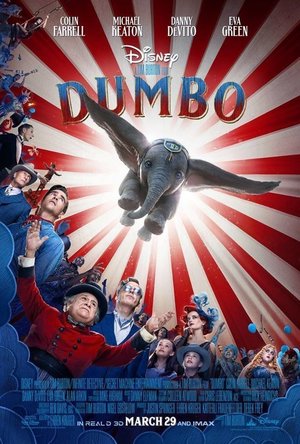
This review has taken me so long to write, I think that's mainly because I just don't know about these human characters. Holt Farrier (Colin Farrell), V.A. Vandervere (Michae Keaton) and Colette Marchant (Eva Green) all just don't do anything for me... they seem very much like padding for a film that probably shouldn't have been made.
I don't want to run into any major spoilers, but that ending... it needs mentioning... it's ridiculous and clichéd. There was a perfectly good ending point they could have taken but sadly someone made the choice that the "happy ever after" ending needed to be spelt out for everyone.
I am torn about this film. You couldn't have remade the original exactly as it was, mild racism and a drunk minor just aren't going to cut it in a kids film. Potentially there is a new version in there somewhere, but I'm not sure that this dark human heavy one was the way to go.
What you should do
It's the Easter holidays, those kids need to be entertained somehow, Dumbo would not be the worst choice you could make.
Movie thing you wish you could take home
I don't think I have room for a baby elephant, so if someone could just cut all the footage of him together and give me a DVD containing all those good feelings that would be great.
I'm going to start with the moaning, but bear with me because it'll get better, I promise.
Let's address the elephant in the room, no not Dumbo, but the fact that they made something live action when it's almost entirely talking animals. (And yes, I'm already concerned for Lion King.) To actually get some human characters in there they've turned it on its head and made the story about the circus and its family. I don't have a problem with them doing this but everything I saw in the run-up to the film made me believe that it was a remake and not an adaptation. Possibly I just got caught up in all the hype of the other remakes Disney are producing. but it did colour my impression.
It's evident that Disney have tried to account for the fact that people won't be getting what they loved so much from the original, everywhere there are nods to the original. All of this is sadly far from that nostalgic fun, instead it felt like a bit of a slap in the face. "Hey look!! Remember this bit?!!" There's a quick nod to the storks, Dumbo getting drunk, and possibly the creepiest of them all, that happy-go-lucky train... you really should have left that one alone.
We're also severely lacking in those wonderful songs. I had heard the Arcade Fire version of Baby Mine in a trailer and it gave me goosebumps, but while it's a lovely scene in the film the song itself doesn't hold nearly enough weight. Disney to me is as much about the music as it is about the story and in this instance they've dropped the ball.
With Tim Burton at the helm it was going to be bleak... but geez! Mum's dead, Dad's missing an arm from war... and that mad elephant scene? "I want to go bigger than spanking an animated child." "I don't think we can have a scene where we spank a child in this day and age." "No, you're right, first thing we're going to need is a coroner." There were a lot of things in this that cut a very fine line, and I think that it's crossed over into a film that isn't really for kids anymore.
Despite these quibbles they've managed to do something magical with Dumbo. All of that magic from the animated version is still there in this little fella. I don't know how you get that much emotion out of something that isn't there, it was wonderful. Dumbo's reactions to feathers throughout, that eyes wide excitement, and when he sees Colette "flying" up to him... honestly, I don't know how to describe it. Hands down my favourite bit has to be the pink elephants bit, Dumbo watching intently and his head bobbing along was so pure.
I still don't know how I feel about the acting in Dumbo, beyond our little pachyderm I was underwhelmed by the whole thing. I wasn't particularly fond of the child characters. They seemed to decide that Milly should be a role model to other little girls, "you can be a scientist", but I don't know that making a role model out of someone who isn't exactly likeable is the way to go with this. They've also given Milly and her brother, Joe, the appointment of elephant trainers, and that frustrated me no end too, but for completely over thought reasons.
Danny Devito was a treat, his character is obviously intended to be dislikeable but is allowed to get some redemption in the end, which was nice to see. His scenes with the monkey were particularly fun.
This review has taken me so long to write, I think that's mainly because I just don't know about these human characters. Holt Farrier (Colin Farrell), V.A. Vandervere (Michae Keaton) and Colette Marchant (Eva Green) all just don't do anything for me... they seem very much like padding for a film that probably shouldn't have been made.
I don't want to run into any major spoilers, but that ending... it needs mentioning... it's ridiculous and clichéd. There was a perfectly good ending point they could have taken but sadly someone made the choice that the "happy ever after" ending needed to be spelt out for everyone.
I am torn about this film. You couldn't have remade the original exactly as it was, mild racism and a drunk minor just aren't going to cut it in a kids film. Potentially there is a new version in there somewhere, but I'm not sure that this dark human heavy one was the way to go.
What you should do
It's the Easter holidays, those kids need to be entertained somehow, Dumbo would not be the worst choice you could make.
Movie thing you wish you could take home
I don't think I have room for a baby elephant, so if someone could just cut all the footage of him together and give me a DVD containing all those good feelings that would be great.
Gareth von Kallenbach (980 KP) rated The Greatest Showman (2017) in Movies
Jul 11, 2019

I can’t claim to know much about musicals. I don’t actively avoid them, but I don’t go out of my way to see them either. The few that I have seen and liked don’t seem to sit well with the musical theater crowd either. For instance, recently in conversation my defense of Russell Crowe as Javert in the latest adaptation of Les Misérables was shot down in a matter of seconds. My wife, with some frequency, reminds me that my (until now) secret admiration of Tim Burton’s Sweeney Todd is something that should never be declared in a public forum. For me, one of the best achievements in musical film will always be South Park: Bigger, Longer & Uncut; and though there is a general positivity about it, I’ve never seen it taken all that seriously as a contemporary musical (it was certainly a hell of a lot more memorable than 2003’s Best Picture winner, Chicago). So, if you haven’t already decided my opinion will be moot and stopped reading, I will, with the limited appreciation I have for this genre, give The Greatest Showman the fairest shake I can.
At a surprisingly short hour and forty-five minutes, this high-concept imagining of the meteoric rise of P.T. Barnum (Hugh Jackman), from the impoverished son of a tailor to one of the biggest names in the history of entertainment, should absolutely fly by. Tragically, it doesn’t. Beginning with an irresponsibly rushed first act that condenses decades of backstory into a few minutes, it dramatically stops dead between its second and third acts as we’re subjected to three songs in a row that not all that subtly beat us over the head with the inevitably that our leads are going to have to face some predictable, life-changing conflict before the big finale. Showman also suffers from the delusion that period pieces will be more engaging and relatable with a modern-inspired soundtrack, à la Baz Luhrmann’s misguided attempt at The Great Gatsby. The idea being that the music of the time, though antiquated to us now, would have sounded modern to people then, so why not put modern music, whether original or sourced, over period images in an attempt to bridge the gap between their world and ours? It’s a concept that might sound great on paper, but as Luhrmann already proved, the final results don’t so much complement each other as they expose each other’s weaknesses.
Its major flaw though, and why The Greatest Showman fails to be a great anything, is the insistence on force-feeding moments of attempted catharsis every 15-20 minutes, having earned almost none of them. A great many of the numbers are presented as such grand, climactic set pieces that they don’t feel as though they are working to serve a cohesive, larger whole. We are inundated with a blur of crescendo after crescendo and left little time to reflect on what we have just seen and heard before the film clumsily bounds off to the next song-and-dance laden plot point; and if you asked me to name any of the individual tunes now three days later, I’d be hard-pressed to do so. It’s an odd juxtaposition, and one I’ve very rarely experienced, wanting so badly for a film to end and at the same time wishing it had been given more time to fully realize its scope. Keep your ears open as well for an ill-advised line in which Barnum proudly compares himself to Napoleon. Isn’t Barnum supposed to be the “hero” of this piece, someone we are supposed to identify with and for whom we want to find success? Somebody please provide Showman’s writers a history lesson that didn’t just come off a Wikipedia page (for Barnum and Napoleon’s sakes).
With any negative criticism, I do like to try and go out on something positive, and if I have to concede anything to this movie, it’s that it finds its footing, albeit temporarily, while addressing issues of equality. Showman shines in the few moments where the supporting players portraying Barnum’s “oddities”, Keala Settle as Lettie Lutz in particular, are given the opportunity to stand toe-to-toe with the leads and, in many of these scenes, they rise above even the likes of Hugh Jackman. Another member of the cast who merits a little bit of praise (and I reserve the right to retract this at any time of my choosing, more than likely with whatever juvenile comedy he’ll be seen in next) is Zac Efron. Exposure to the likes of Nicole Kidman and John Cusack in 2012’s sadly overlooked The Paperboy, may finally be yielding results as he is the only lead who leaves an impression. Though his journey as a high society playwright begrudgingly brought into Barnum’s world definitely leans heavily on the saccharine side, it does provide a break of plausibility in amongst the unbridled chaos of the rest of the picture. I wouldn’t doubt that there is a much better movie that could have been made from expanding into its own feature the subplot of his character bucking the expectations of his status to fall in love with a circus performer.
At a surprisingly short hour and forty-five minutes, this high-concept imagining of the meteoric rise of P.T. Barnum (Hugh Jackman), from the impoverished son of a tailor to one of the biggest names in the history of entertainment, should absolutely fly by. Tragically, it doesn’t. Beginning with an irresponsibly rushed first act that condenses decades of backstory into a few minutes, it dramatically stops dead between its second and third acts as we’re subjected to three songs in a row that not all that subtly beat us over the head with the inevitably that our leads are going to have to face some predictable, life-changing conflict before the big finale. Showman also suffers from the delusion that period pieces will be more engaging and relatable with a modern-inspired soundtrack, à la Baz Luhrmann’s misguided attempt at The Great Gatsby. The idea being that the music of the time, though antiquated to us now, would have sounded modern to people then, so why not put modern music, whether original or sourced, over period images in an attempt to bridge the gap between their world and ours? It’s a concept that might sound great on paper, but as Luhrmann already proved, the final results don’t so much complement each other as they expose each other’s weaknesses.
Its major flaw though, and why The Greatest Showman fails to be a great anything, is the insistence on force-feeding moments of attempted catharsis every 15-20 minutes, having earned almost none of them. A great many of the numbers are presented as such grand, climactic set pieces that they don’t feel as though they are working to serve a cohesive, larger whole. We are inundated with a blur of crescendo after crescendo and left little time to reflect on what we have just seen and heard before the film clumsily bounds off to the next song-and-dance laden plot point; and if you asked me to name any of the individual tunes now three days later, I’d be hard-pressed to do so. It’s an odd juxtaposition, and one I’ve very rarely experienced, wanting so badly for a film to end and at the same time wishing it had been given more time to fully realize its scope. Keep your ears open as well for an ill-advised line in which Barnum proudly compares himself to Napoleon. Isn’t Barnum supposed to be the “hero” of this piece, someone we are supposed to identify with and for whom we want to find success? Somebody please provide Showman’s writers a history lesson that didn’t just come off a Wikipedia page (for Barnum and Napoleon’s sakes).
With any negative criticism, I do like to try and go out on something positive, and if I have to concede anything to this movie, it’s that it finds its footing, albeit temporarily, while addressing issues of equality. Showman shines in the few moments where the supporting players portraying Barnum’s “oddities”, Keala Settle as Lettie Lutz in particular, are given the opportunity to stand toe-to-toe with the leads and, in many of these scenes, they rise above even the likes of Hugh Jackman. Another member of the cast who merits a little bit of praise (and I reserve the right to retract this at any time of my choosing, more than likely with whatever juvenile comedy he’ll be seen in next) is Zac Efron. Exposure to the likes of Nicole Kidman and John Cusack in 2012’s sadly overlooked The Paperboy, may finally be yielding results as he is the only lead who leaves an impression. Though his journey as a high society playwright begrudgingly brought into Barnum’s world definitely leans heavily on the saccharine side, it does provide a break of plausibility in amongst the unbridled chaos of the rest of the picture. I wouldn’t doubt that there is a much better movie that could have been made from expanding into its own feature the subplot of his character bucking the expectations of his status to fall in love with a circus performer.
Naomi Forrest (42 KP) rated The Toy Makers in Books
Jan 2, 2019
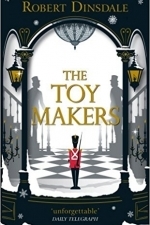

The first thing on the very first page that I loved was the narrator setting the scene and talking directly to you:
‘See the woman with the cage of pipe-cleaner birds, the vagrant soldier marvelling at the stuffed dogs lounging in their baskets? Keep a careful eye on them; you will see them again’.
I knew just from this descriptive ‘setting the scene’ chapter this book was going to be amazing, there was so much magic encapsulated in those first five pages. Papa Jack’s Emporium is the most wonderful shop you could imagine, a labyrinth of joy, surprises around every aisle and so much more. If you have ever seen the toy shop on Home Alone 2 that looked so amazing as a child, it has nothing on this! I was pretty sure for at least half of the book that Papa Jack was indeed Father Christmas.
After the initial chapter, the reader is introduced to Cathy, a fifteen year old who, shamefully (the year is 1906), is unmarried and pregnant. Plans are made for her to go to a special home where she will give birth and her child will be adopted. However, Cathy spots an advert looking for staff for the Emporium and runs away and so, the magic begins! The reader is catapulted into the world of the emporium and soon meets Papa Jack’s sons, Emil and Kaspar, who assist their father in the running of the store and the making of the toys, which are so much more than toys as we know them. People flock from far and wide to the emporium for it’s sublime creations and the memories and pleasures that they evoke.
The first half of the novel was like a fairytale, building beautifully to a gorgeous climax, full of wonder, friendship and subtle romance (perfectly done, so as not to detract from more pressing themes). In my head, toy soldiers and paper trees were everywhere and the wendy house is the stuff that dreams are made of. I loved observing (as I stood in the corner of the emporium, I’m sure, so convincing is Dinsdale) the relationships the built between Cathy and Emil and Cathy and Kaspar, though at times I felt sorry for Emil, never quite catching up to Kaspar as he wishes. If only the story had ended at page 187. And yet, that would not have been satisfying, not enough, so really, I’m glad it didn’t.
The second part of the novel, that is where Dinsdale really takes us on a journey. A couple of darker themes are touched upon in part one, where we learn of Jekab’s history (Papa Jack) but it ramps up in the second part, which ties in with World War I and beyond. You would think going from such wonderment and happiness to a bleak world of misery and reality would make you want to stop reading but I could not put this book down. I read 3/4 of it in one go! It is in the second part that Dinsdale brings in themes of shell shock, betrayal, sibling jealousy, bitterness and true, deep, familial love. Without spoilers, some characters truly lose everything and I cried during and after the book as it moved me so greatly (I mean, I am a crier anyway but not usually with books!). The entire novel is shaped around the ‘war’ between the brothers with some shocking twists along the way. Though part two draws in more realities, more brutalities and some heartbreaking moments, magic still punctuates and carries the reader through to the end. The ending is bitter sweet and my emotions were cloudy here, anger, joy, sadness and warmth all merging into a big teary mess.
I won’t say too much about specifics because some kinds of magic need to be discovered for yourself. The most beautiful sentiment in this novel though is that toys can’t save a life but they can save a soul, because toys transport many of us back to times of happiness, of wonder and of innocence, when things were simpler and problems remedied more easily. Times change but the joy of toys doesn’t. I can recall going through toy exhibits at both the castle museum in York and a toy museum in Edinburgh and it was so thrilling not only to see toys from my childhood but toys from before. Toys have the power to make magic we never knew existed, even if it is only in our head. The Toy Makers has yielded many comparisons with Erin Morgensten’s The Night Circus but for me, this novel surpassed anything I have read before in a similar vein. I have truly been blown away into a world that I honestly believe I will carry with me forever more. If, like me, you are a Harry Potter fan, you will know what I mean when I say that this book matches up to that first trip to Diagon Alley, to Hogwarts and to Honeydukes or that journey up Enid Blyton’s faraway tree as a child but it is even more exciting as an adult. It isn’t only the description that is first rate though; Dinsdale’s narrative style and use of language pulls you in and flows so smoothly, you are carried away from the first page whether you are prepared for it or not. Some reviews have said it is too fantastical but I cannot rate this book highly enough. It isn’t always easy reading – prepare to have your heart broken in several places- but go in looking for magic. You won’t be disappointed!
‘See the woman with the cage of pipe-cleaner birds, the vagrant soldier marvelling at the stuffed dogs lounging in their baskets? Keep a careful eye on them; you will see them again’.
I knew just from this descriptive ‘setting the scene’ chapter this book was going to be amazing, there was so much magic encapsulated in those first five pages. Papa Jack’s Emporium is the most wonderful shop you could imagine, a labyrinth of joy, surprises around every aisle and so much more. If you have ever seen the toy shop on Home Alone 2 that looked so amazing as a child, it has nothing on this! I was pretty sure for at least half of the book that Papa Jack was indeed Father Christmas.
After the initial chapter, the reader is introduced to Cathy, a fifteen year old who, shamefully (the year is 1906), is unmarried and pregnant. Plans are made for her to go to a special home where she will give birth and her child will be adopted. However, Cathy spots an advert looking for staff for the Emporium and runs away and so, the magic begins! The reader is catapulted into the world of the emporium and soon meets Papa Jack’s sons, Emil and Kaspar, who assist their father in the running of the store and the making of the toys, which are so much more than toys as we know them. People flock from far and wide to the emporium for it’s sublime creations and the memories and pleasures that they evoke.
The first half of the novel was like a fairytale, building beautifully to a gorgeous climax, full of wonder, friendship and subtle romance (perfectly done, so as not to detract from more pressing themes). In my head, toy soldiers and paper trees were everywhere and the wendy house is the stuff that dreams are made of. I loved observing (as I stood in the corner of the emporium, I’m sure, so convincing is Dinsdale) the relationships the built between Cathy and Emil and Cathy and Kaspar, though at times I felt sorry for Emil, never quite catching up to Kaspar as he wishes. If only the story had ended at page 187. And yet, that would not have been satisfying, not enough, so really, I’m glad it didn’t.
The second part of the novel, that is where Dinsdale really takes us on a journey. A couple of darker themes are touched upon in part one, where we learn of Jekab’s history (Papa Jack) but it ramps up in the second part, which ties in with World War I and beyond. You would think going from such wonderment and happiness to a bleak world of misery and reality would make you want to stop reading but I could not put this book down. I read 3/4 of it in one go! It is in the second part that Dinsdale brings in themes of shell shock, betrayal, sibling jealousy, bitterness and true, deep, familial love. Without spoilers, some characters truly lose everything and I cried during and after the book as it moved me so greatly (I mean, I am a crier anyway but not usually with books!). The entire novel is shaped around the ‘war’ between the brothers with some shocking twists along the way. Though part two draws in more realities, more brutalities and some heartbreaking moments, magic still punctuates and carries the reader through to the end. The ending is bitter sweet and my emotions were cloudy here, anger, joy, sadness and warmth all merging into a big teary mess.
I won’t say too much about specifics because some kinds of magic need to be discovered for yourself. The most beautiful sentiment in this novel though is that toys can’t save a life but they can save a soul, because toys transport many of us back to times of happiness, of wonder and of innocence, when things were simpler and problems remedied more easily. Times change but the joy of toys doesn’t. I can recall going through toy exhibits at both the castle museum in York and a toy museum in Edinburgh and it was so thrilling not only to see toys from my childhood but toys from before. Toys have the power to make magic we never knew existed, even if it is only in our head. The Toy Makers has yielded many comparisons with Erin Morgensten’s The Night Circus but for me, this novel surpassed anything I have read before in a similar vein. I have truly been blown away into a world that I honestly believe I will carry with me forever more. If, like me, you are a Harry Potter fan, you will know what I mean when I say that this book matches up to that first trip to Diagon Alley, to Hogwarts and to Honeydukes or that journey up Enid Blyton’s faraway tree as a child but it is even more exciting as an adult. It isn’t only the description that is first rate though; Dinsdale’s narrative style and use of language pulls you in and flows so smoothly, you are carried away from the first page whether you are prepared for it or not. Some reviews have said it is too fantastical but I cannot rate this book highly enough. It isn’t always easy reading – prepare to have your heart broken in several places- but go in looking for magic. You won’t be disappointed!
Gareth von Kallenbach (980 KP) rated The Place Beyond The Pines (2013) in Movies
Aug 7, 2019
I really wanted to sit at my computer tonight and write about how much I disliked this movie. I was practically begging people to go with me, but no one wanted to. So I ended up going on my own. The only thing I really knew about this film going into it was that it was from Derek Cianfrance, the writer/director of “Blue Valentine”. I didn’t care much for BV, and so my hopes were not high for “The Place Beyond the Pines”, but actually, Pines surprised me.
Pines is the story of two men on opposite sides of the law, just trying to do the right thing and how what they do impacts each other’s lives, and the lives of their sons. Of course the means by which they got to the “right thing” was not always the “right way”, but ultimately they were trying to good.
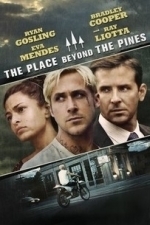
Ryan Gosling plays “Heart Throb” Luke Glanton, a stunt motorcycle rider with a traveling circus. We open on him doing his thing in Schenectady, New York, and after his performance he sees Romina (“Roe”, portrayed by Eva Mendes). You can tell these two have history, as though they met the last time his little side show burned through town. Cutting through the awkwardness, Luke finds out that Roe had a kid. His kid, Jason. Though, he didn’t find out from her. Determined to make things right, despite Roe having moved on being with another man, Luke sticks around Schenectady to try and be part of his son’s life and to win Roe from her man. Only things don’t begin moving fast enough for him, and so turns to robbing banks in this small town as a way to provide for his lover and their newborn child. Only things go south fairly quickly and this puts him on a collision course with an ambitious rookie cop.
Bradley Cooper plays Avery Cross; a rookie cop on the force all of six months. After a harrowing deed that puts takes him off duty for several months and causes him so serious psychological issues which make it hard for him to even look at his son, Avery Jr. After his recovery, Avery returns to the force only to be thrust into a den of corrupt cops, gangs and a genuine fear for his life. He is not sure how to react at first, but eventually knows that he must do the right thing… even if it means ratting out his brothers in arms. This doesn’t prove to be an easy course for him, but he is determined to do the right thing, despite it tearing his family apart.
Act one of this film focuses on Gosling and Mendes’ characters and their tumultuous relationship. When they first brought Mendes on screen, I was really questioning the casting choice. By the end of the act, those questions were still there. It just didn’t seem like Gosling and Mendes had the chemistry that the makers of the film were desperately trying to portray. But we do see a lot into the character of Luke and how much he really just wants to be there for his son. Gosling did an excellent job with the role, but I feel like there was thing that was distracting from his performance: his hair. For some reason they decided bleach blond was the way to go to this character, but mostly what I was thinking when he was on screen was that it just looked out of place and I really had to concentrate to get past it.
Act two focuses on Bradley Cooper and the turmoil he goes through. I can’t say too much without giving away some major plot points of the film, but Bradley Cooper definitely did an excellent job playing the young rookie cop. He has an excellent supporting cast for his act with Harris Yulin playing his father, Rose Byrne as his wife and Bruce Greenwood as the District Attorney. He eventually manages to get from underneath all the lies, coercion and corruption to make a bid for an Assistant District Attorney position.
Fast forward to 15 years later, and this is where our act three takes place. Only now we are focusing on the lives of young Jason and Avery Jr. The deeds of their fathers in yester year, portrayed in our first two acts, affect our young subjects as they become friends without realizing the history between their families. I felt that Dane DeHaan who portrayed a 17-year old Jason knocked it out of the park with his performance. But there is something left to be said for Emory Cohen who is on screen as Avery Jr.
Want to know the rest? Watch the movie. Acts one and two, though long winded at points, blew me out of the water. Cianfrance did an excellent job of captivating the audience and making you care for the two focus points, despite them being on completely different sides of the law (as mentioned earlier). Act three, however, fell kind of flat to me. It very well could be a result of a poor casting choice in Emory Cohen, but I also felt like they could have shaped the end of this tail into so much more.
Overall, I actually enjoyed the movie, despite a lackluster ambition to go see it. Would I have gone to see it on my own if I had to pay for it? Nah! But it is a good date movie and might possibly start some interesting conversations between you and your partner.
Pines is the story of two men on opposite sides of the law, just trying to do the right thing and how what they do impacts each other’s lives, and the lives of their sons. Of course the means by which they got to the “right thing” was not always the “right way”, but ultimately they were trying to good.
Ryan Gosling plays “Heart Throb” Luke Glanton, a stunt motorcycle rider with a traveling circus. We open on him doing his thing in Schenectady, New York, and after his performance he sees Romina (“Roe”, portrayed by Eva Mendes). You can tell these two have history, as though they met the last time his little side show burned through town. Cutting through the awkwardness, Luke finds out that Roe had a kid. His kid, Jason. Though, he didn’t find out from her. Determined to make things right, despite Roe having moved on being with another man, Luke sticks around Schenectady to try and be part of his son’s life and to win Roe from her man. Only things don’t begin moving fast enough for him, and so turns to robbing banks in this small town as a way to provide for his lover and their newborn child. Only things go south fairly quickly and this puts him on a collision course with an ambitious rookie cop.
Bradley Cooper plays Avery Cross; a rookie cop on the force all of six months. After a harrowing deed that puts takes him off duty for several months and causes him so serious psychological issues which make it hard for him to even look at his son, Avery Jr. After his recovery, Avery returns to the force only to be thrust into a den of corrupt cops, gangs and a genuine fear for his life. He is not sure how to react at first, but eventually knows that he must do the right thing… even if it means ratting out his brothers in arms. This doesn’t prove to be an easy course for him, but he is determined to do the right thing, despite it tearing his family apart.
Act one of this film focuses on Gosling and Mendes’ characters and their tumultuous relationship. When they first brought Mendes on screen, I was really questioning the casting choice. By the end of the act, those questions were still there. It just didn’t seem like Gosling and Mendes had the chemistry that the makers of the film were desperately trying to portray. But we do see a lot into the character of Luke and how much he really just wants to be there for his son. Gosling did an excellent job with the role, but I feel like there was thing that was distracting from his performance: his hair. For some reason they decided bleach blond was the way to go to this character, but mostly what I was thinking when he was on screen was that it just looked out of place and I really had to concentrate to get past it.
Act two focuses on Bradley Cooper and the turmoil he goes through. I can’t say too much without giving away some major plot points of the film, but Bradley Cooper definitely did an excellent job playing the young rookie cop. He has an excellent supporting cast for his act with Harris Yulin playing his father, Rose Byrne as his wife and Bruce Greenwood as the District Attorney. He eventually manages to get from underneath all the lies, coercion and corruption to make a bid for an Assistant District Attorney position.
Fast forward to 15 years later, and this is where our act three takes place. Only now we are focusing on the lives of young Jason and Avery Jr. The deeds of their fathers in yester year, portrayed in our first two acts, affect our young subjects as they become friends without realizing the history between their families. I felt that Dane DeHaan who portrayed a 17-year old Jason knocked it out of the park with his performance. But there is something left to be said for Emory Cohen who is on screen as Avery Jr.
Want to know the rest? Watch the movie. Acts one and two, though long winded at points, blew me out of the water. Cianfrance did an excellent job of captivating the audience and making you care for the two focus points, despite them being on completely different sides of the law (as mentioned earlier). Act three, however, fell kind of flat to me. It very well could be a result of a poor casting choice in Emory Cohen, but I also felt like they could have shaped the end of this tail into so much more.
Overall, I actually enjoyed the movie, despite a lackluster ambition to go see it. Would I have gone to see it on my own if I had to pay for it? Nah! But it is a good date movie and might possibly start some interesting conversations between you and your partner.

Cynthia Armistead (17 KP) rated Carniepunk in Books
Mar 1, 2018

As soon as I read about this collection on Kevin Hearne's Facebook, I knew I would be buying it. I don't care for carnivals at all, and every story will be related to one in some way - but there was just no way I was going to miss an Atticus and Oberon story! I even pre-ordered the book on Amazon, the first time I've ever done that. It was SO hard not to skip right ahead and read Hearne's contribution the moment the book was in my hot little hands, but I managed some discipline.
Rob Thurman's "Painted Love" opens the book. It is dark, but to be fair it isn't quite as dark as the only Thurman novel I've read, from the Cal Leandros series. I rather liked the twist. I adored the fiercely protective older sister, especially the way she is described. I'll rate this one at three.
I don't believe I've ever read anything by Delilah S. Dawson before, certainly not anything in the Blud universe, so I had no idea what to expect from "The Three Lives of Lydia." It was a far darker story than I would generally choose to read. I found the male love interest highly appealing. The portrayal of mental illness was horrific. I found it interesting that Dawson is an Atlantan as well as a fellow geeky mom, but I'm sure that I've never heard of her before. She does have a book coming out next year that looks promising, so I may give it a read. This one's a two.
Then there is the Iron Druid story! "The Demon Barker of Wheat Street" is set a few books back in the series' chronology (two weeks after "Two Ravens and One Crow"), so Granuaille isn't yet a full Druid. To make things even more interesting, Atticus accidentally offended the local elemental many years ago, so his magic doesn't work as well as usual in the area. The story isn't vital to the series, and knowledge of the series isn't necessary for enjoying it. Hearne's fans definitely won't want to miss it, though, and it could be used as a nice little taste of his style for new readers. Definitely a five.
I couldn't make it through "The Sweeter the Juice" by Mark Henry. Zombies are disgusting, but I was way squicked before the first walking dead even appeared on the scene. A one, just because there are no zeroes.
Jaye Wells is another new-to-me author, as far as I can remember at the moment. I didn't really like "The Werewife," to be honest. There was no joy anywhere in this story. There wasn't even a hint that perhaps the couple in the story had been happy together at one time. Both of them seemed pretty miserable, and I didn't like the way it ended. It didn't seem like there was any way to give them a happy ending, but that ending didn't feel "true." It gets a two, and that's only to set it apart from the previous story.
"The Cold Girl" by Rachel Caine is about an abusive teen relationship. Oh, and vampires. I'm not a Caine fan, but this story was better than some of her other work. Again, too dark for my tastes. If half stars were possible, it would have one. I'll be nice and round up to three.
The name Allison Pang sounds familiar, so maybe I've read something by her in the past. If I did, I'm certain that it wasn't set in the same world as "A Duet With Darkness," which says it is an Abby Sinclair story. I found the main character to be an annoying, immature twit, but I'm a sucker for fiction with musical influences. The music is well-done here. I don't know if I will read anything more by Ms. Pang or not - I suppose that depends on whether or not her other work has better characters and is also musical. This one gets a four.
I found "Recession of the Divine" by Hillary Jacques fascinating. The Greek inspiration was unusual. I didn't really buy the customers being quite so unquestioning of Ophelia's state, but it wasn't a major complaint overall. I was highly disappointed to find nothing but a credit in another anthology for her. But! Reading the author profiles at the end of the book pays off, because that's how I learned that she also writes as Regan Summers. Now her works published under that name are on my to-read shelf. Another five.
Jennifer Estep's "Parlor Tricks" was actually released free on Amazon a little while back to promote Carniepunk, so it was the first story I read. I enjoy the Elemental Assassin series in general, and this story is no exception. Again, knowledge of the series is not required to understand the story, and the story is not vital to the series. It is a nice little sample, though, and I enjoyed seeing Gin and Bria having a sisterly outing. I'm probably biased, but it gets a five.
I liked Kelly Meding's "Freak House" a lot, and her name sounded familiar, but the story was set in the "Strays" universe, which I was certain I had never heard of before. I actually stirred myself to look her up, and learned that I've had one of her books on my to-read list for ages, and Strays is a new series she's just starting. Djinn, werewolves, vampires, pixies, harpies, leprechauns, skinwalkers, and more, some "out" to humans, some living hidden - what's not to love? This one gets a four.
Nicole Peeler us yet another author who sounded vaguely familiar to me, and yep, there is one of her books on my to-read list (yes, it is massive, why do you ask?). It is, in fact, the first of the Jane True books, and "The Inside Man" is set in that world. Peeler's writing style dies not flow for me, but I liked Capitola Jones and her friends Shar and Moo. As clowns are indisputably evil, I had little to complain about in the story. It gets a three.
Succubus (former?) Jezzie is the main character in Jackie Kessler's story "A Chance in Hell." Obviously, the story is set her Hell on Earth series. I had to look that up, though, because while I know you're shocked, her name did not ring any bells for me. I don't actually have ALL the urban fantasy books on my to-read or read lists! The piece opens with a confusing remark about a demon eating Jezebel's face, when that definitely is not the anatomy in question. If that's a common euphemism, it is wholly new to me. Within the next couple of pages there are multiple references to the fact that she has fallen in love with a human since becoming mortal, but absolutely no explanation of how she would reconcile sex with an incubus with her human love. As much as I would prefer that it were not the case, the default assumption in our society is that people are monogamous. Therefore, when there is a deviation from that norm, the reader expects - something. Is it supposed to demonstrate that the fictional society is different? Is the character in an explicitly non-monogamous relationship? Is her love unrequited? Is the guy dead? Do demons not count? Is she just a skanky ho? Then this great love isn't mentioned again for the rest of the story, so none of the questions raised are answered. Oh. There is, in fact, a plot here, but I was so annoyed by that stuff that I almost failed to notice it. Demonic circus, yo. The whole demon thing reminds me too much of another series I've read in the past. I can't even remember the author's name, much less the title, right now, but Kessler's work feels derivative. She gets a two.
Next up is Kelly Gay - Hey look! Another author whose name I don't recognize! - with "Hell's Menagerie," a Charlie Madigan short story. Okay, this series is set in an alternate Atlanta. As an Atlanta girl, that certainly gets my attention. And Charlie is a single mother. I don't recall any other single mothers in the UF world right off. (Kate Daniels doesn't quite count, because she adopted her daughter as a teen. Although it is interesting to note that Kate is also Atlanta-based.) I was ready to like this one, based solely on what I knew of the series. Then there was a grammatical error on the second page of the story that set my teeth on edge, one which could not be chalked up to a character's voice. Add in the fact that we get a fast, "and also, Jim" style introduction to Charlie (who isn't even present in the story!), Rex, and Emma in less than two pages, and I am officially annoyed. It isn't an old matinee movie, so surely that information could have been worked in a little more naturally? Emma won me over. Mostly. There's some, "Not another super-gifted kid," reaction, but I guess if the mother is supposed to be all that it's to be expected that the daughter might be special, too. Hmm. A three.
The last piece is Seaman McGuire's "Daughter of the Midway, the Mermaid, and the Open, Lonely, Sea." Is that title a mouthful, or what? It has the feel of a Toby Daye story, although it isn't subtitled as such, and there are no fae so maybe it isn't in that universe at all. As there are other stories in the book that are set in the same world as their author's series, yet not marked in any way, lack of a subtitle can't be taken as a negative indicator, though. In any case, the story is poignant, which I've come to expect from McGuire. I didn't really like it, but I didn't dislike it, either. I couldn't "feel" Ada in any true sense. I have the same problem with Toby. A three at best.
Overall, the book was decent. The ratings only average out to 3.21, but I'm very glad to have read the stories by Hearne and Estep. Discovering Jacques/Summers was absolutely worthwhile. I really hate that I read as much of Henry's story as I did. If I could delete that from my memory, it would probably raise the rating for everything else.
Rob Thurman's "Painted Love" opens the book. It is dark, but to be fair it isn't quite as dark as the only Thurman novel I've read, from the Cal Leandros series. I rather liked the twist. I adored the fiercely protective older sister, especially the way she is described. I'll rate this one at three.
I don't believe I've ever read anything by Delilah S. Dawson before, certainly not anything in the Blud universe, so I had no idea what to expect from "The Three Lives of Lydia." It was a far darker story than I would generally choose to read. I found the male love interest highly appealing. The portrayal of mental illness was horrific. I found it interesting that Dawson is an Atlantan as well as a fellow geeky mom, but I'm sure that I've never heard of her before. She does have a book coming out next year that looks promising, so I may give it a read. This one's a two.
Then there is the Iron Druid story! "The Demon Barker of Wheat Street" is set a few books back in the series' chronology (two weeks after "Two Ravens and One Crow"), so Granuaille isn't yet a full Druid. To make things even more interesting, Atticus accidentally offended the local elemental many years ago, so his magic doesn't work as well as usual in the area. The story isn't vital to the series, and knowledge of the series isn't necessary for enjoying it. Hearne's fans definitely won't want to miss it, though, and it could be used as a nice little taste of his style for new readers. Definitely a five.
I couldn't make it through "The Sweeter the Juice" by Mark Henry. Zombies are disgusting, but I was way squicked before the first walking dead even appeared on the scene. A one, just because there are no zeroes.
Jaye Wells is another new-to-me author, as far as I can remember at the moment. I didn't really like "The Werewife," to be honest. There was no joy anywhere in this story. There wasn't even a hint that perhaps the couple in the story had been happy together at one time. Both of them seemed pretty miserable, and I didn't like the way it ended. It didn't seem like there was any way to give them a happy ending, but that ending didn't feel "true." It gets a two, and that's only to set it apart from the previous story.
"The Cold Girl" by Rachel Caine is about an abusive teen relationship. Oh, and vampires. I'm not a Caine fan, but this story was better than some of her other work. Again, too dark for my tastes. If half stars were possible, it would have one. I'll be nice and round up to three.
The name Allison Pang sounds familiar, so maybe I've read something by her in the past. If I did, I'm certain that it wasn't set in the same world as "A Duet With Darkness," which says it is an Abby Sinclair story. I found the main character to be an annoying, immature twit, but I'm a sucker for fiction with musical influences. The music is well-done here. I don't know if I will read anything more by Ms. Pang or not - I suppose that depends on whether or not her other work has better characters and is also musical. This one gets a four.
I found "Recession of the Divine" by Hillary Jacques fascinating. The Greek inspiration was unusual. I didn't really buy the customers being quite so unquestioning of Ophelia's state, but it wasn't a major complaint overall. I was highly disappointed to find nothing but a credit in another anthology for her. But! Reading the author profiles at the end of the book pays off, because that's how I learned that she also writes as Regan Summers. Now her works published under that name are on my to-read shelf. Another five.
Jennifer Estep's "Parlor Tricks" was actually released free on Amazon a little while back to promote Carniepunk, so it was the first story I read. I enjoy the Elemental Assassin series in general, and this story is no exception. Again, knowledge of the series is not required to understand the story, and the story is not vital to the series. It is a nice little sample, though, and I enjoyed seeing Gin and Bria having a sisterly outing. I'm probably biased, but it gets a five.
I liked Kelly Meding's "Freak House" a lot, and her name sounded familiar, but the story was set in the "Strays" universe, which I was certain I had never heard of before. I actually stirred myself to look her up, and learned that I've had one of her books on my to-read list for ages, and Strays is a new series she's just starting. Djinn, werewolves, vampires, pixies, harpies, leprechauns, skinwalkers, and more, some "out" to humans, some living hidden - what's not to love? This one gets a four.
Nicole Peeler us yet another author who sounded vaguely familiar to me, and yep, there is one of her books on my to-read list (yes, it is massive, why do you ask?). It is, in fact, the first of the Jane True books, and "The Inside Man" is set in that world. Peeler's writing style dies not flow for me, but I liked Capitola Jones and her friends Shar and Moo. As clowns are indisputably evil, I had little to complain about in the story. It gets a three.
Succubus (former?) Jezzie is the main character in Jackie Kessler's story "A Chance in Hell." Obviously, the story is set her Hell on Earth series. I had to look that up, though, because while I know you're shocked, her name did not ring any bells for me. I don't actually have ALL the urban fantasy books on my to-read or read lists! The piece opens with a confusing remark about a demon eating Jezebel's face, when that definitely is not the anatomy in question. If that's a common euphemism, it is wholly new to me. Within the next couple of pages there are multiple references to the fact that she has fallen in love with a human since becoming mortal, but absolutely no explanation of how she would reconcile sex with an incubus with her human love. As much as I would prefer that it were not the case, the default assumption in our society is that people are monogamous. Therefore, when there is a deviation from that norm, the reader expects - something. Is it supposed to demonstrate that the fictional society is different? Is the character in an explicitly non-monogamous relationship? Is her love unrequited? Is the guy dead? Do demons not count? Is she just a skanky ho? Then this great love isn't mentioned again for the rest of the story, so none of the questions raised are answered. Oh. There is, in fact, a plot here, but I was so annoyed by that stuff that I almost failed to notice it. Demonic circus, yo. The whole demon thing reminds me too much of another series I've read in the past. I can't even remember the author's name, much less the title, right now, but Kessler's work feels derivative. She gets a two.
Next up is Kelly Gay - Hey look! Another author whose name I don't recognize! - with "Hell's Menagerie," a Charlie Madigan short story. Okay, this series is set in an alternate Atlanta. As an Atlanta girl, that certainly gets my attention. And Charlie is a single mother. I don't recall any other single mothers in the UF world right off. (Kate Daniels doesn't quite count, because she adopted her daughter as a teen. Although it is interesting to note that Kate is also Atlanta-based.) I was ready to like this one, based solely on what I knew of the series. Then there was a grammatical error on the second page of the story that set my teeth on edge, one which could not be chalked up to a character's voice. Add in the fact that we get a fast, "and also, Jim" style introduction to Charlie (who isn't even present in the story!), Rex, and Emma in less than two pages, and I am officially annoyed. It isn't an old matinee movie, so surely that information could have been worked in a little more naturally? Emma won me over. Mostly. There's some, "Not another super-gifted kid," reaction, but I guess if the mother is supposed to be all that it's to be expected that the daughter might be special, too. Hmm. A three.
The last piece is Seaman McGuire's "Daughter of the Midway, the Mermaid, and the Open, Lonely, Sea." Is that title a mouthful, or what? It has the feel of a Toby Daye story, although it isn't subtitled as such, and there are no fae so maybe it isn't in that universe at all. As there are other stories in the book that are set in the same world as their author's series, yet not marked in any way, lack of a subtitle can't be taken as a negative indicator, though. In any case, the story is poignant, which I've come to expect from McGuire. I didn't really like it, but I didn't dislike it, either. I couldn't "feel" Ada in any true sense. I have the same problem with Toby. A three at best.
Overall, the book was decent. The ratings only average out to 3.21, but I'm very glad to have read the stories by Hearne and Estep. Discovering Jacques/Summers was absolutely worthwhile. I really hate that I read as much of Henry's story as I did. If I could delete that from my memory, it would probably raise the rating for everything else.