

D&D Lords of Waterdeep
Games
9.0 Rate It
App
*Cross platform online play! Join your friends on other platforms!* *New In-game chat feature. Stay...

Scanner Radio - iPad Edition
News and Social Networking
App
★★★★ The best selling Scanner Radio for the iPhone comes to the iPad! ★★★★ Listen to...

National Rail Enquiries: Train journey planner
Navigation and Travel
6.5 Rate It
App
Stay on track with the free National Rail Enquiries App, Great Britain’s number one destination...


Seapilot for iPad
Navigation and Utilities
App
Professional marine navigation used to require an expensive GPS plotter. Now, same technology used...

Bob Mann (459 KP) rated Sweetheart (2021) in Movies
Sep 20, 2021
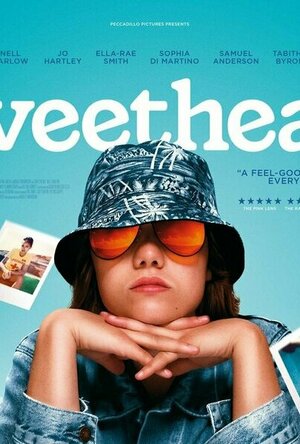

Positives:
- What a great ensemble cast! It's all headed up by Nell Barlow, amazingly in her feature debut. Nell manages to perfectly deliver the hair-pullingly frustrating unpredictability of a teenage girl: always planning to go off doing something worthy like "knitting jumpers for elephants in Indonesia". But she manages to keep the portrayal just the right side of parody, not straying into 'Kevin and Perry' territory. "What's wrong with you?" asks her mother. "I'm 17. Everything's wrong with me" she replies. It's an immaculate performance for someone so young.
- Jo Hartley is also fabulous as A. J.'s mum, a lost soul struggling with her own worries, without having those of AJ to add to them. It's not portrayed as a typical 'Mum v Teen' battle, but beautifully nuanced. "Just because you're a lesbian now, it doesn't mean you have to dress like a boy" she pleads with A. J.
- If you're trying to place her, Ella Rae-Smith was the striking girl in the baseball cap in Netflix's "The Stranger". She is also wonderful here, as the 'hot girl' who you think has it all but is underneath deeply troubled and conflicted. A sex scene (beautifully lit and filmed by Emily Almond Barr and Matthew Wicks) manages to show absolutely nothing but is deliciously erotic as a result.
- The writing by Marley Morrison feels very autobiographical. And, as I found through reading this Guardian article about Morrison's gender-journey, there is a lot of personal experience in here. It's clever that the film is claustrophobically set in the remote holiday park (actually the real Freshwater Beach Holiday Park near Bridport on the Dorset coast). If it had been set in a big city like London, AJ could have constantly fled from her feelings, never resolving them. Here, she is constantly running into Isla.... there is no escape.
- I also very much liked the relationship written between A. J. and Steve. Steve is almost the safety valve on the pressure cooker, always helpfully allowing some steam to escape. It adds warmth to the story.
- For such an indie picture, there's a range of great tunes on the soundtrack: mostly from bands I have never heard of (probably making it affordable). I'm not sure if there's to be a soundtrack album released, but it's worth a listen if so.
Negatives:
- I wasn't fond of the sound mix on the film. Some of the dialogue was indistinct.
- A. J. gives us an occasional running commentary of her thoughts as a voiceover. Regular readers of my blog will know my thoughts on this subject! I'm not sure if it added much to the story: a 'show-not-tell' approach would have been my preference.
Summary Thoughts on "Sweetheart": I likened this film to 1980's "Gregory's Girl", and that's a great compliment. That movie made stars out of John Gordon Sinclair and Clare Grogan. I'd predict similar great things for Nell Barlow, Ella Rae-Smith and particularly for writer/director Marley Morrison. I'll very much look forward to Marley's future projects.
It's a cracking little British film. It deserves a major cinema release, but I suspect this is one that you might need to hunt out at your less mainstream cinemas. But please do so - it's well worth it. Very much recommended.
(For the full graphical review and video, check out #onemannsmovies on the web, Facebook and Tiktok. Thanks.)
Bob Mann (459 KP) rated Lady Bird (2017) in Movies
Sep 29, 2021
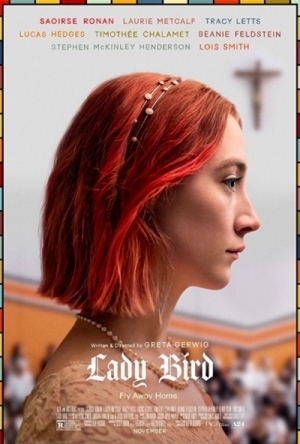


“Lady Bird”, the directorial debut of Greta Gerwig, features one such teen who thinks she knows it all. Looking and acting for all the world like a 15 year old (something that Margot Robbie really can’t pull off in “I, Tonya”) Saoirse Ronan plays Christine McPherson who has the given name (“I gave the name to myself”) of ‘Lady Bird’. She is struggling with a lot of issues: an unreasonable and overbearing (parents: read ‘perfectly reasonably but firm’) mother (Laurie Metcalf, “Roseanne”); the issues of puberty and young love; the constrictions of a Catholic school she despises; and her inability to perform to the grades she needs to get into a college of her choice. That choice being on the East coast as far away from the backwater of Sacremento (“the mid-west of California” – LoL) as she can get.
Love comes in the form of two serial male fixations: the gorgeous and artistic Danny (Lucas Hedges, “Three Billboards Outside Ebbing, Missouri”, “Manchester By The Sea”) and the aloof and enigmatic Kyle (Timothée Chalamet, “Call Me By Your Name”).
This is a near perfect coming of age film. The plot, while fairly superficial and covering ground well-trodden before, fully engages you and makes the running time just fly by. And there is just so much talent on show. The script by Gerwig is chocker-block full of great and memorable lines; Ronan is pitch-perfect as the irascible and cock-sure teen; Tracy Letts (“The Post“) is magnificent in the less showy role as the “good cop” dad, struggling invisibly with his own demons; and Metcalf gives an Oscar-nominated performance that really should give Alison Janney a run for her money… a drive away from an airport conveys just perfectly every college-age parent’s emotional low-point.
Where perhaps the film overplays its hand a bit is in the “wrong side of the tracks” line. The household while struggling is by no means trailer-park poor (compare and contrast with “I, Tonya”): perhaps this is the depths of financial desperation found in Sacremento? But I doubt it… there still seems to be money available for fancy cowgirl outfits.
Which leads me to the rating, which seems to have been a common rant in the last few weeks. I would have thought that there was nothing like this film to turn the mirror of reasonableness on a young teen, perhaps helping them to treat their parents better, work harder for college or make better choices. Yet it has a UK 15 certificate. And for what? There is a full frontal male photo-spread in “Playgirl” (I want to say “it’s a penis, get over it”, but if forced I would have frankly just snipped the 50 milliseconds out to get the lower rating). And there are a few (only a few) F- and C- words. I have the same problem here as with “Phantom Thread” – here is a high-class film that a young teen audience would absolutely love to see. I think the BBFC have got it wrong again here.
I cannot recommend this film enough: a tale of teenage life love and resolution that is hard to beat. Possibly one of the best coming of age tales I’ve ever seen. On the basis that it looks like I will never get to see “Call Me By Your Name” – the only major one I’ve missed – before this Sunday’s Oscar ceremony, what a great way to round off my Oscar-viewing season.
Bob Mann (459 KP) rated The Shallows (2016) in Movies
Sep 29, 2021
Waxing lyrically. The shapely Blake Liveley.
Waxing lyrically. The shapely Blake Liveley.
Blake Lively (“The Age of Adeline“) plays surfer and trainee doctor Nancy, still grieving the recent death from cancer of her mother and travelling to a remote Mexican surf beach where she has photos of her mother surfing while pregnant with her. While surfing alone, Nancy is attacked a couple of hundred yards from the shore by a Great White and severely injured. She has the choice of refuge of either a low rock or another less palatable floating object. Choosing the rock (at low tide) she is faced with the dilemma of both surviving her injuries and then being rescued before the high tide takes the rock and leaves her to the mercy of the ever circling big-fish.
We're going to need a bigger rock.
We’re going to need a bigger rock.
A big summer blockbuster this is not, with a total cast of eleven (not including a guest appearance of Steven Seagull (as himself)). But the small cast doesn’t make it less gripping, and gripping it most certainly is, with tension building progressively (emphasised periodically by an on-screen clock) with the countdown to high tide.
Blake Lively is an underrated actress and really delivers the goods here. And bearing in mind the problems that Spielberg had with his mechanical shark Bruce (named after Spielberg’s lawyer) the appearance of the shark is limited to where actually needed, with Lively having to fill in the blanks with reaction shots. As your imagination is still far better than any special effects, this is hugely effective for certain sequences.
Pure horror: here Dad had gone down to the video rental and come back with 'Dirty Grandpa'.
Pure horror: her Dad had gone down to the video rental and come back with ‘Dirty Grandpa’.
The film draws similarities to another interesting entry in the “Jaws” genre – “Open Water 2: Adrift” from 2006. In that film there was the same incessant threat of shark attack combined with the audience frustration that safety (in that case, the deck of their yacht, if only they had let a ladder down) being so near. Here the 200 yards to the shore is shoutable to but still 190 yards too far.
The cinematography (by Flavio Martínez Labiano) is also just beautifully done with some stunning surf and underwater shots that not only highlight Ms Lively’s lithely (sic) figure and her Californian surfing skills, but also the beauty of the ‘Mexican coast’ (actually Lord Howe Island in New South Wales, Australia).
“The Shallows” was written by Anthony Jaswinski and directed by Jaume Collet-Serra (the director of “Non-Stop“, aka Taken 3.5). It comes with a truly impressive BvS quotient of just 5.9%!
So with all of this going for it, you would think that my rating is heading towards at least a 4.5. But all films like this require a satisfying denouement, and unfortunately this is where this one comes off the rails. It is just plain silly and, together with an unnecessary and irritating epilogue scene, diminishes what was on track to be one of the best films of the summer. So here’s the “One Mann’s Movies” solution:
Using Final Cut X, Adobe Premier or your favourite video editing suite, cut out the scene from 115:00 to 116:00 from “Jaws”;
Photoshop Blake Lively’s face onto Roy Scheider’s body.
Insert the finished clip into “The Shallows” at about 82 minutes in.
Enjoy a 5-Fad classic!
This limitation aside, it’s still worth your while hunting it out at a cinema near you, since the fantastic cinematography is best suited to a big screen.

Movie Metropolis (309 KP) rated Tomb Raider (2018) in Movies
Jun 10, 2019
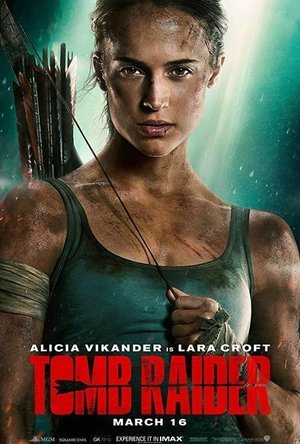
That’s all conjecture anyway as Vikander is the leading lady we have ended up with, for better or for worse. But is this Tomb Raider reboot the film to end that dreaded video game to movie curse and can Vikander take on the role that Angelina Jolie made so famous back in the early 00s? Read on to find out.
Lara Croft (Vikander) is the fiercely independent daughter of an eccentric adventurer (Dominic West) who vanished years earlier. Hoping to solve the mystery of her father’s disappearance, Croft embarks on a perilous journey to his last-known destination – a fabled tomb on a mythical island that might be somewhere off the coast of Japan. The stakes couldn’t be higher as Lara must rely on her sharp mind, blind faith and stubborn spirit to venture into the unknown.
Director Roar Uthaug, who only has a few Swedish movies to his name, directs a decent, if not outstanding adaptation of the famous character’s origins story that features some nifty action set-pieces intertwined with a hectic and often nausea-inducing filming style. It doesn’t break the video game to movie curse, but it’s a good shot.
Unfortunately, the cast is one of the film’s weakest points. Vikander is a whiny, self-absorbed brat for the majority of the runtime, only letting this insipid persona go in the latter half of the movie. This is through no fault of her own as her performance is as solid as we’ve come to expect from the actress, but the script really lets her down. The film starts off poorly with a messily edited boxing match giving way to a rather implausible bike chase that ends with Vikander face planting the bonnet of a police car. Thankfully, this is as bad as it gets.
From then on, the audience is treated to a selection of thrilling set-pieces, populated by some very good CGI indeed. It’s just unfortunate the characters lack any sort of presence whatsoever. Outside of Vikander’s insipid Lara, the rest of the cast are merely there to offer expositional dialogue. Dominic West in particular, who plays Lara’s father, spouts nothing but exposition, even narrating certain parts of the movie.
Apart from a couple of scenes involving Nick Frost as a greedy pawnbroker, Tomb Raider is devoid of any sense of fun whatsoever
Elsewhere, for a film called Tomb Raider, there’s very little tomb raiding to be had. In fact, it feels like a hybrid of Kong: Skull Island,The Mummy, Indiana Jones and The Hunger Games and for this reason it lacks a sense of identity and any originality whatsoever.
Cinematography wise, Tomb Raider is competent but not exceptional. The shot choices are limited and the action is sometimes messily edited to the point where it’s difficult to tell exactly what it is that’s going on. It avoids unnecessary shaky cam, which is a miracle in itself but it’s not the best the genre has to offer.
Unfortunately, director Roar Uthaug’s idea to go the complete opposite of many blockbusters nowadays results in a film that really doesn’t have a sense of humour. Apart from a couple of scenes involving Nick Frost as a greedy pawnbroker, Tomb Raider is devoid of any sense of fun whatsoever. It seems the scriptwriters missed the memo about the premise being absolutely ridiculous – a dose of humour would have done this tale a world of good.
Overall, Tomb Raider is a decent stab at resurrecting a character that Angelina Jolie performed so well over the course of her two films in the early 00s. Alicia Vikander plays a very different Lara Croft to Jolie and whilst she may need a couple more films for us to get acquainted with her, she’s off to a reasonable if unoriginal start. Whether or not she gets the chance to tomb raid again remains to be seen, it all depends on those box-office numbers.
https://moviemetropolis.net/2018/03/16/tomb-raider-review-contains-little-tomb-raiding/

The Bandersnatch (199 KP) rated Memoirs of a Geisha in Books
Nov 7, 2019
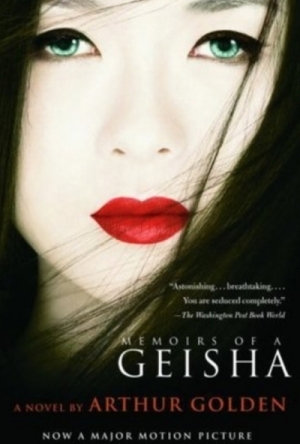
My opinion of the book is one of both curiosity and interest. Japan is one of those countries where its history and culture is both unusual and mysterious. The book gives a brief glimpse into the hidden world of the Geisha which are a prominent spot in Japanese culture but are relatively unknown world wide. I believe that the story of Sayuri is one of personal travel and evolution. Since we see Sayuri';s experience as a child before becoming a Geisha, experiencing the horror of war and eventually finding love with the Chairman.
Arthur Golden was born on December 6th 1956 in Chattanooga, Tennessee. When he was eight years old his parents divorced with his father dying five years later. He spent most of his childhood living in lookout mountain, Georgia before graduating from the Baylor school in Chattanooga in 1974. After earning a degree in Fine art (Specifically Japanese art), an M. A. in Japanese history, Golden spent a summer at the Peking University in Beijing and spent some time working in Tokyo. When he returned to the states he earned an M. A. in English at Boston University. Golden married Trudi Legge and they went on to have two children Hays and Tess.
After getting the initial idea for Memoirs of a Geisha Golden spent six years over the story rewriting it at least three times, changing the view point until settling on the viewpoint of Sayuri. Golden had spent time interviewing several Geisha including Mineko Iwasaki (who ended up suing Golden when the Japanese version of the book came out for breach of contract.....the case was settled out of court in 2003) all of whom provided information about the world of the Geisha. After its release Memoirs of a Geisha spent two years on the New York Times bestseller list, its sold more than four million copies in English alone and has been translated into thirty-two languages around the world. In 2005 the book was made into a movie garnering three academy awards.
My opinion of Arthur Golden is very small and somewhat limited.......I believe he is a fantastic writer and very knowledgeable about Japanese history and art....Much more so than I am but hearing he faced being sued because of citing who his sources were when he was contracted not to has put something of a dampener on his character in my eyes.
Memoirs of a Geisha was released as a Movie on December 9th 2005 under director Rob Marshall and Produced by Steven Spielberg's production Company Amblin Entertainment and Spyglass Entertainment. With its production from pre- to post-production taking place mainly in California US, with a few spots filmed in Kyoto Japan. The movie received mixed reviews in the western world and received somewhat negative reviews in Japan due to its mixed casting of Chinese and Japanese actors and actresses and its relationship to history. Despite the chaos they won three Academy Awards (Best Art Direction, Best Cinematography and Best Costume Design), a Golden Globe (Best Original Score), A national Board of review (Best Supporting Actress), a satellite award (Outstanding screenplay) and three BAFTA's (Cinematography, Costume design and the Anthony Asquith award for Achievement in film music).
Whilst I quite like the movie I definitely feel that if more effort was put into tying more of both Japanese and Geisha history was some how tied into the movie. As well as using more Japanese Actors and actresses in the roles......despite that I believe the actors and actresses did a very good job in brining the script to life and keep a layer of mystery and fluidity to their roles.
And there you have it a book for all the ages, its definitely under the banner of AWESOME!!!.