
Search
Search results

Kara Skinner (332 KP) rated The Mistletoe Bride in Books
Sep 10, 2019
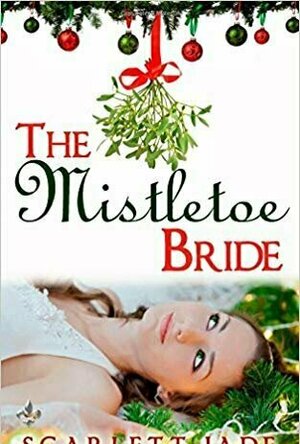

Sometimes we all need a little bit of a pick-me-up during the holiday season. It’s supposed to be the most wonderful time of the year and all that, but it’s frickin’ stressful. Between the in-laws and the holiday shopping (not to mention the calories. Yikes!), December can quickly turn into a jolly nightmare. However, The Mistletoe Bride is perfect for getting into the holiday season.
You see, Eve is having her own trouble this Christmas season. Two weeks before Christmas, her fiance breaks everything off with her because he had been having an affair with his secretary and had gotten her pregnant. This leaves her single and with two tickets to paradise she had been going to surprise her husband with. And she plans to do something crazy. Instead of moping at home, or going on vacation by herself, she plans on asking a perfect stranger on going on vacation with her.
Nick Christmas is shocked when a beautiful and mysterious woman asks him to go on a trip with her, and he’s a little wary, too. But after talking with her for a few minutes in a coffee shop, he’s drawn to her. He’s more than ready to go on vacation with Eve and help her forget her sorrows, but he knows there’s more to everything than an innocent holiday when she starts hearing bells in his laugh. After all, Nick is destined to become the next Santa Claus– and it looks like Eve is destined to be his bride.
First of all, “Two Tickets to Paradise” by Eddie Money will get stuck in your head when you’re reading this. So if you know the song but hate it (but why would you hate it, unless you’re insane?), this might not be the best stress reliever. (I happen to like the song just fine, so no harm done to me.)
Like I said before, this is a great pick-me-up for the holiday season. And that’s all it is: a pick me up to enjoy that will get you in the mood for Christmas. If you like made-for-TV Christmas romances, then you’ll probably like The Mistletoe Bride. It’s adorable. Eve is all innocent and vulnerable and kind, and Nick is all strong and protective and kind. He really wants to help Eve heal from the damage done from her last relationship, and he doesn’t rush her even though he knows she’s his mistletoe bride. It’s incredibly sweet. And I really like how Scarlett Jade build the magic and myth of Santa Claus like she did. Inheriting the role of Santa, a magic suit that fits all Santas perfectly, the knowledge of everyone, as if he’s a god…. it’s pretty awesome.
But the book isn’t perfect. It was anticlimactic, honestly. Yes, there was a lot of suspense what with the Winter Elf trying to destroy Christmas and the race to the altar and everything, but it was rushed. The Winter Elf didn’t even come in until later and probably just to add a little spice to the mainly bland aftermath of Eve’s and Nick’s betrothal. The big villain in the whole book just wanted to make toys for Santa’s workshop. That’s it. I mean really? It’s a romance, not a thriller, I know, but we could have drawn it out a little bit more.
There also shouldn’t have been any sex scenes in this book. I know, this is a really strange complaint for me. After all I love sex scenes and they’re never a problem, right? (But hell is not freezing over right now because the Winter Elf is too effing busy making toys for Santa to cause some damn chaos!) The thing is, the love interest is Santa. Even if he’s young and about to marry his soul mate, he should not have sex appeal. Why? Because he’s Santa. He defined at least a third of my childhood (I really love Christmas) and he’s supposed to be a jolly gift-giver who loves cookies. Having a Santa Clause with sex appeal is like having a Mickey Mouse with sex appeal. Just. Don’t. Do it.
Even Spock thinks a sexy Santa is weird.
Since I was in the right mood for this book when I read it, I’m giving it four out of five stars. But most days I would probably only give it three.
You see, Eve is having her own trouble this Christmas season. Two weeks before Christmas, her fiance breaks everything off with her because he had been having an affair with his secretary and had gotten her pregnant. This leaves her single and with two tickets to paradise she had been going to surprise her husband with. And she plans to do something crazy. Instead of moping at home, or going on vacation by herself, she plans on asking a perfect stranger on going on vacation with her.
Nick Christmas is shocked when a beautiful and mysterious woman asks him to go on a trip with her, and he’s a little wary, too. But after talking with her for a few minutes in a coffee shop, he’s drawn to her. He’s more than ready to go on vacation with Eve and help her forget her sorrows, but he knows there’s more to everything than an innocent holiday when she starts hearing bells in his laugh. After all, Nick is destined to become the next Santa Claus– and it looks like Eve is destined to be his bride.
First of all, “Two Tickets to Paradise” by Eddie Money will get stuck in your head when you’re reading this. So if you know the song but hate it (but why would you hate it, unless you’re insane?), this might not be the best stress reliever. (I happen to like the song just fine, so no harm done to me.)
Like I said before, this is a great pick-me-up for the holiday season. And that’s all it is: a pick me up to enjoy that will get you in the mood for Christmas. If you like made-for-TV Christmas romances, then you’ll probably like The Mistletoe Bride. It’s adorable. Eve is all innocent and vulnerable and kind, and Nick is all strong and protective and kind. He really wants to help Eve heal from the damage done from her last relationship, and he doesn’t rush her even though he knows she’s his mistletoe bride. It’s incredibly sweet. And I really like how Scarlett Jade build the magic and myth of Santa Claus like she did. Inheriting the role of Santa, a magic suit that fits all Santas perfectly, the knowledge of everyone, as if he’s a god…. it’s pretty awesome.
But the book isn’t perfect. It was anticlimactic, honestly. Yes, there was a lot of suspense what with the Winter Elf trying to destroy Christmas and the race to the altar and everything, but it was rushed. The Winter Elf didn’t even come in until later and probably just to add a little spice to the mainly bland aftermath of Eve’s and Nick’s betrothal. The big villain in the whole book just wanted to make toys for Santa’s workshop. That’s it. I mean really? It’s a romance, not a thriller, I know, but we could have drawn it out a little bit more.
There also shouldn’t have been any sex scenes in this book. I know, this is a really strange complaint for me. After all I love sex scenes and they’re never a problem, right? (But hell is not freezing over right now because the Winter Elf is too effing busy making toys for Santa to cause some damn chaos!) The thing is, the love interest is Santa. Even if he’s young and about to marry his soul mate, he should not have sex appeal. Why? Because he’s Santa. He defined at least a third of my childhood (I really love Christmas) and he’s supposed to be a jolly gift-giver who loves cookies. Having a Santa Clause with sex appeal is like having a Mickey Mouse with sex appeal. Just. Don’t. Do it.
Even Spock thinks a sexy Santa is weird.
Since I was in the right mood for this book when I read it, I’m giving it four out of five stars. But most days I would probably only give it three.

Best Islamic, Arabic and Ramadan Ringtones
Music and Entertainment
App
We have crafted the best Ringtones from the best songs about Ramadan, Islamic and Arabic traditional...

Bob Mann (459 KP) rated Cold Pursuit (2019) in Movies
Mar 15, 2020
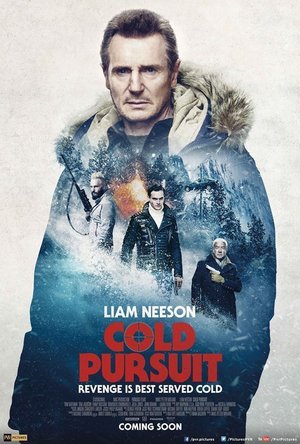


Comments on revenge are best kept on the screen.
I'd completely forgotten the furore about Liam Neeson's comments back last February during the press-tour preceding the film's release. In discussing the destructive feelings of revenge experienced by his character, Nels Coxman, Neeson revealed something he did 40 years ago: after the rape of a friend by "a black man", Neeson went out on the streets to find another "black man" and do them harm. (As a fellow Ballymena-born man, David Moody (from the "Mark and Dave" blog) has an interesting theory about this... that it was not a "rascist" statement in the true sense, but something else entirely. See here - ).
The comments undoubtedly impacted the movie at the box office. Which is a shame. Because in his catalogue of bonkers and violent revenge-porn flicks, this is one of Neeson's more entertaining ones.
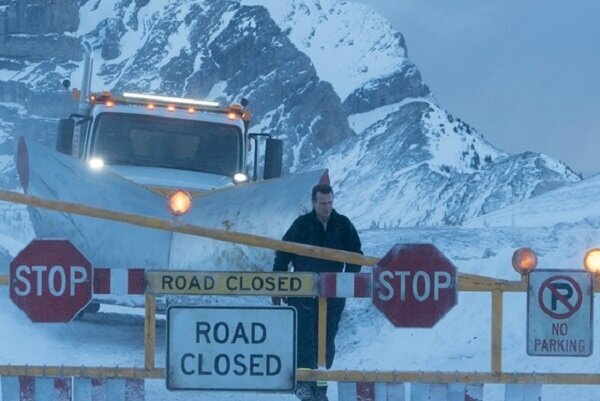
Revenge is a dish best served cold. And where colder to serve it than in the ski-resort of Kehoe where Nels Coxman is the local snowplow operative and "man of the year" for his services to the community. But the tracks are about to fall off his orderly life. For his son Kyle (Micheál Richardson) winds up dead through a drugs overdose and his strained marriage with wife Grace (Laura Dern) disintegrates. (One of the most cutting and best-written "Bye" notes ever seen in the movies).
With revenge in mind, Coxman pursues the Denver-based drugs lord Trevor Calcote (Tom Bateman) who dished out the drugs to his son. But he inadvertently manages to stay just below the parapet as he sets in train a gang war between Calcote and a Kehoe-based native-American drugs gang led by White Bull (Tom Jackson). The snow turned progressively pinker as the body count rises.
Calcote (aka "Viking") is painted as a colourful family man, with an annoyingly bright son Ryan (Nicholas Holmes) that he controls with a rod of iron. Viking is estranged from wife Aya (Julia Jones), who seems completely unafraid of him and happily embarrasses him in front of his men. This relationship never really works. Since given all the terrible and irrational things Viking does to people, whether they obstruct him or help him in equal measure, putting a quiet bullet into Aya's head seems to be to least he could do!
Where there is fun to be had is in the "Stockholm syndrome" linkage between young Ryan and Coxman. When his father insists on controlling his diet, feeding him the same insipidly healthy meals morning, noon and night, the alternative of being kidnapped and fed burgers seems eminently more preferable!
The film is at times really difficult to follow. There are lots of inexplicable leaps of logic and really inexplicably bonkers scenes that you can only patch together later. It's as if the filmmakers randomly filmed 5 hours of footage and then tried to edit it all into a cohesive plot!
As one example of this, the relationship between Coxman and "Wingman" (William Forsythe) was poorly introduced such that I was left baffled by a later plot twist.
In another scene, Neeson smashes the head of enforcer "Santa" (Michael Adamthwaite) into his steering wheel, but in the next scene collapses with him utterly exhausted in the snow. There was clearly a significant fight here that was cut out of the finished cut. But as a result the final cut makes no sense at all!
Of course, the local law enforcement team are average at best. Average because although young and keen-as-mustard detective Kim Dash (Emmy Rossum) is hot on the trail of the truth, her partner Gip (John Doman) is f*ckin' useless... wanting to do nothing but drink coffee and eat donuts in true Simpsons style.
Normally with these sort of films, it's difficult to keep track of the body count. No such problem here. Every death is celebrated with a tombstone graphic so it's easy to keep count! Needless to say, there are a lot of tombstones registered.
Directed by Norwegian Hans Petter Moland, it's all good violent cartoonish fun, that keeps its tongue firmly in its cheek for most of the running time. The snowy setting, the partly native-American cast and the presence of Julia Jones brings to mind the truly excellent Jeremy Renner / Elizabeth Olsen movie "Wind River". But there the similarities (and quality levels) definitely stop. It's not a clever movie; it's borderline bonkers for most of its running time (never more so than with a totally bizarre "joke" final shot); but it is entertaining. As a 'park brain at door' action comedy it just about makes the grade.
(For the full graphical review, please check out One Mann's Movies here - https://bob-the-movie-man.com/2020/03/15/one-manns-movies-dvd-review-cold-pursuit-2019/. Thanks.)
The comments undoubtedly impacted the movie at the box office. Which is a shame. Because in his catalogue of bonkers and violent revenge-porn flicks, this is one of Neeson's more entertaining ones.
Revenge is a dish best served cold. And where colder to serve it than in the ski-resort of Kehoe where Nels Coxman is the local snowplow operative and "man of the year" for his services to the community. But the tracks are about to fall off his orderly life. For his son Kyle (Micheál Richardson) winds up dead through a drugs overdose and his strained marriage with wife Grace (Laura Dern) disintegrates. (One of the most cutting and best-written "Bye" notes ever seen in the movies).
With revenge in mind, Coxman pursues the Denver-based drugs lord Trevor Calcote (Tom Bateman) who dished out the drugs to his son. But he inadvertently manages to stay just below the parapet as he sets in train a gang war between Calcote and a Kehoe-based native-American drugs gang led by White Bull (Tom Jackson). The snow turned progressively pinker as the body count rises.
Calcote (aka "Viking") is painted as a colourful family man, with an annoyingly bright son Ryan (Nicholas Holmes) that he controls with a rod of iron. Viking is estranged from wife Aya (Julia Jones), who seems completely unafraid of him and happily embarrasses him in front of his men. This relationship never really works. Since given all the terrible and irrational things Viking does to people, whether they obstruct him or help him in equal measure, putting a quiet bullet into Aya's head seems to be to least he could do!
Where there is fun to be had is in the "Stockholm syndrome" linkage between young Ryan and Coxman. When his father insists on controlling his diet, feeding him the same insipidly healthy meals morning, noon and night, the alternative of being kidnapped and fed burgers seems eminently more preferable!
The film is at times really difficult to follow. There are lots of inexplicable leaps of logic and really inexplicably bonkers scenes that you can only patch together later. It's as if the filmmakers randomly filmed 5 hours of footage and then tried to edit it all into a cohesive plot!
As one example of this, the relationship between Coxman and "Wingman" (William Forsythe) was poorly introduced such that I was left baffled by a later plot twist.
In another scene, Neeson smashes the head of enforcer "Santa" (Michael Adamthwaite) into his steering wheel, but in the next scene collapses with him utterly exhausted in the snow. There was clearly a significant fight here that was cut out of the finished cut. But as a result the final cut makes no sense at all!
Of course, the local law enforcement team are average at best. Average because although young and keen-as-mustard detective Kim Dash (Emmy Rossum) is hot on the trail of the truth, her partner Gip (John Doman) is f*ckin' useless... wanting to do nothing but drink coffee and eat donuts in true Simpsons style.
Normally with these sort of films, it's difficult to keep track of the body count. No such problem here. Every death is celebrated with a tombstone graphic so it's easy to keep count! Needless to say, there are a lot of tombstones registered.
Directed by Norwegian Hans Petter Moland, it's all good violent cartoonish fun, that keeps its tongue firmly in its cheek for most of the running time. The snowy setting, the partly native-American cast and the presence of Julia Jones brings to mind the truly excellent Jeremy Renner / Elizabeth Olsen movie "Wind River". But there the similarities (and quality levels) definitely stop. It's not a clever movie; it's borderline bonkers for most of its running time (never more so than with a totally bizarre "joke" final shot); but it is entertaining. As a 'park brain at door' action comedy it just about makes the grade.
(For the full graphical review, please check out One Mann's Movies here - https://bob-the-movie-man.com/2020/03/15/one-manns-movies-dvd-review-cold-pursuit-2019/. Thanks.)

Allison Anders recommended Monterey Pop (1968) in Movies (curated)


Decent Japanese Travelling Communicator
Travel and Utilities
App
. Selected by Apple's App Store for Popular Travel Destinations: Japan "Travel Tools" app! . 蘋果...

Chris Sawin (602 KP) rated Public Enemies (2009) in Movies
Jun 22, 2019

The year is 1933 and bank robberies are at an all time high. John Dillinger, Baby Face Nelson, and Pretty Boy Floyd are at the top of their game. In the public eye, robbers are looked at as heroes instead of criminals. Dillinger enjoys the fruit of his labor to the fullest until the day Melvin Purvis is put in charge of the FBI division down in Chicago. Word traveled fast of how one of FBI's top agents (Purvis) took down Pretty Boy Floyd and hopes are high that he can help in the newly announced "war on crime." Once Purvis arrived in Chicago, the crime wave of the 30's that was on a steady uprise took a drastic decline. Bank robberies were never the same as Dillinger's friends began dropping like flies. As Dillinger's motto of not thinking about tomorrow since he's too busy enjoying today comes back to haunt him, he soon realizes that he can only hide for so long and that the feds will catch up with him sooner or later.
The most noticeable thing about the film is its cinematography. Michael Mann has used the same method of shooting Public Enemies with HD digital cameras like he did with Collateral. This could be a hassle to some viewers as the picture isn't as shaky as it was in something like Cloverfield, but isn't as crystal clear and steady as you may have found in some of Mann's earlier work like Heat or most other films, for that matter. Perspective plays a huge role in this film. Certain lighting seems to come off better being shot in HD digital and it certainly shows, but the imperfections seem to give the film more character. Some people might throw the word, "edgy," around, but we'll settle on saying this style of filming feels like a more realistic approach. It makes the audience feel like they're actually amongst these gangsters during their heyday.
It almost felt like Christian Bale didn't really want to be there. Between this and Terminator: Salvation, he's really lacking the charisma and talent he's shown in films like The Prestige and The Machinist or even American Psycho. Maybe he's just hit his peak and has nothing else up his sleeve to wow audiences. Bale has hit an eye-catching slump, which is hard to say since this is coming from a long time fan. As long as he continues to be cast in big budget films though and those films wind up doing extremely well at the box office, then not many people are going to notice a difference in the actor's lackluster performance.
Johnny Depp, on the other hand, stole every scene he was in. His cockiness and confidence in his abilities in what he does just gave life to Dillinger that makes you generally like him. You want to see him escape as soon as he gets caught, pull off that next big robbery, and succeed at everything he does so he can run off with Billie Frechette (Marion Cotillard) and live happily ever after. His dialogue is also generally pretty incredible. In the scene where he's confronting Agent Purvis from behind bars, Dillinger is asking Purvis about what it was like to kill a man. How their eyes looked and how you can literally watch a man just drift away by staring into their eyes while they're dying. That that whole experience could keep a man up at night. Purvis asks Dillinger what keeps him up at night. Dillinger, who always seemed to be chewing gum, replies, "Coffee." Dillinger just felt like one of Depp's better acting roles, as of late. He showed more emotion than we're generally used to seeing from him and it was just an incredibly strong performance from the Oscar nominee.
The film has a lot of great dialogue, intriguing character interaction, and it's interesting watching the story unfold of how the crime wave of the 30s may have come to an end, but what really makes the film worth seeing is the shootouts. Any scene that begins with somebody holding a gun is worth getting excited over. There's a scene in the woods in the latter half of the film that is worth the price of admission alone. It takes place at night and everything is littered with darkness until the tommy guns make an appearance. The way the guns light up everything else around the characters firing them was a nice touch. Small explosions erupting from a chamber every time somebody pulled the trigger. This is some of the best gunfire to ever be filmed.
When it comes to Public Enemies, it is one of the best films of the year which is mentioned in at least one of the TV spots. Anyone who was a fan of Michael Mann's previous films (or gangster films, in general) will more than likely walk away from this film satisfied. Johnny Depp is still at the top of his game while Christian Bale seems to be winding down. Public Enemies is a film worthy of the summer blockbuster season which will satisfy the appetite of any fan of crime films.
The most noticeable thing about the film is its cinematography. Michael Mann has used the same method of shooting Public Enemies with HD digital cameras like he did with Collateral. This could be a hassle to some viewers as the picture isn't as shaky as it was in something like Cloverfield, but isn't as crystal clear and steady as you may have found in some of Mann's earlier work like Heat or most other films, for that matter. Perspective plays a huge role in this film. Certain lighting seems to come off better being shot in HD digital and it certainly shows, but the imperfections seem to give the film more character. Some people might throw the word, "edgy," around, but we'll settle on saying this style of filming feels like a more realistic approach. It makes the audience feel like they're actually amongst these gangsters during their heyday.
It almost felt like Christian Bale didn't really want to be there. Between this and Terminator: Salvation, he's really lacking the charisma and talent he's shown in films like The Prestige and The Machinist or even American Psycho. Maybe he's just hit his peak and has nothing else up his sleeve to wow audiences. Bale has hit an eye-catching slump, which is hard to say since this is coming from a long time fan. As long as he continues to be cast in big budget films though and those films wind up doing extremely well at the box office, then not many people are going to notice a difference in the actor's lackluster performance.
Johnny Depp, on the other hand, stole every scene he was in. His cockiness and confidence in his abilities in what he does just gave life to Dillinger that makes you generally like him. You want to see him escape as soon as he gets caught, pull off that next big robbery, and succeed at everything he does so he can run off with Billie Frechette (Marion Cotillard) and live happily ever after. His dialogue is also generally pretty incredible. In the scene where he's confronting Agent Purvis from behind bars, Dillinger is asking Purvis about what it was like to kill a man. How their eyes looked and how you can literally watch a man just drift away by staring into their eyes while they're dying. That that whole experience could keep a man up at night. Purvis asks Dillinger what keeps him up at night. Dillinger, who always seemed to be chewing gum, replies, "Coffee." Dillinger just felt like one of Depp's better acting roles, as of late. He showed more emotion than we're generally used to seeing from him and it was just an incredibly strong performance from the Oscar nominee.
The film has a lot of great dialogue, intriguing character interaction, and it's interesting watching the story unfold of how the crime wave of the 30s may have come to an end, but what really makes the film worth seeing is the shootouts. Any scene that begins with somebody holding a gun is worth getting excited over. There's a scene in the woods in the latter half of the film that is worth the price of admission alone. It takes place at night and everything is littered with darkness until the tommy guns make an appearance. The way the guns light up everything else around the characters firing them was a nice touch. Small explosions erupting from a chamber every time somebody pulled the trigger. This is some of the best gunfire to ever be filmed.
When it comes to Public Enemies, it is one of the best films of the year which is mentioned in at least one of the TV spots. Anyone who was a fan of Michael Mann's previous films (or gangster films, in general) will more than likely walk away from this film satisfied. Johnny Depp is still at the top of his game while Christian Bale seems to be winding down. Public Enemies is a film worthy of the summer blockbuster season which will satisfy the appetite of any fan of crime films.

BookblogbyCari (345 KP) rated The Naked Future in Books
Aug 5, 2018
Book Review by Cari Mayhew. Rating 7.5/10
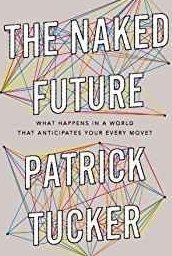
This is a book about how the digital footprint we leave behind us can be used to make predictions about our future in all aspects of our lives. But are we seeing the coming to being of a dystopian science fiction, or are we tapping into a new superpower?
Every app on every device we use leaves a digital trail about us, and this has implications in the fields of medicine and the spread of infections, education and learning, and crime prediction, through to movie preference and dating.
The book predominantly examines the value to society in general but also looks at the benefits to the individual. Of course, these benefits come at a cost to our privacy, which the book also briefly addresses. Each chapter is centered on its own topic. I will mention each but in the interests of brevity won’t go into detail on each topic.
Chapter 1 begins by describing how certain apps can be extremely useful warning providers, but by the end of the chapter, we are looking at how your smartphone apps can be used to locate you, even when your GPS is turned off and you’re not geo-tagging posts or tweets. With modern statistical models and enough data points, it’s possible to predict where you will be down to the hour and within a square block one and a half years from now. Turning off your GPS doesn't actually make you less predictable, it just makes your predictability level harder to detect - your future remains naked.
Similarly, in Chapter 2 which examines deliberate self-tracking, Tucker notes that Fitbit users who are confused or ignorant of the device’s privacy settings are inadvertently sharing the data details of their sexual activity.
This seems like frightening stuff, but then the conversation turns to more benevolent uses of such technology. Chapter 3, by way of an imagined story, examines how such technology can be used to predict the spread of dangerous infections, including the identification of new strains of virus as new mutations occur.
Chapter 4 looks at the use of such technology in weather forecasting, and how it’s been used to make way for insurance against the effects of the weather for affected businesses. Chapter 5 explores how movie/book choice and ratings can be used to predict what makes a good movie/book.
We go back to the frightening stuff in Chapter 6. Here Tucker talks about how the smartphone has become the ultimate shopping accessory. Knowing what habitual time an individual wants a coffee, cig, or beer, is ideal for online advertisers, who will be able to send you a voucher/coupon or a mere suggestion right there on the spot. There could also be surveillance systems examining what you pick up and consider buying but don't put into basket /trolley. Tucker goes on to describe how data brokers such as Acxiom have begun selling on to advertisers access to not only your data to also to your future decisions.
Chapter 7 looks at education and learning, and makes the following good points: “What telemetric education offers is the chance for all students to raise their hands and be heard, without fear of confirming some unflattering, broadly held perception about their social group.” And “Imagine for a moment the power of knowing beforehand how well you would perform on a test but how disempowered you would feel if that same future was naked to your competition, or to your future potential employers.”
I like the title of chapter 8 “When Your Phone Says You’re In Love”. Here Tucker tells how online dating sites have become a living social science lab. Again here your personal details can be sold on. In the future, you could be rating your actual get-togethers on the app. Already invented is a “sociometer” which detects unconscious biological signals which show what role you’re taking in a conversation, and can then produce predictions on how the rest of the conversation will go.
Chapters 9 and 10 look at predictions in the where, when and who of acts of crime. He discusses where it has worked so far. But on this Tucker says “Predictive policing in the wrong hands looks less like a boon to public safety and more like a totalitarian hammer.”
The book concludes with Chapter 11, titled “The World That Anticipates Your Every Move”. Here one interviewee said as “Privacy is a blip on the radar of history.” Indeed the chapter ends with an obituary to privacy, where Tucker says “we will feel increasingly powerless against the tide of transparency rendering this planet in a new form as surely as the movement of glaciers carved our canyons and valleys.”
I’ve highlighted here the more worrisome aspects of the topics, but it’s important to note that Tucker does aim to offer a prescription for the situation, though it’s spread out in occasional paragraphs here and there rather than as a useful reference at the end. That said I found the actionable advice was rather brief and unoriginal.
Tucker presents a fair and balanced view of this important and highly relevant topic of our times, and the book is clearly well-researched. Some chapters show a little humor which was fun, but although the book is aimed at the layman, I often felt like I was reading a science textbook. The book is a real eye-opener, especially if it’s something you hadn’t given much thought to. The overall message of the book is clear: our data is already out there, but it’s ours first and foremost, and we can be savvy and use it to our advantage.
This is a book about how the digital footprint we leave behind us can be used to make predictions about our future in all aspects of our lives. But are we seeing the coming to being of a dystopian science fiction, or are we tapping into a new superpower?
Every app on every device we use leaves a digital trail about us, and this has implications in the fields of medicine and the spread of infections, education and learning, and crime prediction, through to movie preference and dating.
The book predominantly examines the value to society in general but also looks at the benefits to the individual. Of course, these benefits come at a cost to our privacy, which the book also briefly addresses. Each chapter is centered on its own topic. I will mention each but in the interests of brevity won’t go into detail on each topic.
Chapter 1 begins by describing how certain apps can be extremely useful warning providers, but by the end of the chapter, we are looking at how your smartphone apps can be used to locate you, even when your GPS is turned off and you’re not geo-tagging posts or tweets. With modern statistical models and enough data points, it’s possible to predict where you will be down to the hour and within a square block one and a half years from now. Turning off your GPS doesn't actually make you less predictable, it just makes your predictability level harder to detect - your future remains naked.
Similarly, in Chapter 2 which examines deliberate self-tracking, Tucker notes that Fitbit users who are confused or ignorant of the device’s privacy settings are inadvertently sharing the data details of their sexual activity.
This seems like frightening stuff, but then the conversation turns to more benevolent uses of such technology. Chapter 3, by way of an imagined story, examines how such technology can be used to predict the spread of dangerous infections, including the identification of new strains of virus as new mutations occur.
Chapter 4 looks at the use of such technology in weather forecasting, and how it’s been used to make way for insurance against the effects of the weather for affected businesses. Chapter 5 explores how movie/book choice and ratings can be used to predict what makes a good movie/book.
We go back to the frightening stuff in Chapter 6. Here Tucker talks about how the smartphone has become the ultimate shopping accessory. Knowing what habitual time an individual wants a coffee, cig, or beer, is ideal for online advertisers, who will be able to send you a voucher/coupon or a mere suggestion right there on the spot. There could also be surveillance systems examining what you pick up and consider buying but don't put into basket /trolley. Tucker goes on to describe how data brokers such as Acxiom have begun selling on to advertisers access to not only your data to also to your future decisions.
Chapter 7 looks at education and learning, and makes the following good points: “What telemetric education offers is the chance for all students to raise their hands and be heard, without fear of confirming some unflattering, broadly held perception about their social group.” And “Imagine for a moment the power of knowing beforehand how well you would perform on a test but how disempowered you would feel if that same future was naked to your competition, or to your future potential employers.”
I like the title of chapter 8 “When Your Phone Says You’re In Love”. Here Tucker tells how online dating sites have become a living social science lab. Again here your personal details can be sold on. In the future, you could be rating your actual get-togethers on the app. Already invented is a “sociometer” which detects unconscious biological signals which show what role you’re taking in a conversation, and can then produce predictions on how the rest of the conversation will go.
Chapters 9 and 10 look at predictions in the where, when and who of acts of crime. He discusses where it has worked so far. But on this Tucker says “Predictive policing in the wrong hands looks less like a boon to public safety and more like a totalitarian hammer.”
The book concludes with Chapter 11, titled “The World That Anticipates Your Every Move”. Here one interviewee said as “Privacy is a blip on the radar of history.” Indeed the chapter ends with an obituary to privacy, where Tucker says “we will feel increasingly powerless against the tide of transparency rendering this planet in a new form as surely as the movement of glaciers carved our canyons and valleys.”
I’ve highlighted here the more worrisome aspects of the topics, but it’s important to note that Tucker does aim to offer a prescription for the situation, though it’s spread out in occasional paragraphs here and there rather than as a useful reference at the end. That said I found the actionable advice was rather brief and unoriginal.
Tucker presents a fair and balanced view of this important and highly relevant topic of our times, and the book is clearly well-researched. Some chapters show a little humor which was fun, but although the book is aimed at the layman, I often felt like I was reading a science textbook. The book is a real eye-opener, especially if it’s something you hadn’t given much thought to. The overall message of the book is clear: our data is already out there, but it’s ours first and foremost, and we can be savvy and use it to our advantage.

Sophia (Bookwyrming Thoughts) (530 KP) rated The Eternity Cure (Blood of Eden, #2) in Books
Jan 23, 2020


Original Review posted on <a title="The Eternity Cure by Julie Kagawa" href="http://bookwyrming-thoughts.blogspot.com/2013/08/review-the-eternity-cure-by-julie-kagawa.html">Bookwyrming Thoughts</a>.
<i><b>Note:</b> Formatting is lost due to copy and paste</i>
I should warn you. It's a really long post. So feel to scroll on down to the After Reading part if you want to. :3
<b><u>Before Reading:</b></u>
Wowzers. The Eternity Cure must be popular at my library (YAY!). Apparently I went crashing into dead ends (I even lost count of them) since who knows when (April, May) with so many holds (that includes ebook lend on Overdrive and whatnot but those holds weren't me) and FINALLY I have my hands on The Eternity Cure.
Imagine my reaction after that. Happy dancing. Of course. VICTORY! (Yeah... I'm glad I placed a hold before the last copy got taken...)
And then mom drops the bomb. Yes, a bomb. A verbal bomb. The one shatters your dreams (okay, not exactly dreams) into a million pieces and you can't put them back together, like Humpty Dumpty (poor Humpty...), who unfortunately has fallen off the wall.
“Returning book on Saturday.” (or something of the similar sort).
Time for another reaction.
*gawk* Jaw drop. Faceplant on the wall (no one saw it; it was virtual because I don't want a big purple bruise and questions...). Victory dance stops and then someone gets stared at as if they had grown three heads (no, I didn't actually do it, because then everyone at the library will be the ones staring at me as if I had grown three heads).
Expected to read an almost 500-page book in a few days? (It's not even a week.)
It's Julie Kagawa! Challenge Accepted, mother.
Gives mom a thumbs up.
Nods with a very confident (and possibly self-satisfied that says I can do this!) grin at her.
Turns off computer.
Becomes hermit crab for the rest of the week or however long I finish this book. Because I'm not planning to read halfway through and then return it (it's not my style. Once I start, I must finish or there's something that stops me. And by then... there's gotta be something that makes me want to chuck the book across the room – of course... I might have to pay $30 dollars. Not exactly worth it. But I can imagine it being chucked.)
I'm pretty sure I'll fail at staying off though. Because even if the computer doesn't have internet connection...
it's the epitome of procrastination (you know, files to organize, chess to play – yes, girls play chess, making extremely lame movies from MS Paint stick figures, that type of stuff).
At least for me. I should ask someone to lock it up for me. Or ask them to toss me in a place that's so boring, I have nothing to do but to read. Oh, and be sure to remove any magazines, or put some dreadfully boring ones on that coffee table in the corner.
But still. It's Wednesday. I'm closed. Come back another day and see if the sign changes.
Because it won't change. Not until I savor every moment I have left with Allie, Zeke, and any other [lovable] characters that may return (and possible new ones as well).
(Holy monkeys, that probably sounded like a monologue. Sorry if you're bored, or if you think I'm insane by now and don't want to read my thoughts after I come out of hermit-nation in a few days.... because I know I talk too much when I write. Oopsies.)
<b><u>After Reading: - A Few Days Later...</b></u>
Well. I'm out of my little hermit shell now. “Justin Time.” So...
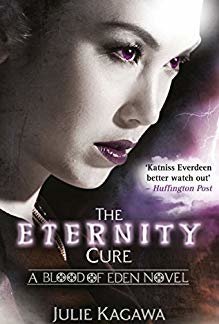
It's been a few months since Allie the vampire left Eden, and there's a new not-so-very-pleasant surprise popping up around the corners. She's more mature now, and when a certain character by the name of Zeke comes around from the previous book, he's also more mature.
Remember Jackal from The Immortal Rules? He's not that bad after all, though he reminds me of a certain arrogant vampire from...
The Vampire Diaries.
Actually, that certain vampire popped up in my head every time Jackal spoke, despite the fact both vampires look different.
In fact, Mr. Raider King is actually a pretty likable character. But Jackal actually has humor. Considering the fact he seemed like the person to take over the world... I didn't exactly find that he would make wisecracks here, there and everywhere.
I think you've figured out which vampire I'm talking about now. *neutrally cheerful voice* Go Daemon.
But about the ending...
O___O
You're kidding me.
O___O
That didn't just happen (or should I say, I did not just read that). I couldn't have read that wrong, could I?
*rereads*
Nope. Definitely didn't read it wrong.
And now you're making me wait for another year or so to find out what happens. >__<
But I'll wait... because I have plenty of other books to keep me company... and the only way to come up with a good story is to patiently wait... and wait... and wait. In which I'll happily do while stalking the county library catalog as soon as it's published.
Oh... and the after part is shorter because well... you're already stuck reading 500+ words from the Before Reading. I figured you don't need to read another 500+ for the After Reading. I mean, you might be bored of me talking too much by now...
I hope no one minds? :3?
<i><b>Note:</b> Formatting is lost due to copy and paste</i>
I should warn you. It's a really long post. So feel to scroll on down to the After Reading part if you want to. :3
<b><u>Before Reading:</b></u>
Wowzers. The Eternity Cure must be popular at my library (YAY!). Apparently I went crashing into dead ends (I even lost count of them) since who knows when (April, May) with so many holds (that includes ebook lend on Overdrive and whatnot but those holds weren't me) and FINALLY I have my hands on The Eternity Cure.
Imagine my reaction after that. Happy dancing. Of course. VICTORY! (Yeah... I'm glad I placed a hold before the last copy got taken...)
And then mom drops the bomb. Yes, a bomb. A verbal bomb. The one shatters your dreams (okay, not exactly dreams) into a million pieces and you can't put them back together, like Humpty Dumpty (poor Humpty...), who unfortunately has fallen off the wall.
“Returning book on Saturday.” (or something of the similar sort).
Time for another reaction.
*gawk* Jaw drop. Faceplant on the wall (no one saw it; it was virtual because I don't want a big purple bruise and questions...). Victory dance stops and then someone gets stared at as if they had grown three heads (no, I didn't actually do it, because then everyone at the library will be the ones staring at me as if I had grown three heads).
Expected to read an almost 500-page book in a few days? (It's not even a week.)
It's Julie Kagawa! Challenge Accepted, mother.
Gives mom a thumbs up.
Nods with a very confident (and possibly self-satisfied that says I can do this!) grin at her.
Turns off computer.
Becomes hermit crab for the rest of the week or however long I finish this book. Because I'm not planning to read halfway through and then return it (it's not my style. Once I start, I must finish or there's something that stops me. And by then... there's gotta be something that makes me want to chuck the book across the room – of course... I might have to pay $30 dollars. Not exactly worth it. But I can imagine it being chucked.)
I'm pretty sure I'll fail at staying off though. Because even if the computer doesn't have internet connection...
it's the epitome of procrastination (you know, files to organize, chess to play – yes, girls play chess, making extremely lame movies from MS Paint stick figures, that type of stuff).
At least for me. I should ask someone to lock it up for me. Or ask them to toss me in a place that's so boring, I have nothing to do but to read. Oh, and be sure to remove any magazines, or put some dreadfully boring ones on that coffee table in the corner.
But still. It's Wednesday. I'm closed. Come back another day and see if the sign changes.
Because it won't change. Not until I savor every moment I have left with Allie, Zeke, and any other [lovable] characters that may return (and possible new ones as well).
(Holy monkeys, that probably sounded like a monologue. Sorry if you're bored, or if you think I'm insane by now and don't want to read my thoughts after I come out of hermit-nation in a few days.... because I know I talk too much when I write. Oopsies.)
<b><u>After Reading: - A Few Days Later...</b></u>
Well. I'm out of my little hermit shell now. “Justin Time.” So...
It's been a few months since Allie the vampire left Eden, and there's a new not-so-very-pleasant surprise popping up around the corners. She's more mature now, and when a certain character by the name of Zeke comes around from the previous book, he's also more mature.
Remember Jackal from The Immortal Rules? He's not that bad after all, though he reminds me of a certain arrogant vampire from...
The Vampire Diaries.
Actually, that certain vampire popped up in my head every time Jackal spoke, despite the fact both vampires look different.
In fact, Mr. Raider King is actually a pretty likable character. But Jackal actually has humor. Considering the fact he seemed like the person to take over the world... I didn't exactly find that he would make wisecracks here, there and everywhere.
I think you've figured out which vampire I'm talking about now. *neutrally cheerful voice* Go Daemon.
But about the ending...
O___O
You're kidding me.
O___O
That didn't just happen (or should I say, I did not just read that). I couldn't have read that wrong, could I?
*rereads*
Nope. Definitely didn't read it wrong.
And now you're making me wait for another year or so to find out what happens. >__<
But I'll wait... because I have plenty of other books to keep me company... and the only way to come up with a good story is to patiently wait... and wait... and wait. In which I'll happily do while stalking the county library catalog as soon as it's published.
Oh... and the after part is shorter because well... you're already stuck reading 500+ words from the Before Reading. I figured you don't need to read another 500+ for the After Reading. I mean, you might be bored of me talking too much by now...
I hope no one minds? :3?

Lee (2222 KP) rated Bombshell (2019) in Movies
Jan 8, 2020 (Updated Jan 8, 2020)
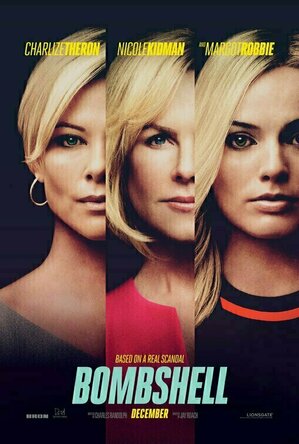
With media currently showing us scenes of disgraced Hollywood mogul Harvey Weinstein as he shuffles into court, expecting sympathy while his victims continue to try and rebuild their lives, along comes the timely release of Bombshell. Based on a high profile #MeToo scandal, Bombshell gives us a look deep inside the heart of Fox News, and tells the explosive story of the women who fought back against the powerful man who created it.
Megyn Kelly (Charlize Theron) begins by giving us a whistle-stop tour of the Fox News building - the floor layout, who is located where, how various news teams operate, who some of the news anchors are. We learn about the second floor, where the man at the centre of the scandal to come, Roger Ailes (John Lithgow), has his office and where Rupert Murdoch and his sons all fit in. It's a lot to take in right off the bat, so don't turn up late for the movie and make sure you're paying attention!
It's 2016, and the presidential campaign is in full swing. Megyn is preparing for the Republican debate hosted by Fox News, where she is planning to fire off a controversial question at Donald Trump regarding his treatment of women. There's a bit of an upset (literally) earlier in the day though, when Megyn develops a nasty stomach bug, presumably from someone tampering with the coffee bought for her on the way to work, and she very nearly doesn't make it to the debate, which we assume was the desired result. She manages to get out her question though, resulting in the kind of rage tweeting from Trump that we've now become so accustomed to, backlash from Trump supporters and paparazzi turning up at the holiday home where Megyn is taking a short break with her family.
Meanwhile, Gretchen Carlson (Nicole Kidman) is meeting with lawyers regarding the sexist comments that she regularly receives both on air from her male co-anchors, and off air from people like Roger Ailes. She also feels that her demotion to a less popular daytime show is the result of her reluctance to 'play ball' with Ailes. We see the uncomfortable story of Rudi Bakhitar, fired for politely declining the sexual advances of her employer, and the lawyers advise that Gretchen will need to gain further evidence from other women before they can file a harassment suit against Ailes.
The harassment and treatment of women and what they have to endure at Fox News, just to try and come close to the same level as their male counterparts, becomes increasingly apparent as the movie progresses. Short dresses, wide angle shots and transparent news desks in order to see their legs and hold viewer attention - it's the kind of thing you might only casually notice while watching a show, but eye opening and shocking when you see the orders being given in the control room to switch to a certain camera, and the women being told off screen how they should look and dress. Even though you know it's only a matter of time before Carlson gets the support she needs in order to get justice, there's obviously a lot of tension and drama that needs to play out before we get there.
In order to highlight and demonstrate the treatment off camera, particularly from Roger Ailes, we are introduced to up-and-coming journalist and new employee Kayla Pospisil (Margot Robbie), who is a fictional character. Kayla beings by working for Gretchen Carlson, but is keen to progress to bigger things and, despite warnings from Gretchen that she should stay close to her, takes a job on Fox's number one program, The O'Reilly Factor. Along the way, Kayla forms a relationship with her co-worker Jess Carr (Kate McKinnon) and manages to find her way into the office of Ailes, where we get to see him at work in a very creepy and uncomfortable scene. As news of Gretchen's lawsuit breaks, a slow trickle of former victims begins to come forward, while Megyn remains noticeably tight-lipped about an encounter she had with Ailes 10 years ago. It's clear that somebody like Megyn has enough power to make the lawsuit a lot more viable.
For me, Bombshell is all about the performances. Charlize Theron wears simple prosthetics, and underwent voice coaching in order to play the role of Megyn Kelly convincingly, and she is outstanding, as is Nicole Kidman. We get to live the trauma and the ups and downs of Margot Robbie's character along with her in the movie, earning her a supporting actress BAFTA nomination this week (against herself, for Once Upon A Time In Hollywood!). John Lithgow, who I found to be brilliant as Winston Churchill in The Crown, has once again bulked up in order to portray Roger Ailes, and succeeds in making him seem human, and at times humorous, while still portraying his darker, weaker and more creepier side.
Outside of the performances, I found Bombshell to be a fairly average movie. What happened in the space of just a few days in real life, seems to occur over weeks in the movie and I felt the trailer covered off the majority of the story in a pretty tight and more intense few minutes, with the movie just a more stretched out version of that. Still, Bombshell is definitely a good movie and, as I mentioned right at the start, more important and relevant now than ever before, so it deserves to be seen by all.
Megyn Kelly (Charlize Theron) begins by giving us a whistle-stop tour of the Fox News building - the floor layout, who is located where, how various news teams operate, who some of the news anchors are. We learn about the second floor, where the man at the centre of the scandal to come, Roger Ailes (John Lithgow), has his office and where Rupert Murdoch and his sons all fit in. It's a lot to take in right off the bat, so don't turn up late for the movie and make sure you're paying attention!
It's 2016, and the presidential campaign is in full swing. Megyn is preparing for the Republican debate hosted by Fox News, where she is planning to fire off a controversial question at Donald Trump regarding his treatment of women. There's a bit of an upset (literally) earlier in the day though, when Megyn develops a nasty stomach bug, presumably from someone tampering with the coffee bought for her on the way to work, and she very nearly doesn't make it to the debate, which we assume was the desired result. She manages to get out her question though, resulting in the kind of rage tweeting from Trump that we've now become so accustomed to, backlash from Trump supporters and paparazzi turning up at the holiday home where Megyn is taking a short break with her family.
Meanwhile, Gretchen Carlson (Nicole Kidman) is meeting with lawyers regarding the sexist comments that she regularly receives both on air from her male co-anchors, and off air from people like Roger Ailes. She also feels that her demotion to a less popular daytime show is the result of her reluctance to 'play ball' with Ailes. We see the uncomfortable story of Rudi Bakhitar, fired for politely declining the sexual advances of her employer, and the lawyers advise that Gretchen will need to gain further evidence from other women before they can file a harassment suit against Ailes.
The harassment and treatment of women and what they have to endure at Fox News, just to try and come close to the same level as their male counterparts, becomes increasingly apparent as the movie progresses. Short dresses, wide angle shots and transparent news desks in order to see their legs and hold viewer attention - it's the kind of thing you might only casually notice while watching a show, but eye opening and shocking when you see the orders being given in the control room to switch to a certain camera, and the women being told off screen how they should look and dress. Even though you know it's only a matter of time before Carlson gets the support she needs in order to get justice, there's obviously a lot of tension and drama that needs to play out before we get there.
In order to highlight and demonstrate the treatment off camera, particularly from Roger Ailes, we are introduced to up-and-coming journalist and new employee Kayla Pospisil (Margot Robbie), who is a fictional character. Kayla beings by working for Gretchen Carlson, but is keen to progress to bigger things and, despite warnings from Gretchen that she should stay close to her, takes a job on Fox's number one program, The O'Reilly Factor. Along the way, Kayla forms a relationship with her co-worker Jess Carr (Kate McKinnon) and manages to find her way into the office of Ailes, where we get to see him at work in a very creepy and uncomfortable scene. As news of Gretchen's lawsuit breaks, a slow trickle of former victims begins to come forward, while Megyn remains noticeably tight-lipped about an encounter she had with Ailes 10 years ago. It's clear that somebody like Megyn has enough power to make the lawsuit a lot more viable.
For me, Bombshell is all about the performances. Charlize Theron wears simple prosthetics, and underwent voice coaching in order to play the role of Megyn Kelly convincingly, and she is outstanding, as is Nicole Kidman. We get to live the trauma and the ups and downs of Margot Robbie's character along with her in the movie, earning her a supporting actress BAFTA nomination this week (against herself, for Once Upon A Time In Hollywood!). John Lithgow, who I found to be brilliant as Winston Churchill in The Crown, has once again bulked up in order to portray Roger Ailes, and succeeds in making him seem human, and at times humorous, while still portraying his darker, weaker and more creepier side.
Outside of the performances, I found Bombshell to be a fairly average movie. What happened in the space of just a few days in real life, seems to occur over weeks in the movie and I felt the trailer covered off the majority of the story in a pretty tight and more intense few minutes, with the movie just a more stretched out version of that. Still, Bombshell is definitely a good movie and, as I mentioned right at the start, more important and relevant now than ever before, so it deserves to be seen by all.
Kirk Bage (1775 KP) rated Black Mirror - Season 3 in TV
Mar 3, 2020
Nosedive - 8
We had to wait almost another 2 years for the Netflix investment to show a product, and in time for Halloween 2016 we got the super-glossy re-boot of Nosedive, with a big name up front and lots of anticipation. The tone was instantly more playful; less British, more inclusive to a world audience. It tackled with a wry humour the universal phenomenon of popularity and everything being rated, most notably, people themselves. In a future world of sunshine and pastel shades it has become the norm to rate every interaction, from buying coffee to buying a house, in the hope of becoming one of the beautiful people rated above a 4.5. It cleverly questions the motivations for that desire, and the pitfalls of false behaviour and the manipulation from an elite standpoint. It isn’t necessary to imagine this future, as we are virtually there already, and all this episode does is heighten the idea to hyperbolic proportions. Rated down by many viewers because it is “annoying”, but that is entirely the point: the whole thing makes you want to scream!
Playtest - 6.5
Also available for Halloween (as was the whole season, in standard Netflix style) came a chance to explore what really scares us! And… they blew it. Sure, the idea that gaming and VR becomes so photo realistic it seems entirely real isn’t far away. But, making it personal to a very annoying character dissolves all tension quite early on. Some mild jump scares aside, this has to go down as a missed opportunity. Notable only for the re-occurance of the White Bear symbol.
Shut Up and Dance - 7
This is the one most likely to make you think, hmm, that is too far! An uncomfortable episode, not only because of the subject matter and ultimate revelation, but because of the intense nastiness that pervades it. No doubt that tension is intentional, and therefore effective to a degree, but for me it crosses the line of entertainment and becomes simply nasty. Being unafraid to tackle controversial subjects is to be applauded, but the execution has to be note perfect, or the risk is the backlash this episode received. A cautionary tale about surveillance, data theft, blackmail and our personal online responsibility. Not a bad piece, just a slight misjudgment on tone and delivery.
San Junipero - 9.5
Just when critics were sharpening their pens that Netflix had ruined the potential of Black Mirror in its first phase, comes an almost perfect piece of TV that is literally heavenly! Everything about San Junipero is a work of art! Another “blind” episode that takes a while to unravel; the pacing and realisation of which is so beautifully judged that, from a writing point of view, this has to be seen as the pinnacle of the show to date. Mackenzie Davis is extraordinary as the vulnerable, shy and naive Yorkie, looking for a connection in an 80s nightclub, filled with nostalgia and cultural memes galore. The music alone is not only sing aloud perfect, but chosen for storytelling reasons so clever it raises goosebumps! The relationship between Yorkie and Kelly, an equally great Gugu Mbatha-Raw, is filled with chemistry and nuance, drawing us in to a place so deep that when the penny drops on what is really going on it draws a gasp and then possibly tears – I know it did for me! The mechanics of the technology that would make this story possible does raise a lot of questions, but in the end it is better to accept it as an allegory for love, life and our ideas of “eternity”. Don’t look too deeply at the how, but marvel at the why, and this could be the best hour of TV you will ever see! So rewatchable, rich and rewarding; the only reason not to make this a feature length big budget film is that how could it possibly be improved?
Men Against Fire - 7
Revisiting yet again the technology of a brain implant that affects our vision of the world, literally and figuratively, this episode explores indoctrination and brainwashing, with the underlying themes of racism and basic human compassion. It is a fine analogy of how the media and governments would have us think of immigrants and the “dangers” of anything “not us”. A tad obvious, and doesn’t really go anywhere new once the twist is revealed. Visually quite stunning, but not as strong as other episodes that cover similar ground.
Hated in the Nation - 8.5
With a running time of 89 minutes, this is essentially what happens when Black Mirror pushes an idea to feature length. Allowing more time for character development does make a difference, and the tension build in this fine concept for a thriller also benefits from a few extra minutes. The ever reliable Kelly MacDonald is the cornerstone of a strong cast, on the hunt for the mind behind a series of killings by killer bee drones, targeted at a democratically elected “most hated” person every day, based on a public vote. An exploration of media vilification and how easy it can be to manipulate our idea of someone’s identity and judge their actions and even personalities based on one wrong thing they may have said or done. The episode is a who-dunnit? A why-doit? And, framed, with the backdrop of the inquest surrounding events, both a good cop movie and a courtroom drama. Charlie Brooker has hinted that some of these characters may return at some point. I’m all for it.
We had to wait almost another 2 years for the Netflix investment to show a product, and in time for Halloween 2016 we got the super-glossy re-boot of Nosedive, with a big name up front and lots of anticipation. The tone was instantly more playful; less British, more inclusive to a world audience. It tackled with a wry humour the universal phenomenon of popularity and everything being rated, most notably, people themselves. In a future world of sunshine and pastel shades it has become the norm to rate every interaction, from buying coffee to buying a house, in the hope of becoming one of the beautiful people rated above a 4.5. It cleverly questions the motivations for that desire, and the pitfalls of false behaviour and the manipulation from an elite standpoint. It isn’t necessary to imagine this future, as we are virtually there already, and all this episode does is heighten the idea to hyperbolic proportions. Rated down by many viewers because it is “annoying”, but that is entirely the point: the whole thing makes you want to scream!
Playtest - 6.5
Also available for Halloween (as was the whole season, in standard Netflix style) came a chance to explore what really scares us! And… they blew it. Sure, the idea that gaming and VR becomes so photo realistic it seems entirely real isn’t far away. But, making it personal to a very annoying character dissolves all tension quite early on. Some mild jump scares aside, this has to go down as a missed opportunity. Notable only for the re-occurance of the White Bear symbol.
Shut Up and Dance - 7
This is the one most likely to make you think, hmm, that is too far! An uncomfortable episode, not only because of the subject matter and ultimate revelation, but because of the intense nastiness that pervades it. No doubt that tension is intentional, and therefore effective to a degree, but for me it crosses the line of entertainment and becomes simply nasty. Being unafraid to tackle controversial subjects is to be applauded, but the execution has to be note perfect, or the risk is the backlash this episode received. A cautionary tale about surveillance, data theft, blackmail and our personal online responsibility. Not a bad piece, just a slight misjudgment on tone and delivery.
San Junipero - 9.5
Just when critics were sharpening their pens that Netflix had ruined the potential of Black Mirror in its first phase, comes an almost perfect piece of TV that is literally heavenly! Everything about San Junipero is a work of art! Another “blind” episode that takes a while to unravel; the pacing and realisation of which is so beautifully judged that, from a writing point of view, this has to be seen as the pinnacle of the show to date. Mackenzie Davis is extraordinary as the vulnerable, shy and naive Yorkie, looking for a connection in an 80s nightclub, filled with nostalgia and cultural memes galore. The music alone is not only sing aloud perfect, but chosen for storytelling reasons so clever it raises goosebumps! The relationship between Yorkie and Kelly, an equally great Gugu Mbatha-Raw, is filled with chemistry and nuance, drawing us in to a place so deep that when the penny drops on what is really going on it draws a gasp and then possibly tears – I know it did for me! The mechanics of the technology that would make this story possible does raise a lot of questions, but in the end it is better to accept it as an allegory for love, life and our ideas of “eternity”. Don’t look too deeply at the how, but marvel at the why, and this could be the best hour of TV you will ever see! So rewatchable, rich and rewarding; the only reason not to make this a feature length big budget film is that how could it possibly be improved?
Men Against Fire - 7
Revisiting yet again the technology of a brain implant that affects our vision of the world, literally and figuratively, this episode explores indoctrination and brainwashing, with the underlying themes of racism and basic human compassion. It is a fine analogy of how the media and governments would have us think of immigrants and the “dangers” of anything “not us”. A tad obvious, and doesn’t really go anywhere new once the twist is revealed. Visually quite stunning, but not as strong as other episodes that cover similar ground.
Hated in the Nation - 8.5
With a running time of 89 minutes, this is essentially what happens when Black Mirror pushes an idea to feature length. Allowing more time for character development does make a difference, and the tension build in this fine concept for a thriller also benefits from a few extra minutes. The ever reliable Kelly MacDonald is the cornerstone of a strong cast, on the hunt for the mind behind a series of killings by killer bee drones, targeted at a democratically elected “most hated” person every day, based on a public vote. An exploration of media vilification and how easy it can be to manipulate our idea of someone’s identity and judge their actions and even personalities based on one wrong thing they may have said or done. The episode is a who-dunnit? A why-doit? And, framed, with the backdrop of the inquest surrounding events, both a good cop movie and a courtroom drama. Charlie Brooker has hinted that some of these characters may return at some point. I’m all for it.