

Wolf Online
Games
App
[Game Overview] A cruel and gruesome war among three wolf species begins. A real network survival...

VoiceMap: GPS Audio Tours with Offline Maps
Travel and Entertainment
App
Experience the magic of GPS audio walks, cycles, drives and even boat rides with VoiceMap tours in...
Jordan Binkerd (567 KP) rated Mercy Kill (X-Wing #10) in Books
Aug 15, 2019 (Updated Aug 20, 2019)
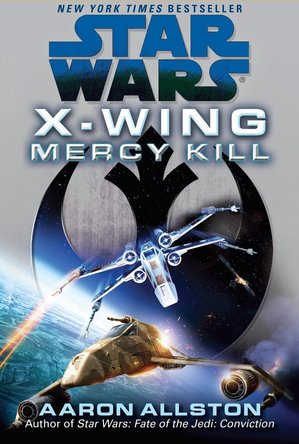

NOTE: This novel is no longer canon following Disney’s acquisition of Star Wars. That’s not to say it isn’t good, just that it belongs to the old Canon - I prefer to think of it as an alternate universe.
Do you remember fondly the Star Wars novels of the 90s? Are you into Star Wars but a newcomer to the Expanded Universe? Do you enjoy your Star Wars with an undertone of comedy, so long as a certain floppy-eared terror is nowhere in sight? If so, X-WING: MERCY KILL may be a good book for you to check out.
Unlike most of the books being released set in the “modern” era of the Star Wars universe (44 ABY–i.e., 44 Years post-Episode IV), MERCY KILL lets you jump right in, more or less without knowing the situation to that point. A lot of the others you could read cold, but they wouldn’t make much sense. MERCY KILL, however, has little to do with the ongoing plot of the Expanded Universe. It’s rooted in recent events, but the setup is very simple and easily grasped. It would pay to know the characters from the X-Wing novels of the 90s, but even that is not really necessary. You could check out three or four articles on Wookiepedia and be fine–I did, just to refresh my memory.
So….here’s what you need to know. In the 90s, they published a series of comics and then novels based around Rogue Squadron, led by Wedge Antilles and a number of the X-Wing pilots from the films along with some new faces. These comics and the first four novels were written by Michael Stackpole, but after the fourth he dropped out for a while citing other commitments he had to work on. So they hired in Aaron Allston to continue the series. Allston decided to let the Rogues go off on their own adventures while he created a new team for his novels–Wraith Squadron, a team of X-Wing pilots who would work equally well as a ground-based commando team. The result was a cross between The A-Team and The Dirty Dozen, with some aerial action thrown in. For the purposes of this new novel, notable characters included Garik “Face” Loran, a child star turned soldier and the eventual commander of the Wraiths; and Voort “Piggy” SaBinring, a genetically-modified Gamorrean. There are a few other returning faces, but these were the better developed and you can probably get by just knowing them.
The Star Wars publishing event of the early 2000s was the New Jedi Order series, in which a race of extra-galactic aliens called the Yuuzhan Vong invaded the Galaxy Far, Far Away and sought to subjugate its people. They almost did it, and they changed the way Star Wars novels worked in the process. Characters–MAIN CHARACTERS–died. Chewbacca, Han and Leia’s youngest son Anakin Solo, and countless others fell to the military might of the invaders. There have been other upheavals since, most notably a second Galactic Civil War when Han and Leia’s oldest son Jacen Solo fell to the Dark Side. In the aftermath of that war, a conspiracy was formed to take over both the Galactic Alliance and the Empire and merge them together once again, recapturing the glory of the height of the Old Empire. This conspiracy failed, but it may not have been completely rooted out…..
In this book, Garik Loran is called out of retirement by the head of the Alliance military. He wants Loran to quietly look into rumors that an up-and-coming officer may have been connected to the Lecerson Conspiracy. Wraith Squadron is back in business! The resulting adventure is a fun trip, dealing both in nostalgia for those of us who read the adventures of the original Wraiths long ago and in action that newer fans can get into, all the while serving up Allston’s signature undertone of humor mixed with heart. I heartily recommend it. The one caveat I will mention for fans of the original books is that there is comparatively little aerial combat in this book. The plot doesn’t call for it, and I certainly didn’t really miss it too much, but some may be disappointed by that.
If you want more reading suggestions, the X-Wing: Rogue Squadron comics and X-Wing novels are quite good. If you wanted to enhance your experience with this book, I would have you read at least the novels, but you may not have the patience for all nine of the previous books. If not, I won’t hold it against you.
Content-wise, they keep the Star Wars novels pretty PG. Mild language, mild violence, mild innuendos…..nothing to worry about.
Original post: https://jordanbinkerd.wordpress.com/2013/03/12/review-star-wars-x-wing-mercy-kill-by-aaron-allston/
Mandy and G.D. Burkhead (26 KP) rated Kushiel's Dart (Phèdre's Trilogy, #1) in Books
May 20, 2018
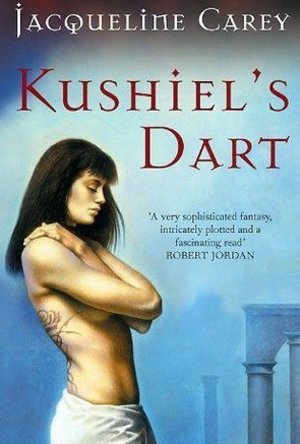

The Spoiler-Free Overview
If you want the shorter, less spoilery answer for what I think of these books: holy crap, yes, they’re as good as everyone says they are. Jacqueline Carey has a way of making me just…feel stuff like no other author can. Plenty of books have caught and held my interest enough that I didn’t want to put them down, but few have made the act of putting them down anyway so torturous. More than once, I hit a point in these stories where I had to drop whatever else I was gonna do that day (that I could realistically drop) just because I had to keep reading to make sure the characters were going to be okay.
This is character-driven fiction at its finest, with people in the pages who come alive and subtly win your heart. More than once, I’ve found reading about their ordeals to be worrying, a little bit painful, and a little bit infuriating (all in a good way, though), and I had to stop and remind myself that these weren’t real people that I was so concerned over and angry for. So if you ever wanted to be really, really invested in the story you’re reading and the people in it, Terre d’Ange is the place to go. All of the eroticism that everyone talks about is just a really nice bonus.
If you want an even shorter answer: do you watch Game of Thrones? Have you read George R.R. Martin’s A Song of Ice and Fire books? Have you at least heard of the fan hype around these stories? The Kushiel and Naamah books are like that, except sexier and with deeper court intrigue. And a lot less incest.
If you want the long answer…
A Dizzying Amount of Adventure Mileage
One thing that has to be said for Kushiel’s Legacy and the Naamah trilogy is that you definitely get your money’s worth of story out of each book. There’s a pattern that I’ve noticed with each of them, which is that you’ll follow the heroine/hero through a massive tribulation, see them endure their hardships and take their small victories where they can, then finally watch matters come to a crux, a climax, and a satisfying resolution…only to realize that you’re only a third of the way through the full page count.
Where most books are content to have one major conflict, Carey packs hers with about three each. The best part is that they’re not laid out in rigid sequence like a series of video game side quests – fight this problem, win, check it off the list, leave it behind and find a new one to fill the word count. No, each new adventure in the same book arises completely organically from the story overall. It makes you realize just how huge a scope these characters’ destinies really are, and just how incredibly wearying it can be and how much seemingly inhuman endurance it takes to be one of the gods’ chosen.
For instance, the first book to kick everything off, Kushiel’s Dart, begins slowly and simply enough. Phedre is an unwanted child who is basically sold into indentured servitude, then trained to be a spy and courtesan while we’re introduced to Terre d’Ange through her eyes over the next couple hundred pages, learning more about the politics and the players in time to watch the drama around them steadily unfold and escalate.
And then her wise mentor gets killed (as wise mentors tend to do), she and her bodyguard companion are betrayed, and the both of them get sold into full-on slavery to the vikings of Skaldia. Plenty of conflict and hardship and planning later, they make their escape and flee into harsh, snowy mountain terrain, falling in love for good measure while they fend off the deadly cold and the pursuit from their enemies. Finally, they make it back to their homeland and clear their names.
This is where most books would be content to stop and maybe leave further contentions for a sequel. Kushiel’s Dart would have been well within its rights to do so as well, and I wouldn’t have complained if it did. But no, it reminds readers, we’re not done yet. There’s a war coming, remember? We talked about this. Catch your breath for a moment, but then we gotta go rally our armies.
So Phedre and Joscelin set off to the wild and secluded island nation of Alba on the other side of an enchanted strait, a body of water where a vengeful, divine power known as the Master of the Straits lives and for some reason prevents almost all contact between the two nations. Arriving safely enough, they find that Alba is also war-torn at the moment, and the armies they had hoped to rally are busy defending their land from another foe. More plotting and intrigue ensues, alliances and promises are made, and with our heroes’ help, the two sides clash in a decisive battle that gains the side we’re rooting for victory as well as gives them their rightful sovereignty back. Now Phedre has the army she needs. After a sudden and unexpected stop at the Master of the Straits’ island, where they learn the secret of his power and guarantee indefinite safe passage between the nations in return for Phedre losing her closest friend, our heroes finally make it back to their homeland again with their army in tow.
Finally! After all of that struggle, we get a happy ending after all. But wait, not yet you don’t, the chunk of pages left at the end remind you. All you did was get your forces together. Good for you. Now you still gotta go actually fight the war with the Skaldi invaders to determine the fate of your entire nation.
So they do. And only after an awesome last-stand battle (the excitement and careful strategy of which will take you completely by surprise if you first entered this book expecting little more than kinky sex scenes) is the story allowed to wrap up in earnest, our heroes finally earning their long-deserved rest. The dangerous and cunning warlord is defeated, the invading army has been pushed back, the new Queen has ascended the throne, Terre d’Ange has been saved, and Phedre and Joscelin are free to finally be together – with the only little niggle being that the real mastermind behind all of their problems is still loose and taunting them. But we can get to that in the next book. Or five.

Kara Skinner (332 KP) rated Of Mice Not Men in Books
Jun 12, 2019
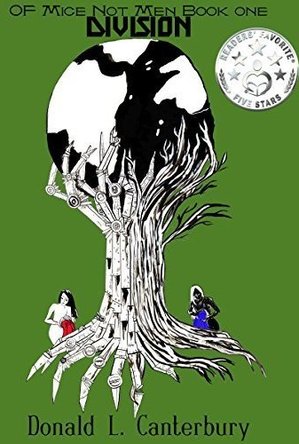

Page Count: 350 pages
Average Goodreads Rating: 4.75 out of 5 stars
My rating: 3 out of 5 stars
After manmade natural disasters wiped out most humans and life around the world, war breaks out among the remaining humans. The faction called the Developers want to take the resources from Earth and leave the dying planet behind to join the stars. The Harmonizers want to stay and restore Earth’s resources. Both factions race to stop the other, using deadly, even sadistic measures. After all, the fate of the planet and the human race lies in the balance.
I had my ups and downs with this book to be sure. Aside from the book badly needing a proofreader, the writing itself is well done, only dipping into preachiness about human’s greed a couple of times. The brain curdling torture scenes were deliciously awful and made me stop reading a couple times to look up pictures of pet pigs until I calmed down enough to continue.
I thought I had a stomach for violence. I read Stephen King books and have watched plenty of horror movies. In middle school I reveled in shocking my classmates with presentations of General Sherman’s March to the Sea and torture practices from the Spanish Inquisition. In high school I was the only one who could watch the video of a shark eating a turtle without looking away ( but I ended up crying about shark fin soup later that year).
The point is, violence in books usually doesn’t bother me. But Canterbury takes it to a whole new level in a few of the torture scenes. It wasn’t just the twisted sadism in the scenes that bothered me, however. It was the fact that both sides are tooth achingly aware of the finite resources left and yet they both spend resources making inefficient weapons. The Developers do it in the name of sadism and the Harmonizers end up with weapons that are less effective than gun powder guns. I guess it shows that humans don’t make sense.
There are a lot of characters in this book, but Jasmine is the main character. I didn’t like her at first. I found her too cold-hearted and hot-headed. Granted, she’s in deeper and darker shit than I’ve ever seen in my lifetime, but despite her parents dying, she isn’t a sympathetic character for most of the book. Her relationship with Thomas feels as forced as a cheap jigsaw puzzle. Mostly she is indifferent to him or pushing him away. For awhile the only reason she was still with him was out of fear of being alone. And then suddenly she loves him? I never really bought it. Cynthia’s relationship with an alien artificial intelligence robot feels more real and she thought she was hallucinating it.
But I ended up really liking Jasmine in the end, and even Thomas. The plot was fascinating, even a couple of parts I was skeptical about at first and this book turned out to be entertaining, even though I guessed two of the biggest plot “twists” (if you can even call them that) as soon as the foreshadowing again. But one plot twist I didn’t see coming at all, which was great.
I do wish the sides were not so black and white. The Developers were clearly evil with practically no human sides in any main characters while the Harmonizers were clearly peaceful with no dark streaks to be found. It ended up making what could have been a great story about needless conflict and saving the world sound a little like anti space exploration propaganda. That being said, it is still entertaining.
While Canterbury’s writing skills are rough, he has the potential to be a great science fiction/horror writer.

Gareth von Kallenbach (980 KP) rated Get Smart (2008) in Movies
Aug 14, 2019


In the new movie “Get Smart” audiences are given a new interpretation of the classic Mel Brooks/Buck Henry series that started Don Adams and Barbra Feldon as a pair of secret agents tasked with saving the world.
This time out Steve Carell and Anne Hathaway star Maxwell Smart and Agent 99 as they are forced to work with one another following a devastating attack on Control headquarters which results in the exposure of their operatives worldwide.
With no agents having the required anonymity needed to perform covert missions, the Chief of Control (Alan Arkin), is forced to promote eager intelligence analyst Smart to the ranks of field agent and pairs him with Agent 99 who is still able to maintain her guise thanks to some prep work she had done for a prior assignment.
To say that 99 is not thrilled to be paired with Smart would be an understatement, as she sees the eager Smart to be an unproven liability and one that would likely cause the failure of the mission and kill both of them.
Since the ultra suave Agent 23 (Dwayne Johnson), is unable to work in the field, Smart and Agent 99 are forced to work with one another as they head off to Russia to get to the bottom of the weapons threat and hopefully follow the trail to the ultimate threat, Siegfried (Terrance Stamp), who is the brains behind an all new wave of terror that only Agent 99 and Smart can stop.
The film starts out slowly, but eventually finds its rhythm and does a decent job of blending comedy and action. Hathaway and Carell do a great job with the material as both roles require a degree of physicality that they have not shown in previous works.
The laughs on the film are constant, but they are off the more dumb humor comedy as nobody will mistake this film as a piece of high comedy. Which is not to say this is a bad thing as Carell is very likeable as Smart and while he portrays the character differently than did the late Don Adams; he maintains the goofy competence that his character requires as despite being a goofball, he does get the job done in the end.
The fine supporting work by Arkin and Johnson as well as a good amount of cameos lead to the fun of the film.
It is important to note that this is not a retelling of the original series that ran from 1965-1970 but a completely new interpretation of the series which has been updated to reflect the modern setting yet contains plenty of winks to the show that inspired it.
While many of the series catch phrases seem out of place in the film, I found myself enjoying the new film despite being a fan of the original series.
Some have leveled criticism that the film has traded locker room humor, stupid comedy, and FX for the wit and inventiveness that made the original series so popular.
I found myself enjoying the new version of the film and enjoyed the performances of the characters and while not side splittingly funny, there were more than enough chuckles along the way to keep me entertained.
Here is hoping 86 and 99 will be back on the big screen for future missions.

ConceptIQ : Human Geography
Education and Games
App
Would you like to have fun, while testing your knowledge of Human Geography. Would you like to...
Fallen Land: A Post Apocalyptic Board Game
9.0 Rate It
Tabletop Game
Set in a post-apocalyptic sci-fi setting, Fallen Land: A Post Apocalyptic Board Game is a hybrid...

Bong Mines Entertainment (15 KP) rated Eargasms for Short-Sighted Post-Truth Era People by Helsinki Headnod Convention in Music
Jun 7, 2019

WHO’S MAKING YOU?
Mellow and subtle. This jazzy tune poses a series of interesting questions.
At the end of the day, it’s you and only you. You keep trying to place the blame on somebody else but it’s you. Also, you and only you are can make you or break you.
OUR TIME IS NOW
This 30 seconds clip tells listeners that their time is now. Also, it’s short, representing that time is short on earth and it shouldn’t be taken for granted.
SORROW AND PAIN
A mixture of Negro Spiritual mixed with Blues and elements of ‘60s Soul.
The black and white video shows an African-American woman walking in the evening. Also, a vehicle with its headlights on approaches and a Caucasian cop parks it.
The following scene shows the woman running away while the cop, dressed as a terrorist, is chasing her with a lit smoke screen in his hand.
The courageous woman falls to the ground, grabs a handful of snow, and throws it in her attacker’s face. Momentarily, it blinds him and she gets up and runs away.
But she can’t see where she’s going because of the smoke. Then, she’s confronted by another Caucasian man, dressed in riot gear. Also, he’s walking towards her while her other attacker is gaining ground behind her.
In the end, while snow is falling and visibility is blurry, the rioter beats the woman with the stick in his hand.
The suggestive video implies that those who are supposed to protect and serve urban communities contain an uncertain amount of national terrorists within their organizations.
Also, some things from the past have changed, but on the other hand, some things have remained the same.
SOLIDARITY
Mellow and smooth. One minute and 13 seconds of conscious therapy, which begins with a calming voice, “We glorify war when we should glorify peace.”
The title is a unity campaign that binds people together as one. Also, its aim is social change within a racist power structure.
DOWN ON BENDED KNEE
The poem is based on Colin Kaepernick’s epic gesture of bending his knee during the National Anthem to protest social injustices happening in urban communities. Also, it speaks on reasons humanity, equality, civility, decency, justice, and other rights.
ANOTHER DAY IN PARADISE
An instrument plays in solitude against a vacant backdrop, where paradise is imagined as an ordinary day in hell, where being cautious is the best way to proceed.
Also, a story is told about a woman who is begging on the street, but the man she is seeking help from doesn’t even acknowledge her.
She calls out to a man on the street, “Sir, can you help me. It’s cold and I have nowhere to sleep. Is there somewhere you can tell me?”
He walks on doesn’t look back. He pretends he can’t hear her. Starts to whistle as he crosses the street. Seems embarrassed to be there.
This story paints a perfect picture of people frowning down on the have-nots, who oftentimes get overlooked while seeking monetary help or begging for information in public.
THE BIGGER PICTURE
With so many points of views to look from, what’s really the bigger picture?
The artist raps, “Watch me step it up. Cape blowing in the wind standing tough. Can’t give up.”
The song implies what’s necessary to see the bigger picture. One must have the courage to not get blown away by the world-wind and its influences.
Also, it implies taking a step up, by elevating your mind, body, and soul. Only then, will you be able to see the bigger picture, which is quite an exquisite view?
HUMAN KINDNESS
Beings with a jazzy fiesta of affectionate sounds perfumed with love. It depicts the hustle and bustle of an inner-city boulevard. It’s fast-paced and warm like the blood flowing in our veins.
CONCLUSION
“Eargasms for Short-Sighted Post-Truth Era People” is an undiluted audible ear drop solution, perfumed with nostalgia. It’s revolutionary but its non-violence approach in combating social inequality is highly effective.
https://www.bongminesentertainment.com/helsinki-headnod-eargasms/

Beckie Shelton (40 KP) rated Beast: The Beginning (Hate Story, #1) in Books
Feb 8, 2018
https://www.beckiebookworm.com/
<a href="http://s1376.photobucket.com/user/rosella1974/media/BookReview_zpsdq9da8x6.jpg.html"; target="_blank"><img src="http://i1376.photobucket.com/albums/ah5/rosella1974/BookReview_zpsdq9da8x6.jpg~original"; border="0" alt=" photo BookReview_zpsdq9da8x6.jpg"/></a>
🌟🌟🌟🌟Stars
I loved Beast: The Beginning (Hate Story, #1). From the minute I started reading This I was lost in another world, one of blood, hate and organised crime.
Where being bad was good and innocence is soon corrupted and lost forever.
So beast is about Frankie Notte and Anteros Drago a boss in the Pavoni family.
Frankie trades herself for her Papas life accompanying the beast to a fate unknown.
The Beast himself has every intention of selling Frankie to the Institute to be sold to the highest bidder.
But sometimes the best-laid plans can go awry, as is what happens here, leaving the beast with a slave that he's not quite sure what to do with.
Now, this was described as a dark read, and there is plenty of evidence of that darkness scattered throughout Beast, but behind closed doors, the Beast becomes increasingly fascinated with his new toy and there is at times a surprising gentleness to some of his interactions with Frankie.
He continues to try and keep up a front in front of his wolves as they start to lose confidence in their leader, questioning his actions towards an inconsequential Slave.
There is also a lot of secrets and intrigue running beneath the surface and rumours running amok concerning the Pavoni Princess, even Beast himself starts to listen and doubt what is real.
So dissecting our two main honchos here.
Anteros Drago/ Beast first, he's Ruthless, cruel, seemingly without mercy, he wants to break Frankie reducing her to nothing, he even initially tells her she is nothing.
His Black-heart is dark to the core, he lives for the job having spent years planning, with his wolves there rise to the top of the family from mere foot soldiers.
He appears to have no weaknesses. that is until Frankie slowly starts to thaw his ice-cold heart, not that you would major notice this as he's still a complete bastard to Frankie subjecting her to awful situations to teach her her place and generally playing mind games, belittling her at every turn while fighting his growing affections and deceiving himself regarding his feelings towards her.
Now Frankie herself, she is multi-faceted in regards to what she portrays outwardly.
Shes, not a worldly girl having been ill much of her teenage years, but From day one despite her apprehension, Frankie refuses to back down, sometimes even stupidly goading Beast, She grows so much in character throughout this story, seeming to get stronger with each new trial experienced, she also tries daily to fight her strange attraction towards the Beast that she swears she hates.
When we get the final satisfying reveal, setting us up for book two all players have been moved around into their new places almost like a chess match.
Or maybe even a new blood war.
You can see straight off that the next instalment is going to be very different in regards to changing tides.
So Really well done to the author I can't wait to get stuck into Beauty: The End (Hate Story, #2).
This may have been my first Mary Catherine Gebhard book, but definitely won't be my last.
It's been quite a while since I indulged myself in a good Dark romance and though this was not as dark as some I have read I found this a great addition to its genre.
So Give this a go if you like a good anti-hero romance, happy reading.
<a href="http://s1376.photobucket.com/user/rosella1974/media/images%205_zpskbahd7a0.jpg.html"; target="_blank"><img src="http://i1376.photobucket.com/albums/ah5/rosella1974/images%205_zpskbahd7a0.jpg~original"; border="0" alt=" photo images 5_zpskbahd7a0.jpg"/></a>
Reviewed By Beckie Bookworm
https://www.beckiebookworm.com/
https://www.facebook.com/beckiebookworm/ (less)