

Mark @ Carstairs Considers (2631 KP) rated Murder on Bank Street in Books
Jan 12, 2020
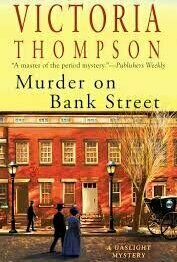

Dr. Brandt’s murder has been an ongoing storyline since the first book, so I was happy to finally see it solved. Ironically, Sarah doesn’t play an active part in solving it, but she is still an active part of the book as she reacts to what Frank is learning and her scenes are just as compelling. We get to see a different side of several characters, including Frank’s new sleuthing partner, but Sarah gets the most development, which only makes sense. We have three viewpoint characters over the course of the book, but the changes are always easy to follow. The plot is strong and kept me confused until we reached the satisfying ending. It did seem a bit repetitive early on, but that was a minor issue overall. If you are new to the series, you could jump in here without missing too much since everything you need to know is explained. As always, I felt like I was in 1897 with the little details and character’s attitudes acting like a time machine. I’m curious to see how the series will progress without this storyline an active part of things, but I am satisfied with how this storyline was wrapped up.

Kristy H (1252 KP) rated Big Lies in a Small Town in Books
Mar 19, 2020
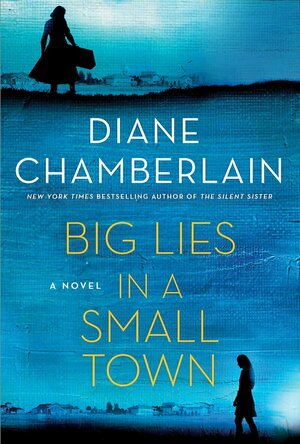
I've never read a book by Diane Chamberlain before, and I really enjoyed this one. It's oddly captivating for centering on a painting from the 1940s. The point-of-view switches between Morgan and Anna and each are compelling narrators in their own right. This was one of those books where I found myself desperately wishing I could read faster, as I wanted to find out what happened to Anna (we're told early on she "went crazy").
I applaud Chamberlain for her original plot. It's odd, but not in a bad way, as it had me interested the entire time. She does a wonderful job of creating two completely different worlds: Anna's in the 40s and Morgan's in near present-day. She deftly weaves in art aspects; Morgan's drunk driving conviction and her past in prison; Anna's possible mental illness; and Morgan's benefactor, so to speak, Lisa, who springs her out of prison to fulfill the wishes of her late father, Jesse, a famous artist.
While this novel is mainly fiction, there are some great twists and turns, especially as we learn what happened to Anna. Chamberlain delves into race relations, as Anna confronts the prejudices of the south in the 1940s. Her writing style is easy, making you want to keep reading, and overall, I quite enjoyed this one. 4 stars.
The Spider Network: The Wild Story of a Maths Genius, a Gang of Backstabbing Bankers, and One of the Greatest Scams in Financial History
Book
Listed as an FT book of the month. "Anyone with an interest in financial services and in what has...
Thomas Becket: Warrior, Priest, Rebel, Victim: A 900-year-old Story Retold
Book
From the winner of the 2004 Whitbread Biography Award and the Marsh Biography Award John Guy, comes...

Unstoppable: My America's Cup Journey
Book
If Ben Ainslie manages to win the right to compete for the America's Cup in 2017, Jimmy Spithill is...
Vera Brittain and the First World War: The Story of Testament of Youth
Book
Vera Brittain and the First World War tells the remarkable story of the author behind Testament of...

White Dresses: A Memoir of Love and Secrets, Mothers and Daughters
Book
In this riveting, poignant memoir of three generations of women and the white dresses that adorned...

Teenage Safari: A South African Conscript in the Border War in Angola and Namibia
Book
A wide-eyed South African conscript relates his small share of the war in Angola and Namibia in the...
The Crocodile by the Door: The Story of a House, a Farm and a Family
Book
The Crocodile by the Door by Selina Guinness - shortlisted for the Costa Biography Award - is a...
Born a Crime: Stories from a South African Childhood
9.2 Rate It
Book
The compelling, inspiring, (often comic) coming-of-age story of Trevor Noah, set during the twilight...